

Author: Kyle Liu, Investment Manager at Bing Ventures
Key Takeaways
LayerZero's processing throughput is quite high, and as long as the cross-chain throughput is large enough, the middle layer will not become a limiting factor.
LayerZero's design concept is very consistent with the current lightweight trend, and can provide developers with a simpler, more efficient and flexible development experience. For liquidity providers and applications, LayerZero's development prospects are very optimistic.
Since end users cannot identify the security of cross-chain, "user-oriented" projects need to be cautious when connecting to protocols such as LayerZero to avoid being contaminated by malicious applications that belong to the same ecosystem. This, to a certain extent, makes the ecological construction present a "prosperity and adversity together" pattern.
Bridging should ultimately be abstracted from the user experience, which is a much larger market. Existing bridges require multiple wallet changes, custom processes, and multiple clicks, while Stargate is a wrapper contract that allows users to get the assets they want on the target chain with just one click, without gas or any other steps on the target chain.
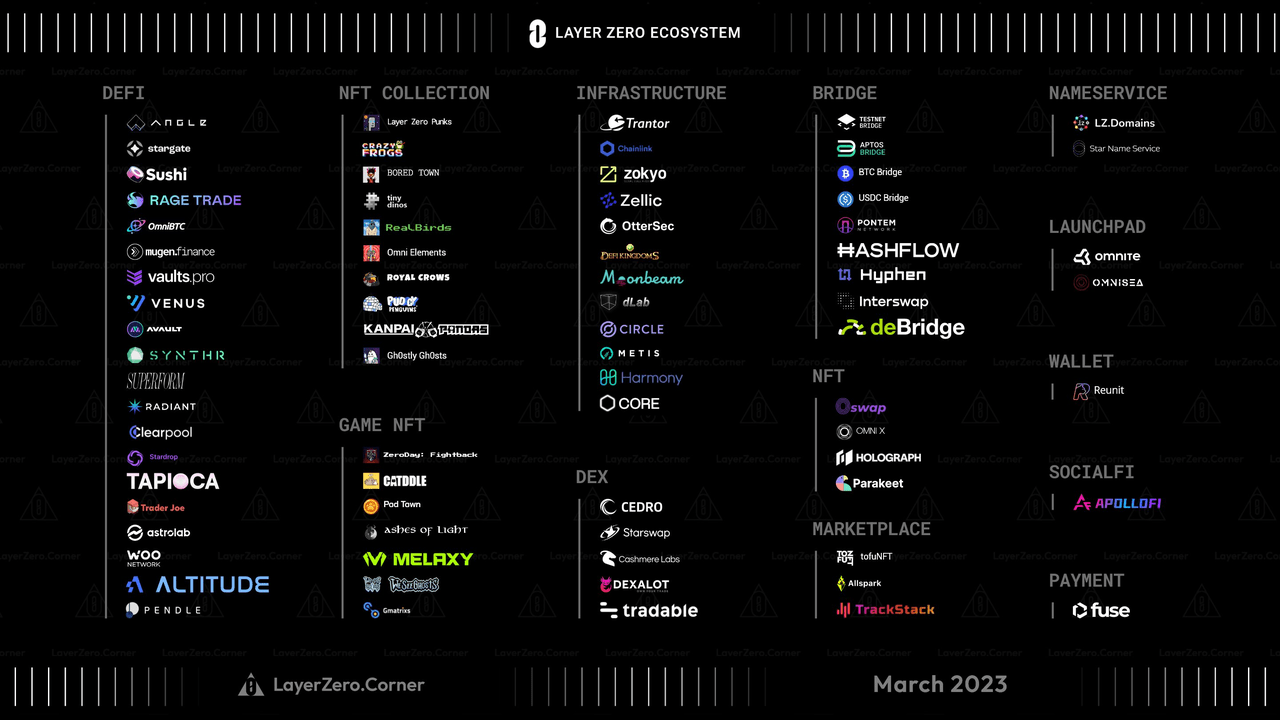
Looking at the ranking of LayerZero ecosystem projects, DeFi infrastructure, NFT, GameFi and cross-chain bridge projects are currently the main projects. The "full chain" scenario provides a more unified and collaborative blockchain ecosystem. We are more optimistic about the introduction of a cross-chain message relay protocol with zero-knowledge proof. This design will promote the safe and free flow of liquidity and the de-trust between different blockchain networks. DeFi and NFT are expected to benefit greatly from this transition, with greater liquidity and flexibility in yield farming and loan protocols, as well as better access to on-chain derivatives and more investment strategies for asset management applications.
LayerZero is a developer-friendly, easy-to-use, and highly scalable full-chain development framework. Its technical architecture has certain security guarantees, can effectively disperse risks, and is very flexible to meet the needs of different types of blockchain applications. Therefore, LayerZero has a very broad prospect in full-chain applications.
LayerZero is moving towards a trustless cross-chain framework, which is probably the most dangerous and fascinating field in the blockchain world. Can LayerZero withstand the security storm? In this wave of full-chain narrative, what opportunities should we explore? This article will explore the development space of LayerZero based on the trend of cross-chain evolution.
1. Technical architecture of LayerZero
LayerZero is a protocol designed to achieve full cross-chain interoperability. Its technical architecture includes Ultra Light Node and Oracle. LayerZero is committed to creating an easy-to-use, secure and reliable blockchain development framework. Its technical architecture has the following two important features.
The worst-case security of this architecture is equal to the best-case security of the chosen Oracle. For example, if Chainlink is chosen as the Oracle, even if the worst-case scenario is that the Oracle and Relayer are the same entity and they reach a consensus, malicious or not, this still ensures that the basic security is equal to Chainlink’s security.
Even if the Oracle becomes malicious and colludes with Relayer A to attack, only the user applications using Relayer A will be affected, while applications using other relays and other Oracles will not be affected at all. This feature can disperse the risk and increase the cost of attack exponentially.
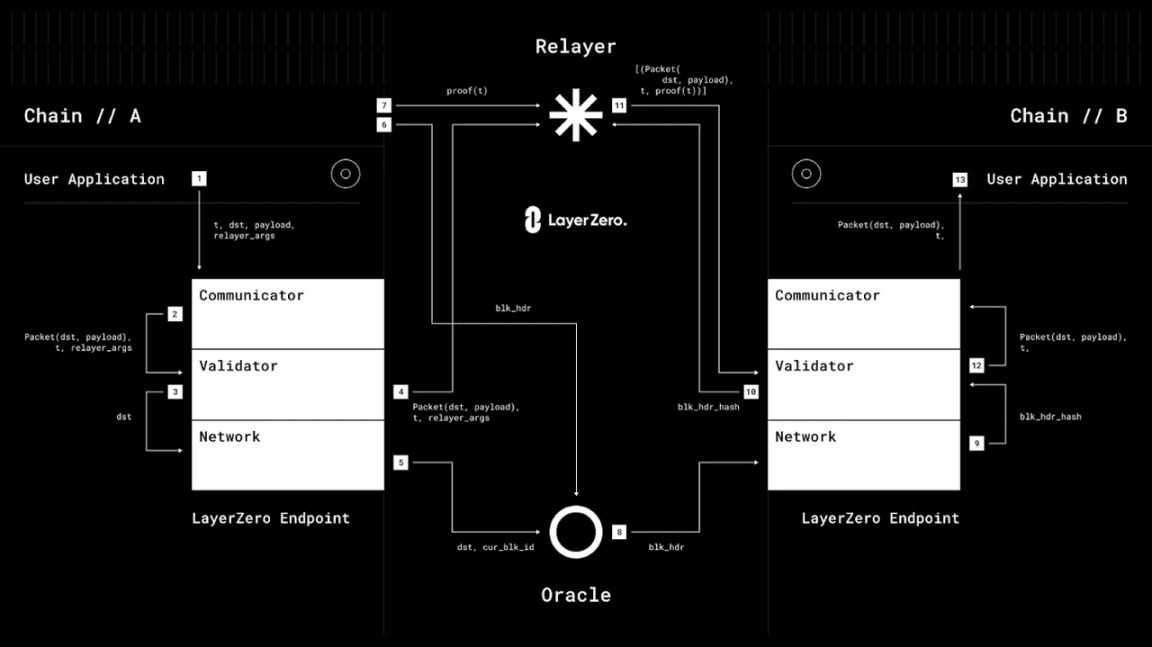
From a security perspective, this is a feature that existing solutions do not have. Therefore, LayerZero's technical architecture is very attractive, and the specific effects are reflected in the following aspects:
Improving cross-chain efficiency
The biggest advantage of LayerZero is that it improves the efficiency of cross-chain transactions. There is no consensus formation or verification process during the transmission of the middle layer, which means that there is no additional complexity. Compared with other solutions, LayerZero's middle layer is very lightweight, and Oracle and Relayer can efficiently forward transaction proofs. Therefore, LayerZero's processing throughput is quite high, and as long as the throughput of the chain across is large enough, the middle layer will not become a limiting factor.
LayerZero ensures the security and reliability of transactions by directly verifying on the chain, has great scalability, and can provide a better user experience for cross-chain transactions. However, there are still some limitations, such as the capacity limit of the block, which is caused by the characteristics of the underlying chain itself. LayerZero is designed to reduce the additional load as much as possible while maintaining the credibility of cross-chain transactions.
More than just asset transfer
In the current blockchain ecosystem, most of the focus is on asset transfer, such as decentralized exchanges and asset cross-chain bridges. However, with the emergence of LayerZero, developers can use it to build some applications, such as shared state applications, which can achieve cross-chain revenue aggregation and rebalancing. At the same time, unified governance can disperse voting from a single chain to the entire protocol. In addition, LayerZero can also play an important role in scenarios such as lending and gaming, making cross-chain operations simpler and more efficient.
LayerZero can also be seen as a new type of data messaging protocol, not just a tool for transferring digital assets. It can provide developers with a new design space to build applications that were previously impossible on a single blockchain. It can be foreseen that with the popularity of LayerZero and the continuous expansion of its application scenarios, it will bring about new changes.
Developers First
LayerZero's design philosophy is developer-first. Applications only need to implement two functions: sending and receiving. They send a general byte payload and parse the byte payload when receiving. Developers can use languages such as Solidity and Rust to write any application that can be built on the chain, and can operate across multiple chains with a very high degree of modularity. This design philosophy is very consistent with the current lightweight trend and can provide developers with a simpler, more efficient and flexible development experience. Compared with existing solutions such as intermediate chains and IBC-style cross-chain, LayerZero's ultra-lightweight nodes have the following advantages:
Higher security: Compared with the intermediate chain solution, LayerZero does not need to rely on the intermediate chain for communication, thus avoiding the security risks of the intermediate chain;
Lower cost: Compared with IBC-style cross-chain, LayerZero only needs to request a single block and does not need to synchronize the entire blockchain, thus reducing costs.
However, we also noticed that LayerZero needs to use Oracle to forward block headers for cross-chain communication, which may increase some complexity and centralization. Although LayerZero uses a layered architecture and an open relay network to ensure security, it still needs to cooperate with Oracle and relay providers. In this process, LayerZero adopts a decentralized risk structure. Applications can choose appropriate Oracles and relays according to their needs to avoid potential risks.
In addition, LayerZero also adopts a modular implementation, which allows different relays to be integrated and combined, further improving security and reliability. LayerZero's security is built on multiple factors, including a decentralized risk structure, user application control, and a modular implementation, which together constitute LayerZero's security architecture.
2. Security Controversy and Prospect Analysis
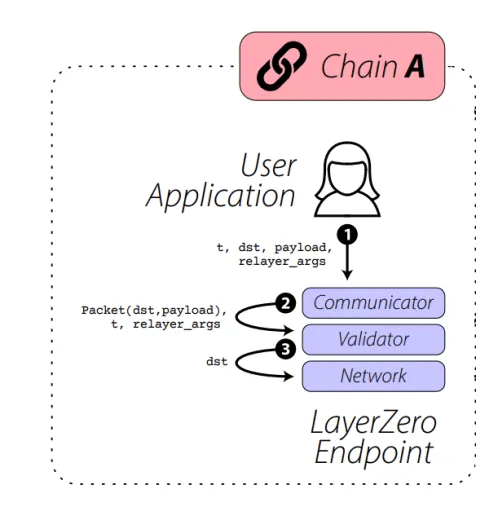
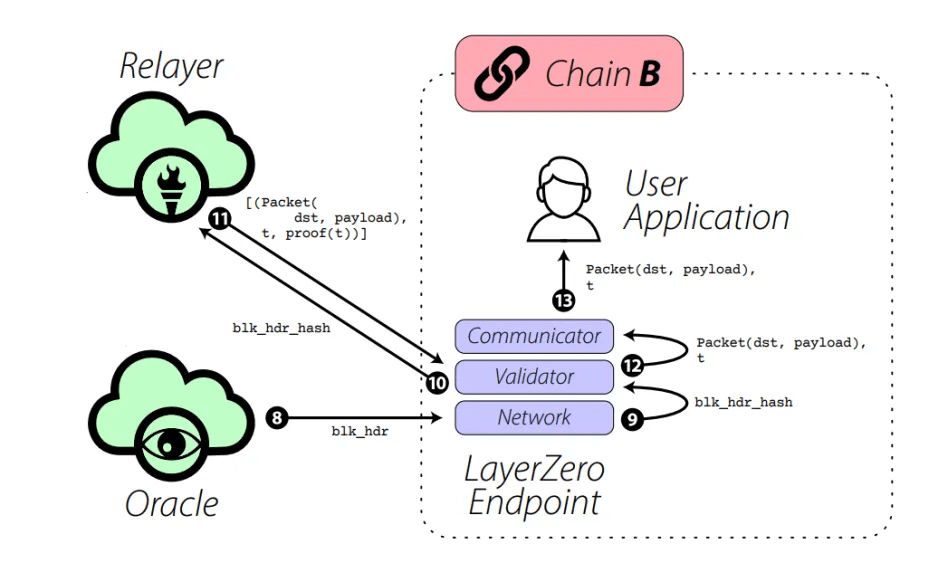
LayerZero's security model is based on two independent participants, oracles and relayers, acting together to ensure the security of the protocol. Whenever a message is sent from one chain to another, the oracle waits for the transaction on the sending chain to complete, then writes the relevant information on the receiving chain, and then the relayer sends a proof to the receiving chain that the stored block header contains the message. LayerZero's security foundation is as follows:
The independence of Oracle and Relayer is the basis of security.
Users can choose different Oracle/Relayer combinations to diversify risks.
Users can run their own Relayer to protect their assets.
Customized risk structures
LayerZero uses a layered architecture to solve the interoperability problem between blockchains. One of the core security features is a decentralized risk structure, where any entity that runs needs to bear its own risk, which means that user applications and liquidity providers have different trust assumptions. Another key feature is an open relay network, where anyone can run a relay, and user applications have full control over all security levers, including choosing the Oracle and relay they want. User applications can also control the risk by mastering the number of confirmations from the source chain. Such a decentralized design ensures the security of user applications and avoids the potential risks of a centralized control architecture.
However, LayerZero assumes that oracles and relayers are independent, honest actors. If they collude, this could cause message verification to fail. While LayerZero claims that its design eliminates the possibility of collusion, in practice, each application can define its own relayers and oracles. Therefore, LayerZero itself cannot guarantee that these components are independent and cannot collude, but rather it is up to the application to provide these guarantees. If the application chooses to break them, LayerZero has no mechanism to stop it. By default, all user applications can change relayers and oracles at any time, completely redefining security assumptions. Therefore, it is not enough to check the security of a given application only once.
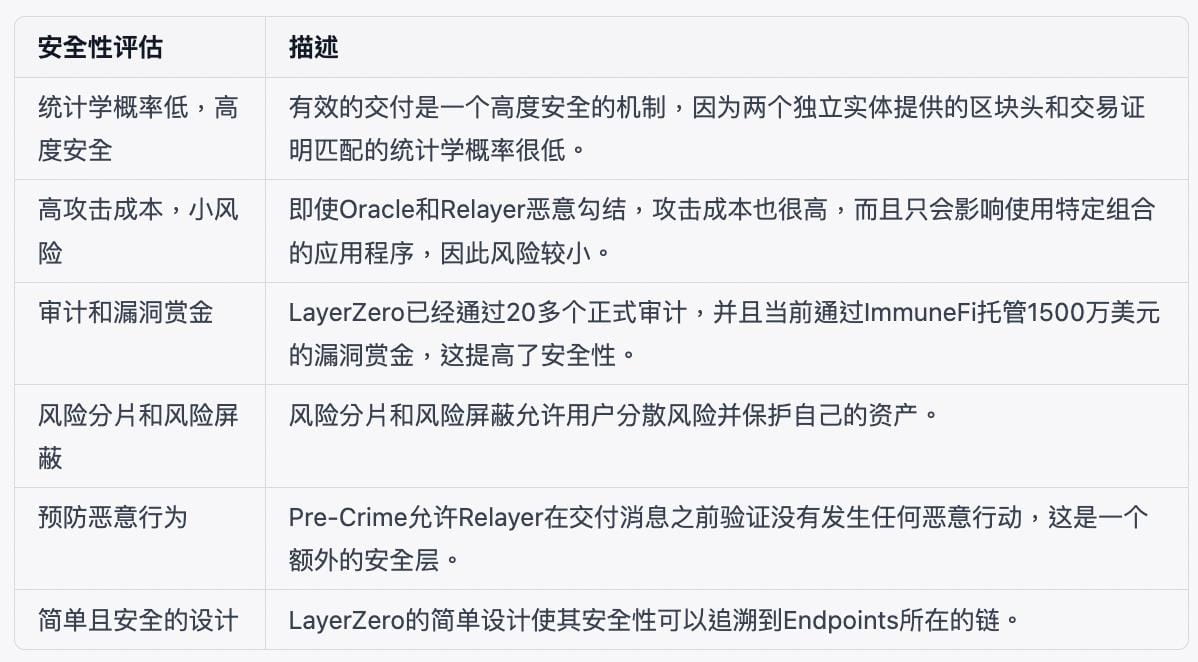
LayerZero is a promising platform for liquidity providers and applications. Developers have full control to avoid the risks of malicious relays or Oracles. Liquidity providers can choose to run their own relays based on their needs and risk appetite, further reducing risk. LayerZero's layered architecture also ensures isolation between different blockchains, preventing possible attacks and vulnerabilities from spreading. Overall, LayerZero's security is built on a decentralized and open relay network, while user applications also have full control, which brings greater convenience to liquidity providers and users.
Collusion Risk
LayerZero is essentially an "ultra-light" cross-chain solution whose architecture consists of Relayer and Oracle. Relayer acts as an intermediary for message passing, while Oracle supervises Relayer. LayerZero's trust assumption depends on the oracle and relayer operating independently of each other, making it impossible to send invalid messages. LayerZero's bridging model includes the requirement that the application selects a relayer on the target chain. Therefore, in this model, the key to the security features within the protocol lies in the relayer. Although this type of project is lightweight, has little code, and is easy to launch, it has several problems:
Node verification is reduced, and the safety factor is reduced;
The trust assumptions of Relayer and Oracle cannot always hold true, and there is no fundamental guarantee that they will not collude to do evil;
LayerZero is only responsible for forwarding messages and is not responsible for the security of the application.
Opening Relayer to everyone will not solve the above problems, but may introduce new problems. If the LayerZero node is allowed to modify the configuration, it may be replaced by an attacker with his own "LayerZero" node, thereby forging messages.
Curbing Evil
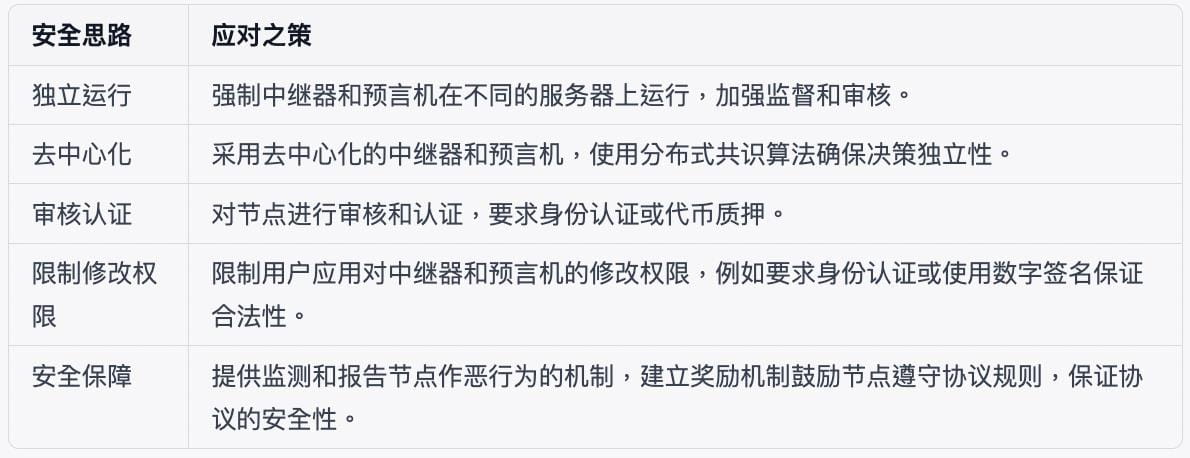
Since end users cannot identify the security of cross-chain, those "user-oriented" projects need to be cautious when accessing protocols such as LayerZero to avoid being contaminated by malicious applications belonging to the same ecosystem. This, to a certain extent, makes the ecological construction present a "prosperity and loss together" pattern. Therefore, the security issues of LayerZero need to be paid close attention. In response to the problems of LayerZero, we can start from the following two aspects:
First, increase the number of node verifications to improve security. LayerZero reduces dozens of node verifications to a single Oracle verification, which naturally reduces the safety factor. Therefore, it is particularly important to increase the number of node verifications and improve security. On the basis of multiple node verifications, consensus algorithms can be further introduced to increase the difficulty and complexity of on-chain verification to improve security.
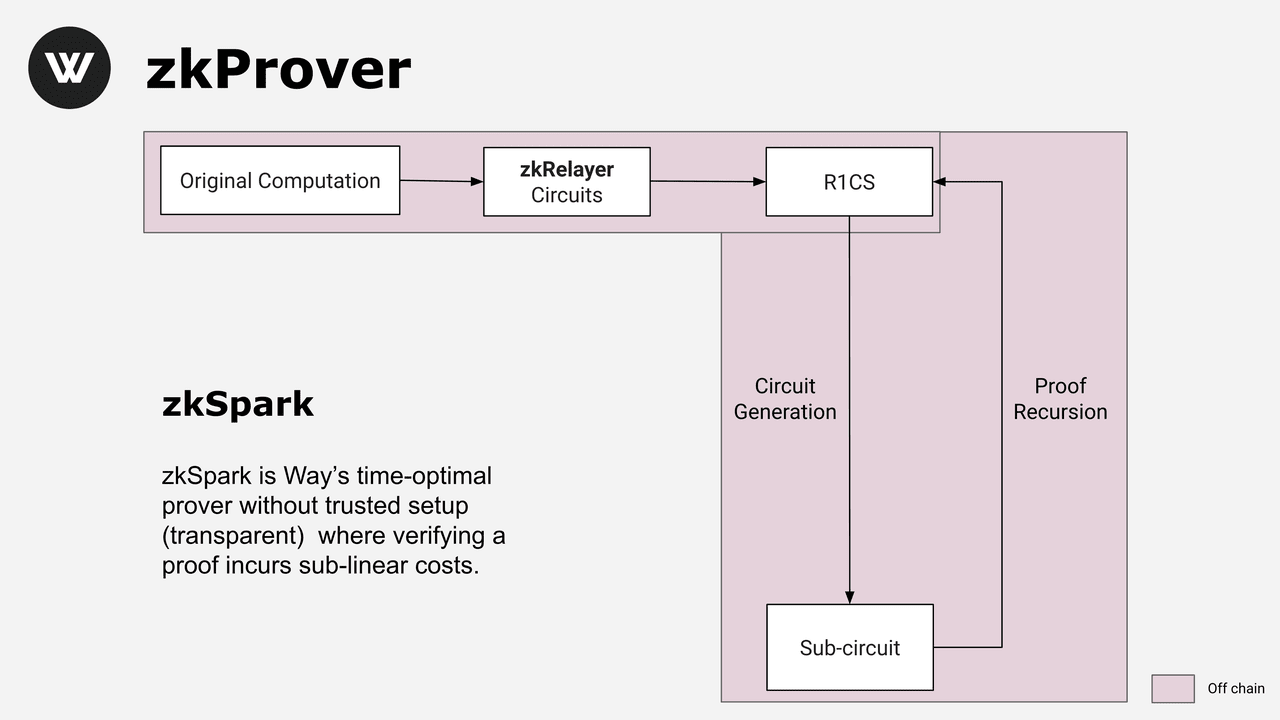
Second, establish a trusted relay mechanism. Since LayerZero's security issues are mainly caused by the trust assumption between Relayer and Oracle, a trusted relay mechanism needs to be established. This can be achieved through zero-knowledge proof technology, using the decentralized and tamper-proof characteristics of blockchain to establish a trusted relay mechanism and improve LayerZero's security.
3. Key Product: Stargate
Stargate is a cross-chain bridging protocol that allows assets to be quickly transferred between different chains without changing existing protocols and liquidity. In decentralized finance, cross-chain transactions have always been a difficult problem. The three goals of cross-chain asset transfer are immediacy, security, and capital efficiency. Most existing cross-chain bridges cannot achieve all three goals at the same time and must compromise on one or two of them.
Stargate allows users and decentralized applications to transfer native assets between different blockchain networks without the use of wrappers or intermediate tokens. Stargate uses a "lock + minting" and "destruction + redemption" mechanism to achieve instant guaranteed finality, because there is no risk of reversal of assets minted on the target chain. At the same time, Stargate also uses a composable design that allows a two-way connection between any two blockchains that support smart contracts, thereby improving security and capital efficiency.
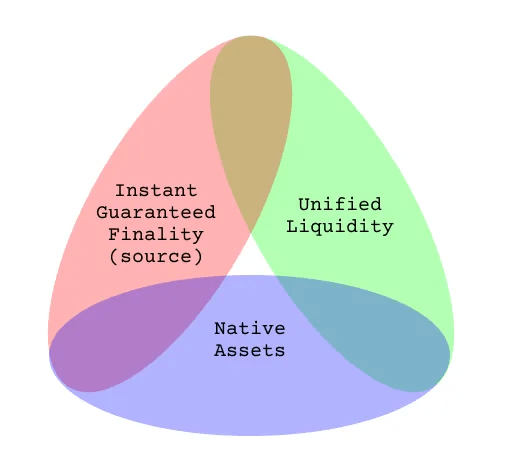
Compared with other cross-chain bridging protocols, the advantage of Stargate is that it is a general and composable cross-chain protocol. It can be applied not only to cross-chain transactions, but also to various other cross-chain applications. As more and more blockchain projects emerge, the demand for cross-chain transactions will increase, and Stargate can serve as a bridge to make it easier for users on different chains to trade and provide liquidity.
Stargate eliminates the extra step of getting unwanted assets that need to be exchanged on the target chain. Instead, users get what they want and save on slippage and exchange fees. Existing bridges require multiple wallet changes, custom processes, and multiple clicks, while Stargate is a wrapper contract that allows users to get the assets they want on the target chain with just one click, without gas or any other steps on the target chain. Bridging should ultimately be abstracted from the user experience, which is a much larger market.
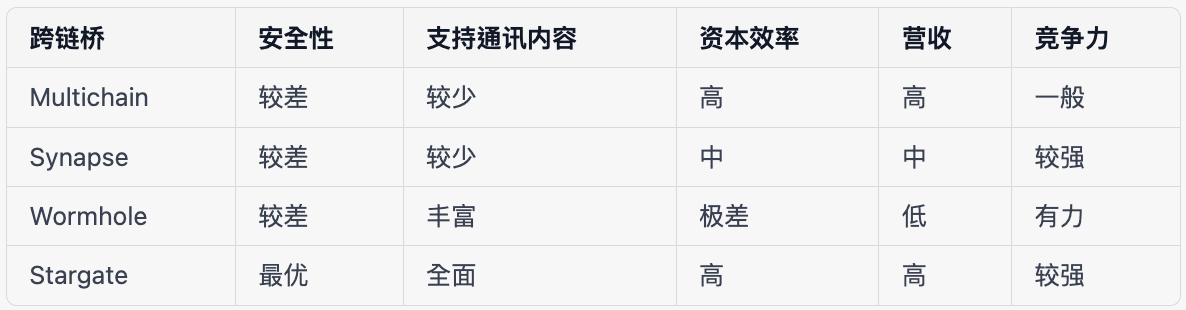
4. Introduction to LayerZero Ecosystem
Looking at the ranking of LayerZero ecosystem projects, they are currently dominated by DeFi infrastructure, NFT/GameFi and cross-chain bridge projects.
DeFi
AMM
SushiXSwap — SushiXSwap is a full-chain trading protocol based on LayerZero launched by SushiSwap, supporting networks including Optimism, Arbitrum, Fantom, BNB Chain, Polygon, and Avalanche. Users can conduct cross-chain transactions between supported networks and assets.
Hashflow — Decentralized trading platform Hashflow announced the launch of the Hashflow bridgeless cross-chain exchange service based on LayerZero at the end of April. It adopts a request for price (RFQ) model, and professional market makers set the token price. It supports token transactions between Ethereum, Avalanche, BNB Chain, Arbitrum and Polygon.
Cetus — Cetus is a pioneer dex and liquidity protocol built on the Aptos & Sui blockchain. It focuses on providing DeFi users with a better trading experience and higher capital efficiency through the process of building its centralized liquidity protocol and a series of subsidiary functional modules. Established a new strategic partnership with LayerZero_Labs on 10.22, 2022.
interswap — a fully composable native-asset cross-chain AMM with unified liquidity built on the LayerZero network.
starswap — the dex of the Move ecosystem, with safe and stable assets, and the advantages of fast transactions and low fees.
Borrowing
Radiant Capital — Radiant Capital is a full-chain lending protocol based on LayerZero. Users can deposit collateral on chain A and lend it on chain B to integrate multi-chain liquidity. Currently, the project has launched version v1 on Arbitrum, which currently only supports lending of assets on Arbitrum. According to the project documentation, version v2 will support full-chain lending of WBTC, ETH, and USDC.
Cedro Finance — Cedro Finance is a cross-chain decentralized liquidity protocol where users can lend and borrow listed assets on multiple chains with affordable transaction fees. Lenders are able to deposit their assets to increase the liquidity of the platform, while borrowers are able to borrow liquidity on an over-collateralized basis.
Clearpool — Clearpool is a decentralized finance ecosystem that encompasses a permissionless marketplace for unsecured institutional liquidity. Driven by supply and demand market forces, Clearpool’s permissionless, single-borrower pool enables institutions to raise short-term capital while providing DeFi lenders with the opportunity to earn risk-adjusted returns based on market consensus-derived interest rates. The fully licensed, institutional-grade platform further addresses the compliance needs of institutional market participants for wholesale lending of digital assets.
Venus Protocol — A high liquidity lending protocol on BNBChain.
tapioca — The Tapioca DAO enables users to borrow and lend across 12+ EVM and non-EVM blockchains. Core products feature Singularity, an independent risk lending marketplace (based on Sushiswap’s Kashi product), and Yield Box (BentoBox V2), a permissionless token vault.
Derivatives
Aries — Aries Markets is a decentralized exchange built on Move. Products cover lending, swaps, margin trading, and account risk management, all on one platform. With a unified margin account, users can easily earn interest on deposits, borrow from shared liquidity pools, swap, trade, and access other DeFi products on Aptos.
Rage trade — Rage Trade is a full-chain Ethereum perpetual contract market that supports Ethereum, Arbitrum, Avalanche, and Fantom. Rage Trade uses the LayerZero-based cross-chain bridge Stargate to deposit ETH-USD LP from DEX, money markets (such as Aave, Rari, Euler), and derivative markets (GMX, Ribbon) on supported networks directly into Rage Trade, and deposits 80% of TVL into revenue-generating services (Curve, GMX, Sushi, etc.), and 20% of TVL provides liquidity for Rage Trade to support users in contract trading.
Aggregator
mugen.finance — RealYield based on LayerZero
Cashmere — Cashmere Labs aims to be a MEV-resistant DEX aggregator with full-chain interoperability. The product is not yet online, but according to the official introduction of the product, Cashmere Labs includes two main products: stablecoin trading and MEV-resistant cross-chain DEX aggregator. Among them, stablecoin trading improves slippage and liquidity problems through unilateral liquidity and incentives for unilateral liquidity; cross-chain DEX aggregator combines LayerZero's cross-chain interoperability and 1inch's liquidity. Since arbitrageurs cannot obtain order information during inter-chain messaging, they cannot conduct MEV-related attacks such as front-running transactions and "sandwich attacks".
OmniBTC — OmniBTC is a cross-chain DEX aggregator based on LayerZero that supports Ethereum, BNB Chain, Avalanche, and Polygon. The team said it will focus on new public chains Aptos and Sui in the future.
Stablecoins
Circle — USDC issuing company
Angle Protocol — Angle Protocol is a decentralized stablecoin protocol that announced in August that it had integrated with LayerZero to enable cross-chain transfers of its euro stablecoin agEUR between Ethereum, Polygon, Optimism, and Arbitrum.
bridge
Stargate — Stargate is a fully composable liquidity transfer protocol. With Stargate, users and dApps can transfer native assets across chains while accessing the protocol's unified liquidity pool with instant finality guarantees. Stargate is the first project built on LayerZero and is committed to building a fully composable native asset cross-chain bridge protocol.
AptosBridge — The LayerZero Aptos bridge enables seamless asset transfers between Aptos and the blockchain world. Outbound transfers from Aptos require 1 million block confirmations and are expected to last approximately 4 days.
Bloctoswap — Blocto is a cross-chain wallet that provides a seamless experience through a developer-friendly SDK, a built-in decentralized exchange called BloctoSwap, and its non-custodial NFT marketplace BloctoBay.
Parakeet.dao — Parakeet.dao is a full-chain cross-chain bridge based on LayerZero, supporting Ethereum, Polygon, Arbitrum, Optimism, BNB Chain, Avalanche, and Fantom. The project is still in the testing phase and only supports cross-chain transfers of NFTs on the above network test networks. Users can submit applications for NFTs that they hope to support cross-chain.
tool
Lz Domain — Lz Domain is Layer Zero’s domain name service. With LZ, users and businesses can replace computer-generated identifiers (such as wallet addresses) with human-readable and easy-to-remember names such as *LayerZero.lz*.
Notify — Notify allows Web3 developers to integrate communications into their applications without having to build the infrastructure themselves. Notify will soon launch Notifi Hub, a Web3 inbox that aggregates cross-chain notifications and messages into a single hub. Notifi now supports Solana, NEAR, and Ethereum, and will expand to Polygon, Avalanche, Aptos, and Sui. Notifi has completed a $10 million seed round of financing, led by Hashed and Race Capital, with participation from Struck Capital, HRT Capital, Wintermute, Superscrypt, and others.
LayerZero.scan — With LayerZero Scan, users can gain deep insights into what is happening on-chain and across chains.
Reunit — The full-chain wallet.
infrastructure
Chainlink — Oracle
zokyo — auditing firm
Zellic — Auditing firm
dlab — Omnichain Interoperable Payments Protocol (OIPP). A decentralized NFT AMM protocol built on LayerZero.
NFT
Omni X — Omni X is a full-chain NFT platform based on LayerZero. According to official information, Omni X aims to connect creators and users, allowing users to mint and trade NFTs on the chains it supports, in order to aggregate users and communities scattered across multiple chains.
Trantor — Trantor is a LayerZero-based NFT cross-chain communication infrastructure that supports cross-chain transfers of NFTs. Currently, it only supports the testnets of BNB Chain and Polygon, and supports users to mint test NFTs for cross-chain operations on the testnet.
Omnisea — Omnisea is a full-chain NFT Launchpad based on LayerZero and Axelar Network. Creators can issue NFTs that can be cross-chain based on LayerZero on the platform. At the same time, the project has issued the token OSEA, and locking the token can get part of the platform revenue as a reward.
Omnite — Omnite provides a full-chain NFT solution based on LayerZero. Its products have not yet been launched, but developers can use the SDK they developed to build full-chain NFT projects.
Oswap — Oswap is a full-chain NFT DEX protocol based on LayerZero developed by dLab, and its Alpha test has ended. Its protocol involves similarities to sudoswap, but supports cross-chain transactions based on LayerZero.
Holograph — Holograph is a full-chain NFT protocol launched by CXIP Labs. The Holograph suite will include three initial products: Bridge, Core, and Mint. Bridge allows NFTs to be transferred between Ethereum Virtual Machine (EVM) blockchains. Core is a multi-chain application programming interface (API) for software developers, and Mint is an NFT minting product for creators. All three products are still in the testing phase and only support Goerli and the testnets of Polygon and Avalanche.
tofuNFT — Multi-chain NFT marketplace
Allspark — NFT Omnichain-Liquidity aggregation protocol.
Trackstack — A marketplace for audio NFTs.
GameFi
Catddle — Catddle is a Web3 pet game, and its NFT is issued based on LayerZero. As of the time of writing, its floor price on OpenSea is 0.035 ETH, and the transaction volume is 11 ETH. The current game content has not yet been launched, but the official document shows that the game is similar to a pet breeding game, and will issue MEO tokens for in-game functions and CAT governance tokens, of which the total amount of MEO is unlimited, and the total amount of CAT is 1 billion, of which 5% will be used for airdrops.
Beyond — Beyond is a Web3 space exploration game where NFTs (planets, etc.) in the game support cross-chain functionality based on LayerZero.
DeFi Kingdoms — DeFi Kingdoms combines the appeal of decentralized finance with the currently emerging play-to-earn economics. It is live on the Harmony ONE network.
SocialFi
APOLLOFI — A socialfi project based on LayerZero.
5. Opportunity Capture in the LayerZero Ecosystem
Cross-chain DeFi protocols drive ecosystem development
LayerZero's DeFi protocols are relatively prosperous, including decentralized trading platforms, lending protocols, and derivatives exchanges. Among them, SushiXSwap, Hashflow, interswap, and starswap in the AMM field support cross-chain transactions, providing users with more asset choices and trading methods. In terms of lending, Radiant Capital, Cedro Finance, Clearpool, and Venus Protocol support multi-chain lending, increasing user liquidity and choices. At the same time, Cetus improves users' trading experience and capital efficiency through centralized liquidity protocols and multiple subsidiary function modules. In terms of derivatives, Aries and Rage Trade offer a variety of products such as lending, swaps, margin trading, and account risk management. LayerZero's future trends will cover broader cross-chain support, faster transaction speeds, lower fees, higher security, and more innovative products. As LayerZero becomes more popular on multiple blockchains, it will continue to play an important role in the DeFi ecosystem and promote the further development of the DeFi market.
The future of cross-chain bridge ecology
Another major feature of its ecosystem is the construction of a series of cross-chain bridging protocols and applications, which are committed to breaking down the barriers between different blockchains and providing all-round asset liquidity support. The first is the bridging protocol. LayerZero's Stargate Finance is a fully composable liquidity transfer protocol that provides users and dApps with a seamless experience of cross-chain native asset transfer. AptosBridge is a bridging protocol on LayerZero that enables asset transfers between Aptos and the blockchain world. Both bridging protocols are built on LayerZero and are fast, efficient, and reliable. In the future, with the continuous development of blockchain technology and the continuous expansion of application scenarios, bridging protocols will become an important hub connecting different blockchains, and LayerZero has great potential in this regard.
The second is decentralized exchanges. LayerZero's Bloctoswap is a cross-chain wallet. Its built-in decentralized exchange BloctoSwap and non-custodial NFT market BloctoBay provide users with seamless asset trading and transfer services. Since decentralized exchanges have obvious advantages in asset security, asset liquidity and fees, in the future, LayerZero can consider adding more cross-chain asset support, improving transaction speed and user experience, etc. in the development of decentralized exchanges.
Finally, there is the full-chain cross-chain bridge. Parakeet.dao by LayerZero is a full-chain cross-chain bridge based on LayerZero, supporting multiple blockchain networks such as Ethereum, Polygon, Arbitrum, Optimism, BNB Chain, Avalanche, Fantom, etc. The project is currently in the testing phase and only supports cross-chain transfers of NFTs on the test network, but its future development prospects are very broad. The full-chain cross-chain bridge can achieve seamless connection between different blockchains, greatly improving asset liquidity and interoperability, and has high application value and market potential.
Building a diverse and scalable NFT and GameFi ecosystem
In LayerZero's NFT ecosystem, there are currently multiple NFT projects developed based on LayerZero. For example, the Omni X platform aims to link creators and users to realize the minting and trading of NFTs on multiple chains it supports; Trantor is an NFT cross-chain communication infrastructure that supports cross-chain transfers of NFTs; Omnisea is a full-chain NFT Launchpad, where creators can issue NFTs that can be based on LayerZero cross-chain on the platform, and receive part of the platform's revenue as a reward by locking tokens. These projects demonstrate the diversity and scalability of the LayerZero NFT ecosystem, and provide strong support for the further development of NFTs.
In addition, LayerZero also has some NFT projects in the testing phase, such as Omnite, which provides a full-chain NFT solution, and the Holograph protocol, which includes three products: Bridge, Core, and Mint, providing NFT cross-chain transmission, multi-chain application programming interface, and NFT casting products. These projects are expected to further expand LayerZero's NFT ecosystem.
In LayerZero's GameFi ecosystem, Catddle, Beyond, and DeFi Kingdoms are all games developed based on LayerZero. Among them, Catddle is a Web3 pet game, in which NFTs in the game are issued based on LayerZero, supporting transactions and governance token CAT airdrops; Beyond is a Web3 universe exploration game, whose NFTs support cross-chain functions based on LayerZero; DeFi Kingdoms combines decentralized finance and Play-to-Earn economics to provide players with rich gaming experiences and profit opportunities.
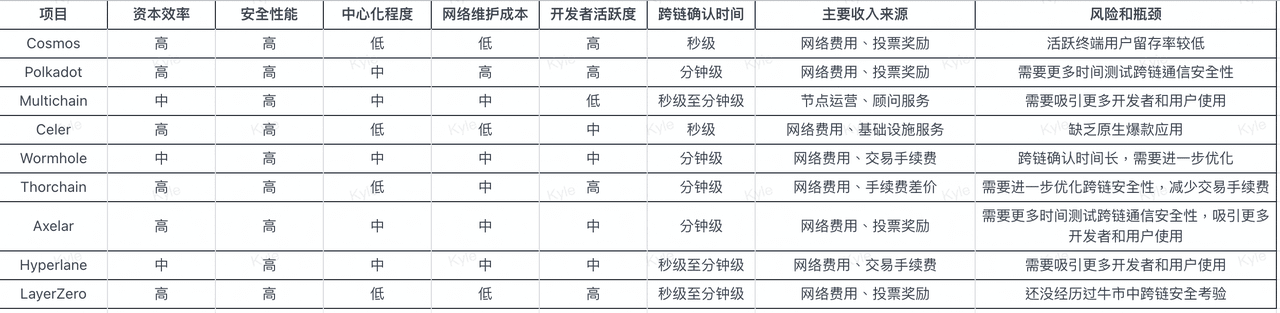
Summary: Opportunities in the full-chain era
Through the above data and the introduction of major ecological projects, we can see that in addition to cross-chain infrastructure, the projects on LayerZero are mainly various DeFi derivative projects, NFT, GameFi, and tool projects such as revenue aggregators around it. The full-chain aggregation track is a broad track with many types. Therefore, if you want to find opportunities on LayerZero, you can pay attention to the following points:
Full-chain DeFi
The value and opportunities of full-chain lending within the LayerZero ecosystem are mainly reflected in solving the liquidity fragmentation problem between different chains/L2s, providing users with cross-chain lending services, while reducing the operational troubles of ordinary users and improving asset utilization. Unlike Aave, Radiant (RDNT) uses LayerZero's Omnichain technology to build its full-chain interoperability, allowing its users to deposit assets on any supported chain and borrow various assets across multiple chains. There is no need to perform cross-chain operations on assets, and lending operations can be completed on different chains or L2s. The essence of Radiant's full-chain currency market is to integrate liquidity on different chains to provide users with more convenient and fast lending services.
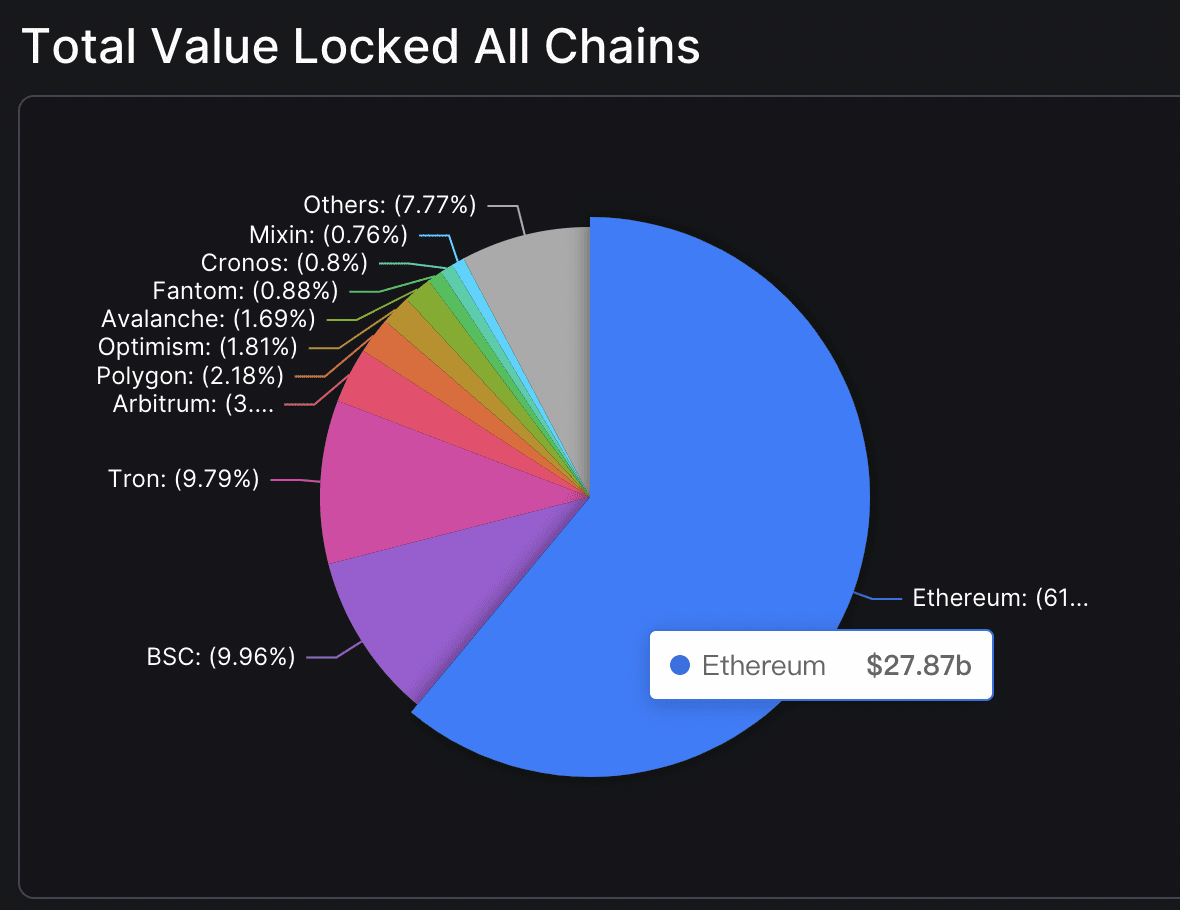
From a technical point of view, Radiant has achieved cross-chain interoperability through Stargate's routing interface and cross-chain operations after the loan is generated. According to Defillama's data, Ethereum L1's TVL only accounts for about 60%, and the rest is distributed on other different chains. Radiant's goal is to integrate liquidity on different chains, build a full-chain lending market, solve the problem of liquidity fragmentation between different chains/L2, and improve users' asset utilization.
However, the update of Radiant v2 may bring uncertainty to existing lenders and borrowers. Although the update may be intended to change the unsustainability of current liquidity mining, it will also lead to reduced interest sharing, longer vesting period, more penalties, and the need to provide liquidity to obtain mining rewards. The release time of RDNT will also be extended, which may have an adverse impact on users who want to withdraw their earnings as soon as possible. However, for users who hold RDNT for a long time and are willing to provide liquidity for liquidity mining, such an update will bring longer-term benefits.
In short, Radiant's full-chain lending market solves the problem of liquidity fragmentation between different chains/L2s, improves users' asset utilization, and provides users with more convenient and fast lending services. Although the update of Radiant v2 may bring some uncertainty, for users who hold RDNT for a long time and are willing to provide liquidity for liquidity mining, such an update will bring longer-term benefits.
Full-chain NFT
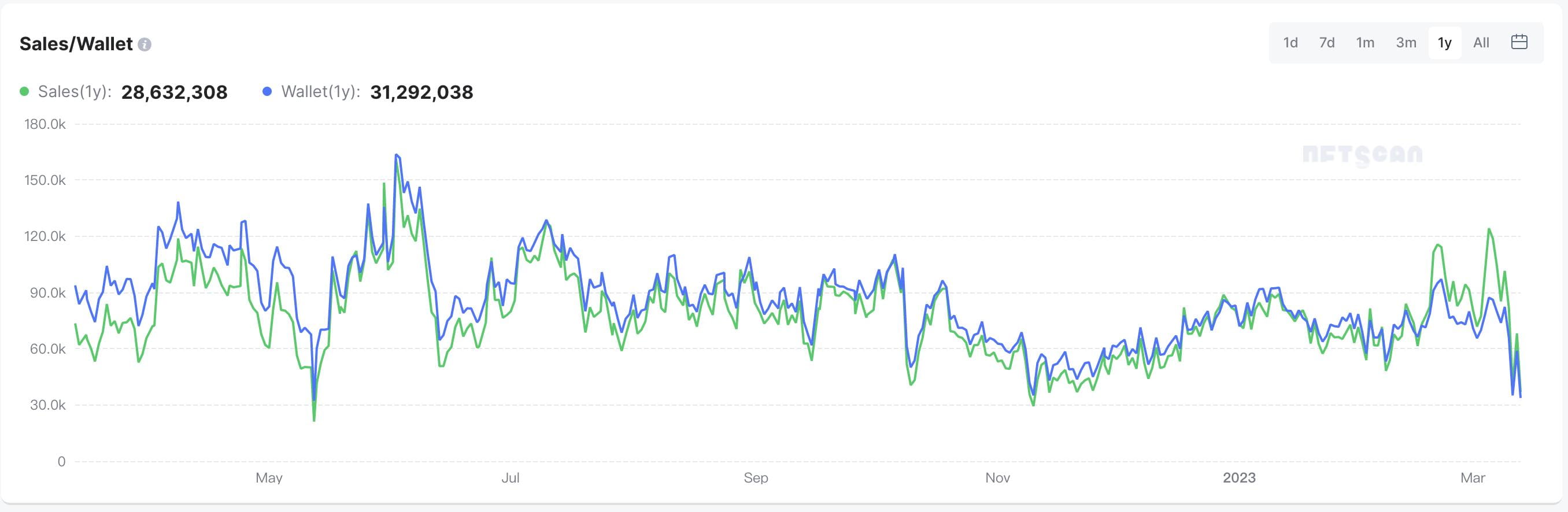
With the launch of Stargate Finance, full-chain NFT has gradually become a hot topic in the LayerZero ecosystem. As a full-chain interoperability protocol, LayerZero realizes data and asset transmission between source and target chains through Endpoints, oracles, and relays. Gh0stly Gh0sts is the first full-chain NFT project on LayerZero. Full-chain NFT can bring opportunities to many projects and many chains. It can bring meaningful NFT assets to other chains and become a catalyst. With LayerZero's cross-chain support, the application scenarios of NFT will be more widely expanded, and users can transfer their NFT works to other chains, attracting more users to participate in the NFT market. In addition, the launch of full-chain NFT will also bring more opportunities in cross-chain asset management, blockchain games, social networks, digital identity and other fields.
There is also a strong-get-stronger effect in full-chain NFTs. Over time, full-chain NFTs may eventually prove to be the most beneficial to Ethereum, as they play a greater role in consolidating and expanding Ethereum's already extensive influence while advancing the influence of other chains in parallel. Therefore, for other chains to gain a larger share of the full-chain NFT market, more active innovation and marketing are needed to stand out in the fierce competition. As for Gh0stly Gh0sts, the project has brought innovation to the cross-chain transfer of NFTs, solved the problem of high Gas Fee required for casting, and retained the "nativeness" of cross-chain items, but there are also some defects, such as the high cost of frequent transfers and the inability to achieve "full-chain universality" of NFTs. Therefore, as a full-chain NFT project, Gh0stly Gh0sts needs to make more innovations and solve these problems to meet the needs of more users and thus gain a larger share in the full-chain NFT market.
Introducing ZKP
The cross-chain message relay protocol based on zero-knowledge proof (ZKP) can improve the security of cross-chain communication to a certain extent. DeFi products within LayerZero can integrate liquidity from different chains, enabling DEX, cross-chain transactions, and aggregators to provide better user experience, lower slippage, and higher liquidity of trading pairs. In other words, the income strategy can be more flexible because more profit opportunities can be found on different blockchains. Lending protocols can cooperate with more DeFi protocols on different chains and accept deposits of different tokens from different chains.
On-chain derivatives will benefit greatly from liquidity. Through secure cross-chain communication, the derivatives market can reach potential customers from different chains and aggregate more liquidity to provide a better trading experience. Asset management protocols can also access more assets from different chains, as well as derivatives from different chains, allowing managers to use more investment strategies.
In summary, the “full chain” scenario provides a more unified and collaborative blockchain ecosystem, and we are more optimistic about the introduction of a cross-chain message relay protocol with zero-knowledge proofs, which will promote the safe and free flow of liquidity and trustlessness between different blockchain networks. DeFi and NFT are expected to benefit greatly from this transition, with greater liquidity and flexibility for yield farming and lending protocols, as well as better access to on-chain derivatives and more investment strategies for asset management applications.