Whether the United States can successfully achieve a soft landing has always been the focus of the world. However, Albert Edwards, an analyst at Societe Generale, warned earlier that the stock market may repeat the Black Monday of October 19, 1987 due to the high bond yields and shrinking money supply.
U.S. Treasury Secretary Janet Yellen expressed confidence earlier this week that long-term high interest rates are "by no means inevitable," reiterating that she is very optimistic about the outlook for the U.S. economy; but she also pointed out that higher long-term interest rates on U.S. debt could pose a threat.
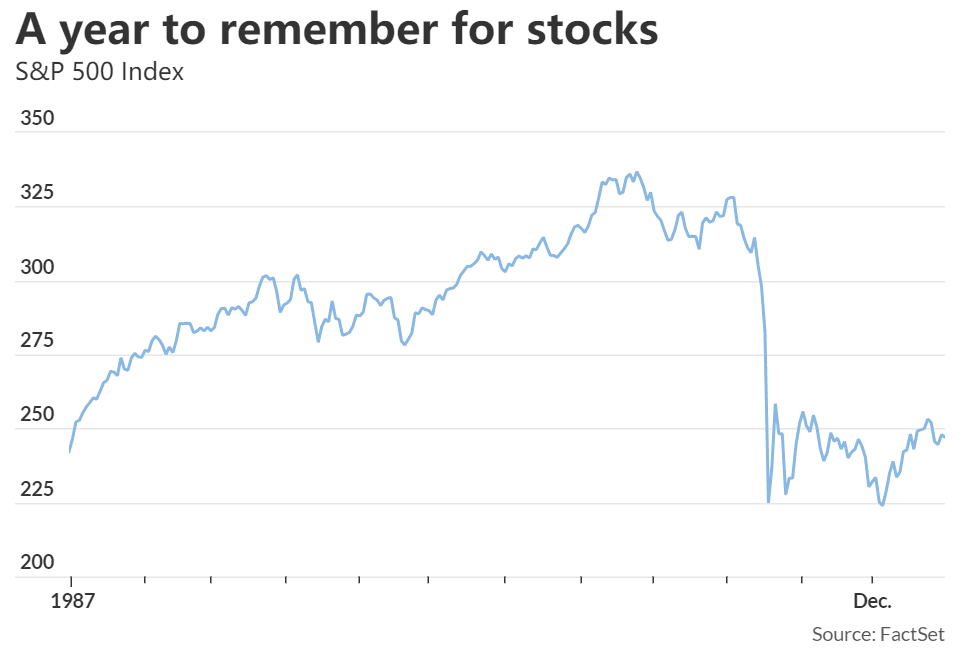
Regarding the rising Treasury yields, Albert Edwards, a strategist at Societe Generale, also warned in a recent report to clients that if the bond market does not cool down, the stock market will repeat the tragedy of Black Monday on October 19, 1987, when the Dow Jones Industrial Average fell 10% in a single day.
30-year U.S. Treasury bonds hit a multi-decade high. Will the stock market be suppressed?
Albert Edwards believes that the current soaring U.S. Treasury yields are "bombarding" the market, and the current situation is like being trapped in a car that is about to have an accident, and can only watch the tragedy happen and is powerless to stop it.
He pointed out that the important S&P 500 index experienced its worst month in 2023 in September, while the bond market faced a lot of selling pressure, with the 30-year U.S. Treasury yield hitting a post-2007 high.
The current resilience of the stock market amid rising Treasury yields reminds me of what happened in 1987, when bullish sentiment among stock market investors was finally suppressed.
Any signs of a recession now would surely be devastating for the stock market.
Young readers may not know that on October 19, 1987, panic selling caused the Dow Jones Index to plummet 22% that day, which was later called Black Monday. (It even led to the introduction of circuit breakers in the U.S. stock market.)
Economic data still has hidden concerns
Using another data graphic, Edwards noted that when trucking jobs are declining precipitously, that often signals an impending recession.
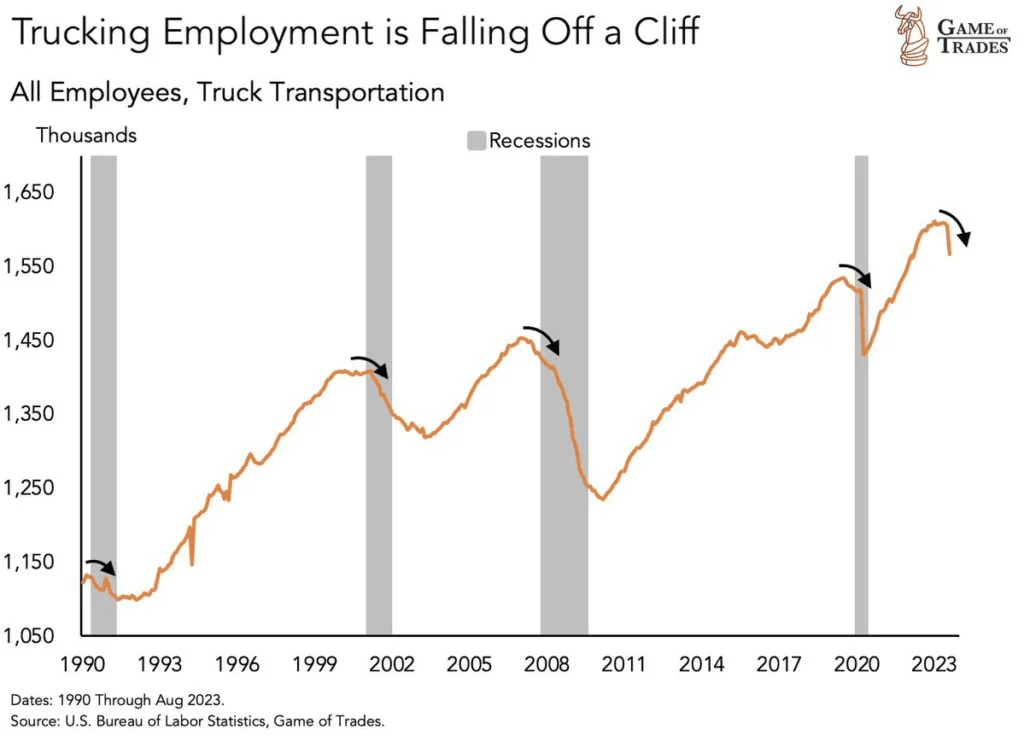
He also identified other economic problems:
The number of smaller corporate bankruptcies and money supply signals are sending warning signs
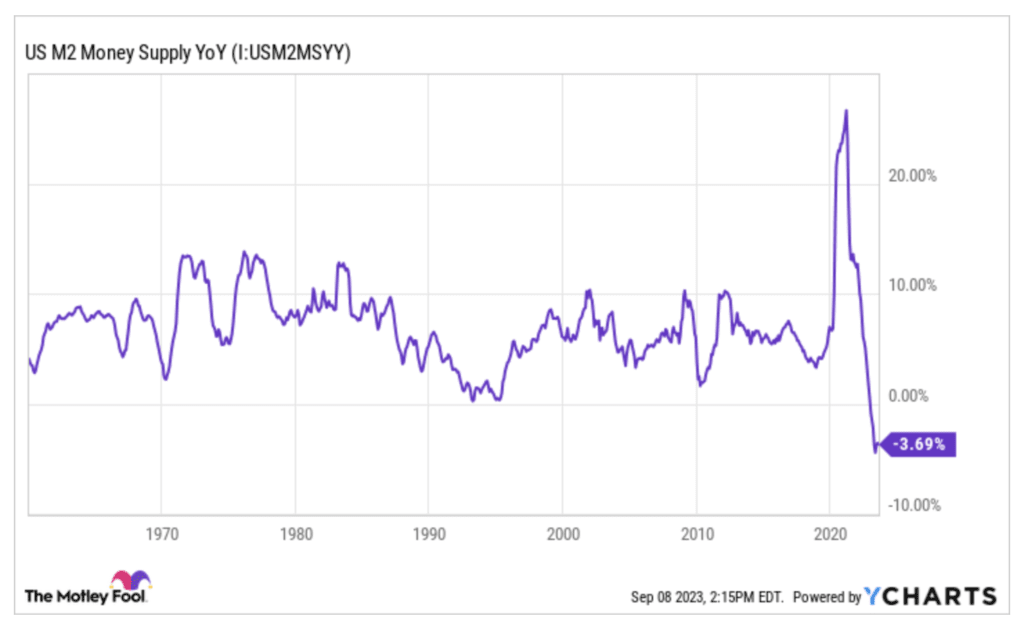
Measures the contraction of M2 (broad money) in the U.S., which includes cash in circulation, checking deposits, savings deposits below $100,000, and money market mutual funds.
The M4 money supply, which measures the amount of notes and coins in circulation and bank accounts, is also shrinking.
Edwards said that over the past few decades, economists, especially economists at the Federal Reserve, have increasingly ignored money supply, and monetarists have been marginalized. In his view, "this is a mistake." He would not call himself a monetarist, but when data confirms that the money supply is weak, he will pay special attention to this situation.
In my career, I have never seen so much uncertainty about where we are in the economic cycle.
Is the long-awaited recession still around the corner, or are we at the beginning of a new economic cycle? Many investors are clearly increasingly convinced that it is the latter, but my view is that a recession is still lurking.