

The time now is October 1, 2023. Let me start with the conclusion: the Bitcoin bull market in 24-25 years will be different from any previous bull market.
Let me share my views from two perspectives. The first is the guiding significance of the past Bitcoin halving market for the future, and the second is the possible impact of the Federal Reserve’s monetary policy over the past years on the highest point of Bitcoin’s next round of market prices.
第一部分:历年比特减半行情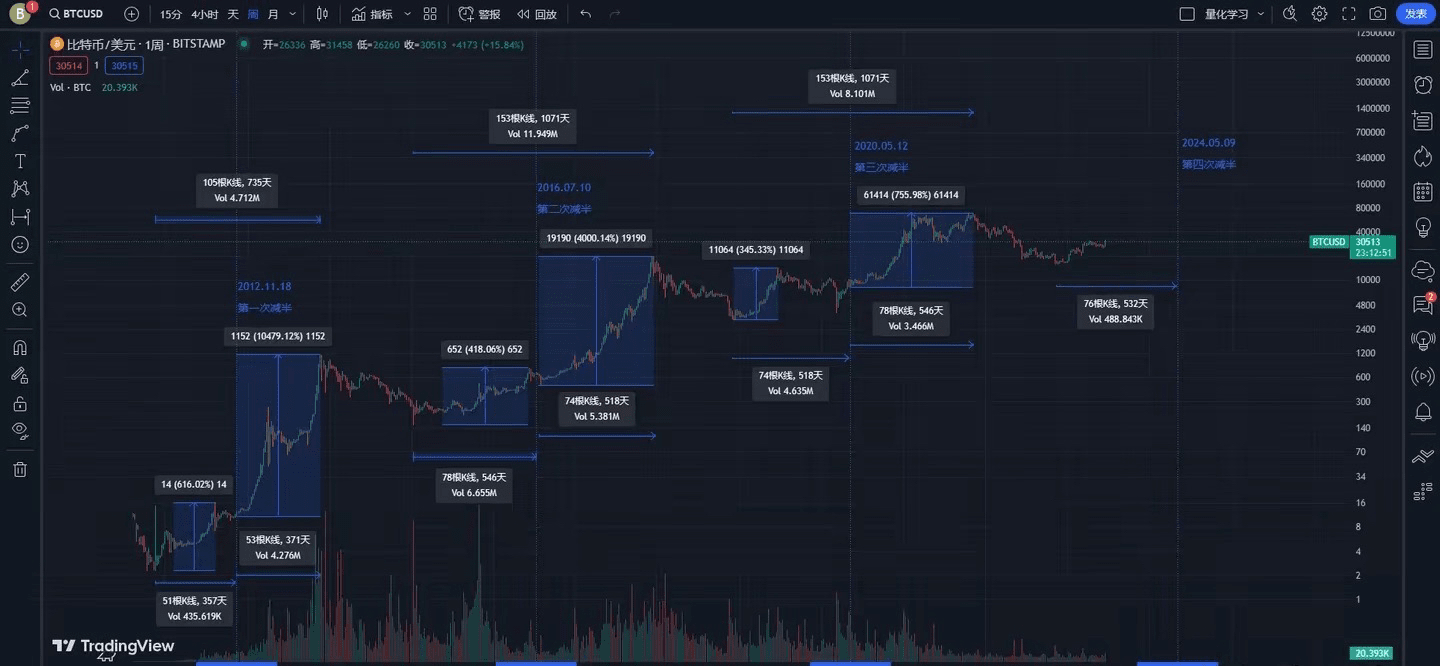
Bitcoin halving occurs every four years, and the specific time is uncertain. At present, the next halving time is 2024.05.09, which is 319 days away. Let’s look back at the past halving cycles.
The first halving occurred in November 2012. The lowest point occurred 357 days before and the highest point occurred 371 days after that. The total lasted 735 days. The highest increase from the halving was 104 times.
The second halving occurred in July 2016. The lowest point occurred 546 days before and the highest point occurred 518 days after that. It lasted a total of 1071 days. The maximum increase from the halving was 40 times.
The third halving occurred in May 2020. The lowest point occurred 518 days before, and the highest point occurred 546 days after that. It lasted a total of 1,071 days. The maximum increase from the halving was 7.5 times.
You can see the similarities are:
1. The lowest point always seems to appear before each halving, and it always occurs between 1 and 1.5 years;
2. The high point after the halving occurs in the period of 1-1.5 years;
3. Before the halving, there are basically opportunities for a second dip or even multiple dips, and the intervals between dips vary;
4. 减半前基本都有小牛行情,涨幅从一开始的6倍到4倍,再到3.5倍;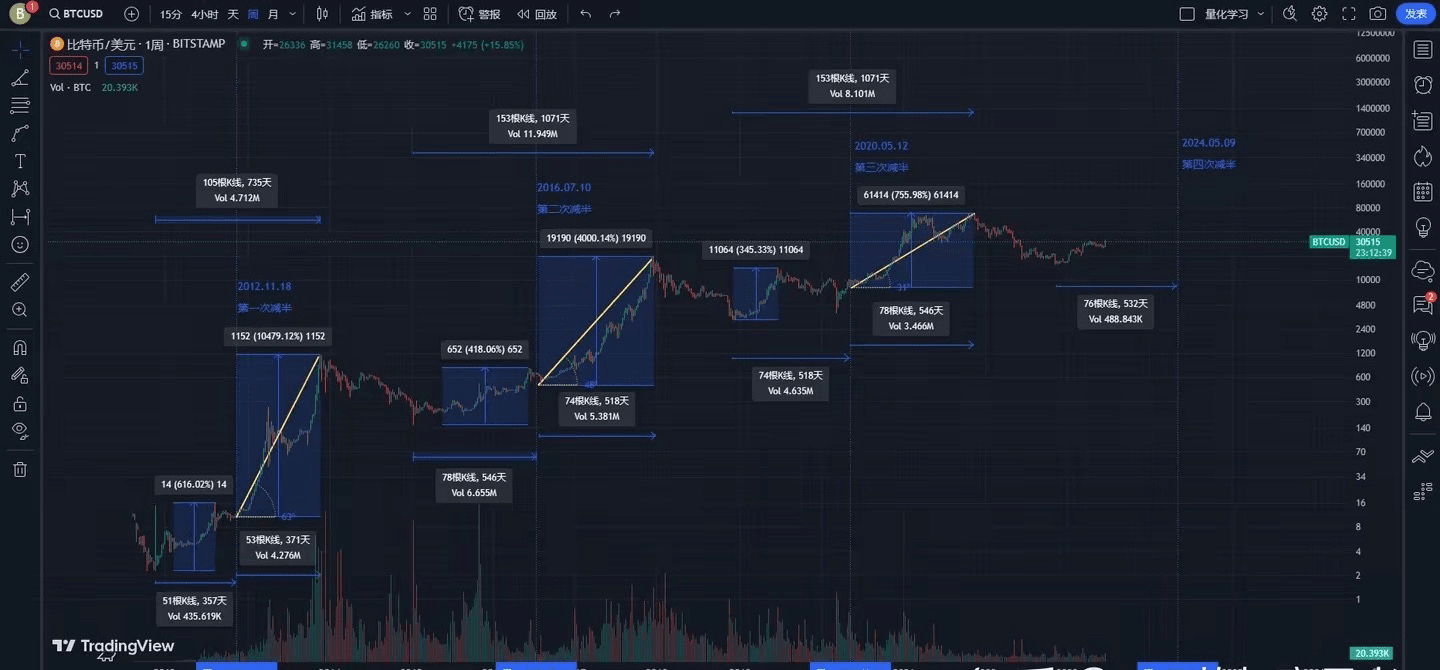
Once the halving begins, there is no chance for a second dip, and everything continues to rise.
There are also some differences:
1. Not every halving cycle has a double top at the top;
2. As the size increases, the increase after each halving becomes lower and lower, from 100 times at the beginning to 7.5 times recently;
3. The slope of each rise is getting lower and lower (63°-48°-31°), and the overall trend seems to be heading towards the top of the arc.
历史往往不会简单重复,如果历史真按照这样简单的韵脚无脑复现,我们目前可以做什么呢?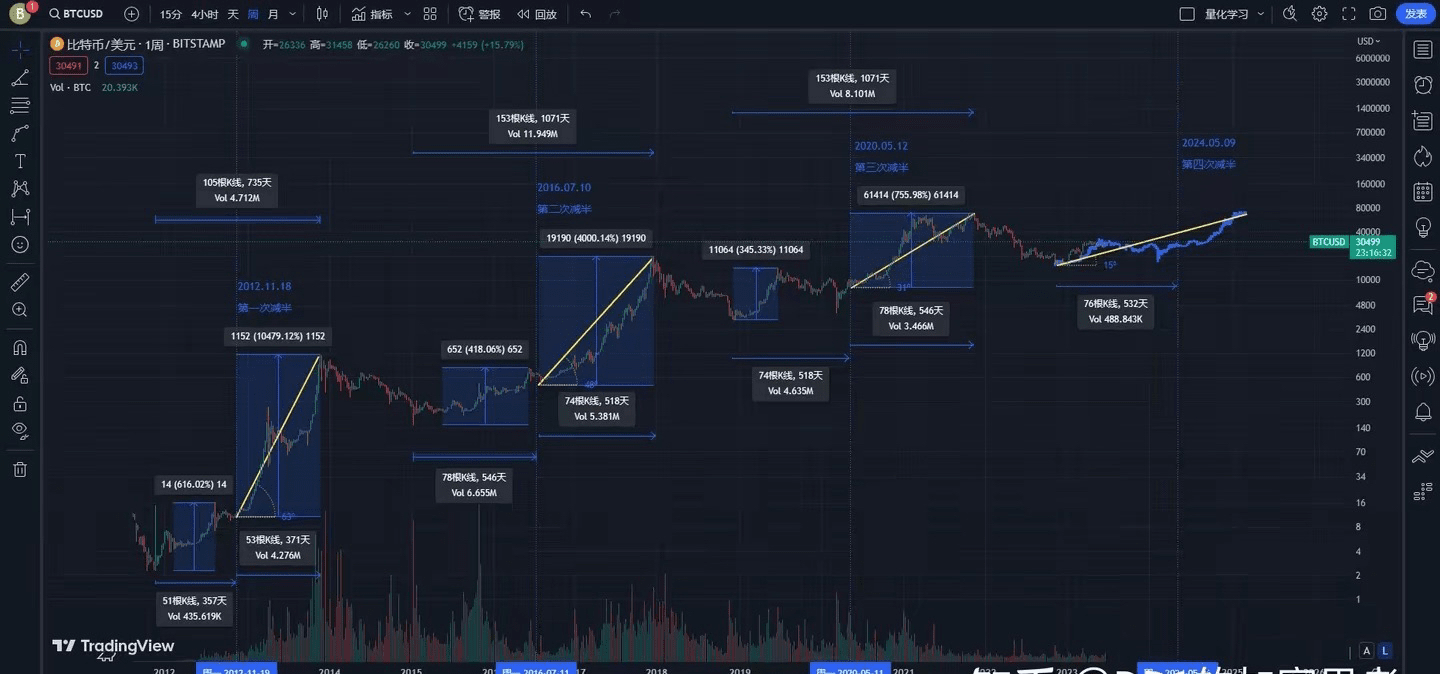 首先,根据过往历史,可以做出如下猜想:
Near 15,000 is the lowest point before this halving cycle. If there is a new low in the future, it will only be near here, probably around 18,000 (that is, assuming 15,000 is the bottom, the bottoming behavior occurs near the neckline of the bottom area) ;
There is a high probability that there will be a wave of calves before each halving cycle. We seem to be experiencing such a market at present. If the increase from the bottom to the top of the calf market does not exceed 3.4 times, if this time it is around 2-2.5 times, then This time the top of the Mavericks will be between 30,000-37,500;
The rising slope of each halving cycle continues to decrease. If the decline is about 16° according to the historical situation, then the next highest price should be around 65,000, and the highest price will not exceed the highest point of the last rise. The overall cycle increase will be from May 2024 From January to around March 2025, it will be around 1.5 times;
If the slope of this increase is set at 15°, then we can refer to the top price of the calf top before the halving, which is approximately between 31,500 and 33,000.
So if history really repeats itself according to simple rhymes, in terms of operations, we have the following conclusions:
The current price is not far from the calf top predicted before the halving;
If 15,000 bits are used up, there is a high probability that there will be an opportunity to buy again;
Facing the next halving market, if the target choice is Bit, the imagination of the increase will not be too high, and it may be near the previous high;
二次探底的行为可能会发生在明年第一季度,也就是俄罗斯大选的时候;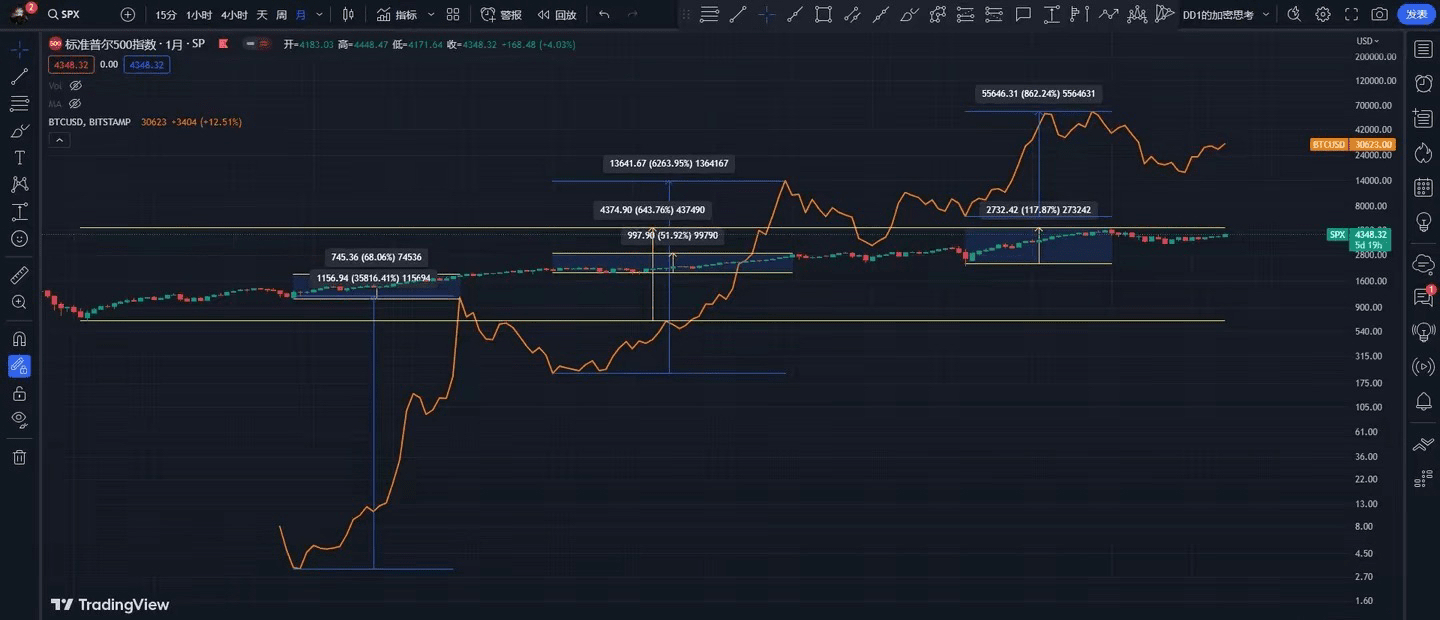
This article is written from the perspective of seeking a sword while carving a boat, but compared to before, the current macro background is very different.
Bitcoin was born due to the subprime mortgage crisis in the United States. Since then, the United States has continued to print money, starting a bull market in the U.S. stock market that has lasted for more than ten years. The S&P 500 has also increased 6.5 times since the low in 2009. Compared with before, there are still many uncertainty:
The macroeconomy is not clear, and the potential impact of China's short-term RRR cut and interest rate cut has not yet emerged;
The international situation is changing rapidly, and the Russia-Ukraine war is still going on;
The interest rate hikes in the United States have not stopped yet. Although the rate hikes are now suspended, two more rate hikes are expected this year;
Whether U.S. real estate can land smoothly is still unknown, and the banking crisis is still there;
As the currency circle becomes larger and larger, the increase in each round becomes smaller and smaller;
After institutions entered the market in 2020, the correlation with the Nasdaq Index became higher and higher. Some people even regarded Bit as a technology stock in the U.S. stock market. When looking at Bit in the larger cycle of the U.S. stock market, even if there is a big release in 2020 , the increase does not seem to be high;
Part 2: The Fed’s interest rate hike cycle
Looking back at history, let’s first look at the interest rate hikes in the past 30 years:
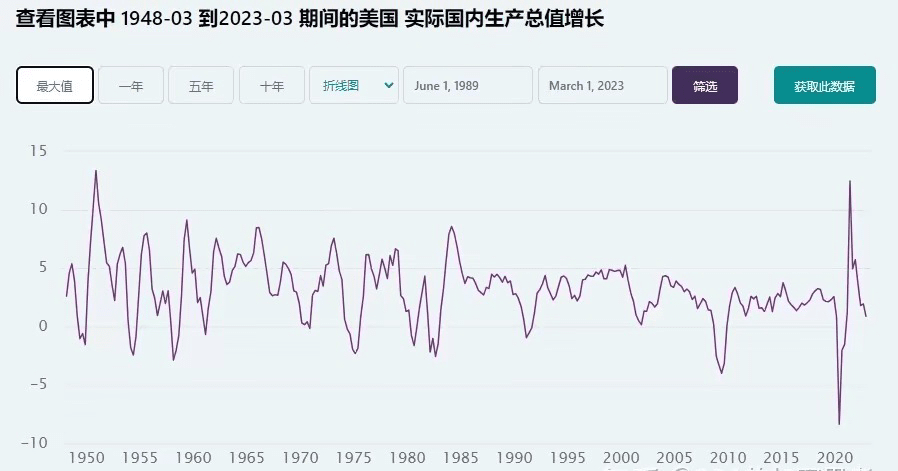
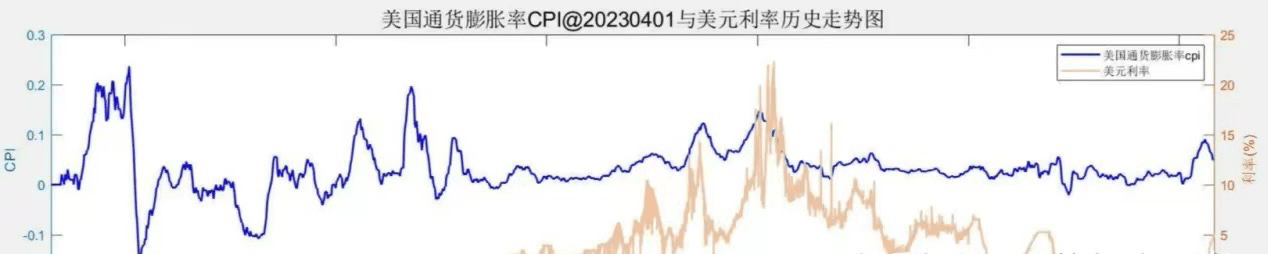 第一轮加息,1994.2-1995.2,历时12个月,基准利率从3%到6%。
The background at that time was that relying on the electronic computer technology accumulated in the previous cycle, the United States was in an era of comprehensive take-off in information technology. Even with the interest rate hikes from 1994 to 1995, GDP growth has always remained above 3%.
Corresponding to the big cycle, this is also the beginning of this round of Kangbo prosperity. The characteristics of the prosperity period are low inflation and high growth. After the interest rate hike ended, the Nasdaq did not fall significantly.
The second round of interest rate hikes lasted 11 months from June 1999 to May 2000, with the benchmark interest rate raised from 4.75% to 6.5%.
The background at that time was the Internet speculative bubble from 1995 to 2001. The GDP growth rate had been maintained at around 4.5% all year round. After the last round of interest rate hikes, inflation dropped from 3% to around 1.7%. At this time, we were still in the Kangbo boom period. .
After 1998, the inflation trend was obvious (from around 1.7% to around 3.7%). In order to reduce financial risks and curb inflation, the Federal Reserve continued to raise interest rates based on the 4.75% interest rate until the Nasdaq reached its peak near 5,000 points in March 2000. After half of the year, it fell all the way to around 1100 points, when interest rates dropped from 6.5% to 2.5%.
It is worth mentioning that the Nasdaq did not enter a downward trend during the interest rate hike cycle, but first rose and then fell. Similarly, the beginning of the interest rate cut cycle did not bring an upward trend. Instead, the decline continued for 20 months. However, sudden events like 911 An interest rate cut can bring about a partial rebound in the market, but it cannot affect the general trend.
The third round of interest rate hikes lasted 25 months from 2004.6 to 2006.7, and the benchmark interest rate was raised from 1% to 5.25%.
The background at that time was the beginning of a new production capacity cycle at the beginning of the century, China's accession to the WTO in December 2001, the post-9.11 disaster reconstruction in the United States, the economy began to recover, and the Kangbo boom period was coming to an end.
In one and a half years, the Nasdaq rose from 1100 points to 2100 points. At this time, the US GDP also returned to a growth rate of 5%, and the CPI further increased, rising from around 1.5% after the disaster to around 3.8%. To prevent a repeat of the past, the Federal Reserve carried out regular interest rate hikes.
As the interest rate hike cycle began, the stock market as a whole showed a volatile upward trend, GDP growth began to slow down, and CPI also fell smoothly back to post-disaster levels.
The fourth round of interest rate hikes lasted 36 months from 2015.12 to 2018.12, with the benchmark interest rate raised from 0% to 2.25%.
The background at that time was that after the U.S. subprime mortgage crisis in 2008, the Federal Reserve quickly lowered the benchmark interest rate to 0-0.25%, which continued until 2015. China released a massive RMB 4 trillion in water. In 2011, the commodity bear market began. From 2014 to 2016, oil prices plummeted from 110 to 27. China’s industrial level is changing from the late stage of take-off to the mature stage, Britain is leaving the European Union, the long wave is changing from recession to depression, and the macro economy is facing the possibility of turning from inflation to stagflation.
Synchronized with the Nasdaq, in August 2015, the second exploration before the bit halving was completed. The decline in energy prices gave China and the United States even signs of deflation in CPI. In order to curb the rise in inflation caused by the short-term excess of energy and the possibility of stagflation in the future, the United States has initiated an interest rate hike cycle.
During this round of interest rate hikes, the Nasdaq fluctuated upward, rising from a low of 4,300 to 8,100. GDP growth slowly recovered to around 3.5%, and CPI has been controlled below 3%.
The fifth round of interest rate hikes, 2022.3-? , which lasted for at least 18 months, and the benchmark interest rate was raised from 0% to at least 5.5-5.75%.
The background at this time is that after the COVID-19 epidemic, the Federal Reserve released a lot of water, inflation surged, and the CPI reached a maximum of more than 8%. The Russia-Ukraine war, China's urbanization process entered a bottleneck, the credit of the US dollar weakened, the internationalization of the RMB, and the epidemic accelerated the recession process. Most of the People set the dividing line from recession to depression in 2015. The reason is that there is a high probability that 2015-2019 will experience the process from inflation to stagflation, and stagflation is the most obvious feature of the depression stage. Although the United States is good in terms of data (mainly unemployment rate), but I personally believe that 2021 is the starting point of the depression stage, and this needs to be verified in the future.
从加息周期开始,纳指最低跌到10500附近,目前在13600附近。此轮加息周期,鲍威尔强调未来通胀目标要降至2%,目前最新5月cpi为4%,预测6月cpi为3.22%,美国2023年第一季度gdp增长2%,2022第四季度为2.6%。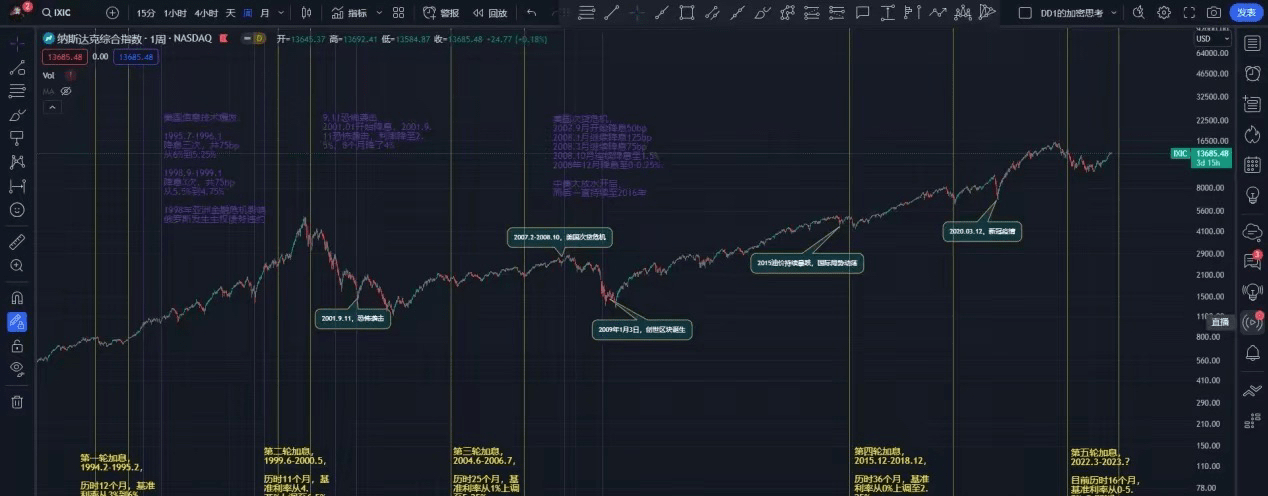
Raising interest rates is a means of regulating the economy, not a factor that affects the economic cycle. There are so many words listed above. Combined with the picture above, I can summarize it in a few points:
When interest rates begin to rise, they often start with a decline.
There is also the possibility of interest rate cuts when the economy is good, and interest rates are just tools.
Raising interest rates does not necessarily mean falling. It depends on the economic cycle and macro-monetary environment we are in. In the process of raising interest rates in the past 30 years, multiple interest rate hikes in the U.S. stock market have produced good returns.
Interest rates may not necessarily rise after the process of raising interest rates is over. In extreme cases, such as the Internet bubble and the subprime mortgage crisis, there is the possibility of a sharp plunge.
The beginning of an interest rate cut does not mean an increase. Most of the time, an increase begins only after the interest rate cut ends.
From the perspective of economic control methods, the phrase "raising interest rates will kill valuations, and cutting interest rates will kill fundamentals" is appropriate for operation and understanding. The reason for raising interest rates is because there is too much money in the market, so many projects are overvalued, and capital is clear, so they are the first to be abandoned after raising interest rates; the reason for lowering interest rates is to stimulate the economy, and sitting at this time It confirms the fact of "poor economy". Under the background of low liquidity, even targets with good fundamentals cannot escape this.
Part 3: Summary
It is difficult to predict the future. Historically, we have always moved forward with a mentality of crossing the river by feeling for stones. Looking back on past cycles, the bull market in the currency circle has always been inseparable from the three elements of policy + liquidity + narrative. At present, None of these three elements are met. In this regard, for those who want to achieve a class jump by relying on the currency circle, they must have a rich knowledge system and respond to the market with a long-term perspective. It is not advisable to carve a boat and seek a sword, but it is the last word to live a long time.
This article only expands from the two dimensions of the halving cycle and the Fed's interest rate hikes. From the perspective of on-chain data, each round of narratives, and copycat performance, there will be opportunities to continue to explore in the future. Even if we are desperate, there will always be some similar impacts. The factors are worthy of reference. Speculate on the new rather than the old. Compared with most markets, this market still has huge room for imagination.
Facing the next round of market conditions, based on past experience, there is not much we can refer to.
从时间来说,一是互联网泡沫破裂后从降息开始到低点出现,总共20个月左右,二是次贷危机后的18个月左右。若明年发生极端黑天鹅事件,美联储开始紧急降息了,做反弹行情是完全可以的,毕竟有减半叙事,但是否意味着反转,或许还得斟酌斟酌。假设明年2月发生黑天鹅,砸到18000附近反弹,那么大底大概率会在25年的第四季度,彼时的价格可能会比15000更低,但这并不意味着可以长拿,因为所处的大周期不同,所以不能一概而论,但你要拿10-20年,大概率是没问题的,因为普通人来说,难度最大的是时间成本。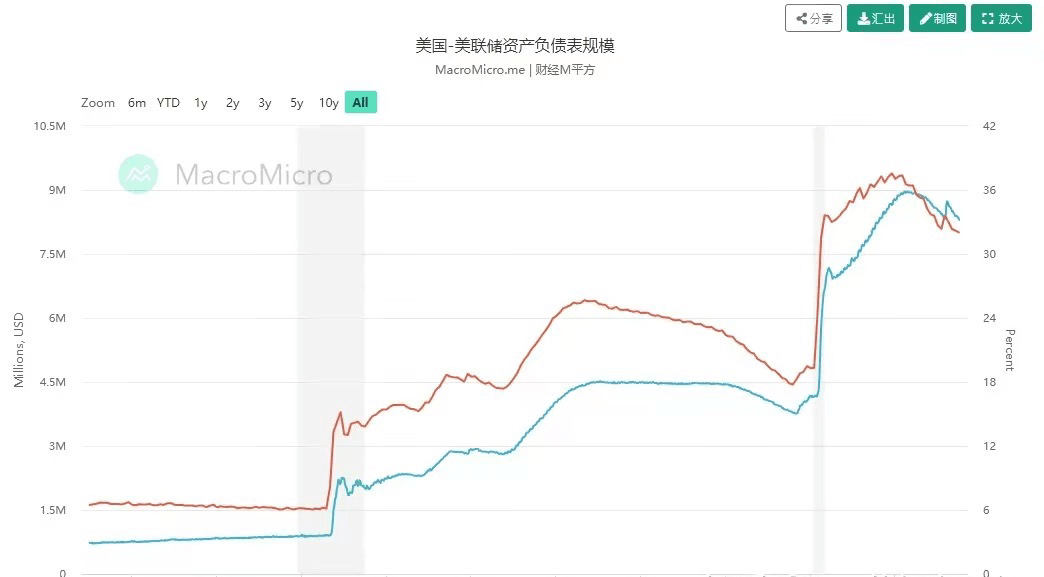
Time selection, currency selection, and allocation are the basic order of investment. The key to making money depends on faith, not research. This belief includes the belief in currency selection, and also includes the belief in timing. Making money in life depends on Kang Bo. Extending the perspective does not mean that we waste our time in a way of looking for swords, but to maintain a prudent attitude, know what is happening and why, and observe ourselves from a broader perspective. position and understand your own behavior.