Throughout my entire investment career, there have been three people who have had a greater influence on me in investment psychology. One is my old boss, Mr. Liu Yiqian, the boss of Changjiang Securities. One is Soros, the author of "Financial Alchemy". One is Kostolani, the author of today’s book. Kostolani is a legendary figure. Unlike Buffett, who is the benchmark for value investing, he calls himself a speculator, a speculator through and through.
Later we will talk about the classic speculation case where he made 140 times the profit in World War I by buying Soviet bonds at the bottom.
Soros was also influenced by it, and the reflexive principle he proposed also has a lot of consistency from the perspective of investment psychology. André Kostolany (February 9, 1906 - September 14, 1999) spent most of his time in Germany and France. He is known as the godfather of the German securities industry. He is an important figure in the German investment community. His status is like that of Warren Buffett in the United States, the uncrowned king of the market. He was 93 years old. He was a Jew. He had been involved in the stock market for more than 70 years and had outstanding achievements. At the age of 35, he had already lived a retired life like a king.
Kostolani is known as "the stock witness of the twentieth century" and "one of the most successful investors in the financial history of this century". He also received the French Chevalier de Gaulle personally awarded by Charles de Gaulle.
His influence on me lies in seeing through market funds and data, an unquantifiable indicator, investor psychology.
The study of this kind of group effect often exerts a powerful butterfly effect on the market. It is an unexplained force that greatly affects the short-term fluctuations of the market. Now there is also a professional term called public opinion monitoring.
1. In the synopsis of "The Great Speculator", the author Kostolany analyzes his entire speculation experience with readers through his decades of speculative career and the analysis of personal speculation cases. He also analyzes and summarizes his entire speculation experience with readers. learned some important experiences. Kostolany inspires readers to explore the nuanced world of financial investing from a more reflective and philosophical perspective. Through case studies, the author shares unique insights into the emotional and psychological dimensions that govern the world of money and investing.
As we begin reading this book, the author provides an insightful discussion of the art of making wise speculative decisions, understanding market dynamics, and navigating complex financial environments. Kostolany emphasized the importance of a deep understanding of the markets, which goes beyond mere number crunching and includes a rich awareness of the human factors that often drive market movements. In addition, this book advocates strategies for readers to develop a rigorous investment approach, encourages long-term thinking, and avoids being affected by market fluctuations.
Blending personal anecdotes, historical analysis, and thoughtful reflections, the book aims to provide readers with the tools to think more deeply about money and navigate financial markets with a more enlightened and informed perspective.
2. The classic case of "The Great Speculator" earning 140 times. In the early 20th century, Russian bonds were considered a lucrative investment because they offered high yields and were backed by the seemingly stable tsarist government. However, the Russian Revolution of 1917 brought the Bolsheviks to power and their refusal to repay these debts, causing huge financial losses to those who held these bonds. Many years later, in the 1960s, Kostolany bought a large number of these defaulted bonds at very low prices because they were considered worthless at the time.
To the surprise of many, in the 1980s the Soviet government began negotiating a settlement of these old debts, and eventually, after the collapse of the Soviet Union, the Russian government decided to repay these debts at a fraction of their face value, with the result that for many people, including Kostolani For those who hold these bonds, including those who hold these bonds, this will be a windfall, and this battle has allowed the author to earn 140 times the return on speculation!
So Kostolani reminds in the book: Speculation is not roulette, that is not speculation. As a professional speculator, you should not only analyze and observe your own domestic financial market, but also analyze and observe global events, policies of various countries around the world, capital flows, etc. at all times. Therefore, speculation is actually a technical activity, and it is not as simple as watching the market and chasing the rise and fall.
Lessons from this investment case: Patience: Investing can sometimes be a long game, requiring investors to wait decades for returns.
Contrarian Investing: Sometimes, going against the crowd and investing in assets that are currently out of favor can lead to huge gains. Risk and Reward: High-risk investments can sometimes offer high returns, but they also require a thorough understanding of the potential drawbacks.
Market Psychology: This story highlights that market values are often influenced more by cognition and emotion than by fundamental values. Through his experience with Russian bonds, Kostolany may shed light on how investors sometimes benefit from patience, a deep understanding of market history and a willingness to take calculated risks. Therefore, this story can serve as a lesson about the unpredictability of the market and the potential for significant gains through unconventional investment strategies.
This exemplifies an oft-repeated refrain from Kostolani: "The market is never wrong, but sometimes it can be crazy."
3. Revelation of "The Great Speculator"
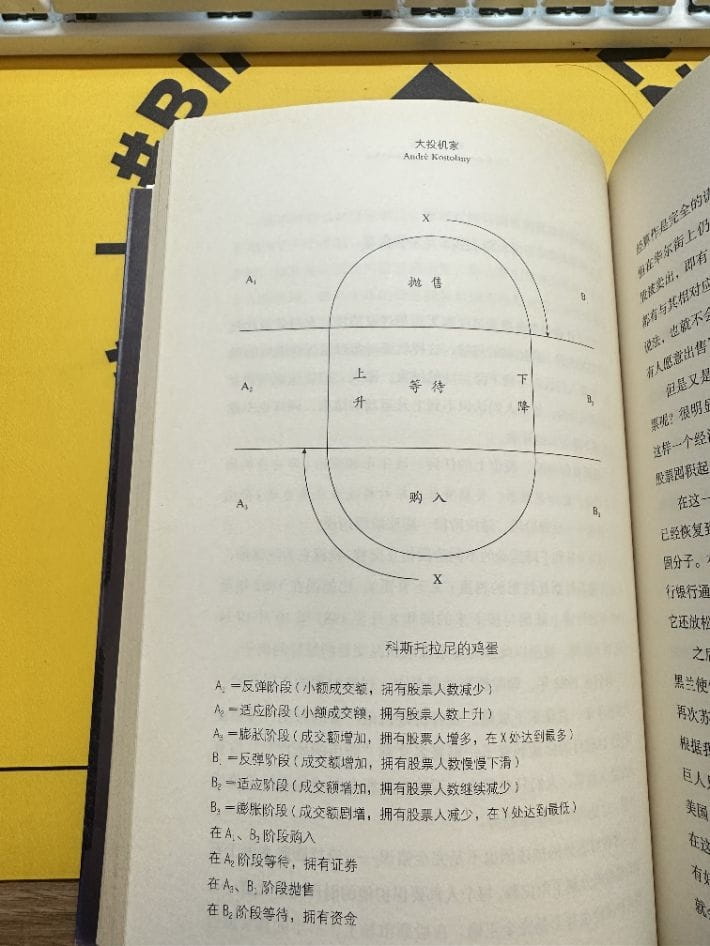
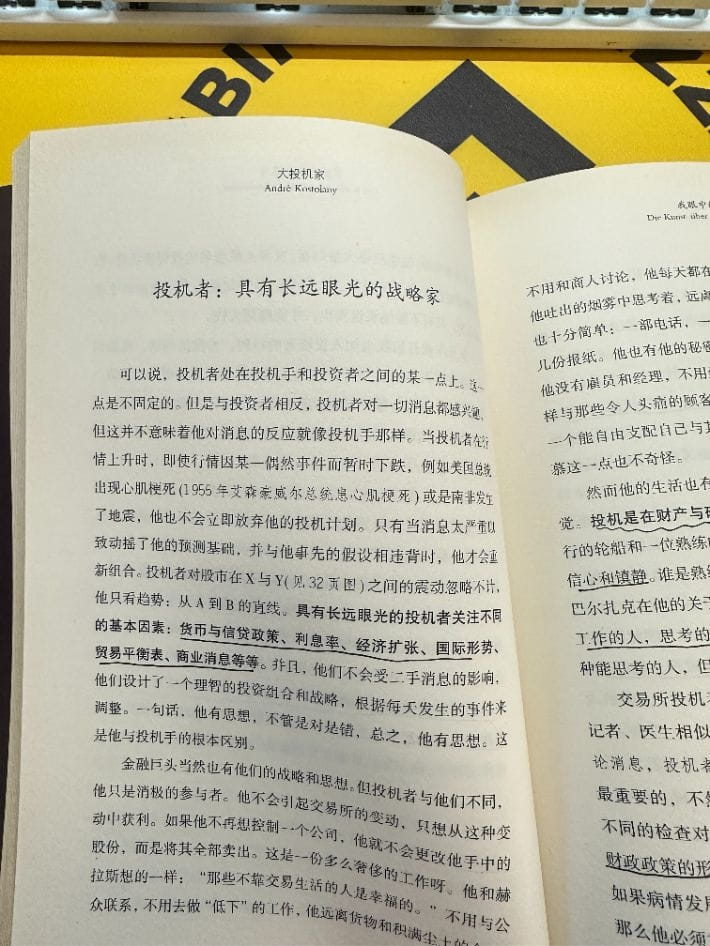
1. Market psychology, the regression curve that affects value and price. The economy and financial markets do not often develop in parallel, or in other words, there is no correlation between the two. Kostolany explained with a metaphor he coined many years ago: A man is walking on the street with his dog next to him. The dog always does this, it runs ahead, but then returns to its owner, and then it He ran to the back again, and when he saw that he had gone too far, he ran back again. It's always been like this. Finally, they both arrive at the same destination. While the owner walked slowly for one kilometer, the dog ran back and forth for four kilometers! The man is the economy, and the dog is finance. In the long run, it can be said that the economy and the market are developing in the same direction, but during the development process, the two may have completely different directions.
2. Factors affecting financial market fluctuations Financial analysts work hard every day to explain market fluctuations throughout the day. One day a strong dollar may be the basis for a market rally, but the next day, in the same newspaper, it is the culprit for a decline. These comments are really unnecessary garbage for speculators. In fact, whether from a short-term or long-term perspective, the situation is definitely not as simple as "good stocks rise and bad stocks fall." There are many companies that can still achieve good profits when the stock price falls and also have good prospects. So what does market movement depend on? It depends on whether sellers are more eager to sell their investments than buyers are to buy stocks. When a stock holder wants to sell his stock out of psychological or material pressure, and if a currency holder wants to buy but is not in a hurry, the stock price will fall. ; If currency holders want to buy stocks eagerly and stockholders have no psychological or material pressure and are not eager to sell, the stock price will rise. Everything depends on the current supply and demand, and Kostolani's entire stock market theory is also based on this.
3. The relationship between capital and stock market trends. The core influencing factors of financial market fluctuations: capital and psychology. The first factor is capital. Funds to financial markets are like oxygen to breathing or gasoline to motorcycles. Without funds, no matter how promising the market is, how optimistic the situation is, or how the economy enters a period of prosperity, market prices cannot rise. If people don’t have extra funds in their hands, they won’t buy stocks, cryptocurrencies and other financial instruments. It can be said that funds are the lifeblood of financial markets. But with just funds, the market still cannot function.
The second factor is psychological. If people's psychology towards investing in securities is negative, no one will be willing to buy financial targets, and the market will not be able to rise. If the two factors, namely capital and psychological effects, are both positive, the market will be bullish; if both factors are negative, the market will inevitably fall. If one factor is positive and the other is negative, then the two will cancel each other out and the market will not fluctuate much.
Kostolany's equation: Funds + psychological effects = development trend. If investors, large and small, are willing to buy and have the ability to buy, then the market will rise. They are willing to buy because their assessment of financial and economic conditions is optimistic; they are able to buy because they have extra funds in their wallets or bank books. That's all the secret to a market going up, even when all the basic facts and economic reports say it should go down. Capital is the most decisive factor. If the capital factor is positive, then sooner or later the psychological factor will also turn positive.
4. Conditions for becoming a good speculator. Kostolani believes that four factors are needed: funds, ideas, patience and luck. The money earned from speculation is actually compensation. First people have to experience pain, and then they can make money. Before people's ideas become reality, something unexpected will always happen. Kostolani invented a formula for the exchange: 2×2=5-1. Meaning, the outcome will happen exactly as it is supposed to happen. 2 times 2 equals 4, as it should. And then to get to this end result, we took a detour instead of a straight path. If the speculator does not have enough patience and persists to the end, and gives up when he sees -1 appears, then he has failed and cannot profit from speculation.
5. Three bottom characteristics of financial markets: First, if a market stops falling after negative reports, this is a sign that the market has been sold too much and is close to its lowest point.
Second, if the market declines with a small trading volume, it means that it will continue to decline for a period of time; if the market declines with an increasingly large trading volume, this trend will not last long. Third, if the media unanimously say that the situation is very bad, even the last optimists will become pessimists, and the market will reach the end of the bear market. 4. Rules for stock selection 1. Look at the market first and then choose stocks. First, you must consider the general market conditions of the stock market, and then choose stocks! If the market is bullish, even the worst stocks can make money, but conversely, the best people can hardly make profits! So first consider the general market conditions before choosing a stock!
2. Choose a growth industry. The choice in this regard is to recognize growth companies earlier. Don’t be tempted by something that everyone knows in the stock market. It will be difficult for its price to rise again in the future.
3. Continuous rise and fall rule and M/W rule. Continuous rise means that in the development of the market, the previous high point is surpassed by the next high point. If this phenomenon occurs several times, the stock market will continue to rise. On the contrary, the low points will become higher and higher. The lower it is, the lower the trend will continue. The M shape shows the resistance characteristics of the market, and the W bottom shows the relative bottom characteristics of the market!
4. Find real gold in reversal stocks. It is very difficult to identify companies that will have greater growth potential in the future, so it is also a good choice to focus on current reversal stocks. Reversal stocks refer to companies that are currently in crisis. Among them, the listed companies of large enterprises have suffered losses. Due to various problems they are facing, the stock prices have fallen to the bottom accordingly. If such stocks can achieve a reversal and regain profits, their stock prices will quickly rebound. The stock price of Chrysler, which was once on the verge of bankruptcy, skyrocketed to $150 for the $3 he bought from Andre. This is a living example!
5. Ten Laws and Ten Commandments
ten laws
1. Be assertive and think twice before deciding whether you should buy it. If so, where, what industry, and which country? 2. Have enough funds to avoid stress.
3. Be patient, because nothing is predictable, and the direction of development is different from what everyone imagines.
4. If you trust your own judgment, you must be firm.
5. Be flexible and always consider possible errors in your ideas.
6. If you see a new situation emerging, you should sell.
7. Check the list of purchased stocks from time to time and check which stocks are still available to buy now.
8. Only buy when you see great development prospects.
9. Consider all risks, even impossible ones, that is, always think of unexpected factors.
10. Even if you are right, stay humble.
Ten Commandments
1. Don’t follow suggestions and don’t expect to hear secret messages.
2. Don’t believe that sellers know why they want to sell, or buyers know why they want to buy. In other words, don’t believe that they know more than you do.
3. Don’t try to make back what you lost.
4. Don’t consider past indices.
5. Don't sleep on securities, don't forget about them because you hope to achieve a better index, that is, don't make a decision.
6. Don’t constantly observe subtle changes in the index, and don’t react to any troubles.
7. Don’t make final conclusions when you have just made or lost money.
8. Don’t sell stocks just because you want to make a profit.
9. Don’t be emotionally affected by political likes and dislikes.
10. When making profits, don’t be overly conceited.