

#web3utility
web3utility
16,680 views
191 Discussing
Hot
Latest

·
--
Eliminating Ticket Scalping with Blockchain
Title: 🚫 Say Goodbye to Fake Tickets: Blockchain Enters Stadium Gates
Fake tickets and predatory scalping have plagued football fans for decades. The solution? Dynamic NFT Smart Tickets on public blockchains.
🔐 Verifiable Ownership: Every ticket is verified on-chain, preventing secondary market scams.
💰 Fair Secondary Sales: Smart contracts cap resale price markups so real fans don't get priced out.
Would you prefer all stadium tickets to be issued as Web3 digital assets? 🎟️🤖
$ETH $BTC
#Web3Utility #BlockchainTech #FanExperience #CryptoNews #Binance
Eliminating Ticket Scalping with Blockchain
Title: 🚫 Say Goodbye to Fake Tickets: Blockchain Enters Stadium Gates
Fake tickets and predatory scalping have plagued football fans for decades. The solution? Dynamic NFT Smart Tickets on public blockchains.
🔐 Verifiable Ownership: Every ticket is verified on-chain, preventing secondary market scams.
💰 Fair Secondary Sales: Smart contracts cap resale price markups so real fans don't get priced out.
Would you prefer all stadium tickets to be issued as Web3 digital assets? 🎟️🤖
$ETH $BTC
#Web3Utility #BlockchainTech #FanExperience #CryptoNews #Binance
Title: 🚫 Say Goodbye to Fake Tickets: Blockchain Enters Stadium Gates
Fake tickets and predatory scalping have plagued football fans for decades. The solution? Dynamic NFT Smart Tickets on public blockchains.
🔐 Verifiable Ownership: Every ticket is verified on-chain, preventing secondary market scams.
💰 Fair Secondary Sales: Smart contracts cap resale price markups so real fans don't get priced out.
Would you prefer all stadium tickets to be issued as Web3 digital assets? 🎟️🤖
$ETH $BTC
#Web3Utility #BlockchainTech #FanExperience #CryptoNews #Binance
24
·
--
Bullish
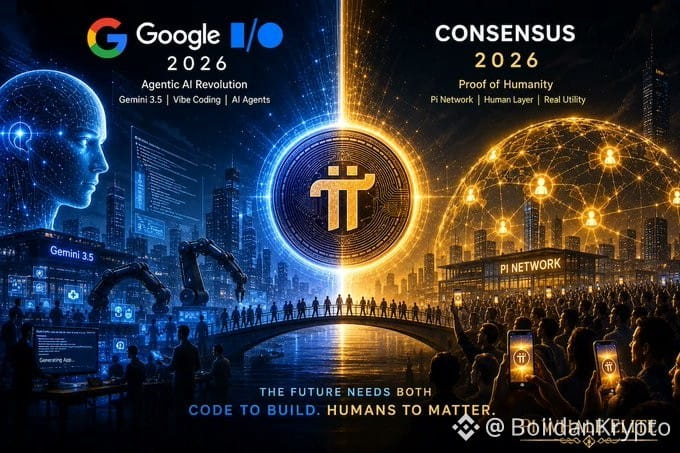
🚀 Pi Founder Chengdiao Fan dropped a truth bomb at Consensus 2026:
The biggest bottleneck in crypto today?
👉 Token design constantly misaligned with real product innovation.
Her talk, “Aligning Web3, AI, and Blockchain for Utility,” flipped the script:
💡 Tokens shouldn’t just be speculative—they should be tools for user growth, engagement, and long-term value creation.
Enter Pi Launchpad 🧩—Pi’s ecosystem engine that helps products attract real users who interact, give feedback, and actually use tokens inside real experiences.
With AI making app creation easier than ever, building isn’t the hard part anymore.
🎯 The real war is over distribution + usage.
Pi bridges this gap by combining:
🔗 Blockchain infrastructure
🎟️ Smart token & launch mechanisms
✅ Identity verification
🌍 A massive, engaged community of real people
That’s how Web3 wins. 💪
#Web3Utility #PiNetwork #TokenRealignment
$BTC
{spot}(BTCUSDT)
$ETH
{spot}(ETHUSDT)
$BNB
{spot}(BNBUSDT)
🚀 Pi Founder Chengdiao Fan dropped a truth bomb at Consensus 2026:
The biggest bottleneck in crypto today?
👉 Token design constantly misaligned with real product innovation.
Her talk, “Aligning Web3, AI, and Blockchain for Utility,” flipped the script:
💡 Tokens shouldn’t just be speculative—they should be tools for user growth, engagement, and long-term value creation.
Enter Pi Launchpad 🧩—Pi’s ecosystem engine that helps products attract real users who interact, give feedback, and actually use tokens inside real experiences.
With AI making app creation easier than ever, building isn’t the hard part anymore.
🎯 The real war is over distribution + usage.
Pi bridges this gap by combining:
🔗 Blockchain infrastructure
🎟️ Smart token & launch mechanisms
✅ Identity verification
🌍 A massive, engaged community of real people
That’s how Web3 wins. 💪
#Web3Utility #PiNetwork #TokenRealignment
$BTC
$ETH
$BNB
The biggest bottleneck in crypto today?
👉 Token design constantly misaligned with real product innovation.
Her talk, “Aligning Web3, AI, and Blockchain for Utility,” flipped the script:
💡 Tokens shouldn’t just be speculative—they should be tools for user growth, engagement, and long-term value creation.
Enter Pi Launchpad 🧩—Pi’s ecosystem engine that helps products attract real users who interact, give feedback, and actually use tokens inside real experiences.
With AI making app creation easier than ever, building isn’t the hard part anymore.
🎯 The real war is over distribution + usage.
Pi bridges this gap by combining:
🔗 Blockchain infrastructure
🎟️ Smart token & launch mechanisms
✅ Identity verification
🌍 A massive, engaged community of real people
That’s how Web3 wins. 💪
#Web3Utility #PiNetwork #TokenRealignment
$BTC
$ETH
$BNB
113
·
--
The evolution of Right-to-Ticket (RTT) digital assets shows how blockchain solves real-world ticketing issues. Redeeming digital vouchers on the blockchain prevents fraud and secures global fan access. Massive utility! 🎫
$ETH $BNB $BTC
#BlockchainTicketing #Web3Utility #CryptoAdoption #NFTs #realworldassets
The evolution of Right-to-Ticket (RTT) digital assets shows how blockchain solves real-world ticketing issues. Redeeming digital vouchers on the blockchain prevents fraud and secures global fan access. Massive utility! 🎫
$ETH $BNB $BTC
#BlockchainTicketing #Web3Utility #CryptoAdoption #NFTs #realworldassets
$ETH $BNB $BTC
#BlockchainTicketing #Web3Utility #CryptoAdoption #NFTs #realworldassets
39

·
--
Article
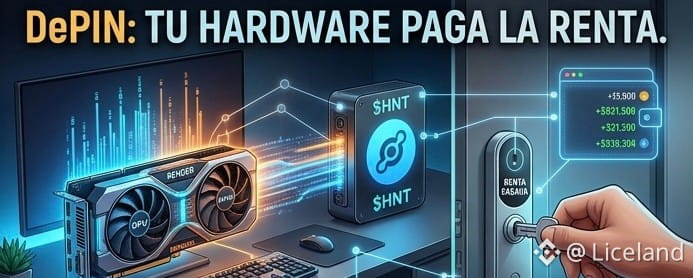
DePIN: When your hardware pays the rentFrom speculation to utility: Why your 2026 portfolio needs DePIN.
In 2024, we were talking about 'potential'. By May 2026, we’ll be discussing dividends. Decentralized Physical Infrastructure Networks (DePIN) have transitioned from a niche to becoming the backbone of AI.
1. Render ($RENDER): It's no longer just for artists; it's the backbone of visual processing for real-time generative AI models.
2. Helium ($HNT): Connecting millions of IoT devices without relying on traditional telcos.
DePIN: When your hardware pays the rent
From speculation to utility: Why your 2026 portfolio needs DePIN.
In 2024, we were talking about 'potential'. By May 2026, we’ll be discussing dividends. Decentralized Physical Infrastructure Networks (DePIN) have transitioned from a niche to becoming the backbone of AI.
1. Render ($RENDER ): It's no longer just for artists; it's the backbone of visual processing for real-time generative AI models.
2. Helium ($HNT): Connecting millions of IoT devices without relying on traditional telcos.
In 2024, we were talking about 'potential'. By May 2026, we’ll be discussing dividends. Decentralized Physical Infrastructure Networks (DePIN) have transitioned from a niche to becoming the backbone of AI.
1. Render ($RENDER ): It's no longer just for artists; it's the backbone of visual processing for real-time generative AI models.
2. Helium ($HNT): Connecting millions of IoT devices without relying on traditional telcos.
1
154

·
--
Article
The Rise of Utility: Analyzing the DePIN and RWA Shift in May 2026Market dynamics in May 2026 suggest a growing interest in sectors with tangible infrastructure. While market sentiment often fluctuates based on social trends, recent data indicates a capital rotation toward Decentralized Physical Infrastructure (DePIN) and Real World Assets (RWA).
Key Drivers Observed:
Infrastructure Needs: Increased demand for AI compute and decentralized storage is providing a fundamental use case for DePIN protocols.
Institutional Frameworks: Continued exploration of tokenized treasuries and private credit by institutional entities is creating a more structured environment for the RWA sector.
As the market matures, the focus appears to be shifting from purely speculative assets to those integrated with real-world services.
#DePIN #RWA #Web3Utility #Crypto2026🔥
{future}(BTCUSDT)
{future}(XAUUSDT)
Disclaimer: This content is for informational purposes only and does not constitute financial advice. Always conduct your own research (DYOR).
The Rise of Utility: Analyzing the DePIN and RWA Shift in May 2026
Market dynamics in May 2026 suggest a growing interest in sectors with tangible infrastructure. While market sentiment often fluctuates based on social trends, recent data indicates a capital rotation toward Decentralized Physical Infrastructure (DePIN) and Real World Assets (RWA).
Key Drivers Observed:
Infrastructure Needs: Increased demand for AI compute and decentralized storage is providing a fundamental use case for DePIN protocols.
Institutional Frameworks: Continued exploration of tokenized treasuries and private credit by institutional entities is creating a more structured environment for the RWA sector.
As the market matures, the focus appears to be shifting from purely speculative assets to those integrated with real-world services.
#DePIN #RWA #Web3Utility #Crypto2026🔥
Disclaimer: This content is for informational purposes only and does not constitute financial advice. Always conduct your own research (DYOR).
Key Drivers Observed:
Infrastructure Needs: Increased demand for AI compute and decentralized storage is providing a fundamental use case for DePIN protocols.
Institutional Frameworks: Continued exploration of tokenized treasuries and private credit by institutional entities is creating a more structured environment for the RWA sector.
As the market matures, the focus appears to be shifting from purely speculative assets to those integrated with real-world services.
#DePIN #RWA #Web3Utility #Crypto2026🔥
Disclaimer: This content is for informational purposes only and does not constitute financial advice. Always conduct your own research (DYOR).
101

Utility Is the Strongest Form of Promotion
TRON’s ecosystem is built to be used, not hyped 🚀
Settlement rails move money efficiently
WINkLink secures DeFi
JustLendDAO circulates capital responsibly
BTTC enables cross-chain fluidity
BitTorrent supports data persistence
When infrastructure works, adoption follows naturally.
#TRON #CryptoInfrastructure #Web3Utility @JustinSun @TRONDAO
Utility Is the Strongest Form of Promotion
TRON’s ecosystem is built to be used, not hyped 🚀
Settlement rails move money efficiently
WINkLink secures DeFi
JustLendDAO circulates capital responsibly
BTTC enables cross-chain fluidity
BitTorrent supports data persistence
When infrastructure works, adoption follows naturally.
#TRON #CryptoInfrastructure #Web3Utility @Justin Sun孙宇晨 @TRON DAO
TRON’s ecosystem is built to be used, not hyped 🚀
Settlement rails move money efficiently
WINkLink secures DeFi
JustLendDAO circulates capital responsibly
BTTC enables cross-chain fluidity
BitTorrent supports data persistence
When infrastructure works, adoption follows naturally.
#TRON #CryptoInfrastructure #Web3Utility @Justin Sun孙宇晨 @TRON DAO
36
·
--
Article
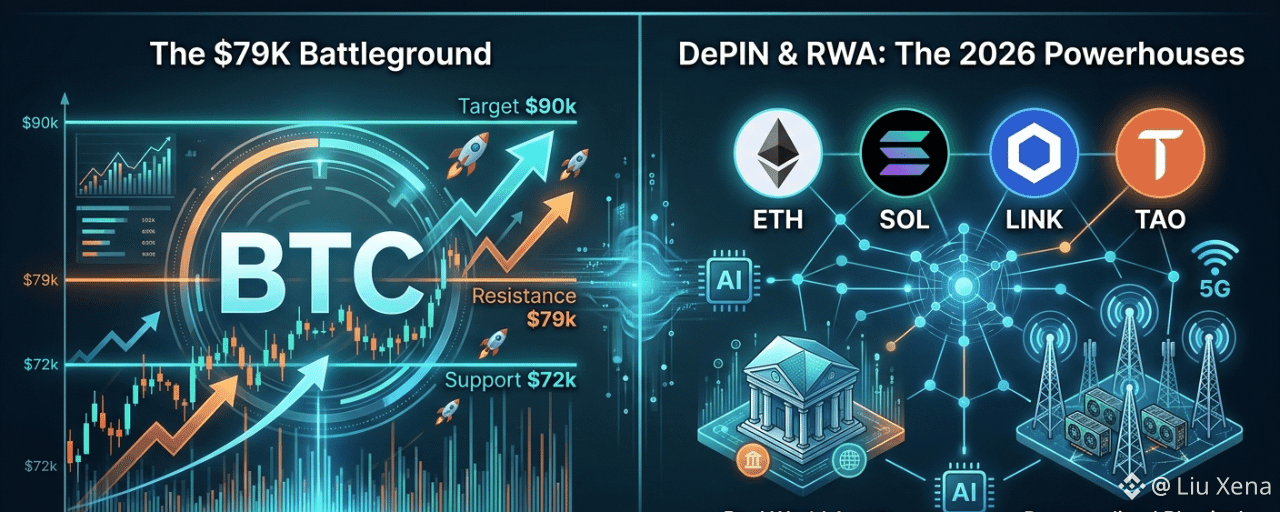
The $79K Battleground—Is Bitcoin Primed for a $90K Summer?Headline: 🚀 BTC at the Crossroads: Breaking the $79,000 Barrier or Awaiting a May Correction?
The air in the crypto market is thick with anticipation as $BTC hovers near the pivotal $79,000 decision zone. We aren't just looking at a number; we’re looking at the gateway to a new psychological paradigm for the 2026 bull run.
The Three Scenarios for May:
The Bullish Breakout: If Bitcoin flips $79,000 into support with strong volume, the path to $84,000 is wide open. Analysts suggest that institutional ETF inflows, coupled with post-halving supply shocks, could push us toward the $90,000–$92,000 range before June.The Mid-Month Chop: A failure to break $79k could see us consolidate in the $75k–$79k range. While boring for day traders, this "sideways" action is actually healthy—it builds the necessary liquidity for a stronger moonshot later.The Healthy Correction: Should we lose the $72,000 support, expect a dip toward $68k. In a secular bull market, these "shakeouts" are often the best entries for those who missed the initial rally.
The Strategy: Don't FOMO into the resistance. Watch the 4-hour candle close above $79k for confirmation. This cycle is about patience and precision, not just luck.
What do you think? Will we see $90k by June, or is the market due for a breather? Drop your predictions below! 👇
#BTC #Crypto2026 #BitcoinAnalysis #TradingStrategy
DYOR
Article 2: Beyond the Hype—Why DePIN and RWA are the 2026 Powerhouses
Headline: 💎 Forget "Just" Memes: The Trillion-Dollar Convergence of RWA and DePIN is Here
While memecoins capture the headlines, the smart money in 2026 is flowing into sectors with tangible utility. If you aren't watching Real World Assets (RWA) and Decentralized Physical Infrastructure (DePIN), you’re missing the actual structural shift of Web3.
🌐 Real World Assets (RWA)
Institutional giants like BlackRock have fully integrated Ethereum-based tokenization. We are no longer talking about "if" real estate and bonds come on-chain—they are already here. Projects bridging the gap between TradFi and DeFi are seeing record TVL (Total Value Locked) because they offer something rare in crypto: sustainable, real-world yield.
📡 The Rise of DePIN
DePIN is the sleeper hit of 2026. By using tokens to incentivize the building of physical networks—GPU clusters for AI, decentralized 5G, and green energy grids—crypto is finally solving "meatspace" problems.
Key Narrative: As AI demand for compute power explodes, DePIN projects providing decentralized GPUs are becoming the "Nvidia of Web3."
Why it matters for your portfolio:
Unlike speculative assets, RWA and DePIN are driven by utilization, not just hype. In a maturing market, these are the assets that provide "stickiness" during volatility.
Watchlist Tags: $ETH
{future}(ETHUSDT)
$SOL
{future}(SOLUSDT)
$LINK
{future}(LINKUSDT)
$TAO
{future}(TAOUSDT)
Which DePIN project is on your radar this month? Let’s discuss in the comments!
#RWA #DePIN #Web3Utility #CryptoInvesting #Altcoins
DYOR
The $79K Battleground—Is Bitcoin Primed for a $90K Summer?
Headline: 🚀 BTC at the Crossroads: Breaking the $79,000 Barrier or Awaiting a May Correction?
The air in the crypto market is thick with anticipation as $BTC hovers near the pivotal $79,000 decision zone. We aren't just looking at a number; we’re looking at the gateway to a new psychological paradigm for the 2026 bull run.
The Three Scenarios for May:
The Bullish Breakout: If Bitcoin flips $79,000 into support with strong volume, the path to $84,000 is wide open. Analysts suggest that institutional ETF inflows, coupled with post-halving supply shocks, could push us toward the $90,000–$92,000 range before June.The Mid-Month Chop: A failure to break $79k could see us consolidate in the $75k–$79k range. While boring for day traders, this "sideways" action is actually healthy—it builds the necessary liquidity for a stronger moonshot later.The Healthy Correction: Should we lose the $72,000 support, expect a dip toward $68k. In a secular bull market, these "shakeouts" are often the best entries for those who missed the initial rally.
The Strategy: Don't FOMO into the resistance. Watch the 4-hour candle close above $79k for confirmation. This cycle is about patience and precision, not just luck.
What do you think? Will we see $90k by June, or is the market due for a breather? Drop your predictions below! 👇
#BTC #Crypto2026 #BitcoinAnalysis #TradingStrategy
DYOR
Article 2: Beyond the Hype—Why DePIN and RWA are the 2026 Powerhouses
Headline: 💎 Forget "Just" Memes: The Trillion-Dollar Convergence of RWA and DePIN is Here
While memecoins capture the headlines, the smart money in 2026 is flowing into sectors with tangible utility. If you aren't watching Real World Assets (RWA) and Decentralized Physical Infrastructure (DePIN), you’re missing the actual structural shift of Web3.
🌐 Real World Assets (RWA)
Institutional giants like BlackRock have fully integrated Ethereum-based tokenization. We are no longer talking about "if" real estate and bonds come on-chain—they are already here. Projects bridging the gap between TradFi and DeFi are seeing record TVL (Total Value Locked) because they offer something rare in crypto: sustainable, real-world yield.
📡 The Rise of DePIN
DePIN is the sleeper hit of 2026. By using tokens to incentivize the building of physical networks—GPU clusters for AI, decentralized 5G, and green energy grids—crypto is finally solving "meatspace" problems.
Key Narrative: As AI demand for compute power explodes, DePIN projects providing decentralized GPUs are becoming the "Nvidia of Web3."
Why it matters for your portfolio:
Unlike speculative assets, RWA and DePIN are driven by utilization, not just hype. In a maturing market, these are the assets that provide "stickiness" during volatility.
Watchlist Tags: $ETH
$SOL
$LINK
$TAO
Which DePIN project is on your radar this month? Let’s discuss in the comments!
#RWA #DePIN #Web3Utility #CryptoInvesting #Altcoins
DYOR
The air in the crypto market is thick with anticipation as $BTC hovers near the pivotal $79,000 decision zone. We aren't just looking at a number; we’re looking at the gateway to a new psychological paradigm for the 2026 bull run.
The Three Scenarios for May:
The Bullish Breakout: If Bitcoin flips $79,000 into support with strong volume, the path to $84,000 is wide open. Analysts suggest that institutional ETF inflows, coupled with post-halving supply shocks, could push us toward the $90,000–$92,000 range before June.The Mid-Month Chop: A failure to break $79k could see us consolidate in the $75k–$79k range. While boring for day traders, this "sideways" action is actually healthy—it builds the necessary liquidity for a stronger moonshot later.The Healthy Correction: Should we lose the $72,000 support, expect a dip toward $68k. In a secular bull market, these "shakeouts" are often the best entries for those who missed the initial rally.
The Strategy: Don't FOMO into the resistance. Watch the 4-hour candle close above $79k for confirmation. This cycle is about patience and precision, not just luck.
What do you think? Will we see $90k by June, or is the market due for a breather? Drop your predictions below! 👇
#BTC #Crypto2026 #BitcoinAnalysis #TradingStrategy
DYOR
Article 2: Beyond the Hype—Why DePIN and RWA are the 2026 Powerhouses
Headline: 💎 Forget "Just" Memes: The Trillion-Dollar Convergence of RWA and DePIN is Here
While memecoins capture the headlines, the smart money in 2026 is flowing into sectors with tangible utility. If you aren't watching Real World Assets (RWA) and Decentralized Physical Infrastructure (DePIN), you’re missing the actual structural shift of Web3.
🌐 Real World Assets (RWA)
Institutional giants like BlackRock have fully integrated Ethereum-based tokenization. We are no longer talking about "if" real estate and bonds come on-chain—they are already here. Projects bridging the gap between TradFi and DeFi are seeing record TVL (Total Value Locked) because they offer something rare in crypto: sustainable, real-world yield.
📡 The Rise of DePIN
DePIN is the sleeper hit of 2026. By using tokens to incentivize the building of physical networks—GPU clusters for AI, decentralized 5G, and green energy grids—crypto is finally solving "meatspace" problems.
Key Narrative: As AI demand for compute power explodes, DePIN projects providing decentralized GPUs are becoming the "Nvidia of Web3."
Why it matters for your portfolio:
Unlike speculative assets, RWA and DePIN are driven by utilization, not just hype. In a maturing market, these are the assets that provide "stickiness" during volatility.
Watchlist Tags: $ETH
$SOL
$LINK
$TAO
Which DePIN project is on your radar this month? Let’s discuss in the comments!
#RWA #DePIN #Web3Utility #CryptoInvesting #Altcoins
DYOR
261
💎 TIRED OF MISSING OUT? $TON is holding the ecosystem crown with a solid +23.36% breakout! 🏛️⚡
Toncoin is no longer just a "fast" chain; it’s the standard for 2026 digital utility. With active addresses surging past the 5 Million mark, TON is coiling for a massive vertical move. The infrastructure is built, the liquidity is locked, and the repricing is inevitable. While others speculate, TON builds. Are you holding the standard? ⛽🔒
👇 PURE TON ALPHA – THE TARGETS 👇
📈 $2.50
🌕 $5.00
👑 $8.00
Is $TON the definitive L1 king of this cycle? Debate the math! 🥊
$TON #Toncoin #EcosystemKing #SpeedStandard #Web3Utility #HODL
💎 TIRED OF MISSING OUT? $TON is holding the ecosystem crown with a solid +23.36% breakout! 🏛️⚡
Toncoin is no longer just a "fast" chain; it’s the standard for 2026 digital utility. With active addresses surging past the 5 Million mark, TON is coiling for a massive vertical move. The infrastructure is built, the liquidity is locked, and the repricing is inevitable. While others speculate, TON builds. Are you holding the standard? ⛽🔒
👇 PURE TON ALPHA – THE TARGETS 👇
📈 $2.50
🌕 $5.00
👑 $8.00
Is $TON the definitive L1 king of this cycle? Debate the math! 🥊
$TON #Toncoin #EcosystemKing #SpeedStandard #Web3Utility #HODL
Toncoin is no longer just a "fast" chain; it’s the standard for 2026 digital utility. With active addresses surging past the 5 Million mark, TON is coiling for a massive vertical move. The infrastructure is built, the liquidity is locked, and the repricing is inevitable. While others speculate, TON builds. Are you holding the standard? ⛽🔒
👇 PURE TON ALPHA – THE TARGETS 👇
📈 $2.50
🌕 $5.00
👑 $8.00
Is $TON the definitive L1 king of this cycle? Debate the math! 🥊
$TON #Toncoin #EcosystemKing #SpeedStandard #Web3Utility #HODL

1
70


Article
The Real-World Utility: Spend Crypto Like Normal Cash!Great News! You can now spend your Stable coins at your local grocery store or for Netflix subscriptions just like normal money! 🌍🛍️
For years, the biggest headache in crypto was converting your digital dollars ($USDT or $USDC) back into local currency to actually buy things. You had to send it to an exchange, withdraw to a bank, and wait for days.
What happened today? A new virtual crypto card service called Nero has officially launched, compressing that entire process into minutes. You can now top up an account with stable coins and instantly pay anywhere conventional credit cards are accepted.
Why this changes the game for everyday users:
Apple & Google Pay Support: You can link this virtual card directly to your phone and tap-to-pay in-store.Instant Conversion: The conversion from crypto to fiat cash happens exactly at the moment of payment, meaning merchants just see a regular transaction.Perfect for Subscriptions: You can use it online for software, e-commerce, or everyday utility.
The Takeaway: While the market charts go up and down, real-world adoption is moving faster than ever. Crypto is finally becoming ordinary, usable money—not just something we stare at on charts! 🚀
Would you use a virtual card to spend your crypto profits directly in real life? Let me know! 👇
#CryptoAdoption #FinTech #Stablecoin #Web3Utility #CryptoNews
The Real-World Utility: Spend Crypto Like Normal Cash!
Great News! You can now spend your Stable coins at your local grocery store or for Netflix subscriptions just like normal money! 🌍🛍️
For years, the biggest headache in crypto was converting your digital dollars ($USDT or $USDC) back into local currency to actually buy things. You had to send it to an exchange, withdraw to a bank, and wait for days.
What happened today? A new virtual crypto card service called Nero has officially launched, compressing that entire process into minutes. You can now top up an account with stable coins and instantly pay anywhere conventional credit cards are accepted.
Why this changes the game for everyday users:
Apple & Google Pay Support: You can link this virtual card directly to your phone and tap-to-pay in-store.Instant Conversion: The conversion from crypto to fiat cash happens exactly at the moment of payment, meaning merchants just see a regular transaction.Perfect for Subscriptions: You can use it online for software, e-commerce, or everyday utility.
The Takeaway: While the market charts go up and down, real-world adoption is moving faster than ever. Crypto is finally becoming ordinary, usable money—not just something we stare at on charts! 🚀
Would you use a virtual card to spend your crypto profits directly in real life? Let me know! 👇
#CryptoAdoption #FinTech #Stablecoin #Web3Utility #CryptoNews
For years, the biggest headache in crypto was converting your digital dollars ($USDT or $USDC) back into local currency to actually buy things. You had to send it to an exchange, withdraw to a bank, and wait for days.
What happened today? A new virtual crypto card service called Nero has officially launched, compressing that entire process into minutes. You can now top up an account with stable coins and instantly pay anywhere conventional credit cards are accepted.
Why this changes the game for everyday users:
Apple & Google Pay Support: You can link this virtual card directly to your phone and tap-to-pay in-store.Instant Conversion: The conversion from crypto to fiat cash happens exactly at the moment of payment, meaning merchants just see a regular transaction.Perfect for Subscriptions: You can use it online for software, e-commerce, or everyday utility.
The Takeaway: While the market charts go up and down, real-world adoption is moving faster than ever. Crypto is finally becoming ordinary, usable money—not just something we stare at on charts! 🚀
Would you use a virtual card to spend your crypto profits directly in real life? Let me know! 👇
#CryptoAdoption #FinTech #Stablecoin #Web3Utility #CryptoNews
90

Why This Crypto Cycle Feels Entirely Different
The previous market cycle was largely fueled by pure hype and speculation. This time around, fundamental utility is taking center stage.
We are seeing AI projects deploy functional, real-world products, DeFi platforms capture authentic liquidity, and ecosystems like $SOL , $WLD , and $TAO expand through genuine user adoption rather than empty promises.
My Blueprint for This Market:
Accumulate Value: Snatch up fundamentally strong projects during market dips.
Manage Risk: Steer completely clear of overleveraging.
Maintain Perspective: Exercise patience and let real-world utility fuel sustainable, long-term growth.
The ultimate winners of this cycle won't necessarily be the ones shouting the loudest on social media—they will be the ones consistently building in the trenches.
#CryptoStrategy #Altcoins #CryptoInsights #Web3Utility #Solana
{spot}(SOLUSDT)
{spot}(WLDUSDT)
{spot}(TAOUSDT)
Why This Crypto Cycle Feels Entirely Different
The previous market cycle was largely fueled by pure hype and speculation. This time around, fundamental utility is taking center stage.
We are seeing AI projects deploy functional, real-world products, DeFi platforms capture authentic liquidity, and ecosystems like $SOL , $WLD , and $TAO expand through genuine user adoption rather than empty promises.
My Blueprint for This Market:
Accumulate Value: Snatch up fundamentally strong projects during market dips.
Manage Risk: Steer completely clear of overleveraging.
Maintain Perspective: Exercise patience and let real-world utility fuel sustainable, long-term growth.
The ultimate winners of this cycle won't necessarily be the ones shouting the loudest on social media—they will be the ones consistently building in the trenches.
#CryptoStrategy #Altcoins #CryptoInsights #Web3Utility #Solana
The previous market cycle was largely fueled by pure hype and speculation. This time around, fundamental utility is taking center stage.
We are seeing AI projects deploy functional, real-world products, DeFi platforms capture authentic liquidity, and ecosystems like $SOL , $WLD , and $TAO expand through genuine user adoption rather than empty promises.
My Blueprint for This Market:
Accumulate Value: Snatch up fundamentally strong projects during market dips.
Manage Risk: Steer completely clear of overleveraging.
Maintain Perspective: Exercise patience and let real-world utility fuel sustainable, long-term growth.
The ultimate winners of this cycle won't necessarily be the ones shouting the loudest on social media—they will be the ones consistently building in the trenches.
#CryptoStrategy #Altcoins #CryptoInsights #Web3Utility #Solana
253
Utility-First Network Dynamics
Usage-driven adoption compounds quietly. TRON’s emphasis on stablecoin settlements and DeFi circulation prioritizes utility cycles over speculative hype. Utility-driven growth ensures sustainability, embeds trust, and reinforces network effects.
#TRON #Web3Utility #BlockchainDurability @TRONDAO
Utility-First Network Dynamics
Usage-driven adoption compounds quietly. TRON’s emphasis on stablecoin settlements and DeFi circulation prioritizes utility cycles over speculative hype. Utility-driven growth ensures sustainability, embeds trust, and reinforces network effects.
#TRON #Web3Utility #BlockchainDurability @TRON DAO
Usage-driven adoption compounds quietly. TRON’s emphasis on stablecoin settlements and DeFi circulation prioritizes utility cycles over speculative hype. Utility-driven growth ensures sustainability, embeds trust, and reinforces network effects.
#TRON #Web3Utility #BlockchainDurability @TRON DAO
49
·
--
Web3 Ticketing Eliminates Stadium Fraud
Title: 🎟️ How Blockchain is Ending Fake Football Tickets for Good
Fake tickets and secondary market scalping have troubled matchday fans for years. Web3 smart ticketing is providing the ultimate solution. 🚫
🔐 On-Chain Verification: Dynamic NFT tickets guarantee authentic ownership directly inside user wallets.
⚖️ Fair Resale Caps: Smart contracts enforce maximum resale prices so true supporters aren't priced out.
⚡ Seamless Entry: High-speed Layer-1 networks enable instant barcode validation at stadium gates.
Would you prefer all stadium passes to be issued as Web3 digital assets? 🎟️⚽
$NFT
#BlockchainTech #Web3Utility #NFTs #SportsTech #BinanceSquare
Web3 Ticketing Eliminates Stadium Fraud
Title: 🎟️ How Blockchain is Ending Fake Football Tickets for Good
Fake tickets and secondary market scalping have troubled matchday fans for years. Web3 smart ticketing is providing the ultimate solution. 🚫
🔐 On-Chain Verification: Dynamic NFT tickets guarantee authentic ownership directly inside user wallets.
⚖️ Fair Resale Caps: Smart contracts enforce maximum resale prices so true supporters aren't priced out.
⚡ Seamless Entry: High-speed Layer-1 networks enable instant barcode validation at stadium gates.
Would you prefer all stadium passes to be issued as Web3 digital assets? 🎟️⚽
$NFT
#BlockchainTech #Web3Utility #NFTs #SportsTech #BinanceSquare
Title: 🎟️ How Blockchain is Ending Fake Football Tickets for Good
Fake tickets and secondary market scalping have troubled matchday fans for years. Web3 smart ticketing is providing the ultimate solution. 🚫
🔐 On-Chain Verification: Dynamic NFT tickets guarantee authentic ownership directly inside user wallets.
⚖️ Fair Resale Caps: Smart contracts enforce maximum resale prices so true supporters aren't priced out.
⚡ Seamless Entry: High-speed Layer-1 networks enable instant barcode validation at stadium gates.
Would you prefer all stadium passes to be issued as Web3 digital assets? 🎟️⚽
$NFT
#BlockchainTech #Web3Utility #NFTs #SportsTech #BinanceSquare
112
·
--
Bullish
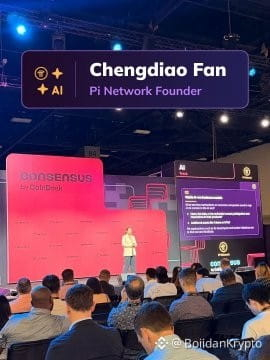
At Consensus 2026 in Miami, Pi Founder Dr. Chengdiao Fan took the stage with a powerful message on aligning Web3, AI, and blockchain for real-world utility. 🌐🤖
She broke down how Pi’s blockchain infrastructure, identity verification, and massive global community can fuel utility-driven products in the AI era. Her core insight? The crypto industry has long suffered from a broken link between token design and genuine innovation—too many tokens are built for quick exits, not lasting value.
Dr. Fan flipped the script: tokens should drive user growth, real engagement, and long-term utility. Pi’s model integrates token design directly into product innovation—helping projects acquire real users who interact, give feedback, and use tokens inside actual experiences. 🛠️📱
Beyond that, she challenged the room to think bigger: blockchain can redefine business models, financial literacy, digital ownership, and socioeconomic participation in the AI age. As AI lowers the barrier to building, what becomes priceless? Real users, real participation, and trusted human input at scale. 💡
#Web3Utility #PiNetwork #AIFuture
$BTC
{spot}(BTCUSDT)
$ETH
{spot}(ETHUSDT)
$BNB
{spot}(BNBUSDT)
At Consensus 2026 in Miami, Pi Founder Dr. Chengdiao Fan took the stage with a powerful message on aligning Web3, AI, and blockchain for real-world utility. 🌐🤖
She broke down how Pi’s blockchain infrastructure, identity verification, and massive global community can fuel utility-driven products in the AI era. Her core insight? The crypto industry has long suffered from a broken link between token design and genuine innovation—too many tokens are built for quick exits, not lasting value.
Dr. Fan flipped the script: tokens should drive user growth, real engagement, and long-term utility. Pi’s model integrates token design directly into product innovation—helping projects acquire real users who interact, give feedback, and use tokens inside actual experiences. 🛠️📱
Beyond that, she challenged the room to think bigger: blockchain can redefine business models, financial literacy, digital ownership, and socioeconomic participation in the AI age. As AI lowers the barrier to building, what becomes priceless? Real users, real participation, and trusted human input at scale. 💡
#Web3Utility #PiNetwork #AIFuture
$BTC
$ETH
$BNB
She broke down how Pi’s blockchain infrastructure, identity verification, and massive global community can fuel utility-driven products in the AI era. Her core insight? The crypto industry has long suffered from a broken link between token design and genuine innovation—too many tokens are built for quick exits, not lasting value.
Dr. Fan flipped the script: tokens should drive user growth, real engagement, and long-term utility. Pi’s model integrates token design directly into product innovation—helping projects acquire real users who interact, give feedback, and use tokens inside actual experiences. 🛠️📱
Beyond that, she challenged the room to think bigger: blockchain can redefine business models, financial literacy, digital ownership, and socioeconomic participation in the AI age. As AI lowers the barrier to building, what becomes priceless? Real users, real participation, and trusted human input at scale. 💡
#Web3Utility #PiNetwork #AIFuture
$BTC
$ETH
$BNB

1
66

·
--
The Shift from Hype to Reality: Why Ecosystem Utility Leads the Market 🚀The crypto landscape has officially graduated from pure speculation into a selective, utility-first market. Gone are the days when blind hype could sustain a token's value over multiple quarters. Today, smart money is flowing precisely where real-world network mechanics and robust economic models exist—and native platform assets like $BNB stand right at the forefront of this evolution. 💎
Why Infrastructure & Ecosystem Coins Are Winning
It's no longer just about paying lower trading fees on an exchange. The utility of major ecosystem assets has shifted dramatically due to several structural catalysts:
The Launchpool Multiplier Effect ⚡: Holding core ecosystem assets remains the single most consistent and profitable gateway to farming high-potential Web3 projects before they hit the mainstream public markets.
Aggressive Deflationary Design 🔥: Consistent and transparent auto-burn mechanisms ensure that token supply contracts systematically over time, creating a natural supply crunch while global adoption rates rise.
Real-World Financial Integration 🏦: Major platforms are no longer isolated digital silos; they are rapidly acting as bridges for decentralized financial infrastructure, institutional-grade custody, and highly scalable payment rails.
The Investor’s Takeaway 📈
If you are building a resilient digital asset portfolio for the long haul, the strategy is simple: stop chasing high-risk meme tokens that vanish overnight. Look for sustainability, dynamic value capture, clear platform revenue models, and relentless developer activity.
Positioning early in structural utility is what separates temporary traders from long-term wealth builders. 🧠
What is your strategic price outlook for ecosystem coins this quarter? Let's map out the charts in the comments below! 👇
#BNB #CryptoInvesting #Write2Earn #Web3Utility #BinanceSquare
The Shift from Hype to Reality: Why Ecosystem Utility Leads the Market 🚀
The crypto landscape has officially graduated from pure speculation into a selective, utility-first market. Gone are the days when blind hype could sustain a token's value over multiple quarters. Today, smart money is flowing precisely where real-world network mechanics and robust economic models exist—and native platform assets like $BNB stand right at the forefront of this evolution. 💎
Why Infrastructure & Ecosystem Coins Are Winning
It's no longer just about paying lower trading fees on an exchange. The utility of major ecosystem assets has shifted dramatically due to several structural catalysts:
The Launchpool Multiplier Effect ⚡: Holding core ecosystem assets remains the single most consistent and profitable gateway to farming high-potential Web3 projects before they hit the mainstream public markets.
Aggressive Deflationary Design 🔥: Consistent and transparent auto-burn mechanisms ensure that token supply contracts systematically over time, creating a natural supply crunch while global adoption rates rise.
Real-World Financial Integration 🏦: Major platforms are no longer isolated digital silos; they are rapidly acting as bridges for decentralized financial infrastructure, institutional-grade custody, and highly scalable payment rails.
The Investor’s Takeaway 📈
If you are building a resilient digital asset portfolio for the long haul, the strategy is simple: stop chasing high-risk meme tokens that vanish overnight. Look for sustainability, dynamic value capture, clear platform revenue models, and relentless developer activity.
Positioning early in structural utility is what separates temporary traders from long-term wealth builders. 🧠
What is your strategic price outlook for ecosystem coins this quarter? Let's map out the charts in the comments below! 👇
#BNB #CryptoInvesting #Write2Earn #Web3Utility #BinanceSquare
Why Infrastructure & Ecosystem Coins Are Winning
It's no longer just about paying lower trading fees on an exchange. The utility of major ecosystem assets has shifted dramatically due to several structural catalysts:
The Launchpool Multiplier Effect ⚡: Holding core ecosystem assets remains the single most consistent and profitable gateway to farming high-potential Web3 projects before they hit the mainstream public markets.
Aggressive Deflationary Design 🔥: Consistent and transparent auto-burn mechanisms ensure that token supply contracts systematically over time, creating a natural supply crunch while global adoption rates rise.
Real-World Financial Integration 🏦: Major platforms are no longer isolated digital silos; they are rapidly acting as bridges for decentralized financial infrastructure, institutional-grade custody, and highly scalable payment rails.
The Investor’s Takeaway 📈
If you are building a resilient digital asset portfolio for the long haul, the strategy is simple: stop chasing high-risk meme tokens that vanish overnight. Look for sustainability, dynamic value capture, clear platform revenue models, and relentless developer activity.
Positioning early in structural utility is what separates temporary traders from long-term wealth builders. 🧠
What is your strategic price outlook for ecosystem coins this quarter? Let's map out the charts in the comments below! 👇
#BNB #CryptoInvesting #Write2Earn #Web3Utility #BinanceSquare
53

Headline: 🏦 RWA & Infrastructure: Why Broadridge & Chainlink are Winning
The biggest narrative for the remainder of 2026 isn't a coin—it's an infrastructure shift. Financial giant Broadridge just expanded its tokenization platform, which already handles $365 billion in daily volume.
Chainlink (LINK) as the Backbone: For real-world assets (like bonds and real estate) to stay updated on the blockchain, they need "Oracles." Chainlink remains the undisputed leader here, acting as the bridge for major banks.
Why it Matters: Tokenization reduces "friction" in global markets. Instead of waiting days for a trade to settle, blockchain allows for T+0 settlement (instant).
Investment Perspective: Projects with actual "revenue-generating" utility (like ONDO or LINK) are less affected by the typical 4-year cycle volatility.
Deep Insight: As global banks move $15 trillion in assets toward digital ledgers, the "utility" phase of crypto has officially replaced the "hype" phase.
#RWA #Chainlink #Tokenization #Web3Utility
Headline: 🏦 RWA & Infrastructure: Why Broadridge & Chainlink are Winning
The biggest narrative for the remainder of 2026 isn't a coin—it's an infrastructure shift. Financial giant Broadridge just expanded its tokenization platform, which already handles $365 billion in daily volume.
Chainlink (LINK) as the Backbone: For real-world assets (like bonds and real estate) to stay updated on the blockchain, they need "Oracles." Chainlink remains the undisputed leader here, acting as the bridge for major banks.
Why it Matters: Tokenization reduces "friction" in global markets. Instead of waiting days for a trade to settle, blockchain allows for T+0 settlement (instant).
Investment Perspective: Projects with actual "revenue-generating" utility (like ONDO or LINK) are less affected by the typical 4-year cycle volatility.
Deep Insight: As global banks move $15 trillion in assets toward digital ledgers, the "utility" phase of crypto has officially replaced the "hype" phase.
#RWA #Chainlink #Tokenization #Web3Utility
The biggest narrative for the remainder of 2026 isn't a coin—it's an infrastructure shift. Financial giant Broadridge just expanded its tokenization platform, which already handles $365 billion in daily volume.
Chainlink (LINK) as the Backbone: For real-world assets (like bonds and real estate) to stay updated on the blockchain, they need "Oracles." Chainlink remains the undisputed leader here, acting as the bridge for major banks.
Why it Matters: Tokenization reduces "friction" in global markets. Instead of waiting days for a trade to settle, blockchain allows for T+0 settlement (instant).
Investment Perspective: Projects with actual "revenue-generating" utility (like ONDO or LINK) are less affected by the typical 4-year cycle volatility.
Deep Insight: As global banks move $15 trillion in assets toward digital ledgers, the "utility" phase of crypto has officially replaced the "hype" phase.
#RWA #Chainlink #Tokenization #Web3Utility
284
·
--
Article
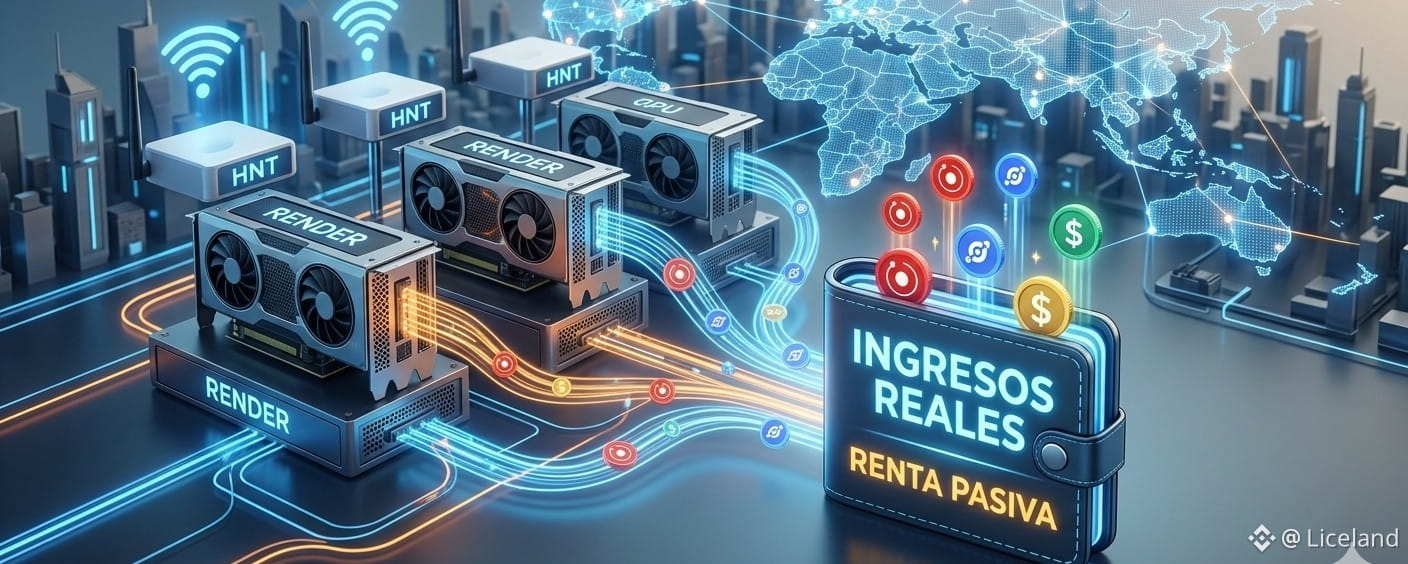
Beyond the Hype: Why Heavy Capital is Moving to DePIN This Quarter.Less Memes, More Infrastructure: Why DePIN is Your "Passive Income" in 2026
The time for coins that only promise to "moon" is running out. By May 2026, the market will reward tangible utility. If your portfolio still relies 100% on memes, you're overlooking the infrastructure that supports today's digital economy.
From Narrative to Real Billing
Decentralized Physical Infrastructure Networks (DePIN) have transitioned from a technical concept to income generators. The difference is straightforward: Inorganic Demand.
Beyond the Hype: Why Heavy Capital is Moving to DePIN This Quarter.
Less Memes, More Infrastructure: Why DePIN is Your "Passive Income" in 2026
The time for coins that only promise to "moon" is running out. By May 2026, the market will reward tangible utility. If your portfolio still relies 100% on memes, you're overlooking the infrastructure that supports today's digital economy.
From Narrative to Real Billing
Decentralized Physical Infrastructure Networks (DePIN) have transitioned from a technical concept to income generators. The difference is straightforward: Inorganic Demand.
The time for coins that only promise to "moon" is running out. By May 2026, the market will reward tangible utility. If your portfolio still relies 100% on memes, you're overlooking the infrastructure that supports today's digital economy.
From Narrative to Real Billing
Decentralized Physical Infrastructure Networks (DePIN) have transitioned from a technical concept to income generators. The difference is straightforward: Inorganic Demand.
65
·
--
Bullish
🚨 BIG BREAKTHROUGH: PI APP STUDIO JUST LEVELED UP!
Now you can take any external app built with Claude Code, Cursor, Lovable, or Replit and seamlessly turn it into a Pi Ecosystem App — directly through Pi App Studio.
This means AI developers & creators can now plug straight into Pi’s real-world utility layer with ease.
✅ Convert → ✅ List → ✅ Launch into the Pi Ecosystem instantly.
The door is wide open for the next wave of utility-powered Pi apps. Don’t sleep on this. 💥
#PiNetwork #AItoPi #Web3Utility
$BTC
{spot}(BTCUSDT)
🚨 BIG BREAKTHROUGH: PI APP STUDIO JUST LEVELED UP!
Now you can take any external app built with Claude Code, Cursor, Lovable, or Replit and seamlessly turn it into a Pi Ecosystem App — directly through Pi App Studio.
This means AI developers & creators can now plug straight into Pi’s real-world utility layer with ease.
✅ Convert → ✅ List → ✅ Launch into the Pi Ecosystem instantly.
The door is wide open for the next wave of utility-powered Pi apps. Don’t sleep on this. 💥
#PiNetwork #AItoPi #Web3Utility
$BTC
Now you can take any external app built with Claude Code, Cursor, Lovable, or Replit and seamlessly turn it into a Pi Ecosystem App — directly through Pi App Studio.
This means AI developers & creators can now plug straight into Pi’s real-world utility layer with ease.
✅ Convert → ✅ List → ✅ Launch into the Pi Ecosystem instantly.
The door is wide open for the next wave of utility-powered Pi apps. Don’t sleep on this. 💥
#PiNetwork #AItoPi #Web3Utility
$BTC

69
Log in to explore more content
Join global crypto users on Binance Square
⚡️ Get latest and useful information about crypto.
💬 Trusted by the world’s largest crypto exchange.
👍 Discover real insights from verified creators.
Email / Phone number
Trending Topics
1
#NEARFallsToAround$4.70Down14%
0 views
1 Discussing
2
#EvernorthPlansNasdaqListingOct8
0 views
10 Discussing
3
#SECProposesCryptoCustodyFramework
0 views
15 Discussing
4
#IMFApproves$139MDisbursementToElSalvador
35 views
5 Discussing
5
#AnthropicTargetsIPOAsSoonAsMidNovember
753 views
62 Discussing
6
#EtherGains70.9%InQ3
197,737 views
1,296 Discussing
7
#TreasuryLetsStatesFileStablecoinCertificationsEarly
13,778 views
101 Discussing
8
#US10YearYieldNears5.3%
169,164 views
1,231 Discussing
9
#DollarIndexHitsHighestSinceMay2025
54,251 views
695 Discussing
10
#USWeeklyJoblessClaimsFallTo197000
41,485 views
551 Discussing