
#tronecostar
tronecostar
4.3M views
1.1M Discussing
Hot
Latest

·
--
𝗙𝗜𝗩𝗘 𝗛𝗨𝗡𝗗𝗥𝗘𝗗 𝗙𝗜𝗙𝗧𝗬 𝗧𝗛𝗢𝗨𝗦𝗔𝗡𝗗 𝗨𝗦𝗘𝗥𝗦 𝗟𝗔𝗧𝗘𝗥: 𝗣𝗔𝗬𝗜𝗡𝗚 𝗚𝗔𝗦 𝗜𝗡𝗙𝗜𝗩𝗘 𝗛𝗨𝗡𝗗𝗥𝗘𝗗 𝗙𝗜𝗙𝗧𝗬 𝗧𝗛𝗢𝗨𝗦𝗔𝗡𝗗 𝗨𝗦𝗘𝗥𝗦 𝗟𝗔𝗧𝗘𝗥: 𝗣𝗔𝗬𝗜𝗡𝗚 𝗚𝗔𝗦 𝗜𝗡 𝗦𝗧𝗔𝗕𝗟𝗘𝗖𝗢𝗜𝗡𝗦 𝗜𝗦 𝗡𝗢 𝗟𝗢𝗡𝗚𝗘𝗥 𝗔 𝗡𝗜𝗖𝗘 𝗘𝗫𝗧𝗥𝗔
Nobody wakes up excited to calculate how many native gas tokens they need sitting in a spare wallet corner just so their stablecoin transfer goes through.
For years, crypto demanded that weird double-step ritual—hold dollars to spend, yet hold a completely separate volatile coin just to unlock the door.
Reaching 550,351 users on GasFree proves people overwhelmingly prefer the obvious alternative: paying TRON transaction fees straight in $USDT or $USDD without ever pausing to hunt for gas.
𝗪𝗵𝘆 𝟱𝟱𝟬,𝟯𝟱𝟭 𝗚𝗮𝘀𝗙𝗿𝗲𝗲 𝗨𝘀𝗲𝗿𝘀 𝗠𝗮𝗿𝗸 𝗔 𝗥𝗲𝗮𝗹 𝗨𝗫 𝗧𝘂𝗿𝗻𝗶𝗻𝗴 𝗣𝗼𝗶𝗻𝘁
When everyday wallets and core ecosystem tools remove friction together, adoption stops feeling forced and starts feeling natural:
➞ Dual Stablecoin Fee Flexibility: GasFree supports network fee payments directly in both USDT and USDD, letting holders transact with whichever digital dollar is already in their balance
➞ Major Wallet Integration: Binance Web3 Wallet now powers TRC-20 token transfers through GasFree so users can settle gas fees in USDT right inside a familiar interface
➞ Half A Million Proof Points: Crossing 550,351 active users shows stablecoin-native gas is solving an everyday headache at genuine scale
550,351 GasFree users + USDT & USDD fee support + Binance Web3 Wallet → Effortless TRC-20 transfers
𝗧𝗵𝗲 𝗕𝗲𝘀𝘁 𝗖𝗿𝘆𝗽𝘁𝗼 𝗨𝗽𝗴𝗿𝗮𝗱𝗲𝘀 𝗠𝗮𝗸𝗲 𝗧𝗲𝗰𝗵𝗻𝗶𝗰𝗮𝗹 𝗛𝘂𝗿𝗱𝗹𝗲𝘀 𝗗𝗶𝘀𝗮𝗽𝗽𝗲𝗮𝗿
Mass adoption never arrives when users memorize gas mechanics; it arrives when sending digital dollars feels as straightforward as tapping send on a messaging app.
Watching GasFree pass 550,351 users across TRON shows how quickly people embrace tools that respect their time and simplify asset movement.
Have you tried sending TRC-20 tokens with stablecoin gas fees yet, and do you prefer paying in USDT or USDD?
@JustinSun @DeFi_JUST #TRONEcoStar
𝗙𝗜𝗩𝗘 𝗛𝗨𝗡𝗗𝗥𝗘𝗗 𝗙𝗜𝗙𝗧𝗬 𝗧𝗛𝗢𝗨𝗦𝗔𝗡𝗗 𝗨𝗦𝗘𝗥𝗦 𝗟𝗔𝗧𝗘𝗥: 𝗣𝗔𝗬𝗜𝗡𝗚 𝗚𝗔𝗦 𝗜𝗡
𝗙𝗜𝗩𝗘 𝗛𝗨𝗡𝗗𝗥𝗘𝗗 𝗙𝗜𝗙𝗧𝗬 𝗧𝗛𝗢𝗨𝗦𝗔𝗡𝗗 𝗨𝗦𝗘𝗥𝗦 𝗟𝗔𝗧𝗘𝗥: 𝗣𝗔𝗬𝗜𝗡𝗚 𝗚𝗔𝗦 𝗜𝗡 𝗦𝗧𝗔𝗕𝗟𝗘𝗖𝗢𝗜𝗡𝗦 𝗜𝗦 𝗡𝗢 𝗟𝗢𝗡𝗚𝗘𝗥 𝗔 𝗡𝗜𝗖𝗘 𝗘𝗫𝗧𝗥𝗔
Nobody wakes up excited to calculate how many native gas tokens they need sitting in a spare wallet corner just so their stablecoin transfer goes through.
For years, crypto demanded that weird double-step ritual—hold dollars to spend, yet hold a completely separate volatile coin just to unlock the door.
Reaching 550,351 users on GasFree proves people overwhelmingly prefer the obvious alternative: paying TRON transaction fees straight in $USDT or $USDD without ever pausing to hunt for gas.
𝗪𝗵𝘆 𝟱𝟱𝟬,𝟯𝟱𝟭 𝗚𝗮𝘀𝗙𝗿𝗲𝗲 𝗨𝘀𝗲𝗿𝘀 𝗠𝗮𝗿𝗸 𝗔 𝗥𝗲𝗮𝗹 𝗨𝗫 𝗧𝘂𝗿𝗻𝗶𝗻𝗴 𝗣𝗼𝗶𝗻𝘁
When everyday wallets and core ecosystem tools remove friction together, adoption stops feeling forced and starts feeling natural:
➞ Dual Stablecoin Fee Flexibility: GasFree supports network fee payments directly in both USDT and USDD, letting holders transact with whichever digital dollar is already in their balance
➞ Major Wallet Integration: Binance Web3 Wallet now powers TRC-20 token transfers through GasFree so users can settle gas fees in USDT right inside a familiar interface
➞ Half A Million Proof Points: Crossing 550,351 active users shows stablecoin-native gas is solving an everyday headache at genuine scale
550,351 GasFree users + USDT & USDD fee support + Binance Web3 Wallet → Effortless TRC-20 transfers
𝗧𝗵𝗲 𝗕𝗲𝘀𝘁 𝗖𝗿𝘆𝗽𝘁𝗼 𝗨𝗽𝗴𝗿𝗮𝗱𝗲𝘀 𝗠𝗮𝗸𝗲 𝗧𝗲𝗰𝗵𝗻𝗶𝗰𝗮𝗹 𝗛𝘂𝗿𝗱𝗹𝗲𝘀 𝗗𝗶𝘀𝗮𝗽𝗽𝗲𝗮𝗿
Mass adoption never arrives when users memorize gas mechanics; it arrives when sending digital dollars feels as straightforward as tapping send on a messaging app.
Watching GasFree pass 550,351 users across TRON shows how quickly people embrace tools that respect their time and simplify asset movement.
Have you tried sending TRC-20 tokens with stablecoin gas fees yet, and do you prefer paying in USDT or USDD?
@Justin Sun孙宇晨 @JUST DAO #TRONEcoStar
70
·
--
𝗢𝗡𝗘 𝗧𝗢𝗞𝗘𝗡, 𝗧𝗪𝗢 𝗬𝗜𝗘𝗟𝗗 𝗦𝗧𝗥𝗘𝗔𝗠𝗦: 𝗪𝗛𝗬 𝗦𝗧𝗔𝗞𝗜𝗡𝗚 𝗧𝗥𝗫 𝗙𝗢𝗥 𝘀𝗧𝗥𝗫𝗢𝗡𝗘 𝗧𝗢𝗞𝗘𝗡, 𝗧𝗪𝗢 𝗬𝗜𝗘𝗟𝗗 𝗦𝗧𝗥𝗘𝗔𝗠𝗦: 𝗪𝗛𝗬 𝗦𝗧𝗔𝗞𝗜𝗡𝗚 𝗧𝗥𝗫 𝗙𝗢𝗥 𝘀𝗧𝗥𝗫 𝗕𝗘𝗔𝗧𝗦 𝗟𝗘𝗧𝗧𝗜𝗡𝗚 𝗬𝗢𝗨𝗥 𝗕𝗔𝗚 𝗖𝗢𝗟𝗟𝗘𝗖𝗧 𝗗𝗨𝗦𝗧
Keeping raw $TRX sitting idle inside a wallet is a lot like owning a rental apartment and leaving the front door locked all year—you still own the property, sure, yet you are leaving steady monthly rent checks sitting on the mailbox floor.
Traditional staking used to force a trade-off between earning network rewards and keeping your tokens usable across DeFi.
Staking TRX on JustLend for sTRX flips that old compromise upside down, turning a single asset into a liquid, multi-yield workhorse.
𝗛𝗼𝘄 𝘀𝗧𝗥𝗫 𝗠𝗮𝗸𝗲𝘀 𝗘𝘃𝗲𝗿𝘆 𝗧𝗥𝗫 𝗪𝗼𝗿𝗸 𝗧𝘄𝗶𝗰𝗲 𝗔𝘀 𝗛𝗮𝗿𝗱
Instead of relying on thin, inflationary gimmicks, sTRX combines two real, native TRON revenue engines under one roof:
➞ TRON Governance Rewards: Your staked TRX automatically participates in Super Representative voting, capturing baseline protocol rewards without daily manual upkeep
➞ Energy Rental Income: JustLend routes staked resources into TRON's active Energy Rental market, sharing real user rental fees directly back with sTRX holders
➞ 4.16% 7-Day Average APY & Liquid Utility: Earn an attractive 4.16% 7d Avg. APY while holding a transferable TRC-20 token you can deploy across TRON DeFi anytime
Stake TRX → Receive sTRX → Earn governance rewards + Energy Rental yield (4.16% 7d Avg. APY)
𝗬𝗼𝘂𝗿 𝗖𝗼𝗿𝗲 𝗛𝗼𝗹𝗱𝗶𝗻𝗴𝘀 𝗦𝗵𝗼𝘂𝗹𝗱 𝗣𝗮𝘆 𝗬𝗼𝘂 𝗧𝗼 𝗛𝗼𝗹𝗱 𝗧𝗵𝗲𝗺
Smart crypto investing is rarely about chasing exhausting day trades; it is about positioning your foundational tokens where real protocol usage pays you every single week.
Turning idle TRX into sTRX on JustLend lets your long-term conviction earn double rewards without locking you out of DeFi.
Are you already earning dual yields with sTRX, or is your TRX still sitting idle waiting for your next move?
@JustinSun @DeFi_JUST #TRONEcoStar
𝗢𝗡𝗘 𝗧𝗢𝗞𝗘𝗡, 𝗧𝗪𝗢 𝗬𝗜𝗘𝗟𝗗 𝗦𝗧𝗥𝗘𝗔𝗠𝗦: 𝗪𝗛𝗬 𝗦𝗧𝗔𝗞𝗜𝗡𝗚 𝗧𝗥𝗫 𝗙𝗢𝗥 𝘀𝗧𝗥𝗫
𝗢𝗡𝗘 𝗧𝗢𝗞𝗘𝗡, 𝗧𝗪𝗢 𝗬𝗜𝗘𝗟𝗗 𝗦𝗧𝗥𝗘𝗔𝗠𝗦: 𝗪𝗛𝗬 𝗦𝗧𝗔𝗞𝗜𝗡𝗚 𝗧𝗥𝗫 𝗙𝗢𝗥 𝘀𝗧𝗥𝗫 𝗕𝗘𝗔𝗧𝗦 𝗟𝗘𝗧𝗧𝗜𝗡𝗚 𝗬𝗢𝗨𝗥 𝗕𝗔𝗚 𝗖𝗢𝗟𝗟𝗘𝗖𝗧 𝗗𝗨𝗦𝗧
Keeping raw $TRX sitting idle inside a wallet is a lot like owning a rental apartment and leaving the front door locked all year—you still own the property, sure, yet you are leaving steady monthly rent checks sitting on the mailbox floor.
Traditional staking used to force a trade-off between earning network rewards and keeping your tokens usable across DeFi.
Staking TRX on JustLend for sTRX flips that old compromise upside down, turning a single asset into a liquid, multi-yield workhorse.
𝗛𝗼𝘄 𝘀𝗧𝗥𝗫 𝗠𝗮𝗸𝗲𝘀 𝗘𝘃𝗲𝗿𝘆 𝗧𝗥𝗫 𝗪𝗼𝗿𝗸 𝗧𝘄𝗶𝗰𝗲 𝗔𝘀 𝗛𝗮𝗿𝗱
Instead of relying on thin, inflationary gimmicks, sTRX combines two real, native TRON revenue engines under one roof:
➞ TRON Governance Rewards: Your staked TRX automatically participates in Super Representative voting, capturing baseline protocol rewards without daily manual upkeep
➞ Energy Rental Income: JustLend routes staked resources into TRON's active Energy Rental market, sharing real user rental fees directly back with sTRX holders
➞ 4.16% 7-Day Average APY & Liquid Utility: Earn an attractive 4.16% 7d Avg. APY while holding a transferable TRC-20 token you can deploy across TRON DeFi anytime
Stake TRX → Receive sTRX → Earn governance rewards + Energy Rental yield (4.16% 7d Avg. APY)
𝗬𝗼𝘂𝗿 𝗖𝗼𝗿𝗲 𝗛𝗼𝗹𝗱𝗶𝗻𝗴𝘀 𝗦𝗵𝗼𝘂𝗹𝗱 𝗣𝗮𝘆 𝗬𝗼𝘂 𝗧𝗼 𝗛𝗼𝗹𝗱 𝗧𝗵𝗲𝗺
Smart crypto investing is rarely about chasing exhausting day trades; it is about positioning your foundational tokens where real protocol usage pays you every single week.
Turning idle TRX into sTRX on JustLend lets your long-term conviction earn double rewards without locking you out of DeFi.
Are you already earning dual yields with sTRX, or is your TRX still sitting idle waiting for your next move?
@Justin Sun孙宇晨 @JUST DAO #TRONEcoStar
33
·
--
𝗦𝗜𝗫 𝗕𝗜𝗟𝗟𝗜𝗢𝗡 𝗜𝗡 𝗧𝗩𝗟 𝗔𝗡𝗗 𝗙𝗢𝗥𝗧𝗬-𝗢𝗡𝗘 𝗧𝗛𝗢𝗨𝗦𝗔𝗡𝗗 𝗨𝗦𝗗𝗗 𝗔 𝗗𝗔𝗬: 𝗪𝗛𝗦𝗜𝗫 𝗕𝗜𝗟𝗟𝗜𝗢𝗡 𝗜𝗡 𝗧𝗩𝗟 𝗔𝗡𝗗 𝗙𝗢𝗥𝗧𝗬-𝗢𝗡𝗘 𝗧𝗛𝗢𝗨𝗦𝗔𝗡𝗗 𝗨𝗦𝗗𝗗 𝗔 𝗗𝗔𝗬: 𝗪𝗛𝗬 𝗝𝗨𝗦𝗧𝗟𝗘𝗡𝗗 𝗟𝗜𝗤𝗨𝗜𝗗𝗜𝗧𝗬 𝗞𝗘𝗘𝗣𝗦 𝗣𝗨𝗟𝗟𝗜𝗡𝗚 𝗖𝗔𝗣𝗜𝗧𝗔𝗟 𝗜𝗡
Deep liquidity in DeFi works a lot like a bustling Saturday morning farmers' market—buyers show up because every stall is stocked, and farmers bring their best harvest because real customers are already walking the aisles.
When a lending protocol hits $6.17B in Total Value Locked, $3.16B in active supply, and $177.91M in open borrows, you are no longer looking at speculative noise—you are looking at an established on-chain money market humming at scale.
Add 41,573 $USDD flowing out in daily rewards, and JustLend becomes the kind of core infrastructure where idle crypto turns into steady, transparent productivity.
𝗪𝗵𝗮𝘁 𝗧𝗵𝗲𝘀𝗲 𝗝𝘂𝘀𝘁𝗟𝗲𝗻𝗱 𝗡𝘂𝗺𝗯𝗲𝗿𝘀 𝗠𝗲𝗮𝗻 𝗙𝗼𝗿 𝗘𝘃𝗲𝗿𝘆𝗱𝗮𝘆 𝗗𝗲𝗙𝗶 𝗨𝘀𝗲𝗿𝘀
Big protocol metrics only matter when they translate into smoother execution and better opportunities for individual wallets:
➞ $6.17B TVL & $3.16B Supply: Massive capital depth absorbs large deposits and withdrawals cleanly without jarring rate spikes or thin order books
➞ $177.91M Active Borrowing: Healthy credit demand shows traders and builders actively borrowing liquidity against collateral rather than letting pools sit stagnant
➞ 41,573 $USDD Daily Rewards: Consistent daily distributions reward suppliers and borrowers in a stable, usable dollar asset right on TRON
$6.17B TVL + $3.16B supply + 41,573 $USDD daily rewards → Real DeFi depth in action
𝗟𝗶𝗾𝘂𝗶𝗱𝗶𝘁𝘆 𝗔𝗹𝘄𝗮𝘆𝘀 𝗔𝘁𝘁𝗿𝗮𝗰𝘁𝘀 𝗠𝗼𝗿𝗲 𝗟𝗶𝗾𝘂𝗶𝗱𝗶𝘁𝘆
In decentralized finance, capital naturally gravitates toward venues that pair proven scale with predictable daily incentives.
Exploring the latest markets on JustLend shows how deep pools and steady $USDD rewards reinforce each other day after day.
When evaluating a lending market, do you look at total TVL depth first or check the daily reward distribution rate?
@DeFi_JUST @JustinSun #TRONEcoStar
𝗦𝗜𝗫 𝗕𝗜𝗟𝗟𝗜𝗢𝗡 𝗜𝗡 𝗧𝗩𝗟 𝗔𝗡𝗗 𝗙𝗢𝗥𝗧𝗬-𝗢𝗡𝗘 𝗧𝗛𝗢𝗨𝗦𝗔𝗡𝗗 𝗨𝗦𝗗𝗗 𝗔 𝗗𝗔𝗬: 𝗪𝗛
𝗦𝗜𝗫 𝗕𝗜𝗟𝗟𝗜𝗢𝗡 𝗜𝗡 𝗧𝗩𝗟 𝗔𝗡𝗗 𝗙𝗢𝗥𝗧𝗬-𝗢𝗡𝗘 𝗧𝗛𝗢𝗨𝗦𝗔𝗡𝗗 𝗨𝗦𝗗𝗗 𝗔 𝗗𝗔𝗬: 𝗪𝗛𝗬 𝗝𝗨𝗦𝗧𝗟𝗘𝗡𝗗 𝗟𝗜𝗤𝗨𝗜𝗗𝗜𝗧𝗬 𝗞𝗘𝗘𝗣𝗦 𝗣𝗨𝗟𝗟𝗜𝗡𝗚 𝗖𝗔𝗣𝗜𝗧𝗔𝗟 𝗜𝗡
Deep liquidity in DeFi works a lot like a bustling Saturday morning farmers' market—buyers show up because every stall is stocked, and farmers bring their best harvest because real customers are already walking the aisles.
When a lending protocol hits $6.17B in Total Value Locked, $3.16B in active supply, and $177.91M in open borrows, you are no longer looking at speculative noise—you are looking at an established on-chain money market humming at scale.
Add 41,573 $USDD flowing out in daily rewards, and JustLend becomes the kind of core infrastructure where idle crypto turns into steady, transparent productivity.
𝗪𝗵𝗮𝘁 𝗧𝗵𝗲𝘀𝗲 𝗝𝘂𝘀𝘁𝗟𝗲𝗻𝗱 𝗡𝘂𝗺𝗯𝗲𝗿𝘀 𝗠𝗲𝗮𝗻 𝗙𝗼𝗿 𝗘𝘃𝗲𝗿𝘆𝗱𝗮𝘆 𝗗𝗲𝗙𝗶 𝗨𝘀𝗲𝗿𝘀
Big protocol metrics only matter when they translate into smoother execution and better opportunities for individual wallets:
➞ $6.17B TVL & $3.16B Supply: Massive capital depth absorbs large deposits and withdrawals cleanly without jarring rate spikes or thin order books
➞ $177.91M Active Borrowing: Healthy credit demand shows traders and builders actively borrowing liquidity against collateral rather than letting pools sit stagnant
➞ 41,573 $USDD Daily Rewards: Consistent daily distributions reward suppliers and borrowers in a stable, usable dollar asset right on TRON
$6.17B TVL + $3.16B supply + 41,573 $USDD daily rewards → Real DeFi depth in action
𝗟𝗶𝗾𝘂𝗶𝗱𝗶𝘁𝘆 𝗔𝗹𝘄𝗮𝘆𝘀 𝗔𝘁𝘁𝗿𝗮𝗰𝘁𝘀 𝗠𝗼𝗿𝗲 𝗟𝗶𝗾𝘂𝗶𝗱𝗶𝘁𝘆
In decentralized finance, capital naturally gravitates toward venues that pair proven scale with predictable daily incentives.
Exploring the latest markets on JustLend shows how deep pools and steady $USDD rewards reinforce each other day after day.
When evaluating a lending market, do you look at total TVL depth first or check the daily reward distribution rate?
@JUST DAO @Justin Sun孙宇晨 #TRONEcoStar
15
·
--
𝗦𝗧𝗢𝗣 𝗟𝗘𝗧𝗧𝗜𝗡𝗚 𝗬𝗢𝗨𝗥 𝗧𝗥𝗢𝗡 𝗔𝗦𝗦𝗘𝗧𝗦 𝗦𝗜𝗧 𝗜𝗗𝗟𝗘: 𝗛𝗢𝗪 𝗝𝗨𝗦𝗧𝗟𝗘𝗡𝗗 𝗦𝗕𝗦𝗧𝗢𝗣 𝗟𝗘𝗧𝗧𝗜𝗡𝗚 𝗬𝗢𝗨𝗥 𝗧𝗥𝗢𝗡 𝗔𝗦𝗦𝗘𝗧𝗦 𝗦𝗜𝗧 𝗜𝗗𝗟𝗘: 𝗛𝗢𝗪 𝗝𝗨𝗦𝗧𝗟𝗘𝗡𝗗 𝗦𝗕𝗠 𝗩𝟭 𝗧𝗨𝗥𝗡𝗦 𝗢𝗡𝗘 𝗪𝗔𝗟𝗟𝗘𝗧 𝗜𝗡𝗧𝗢 𝗔 𝗧𝗪𝗢-𝗪𝗔𝗬 𝗟𝗜𝗤𝗨𝗜𝗗𝗜𝗧𝗬 𝗘𝗡𝗚𝗜𝗡𝗘
Leaving crypto sitting untouched inside a wallet feels a bit like buying a sports car just to admire it parked in the driveway—safe enough, sure, yet wasting everything it was actually built to do.
On TRON, holders often face a familiar dilemma: you want your tokens earning steady yield, yet you also hate the idea of selling core assets whenever you need fresh liquidity for a new opportunity.
JustLend's Supply & Borrow Market V1 (SBM V1) solves both sides of that equation inside a single shared cross-collateral market.
𝗛𝗼𝘄 𝗝𝘂𝘀𝘁𝗟𝗲𝗻𝗱 𝗦𝗕𝗠 𝗩𝟭 𝗣𝘂𝘁𝘀 𝗬𝗼𝘂𝗿 𝗖𝗮𝗽𝗶𝘁𝗮𝗹 𝗧𝗼 𝗪𝗼𝗿𝗸 𝗢𝗻 𝗕𝗼𝘁𝗵 𝗦𝗶𝗱𝗲𝘀
Instead of splitting your portfolio across disconnected tools, SBM V1 connects supply yield and borrowing power seamlessly:
➞ Earn Interest On Supported Assets: Supply mainstream TRON tokens—including $TRX, $USDD, $USDT, sTRX, wstUSDT, and $SUN—to start accumulating continuous protocol interest
➞ Unlock Cross-Collateral Borrowing: Use your eligible supplied holdings as shared collateral to borrow liquidity without giving up upside exposure on your underlying tokens
➞ High Capital Efficiency: Your collateral continues earning supply yield even while backing active borrows, keeping every dollar productive
Supply TRON assets → Earn yield + Unlock collateral power → Borrow liquidity without selling
𝗖𝗮𝗽𝗶𝘁𝗮𝗹 𝗘𝗳𝗳𝗶𝗰𝗶𝗲𝗻𝗰𝘆 𝗜𝘀 𝗧𝗵𝗲 𝗥𝗲𝗮𝗹 𝗘𝗱𝗴𝗲 𝗜𝗻 𝗢𝗻-𝗖𝗵𝗮𝗶𝗻 𝗙𝗶𝗻𝗮𝗻𝗰𝗲
Smart portfolio management is rarely about chasing every noisy trade; it is about letting your core holdings generate yield while staying flexible enough to borrow against them on demand.
By bringing supply and borrowing together in one shared market, JustLend SBM V1 gives TRON users practical control over their liquidity.
Do you mainly use JustLend SBM V1 to earn passive supply yield on your TRON tokens, or to borrow liquidity against your collateral without selling?
@DeFi_JUST @JustinSun #TRONEcoStar
𝗦𝗧𝗢𝗣 𝗟𝗘𝗧𝗧𝗜𝗡𝗚 𝗬𝗢𝗨𝗥 𝗧𝗥𝗢𝗡 𝗔𝗦𝗦𝗘𝗧𝗦 𝗦𝗜𝗧 𝗜𝗗𝗟𝗘: 𝗛𝗢𝗪 𝗝𝗨𝗦𝗧𝗟𝗘𝗡𝗗 𝗦𝗕
𝗦𝗧𝗢𝗣 𝗟𝗘𝗧𝗧𝗜𝗡𝗚 𝗬𝗢𝗨𝗥 𝗧𝗥𝗢𝗡 𝗔𝗦𝗦𝗘𝗧𝗦 𝗦𝗜𝗧 𝗜𝗗𝗟𝗘: 𝗛𝗢𝗪 𝗝𝗨𝗦𝗧𝗟𝗘𝗡𝗗 𝗦𝗕𝗠 𝗩𝟭 𝗧𝗨𝗥𝗡𝗦 𝗢𝗡𝗘 𝗪𝗔𝗟𝗟𝗘𝗧 𝗜𝗡𝗧𝗢 𝗔 𝗧𝗪𝗢-𝗪𝗔𝗬 𝗟𝗜𝗤𝗨𝗜𝗗𝗜𝗧𝗬 𝗘𝗡𝗚𝗜𝗡𝗘
Leaving crypto sitting untouched inside a wallet feels a bit like buying a sports car just to admire it parked in the driveway—safe enough, sure, yet wasting everything it was actually built to do.
On TRON, holders often face a familiar dilemma: you want your tokens earning steady yield, yet you also hate the idea of selling core assets whenever you need fresh liquidity for a new opportunity.
JustLend's Supply & Borrow Market V1 (SBM V1) solves both sides of that equation inside a single shared cross-collateral market.
𝗛𝗼𝘄 𝗝𝘂𝘀𝘁𝗟𝗲𝗻𝗱 𝗦𝗕𝗠 𝗩𝟭 𝗣𝘂𝘁𝘀 𝗬𝗼𝘂𝗿 𝗖𝗮𝗽𝗶𝘁𝗮𝗹 𝗧𝗼 𝗪𝗼𝗿𝗸 𝗢𝗻 𝗕𝗼𝘁𝗵 𝗦𝗶𝗱𝗲𝘀
Instead of splitting your portfolio across disconnected tools, SBM V1 connects supply yield and borrowing power seamlessly:
➞ Earn Interest On Supported Assets: Supply mainstream TRON tokens—including $TRX, $USDD, $USDT, sTRX, wstUSDT, and $SUN—to start accumulating continuous protocol interest
➞ Unlock Cross-Collateral Borrowing: Use your eligible supplied holdings as shared collateral to borrow liquidity without giving up upside exposure on your underlying tokens
➞ High Capital Efficiency: Your collateral continues earning supply yield even while backing active borrows, keeping every dollar productive
Supply TRON assets → Earn yield + Unlock collateral power → Borrow liquidity without selling
𝗖𝗮𝗽𝗶𝘁𝗮𝗹 𝗘𝗳𝗳𝗶𝗰𝗶𝗲𝗻𝗰𝘆 𝗜𝘀 𝗧𝗵𝗲 𝗥𝗲𝗮𝗹 𝗘𝗱𝗴𝗲 𝗜𝗻 𝗢𝗻-𝗖𝗵𝗮𝗶𝗻 𝗙𝗶𝗻𝗮𝗻𝗰𝗲
Smart portfolio management is rarely about chasing every noisy trade; it is about letting your core holdings generate yield while staying flexible enough to borrow against them on demand.
By bringing supply and borrowing together in one shared market, JustLend SBM V1 gives TRON users practical control over their liquidity.
Do you mainly use JustLend SBM V1 to earn passive supply yield on your TRON tokens, or to borrow liquidity against your collateral without selling?
@JUST DAO @Justin Sun孙宇晨 #TRONEcoStar
31
·
--
𝗡𝗜𝗡𝗘 𝗣𝗘𝗥𝗖𝗘𝗡𝗧 𝗬𝗜𝗘𝗟𝗗 𝗪𝗜𝗧𝗛 𝗭𝗘𝗥𝗢 𝗟𝗢𝗖𝗞𝗨𝗣𝗦𝗡𝗜𝗡𝗘 𝗣𝗘𝗥𝗖𝗘𝗡𝗧 𝗬𝗜𝗘𝗟𝗗 𝗪𝗜𝗧𝗛 𝗭𝗘𝗥𝗢 𝗟𝗢𝗖𝗞𝗨𝗣𝗦: 𝗪𝗛𝗬 𝘀𝗨𝗦𝗗𝗗 𝗙𝗘𝗘𝗟𝗦 𝗟𝗜𝗞𝗘 𝗧𝗛𝗘 𝗦𝗔𝗩𝗜𝗡𝗚𝗦 𝗔𝗖𝗖𝗢𝗨𝗡𝗧 𝗕𝗔𝗡𝗞𝗦 𝗡𝗘𝗩𝗘𝗥 𝗕𝗨𝗜𝗟𝗧
Most traditional savings accounts hand you a fraction of a percent in interest while burying your cash behind transfer delays, minimum balance rules, and withdrawal penalties.
Meanwhile, half of DeFi swings to the opposite extreme—demanding thirty-day lockups or confusing multi-step vaults just to unlock a decent return.
That is why seeing the numbers behind sUSDD laid out clearly makes its growing popularity obvious: a rock-solid 4% baseline lifting total yield to around 9%, paired with complete freedom to move your money whenever you please.
𝗪𝗵𝗮𝘁 𝗠𝗮𝗸𝗲𝘀 𝘀𝗨𝗦𝗗𝗗 𝗧𝗵𝗲 𝗜𝗱𝗲𝗮𝗹 𝗢𝗻-𝗖𝗵𝗮𝗶𝗻 𝗦𝗮𝘃𝗶𝗻𝗴𝘀 𝗘𝘅𝗽𝗲𝗿𝗶𝗲𝗻𝗰𝗲
True financial comfort happens when your capital grows reliably in the background without ever feeling handcuffed:
➞ Competitive ~9% Total Yield: Built on a dependable 4% baseline so your digital dollars compound steadily without chasing fragile, overnight gimmicks
➞ Zero Minimums Or Maximums: Start with spare pocket money or park a serious treasury—every deposit receives the exact same clean treatment
➞ Instant Deposit & Withdrawal Freedom: With zero lockups, you remain the sole decision-maker over your funds twenty-four hours a day
4% baseline + ~9% total yield + Zero lockups → Effortless on-chain savings
𝗦𝗶𝗺𝗽𝗹𝗶𝗰𝗶𝘁𝘆 𝗔𝗻𝗱 𝗖𝗼𝗻𝘁𝗿𝗼𝗹 𝗔𝗿𝗲 𝗧𝗵𝗲 𝗥𝗲𝗮𝗹 𝗟𝘂𝘅𝘂𝗿𝘆
A great savings tool never forces you to choose between earning strong returns and keeping your cash accessible for real life.
Holding sUSDD proves that on-chain wealth building works best when transparent math replaces complicated fine print.
What frustrates you more about traditional savings accounts—the tiny interest rates or the restrictions on moving your own money?
#USDD #TRONEcoStar @JustinSun @usddio
𝗡𝗜𝗡𝗘 𝗣𝗘𝗥𝗖𝗘𝗡𝗧 𝗬𝗜𝗘𝗟𝗗 𝗪𝗜𝗧𝗛 𝗭𝗘𝗥𝗢 𝗟𝗢𝗖𝗞𝗨𝗣𝗦
𝗡𝗜𝗡𝗘 𝗣𝗘𝗥𝗖𝗘𝗡𝗧 𝗬𝗜𝗘𝗟𝗗 𝗪𝗜𝗧𝗛 𝗭𝗘𝗥𝗢 𝗟𝗢𝗖𝗞𝗨𝗣𝗦: 𝗪𝗛𝗬 𝘀𝗨𝗦𝗗𝗗 𝗙𝗘𝗘𝗟𝗦 𝗟𝗜𝗞𝗘 𝗧𝗛𝗘 𝗦𝗔𝗩𝗜𝗡𝗚𝗦 𝗔𝗖𝗖𝗢𝗨𝗡𝗧 𝗕𝗔𝗡𝗞𝗦 𝗡𝗘𝗩𝗘𝗥 𝗕𝗨𝗜𝗟𝗧
Most traditional savings accounts hand you a fraction of a percent in interest while burying your cash behind transfer delays, minimum balance rules, and withdrawal penalties.
Meanwhile, half of DeFi swings to the opposite extreme—demanding thirty-day lockups or confusing multi-step vaults just to unlock a decent return.
That is why seeing the numbers behind sUSDD laid out clearly makes its growing popularity obvious: a rock-solid 4% baseline lifting total yield to around 9%, paired with complete freedom to move your money whenever you please.
𝗪𝗵𝗮𝘁 𝗠𝗮𝗸𝗲𝘀 𝘀𝗨𝗦𝗗𝗗 𝗧𝗵𝗲 𝗜𝗱𝗲𝗮𝗹 𝗢𝗻-𝗖𝗵𝗮𝗶𝗻 𝗦𝗮𝘃𝗶𝗻𝗴𝘀 𝗘𝘅𝗽𝗲𝗿𝗶𝗲𝗻𝗰𝗲
True financial comfort happens when your capital grows reliably in the background without ever feeling handcuffed:
➞ Competitive ~9% Total Yield: Built on a dependable 4% baseline so your digital dollars compound steadily without chasing fragile, overnight gimmicks
➞ Zero Minimums Or Maximums: Start with spare pocket money or park a serious treasury—every deposit receives the exact same clean treatment
➞ Instant Deposit & Withdrawal Freedom: With zero lockups, you remain the sole decision-maker over your funds twenty-four hours a day
4% baseline + ~9% total yield + Zero lockups → Effortless on-chain savings
𝗦𝗶𝗺𝗽𝗹𝗶𝗰𝗶𝘁𝘆 𝗔𝗻𝗱 𝗖𝗼𝗻𝘁𝗿𝗼𝗹 𝗔𝗿𝗲 𝗧𝗵𝗲 𝗥𝗲𝗮𝗹 𝗟𝘂𝘅𝘂𝗿𝘆
A great savings tool never forces you to choose between earning strong returns and keeping your cash accessible for real life.
Holding sUSDD proves that on-chain wealth building works best when transparent math replaces complicated fine print.
What frustrates you more about traditional savings accounts—the tiny interest rates or the restrictions on moving your own money?
#USDD #TRONEcoStar @Justin Sun孙宇晨 @USDD - Decentralized USD
2

·
--
FROM ECOSYSTEM REVENUE TO PERMANENT SUPPLY REDUCTION: HOW JUST'S JST BUYBACK MECHANISM WORKS
A buyback programme is more than setting aside money to purchase tokens. The important question is how capital moves through the system, who oversees its deployment and what happens after the tokens are purchased.
JUST's upgraded JST buyback mechanism introduces a structured process connecting ecosystem revenue with the long-term management of JST's supply.
Here is how the mechanism works.
1. REVENUE ENTERS THE FUNDING FRAMEWORK
Eligible revenue from JustLend, USDD and GasFree forms the foundation of the upgraded programme. This connects the buyback process to the actual business activities of JUST rather than depending entirely on external funding.
2. THE TREASURY RESERVE IS PROTECTED
JUST maintains a minimum $50 million treasury reserve cushion. This is an important financial boundary: funds needed to maintain the ecosystem's safety buffer are distinguished from surplus capital available for buybacks.
3. AVAILABLE CAPITAL IS DEPLOYED
The upgraded framework provides for approximately $20.34 million in surplus capital to be released in four phases, beginning in Q4 2026. Alongside this, eligible ongoing ecosystem revenue supports future purchases.
4. JST IS PURCHASED FROM THE MARKET
JUST DAO oversees the execution of buybacks. Under the new approach, purchases are designed to occur continuously, with execution adjusted to prevailing market depth and liquidity conditions.
This matters because responsible execution should consider market conditions rather than treat every purchase as an identical transaction.
5. REPURCHASED TOKENS ARE PERMANENTLY BURNED
Instead of distributing the purchased JST back into circulation, the mechanism adopts periodic burns. The tokens accumulated through buybacks are sent to a designated burn address, permanently removing them from circulation.
WHY I THINK THIS STRUCTURE MATTERS
The most interesting part of this upgrade is the separation between financial protection,
@DeFi_JUST @JustinSun
#TRONEcoStar
FROM ECOSYSTEM REVENUE TO PERMANENT SUPPLY REDUCTION: HOW JUST'S JST BUYBACK MECHANISM WORKS
A buyback programme is more than setting aside money to purchase tokens. The important question is how capital moves through the system, who oversees its deployment and what happens after the tokens are purchased.
JUST's upgraded JST buyback mechanism introduces a structured process connecting ecosystem revenue with the long-term management of JST's supply.
Here is how the mechanism works.
1. REVENUE ENTERS THE FUNDING FRAMEWORK
Eligible revenue from JustLend, USDD and GasFree forms the foundation of the upgraded programme. This connects the buyback process to the actual business activities of JUST rather than depending entirely on external funding.
2. THE TREASURY RESERVE IS PROTECTED
JUST maintains a minimum $50 million treasury reserve cushion. This is an important financial boundary: funds needed to maintain the ecosystem's safety buffer are distinguished from surplus capital available for buybacks.
3. AVAILABLE CAPITAL IS DEPLOYED
The upgraded framework provides for approximately $20.34 million in surplus capital to be released in four phases, beginning in Q4 2026. Alongside this, eligible ongoing ecosystem revenue supports future purchases.
4. JST IS PURCHASED FROM THE MARKET
JUST DAO oversees the execution of buybacks. Under the new approach, purchases are designed to occur continuously, with execution adjusted to prevailing market depth and liquidity conditions.
This matters because responsible execution should consider market conditions rather than treat every purchase as an identical transaction.
5. REPURCHASED TOKENS ARE PERMANENTLY BURNED
Instead of distributing the purchased JST back into circulation, the mechanism adopts periodic burns. The tokens accumulated through buybacks are sent to a designated burn address, permanently removing them from circulation.
WHY I THINK THIS STRUCTURE MATTERS
The most interesting part of this upgrade is the separation between financial protection,
@JUST DAO @Justin Sun孙宇晨
#TRONEcoStar
49

·
--
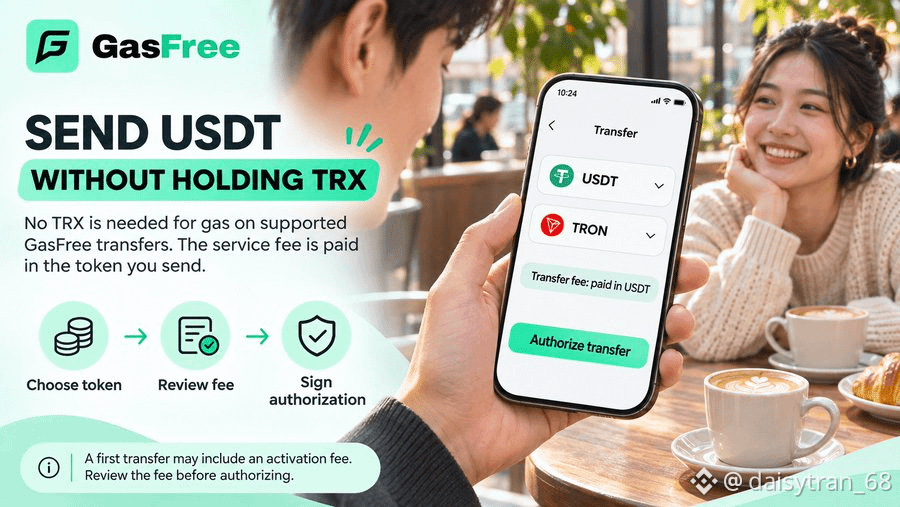
SEND USDT ON TRON WITHOUT HOLDING TRX FOR GAS.
One of the common frustrations for new users entering the TRON ecosystem is needing TRX just to pay network fees when transferring USDT.
Imagine having USDT in your wallet, wanting to send it to another address, but being unable to complete the transaction because you don't have enough TRX for Energy or network fees.
This is exactly the kind of friction that GasFree aims to address.
With GasFree, users can transfer supported tokens such as USDT on TRON without needing to hold TRX specifically to pay gas.
Here's how the process works:
1️⃣
Choose your token
Select the supported token you want to transfer, such as USDT.
2️⃣
Review the service fee
Before proceeding, check the displayed fee. The service fee is paid in the token being transferred, rather than requiring a separate TRX balance.
3️⃣
Sign the authorization
Review the transaction details and sign the required authorization to proceed. The service provider handles transaction submission and network gas payment.
A few things users should remember:
The first transfer may involve an additional account activation fee.
Service fees should always be checked before signing.
Don't approve a transaction until you understand the amount being transferred and the fees involved.
Personally, I think this is a meaningful improvement to the TRON user experience.
Gas fees can become a real barrier for newcomers. Having to acquire and maintain a separate token just to move stablecoins adds an unnecessary step to what should be a simple transaction.
GasFree helps make that process more straightforward.
You shouldn't need to understand every detail of blockchain gas mechanics just to send USDT.
@JustinSun #TRONEcoStar @DeFi_JUST
SEND USDT ON TRON WITHOUT HOLDING TRX FOR GAS.
One of the common frustrations for new users entering the TRON ecosystem is needing TRX just to pay network fees when transferring USDT.
Imagine having USDT in your wallet, wanting to send it to another address, but being unable to complete the transaction because you don't have enough TRX for Energy or network fees.
This is exactly the kind of friction that GasFree aims to address.
With GasFree, users can transfer supported tokens such as USDT on TRON without needing to hold TRX specifically to pay gas.
Here's how the process works:
1️⃣
Choose your token
Select the supported token you want to transfer, such as USDT.
2️⃣
Review the service fee
Before proceeding, check the displayed fee. The service fee is paid in the token being transferred, rather than requiring a separate TRX balance.
3️⃣
Sign the authorization
Review the transaction details and sign the required authorization to proceed. The service provider handles transaction submission and network gas payment.
A few things users should remember:
The first transfer may involve an additional account activation fee.
Service fees should always be checked before signing.
Don't approve a transaction until you understand the amount being transferred and the fees involved.
Personally, I think this is a meaningful improvement to the TRON user experience.
Gas fees can become a real barrier for newcomers. Having to acquire and maintain a separate token just to move stablecoins adds an unnecessary step to what should be a simple transaction.
GasFree helps make that process more straightforward.
You shouldn't need to understand every detail of blockchain gas mechanics just to send USDT.
@Justin Sun孙宇晨 #TRONEcoStar @JUST DAO
4
·
--
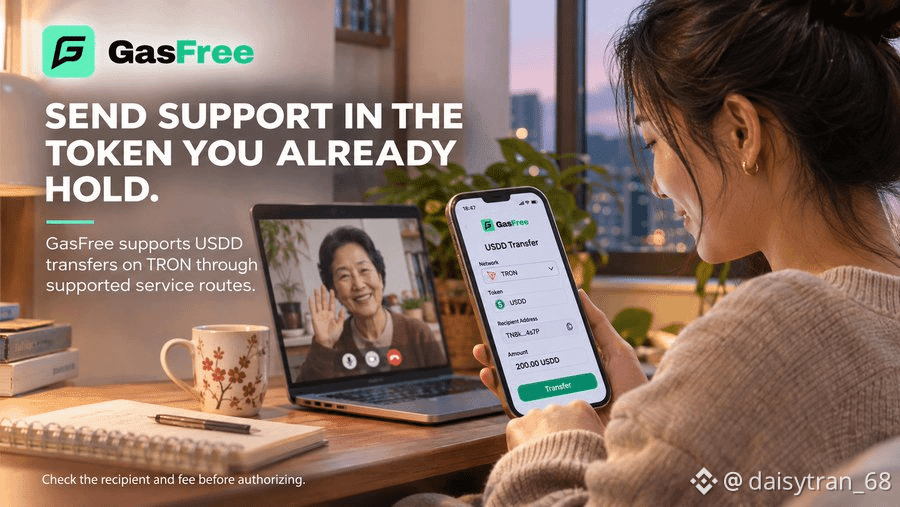
SEND SUPPORT IN THE TOKEN YOU ALREADY HOLD.
Imagine a family member needs financial support. You have USDD in your wallet and want to send some directly to their address.
The process sounds simple, but traditional on-chain transfers can require users to prepare TRX separately to cover network gas.
This is where GasFree on TRON can make a difference.
GasFree supports USDD transfers through supported service routes, allowing users to transfer USDD without needing to hold a separate TRX balance specifically for network gas.
Here's how a typical transfer could look:
1️⃣
Check the recipient's address
Make sure the wallet address belongs to the intended recipient. Always double-check before sending.
2️⃣
Select USDD
Choose USDD as the transfer token and enter the amount you want to send.
3️⃣
Review the service fee
Check the displayed fee before confirming. GasFree can charge the service fee in the token being transferred, so a separate TRX balance isn't required for gas payment.
4️⃣
Authorize the transfer
After reviewing the recipient, amount, and fee, sign the required authorization to proceed. The service provider handles transaction submission and network gas payment.
Why do I think this matters?
Crypto should make transferring value easier, not force users to understand every detail of network resources before sending money.
For someone who already holds USDD, removing the need to prepare a separate TRX balance can make the transfer experience much more convenient.
One important note: USDD availability depends on the supported service route and provider. Users should verify availability and fees before signing.
Sometimes the best improvement in crypto isn't a new financial product. It's making the simple things easier for everyone.
@JustinSun #TRONEcoStar @DeFi_JUST
SEND SUPPORT IN THE TOKEN YOU ALREADY HOLD.
Imagine a family member needs financial support. You have USDD in your wallet and want to send some directly to their address.
The process sounds simple, but traditional on-chain transfers can require users to prepare TRX separately to cover network gas.
This is where GasFree on TRON can make a difference.
GasFree supports USDD transfers through supported service routes, allowing users to transfer USDD without needing to hold a separate TRX balance specifically for network gas.
Here's how a typical transfer could look:
1️⃣
Check the recipient's address
Make sure the wallet address belongs to the intended recipient. Always double-check before sending.
2️⃣
Select USDD
Choose USDD as the transfer token and enter the amount you want to send.
3️⃣
Review the service fee
Check the displayed fee before confirming. GasFree can charge the service fee in the token being transferred, so a separate TRX balance isn't required for gas payment.
4️⃣
Authorize the transfer
After reviewing the recipient, amount, and fee, sign the required authorization to proceed. The service provider handles transaction submission and network gas payment.
Why do I think this matters?
Crypto should make transferring value easier, not force users to understand every detail of network resources before sending money.
For someone who already holds USDD, removing the need to prepare a separate TRX balance can make the transfer experience much more convenient.
One important note: USDD availability depends on the supported service route and provider. Users should verify availability and fees before signing.
Sometimes the best improvement in crypto isn't a new financial product. It's making the simple things easier for everyone.
@Justin Sun孙宇晨 #TRONEcoStar @JUST DAO
7
·
--
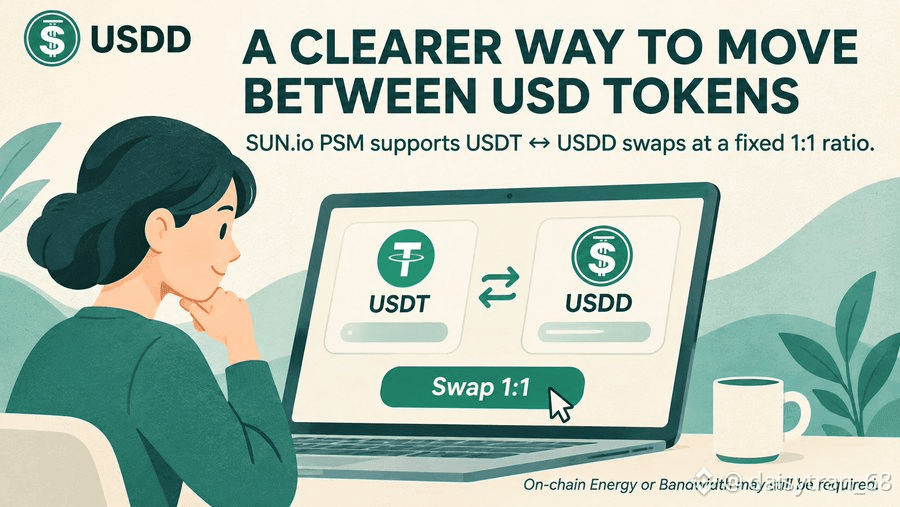
A CLEARER WAY TO MOVE BETWEEN USD TOKENS.
Stablecoins are designed to make digital value easier to manage, but moving between different stablecoins can sometimes involve unnecessary complexity.
That's why I find
http://SUN.io
PSM (Peg Stability Module) an interesting feature in the USDD ecosystem.
PSM supports direct swaps between USDT and USDD at a fixed 1:1 ratio, offering users a straightforward way to move between these two USD-pegged assets.
Here's why this matters:
1️⃣
Fixed 1:1 swap ratio
Users can swap USDT
↔
USDD at a fixed 1:1 ratio, making the conversion process easier to understand.
2️⃣
More flexibility for stablecoin users
Instead of treating USDT and USDD as completely separate assets, users have a dedicated mechanism to move between them.
3️⃣
A more connected USDD ecosystem
Integrating PSM into
SUN
adds another practical utility for USDD, supporting its role within the broader TRON DeFi ecosystem.
Personally, I believe stablecoin infrastructure should focus not only on maintaining value, but also on making that value easier to move and use.
A simple, predictable conversion mechanism can reduce friction and give users more flexibility when managing their stablecoin positions.
One important detail: although the swap uses a fixed 1:1 ratio, on-chain Energy or Bandwidth may still be required to complete the transaction.
Stablecoins become more useful when moving between them is just as straightforward as holding them.
@JustinSun #TRONEcoStar @usddio
A CLEARER WAY TO MOVE BETWEEN USD TOKENS.
Stablecoins are designed to make digital value easier to manage, but moving between different stablecoins can sometimes involve unnecessary complexity.
That's why I find
http://SUN.io
PSM (Peg Stability Module) an interesting feature in the USDD ecosystem.
PSM supports direct swaps between USDT and USDD at a fixed 1:1 ratio, offering users a straightforward way to move between these two USD-pegged assets.
Here's why this matters:
1️⃣
Fixed 1:1 swap ratio
Users can swap USDT
↔
USDD at a fixed 1:1 ratio, making the conversion process easier to understand.
2️⃣
More flexibility for stablecoin users
Instead of treating USDT and USDD as completely separate assets, users have a dedicated mechanism to move between them.
3️⃣
A more connected USDD ecosystem
Integrating PSM into
SUN
adds another practical utility for USDD, supporting its role within the broader TRON DeFi ecosystem.
Personally, I believe stablecoin infrastructure should focus not only on maintaining value, but also on making that value easier to move and use.
A simple, predictable conversion mechanism can reduce friction and give users more flexibility when managing their stablecoin positions.
One important detail: although the swap uses a fixed 1:1 ratio, on-chain Energy or Bandwidth may still be required to complete the transaction.
Stablecoins become more useful when moving between them is just as straightforward as holding them.
@Justin Sun孙宇晨 #TRONEcoStar @USDD - Decentralized USD
10
·
--
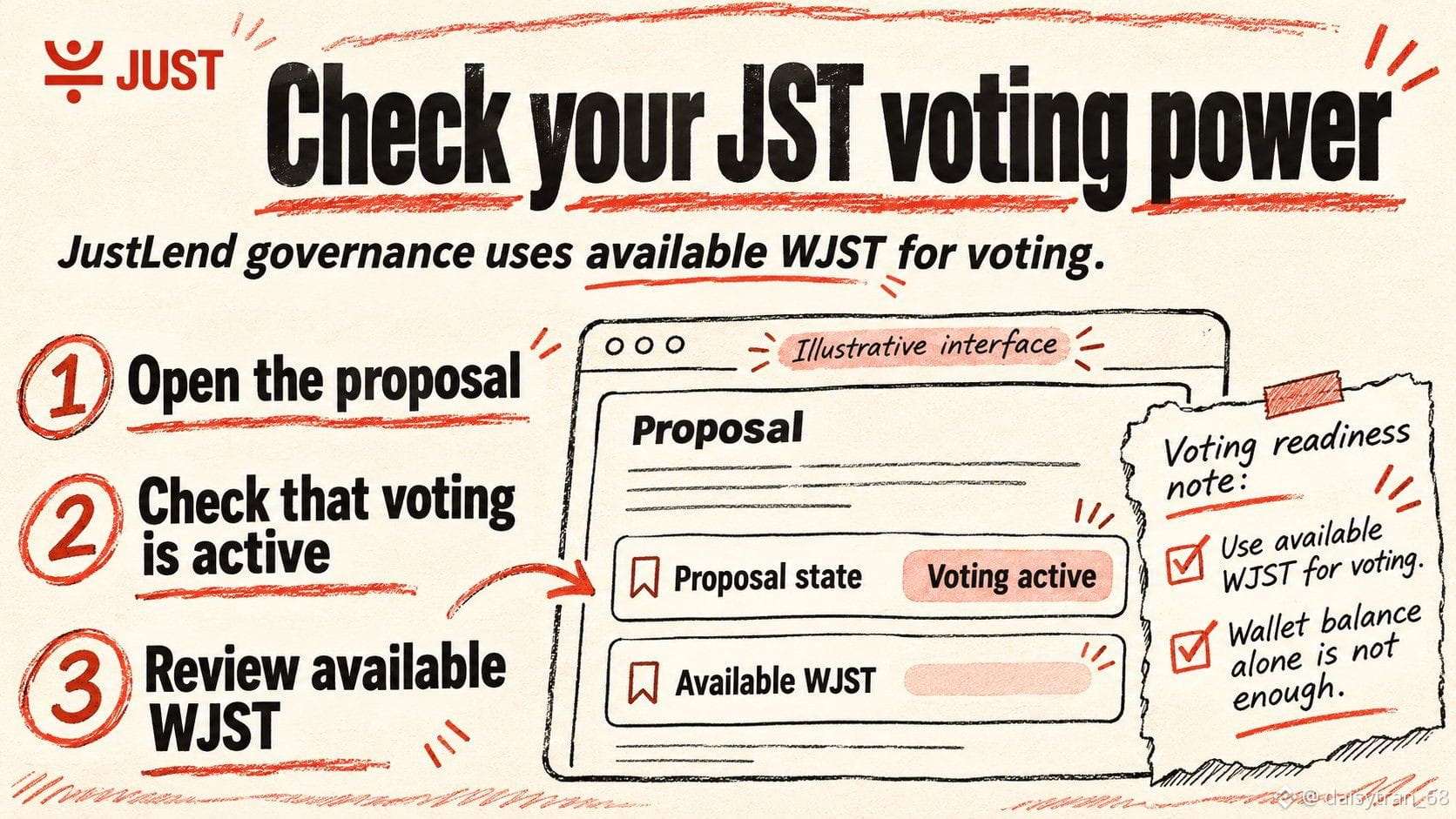
YOUR WALLET SHOWS JST AND A PROPOSAL IS OPEN ON SCREEN. WHAT WILL THE VOTING SYSTEM ACTUALLY COUNT?
Holding JST is the starting point, but governance voting on JustLend uses WJST to determine voting power.
Before casting a vote on a JustLend Improvement Proposal (JIP), there are two important things to understand: the proposal's current status and the voting power available to your account.
Here's how to check:
1️⃣
Check the Proposal Status
→ Open the JIP you want to participate in.
→ If its status is Pending, the proposal has not yet reached the active voting stage.
→ Active means the proposal has entered the stage where eligible holders can cast their votes.
→ Don't assume you can vote simply because a proposal is visible on the governance page.
2️⃣
Understand How JST Becomes Voting Power
→ JustLend's documented governance process uses JST deposited into WJST.
→ WJST represents the voting power used in the governance process.
→ This means your wallet's JST balance and your account's available WJST are not necessarily the same thing.
3️⃣
Check Your Available WJST
→ Connect the account you intend to use for voting.
→ Review how much WJST is available to that account.
→ Make sure you understand the available voting weight before proceeding.
→ If you hold JST but haven't deposited it into WJST, don't assume that your entire JST balance is immediately available for voting.
4️⃣
Understand What Happens After Voting
→ When you cast a vote, the voting weight used is locked for that specific proposal.
→ This is why available voting power can differ from the JST balance you initially saw in your wallet.
→ Consider this restriction before committing your voting weight.
@JustinSun #TRONEcoStar @DeFi_JUST
YOUR WALLET SHOWS JST AND A PROPOSAL IS OPEN ON SCREEN. WHAT WILL THE VOTING SYSTEM ACTUALLY COUNT?
Holding JST is the starting point, but governance voting on JustLend uses WJST to determine voting power.
Before casting a vote on a JustLend Improvement Proposal (JIP), there are two important things to understand: the proposal's current status and the voting power available to your account.
Here's how to check:
1️⃣
Check the Proposal Status
→ Open the JIP you want to participate in.
→ If its status is Pending, the proposal has not yet reached the active voting stage.
→ Active means the proposal has entered the stage where eligible holders can cast their votes.
→ Don't assume you can vote simply because a proposal is visible on the governance page.
2️⃣
Understand How JST Becomes Voting Power
→ JustLend's documented governance process uses JST deposited into WJST.
→ WJST represents the voting power used in the governance process.
→ This means your wallet's JST balance and your account's available WJST are not necessarily the same thing.
3️⃣
Check Your Available WJST
→ Connect the account you intend to use for voting.
→ Review how much WJST is available to that account.
→ Make sure you understand the available voting weight before proceeding.
→ If you hold JST but haven't deposited it into WJST, don't assume that your entire JST balance is immediately available for voting.
4️⃣
Understand What Happens After Voting
→ When you cast a vote, the voting weight used is locked for that specific proposal.
→ This is why available voting power can differ from the JST balance you initially saw in your wallet.
→ Consider this restriction before committing your voting weight.
@Justin Sun孙宇晨 #TRONEcoStar @JUST DAO
30
·
--
📊
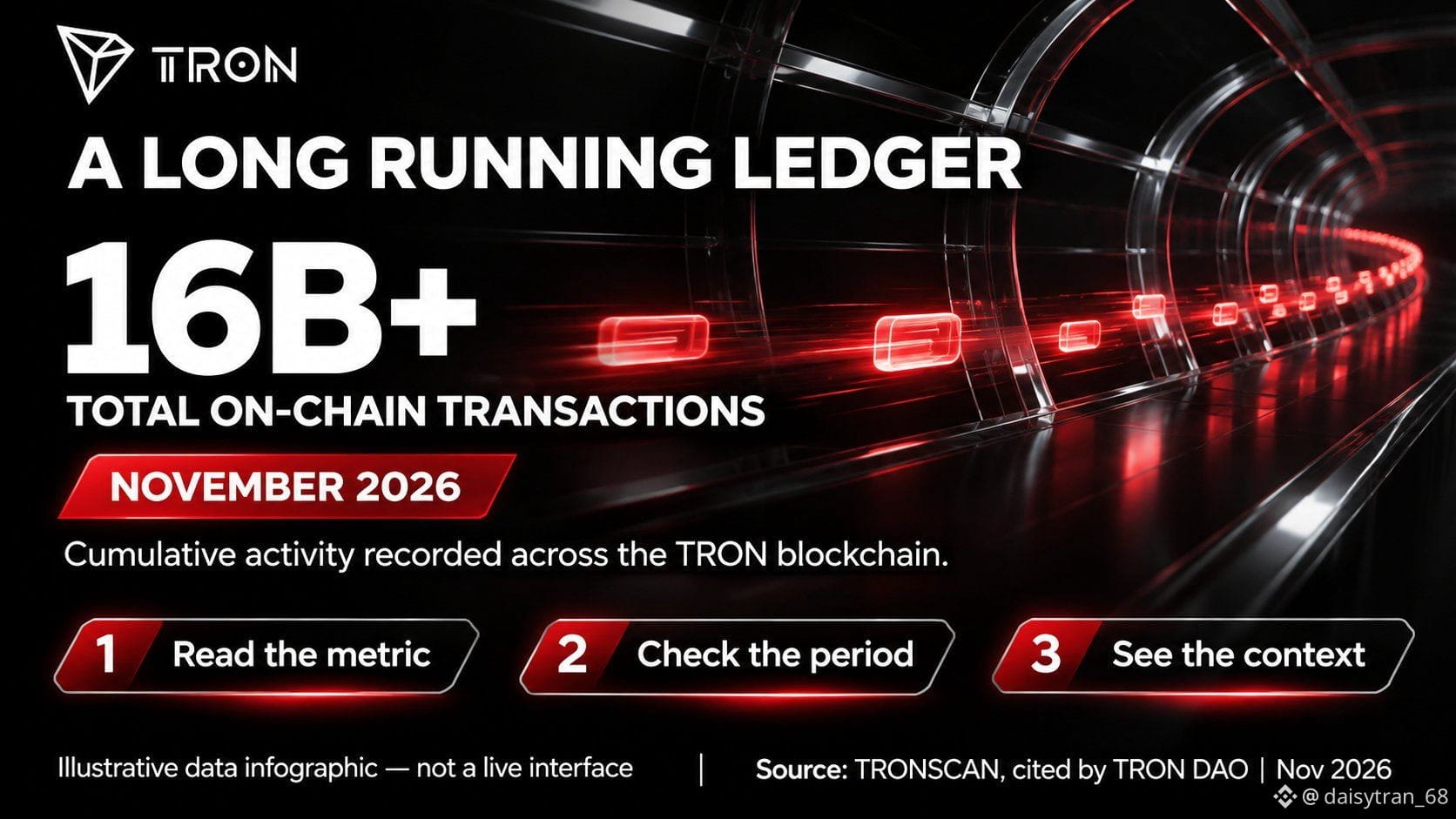
TRON’S ON-CHAIN HISTORY: MORE THAN 16 BILLION TRANSACTIONS.
Every transaction adds another entry to the network’s public history.
By November 2026, TRON had processed more than 16 billion total transactions, marking another milestone in the growth of its blockchain activity.
1️⃣
Understanding the 16 Billion Milestone
→ This is a cumulative transaction count, representing transactions recorded over the network's history.
→ It reflects activity accumulated over time, not the number of transactions processed in a single day, week, or quarter.
2️⃣
Transaction Count vs. Transfer Volume
These two metrics answer different questions:
→ Transaction Count: How many transactions have been recorded on-chain?
→ Transfer Volume: How much value has moved through the network?
→ A high transaction count demonstrates recorded activity, but it doesn't automatically indicate an equally high amount of value transferred.
3️⃣
Why Public On-Chain Records Matter
→ Blockchain explorers allow users to inspect recorded transactions.
→ Public records provide a transparent foundation for tracking network activity.
→ Historical transaction data helps researchers and community members study how network usage evolves.
4️⃣
Look Beyond the Headline Number
When comparing TRON with other blockchain networks, consider the reporting period, transaction definitions, and counting methodology.
Different networks may classify or count transactions differently, so comparisons require consistent measurement.
💡
From Historical Growth to Current Usage
Cumulative activity shows how much has happened over time. Daily and monthly transaction data provide a clearer picture of how the network is being used today.
📌
Cumulative activity tells one part of the story; time-based data shows how the network is being used now.
@JustinSun #TRONEcoStar @TRONDAO
📊
TRON’S ON-CHAIN HISTORY: MORE THAN 16 BILLION TRANSACTIONS.
Every transaction adds another entry to the network’s public history.
By November 2026, TRON had processed more than 16 billion total transactions, marking another milestone in the growth of its blockchain activity.
1️⃣
Understanding the 16 Billion Milestone
→ This is a cumulative transaction count, representing transactions recorded over the network's history.
→ It reflects activity accumulated over time, not the number of transactions processed in a single day, week, or quarter.
2️⃣
Transaction Count vs. Transfer Volume
These two metrics answer different questions:
→ Transaction Count: How many transactions have been recorded on-chain?
→ Transfer Volume: How much value has moved through the network?
→ A high transaction count demonstrates recorded activity, but it doesn't automatically indicate an equally high amount of value transferred.
3️⃣
Why Public On-Chain Records Matter
→ Blockchain explorers allow users to inspect recorded transactions.
→ Public records provide a transparent foundation for tracking network activity.
→ Historical transaction data helps researchers and community members study how network usage evolves.
4️⃣
Look Beyond the Headline Number
When comparing TRON with other blockchain networks, consider the reporting period, transaction definitions, and counting methodology.
Different networks may classify or count transactions differently, so comparisons require consistent measurement.
💡
From Historical Growth to Current Usage
Cumulative activity shows how much has happened over time. Daily and monthly transaction data provide a clearer picture of how the network is being used today.
📌
Cumulative activity tells one part of the story; time-based data shows how the network is being used now.
@Justin Sun孙宇晨 #TRONEcoStar @TRON DAO
6
·
--
🧭
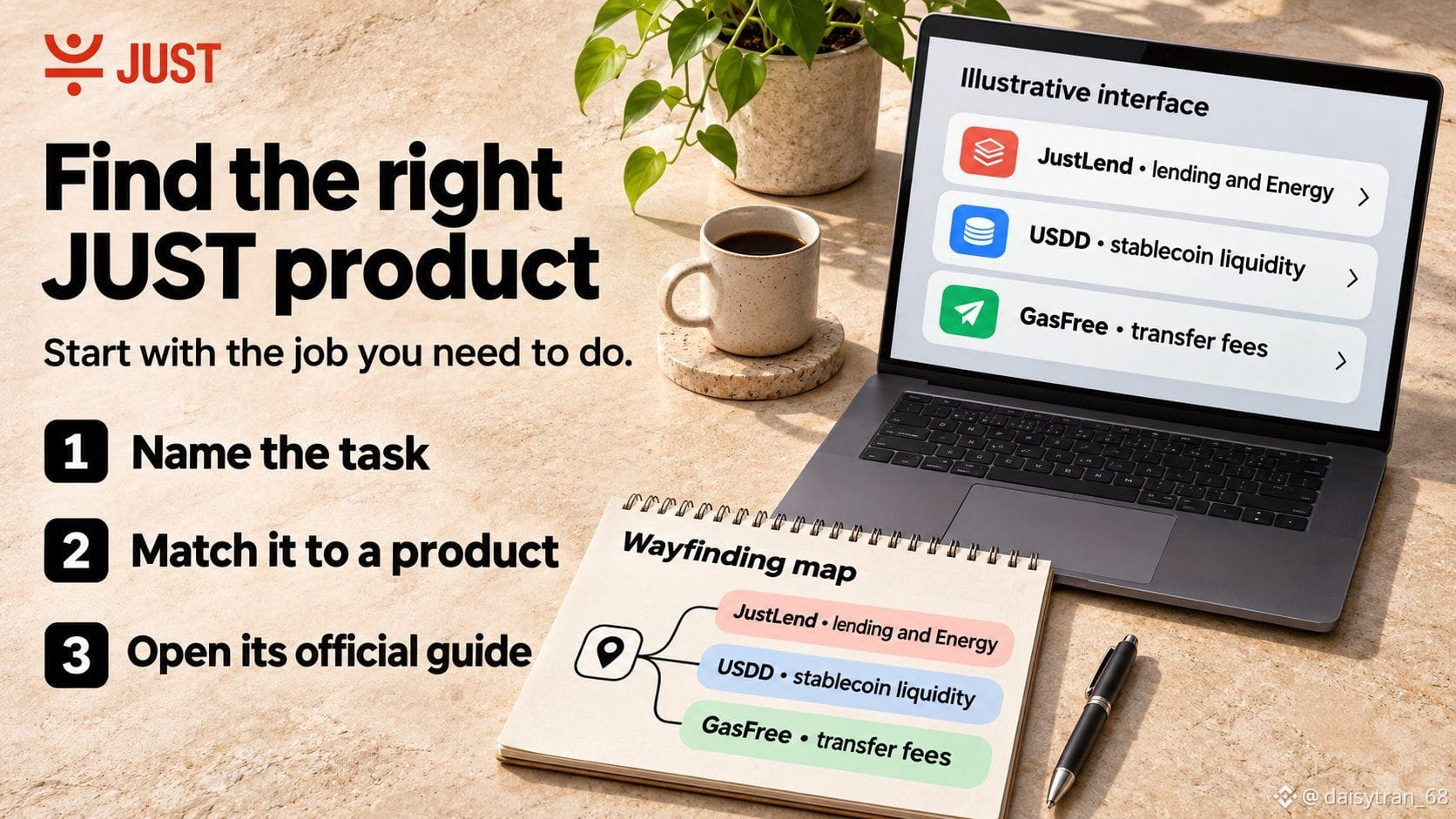
FIND THE RIGHT JUST PRODUCT — START WITH YOUR QUESTION.
You want to pay a transfer fee in stablecoins. The JUST homepage gives you three product names. Which one do you open?
The easiest way to navigate the JUST ecosystem is to start with the task you want to complete, then follow the product designed for it.
1️⃣
GasFree — Paying Transfer Fees in Tokens
→ Your question: Which token can cover my transfer fee?
→ Open the GasFree section and check its supported fee-payment options.
→ Review the supported tokens and wallet requirements before making your transfer.
2️⃣
USDD — Exploring Stablecoin Options
→ Your question: How can I explore stablecoin swaps through the PSM?
→ Follow the USDD entry to learn about its stablecoin ecosystem and PSM functionality.
3️⃣
JustLend — Lending Markets and Energy
→ Your question: Where can I explore lending markets or Energy services?
→ Open JustLend to find information about supplying, borrowing, and Energy-related services.
💡
A Simple Navigation Tip
Don't start by clicking every product. Keep your original task in mind and open the guide that answers it.
If you're preparing a transfer, focus on the fee-token information for that specific transfer rather than assuming every wallet or token is supported.
📌
For this transfer, start with GasFree and check which fee token your wallet supports.
@JustinSun #TRONEcoStar @DeFi_JUST
🧭
FIND THE RIGHT JUST PRODUCT — START WITH YOUR QUESTION.
You want to pay a transfer fee in stablecoins. The JUST homepage gives you three product names. Which one do you open?
The easiest way to navigate the JUST ecosystem is to start with the task you want to complete, then follow the product designed for it.
1️⃣
GasFree — Paying Transfer Fees in Tokens
→ Your question: Which token can cover my transfer fee?
→ Open the GasFree section and check its supported fee-payment options.
→ Review the supported tokens and wallet requirements before making your transfer.
2️⃣
USDD — Exploring Stablecoin Options
→ Your question: How can I explore stablecoin swaps through the PSM?
→ Follow the USDD entry to learn about its stablecoin ecosystem and PSM functionality.
3️⃣
JustLend — Lending Markets and Energy
→ Your question: Where can I explore lending markets or Energy services?
→ Open JustLend to find information about supplying, borrowing, and Energy-related services.
💡
A Simple Navigation Tip
Don't start by clicking every product. Keep your original task in mind and open the guide that answers it.
If you're preparing a transfer, focus on the fee-token information for that specific transfer rather than assuming every wallet or token is supported.
📌
For this transfer, start with GasFree and check which fee token your wallet supports.
@Justin Sun孙宇晨 #TRONEcoStar @JUST DAO
20
·
--
🚀
REAL DATA. REAL GROWTH. SUSTAINABLE VALUE.
📊
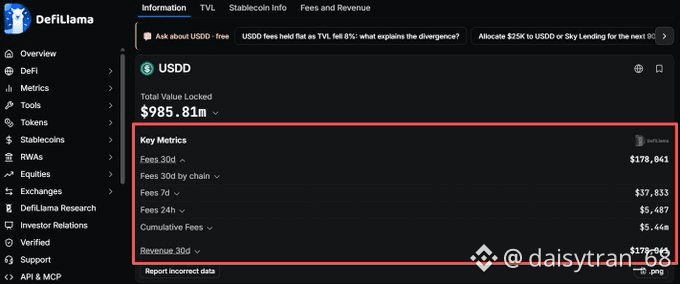
According to DefiLlama, USDD has generated approximately $5.44M in cumulative protocol fees, while Smart Allocator has delivered over $35M in cumulative investment returns.
These figures highlight two important dimensions of the USDD ecosystem:
💰
Protocol Revenue
→ Approximately $5.44M in cumulative fees reflects the economic activity generated by the protocol.
📈
Smart Allocator Performance
→ More than $35M in cumulative investment returns highlights its role in putting reserves to work.
🌱
From protocol revenue to investment performance, these metrics offer a snapshot of USDD's growing ecosystem and its focus on building sustainable long-term value.
@JustinSun #TRONEcoStar @usddio
🚀
REAL DATA. REAL GROWTH. SUSTAINABLE VALUE.
📊
According to DefiLlama, USDD has generated approximately $5.44M in cumulative protocol fees, while Smart Allocator has delivered over $35M in cumulative investment returns.
These figures highlight two important dimensions of the USDD ecosystem:
💰
Protocol Revenue
→ Approximately $5.44M in cumulative fees reflects the economic activity generated by the protocol.
📈
Smart Allocator Performance
→ More than $35M in cumulative investment returns highlights its role in putting reserves to work.
🌱
From protocol revenue to investment performance, these metrics offer a snapshot of USDD's growing ecosystem and its focus on building sustainable long-term value.
@Justin Sun孙宇晨 #TRONEcoStar @USDD - Decentralized USD
1
·
--
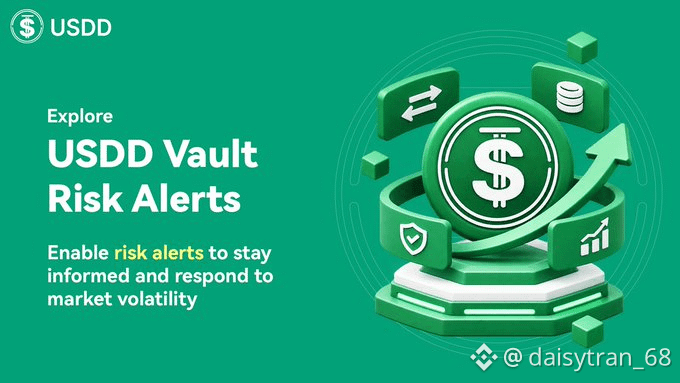
MARKETS ARE VOLATILE. HAVE YOU ENABLED RISK ALERTS FOR YOUR USDD VAULT?
Managing a USDD Vault isn't just about opening a position. It's also about staying informed when market movements affect your collateralization ratio.
That's why USDD Risk Alerts provide two ways to keep track of potential risks without having to monitor the market around the clock.
🔔
TWO WAYS TO STAY INFORMED
1️⃣
In-App Alerts — Enabled by Default
→ Risk warnings are automatically displayed at the top of the page.
→ Alerts are based on your Vault's collateralization ratio.
→ Check the warning messages to understand when your position may require attention.
2️⃣
Email Alerts — Optional
→ Enable email notifications if you want additional updates.
→ Receive alerts when potential risks are detected in your Vault position.
→ Get another channel for staying informed even when you're not actively viewing the platform.
3️⃣
Manage Your Alert Settings
→ Open your USDD Vault interface.
→ Find the bell icon in the top-right corner.
→ Access your notification settings and manage email alerts whenever needed.
⭐
WHY RISK ALERTS MATTER
→ Stay aware: Receive warnings when your Vault's collateralization ratio indicates potential risks.
→ React sooner: Alerts can help you identify positions that may need attention.
→ More convenient monitoring: Combine in-app warnings with optional email notifications.
→ Better risk management: Stay informed without constantly checking market movements yourself.
⚠️
REMEMBER: Risk alerts are monitoring tools, not protection against liquidation or a guarantee that every market movement will be detected in advance. Continue monitoring your collateralization ratio and manage your position responsibly.
@JustinSun #TRONEcoStar @usddio
MARKETS ARE VOLATILE. HAVE YOU ENABLED RISK ALERTS FOR YOUR USDD VAULT?
Managing a USDD Vault isn't just about opening a position. It's also about staying informed when market movements affect your collateralization ratio.
That's why USDD Risk Alerts provide two ways to keep track of potential risks without having to monitor the market around the clock.
🔔
TWO WAYS TO STAY INFORMED
1️⃣
In-App Alerts — Enabled by Default
→ Risk warnings are automatically displayed at the top of the page.
→ Alerts are based on your Vault's collateralization ratio.
→ Check the warning messages to understand when your position may require attention.
2️⃣
Email Alerts — Optional
→ Enable email notifications if you want additional updates.
→ Receive alerts when potential risks are detected in your Vault position.
→ Get another channel for staying informed even when you're not actively viewing the platform.
3️⃣
Manage Your Alert Settings
→ Open your USDD Vault interface.
→ Find the bell icon in the top-right corner.
→ Access your notification settings and manage email alerts whenever needed.
⭐
WHY RISK ALERTS MATTER
→ Stay aware: Receive warnings when your Vault's collateralization ratio indicates potential risks.
→ React sooner: Alerts can help you identify positions that may need attention.
→ More convenient monitoring: Combine in-app warnings with optional email notifications.
→ Better risk management: Stay informed without constantly checking market movements yourself.
⚠️
REMEMBER: Risk alerts are monitoring tools, not protection against liquidation or a guarantee that every market movement will be detected in advance. Continue monitoring your collateralization ratio and manage your position responsibly.
@Justin Sun孙宇晨 #TRONEcoStar @USDD - Decentralized USD
1

·
--
TRON ECO WEEKLY RECAP (NOV 2 – NOV 8): LIQUIDITY SCALE, RESERVES, AND BUILDER UPDATESWeekly ecosystem recaps make it easier to see how different layers of a network move at the same time. Across the November 2 to November 8 TRON Eco recap, updates spanned payment volume, stablecoin backing, lending incentives, AI tooling, and long-standing P2P reach.
Together, these snapshots show activity across both financial rails and developer-facing infrastructure.
➤ Transfer Volume, Reserves, and DeFi Activity
Several numbers in the recap point to measurable scale across liquidity and lending markets:
GasFree and USDD: Over $15.89B in October transfer volume for GasFree, while USDD reached $1.5B in circulation backed by more than $2.2B in collateral. WrappedBTC reserves: Published Proof of Reserves showing 116,511.99 BTC in reserves against 116,499.19 WBTC in circulation. JustLend and SUN.io: The 24th USDD 2.0 Supply Mining phase launched alongside WIN and NFT market activity, while SUN.io hosted an English roundtable on DeFi yields, hidden risks, and trust.
Still, reserve figures and mining phases only tell part of the story until checked alongside ongoing demand and risk management.
➤ AI Workflow Upgrades and Global Client Scale
Outside lending and reserves, the recap also highlighted practical product additions and broad distribution milestones:
B.AI updates: Added GitHub login and API account top-ups for developers and users. BitTorrent milestone: Surpassed 589M global client installations.
Developer conveniences like GitHub login and API top-ups lower friction for builders, even as long-term impact depends on real day-to-day usage.
➤ Why Data Reliability Connects the Ecosystem
From lending pools and yield discussions to automated tools, applications depend on trustworthy underlying data to operate smoothly. Oracle infrastructure helps connect on-chain protocols with dependable external information across the TRON ecosystem over time.
➤ My Personal Perspective
I like recaps like this because they put big numbers—like $15.89B in volume or 116,511.99 BTC in reserves—right next to practical builder updates like GitHub login on B.AI. When you read them together, you see a mix of scale, risk conversations, and everyday product polish.
For me, roundtables about DeFi yields and hidden risks are especially worth paying attention to whenever liquidity numbers look big.
Which item from the November 2 to November 8 TRON Eco recap stood out most to you—and what risk or utility metric do you look at first when reading a recap like this?
@WINkLink_Official @JustinSun #TRONEcoStar
TRON ECO WEEKLY RECAP (NOV 2 – NOV 8): LIQUIDITY SCALE, RESERVES, AND BUILDER UPDATES
Weekly ecosystem recaps make it easier to see how different layers of a network move at the same time. Across the November 2 to November 8 TRON Eco recap, updates spanned payment volume, stablecoin backing, lending incentives, AI tooling, and long-standing P2P reach.
Together, these snapshots show activity across both financial rails and developer-facing infrastructure.
➤ Transfer Volume, Reserves, and DeFi Activity
Several numbers in the recap point to measurable scale across liquidity and lending markets:
GasFree and USDD: Over $15.89B in October transfer volume for GasFree, while USDD reached $1.5B in circulation backed by more than $2.2B in collateral. WrappedBTC reserves: Published Proof of Reserves showing 116,511.99 BTC in reserves against 116,499.19 WBTC in circulation. JustLend and SUN.io: The 24th USDD 2.0 Supply Mining phase launched alongside WIN and NFT market activity, while SUN.io hosted an English roundtable on DeFi yields, hidden risks, and trust.
Still, reserve figures and mining phases only tell part of the story until checked alongside ongoing demand and risk management.
➤ AI Workflow Upgrades and Global Client Scale
Outside lending and reserves, the recap also highlighted practical product additions and broad distribution milestones:
B.AI updates: Added GitHub login and API account top-ups for developers and users. BitTorrent milestone: Surpassed 589M global client installations.
Developer conveniences like GitHub login and API top-ups lower friction for builders, even as long-term impact depends on real day-to-day usage.
➤ Why Data Reliability Connects the Ecosystem
From lending pools and yield discussions to automated tools, applications depend on trustworthy underlying data to operate smoothly. Oracle infrastructure helps connect on-chain protocols with dependable external information across the TRON ecosystem over time.
➤ My Personal Perspective
I like recaps like this because they put big numbers—like $15.89B in volume or 116,511.99 BTC in reserves—right next to practical builder updates like GitHub login on B.AI. When you read them together, you see a mix of scale, risk conversations, and everyday product polish.
For me, roundtables about DeFi yields and hidden risks are especially worth paying attention to whenever liquidity numbers look big.
Which item from the November 2 to November 8 TRON Eco recap stood out most to you—and what risk or utility metric do you look at first when reading a recap like this?
@WINkLink_Official @Justin Sun孙宇晨 #TRONEcoStar
45

·
--
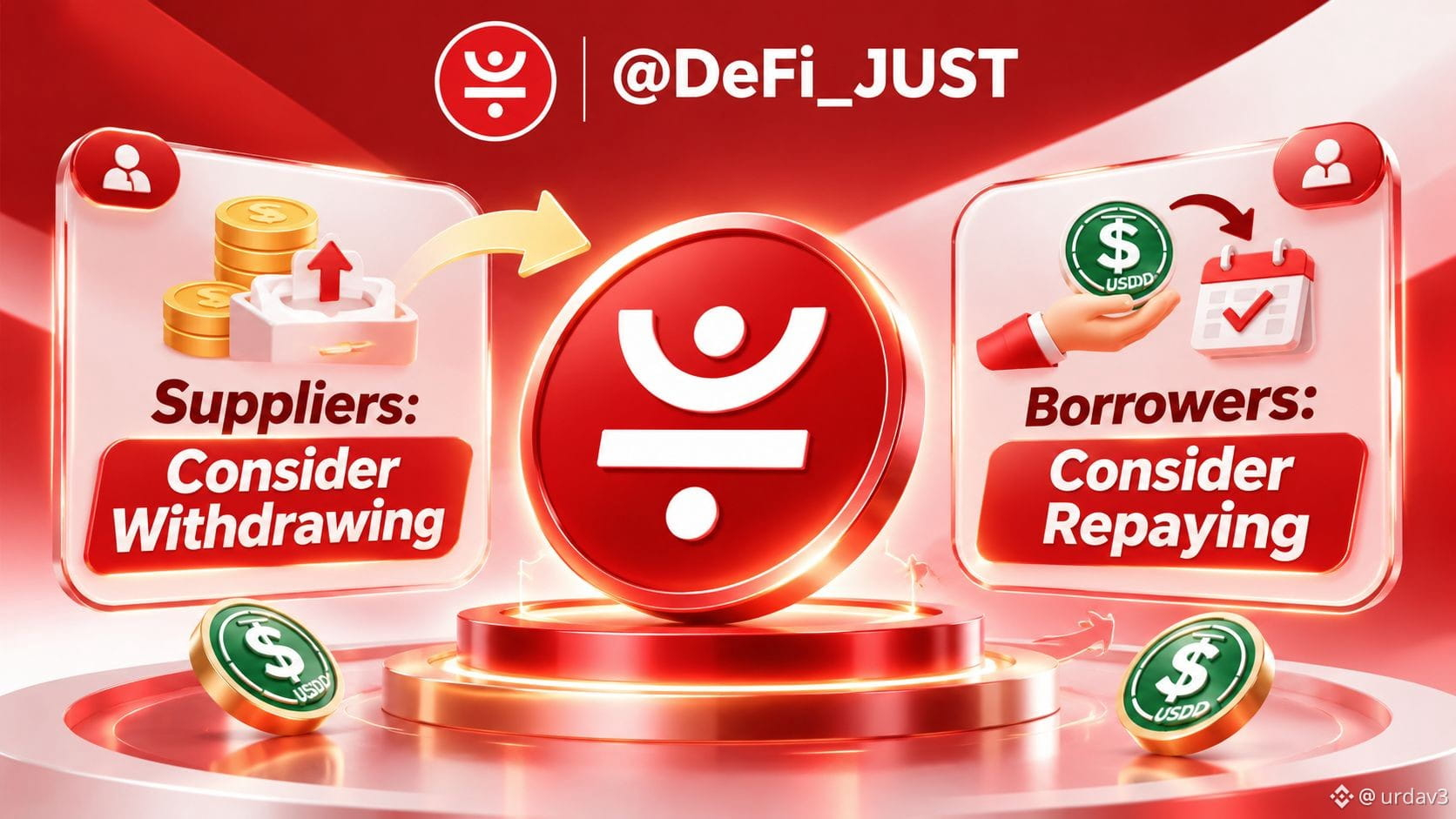
Supply and Borrow Functions Disabled – What does JustLend’s pause on new USD1 and wstUSDT positions mean?
- JustLend has officially disabled the Supply and Borrow functions for the USD1 and wstUSDT markets.
- New supply or borrow positions in these two markets can no longer be opened.
- Existing positions continue to be fully supported and can be managed normally during the transition.
- The change applies specifically to USD1 and wstUSDT; other markets on JustLend remain unaffected.
- Full announcement: support.justlend.org/hc/en-us/articles/64626259450905
Source: Official JustLend DAO announcement.
Perspective: Disabling new supply and borrow is a targeted control measure, not a broad shutdown. It prevents additional capital from entering these specific markets while the transition is underway, which helps limit risk concentration. For the wider JustLend ecosystem, this keeps the rest of the protocol operating normally. Users who were planning to open new positions in USD1 or wstUSDT will need to wait or consider other markets, while those already inside can continue operating as before. Clear communication of the scope (new only, not existing) is what separates a controlled adjustment from unnecessary panic.
@DeFi_JUST @JustinSun
#TRONEcoStar
Supply and Borrow Functions Disabled – What does JustLend’s pause on new USD1 and wstUSDT positions mean?
- JustLend has officially disabled the Supply and Borrow functions for the USD1 and wstUSDT markets.
- New supply or borrow positions in these two markets can no longer be opened.
- Existing positions continue to be fully supported and can be managed normally during the transition.
- The change applies specifically to USD1 and wstUSDT; other markets on JustLend remain unaffected.
- Full announcement: support.justlend.org/hc/en-us/articles/64626259450905
Source: Official JustLend DAO announcement.
Perspective: Disabling new supply and borrow is a targeted control measure, not a broad shutdown. It prevents additional capital from entering these specific markets while the transition is underway, which helps limit risk concentration. For the wider JustLend ecosystem, this keeps the rest of the protocol operating normally. Users who were planning to open new positions in USD1 or wstUSDT will need to wait or consider other markets, while those already inside can continue operating as before. Clear communication of the scope (new only, not existing) is what separates a controlled adjustment from unnecessary panic.
@JUST DAO @Justin Sun孙宇晨
#TRONEcoStar
37
·
--
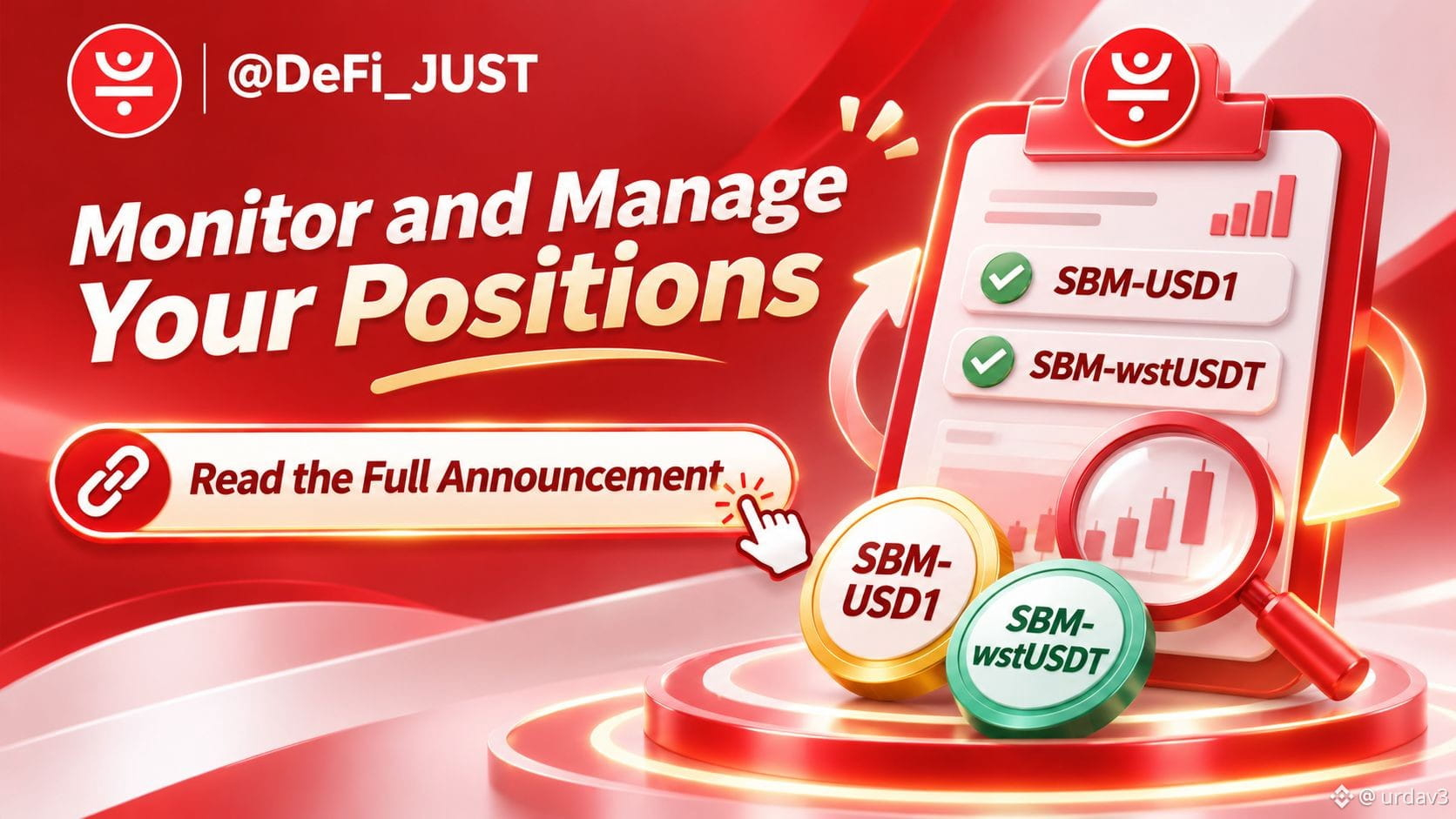
Suppliers Consider Withdrawing, Borrowers Consider Repaying – How should users handle USD1 and wstUSDT positions now?
- JustLend has disabled new Supply and Borrow functions for the USD1 and wstUSDT markets.
- Existing positions remain fully supported during the transition period.
- Official recommendation:
• Suppliers may consider withdrawing their supplied USD1 or wstUSDT.
• Borrowers may consider repaying outstanding USD1 or wstUSDT loans.
• Users in SBM-USD1 or SBM-wstUSDT markets should continue monitoring and managing positions.
- No mandatory deadline or forced action has been stated.
- Details are in the official JustLend support announcement.
Source: JustLend DAO official notice on disabling Supply and Borrow for USD1 and wstUSDT markets.
Perspective: The language used is “may consider,” not “must immediately.” This gives users flexibility while signaling that a review of positions is prudent. Suppliers who withdraw reduce exposure to any potential rate or liquidity changes during the transition; borrowers who repay eliminate interest accrual and liquidation risk in these specific markets. Because existing positions stay fully functional, users can choose the timing that suits their own risk tolerance rather than reacting to an emergency. In practice, the users who treat the notice as a prompt to review rather than an alarm tend to make cleaner decisions.
@DeFi_JUST @JustinSun
#TRONEcoStar
Suppliers Consider Withdrawing, Borrowers Consider Repaying – How should users handle USD1 and wstUSDT positions now?
- JustLend has disabled new Supply and Borrow functions for the USD1 and wstUSDT markets.
- Existing positions remain fully supported during the transition period.
- Official recommendation:
• Suppliers may consider withdrawing their supplied USD1 or wstUSDT.
• Borrowers may consider repaying outstanding USD1 or wstUSDT loans.
• Users in SBM-USD1 or SBM-wstUSDT markets should continue monitoring and managing positions.
- No mandatory deadline or forced action has been stated.
- Details are in the official JustLend support announcement.
Source: JustLend DAO official notice on disabling Supply and Borrow for USD1 and wstUSDT markets.
Perspective: The language used is “may consider,” not “must immediately.” This gives users flexibility while signaling that a review of positions is prudent. Suppliers who withdraw reduce exposure to any potential rate or liquidity changes during the transition; borrowers who repay eliminate interest accrual and liquidation risk in these specific markets. Because existing positions stay fully functional, users can choose the timing that suits their own risk tolerance rather than reacting to an emergency. In practice, the users who treat the notice as a prompt to review rather than an alarm tend to make cleaner decisions.
@JUST DAO @Justin Sun孙宇晨
#TRONEcoStar
48
·
--
JustLend Disables New Supply and Borrow for USD1 and wstUSDT MarketsJustLend Disables New Supply and Borrow for USD1 and wstUSDT Markets
What does the temporary disablement of USD1 and wstUSDT markets actually mean for existing users?
Supply and Borrow functions for the USD1 and wstUSDT markets on JustLend have been disabled.New positions in these two markets can no longer be opened.Existing positions remain fully supported and can continue to be managed normally during the transition period.Recommended actions: • Suppliers may consider withdrawing their supplied USD1 or wstUSDT. • Borrowers may consider repaying outstanding USD1 or wstUSDT loans. • Users in the SBM-USD1 or SBM-wstUSDT markets should keep monitoring and managing their positions.Full announcement: support.justlend.org (article on disabling Supply and Borrow for USD1 and wstUSDT markets).
Source: Official JustLend DAO announcement.
Perspective: This is a market-specific adjustment, not a shutdown of JustLend. By pausing new supply and borrow while keeping existing positions fully functional, the protocol reduces potential complexity during a transition without forcing immediate action on current users. For participants, the practical takeaway is simple risk management: review positions, decide whether to withdraw or repay, and continue monitoring rather than treating the notice as an emergency. In a multi-market lending protocol, selective adjustments like this help maintain overall system stability while individual markets are reconfigured.
@JustinSun @DeFi_JUST #TRONEcoStar
JustLend Disables New Supply and Borrow for USD1 and wstUSDT Markets
JustLend Disables New Supply and Borrow for USD1 and wstUSDT Markets
What does the temporary disablement of USD1 and wstUSDT markets actually mean for existing users?
Supply and Borrow functions for the USD1 and wstUSDT markets on JustLend have been disabled.New positions in these two markets can no longer be opened.Existing positions remain fully supported and can continue to be managed normally during the transition period.Recommended actions: • Suppliers may consider withdrawing their supplied USD1 or wstUSDT. • Borrowers may consider repaying outstanding USD1 or wstUSDT loans. • Users in the SBM-USD1 or SBM-wstUSDT markets should keep monitoring and managing their positions.Full announcement: support.justlend.org (article on disabling Supply and Borrow for USD1 and wstUSDT markets).
Source: Official JustLend DAO announcement.
Perspective: This is a market-specific adjustment, not a shutdown of JustLend. By pausing new supply and borrow while keeping existing positions fully functional, the protocol reduces potential complexity during a transition without forcing immediate action on current users. For participants, the practical takeaway is simple risk management: review positions, decide whether to withdraw or repay, and continue monitoring rather than treating the notice as an emergency. In a multi-market lending protocol, selective adjustments like this help maintain overall system stability while individual markets are reconfigured.
@Justin Sun孙宇晨 @JUST DAO #TRONEcoStar
107
·
--
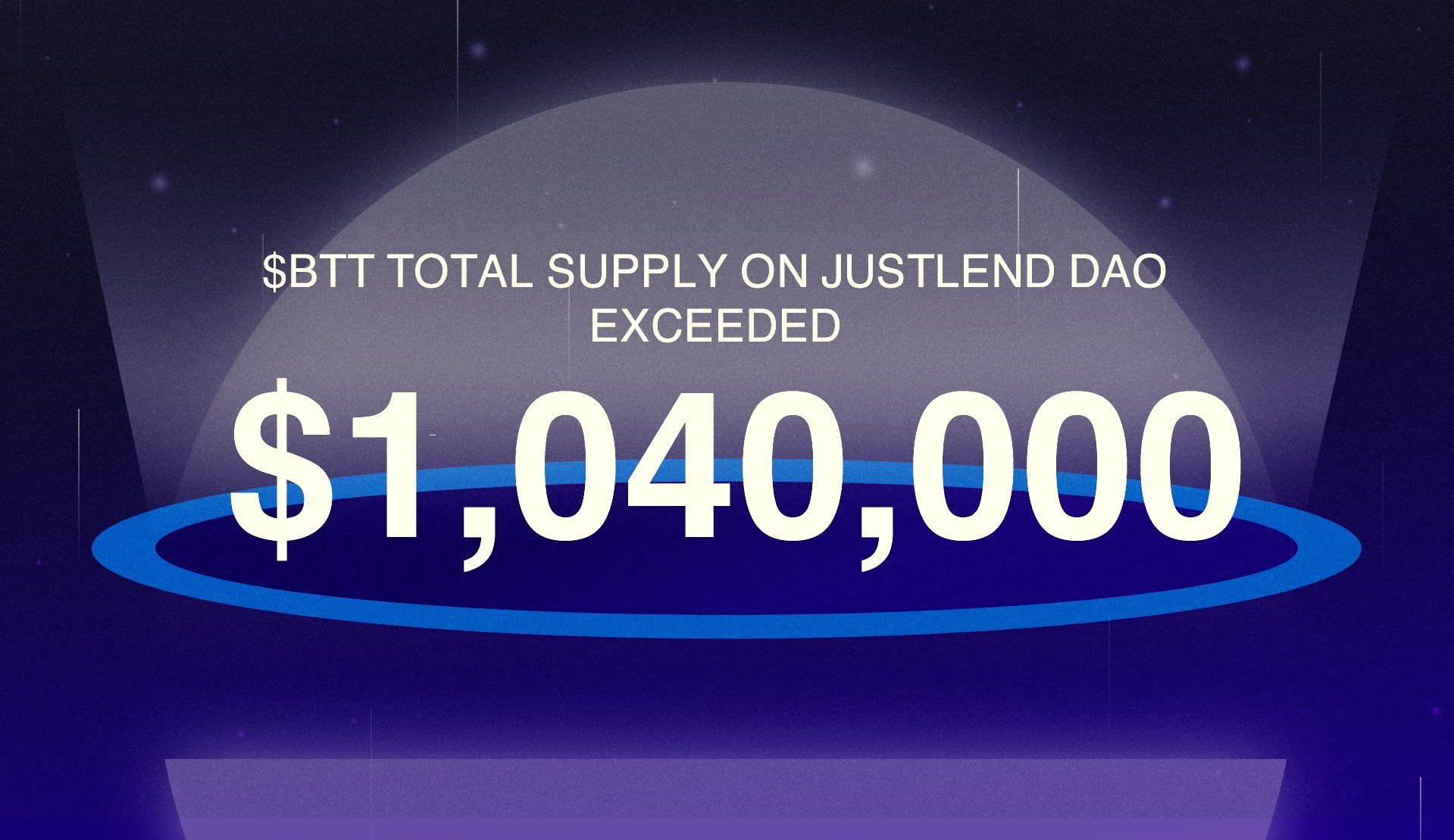
BTT TOTAL SUPPLY CROSSING $1.04M ON JUSTLEND
Seeing BTT total supply move past $1.04 million on JustLend is a reminder that on-chain liquidity tells a quieter story than daily price chatter. When holders supply tokens into a lending market, they choose active participation over letting balances sit idle in a wallet.
Instead of treating ecosystem tokens strictly as passive holdings, lending markets provide a practical way to put liquidity to work on-chain.
➤ What This Liquidity Milestone Shows
A supply figure above $1.04 million reflects real user engagement in the market:
Active participation: Holders are supplying BTT into JustLend rather than leaving assets untouched. Market depth: Larger supply pools support steadier liquidity for lending and borrowing activity. On-chain utility: Ecosystem tokens connect directly with decentralized finance tools on TRON. Transparent mechanics: Smart contracts manage supply and lending terms openly without intermediaries.
Watching supply cross clear thresholds helps track where actual capital is choosing to sit.
➤ Why This Matters
In decentralized finance, sustainable markets depend on real liquidity rather than short-term attention spikes.
When a token builds steady supply on a lending protocol, it gains another layer of functional utility alongside its broader network role, giving participants more ways to interact with the ecosystem beyond simple holding.
➤ My Personal Perspective
Tracking lending supply numbers shows where participants are willing to commit assets rather than just talk about them.
Crossing $1.04 million on JustLend feels like a solid, grounded sign of ongoing participation in the BTT market.
Do you usually keep your ecosystem tokens in a wallet or supply them to lending markets when opportunities open up?
@JustinSun @BitTorrent_Official #TRONEcoStar
BTT TOTAL SUPPLY CROSSING $1.04M ON JUSTLEND
Seeing BTT total supply move past $1.04 million on JustLend is a reminder that on-chain liquidity tells a quieter story than daily price chatter. When holders supply tokens into a lending market, they choose active participation over letting balances sit idle in a wallet.
Instead of treating ecosystem tokens strictly as passive holdings, lending markets provide a practical way to put liquidity to work on-chain.
➤ What This Liquidity Milestone Shows
A supply figure above $1.04 million reflects real user engagement in the market:
Active participation: Holders are supplying BTT into JustLend rather than leaving assets untouched. Market depth: Larger supply pools support steadier liquidity for lending and borrowing activity. On-chain utility: Ecosystem tokens connect directly with decentralized finance tools on TRON. Transparent mechanics: Smart contracts manage supply and lending terms openly without intermediaries.
Watching supply cross clear thresholds helps track where actual capital is choosing to sit.
➤ Why This Matters
In decentralized finance, sustainable markets depend on real liquidity rather than short-term attention spikes.
When a token builds steady supply on a lending protocol, it gains another layer of functional utility alongside its broader network role, giving participants more ways to interact with the ecosystem beyond simple holding.
➤ My Personal Perspective
Tracking lending supply numbers shows where participants are willing to commit assets rather than just talk about them.
Crossing $1.04 million on JustLend feels like a solid, grounded sign of ongoing participation in the BTT market.
Do you usually keep your ecosystem tokens in a wallet or supply them to lending markets when opportunities open up?
@Justin Sun孙宇晨 @BitTorrent_Official #TRONEcoStar
88


𝗧𝗵𝗲 𝗘𝗳𝗳𝗼𝗿𝘁𝗹𝗲𝘀𝘀 𝗔𝘂𝘁𝗼-𝗥𝗼𝗹𝗹𝗼𝘃𝗲𝗿 𝗠𝗲𝗰𝗵𝗮𝗻𝗶𝗰 𝗶𝗻 𝗦𝗲𝗮𝘀𝗼𝗻 𝟯
Requiring stakers to manually withdraw, unstake, and re-deposit capital between campaign seasons creates unnecessary operational friction. Manual steps inflate transaction fees, cause missed yield windows, and frustrate users.
Automated position rollover features eliminate these hassles entirely, ensuring continuous earning for loyal stakers. Preserving position continuity respects user time while maintaining optimal capital efficiency.
In TRON DeFi Summer S3, jSUN stakers from Season 2 are automatically qualified for Season 3. Your staked capital rolls over seamlessly without needing a single manual transaction or extra gas fee.
Enjoy continuous, uninterrupted earning on TRON without administrative friction.
𝗚𝗲𝘁𝘁𝗶𝗻𝗴 𝗦𝘁𝗮𝗿𝘁𝗲𝗱
Managing your rolling seasonal position on JustLend DAO is effortless.
Confirm that your active jSUN position from Season 2 is connected in your Web3 wallet.
Relax as the smart contract automatically rolls your position into Season 3.
Track your continuous hourly boosted APR rewards on the official campaign dashboard.
𝗪𝗵𝘆 Automated Rollover 𝗠𝗮𝘁𝘁𝗲𝗿𝘀
Automated position continuity delivers major user experience advantages.
- Zero extra gas fees needed for manual unstaking, withdrawing, or re-depositing between seasons.
- Zero yield downtime, keeping your capital generating uninterrupted hourly returns.
- Stress-free management that eliminates the risk of missing campaign entry deadlines.
- Continuous access to the $100,000 SUN Boost pool throughout the 60-day event.
This seamless design highlights TRON's commitment to building user-friendly financial applications.
@SunPump_meme @JustinSun #TRONEcoStar
𝗧𝗵𝗲 𝗘𝗳𝗳𝗼𝗿𝘁𝗹𝗲𝘀𝘀 𝗔𝘂𝘁𝗼-𝗥𝗼𝗹𝗹𝗼𝘃𝗲𝗿 𝗠𝗲𝗰𝗵𝗮𝗻𝗶𝗰 𝗶𝗻 𝗦𝗲𝗮𝘀𝗼𝗻 𝟯
Requiring stakers to manually withdraw, unstake, and re-deposit capital between campaign seasons creates unnecessary operational friction. Manual steps inflate transaction fees, cause missed yield windows, and frustrate users.
Automated position rollover features eliminate these hassles entirely, ensuring continuous earning for loyal stakers. Preserving position continuity respects user time while maintaining optimal capital efficiency.
In TRON DeFi Summer S3, jSUN stakers from Season 2 are automatically qualified for Season 3. Your staked capital rolls over seamlessly without needing a single manual transaction or extra gas fee.
Enjoy continuous, uninterrupted earning on TRON without administrative friction.
𝗚𝗲𝘁𝘁𝗶𝗻𝗴 𝗦𝘁𝗮𝗿𝘁𝗲𝗱
Managing your rolling seasonal position on JustLend DAO is effortless.
Confirm that your active jSUN position from Season 2 is connected in your Web3 wallet.
Relax as the smart contract automatically rolls your position into Season 3.
Track your continuous hourly boosted APR rewards on the official campaign dashboard.
𝗪𝗵𝘆 Automated Rollover 𝗠𝗮𝘁𝘁𝗲𝗿𝘀
Automated position continuity delivers major user experience advantages.
- Zero extra gas fees needed for manual unstaking, withdrawing, or re-depositing between seasons.
- Zero yield downtime, keeping your capital generating uninterrupted hourly returns.
- Stress-free management that eliminates the risk of missing campaign entry deadlines.
- Continuous access to the $100,000 SUN Boost pool throughout the 60-day event.
This seamless design highlights TRON's commitment to building user-friendly financial applications.
@OfficialSUNio @Justin Sun孙宇晨 #TRONEcoStar

11
Log in to explore more content
Join global crypto users on Binance Square
⚡️ Get latest and useful information about crypto.
💬 Trusted by the world’s largest crypto exchange.
👍 Discover real insights from verified creators.
Email / Phone number
Trending Topics
1
#Bitcoin'sReboundFadesBelow$60K
1,293 views
42 Discussing
2
#NVIDIAReinstatesJensenHuangasCEO
186,210 views
1,281 Discussing
3
#WillMarketsStageAThanksgivingReliefRally?
281,653 views
2,163 Discussing
4
#WillOctCorePCEShiftFedHikeExpectations?
96,503 views
983 Discussing
5
#EvolveAtBinanceBlockchainWeek
206,747 views
1,279 Discussing
6
#BitcoinCoreVulnerabilityCanFreezeNodesOver12Seconds
0 views
0 Discussing
7
#SouthKoreaBeginsCryptoProviderShareholderReviews
119 views
13 Discussing
8
#USAddsMegaspeedToEntityList
4,195 views
108 Discussing
9
#GrayscaleLaunches2xLeveragedZcashETF
3,554 views
79 Discussing
10
#StrategyValueFallsBelowItsBitcoinHoldings
2,750 views
93 Discussing