

#tradedeficit
tradedeficit
106,099 views
47 Discussing
Hot
Latest

·
--
The US trade deficit widened to $105.6B in August against $102B expected, and I wouldn't read it as the AI build widening the gap... at least not this month.
Goods imports rose $17.2B. Crude added $3.3B and nonmonetary gold $3.1B, and that gold is bullion moving between vaults, so it doesn't say much about demand for $XAU. Semiconductors added $2.4B, but computer accessories, the line most AI server imports land in, fell $1.6B, so chips and servers net out to under $1B of the jump.
Year to date the deficit is still 19.9% smaller than 2025, when everyone front-ran the tariffs. It's one month and September could easily swing it back. For $SMH and the rest of the chip trade I'll keep an eye on that server line, I think it's where the capex would show up first.
#TradeDeficit #Macro #AI #Gold
The US trade deficit widened to $105.6B in August against $102B expected, and I wouldn't read it as the AI build widening the gap... at least not this month.
Goods imports rose $17.2B. Crude added $3.3B and nonmonetary gold $3.1B, and that gold is bullion moving between vaults, so it doesn't say much about demand for $XAU . Semiconductors added $2.4B, but computer accessories, the line most AI server imports land in, fell $1.6B, so chips and servers net out to under $1B of the jump.
Year to date the deficit is still 19.9% smaller than 2025, when everyone front-ran the tariffs. It's one month and September could easily swing it back. For $SMH and the rest of the chip trade I'll keep an eye on that server line, I think it's where the capex would show up first.
#TradeDeficit #Macro #AI #Gold
221

·
--
U.S. trade deficit surges to $105.6 billion! Imports far outpace exports, putting immense pressure on the dollar. As the traditional economy falters, crypto could become a safe haven. $BTC $ETH #宏观经济 #tradedeficit
US trade deficit surges to $105.6 billion! Imports massively outpace exports, putting pressure on the dollar. Traditional economy struggling, crypto could be the safe haven. $BTC $ETH #macroeconomics #tradedeficit
US trade deficit surges to $105.6 billion! Imports massively outpace exports, putting pressure on the dollar. Traditional economy struggling, crypto could be the safe haven. $BTC $ETH #macroeconomics #tradedeficit
285

The U.S. Department of Commerce released the latest foreign trade data on October 7. The U.S. trade deficit widened further to $105.6 billion in August, exceeding market expectations of $102 billion. Meanwhile, the July trade deficit was also revised sharply upward, from $88.6 billion to $92.8 billion. Total imports rose to $420.8 billion in August, significantly exceeding exports of $315.2 billion.
The persistent widening of the trade deficit indicates that U.S. domestic demand remains highly dependent on overseas supply chains, while the global economic slowdown is materially curbing U.S. export momentum. The sharp deterioration in net exports will directly weigh on estimates of third-quarter real GDP growth, undermining the market’s previously overheated expectations for a soft landing in the second half of the year.
In macro financial markets, the widening deficit, combined with the risk of twin deficits, is putting short-term pressure on the U.S. dollar index, while the Treasury yield curve faces a structural reassessment. Rising concerns about downside risks to economic growth are prompting safe-haven flows into defensive assets such as government bonds, noticeably dampening risk appetite.
For crypto markets, weakening macro fundamentals may constrain liquidity injections in the short term. Although a weaker dollar usually benefits risk assets, concerns about a liquidity crisis remain elevated amid the combined pressures of slowing economic growth and the lagged effects of tight monetary policy. $BTC remains range-bound around key resistance levels, and may struggle to escape the risk of high volatility in the near term.
#TradeDeficit #MacroEconomics #CryptoLiquidity
152

·
--
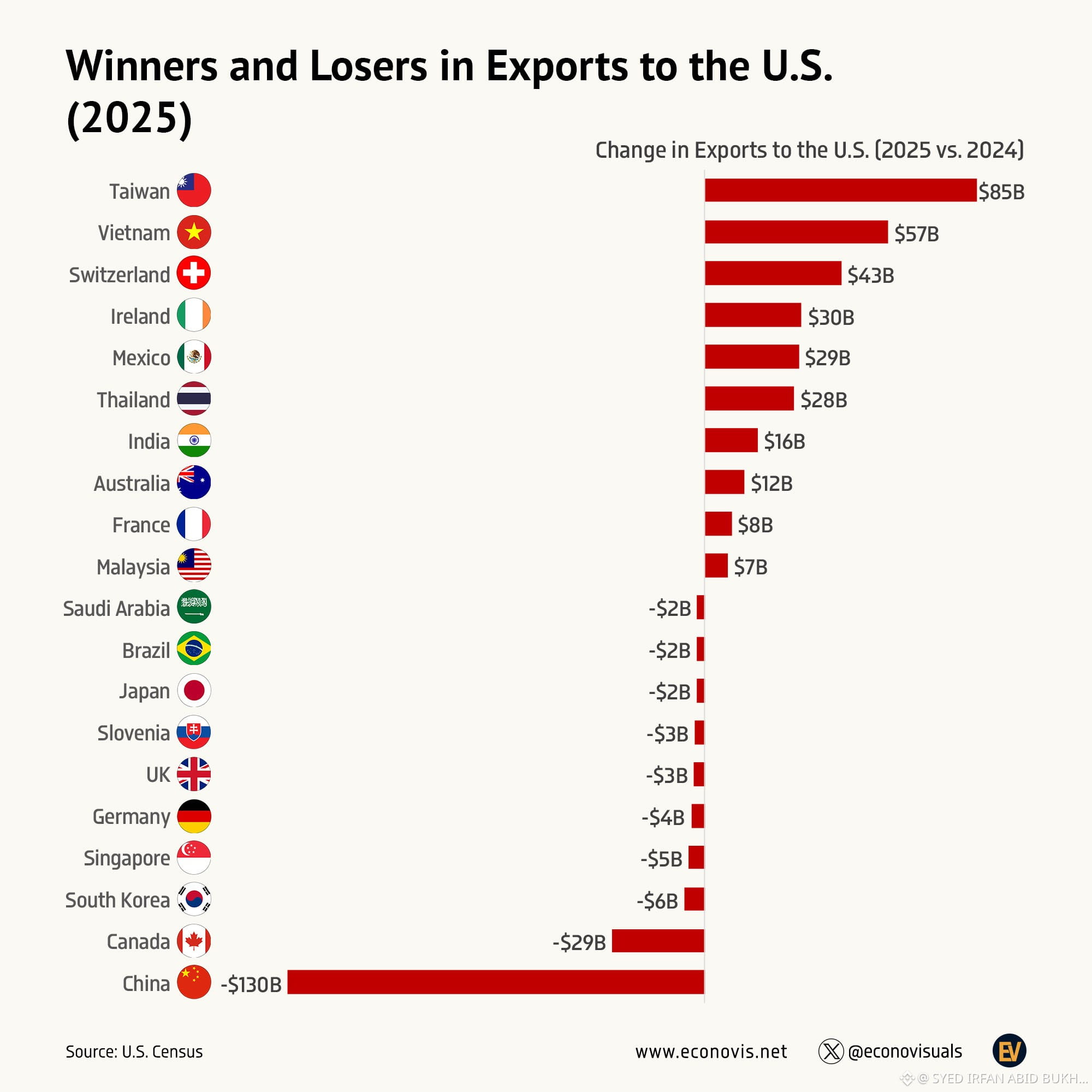
📈 Winners and Losers in Exports to the U.S. (2025)
In 2025, U.S. imports reached $3.44 trillion, up $143 billion (+4.3% YoY) from 2024.
Five Most important countries that increased exports to the U.S.:
· Taiwan (+$85B)
· Vietnam (+$57B)
· Switzerland (+43B)
· Ireland (+$30B)
· Mexico (+$29B)
Most significant declines in exports to the U.S.:
· China (−$130B)
· Canada (−$29B)
#USA #trade #exports #imports #tariffs #TradeWar #deficit #TradeDeficit
follow like share
2
595

·
--
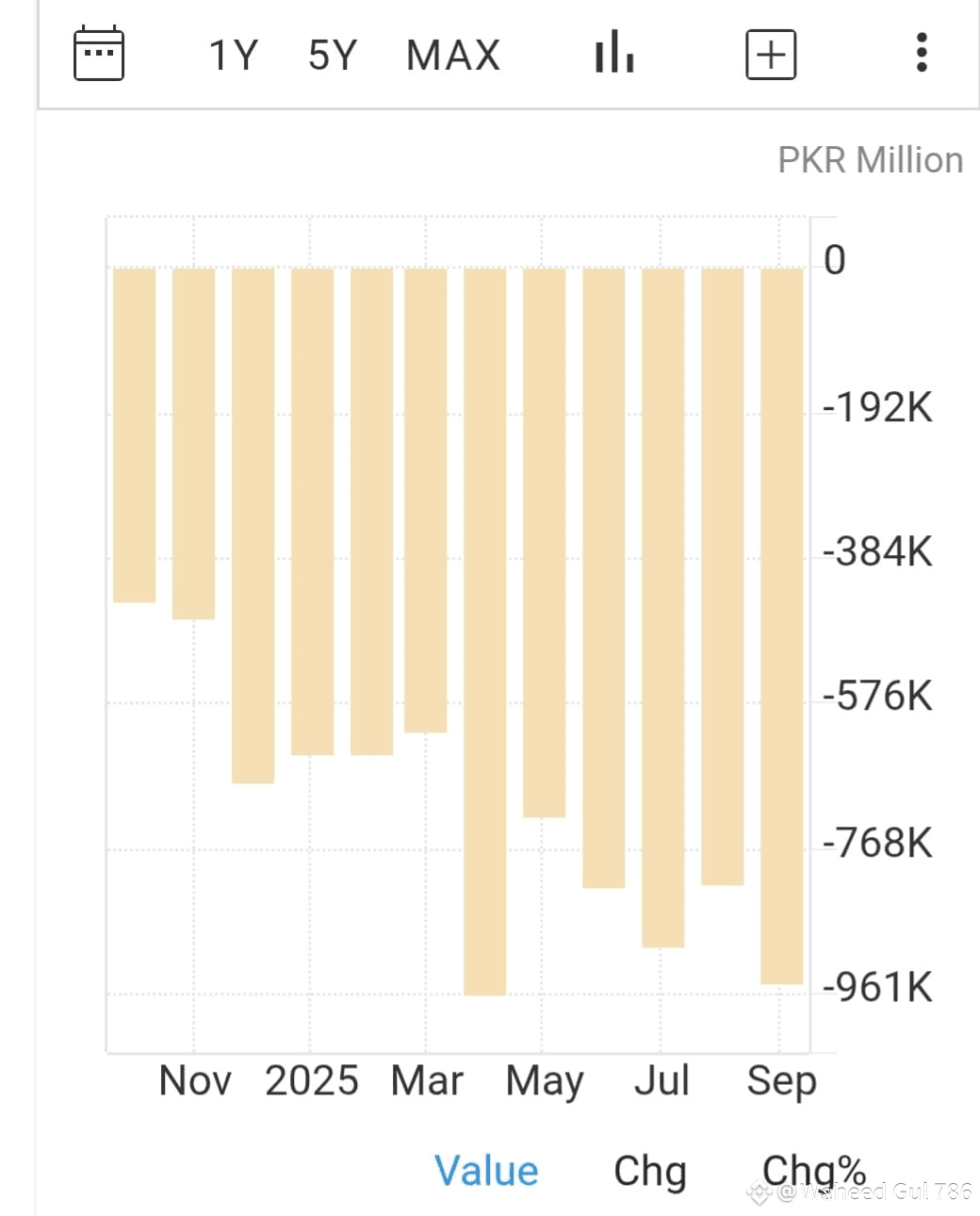
📉 BREAKING: Pakistan Records PKR 943,067 Million Trade Deficit in Sept 2025
According to the Pakistan Bureau of Statistics, Pakistan registered a trade deficit of PKR 943.07 billion in September 2025. Historically, the country's Balance of Trade has averaged -88,415.95 million PKR from 1957 to 2025, reflecting a persistent trade imbalance. The highest trade surplus was recorded in June 2003 at PKR 6,457 million, while the largest deficit occurred in June 2022, reaching -PKR 1,013,894 million. This recent figure highlights ongoing economic challenges, including rising imports and pressure on foreign reserves. Policymakers may need to implement stronger trade and fiscal reforms to stabilize the economy.
#PakistanEconomy #TradeDeficit #PBS #Imports #Exports
1
788
Log in to explore more content
Join global crypto users on Binance Square
⚡️ Get latest and useful information about crypto.
💬 Trusted by the world’s largest crypto exchange.
👍 Discover real insights from verified creators.
Email / Phone number
Trending Topics
1
#BinancePick
3.1M views
152,925 Discussing
2
#EarningsSeason
5.3M views
26,011 Discussing
3
#AnthropicTTMRevenueGrewAbout1200%
30,903 views
426 Discussing
4
#AnthropicS1ExpectedToday
26,745 views
352 Discussing
5
#SouthKoreaReportedlyWeighsFourthCryptoTaxDelay
30,710 views
475 Discussing
6
#FranklinTempletonFilesForTwoDividendToBitcoinETFs
40,922 views
546 Discussing
7
#StrategyMSTRSurpassesNasdaqInMarketCap
30,804 views
388 Discussing
8
#CanadaProposesStablecoinRedemptionWithin3BusinessDays
1,336 views
36 Discussing
9
#ElectrumWalletBugLetRogueServersStealFunds
31,531 views
467 Discussing
10
#ArgentineCourtDismissesLIBRACaseAgainstMilei
46,892 views
583 Discussing