

#sdk
sdk
72,733 views
75 Discussing
Hot
Latest

I Realized I Was Building an Exchange Instead of Building a Strategy; Hotstuff compact SDKOne night, while fixing another WebSocket issue, it hit me.
I wasn't improving my trading bot.I was spending most of my time rebuilding things exchanges should already provide.Every week it was something new.
A connection dropped.An API changed.A data stream behaved differently than expected.
Instead of working on strategy, I was maintaining infrastructure.
That's when I decided to try Hotstuff's SDK. This is builders heaven in simple term, check out it once, u see real difference..
The Moment Things Got Simpler :-
What I expected was another developer tool.
What I found was less work.
After connecting, I wasn't thinking about authentication flows, data formatting, or managing multiple services.
I was thinking about trading logic again.
That's a big difference.
Because as builders, our goal isn't to create endless layers of plumbing.
Our goal is to build something useful on top of it.
What Actually Impressed Me :-
The best technology is often the technology you stop noticing.
Data arrives where it's supposed to.Orders go through.Risk management is accessible.
Everything works together without forcing me to glue five different systems into one.
There was no "wow" moment.Just fewer problems to solve.And honestly, that's better.
The Bigger Lesson :-
Most builders think they need more tools.
Sometimes what they really need is fewer things to maintain.
The more time I spend improving a strategy instead of fixing infrastructure, the more valuable my work becomes.
That's why I keep coming back.
Not because the SDK is flashy.Not because of a marketing campaign.
Because for the first time in a while, I feel like I'm building what I wanted to build from the start.
And the infrastructure quietly stays in the background where it belongs.
#rwa #Developers #SDK
I Realized I Was Building an Exchange Instead of Building a Strategy; Hotstuff compact SDK
One night, while fixing another WebSocket issue, it hit me.
I wasn't improving my trading bot.I was spending most of my time rebuilding things exchanges should already provide.Every week it was something new.
A connection dropped.An API changed.A data stream behaved differently than expected.
Instead of working on strategy, I was maintaining infrastructure.
That's when I decided to try Hotstuff's SDK. This is builders heaven in simple term, check out it once, u see real difference..
The Moment Things Got Simpler :-
What I expected was another developer tool.
What I found was less work.
After connecting, I wasn't thinking about authentication flows, data formatting, or managing multiple services.
I was thinking about trading logic again.
That's a big difference.
Because as builders, our goal isn't to create endless layers of plumbing.
Our goal is to build something useful on top of it.
What Actually Impressed Me :-
The best technology is often the technology you stop noticing.
Data arrives where it's supposed to.Orders go through.Risk management is accessible.
Everything works together without forcing me to glue five different systems into one.
There was no "wow" moment.Just fewer problems to solve.And honestly, that's better.
The Bigger Lesson :-
Most builders think they need more tools.
Sometimes what they really need is fewer things to maintain.
The more time I spend improving a strategy instead of fixing infrastructure, the more valuable my work becomes.
That's why I keep coming back.
Not because the SDK is flashy.Not because of a marketing campaign.
Because for the first time in a while, I feel like I'm building what I wanted to build from the start.
And the infrastructure quietly stays in the background where it belongs.
#rwa #Developers #SDK
I wasn't improving my trading bot.I was spending most of my time rebuilding things exchanges should already provide.Every week it was something new.
A connection dropped.An API changed.A data stream behaved differently than expected.
Instead of working on strategy, I was maintaining infrastructure.
That's when I decided to try Hotstuff's SDK. This is builders heaven in simple term, check out it once, u see real difference..
The Moment Things Got Simpler :-
What I expected was another developer tool.
What I found was less work.
After connecting, I wasn't thinking about authentication flows, data formatting, or managing multiple services.
I was thinking about trading logic again.
That's a big difference.
Because as builders, our goal isn't to create endless layers of plumbing.
Our goal is to build something useful on top of it.
What Actually Impressed Me :-
The best technology is often the technology you stop noticing.
Data arrives where it's supposed to.Orders go through.Risk management is accessible.
Everything works together without forcing me to glue five different systems into one.
There was no "wow" moment.Just fewer problems to solve.And honestly, that's better.
The Bigger Lesson :-
Most builders think they need more tools.
Sometimes what they really need is fewer things to maintain.
The more time I spend improving a strategy instead of fixing infrastructure, the more valuable my work becomes.
That's why I keep coming back.
Not because the SDK is flashy.Not because of a marketing campaign.
Because for the first time in a while, I feel like I'm building what I wanted to build from the start.
And the infrastructure quietly stays in the background where it belongs.
#rwa #Developers #SDK
1
90


Article
Enforce the Rules of Code: Why Newton Mainnet Beta a Game-Changer for Institutional RWA TokenizationThe momentum shifting real-world assets (RWAs) and complex financial logic onchain is accelerating, but a critical roadblock remains: traditional authorization systems cannot securely keep pace with rapidly changing regulatory demands. The recent launch of the $NEWT Newton Mainnet Beta, announced on the main stage at the #TokenizeThis conference, directly addresses this core infrastructure gap.
Instead of treating regulatory compliance as a manual check added long after a transaction is processed, @NewtonProtocol shifts the framework entirely. It introduces an onchain authorization layer that evaluates and executes programmable policies before any transaction can settle.
Bringing VaultKit and Programmable Authorization to Web3
A standout feature of this release is VaultKit, the developer software development kit (SDK) rolled out alongside the mainnet beta. #Visa authorization world of deep analyses, risk assessment, policies to confirm Identity, and ensure this transaction is requested. All the previously mentioned bullet points are standard when using CREDIT CARDS. A whole mew masterpiece and basically a golden goose is the beginning of a new era:
•VaultKit allows creators to build specific, enforceable rules directly into digital asset vaults. The network dynamically evaluates these predefined guidelines, matching them against both onchain data and external offchain criteria. #SDK
Once verified, the protocol generates a secure, cryptographically signed attestation. Because anyone can independently audit this proof, it provides the deterministic security that traditional finance and institutions require before committing massive capital to public blockchains.
The Engine Behind the Automation: $USDT
At the center of this expanding ecosystem is the native utility token, $NEWT (MC $47.7M NOW) As the protocol transitions into a fully operational automation layer, the utility for the token scales directly with network adoption. Key utilities driving the ecosystem include:
Gas & Execution Fees: Powers the native gas model required to execute secure, agent-based automations.Developer Registries: Devs utilize the token to publish and register custom automated models inside the Newton Model Registry.Network Security: Network nodes and operators stake the token as collateral to secure the underlying cryptographic validation process.
By combining robust smart contracts, the specialized Rego policy language, and automated execution layers, @NewtonProtocol is transforming how automated applications operate. Newton #DEFİ of course is plays a role makes all of this solid or basically exist. Moreover, The Mainnet shines & gives the Newton-Defi to exist in its plain. The Mainnet is not just a conceptual test—it is an active sandbox demonstrating how the crypto space can build a highly scalable, friction-free environment for institutional-grade finance.
#Newt
Disclaimer: This content is part of Paid Partnership campaign.
Enforce the Rules of Code: Why Newton Mainnet Beta a Game-Changer for Institutional RWA Tokenization
The momentum shifting real-world assets (RWAs) and complex financial logic onchain is accelerating, but a critical roadblock remains: traditional authorization systems cannot securely keep pace with rapidly changing regulatory demands. The recent launch of the $NEWT Newton Mainnet Beta, announced on the main stage at the #TokenizeThis conference, directly addresses this core infrastructure gap.
Instead of treating regulatory compliance as a manual check added long after a transaction is processed, @NewtonProtocol shifts the framework entirely. It introduces an onchain authorization layer that evaluates and executes programmable policies before any transaction can settle.
Bringing VaultKit and Programmable Authorization to Web3
A standout feature of this release is VaultKit, the developer software development kit (SDK) rolled out alongside the mainnet beta. #Visa authorization world of deep analyses, risk assessment, policies to confirm Identity, and ensure this transaction is requested. All the previously mentioned bullet points are standard when using CREDIT CARDS. A whole mew masterpiece and basically a golden goose is the beginning of a new era:
•VaultKit allows creators to build specific, enforceable rules directly into digital asset vaults. The network dynamically evaluates these predefined guidelines, matching them against both onchain data and external offchain criteria. #SDK
Once verified, the protocol generates a secure, cryptographically signed attestation. Because anyone can independently audit this proof, it provides the deterministic security that traditional finance and institutions require before committing massive capital to public blockchains.
The Engine Behind the Automation: $USDT
At the center of this expanding ecosystem is the native utility token, $NEWT (MC $47.7M NOW) As the protocol transitions into a fully operational automation layer, the utility for the token scales directly with network adoption. Key utilities driving the ecosystem include:
Gas & Execution Fees: Powers the native gas model required to execute secure, agent-based automations.Developer Registries: Devs utilize the token to publish and register custom automated models inside the Newton Model Registry.Network Security: Network nodes and operators stake the token as collateral to secure the underlying cryptographic validation process.
By combining robust smart contracts, the specialized Rego policy language, and automated execution layers, @NewtonProtocol is transforming how automated applications operate. Newton #DEFİ of course is plays a role makes all of this solid or basically exist. Moreover, The Mainnet shines & gives the Newton-Defi to exist in its plain. The Mainnet is not just a conceptual test—it is an active sandbox demonstrating how the crypto space can build a highly scalable, friction-free environment for institutional-grade finance.
#Newt
Disclaimer: This content is part of Paid Partnership campaign.
Instead of treating regulatory compliance as a manual check added long after a transaction is processed, @NewtonProtocol shifts the framework entirely. It introduces an onchain authorization layer that evaluates and executes programmable policies before any transaction can settle.
Bringing VaultKit and Programmable Authorization to Web3
A standout feature of this release is VaultKit, the developer software development kit (SDK) rolled out alongside the mainnet beta. #Visa authorization world of deep analyses, risk assessment, policies to confirm Identity, and ensure this transaction is requested. All the previously mentioned bullet points are standard when using CREDIT CARDS. A whole mew masterpiece and basically a golden goose is the beginning of a new era:
•VaultKit allows creators to build specific, enforceable rules directly into digital asset vaults. The network dynamically evaluates these predefined guidelines, matching them against both onchain data and external offchain criteria. #SDK
Once verified, the protocol generates a secure, cryptographically signed attestation. Because anyone can independently audit this proof, it provides the deterministic security that traditional finance and institutions require before committing massive capital to public blockchains.
The Engine Behind the Automation: $USDT
At the center of this expanding ecosystem is the native utility token, $NEWT (MC $47.7M NOW) As the protocol transitions into a fully operational automation layer, the utility for the token scales directly with network adoption. Key utilities driving the ecosystem include:
Gas & Execution Fees: Powers the native gas model required to execute secure, agent-based automations.Developer Registries: Devs utilize the token to publish and register custom automated models inside the Newton Model Registry.Network Security: Network nodes and operators stake the token as collateral to secure the underlying cryptographic validation process.
By combining robust smart contracts, the specialized Rego policy language, and automated execution layers, @NewtonProtocol is transforming how automated applications operate. Newton #DEFİ of course is plays a role makes all of this solid or basically exist. Moreover, The Mainnet shines & gives the Newton-Defi to exist in its plain. The Mainnet is not just a conceptual test—it is an active sandbox demonstrating how the crypto space can build a highly scalable, friction-free environment for institutional-grade finance.
#Newt
Disclaimer: This content is part of Paid Partnership campaign.
3
1
156
My personal Experience with STON.fi inside TelegramSTON.fi makes DeFi on the TON blockchain easy. Users can swap tokens, add liquidity, and earn rewards without dealing with a complicated process, also work smooth inside Telegram and Mobile friendly.
In my 9 years of experience, I don't see this much utility in a tool like Omniston. This is a smart aggregator and combines liquidity from many DEXs and quote systems with a secure route. It automatically finds the best prices and deepest pools for every swap.
That's why Swaps feel instant, usually 1-2 seconds, with very low fees, often under 10 cents. This is the part most other DeFi platforms miss, but STON.fi is making it real. I feel it's a game-changing tool; from this, users get smooth, hassle-free, secured transaction at low cost.
For interacting, just connected my TON wallet inside Telegram and started trading right away. No account or complicated steps needed. Everything stays in my control because it is fully self-custody.
Now,I swapped tokens very easily and got better rates than elsewhere. Then I provided liquidity to pools to earn fees and farmed rewards. Staking their native token, STON token, boosted my APRs nicely. Without any risk and additional complex set up, now we invest and farm.
Right now, the STON.fi team is in Tokyo for Japan Blockchain Week 2026. They will be at WebX Asia, where Ethan Clime is speaking at the AI Economic Forum on July 15 on how AI and Web3 are reshaping each other. It shows how they are fascinated with growth and connect DeFi with fresh ideas.
The platform feels secure with audits and protections. They are adding cross-chain swaps without bridges too. That's why now we can move our assets very easily from one network to another, supporting all major networks.
For anyone using TON and Telegram, STON.fi makes DeFi simple, fast, and rewarding. My time with it has been great, and their Japan trip makes me even more excited about the future. Also, any Telegram applications now directly connect with its SDK, so now No issues of liquidity at the initial stage. It shows how they are supporting solo builders too. All those make me stop and think, then invest here.
#defi #trading #Telegram #SDK
My personal Experience with STON.fi inside Telegram
STON.fi makes DeFi on the TON blockchain easy. Users can swap tokens, add liquidity, and earn rewards without dealing with a complicated process, also work smooth inside Telegram and Mobile friendly.
In my 9 years of experience, I don't see this much utility in a tool like Omniston. This is a smart aggregator and combines liquidity from many DEXs and quote systems with a secure route. It automatically finds the best prices and deepest pools for every swap.
That's why Swaps feel instant, usually 1-2 seconds, with very low fees, often under 10 cents. This is the part most other DeFi platforms miss, but STON.fi is making it real. I feel it's a game-changing tool; from this, users get smooth, hassle-free, secured transaction at low cost.
For interacting, just connected my TON wallet inside Telegram and started trading right away. No account or complicated steps needed. Everything stays in my control because it is fully self-custody.
Now,I swapped tokens very easily and got better rates than elsewhere. Then I provided liquidity to pools to earn fees and farmed rewards. Staking their native token, STON token, boosted my APRs nicely. Without any risk and additional complex set up, now we invest and farm.
Right now, the STON.fi team is in Tokyo for Japan Blockchain Week 2026. They will be at WebX Asia, where Ethan Clime is speaking at the AI Economic Forum on July 15 on how AI and Web3 are reshaping each other. It shows how they are fascinated with growth and connect DeFi with fresh ideas.
The platform feels secure with audits and protections. They are adding cross-chain swaps without bridges too. That's why now we can move our assets very easily from one network to another, supporting all major networks.
For anyone using TON and Telegram, STON.fi makes DeFi simple, fast, and rewarding. My time with it has been great, and their Japan trip makes me even more excited about the future. Also, any Telegram applications now directly connect with its SDK, so now No issues of liquidity at the initial stage. It shows how they are supporting solo builders too. All those make me stop and think, then invest here.
#defi #trading #Telegram #SDK
In my 9 years of experience, I don't see this much utility in a tool like Omniston. This is a smart aggregator and combines liquidity from many DEXs and quote systems with a secure route. It automatically finds the best prices and deepest pools for every swap.
That's why Swaps feel instant, usually 1-2 seconds, with very low fees, often under 10 cents. This is the part most other DeFi platforms miss, but STON.fi is making it real. I feel it's a game-changing tool; from this, users get smooth, hassle-free, secured transaction at low cost.
For interacting, just connected my TON wallet inside Telegram and started trading right away. No account or complicated steps needed. Everything stays in my control because it is fully self-custody.
Now,I swapped tokens very easily and got better rates than elsewhere. Then I provided liquidity to pools to earn fees and farmed rewards. Staking their native token, STON token, boosted my APRs nicely. Without any risk and additional complex set up, now we invest and farm.
Right now, the STON.fi team is in Tokyo for Japan Blockchain Week 2026. They will be at WebX Asia, where Ethan Clime is speaking at the AI Economic Forum on July 15 on how AI and Web3 are reshaping each other. It shows how they are fascinated with growth and connect DeFi with fresh ideas.
The platform feels secure with audits and protections. They are adding cross-chain swaps without bridges too. That's why now we can move our assets very easily from one network to another, supporting all major networks.
For anyone using TON and Telegram, STON.fi makes DeFi simple, fast, and rewarding. My time with it has been great, and their Japan trip makes me even more excited about the future. Also, any Telegram applications now directly connect with its SDK, so now No issues of liquidity at the initial stage. It shows how they are supporting solo builders too. All those make me stop and think, then invest here.
#defi #trading #Telegram #SDK
1
89

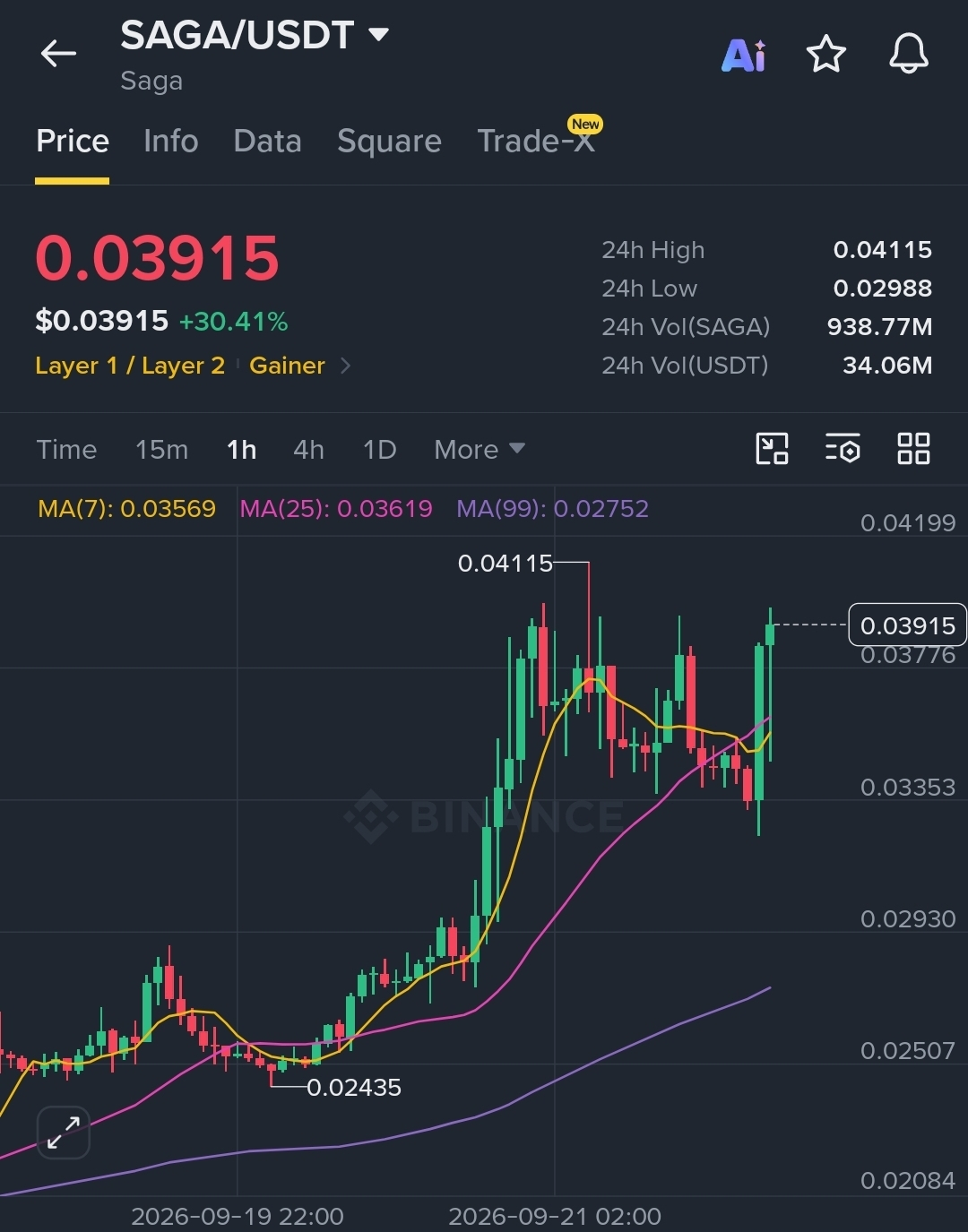
$SAGA /USDT — 🟢 LONG · Conf 75%
📍 Entry: 0.0390 – 0.0393
🛑 SL: 0.0299
🎯 TP1: 0.0411
✅ TP2: 0.0427
🏆 TP3: 0.0450
Price has reclaimed above MA7 (0.03569) and MA25 (0.03619) after a healthy consolidation — the bounce off the 0.02988 low with rising volume on the 1H confirms buyers defending the MA25 zone.
$SAGA : Saga is a Layer 1 protocol that auto-provisions dedicated application-specific chains called Chainlets for gaming and entertainment — each Chainlet inherits security from the Saga mainnet via shared validators; risk is that Chainlet adoption has been slow with limited live deployments generating real revenue for the network.
Does Saga's auto-provisioning model for gaming chains solve a real developer pain point that existing solutions like Cosmos SDK or OP Stack cannot address, or is the abstraction layer adding complexity without proportional value?
#SAGA #Layer1 #Gaming #SDK #opstack
{future}(SAGAUSDT)
$SAGA /USDT — 🟢 LONG · Conf 75%
📍 Entry: 0.0390 – 0.0393
🛑 SL: 0.0299
🎯 TP1: 0.0411
✅ TP2: 0.0427
🏆 TP3: 0.0450
Price has reclaimed above MA7 (0.03569) and MA25 (0.03619) after a healthy consolidation — the bounce off the 0.02988 low with rising volume on the 1H confirms buyers defending the MA25 zone.
$SAGA : Saga is a Layer 1 protocol that auto-provisions dedicated application-specific chains called Chainlets for gaming and entertainment — each Chainlet inherits security from the Saga mainnet via shared validators; risk is that Chainlet adoption has been slow with limited live deployments generating real revenue for the network.
Does Saga's auto-provisioning model for gaming chains solve a real developer pain point that existing solutions like Cosmos SDK or OP Stack cannot address, or is the abstraction layer adding complexity without proportional value?
#SAGA #Layer1 #Gaming #SDK #opstack
📍 Entry: 0.0390 – 0.0393
🛑 SL: 0.0299
🎯 TP1: 0.0411
✅ TP2: 0.0427
🏆 TP3: 0.0450
Price has reclaimed above MA7 (0.03569) and MA25 (0.03619) after a healthy consolidation — the bounce off the 0.02988 low with rising volume on the 1H confirms buyers defending the MA25 zone.
$SAGA : Saga is a Layer 1 protocol that auto-provisions dedicated application-specific chains called Chainlets for gaming and entertainment — each Chainlet inherits security from the Saga mainnet via shared validators; risk is that Chainlet adoption has been slow with limited live deployments generating real revenue for the network.
Does Saga's auto-provisioning model for gaming chains solve a real developer pain point that existing solutions like Cosmos SDK or OP Stack cannot address, or is the abstraction layer adding complexity without proportional value?
#SAGA #Layer1 #Gaming #SDK #opstack

1
5
371
·
--
Bearish
Partly True
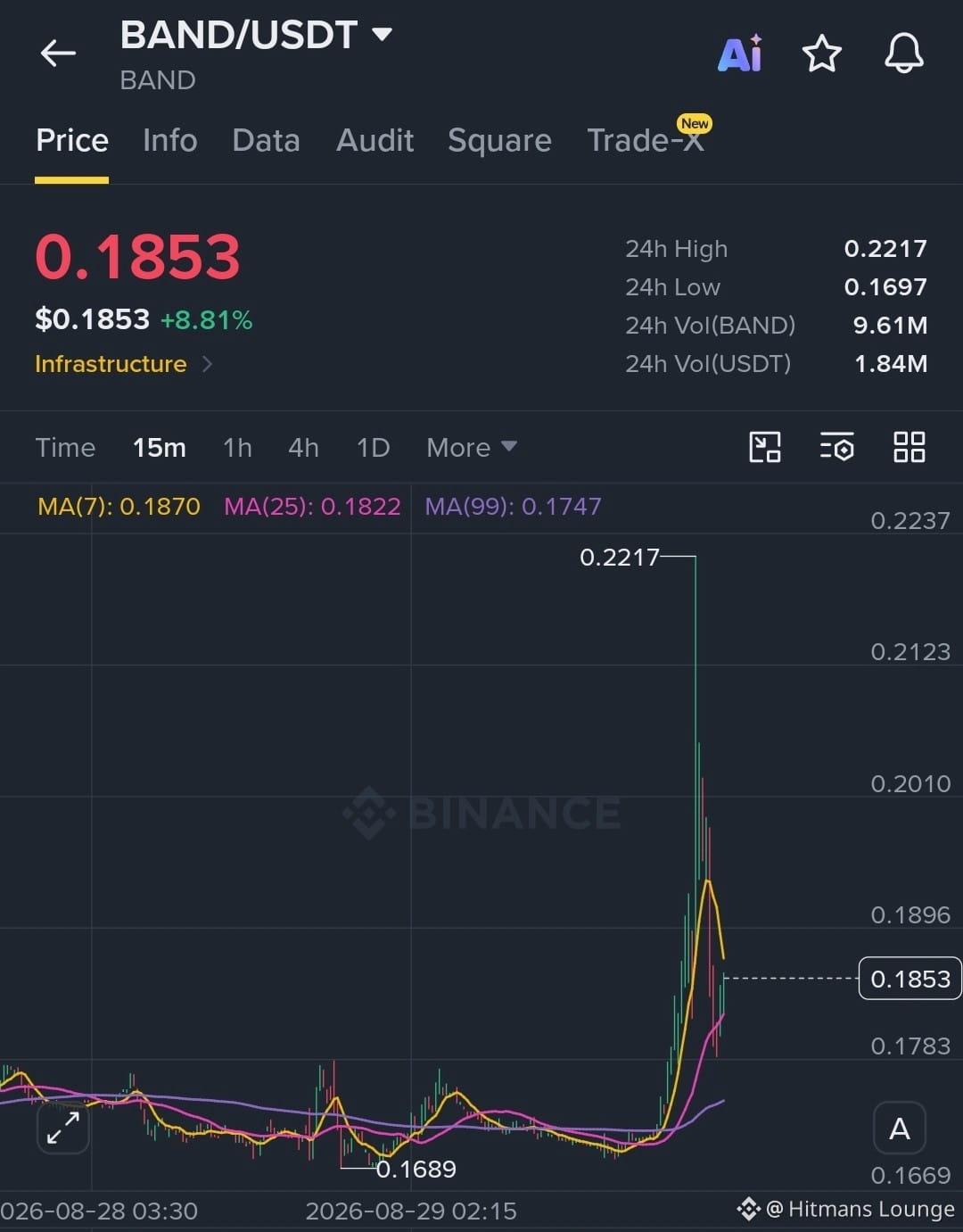
$BAND /USDT — 🔴 SHORT · Conf 70%
📍 Entry: 0.1847 – 0.1859
🛑 SL: 0.2003
🎯 TP1: 0.1760
✅ TP2: 0.1686
🏆 TP3: 0.1575
Price spiked to 0.2217 and rejected hard back below MA7 (0.1870) on only $1.84M daily volume — the wick is the signal, not the candle body.
Band Protocol is a cross-chain oracle network built on Cosmos SDK that feeds real-world data to 62+ blockchains via custom oracle scripts — it recently launched Band v3 with 10x throughput improvement and RWA price feeds for T-bills and equities — key risk is Chainlink's entrenched dominance means Band competes for integrations against a network with far deeper liquidity and developer mindshare.
Band v3 expanded to 62+ chains and launched RWA price feeds for equities — if oracle utility is genuinely growing, why is Binance delisting its BAND/BTC pair and daily spot volume sitting under $2M?
#BAND #Bandprotocol #Crypto #SDK
{future}(BANDUSDT)
$BAND /USDT — 🔴 SHORT · Conf 70%
📍 Entry: 0.1847 – 0.1859
🛑 SL: 0.2003
🎯 TP1: 0.1760
✅ TP2: 0.1686
🏆 TP3: 0.1575
Price spiked to 0.2217 and rejected hard back below MA7 (0.1870) on only $1.84M daily volume — the wick is the signal, not the candle body.
Band Protocol is a cross-chain oracle network built on Cosmos SDK that feeds real-world data to 62+ blockchains via custom oracle scripts — it recently launched Band v3 with 10x throughput improvement and RWA price feeds for T-bills and equities — key risk is Chainlink's entrenched dominance means Band competes for integrations against a network with far deeper liquidity and developer mindshare.
Band v3 expanded to 62+ chains and launched RWA price feeds for equities — if oracle utility is genuinely growing, why is Binance delisting its BAND/BTC pair and daily spot volume sitting under $2M?
#BAND #Bandprotocol #Crypto #SDK
📍 Entry: 0.1847 – 0.1859
🛑 SL: 0.2003
🎯 TP1: 0.1760
✅ TP2: 0.1686
🏆 TP3: 0.1575
Price spiked to 0.2217 and rejected hard back below MA7 (0.1870) on only $1.84M daily volume — the wick is the signal, not the candle body.
Band Protocol is a cross-chain oracle network built on Cosmos SDK that feeds real-world data to 62+ blockchains via custom oracle scripts — it recently launched Band v3 with 10x throughput improvement and RWA price feeds for T-bills and equities — key risk is Chainlink's entrenched dominance means Band competes for integrations against a network with far deeper liquidity and developer mindshare.
Band v3 expanded to 62+ chains and launched RWA price feeds for equities — if oracle utility is genuinely growing, why is Binance delisting its BAND/BTC pair and daily spot volume sitting under $2M?
#BAND #Bandprotocol #Crypto #SDK

1
533

·
--
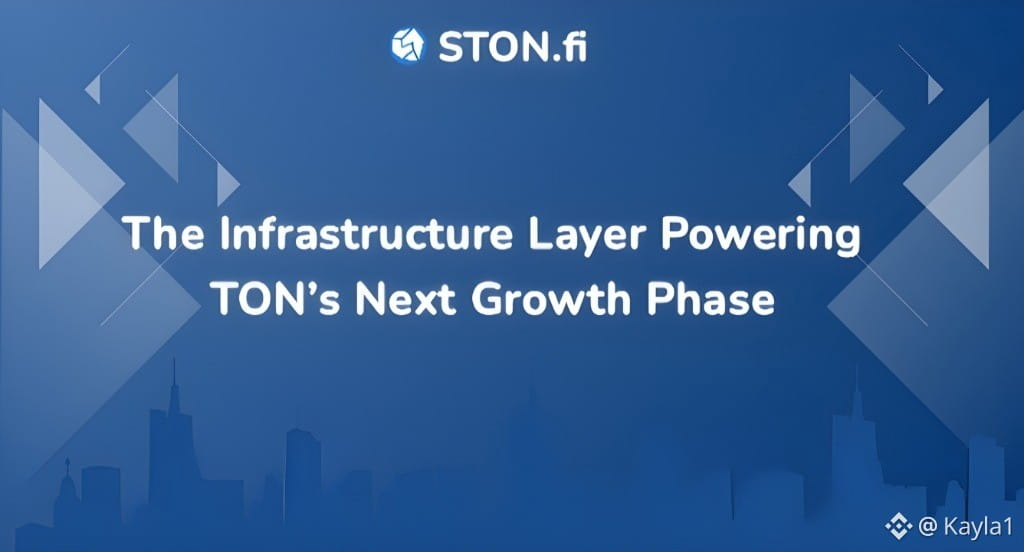
The Infrastructure Layer Powering TON’s Next Growth Phase
Most blockchain ecosystems talk about growth through user numbers and transaction volume. But the stronger signal often comes from something deeper — the quality of infrastructure developers are building behind the scenes.
TON is transitioning from an ecosystem driven mainly by applications into one supported by shared liquidity systems, open SDKs, and developer-focused tools that make building faster and more scalable.
Instead of forcing every project to create its own backend from scratch, TON is developing the kind of interconnected infrastructure that allows innovation to compound across the entire ecosystem.
One of the biggest challenges for blockchain developers is creating reliable backend systems.
Features like token swaps, liquidity access, price routing, and slippage protection require complex infrastructure. For smaller teams, building these systems independently can slow development and increase security risks.
This is where open development tools become important.
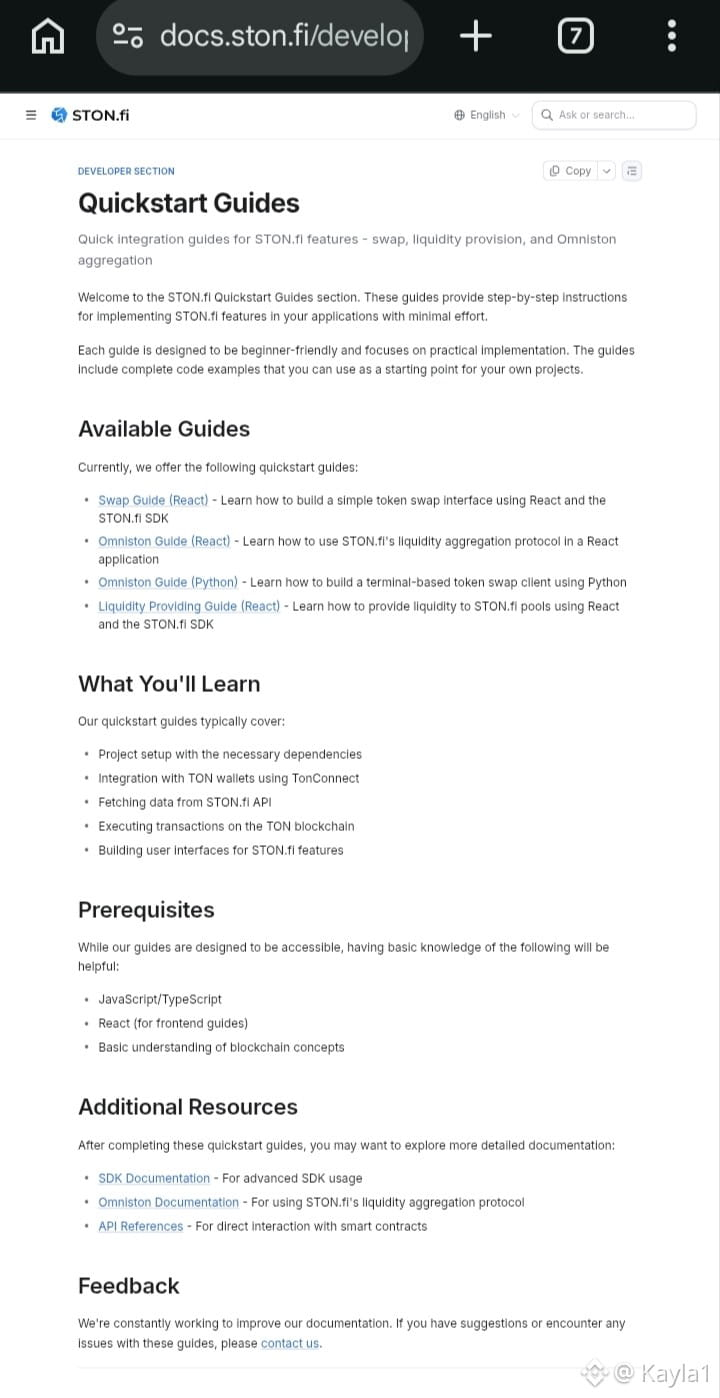
The STONfi SDK gives projects access to ready-made infrastructure for swaps and liquidity integration. Instead of spending months building core DeFi systems, developers can focus on improving their products and user experience.
That approach helps the entire ecosystem move faster. The more accessible development becomes, the easier it is for new ideas to enter the $TON network.
The release of the Omniston SDK introduces another important layer for TON developers.
Projects can now integrate advanced features like price discovery and slippage protection directly into their applications without building those systems themselves.
$BTC $ETH #SDK #TON #STONfi #Developers #TONDeFiEcosystem
The Infrastructure Layer Powering TON’s Next Growth Phase
Most blockchain ecosystems talk about growth through user numbers and transaction volume. But the stronger signal often comes from something deeper — the quality of infrastructure developers are building behind the scenes.
TON is transitioning from an ecosystem driven mainly by applications into one supported by shared liquidity systems, open SDKs, and developer-focused tools that make building faster and more scalable.
Instead of forcing every project to create its own backend from scratch, TON is developing the kind of interconnected infrastructure that allows innovation to compound across the entire ecosystem.
One of the biggest challenges for blockchain developers is creating reliable backend systems.
Features like token swaps, liquidity access, price routing, and slippage protection require complex infrastructure. For smaller teams, building these systems independently can slow development and increase security risks.
This is where open development tools become important.
The STONfi SDK gives projects access to ready-made infrastructure for swaps and liquidity integration. Instead of spending months building core DeFi systems, developers can focus on improving their products and user experience.
That approach helps the entire ecosystem move faster. The more accessible development becomes, the easier it is for new ideas to enter the $TON network.
The release of the Omniston SDK introduces another important layer for TON developers.
Projects can now integrate advanced features like price discovery and slippage protection directly into their applications without building those systems themselves.
$BTC $ETH #SDK #TON #STONfi #Developers #TONDeFiEcosystem
Most blockchain ecosystems talk about growth through user numbers and transaction volume. But the stronger signal often comes from something deeper — the quality of infrastructure developers are building behind the scenes.
TON is transitioning from an ecosystem driven mainly by applications into one supported by shared liquidity systems, open SDKs, and developer-focused tools that make building faster and more scalable.
Instead of forcing every project to create its own backend from scratch, TON is developing the kind of interconnected infrastructure that allows innovation to compound across the entire ecosystem.
One of the biggest challenges for blockchain developers is creating reliable backend systems.
Features like token swaps, liquidity access, price routing, and slippage protection require complex infrastructure. For smaller teams, building these systems independently can slow development and increase security risks.
This is where open development tools become important.
The STONfi SDK gives projects access to ready-made infrastructure for swaps and liquidity integration. Instead of spending months building core DeFi systems, developers can focus on improving their products and user experience.
That approach helps the entire ecosystem move faster. The more accessible development becomes, the easier it is for new ideas to enter the $TON network.
The release of the Omniston SDK introduces another important layer for TON developers.
Projects can now integrate advanced features like price discovery and slippage protection directly into their applications without building those systems themselves.
$BTC $ETH #SDK #TON #STONfi #Developers #TONDeFiEcosystem
1
188

·
--
$0G #0gcommunity #OpenAI #SDK
0g Everyone! big pump..
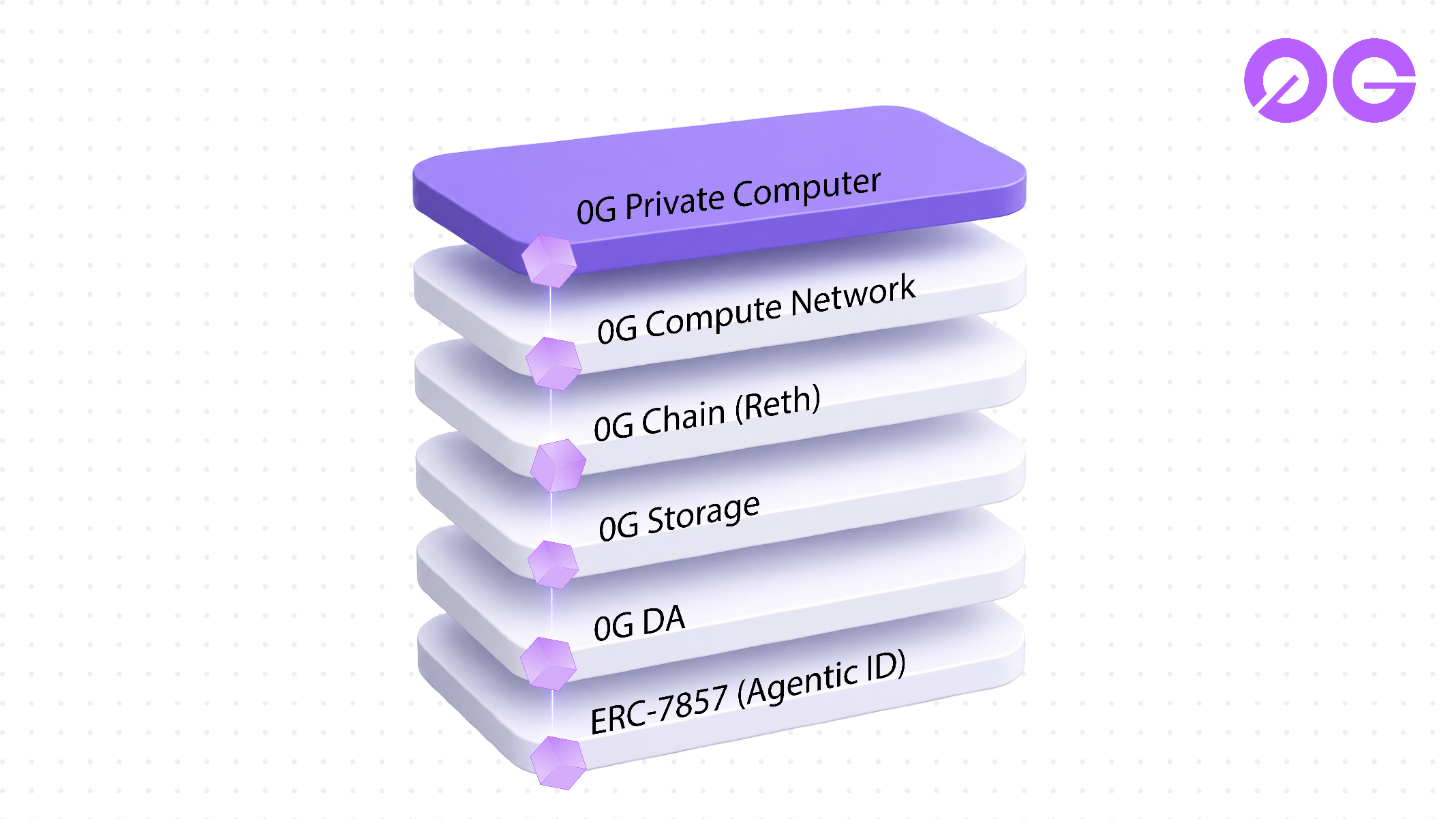
0G Private Computer is live.
Build and run AI agents where every inference is sealed inside a hardware isolated enclave. Your prompts stay encrypted, outputs are signed before they leave.
• One OpenAI-compatible API, swap your base URL and you're on a decentralised, verifiable network
• Six TEE verified models at launch including DeepSeek, Qwen3.6 Plus, Whisper, and more
• 60-second setup, connect wallet, create a key, start building
• No KYC, no waiting list, no middlemen
Policy based privacy is a promise. Hardware isolated privacy is proof.
$0G #0gcommunity #OpenAI #SDK
0g Everyone! big pump..
0G Private Computer is live.
Build and run AI agents where every inference is sealed inside a hardware isolated enclave. Your prompts stay encrypted, outputs are signed before they leave.
• One OpenAI-compatible API, swap your base URL and you're on a decentralised, verifiable network
• Six TEE verified models at launch including DeepSeek, Qwen3.6 Plus, Whisper, and more
• 60-second setup, connect wallet, create a key, start building
• No KYC, no waiting list, no middlemen
Policy based privacy is a promise. Hardware isolated privacy is proof.
0g Everyone! big pump..
0G Private Computer is live.
Build and run AI agents where every inference is sealed inside a hardware isolated enclave. Your prompts stay encrypted, outputs are signed before they leave.
• One OpenAI-compatible API, swap your base URL and you're on a decentralised, verifiable network
• Six TEE verified models at launch including DeepSeek, Qwen3.6 Plus, Whisper, and more
• 60-second setup, connect wallet, create a key, start building
• No KYC, no waiting list, no middlemen
Policy based privacy is a promise. Hardware isolated privacy is proof.
1
2
557


·
--
Bullish
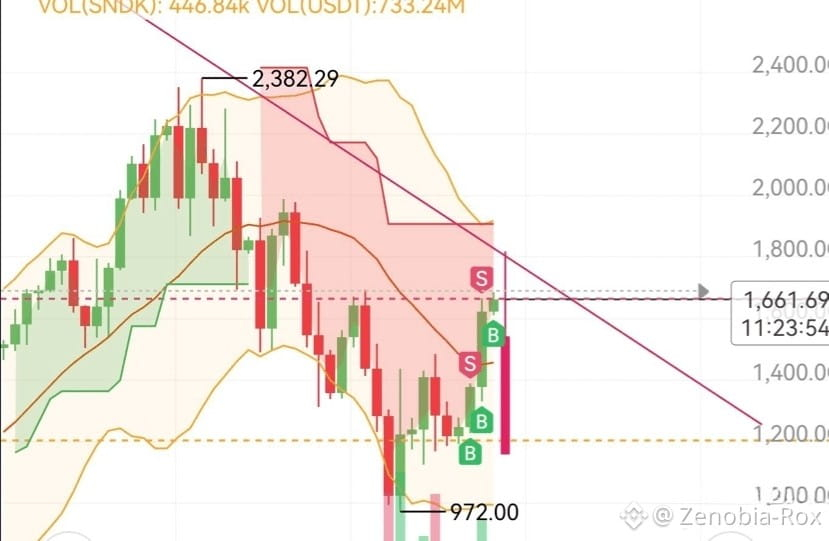
$SNDK is a perfect example of why shorting a strong momentum stock can get painful fast.
Short sellers have reportedly taken billions in losses while Sandisk keeps pushing higher. Revenue growth has been impressive, and the fundamentals clearly aren’t something to ignore.
But after a massive 700%+ run, a P/E above 20, and short interest still elevated, I’m asking a different question:
Is this genuine value discovery, or are we watching the final stage of an AI-driven frenzy?
I’m still leaning toward the short side.
It’s painful right now, but markets eventually reveal whether the fundamentals justify the price.
Sometimes surviving the squeeze is the hardest part of being early.
#SDK
{future}(SNDKUSDT)
$SNDK is a perfect example of why shorting a strong momentum stock can get painful fast.
Short sellers have reportedly taken billions in losses while Sandisk keeps pushing higher. Revenue growth has been impressive, and the fundamentals clearly aren’t something to ignore.
But after a massive 700%+ run, a P/E above 20, and short interest still elevated, I’m asking a different question:
Is this genuine value discovery, or are we watching the final stage of an AI-driven frenzy?
I’m still leaning toward the short side.
It’s painful right now, but markets eventually reveal whether the fundamentals justify the price.
Sometimes surviving the squeeze is the hardest part of being early.
#SDK
Short sellers have reportedly taken billions in losses while Sandisk keeps pushing higher. Revenue growth has been impressive, and the fundamentals clearly aren’t something to ignore.
But after a massive 700%+ run, a P/E above 20, and short interest still elevated, I’m asking a different question:
Is this genuine value discovery, or are we watching the final stage of an AI-driven frenzy?
I’m still leaning toward the short side.
It’s painful right now, but markets eventually reveal whether the fundamentals justify the price.
Sometimes surviving the squeeze is the hardest part of being early.
#SDK
1
2
542

⚙️ New update release for the WhiteBit Python SDK package
A new update has been released for the WhiteBit Python SDK package in version 1.1.16. This update aims to improve the functionality of the Application Programming Interface (API) for the WhiteBit cryptocurrency trading platform, providing developers with enhanced tools to interact with the platform.
━━━━━━━━━━━━━━
📊 Impact: 📊 Medium
🏷️ EXCHANGE
#WhiteBit #Python #SDK #Cryptocurrency #ExchangeAPI
📰 Source: pypi.org
⚙️ New update release for the WhiteBit Python SDK package
A new update has been released for the WhiteBit Python SDK package in version 1.1.16. This update aims to improve the functionality of the Application Programming Interface (API) for the WhiteBit cryptocurrency trading platform, providing developers with enhanced tools to interact with the platform.
━━━━━━━━━━━━━━
📊 Impact: 📊 Medium
🏷️ EXCHANGE
#WhiteBit #Python #SDK #Cryptocurrency #ExchangeAPI
📰 Source: pypi.org
A new update has been released for the WhiteBit Python SDK package in version 1.1.16. This update aims to improve the functionality of the Application Programming Interface (API) for the WhiteBit cryptocurrency trading platform, providing developers with enhanced tools to interact with the platform.
━━━━━━━━━━━━━━
📊 Impact: 📊 Medium
🏷️ EXCHANGE
#WhiteBit #Python #SDK #Cryptocurrency #ExchangeAPI
📰 Source: pypi.org
69

What if the biggest security upgrade isn't another wallet, but one extra decision before a transaction?
While testing @NewtonProtocol , one detail kept standing out. A transaction doesn't have to be executed just because it was signed. #Newt lets you simulate a policy first, then returns a simple result: allow = true or false. That tiny checkpoint changes how automation behaves.
3 things I wrote down while looking at Newton:
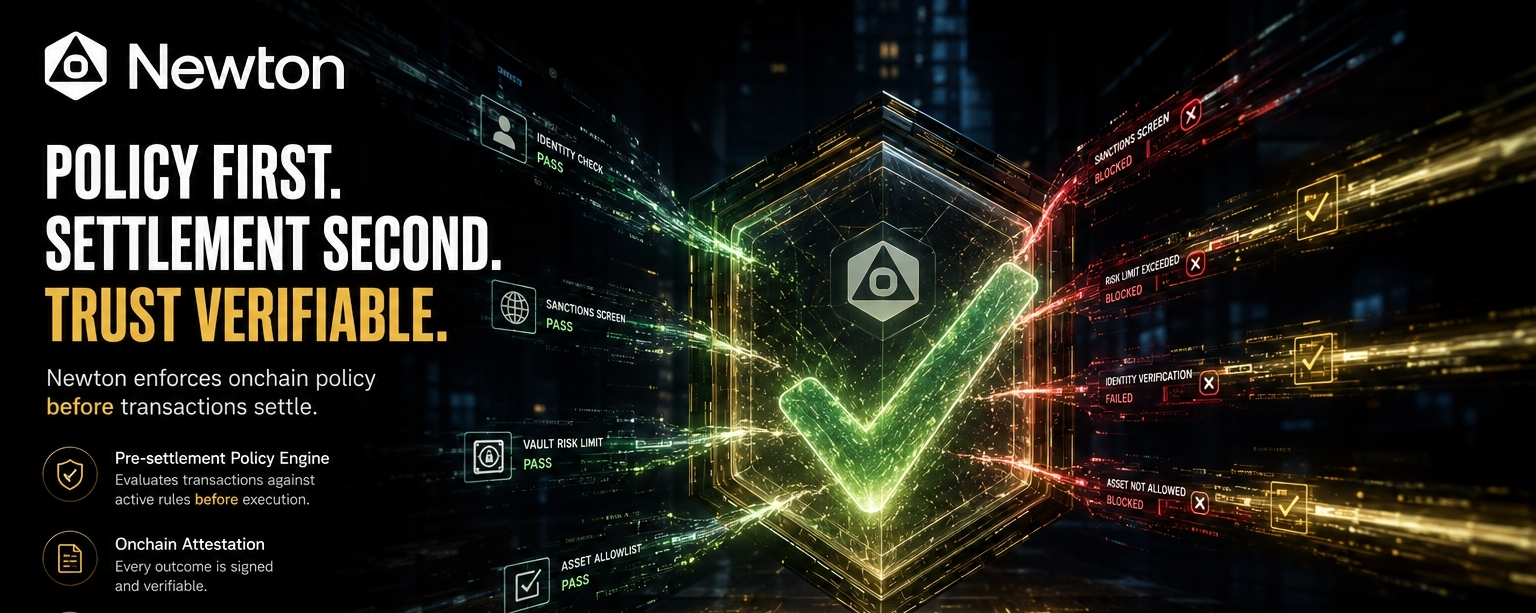
_ Newton evaluates the transaction before execution, not after it settles.
_ The #SDK checks a transaction intent using details like the sender, recipient, value, and policy data in a single simulation request.
_ The result is binary. True means proceed. False means stop. No guessing, no partial execution.
That matters more than it sounds. One policy simulation can prevent an AI agent or automated workflow from sending funds outside its approved limits. A failed check costs far less than an irreversible on-chain mistake.
If you're building with $NEWT , try one habit: simulate every high-value transaction before broadcasting it. It adds one extra step, but it removes a surprising amount of uncertainty.
I'm curious whether Newton eventually makes this the default expectation instead of an optional security feature. That feels like the more interesting question.
#NewtonProtocol #NEWTtoken #NEWTUSDT $ETH
What if the biggest security upgrade isn't another wallet, but one extra decision before a transaction?
While testing @NewtonProtocol , one detail kept standing out. A transaction doesn't have to be executed just because it was signed. #Newt lets you simulate a policy first, then returns a simple result: allow = true or false. That tiny checkpoint changes how automation behaves.
3 things I wrote down while looking at Newton:
_ Newton evaluates the transaction before execution, not after it settles.
_ The #SDK checks a transaction intent using details like the sender, recipient, value, and policy data in a single simulation request.
_ The result is binary. True means proceed. False means stop. No guessing, no partial execution.
That matters more than it sounds. One policy simulation can prevent an AI agent or automated workflow from sending funds outside its approved limits. A failed check costs far less than an irreversible on-chain mistake.
If you're building with $NEWT , try one habit: simulate every high-value transaction before broadcasting it. It adds one extra step, but it removes a surprising amount of uncertainty.
I'm curious whether Newton eventually makes this the default expectation instead of an optional security feature. That feels like the more interesting question.
#NewtonProtocol #NEWTtoken #NEWTUSDT $ETH
While testing @NewtonProtocol , one detail kept standing out. A transaction doesn't have to be executed just because it was signed. #Newt lets you simulate a policy first, then returns a simple result: allow = true or false. That tiny checkpoint changes how automation behaves.
3 things I wrote down while looking at Newton:
_ Newton evaluates the transaction before execution, not after it settles.
_ The #SDK checks a transaction intent using details like the sender, recipient, value, and policy data in a single simulation request.
_ The result is binary. True means proceed. False means stop. No guessing, no partial execution.
That matters more than it sounds. One policy simulation can prevent an AI agent or automated workflow from sending funds outside its approved limits. A failed check costs far less than an irreversible on-chain mistake.
If you're building with $NEWT , try one habit: simulate every high-value transaction before broadcasting it. It adds one extra step, but it removes a surprising amount of uncertainty.
I'm curious whether Newton eventually makes this the default expectation instead of an optional security feature. That feels like the more interesting question.
#NewtonProtocol #NEWTtoken #NEWTUSDT $ETH

47
1
35
382

·
--
Article
Newton Protocol's Mainnet Beta Is Live: But What Actually Matters NowHere's What I'm Actually Watching.
The announcement dropped cleanly. Mainnet Beta is live, the Vault #SDK is shipping, and the partner list reads like someone did their homework — Chainalysis, EigenLayer, Succinct, RedStone, Credora, Vaults.fyi. On paper this is one of the more serious infrastructure launches in #defi this cycle.
I don't think that means it's solved. I think it means the hard part is starting.
The idea is genuinely right
Let me say that clearly first, because the rest of this is going to poke at things.
The core problem Newton is addressing is real and has been sitting quietly under DeFi the entire time. Every vault, every protocol, every stablecoin issuer makes risk decisions based on rules that live somewhere offchain — in a document, in a team's internal process, in a Notion page nobody outside the core team has ever read. When something goes wrong, the investigation happens after settlement. The money already moved. The damage is already done.
Newton's pitch is moving the check before the transaction settles. Evaluate the policy first, produce a signed onchain attestation either way, let the chain enforce the decision rather than a human cleaning up afterward. That's not a marginal improvement on existing compliance tooling. That's a fundamentally different posture.
The Visa analogy the team uses is actually apt for once — not in the marketing sense, but in the structural sense. Visa's authorization network runs a decision before the merchant gets paid. Nobody thinks about it. It just works, silently, billions of times a day. If Newton gets to that level of invisibility onchain, it will have built something that matters enormously and that most people will never consciously notice. That's the target.
What I'm less sure about
Here's where I start pressing.
The operator network running policy evaluations is secured through EigenLayer restaking. That's a reasonable design choice given where the industry is, but EigenLayer itself is still maturing. The security guarantees of a restaked operator network are not the same as a battle-hardened L1 validator set. Newton's attestations are only as trustworthy as the operators producing them, and what happens when operator incentives get tested during a high-stakes evaluation — when approving a transaction would benefit the operator economically — is a question I haven't seen answered cleanly yet.
The second thing I'm watching is policy complexity at scale. Right now the use cases are relatively contained — vault risk limits, sanctions screening, identity verification. These are meaningful, but they're also comparatively well-defined. The moment Newton starts handling AI agent transactions, RWA settlement, or cross-jurisdiction stablecoin flows, the policy layer has to make judgment calls on situations nobody has written clean rules for yet. Who writes those policies? Who audits them? How does a depositor actually verify that the policy enforcing their vault is doing what they think it's doing, not just what the operator claims?
The Newton Explorer helps here. Onchain attestations are at least visible. But visible and interpretable are different things, and most vault depositors are not going to read raw attestation data.
The third thing is adoption friction. The Vault SDK ships compliance, security, and risk checks as a single onchain layer that protocols can plug in. In theory, seamless. In practice, every integration is a security surface, a legal question about liability, and a business decision about whether adding a pre-settlement check is worth the latency and complexity it adds to the user experience. The protocols most likely to integrate first are the ones already taking compliance seriously — which means Newton's early network might end up concentrated among a relatively small group of like-minded operators rather than becoming the default layer across DeFi broadly.
What makes me take it seriously anyway
Magic Labs is not a whitepaper team. They built the embedded wallet infrastructure that powers Polymarket, among others. 57 million wallets, 200,000 developers. They know what production infrastructure actually looks like under load, and they've already shipped a pre-settlement verification layer for Polymarket that is running at scale right now, not in a testnet environment.
That's the detail I keep coming back to. Most "pre-transaction compliance" pitches in crypto are theoretical. Newton has a reference implementation in production on one of the highest-volume prediction markets in the space. You can argue about the architecture. You can't argue with the fact that it's already running.
The partner stack also matters more than it might look on a press release. Chainalysis and Hexagate on the compliance and security side, RedStone and Credora on risk and data, Vaults.fyi for the vault market entry point — these aren't logo partnerships. Each of them brings a specific data or enforcement capability that Newton needs to actually evaluate policies accurately. The system is only as good as the inputs feeding the policy engine, and these integrations suggest someone thought carefully about where the real gaps are.
What I'm actually watching post-launch
Not the token price. Not the total value locked. Not the number of integrations announced.
I'm watching whether the attestation layer holds up when a major vault is under real stress — when liquidity is draining fast, when oracle data is moving violently, when operators face genuine economic pressure to let transactions through that the policy should reject. That's when pre-settlement authorization either proves it works or reveals the gaps in the incentive design.
I'm watching whether a mid-sized DeFi protocol with no existing compliance infrastructure can actually integrate the Vault SDK without it becoming a six-month engineering project. Ease of integration is the difference between this becoming DeFi's default authorization layer and becoming a well-respected niche product used by the ten most cautious protocols in the space.
And I'm watching the #AI agent angle. Newton mentions scaling from vaults to #RWAs to AI agents. Autonomous agents transacting onchain without human oversight is exactly the situation where pre-settlement policy enforcement stops being nice to have and becomes the only real option. If Newton can position the policy layer as the authorization infrastructure for agent-to-agent transactions before that market develops, that's a much larger opportunity than DeFi vault compliance alone.
The Mainnet Beta launch is the beginning of that test, not the end of it.
@NewtonProtocol $NEWT #Newt #Vault
{future}(NEWTUSDT)
Newton Protocol's Mainnet Beta Is Live: But What Actually Matters Now
Here's What I'm Actually Watching.
The announcement dropped cleanly. Mainnet Beta is live, the Vault #SDK is shipping, and the partner list reads like someone did their homework — Chainalysis, EigenLayer, Succinct, RedStone, Credora, Vaults.fyi. On paper this is one of the more serious infrastructure launches in #defi this cycle.
I don't think that means it's solved. I think it means the hard part is starting.
The idea is genuinely right
Let me say that clearly first, because the rest of this is going to poke at things.
The core problem Newton is addressing is real and has been sitting quietly under DeFi the entire time. Every vault, every protocol, every stablecoin issuer makes risk decisions based on rules that live somewhere offchain — in a document, in a team's internal process, in a Notion page nobody outside the core team has ever read. When something goes wrong, the investigation happens after settlement. The money already moved. The damage is already done.
Newton's pitch is moving the check before the transaction settles. Evaluate the policy first, produce a signed onchain attestation either way, let the chain enforce the decision rather than a human cleaning up afterward. That's not a marginal improvement on existing compliance tooling. That's a fundamentally different posture.
The Visa analogy the team uses is actually apt for once — not in the marketing sense, but in the structural sense. Visa's authorization network runs a decision before the merchant gets paid. Nobody thinks about it. It just works, silently, billions of times a day. If Newton gets to that level of invisibility onchain, it will have built something that matters enormously and that most people will never consciously notice. That's the target.
What I'm less sure about
Here's where I start pressing.
The operator network running policy evaluations is secured through EigenLayer restaking. That's a reasonable design choice given where the industry is, but EigenLayer itself is still maturing. The security guarantees of a restaked operator network are not the same as a battle-hardened L1 validator set. Newton's attestations are only as trustworthy as the operators producing them, and what happens when operator incentives get tested during a high-stakes evaluation — when approving a transaction would benefit the operator economically — is a question I haven't seen answered cleanly yet.
The second thing I'm watching is policy complexity at scale. Right now the use cases are relatively contained — vault risk limits, sanctions screening, identity verification. These are meaningful, but they're also comparatively well-defined. The moment Newton starts handling AI agent transactions, RWA settlement, or cross-jurisdiction stablecoin flows, the policy layer has to make judgment calls on situations nobody has written clean rules for yet. Who writes those policies? Who audits them? How does a depositor actually verify that the policy enforcing their vault is doing what they think it's doing, not just what the operator claims?
The Newton Explorer helps here. Onchain attestations are at least visible. But visible and interpretable are different things, and most vault depositors are not going to read raw attestation data.
The third thing is adoption friction. The Vault SDK ships compliance, security, and risk checks as a single onchain layer that protocols can plug in. In theory, seamless. In practice, every integration is a security surface, a legal question about liability, and a business decision about whether adding a pre-settlement check is worth the latency and complexity it adds to the user experience. The protocols most likely to integrate first are the ones already taking compliance seriously — which means Newton's early network might end up concentrated among a relatively small group of like-minded operators rather than becoming the default layer across DeFi broadly.
What makes me take it seriously anyway
Magic Labs is not a whitepaper team. They built the embedded wallet infrastructure that powers Polymarket, among others. 57 million wallets, 200,000 developers. They know what production infrastructure actually looks like under load, and they've already shipped a pre-settlement verification layer for Polymarket that is running at scale right now, not in a testnet environment.
That's the detail I keep coming back to. Most "pre-transaction compliance" pitches in crypto are theoretical. Newton has a reference implementation in production on one of the highest-volume prediction markets in the space. You can argue about the architecture. You can't argue with the fact that it's already running.
The partner stack also matters more than it might look on a press release. Chainalysis and Hexagate on the compliance and security side, RedStone and Credora on risk and data, Vaults.fyi for the vault market entry point — these aren't logo partnerships. Each of them brings a specific data or enforcement capability that Newton needs to actually evaluate policies accurately. The system is only as good as the inputs feeding the policy engine, and these integrations suggest someone thought carefully about where the real gaps are.
What I'm actually watching post-launch
Not the token price. Not the total value locked. Not the number of integrations announced.
I'm watching whether the attestation layer holds up when a major vault is under real stress — when liquidity is draining fast, when oracle data is moving violently, when operators face genuine economic pressure to let transactions through that the policy should reject. That's when pre-settlement authorization either proves it works or reveals the gaps in the incentive design.
I'm watching whether a mid-sized DeFi protocol with no existing compliance infrastructure can actually integrate the Vault SDK without it becoming a six-month engineering project. Ease of integration is the difference between this becoming DeFi's default authorization layer and becoming a well-respected niche product used by the ten most cautious protocols in the space.
And I'm watching the #AI agent angle. Newton mentions scaling from vaults to #RWAs to AI agents. Autonomous agents transacting onchain without human oversight is exactly the situation where pre-settlement policy enforcement stops being nice to have and becomes the only real option. If Newton can position the policy layer as the authorization infrastructure for agent-to-agent transactions before that market develops, that's a much larger opportunity than DeFi vault compliance alone.
The Mainnet Beta launch is the beginning of that test, not the end of it.
@NewtonProtocol $NEWT #Newt #Vault
The announcement dropped cleanly. Mainnet Beta is live, the Vault #SDK is shipping, and the partner list reads like someone did their homework — Chainalysis, EigenLayer, Succinct, RedStone, Credora, Vaults.fyi. On paper this is one of the more serious infrastructure launches in #defi this cycle.
I don't think that means it's solved. I think it means the hard part is starting.
The idea is genuinely right
Let me say that clearly first, because the rest of this is going to poke at things.
The core problem Newton is addressing is real and has been sitting quietly under DeFi the entire time. Every vault, every protocol, every stablecoin issuer makes risk decisions based on rules that live somewhere offchain — in a document, in a team's internal process, in a Notion page nobody outside the core team has ever read. When something goes wrong, the investigation happens after settlement. The money already moved. The damage is already done.
Newton's pitch is moving the check before the transaction settles. Evaluate the policy first, produce a signed onchain attestation either way, let the chain enforce the decision rather than a human cleaning up afterward. That's not a marginal improvement on existing compliance tooling. That's a fundamentally different posture.
The Visa analogy the team uses is actually apt for once — not in the marketing sense, but in the structural sense. Visa's authorization network runs a decision before the merchant gets paid. Nobody thinks about it. It just works, silently, billions of times a day. If Newton gets to that level of invisibility onchain, it will have built something that matters enormously and that most people will never consciously notice. That's the target.
What I'm less sure about
Here's where I start pressing.
The operator network running policy evaluations is secured through EigenLayer restaking. That's a reasonable design choice given where the industry is, but EigenLayer itself is still maturing. The security guarantees of a restaked operator network are not the same as a battle-hardened L1 validator set. Newton's attestations are only as trustworthy as the operators producing them, and what happens when operator incentives get tested during a high-stakes evaluation — when approving a transaction would benefit the operator economically — is a question I haven't seen answered cleanly yet.
The second thing I'm watching is policy complexity at scale. Right now the use cases are relatively contained — vault risk limits, sanctions screening, identity verification. These are meaningful, but they're also comparatively well-defined. The moment Newton starts handling AI agent transactions, RWA settlement, or cross-jurisdiction stablecoin flows, the policy layer has to make judgment calls on situations nobody has written clean rules for yet. Who writes those policies? Who audits them? How does a depositor actually verify that the policy enforcing their vault is doing what they think it's doing, not just what the operator claims?
The Newton Explorer helps here. Onchain attestations are at least visible. But visible and interpretable are different things, and most vault depositors are not going to read raw attestation data.
The third thing is adoption friction. The Vault SDK ships compliance, security, and risk checks as a single onchain layer that protocols can plug in. In theory, seamless. In practice, every integration is a security surface, a legal question about liability, and a business decision about whether adding a pre-settlement check is worth the latency and complexity it adds to the user experience. The protocols most likely to integrate first are the ones already taking compliance seriously — which means Newton's early network might end up concentrated among a relatively small group of like-minded operators rather than becoming the default layer across DeFi broadly.
What makes me take it seriously anyway
Magic Labs is not a whitepaper team. They built the embedded wallet infrastructure that powers Polymarket, among others. 57 million wallets, 200,000 developers. They know what production infrastructure actually looks like under load, and they've already shipped a pre-settlement verification layer for Polymarket that is running at scale right now, not in a testnet environment.
That's the detail I keep coming back to. Most "pre-transaction compliance" pitches in crypto are theoretical. Newton has a reference implementation in production on one of the highest-volume prediction markets in the space. You can argue about the architecture. You can't argue with the fact that it's already running.
The partner stack also matters more than it might look on a press release. Chainalysis and Hexagate on the compliance and security side, RedStone and Credora on risk and data, Vaults.fyi for the vault market entry point — these aren't logo partnerships. Each of them brings a specific data or enforcement capability that Newton needs to actually evaluate policies accurately. The system is only as good as the inputs feeding the policy engine, and these integrations suggest someone thought carefully about where the real gaps are.
What I'm actually watching post-launch
Not the token price. Not the total value locked. Not the number of integrations announced.
I'm watching whether the attestation layer holds up when a major vault is under real stress — when liquidity is draining fast, when oracle data is moving violently, when operators face genuine economic pressure to let transactions through that the policy should reject. That's when pre-settlement authorization either proves it works or reveals the gaps in the incentive design.
I'm watching whether a mid-sized DeFi protocol with no existing compliance infrastructure can actually integrate the Vault SDK without it becoming a six-month engineering project. Ease of integration is the difference between this becoming DeFi's default authorization layer and becoming a well-respected niche product used by the ten most cautious protocols in the space.
And I'm watching the #AI agent angle. Newton mentions scaling from vaults to #RWAs to AI agents. Autonomous agents transacting onchain without human oversight is exactly the situation where pre-settlement policy enforcement stops being nice to have and becomes the only real option. If Newton can position the policy layer as the authorization infrastructure for agent-to-agent transactions before that market develops, that's a much larger opportunity than DeFi vault compliance alone.
The Mainnet Beta launch is the beginning of that test, not the end of it.
@NewtonProtocol $NEWT #Newt #Vault
7
4
433

Python SDK for Developers.
As I've been exploring @OpenGradient one thing that stood out is its Python SDK.
If you've ever built something with Python you will know how much easier SDK can make development.
Instead of worrying about every technical detail developers can spend more time building and testing their ideas.
That's what I like about $OPG approach.
The Python SDK is designed to help developers interact with the network and build An AI applications without starting from scratch.
I think tools like this are important because they lower the barrier to entry. You don't need to reinvent everything just to experiment with AI. The easier it is to build the more people will be willing to create new applications.
For me, a project isn't only about its technology it's also about the experience it gives developers. Good tools can make a big difference.
#OPG #opg #python #sdk #BTC☀
💭 If you were building an AI project today would you choose Python or another programming language?
Python SDK for Developers.
As I've been exploring @OpenGradient one thing that stood out is its Python SDK.
If you've ever built something with Python you will know how much easier SDK can make development.
Instead of worrying about every technical detail developers can spend more time building and testing their ideas.
That's what I like about $OPG approach.
The Python SDK is designed to help developers interact with the network and build An AI applications without starting from scratch.
I think tools like this are important because they lower the barrier to entry. You don't need to reinvent everything just to experiment with AI. The easier it is to build the more people will be willing to create new applications.
For me, a project isn't only about its technology it's also about the experience it gives developers. Good tools can make a big difference.
#OPG #opg #python #sdk #BTC☀
💭 If you were building an AI project today would you choose Python or another programming language?
As I've been exploring @OpenGradient one thing that stood out is its Python SDK.
If you've ever built something with Python you will know how much easier SDK can make development.
Instead of worrying about every technical detail developers can spend more time building and testing their ideas.
That's what I like about $OPG approach.
The Python SDK is designed to help developers interact with the network and build An AI applications without starting from scratch.
I think tools like this are important because they lower the barrier to entry. You don't need to reinvent everything just to experiment with AI. The easier it is to build the more people will be willing to create new applications.
For me, a project isn't only about its technology it's also about the experience it gives developers. Good tools can make a big difference.
#OPG #opg #python #sdk #BTC☀
💭 If you were building an AI project today would you choose Python or another programming language?
2
1
164
Log in to explore more content
Join global crypto users on Binance Square
⚡️ Get latest and useful information about crypto.
💬 Trusted by the world’s largest crypto exchange.
👍 Discover real insights from verified creators.
Email / Phone number
Trending Topics
1
#EarningsSeason
265,074 views
2,275 Discussing
2
#BitwiseLaunchesFirstSpotNEARETF
17,762 views
429 Discussing
3
#USJobOpeningsFallToFiveMonthLow
23,456 views
325 Discussing
4
#ECBToTestAIAgentsInDigitalEuroPayments
19,796 views
472 Discussing
5
#JapanFSABacksFourthStablecoinTradeSettlementPilot
23,144 views
496 Discussing
6
#BitgetHackerFailsToMoveStolenFunds
38,799 views
596 Discussing
7
#BitMineETHHoldingsTop6Million
32,752 views
701 Discussing
8
#StrategyAdds1666BTCHoldingsReach847666
27,909 views
489 Discussing
9
#NvidiaApproves$150BBuyback
5,005 views
74 Discussing
10
#OpenAIDelaysGPT6.1OverSafetyIssues
41,192 views
866 Discussing