

#pythroadmap
pythroadmap
9.4M views
73,494 Discussing
Hot
Latest


PYTH Token: The Economic Engine of the Network #PythNetwork
The PYTH token is the native utility and governance token of the Pyth Network. The token plays a pivotal role in coordinating participant activities and incentivizing positive behavior within the ecosystem.
Benefits of the token:
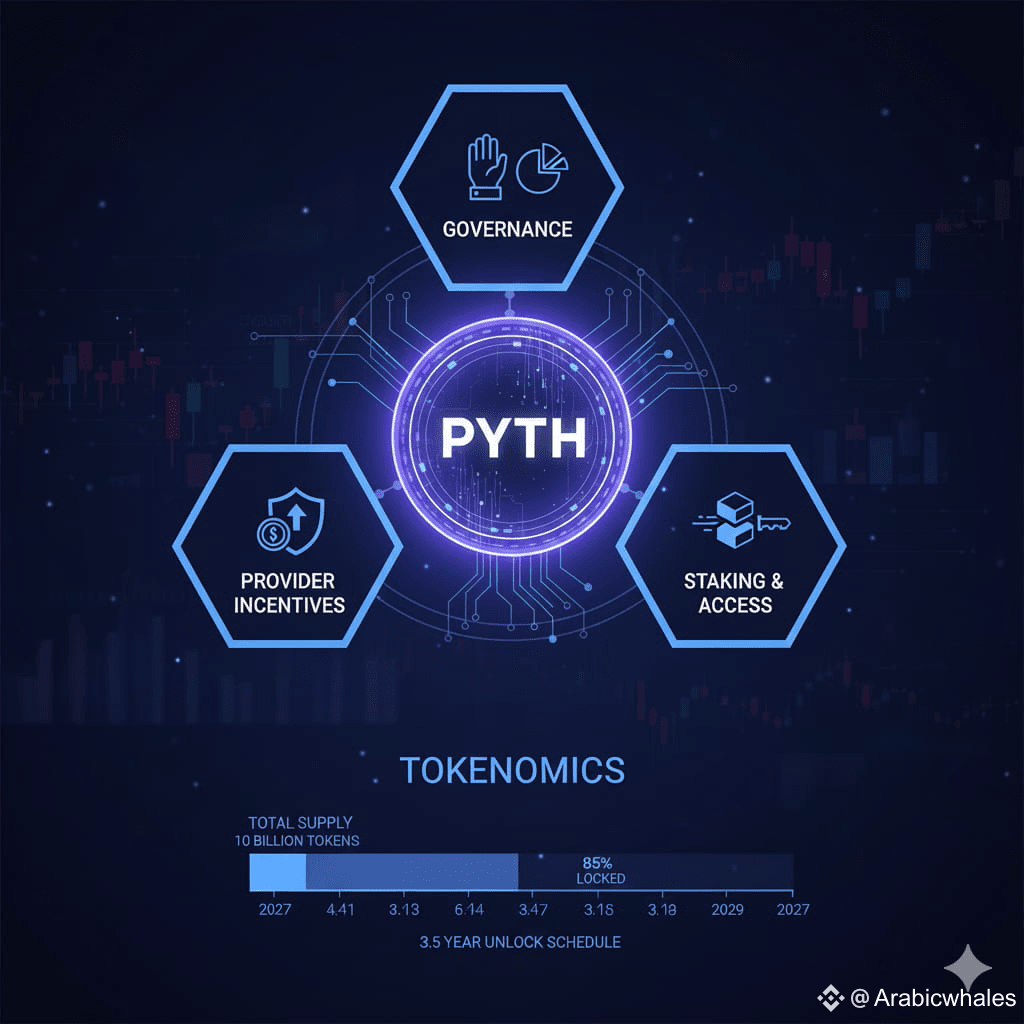
Governance: The token allows its holders to participate in the governance of the Pyth DAO, voting on critical decisions that shape the future of the protocol. These decisions include setting service fees, directing rewards to publishers, approving updates, and adding new assets to the network.
Incentivizing Providers: The token is used to incentivize data providers to deliver accurate and timely information, as they are rewarded for the quality of their data.
Staking and Access: Data consumers can stake PYTH tokens to gain access to premium data.
Economic Model and Token Distribution:
The total supply of PYTH tokens is capped at 10 billion tokens.
More than 85% of the tokens are locked and will be released in phases over 3.5 years, with specific unblocking schedules every 6 months until 2027.
The distribution is designed to ensure the long-term sustainability of the network
$PYTH #PythRoadmap @PythNetwork
PYTH Token: The Economic Engine of the Network #PythNetwork
The PYTH token is the native utility and governance token of the Pyth Network. The token plays a pivotal role in coordinating participant activities and incentivizing positive behavior within the ecosystem.
Benefits of the token:
Governance: The token allows its holders to participate in the governance of the Pyth DAO, voting on critical decisions that shape the future of the protocol. These decisions include setting service fees, directing rewards to publishers, approving updates, and adding new assets to the network.
Incentivizing Providers: The token is used to incentivize data providers to deliver accurate and timely information, as they are rewarded for the quality of their data.
Staking and Access: Data consumers can stake PYTH tokens to gain access to premium data.
Economic Model and Token Distribution:
The total supply of PYTH tokens is capped at 10 billion tokens.
More than 85% of the tokens are locked and will be released in phases over 3.5 years, with specific unblocking schedules every 6 months until 2027.
The distribution is designed to ensure the long-term sustainability of the network
$PYTH #PythRoadmap @PythNetwork
The PYTH token is the native utility and governance token of the Pyth Network. The token plays a pivotal role in coordinating participant activities and incentivizing positive behavior within the ecosystem.
Benefits of the token:
Governance: The token allows its holders to participate in the governance of the Pyth DAO, voting on critical decisions that shape the future of the protocol. These decisions include setting service fees, directing rewards to publishers, approving updates, and adding new assets to the network.
Incentivizing Providers: The token is used to incentivize data providers to deliver accurate and timely information, as they are rewarded for the quality of their data.
Staking and Access: Data consumers can stake PYTH tokens to gain access to premium data.
Economic Model and Token Distribution:
The total supply of PYTH tokens is capped at 10 billion tokens.
More than 85% of the tokens are locked and will be released in phases over 3.5 years, with specific unblocking schedules every 6 months until 2027.
The distribution is designed to ensure the long-term sustainability of the network
$PYTH #PythRoadmap @PythNetwork
2
7
948

·
--
Pyth Network: Web3 High-Frequency Trading's 'Price Engine'What is Pyth?
Pyth Network is a decentralized oracle protocol focused on providing accurate, low-latency financial market data for smart contracts.
⚡ Core Features
1️⃣ Direct data sources: 90+ top exchanges & market makers upload data directly, eliminating intermediaries.
2️⃣ Real-time updates: sub-second latency, supporting high-frequency trading & dynamic NFTs.
3️⃣ Multi-asset coverage: cryptocurrencies, stocks, commodities, data is all available.
4️⃣ Decentralized & transparent: all data can be verified on-chain, eliminating manipulation risks.
Pyth Network: Web3 High-Frequency Trading's 'Price Engine'
What is Pyth?
Pyth Network is a decentralized oracle protocol focused on providing accurate, low-latency financial market data for smart contracts.
⚡ Core Features
1️⃣ Direct data sources: 90+ top exchanges & market makers upload data directly, eliminating intermediaries.
2️⃣ Real-time updates: sub-second latency, supporting high-frequency trading & dynamic NFTs.
3️⃣ Multi-asset coverage: cryptocurrencies, stocks, commodities, data is all available.
4️⃣ Decentralized & transparent: all data can be verified on-chain, eliminating manipulation risks.
Pyth Network is a decentralized oracle protocol focused on providing accurate, low-latency financial market data for smart contracts.
⚡ Core Features
1️⃣ Direct data sources: 90+ top exchanges & market makers upload data directly, eliminating intermediaries.
2️⃣ Real-time updates: sub-second latency, supporting high-frequency trading & dynamic NFTs.
3️⃣ Multi-asset coverage: cryptocurrencies, stocks, commodities, data is all available.
4️⃣ Decentralized & transparent: all data can be verified on-chain, eliminating manipulation risks.
1
1
12
5.5k

Article
PYTH's Creative Leap: Empowering Artists with On-Chain RewardsIn a world increasingly dominated by digital content, artists, creators, and innovators often find themselves navigating a labyrinth of intermediaries, opaque payment structures, and insufficient recognition for their groundbreaking work. While Web3 promises a paradigm shift, the mechanisms for truly empowering creators with transparent, real-time, and fair rewards have largely remained nascent. This is where PYTH, typically known for its robust financial data, takes a revolutionary creative leap, harnessing its foundational technology to usher in a new era of on-chain rewards that directly empower artists and revolutionize the creator economy.
For too long, the creative industry has been characterized by a power imbalance. Artists pour their passion and talent into generating content, only to receive a fraction of the value they create, often through delayed and complex payout systems. The rise of NFTs offered a glimpse into direct ownership, but the broader spectrum of ongoing engagement and derivative value for creators remained largely untapped. PYTH, with its unparalleled ability to deliver high-fidelity, real-time data on-chain, is now uniquely positioned to change this narrative, transforming how artists are recognized, rewarded, and financially empowered.
PYTH's Artistic Vision: Forging a Transparent & Fair Creator Economy
PYTH's "Creative Leap" is a strategic expansion of its core capabilities, moving beyond traditional financial markets to address the critical needs of the creator economy. This isn't just about adding a feature; it's about fundamentally re-engineering the relationship between artists, their work, and their audience, establishing a transparent, automated, and fair system for on-chain rewards.
Here’s how PYTH is empowering artists with groundbreaking on-chain rewards:
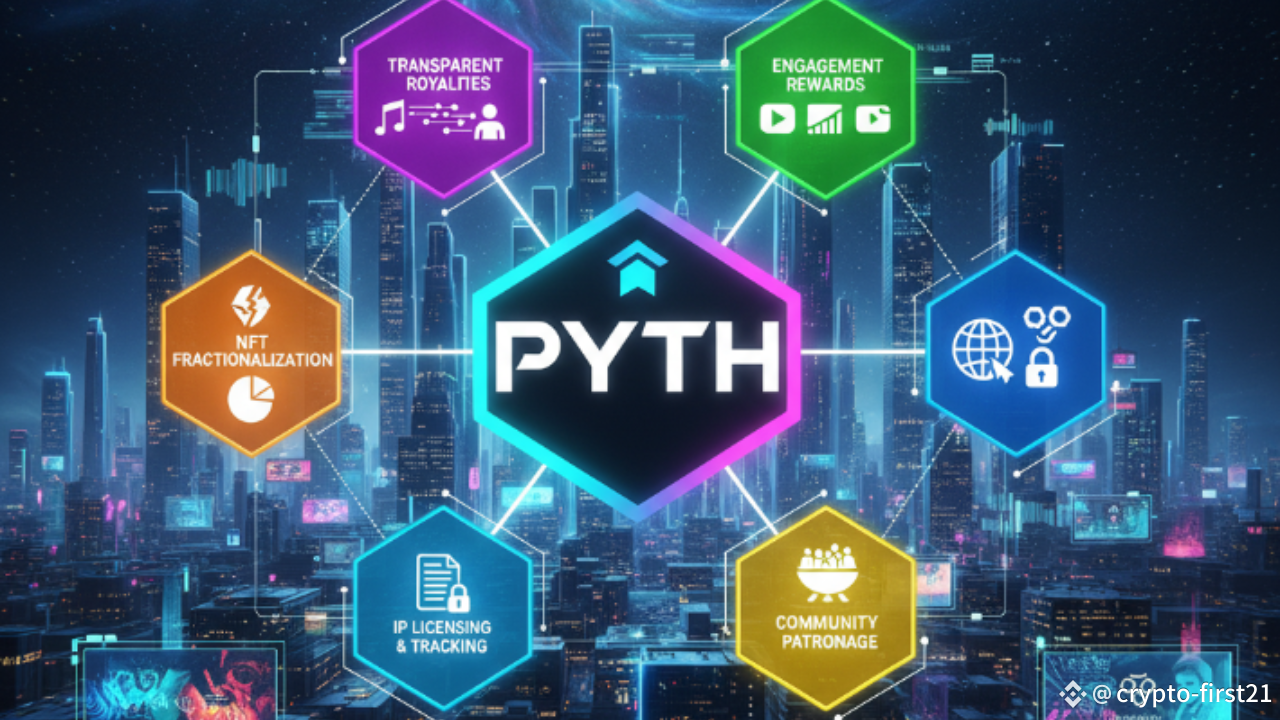
Real-Time, Transparent Royalty Distribution: Imagine a world where artists receive their royalties instantly, on-chain, as their work is consumed or re-used. PYTH's real-time data feeds can power smart contracts that automatically trigger micro-payments to creators whenever their music is streamed, their art is displayed, or their digital content is interacted with, cutting out intermediaries and ensuring complete transparency.
Dynamic Content Monetization & Engagement Rewards: PYTH's low-latency data can track real-time engagement metrics (e.g., views, shares, likes, downloads on integrated platforms). This allows for dynamic reward structures where artists are compensated not just for initial sales, but for ongoing audience interaction and value generation, creating continuous revenue streams directly tied to content performance.
NFT Fractionalization & Royalty Optimization: For high-value NFTs, PYTH can facilitate advanced fractionalization protocols where the fractional owners, or even the original artist, receive pro-rata shares of any royalties or secondary sales, all tracked and distributed on-chain with precision. This ensures fair compensation for all stakeholders over the lifetime of the asset.
IP Licensing & Usage Tracking: PYTH's data integrity can be leveraged to create a verifiable, on-chain record of IP licensing and usage. Smart contracts, powered by PYTH, can automatically enforce licensing terms and distribute payments to artists when their work is utilized in new projects, games, or metaverse experiences, providing unprecedented control and monetization opportunities.
Community-Driven Funding & Patronage: PYTH can facilitate innovative, on-chain funding models where communities directly support artists based on their impact and output. Real-time data about content creation milestones or community engagement can trigger automated payouts, fostering a direct and impactful relationship between creators and their patrons.
Decentralized Copyright Verification & Attribution: While not a legal framework, PYTH's immutable data can contribute to creating decentralized registries for content creation and attribution. This helps artists prove ownership and track the lineage of their work across digital platforms, forming a transparent record that enhances their bargaining power.
The PYTH Advantage: A New Renaissance for Creators
PYTH's Creative Leap is more than just an application of technology; it's a commitment to fostering a new renaissance in the digital arts and creator economy. By providing transparent, real-time, and fair on-chain reward mechanisms, PYTH is dismantling traditional barriers and empowering artists with unprecedented financial control and opportunity.
For musicians, visual artists, game developers, metaverse builders, and all creators seeking fair compensation and direct connection with their audience, PYTH is rapidly becoming the indispensable solution. This isn't just about data; it's about dignity, empowerment, and building a truly equitable future for creative minds worldwide.
@PythNetwork #PythRoadmap $PYTH
PYTH's Creative Leap: Empowering Artists with On-Chain Rewards
In a world increasingly dominated by digital content, artists, creators, and innovators often find themselves navigating a labyrinth of intermediaries, opaque payment structures, and insufficient recognition for their groundbreaking work. While Web3 promises a paradigm shift, the mechanisms for truly empowering creators with transparent, real-time, and fair rewards have largely remained nascent. This is where PYTH, typically known for its robust financial data, takes a revolutionary creative leap, harnessing its foundational technology to usher in a new era of on-chain rewards that directly empower artists and revolutionize the creator economy.
For too long, the creative industry has been characterized by a power imbalance. Artists pour their passion and talent into generating content, only to receive a fraction of the value they create, often through delayed and complex payout systems. The rise of NFTs offered a glimpse into direct ownership, but the broader spectrum of ongoing engagement and derivative value for creators remained largely untapped. PYTH, with its unparalleled ability to deliver high-fidelity, real-time data on-chain, is now uniquely positioned to change this narrative, transforming how artists are recognized, rewarded, and financially empowered.
PYTH's Artistic Vision: Forging a Transparent & Fair Creator Economy
PYTH's "Creative Leap" is a strategic expansion of its core capabilities, moving beyond traditional financial markets to address the critical needs of the creator economy. This isn't just about adding a feature; it's about fundamentally re-engineering the relationship between artists, their work, and their audience, establishing a transparent, automated, and fair system for on-chain rewards.
Here’s how PYTH is empowering artists with groundbreaking on-chain rewards:
Real-Time, Transparent Royalty Distribution: Imagine a world where artists receive their royalties instantly, on-chain, as their work is consumed or re-used. PYTH's real-time data feeds can power smart contracts that automatically trigger micro-payments to creators whenever their music is streamed, their art is displayed, or their digital content is interacted with, cutting out intermediaries and ensuring complete transparency.
Dynamic Content Monetization & Engagement Rewards: PYTH's low-latency data can track real-time engagement metrics (e.g., views, shares, likes, downloads on integrated platforms). This allows for dynamic reward structures where artists are compensated not just for initial sales, but for ongoing audience interaction and value generation, creating continuous revenue streams directly tied to content performance.
NFT Fractionalization & Royalty Optimization: For high-value NFTs, PYTH can facilitate advanced fractionalization protocols where the fractional owners, or even the original artist, receive pro-rata shares of any royalties or secondary sales, all tracked and distributed on-chain with precision. This ensures fair compensation for all stakeholders over the lifetime of the asset.
IP Licensing & Usage Tracking: PYTH's data integrity can be leveraged to create a verifiable, on-chain record of IP licensing and usage. Smart contracts, powered by PYTH, can automatically enforce licensing terms and distribute payments to artists when their work is utilized in new projects, games, or metaverse experiences, providing unprecedented control and monetization opportunities.
Community-Driven Funding & Patronage: PYTH can facilitate innovative, on-chain funding models where communities directly support artists based on their impact and output. Real-time data about content creation milestones or community engagement can trigger automated payouts, fostering a direct and impactful relationship between creators and their patrons.
Decentralized Copyright Verification & Attribution: While not a legal framework, PYTH's immutable data can contribute to creating decentralized registries for content creation and attribution. This helps artists prove ownership and track the lineage of their work across digital platforms, forming a transparent record that enhances their bargaining power.
The PYTH Advantage: A New Renaissance for Creators
PYTH's Creative Leap is more than just an application of technology; it's a commitment to fostering a new renaissance in the digital arts and creator economy. By providing transparent, real-time, and fair on-chain reward mechanisms, PYTH is dismantling traditional barriers and empowering artists with unprecedented financial control and opportunity.
For musicians, visual artists, game developers, metaverse builders, and all creators seeking fair compensation and direct connection with their audience, PYTH is rapidly becoming the indispensable solution. This isn't just about data; it's about dignity, empowerment, and building a truly equitable future for creative minds worldwide.
@PythNetwork #PythRoadmap $PYTH
For too long, the creative industry has been characterized by a power imbalance. Artists pour their passion and talent into generating content, only to receive a fraction of the value they create, often through delayed and complex payout systems. The rise of NFTs offered a glimpse into direct ownership, but the broader spectrum of ongoing engagement and derivative value for creators remained largely untapped. PYTH, with its unparalleled ability to deliver high-fidelity, real-time data on-chain, is now uniquely positioned to change this narrative, transforming how artists are recognized, rewarded, and financially empowered.
PYTH's Artistic Vision: Forging a Transparent & Fair Creator Economy
PYTH's "Creative Leap" is a strategic expansion of its core capabilities, moving beyond traditional financial markets to address the critical needs of the creator economy. This isn't just about adding a feature; it's about fundamentally re-engineering the relationship between artists, their work, and their audience, establishing a transparent, automated, and fair system for on-chain rewards.
Here’s how PYTH is empowering artists with groundbreaking on-chain rewards:
Real-Time, Transparent Royalty Distribution: Imagine a world where artists receive their royalties instantly, on-chain, as their work is consumed or re-used. PYTH's real-time data feeds can power smart contracts that automatically trigger micro-payments to creators whenever their music is streamed, their art is displayed, or their digital content is interacted with, cutting out intermediaries and ensuring complete transparency.
Dynamic Content Monetization & Engagement Rewards: PYTH's low-latency data can track real-time engagement metrics (e.g., views, shares, likes, downloads on integrated platforms). This allows for dynamic reward structures where artists are compensated not just for initial sales, but for ongoing audience interaction and value generation, creating continuous revenue streams directly tied to content performance.
NFT Fractionalization & Royalty Optimization: For high-value NFTs, PYTH can facilitate advanced fractionalization protocols where the fractional owners, or even the original artist, receive pro-rata shares of any royalties or secondary sales, all tracked and distributed on-chain with precision. This ensures fair compensation for all stakeholders over the lifetime of the asset.
IP Licensing & Usage Tracking: PYTH's data integrity can be leveraged to create a verifiable, on-chain record of IP licensing and usage. Smart contracts, powered by PYTH, can automatically enforce licensing terms and distribute payments to artists when their work is utilized in new projects, games, or metaverse experiences, providing unprecedented control and monetization opportunities.
Community-Driven Funding & Patronage: PYTH can facilitate innovative, on-chain funding models where communities directly support artists based on their impact and output. Real-time data about content creation milestones or community engagement can trigger automated payouts, fostering a direct and impactful relationship between creators and their patrons.
Decentralized Copyright Verification & Attribution: While not a legal framework, PYTH's immutable data can contribute to creating decentralized registries for content creation and attribution. This helps artists prove ownership and track the lineage of their work across digital platforms, forming a transparent record that enhances their bargaining power.
The PYTH Advantage: A New Renaissance for Creators
PYTH's Creative Leap is more than just an application of technology; it's a commitment to fostering a new renaissance in the digital arts and creator economy. By providing transparent, real-time, and fair on-chain reward mechanisms, PYTH is dismantling traditional barriers and empowering artists with unprecedented financial control and opportunity.
For musicians, visual artists, game developers, metaverse builders, and all creators seeking fair compensation and direct connection with their audience, PYTH is rapidly becoming the indispensable solution. This isn't just about data; it's about dignity, empowerment, and building a truly equitable future for creative minds worldwide.
@PythNetwork #PythRoadmap $PYTH
1
7
864

·
--

Article
Why Pyth’s Latest Adoption Growth Makes Me Bullish On Its Future DirectionWhen I first came across Pyth, what struck me wasn’t just the sophistication of the platform, it was the audacity of its vision. This project isn’t content with simply solving a problem in crypto; it’s tackling a challenge that has long plagued the entire financial data ecosystem. The traditional market data industry, worth over $50 billion, has been dominated for decades by centralized entities that control access, dictate prices, and restrict transparency. For years, institutions, analysts, and traders were bound to rigid, opaque systems offering limited flexibility. Pyth, however, flips this model on its head. It introduces a decentralized, transparent, and incentive-driven alternative that aligns contributors, users, and governance in a single, self-sustaining ecosystem.
The beauty of Pyth lies in its ability to democratize high-quality financial data. It doesn’t merely present another platform; it fosters a network where trust is embedded in the architecture. Institutions, developers, and individual traders all benefit from the network’s reliability, while contributors are incentivized to maintain accuracy and integrity. What feels groundbreaking here is the way Pyth seamlessly merges technological innovation with practical utility, creating a platform that could very well redefine the flow of global financial information.
Every step of the project feels meticulously planned, yet each milestone introduces an element of suspense. Observers can sense the underlying momentum building, almost like watching a quiet revolution gather speed beneath the surface. Pyth is more than a data project, it’s a narrative of transformation, a story where decentralization meets global finance in ways that are both ambitious and achievable.
A Roadmap Poised to Reshape Finance
The roadmap of Pyth is not merely a technical outline; it is a carefully constructed blueprint for systemic change. Phase Two, which focuses on institutional subscription feeds, is where the project promises its most significant impact. Imagine a world where trading desks, hedge funds, and research teams are no longer tethered to costly, centralized data providers. Instead, they gain access to decentralized, real-time data feeds that combine reliability with transparency, a combination that has long eluded traditional finance.
Phase One laid the foundation, proving that decentralized feeds could function at scale while maintaining accuracy and speed. Phase Two takes this further, introducing institutional-grade subscription models that could fundamentally alter how market participants interact with data. The implications are enormous: decentralized networks feeding critical financial data to institutions at the quality and speed they require could catalyze a shift in the very infrastructure of finance.
Adding depth to this transformation is the role of $PYTH . The token is more than a speculative instrument; it underpins the entire ecosystem. Contributors are rewarded for accurate data submissions, while the DAO benefits from consistent revenue streams generated by subscriptions and network usage. This alignment of incentives ensures that value creation is both transparent and sustainable. Unlike projects that rely on hype-driven tokenomics, Pyth ties its financial structure directly to real-world utility, making it a model for long-term, practical application.
The roadmap also emphasizes governance, which has evolved to include mechanisms that enhance transparency and community participation. Every update to governance is a strategic step toward a decentralized ecosystem that is resilient, efficient, and adaptable. It’s this thoughtful layering of roadmap milestones that makes following Pyth a suspenseful yet exciting experience, one never knows which breakthrough integration or governance update might redefine the network’s trajectory.
Ecosystem Growth: Integrations and Momentum
Momentum is often the hardest element for blockchain projects to maintain, yet Pyth demonstrates consistent growth and expansion. Its ecosystem integrations span multiple sectors, each adding a layer of utility and reinforcing the project’s long-term vision. These integrations are not superficial; they represent real-world adoption and a growing recognition of decentralized data’s potential to disrupt traditional financial hierarchies.
From technical integrations with decentralized applications to partnerships with institutions seeking reliable data feeds, Pyth’s footprint is expanding rapidly. Developers can now build products that leverage real-time financial data with minimal latency, while institutions gain a secure, decentralized alternative to traditional providers. Contributors, meanwhile, are rewarded through mechanisms that encourage accuracy, speed, and consistency. This creates a network effect: as more participants engage, the ecosystem strengthens, reliability improves, and adoption accelerates.
The project’s emphasis on transparency and security amplifies the impact of each integration. In traditional finance, the opacity of data sources often leads to inefficiencies, mispricing, and risk. Pyth addresses this by ensuring that each data point submitted is verified, incentivized, and traceable. The suspense here lies in watching how this decentralized model, layer by layer, starts to challenge entrenched norms in global finance. Every new integration feels like a small step toward a larger disruption, hinting at the future potential of a network that can truly operate at scale.
Technical Sophistication: Decentralization Meets Reliability
At the heart of Pyth is a deeply sophisticated technical framework that ensures reliability, speed, and accuracy. Unlike legacy systems that rely on central points of control, Pyth’s decentralized network distributes data collection, validation, and dissemination across multiple contributors. This redundancy not only increases accuracy but also enhances resilience against errors, manipulation, or downtime.
Real-time data delivery is critical for institutions and traders. Latency, accuracy, and consistency determine the difference between profit and loss in fast-moving markets. Pyth addresses these challenges through innovative mechanisms that prioritize verified data submission while maintaining speed. Contributors’ incentives are designed to reward both the quantity and quality of submissions, creating a dynamic ecosystem where reliability is built into the network itself.
Security, too, is paramount. Decentralized networks often face criticism for potential vulnerabilities, but Pyth has implemented multiple layers of safeguards. Cryptographic verification, network consensus, and incentive alignment work together to ensure that the data flowing through the ecosystem is trustworthy. This combination of technical sophistication and thoughtful incentives creates a platform that is not only operationally robust but also credible in the eyes of institutional participants.
Impact Across Industries: Real-World Use Cases
Pyth’s potential isn’t limited to crypto, it extends into traditional finance, DeFi, risk management, and even algorithmic trading. The ability to access decentralized, high-fidelity data in real time opens doors to a range of applications previously constrained by centralized bottlenecks.
For institutional traders, Pyth provides a reliable layer of market data that can support automated strategies, hedging, and research. DeFi developers gain access to feeds that enhance smart contract functionality, lending protocols, and decentralized exchanges. Even regulatory and risk management teams could leverage the transparency of the network to create better compliance frameworks. Each use case underscores how Pyth functions as a bridge, linking the decentralized world with real-world financial operations in a way few projects have achieved.
The suspense is particularly palpable when imagining the long-term ripple effects. If decentralized data networks like Pyth gain widespread adoption, the traditional monopolies over financial information could face significant disruption. Markets may become more transparent, trading strategies more sophisticated, and the global financial ecosystem more resilient. Watching this potential unfold adds an element of narrative intrigue that is rarely found in technology projects.
The Human Element: Participation and Governance
A project is only as strong as its participants, and Pyth excels in designing a network that empowers its contributors. Individuals, institutions, and developers all play an active role in maintaining, validating, and expanding the ecosystem. This human-centric approach transforms what could be a dry technical endeavor into a dynamic, evolving story. Contributors are not merely providing data, they are actively shaping the infrastructure of future finance.
Governance is a critical piece of this puzzle. Updates to voting structures, reward mechanisms, and participation models have increased transparency and allowed the community to influence the project’s direction meaningfully. This adds an additional layer of suspense: each decision, vote, and integration carries the potential to alter the trajectory of the ecosystem. For observers, this human element creates a compelling narrative of collaboration, strategy, and decentralized decision-making.
Conclusion: $PYTH as the Key to a Decentralized Future
Pyth is more than a technological innovation, it is a vision of what the future of finance could look like. From its ambitious roadmap to institutional subscription feeds, governance updates, ecosystem integrations, and incentive-aligned tokenomics, every element is designed to create a resilient, decentralized, and practical data network.
The project doesn’t merely promise innovation; it delivers utility, momentum, and sustainability. Contributors, developers, and institutions are all participants in a narrative that is unfolding in real time, a story of transparency, decentralization, and strategic growth. With each milestone, Pyth moves closer to realizing its vision as a bridge between traditional finance and the decentralized world, offering reliability, accessibility, and potential for systemic impact.
Watching @PythNetwork evolve is like observing a quiet revolution taking shape, one that could redefine the global financial ecosystem. Its combination of ambition, technical sophistication, and human-centered incentives sets it apart from most other projects in crypto. The suspense, potential, and excitement are palpable, making it one of the most intriguing narratives in modern finance.
#PythRoadmap
Why Pyth’s Latest Adoption Growth Makes Me Bullish On Its Future Direction
When I first came across Pyth, what struck me wasn’t just the sophistication of the platform, it was the audacity of its vision. This project isn’t content with simply solving a problem in crypto; it’s tackling a challenge that has long plagued the entire financial data ecosystem. The traditional market data industry, worth over $50 billion, has been dominated for decades by centralized entities that control access, dictate prices, and restrict transparency. For years, institutions, analysts, and traders were bound to rigid, opaque systems offering limited flexibility. Pyth, however, flips this model on its head. It introduces a decentralized, transparent, and incentive-driven alternative that aligns contributors, users, and governance in a single, self-sustaining ecosystem.
The beauty of Pyth lies in its ability to democratize high-quality financial data. It doesn’t merely present another platform; it fosters a network where trust is embedded in the architecture. Institutions, developers, and individual traders all benefit from the network’s reliability, while contributors are incentivized to maintain accuracy and integrity. What feels groundbreaking here is the way Pyth seamlessly merges technological innovation with practical utility, creating a platform that could very well redefine the flow of global financial information.
Every step of the project feels meticulously planned, yet each milestone introduces an element of suspense. Observers can sense the underlying momentum building, almost like watching a quiet revolution gather speed beneath the surface. Pyth is more than a data project, it’s a narrative of transformation, a story where decentralization meets global finance in ways that are both ambitious and achievable.
A Roadmap Poised to Reshape Finance
The roadmap of Pyth is not merely a technical outline; it is a carefully constructed blueprint for systemic change. Phase Two, which focuses on institutional subscription feeds, is where the project promises its most significant impact. Imagine a world where trading desks, hedge funds, and research teams are no longer tethered to costly, centralized data providers. Instead, they gain access to decentralized, real-time data feeds that combine reliability with transparency, a combination that has long eluded traditional finance.
Phase One laid the foundation, proving that decentralized feeds could function at scale while maintaining accuracy and speed. Phase Two takes this further, introducing institutional-grade subscription models that could fundamentally alter how market participants interact with data. The implications are enormous: decentralized networks feeding critical financial data to institutions at the quality and speed they require could catalyze a shift in the very infrastructure of finance.
Adding depth to this transformation is the role of $PYTH . The token is more than a speculative instrument; it underpins the entire ecosystem. Contributors are rewarded for accurate data submissions, while the DAO benefits from consistent revenue streams generated by subscriptions and network usage. This alignment of incentives ensures that value creation is both transparent and sustainable. Unlike projects that rely on hype-driven tokenomics, Pyth ties its financial structure directly to real-world utility, making it a model for long-term, practical application.
The roadmap also emphasizes governance, which has evolved to include mechanisms that enhance transparency and community participation. Every update to governance is a strategic step toward a decentralized ecosystem that is resilient, efficient, and adaptable. It’s this thoughtful layering of roadmap milestones that makes following Pyth a suspenseful yet exciting experience, one never knows which breakthrough integration or governance update might redefine the network’s trajectory.
Ecosystem Growth: Integrations and Momentum
Momentum is often the hardest element for blockchain projects to maintain, yet Pyth demonstrates consistent growth and expansion. Its ecosystem integrations span multiple sectors, each adding a layer of utility and reinforcing the project’s long-term vision. These integrations are not superficial; they represent real-world adoption and a growing recognition of decentralized data’s potential to disrupt traditional financial hierarchies.
From technical integrations with decentralized applications to partnerships with institutions seeking reliable data feeds, Pyth’s footprint is expanding rapidly. Developers can now build products that leverage real-time financial data with minimal latency, while institutions gain a secure, decentralized alternative to traditional providers. Contributors, meanwhile, are rewarded through mechanisms that encourage accuracy, speed, and consistency. This creates a network effect: as more participants engage, the ecosystem strengthens, reliability improves, and adoption accelerates.
The project’s emphasis on transparency and security amplifies the impact of each integration. In traditional finance, the opacity of data sources often leads to inefficiencies, mispricing, and risk. Pyth addresses this by ensuring that each data point submitted is verified, incentivized, and traceable. The suspense here lies in watching how this decentralized model, layer by layer, starts to challenge entrenched norms in global finance. Every new integration feels like a small step toward a larger disruption, hinting at the future potential of a network that can truly operate at scale.
Technical Sophistication: Decentralization Meets Reliability
At the heart of Pyth is a deeply sophisticated technical framework that ensures reliability, speed, and accuracy. Unlike legacy systems that rely on central points of control, Pyth’s decentralized network distributes data collection, validation, and dissemination across multiple contributors. This redundancy not only increases accuracy but also enhances resilience against errors, manipulation, or downtime.
Real-time data delivery is critical for institutions and traders. Latency, accuracy, and consistency determine the difference between profit and loss in fast-moving markets. Pyth addresses these challenges through innovative mechanisms that prioritize verified data submission while maintaining speed. Contributors’ incentives are designed to reward both the quantity and quality of submissions, creating a dynamic ecosystem where reliability is built into the network itself.
Security, too, is paramount. Decentralized networks often face criticism for potential vulnerabilities, but Pyth has implemented multiple layers of safeguards. Cryptographic verification, network consensus, and incentive alignment work together to ensure that the data flowing through the ecosystem is trustworthy. This combination of technical sophistication and thoughtful incentives creates a platform that is not only operationally robust but also credible in the eyes of institutional participants.
Impact Across Industries: Real-World Use Cases
Pyth’s potential isn’t limited to crypto, it extends into traditional finance, DeFi, risk management, and even algorithmic trading. The ability to access decentralized, high-fidelity data in real time opens doors to a range of applications previously constrained by centralized bottlenecks.
For institutional traders, Pyth provides a reliable layer of market data that can support automated strategies, hedging, and research. DeFi developers gain access to feeds that enhance smart contract functionality, lending protocols, and decentralized exchanges. Even regulatory and risk management teams could leverage the transparency of the network to create better compliance frameworks. Each use case underscores how Pyth functions as a bridge, linking the decentralized world with real-world financial operations in a way few projects have achieved.
The suspense is particularly palpable when imagining the long-term ripple effects. If decentralized data networks like Pyth gain widespread adoption, the traditional monopolies over financial information could face significant disruption. Markets may become more transparent, trading strategies more sophisticated, and the global financial ecosystem more resilient. Watching this potential unfold adds an element of narrative intrigue that is rarely found in technology projects.
The Human Element: Participation and Governance
A project is only as strong as its participants, and Pyth excels in designing a network that empowers its contributors. Individuals, institutions, and developers all play an active role in maintaining, validating, and expanding the ecosystem. This human-centric approach transforms what could be a dry technical endeavor into a dynamic, evolving story. Contributors are not merely providing data, they are actively shaping the infrastructure of future finance.
Governance is a critical piece of this puzzle. Updates to voting structures, reward mechanisms, and participation models have increased transparency and allowed the community to influence the project’s direction meaningfully. This adds an additional layer of suspense: each decision, vote, and integration carries the potential to alter the trajectory of the ecosystem. For observers, this human element creates a compelling narrative of collaboration, strategy, and decentralized decision-making.
Conclusion: $PYTH as the Key to a Decentralized Future
Pyth is more than a technological innovation, it is a vision of what the future of finance could look like. From its ambitious roadmap to institutional subscription feeds, governance updates, ecosystem integrations, and incentive-aligned tokenomics, every element is designed to create a resilient, decentralized, and practical data network.
The project doesn’t merely promise innovation; it delivers utility, momentum, and sustainability. Contributors, developers, and institutions are all participants in a narrative that is unfolding in real time, a story of transparency, decentralization, and strategic growth. With each milestone, Pyth moves closer to realizing its vision as a bridge between traditional finance and the decentralized world, offering reliability, accessibility, and potential for systemic impact.
Watching @PythNetwork evolve is like observing a quiet revolution taking shape, one that could redefine the global financial ecosystem. Its combination of ambition, technical sophistication, and human-centered incentives sets it apart from most other projects in crypto. The suspense, potential, and excitement are palpable, making it one of the most intriguing narratives in modern finance.
#PythRoadmap
The beauty of Pyth lies in its ability to democratize high-quality financial data. It doesn’t merely present another platform; it fosters a network where trust is embedded in the architecture. Institutions, developers, and individual traders all benefit from the network’s reliability, while contributors are incentivized to maintain accuracy and integrity. What feels groundbreaking here is the way Pyth seamlessly merges technological innovation with practical utility, creating a platform that could very well redefine the flow of global financial information.
Every step of the project feels meticulously planned, yet each milestone introduces an element of suspense. Observers can sense the underlying momentum building, almost like watching a quiet revolution gather speed beneath the surface. Pyth is more than a data project, it’s a narrative of transformation, a story where decentralization meets global finance in ways that are both ambitious and achievable.
A Roadmap Poised to Reshape Finance
The roadmap of Pyth is not merely a technical outline; it is a carefully constructed blueprint for systemic change. Phase Two, which focuses on institutional subscription feeds, is where the project promises its most significant impact. Imagine a world where trading desks, hedge funds, and research teams are no longer tethered to costly, centralized data providers. Instead, they gain access to decentralized, real-time data feeds that combine reliability with transparency, a combination that has long eluded traditional finance.
Phase One laid the foundation, proving that decentralized feeds could function at scale while maintaining accuracy and speed. Phase Two takes this further, introducing institutional-grade subscription models that could fundamentally alter how market participants interact with data. The implications are enormous: decentralized networks feeding critical financial data to institutions at the quality and speed they require could catalyze a shift in the very infrastructure of finance.
Adding depth to this transformation is the role of $PYTH . The token is more than a speculative instrument; it underpins the entire ecosystem. Contributors are rewarded for accurate data submissions, while the DAO benefits from consistent revenue streams generated by subscriptions and network usage. This alignment of incentives ensures that value creation is both transparent and sustainable. Unlike projects that rely on hype-driven tokenomics, Pyth ties its financial structure directly to real-world utility, making it a model for long-term, practical application.
The roadmap also emphasizes governance, which has evolved to include mechanisms that enhance transparency and community participation. Every update to governance is a strategic step toward a decentralized ecosystem that is resilient, efficient, and adaptable. It’s this thoughtful layering of roadmap milestones that makes following Pyth a suspenseful yet exciting experience, one never knows which breakthrough integration or governance update might redefine the network’s trajectory.
Ecosystem Growth: Integrations and Momentum
Momentum is often the hardest element for blockchain projects to maintain, yet Pyth demonstrates consistent growth and expansion. Its ecosystem integrations span multiple sectors, each adding a layer of utility and reinforcing the project’s long-term vision. These integrations are not superficial; they represent real-world adoption and a growing recognition of decentralized data’s potential to disrupt traditional financial hierarchies.
From technical integrations with decentralized applications to partnerships with institutions seeking reliable data feeds, Pyth’s footprint is expanding rapidly. Developers can now build products that leverage real-time financial data with minimal latency, while institutions gain a secure, decentralized alternative to traditional providers. Contributors, meanwhile, are rewarded through mechanisms that encourage accuracy, speed, and consistency. This creates a network effect: as more participants engage, the ecosystem strengthens, reliability improves, and adoption accelerates.
The project’s emphasis on transparency and security amplifies the impact of each integration. In traditional finance, the opacity of data sources often leads to inefficiencies, mispricing, and risk. Pyth addresses this by ensuring that each data point submitted is verified, incentivized, and traceable. The suspense here lies in watching how this decentralized model, layer by layer, starts to challenge entrenched norms in global finance. Every new integration feels like a small step toward a larger disruption, hinting at the future potential of a network that can truly operate at scale.
Technical Sophistication: Decentralization Meets Reliability
At the heart of Pyth is a deeply sophisticated technical framework that ensures reliability, speed, and accuracy. Unlike legacy systems that rely on central points of control, Pyth’s decentralized network distributes data collection, validation, and dissemination across multiple contributors. This redundancy not only increases accuracy but also enhances resilience against errors, manipulation, or downtime.
Real-time data delivery is critical for institutions and traders. Latency, accuracy, and consistency determine the difference between profit and loss in fast-moving markets. Pyth addresses these challenges through innovative mechanisms that prioritize verified data submission while maintaining speed. Contributors’ incentives are designed to reward both the quantity and quality of submissions, creating a dynamic ecosystem where reliability is built into the network itself.
Security, too, is paramount. Decentralized networks often face criticism for potential vulnerabilities, but Pyth has implemented multiple layers of safeguards. Cryptographic verification, network consensus, and incentive alignment work together to ensure that the data flowing through the ecosystem is trustworthy. This combination of technical sophistication and thoughtful incentives creates a platform that is not only operationally robust but also credible in the eyes of institutional participants.
Impact Across Industries: Real-World Use Cases
Pyth’s potential isn’t limited to crypto, it extends into traditional finance, DeFi, risk management, and even algorithmic trading. The ability to access decentralized, high-fidelity data in real time opens doors to a range of applications previously constrained by centralized bottlenecks.
For institutional traders, Pyth provides a reliable layer of market data that can support automated strategies, hedging, and research. DeFi developers gain access to feeds that enhance smart contract functionality, lending protocols, and decentralized exchanges. Even regulatory and risk management teams could leverage the transparency of the network to create better compliance frameworks. Each use case underscores how Pyth functions as a bridge, linking the decentralized world with real-world financial operations in a way few projects have achieved.
The suspense is particularly palpable when imagining the long-term ripple effects. If decentralized data networks like Pyth gain widespread adoption, the traditional monopolies over financial information could face significant disruption. Markets may become more transparent, trading strategies more sophisticated, and the global financial ecosystem more resilient. Watching this potential unfold adds an element of narrative intrigue that is rarely found in technology projects.
The Human Element: Participation and Governance
A project is only as strong as its participants, and Pyth excels in designing a network that empowers its contributors. Individuals, institutions, and developers all play an active role in maintaining, validating, and expanding the ecosystem. This human-centric approach transforms what could be a dry technical endeavor into a dynamic, evolving story. Contributors are not merely providing data, they are actively shaping the infrastructure of future finance.
Governance is a critical piece of this puzzle. Updates to voting structures, reward mechanisms, and participation models have increased transparency and allowed the community to influence the project’s direction meaningfully. This adds an additional layer of suspense: each decision, vote, and integration carries the potential to alter the trajectory of the ecosystem. For observers, this human element creates a compelling narrative of collaboration, strategy, and decentralized decision-making.
Conclusion: $PYTH as the Key to a Decentralized Future
Pyth is more than a technological innovation, it is a vision of what the future of finance could look like. From its ambitious roadmap to institutional subscription feeds, governance updates, ecosystem integrations, and incentive-aligned tokenomics, every element is designed to create a resilient, decentralized, and practical data network.
The project doesn’t merely promise innovation; it delivers utility, momentum, and sustainability. Contributors, developers, and institutions are all participants in a narrative that is unfolding in real time, a story of transparency, decentralization, and strategic growth. With each milestone, Pyth moves closer to realizing its vision as a bridge between traditional finance and the decentralized world, offering reliability, accessibility, and potential for systemic impact.
Watching @PythNetwork evolve is like observing a quiet revolution taking shape, one that could redefine the global financial ecosystem. Its combination of ambition, technical sophistication, and human-centered incentives sets it apart from most other projects in crypto. The suspense, potential, and excitement are palpable, making it one of the most intriguing narratives in modern finance.
#PythRoadmap
1
933

Pyth Network: Redefining Market Data for the Future of DeFi and Beyond@PythNetwork #PythRoadmap $PYTH
Introduction
Market data is the backbone of financial systems. Prices of stocks, commodities, currencies, and digital assets all depend on reliable market feeds. In traditional finance, institutions pay billions every year for secure and trusted price data. But in DeFi, most oracles that provide this data are still weak, slow, or undervalued.
This is where Pyth Network stands out. It is a decentralized, first-party financial oracle that delivers real-time market data directly on-chain. It does so securely, transparently, and without relying on middlemen. Pyth has already dominated DeFi by becoming the largest first-party oracle, but it is now expanding into a new phase with even bigger goals.
This report explains what Pyth is, how it works, why it matters, and why holding PYTH could be a strong choice for the future.
---
What is Pyth Network
Pyth Network is a decentralized financial oracle. Unlike most oracles that depend on third-party nodes to collect and deliver data, Pyth sources prices directly from first-party providers. These providers are the same trading firms, exchanges, and institutions that create and use this data in real markets.
This first-party model ensures that Pyth’s data is faster, more accurate, and more secure than other solutions. It allows Pyth to power decentralized finance applications with real-time pricing for thousands of assets.
But Pyth is not stopping at DeFi. It has a vision to expand into the $50 billion market data industry by building a system that can serve both decentralized apps and traditional institutions.
---
The Problem with Traditional Oracles
To understand why Pyth is special, it helps to see the problems with existing oracles.
1. Third-Party Middlemen – Most oracles rely on random nodes to fetch data. These nodes often don’t generate the data themselves.
2. Latency and Delays – Data is often delayed, which is dangerous in trading where milliseconds matter.
3. Security Risks – Middlemen add risk. If they are compromised, data can be manipulated.
4. Revenue Issues – Oracles often survive on subsidies, which leads to weak token value and long-term sustainability problems.
These weaknesses make current oracle systems less reliable for both DeFi and traditional finance.
---
How Pyth Solves This
Pyth uses a first-party model. Instead of depending on unknown nodes, Pyth collects price data directly from the source. Exchanges, trading firms, and financial institutions themselves provide the data. This changes everything.
1. Faster Data – Real-time updates come directly from the market.
2. Secure and Trustworthy – Data is signed by providers and delivered on-chain, ensuring authenticity.
3. No Middlemen – This removes extra risks and increases reliability.
4. Sustainable Model – Pyth’s new roadmap introduces revenue generation through institutional products.
This approach makes Pyth the strongest oracle system in the market today.
---
Pyth’s Growth and Adoption
Since launch, Pyth has grown to become the most widely used first-party oracle in DeFi.
Hundreds of applications already integrate Pyth for live price feeds.
Thousands of assets including crypto, stocks, ETFs, FX, and commodities are supported.
Billions in trading volume flows through protocols powered by Pyth data.
Institutions are now recognizing this strength and demanding Pyth price feeds for their systems. This demand has created the foundation for the next phase of Pyth’s roadmap.
---
Phase One: DeFi Domination
In its first phase, Pyth dominated DeFi. It became the leading choice for protocols needing reliable and fast price data. By partnering with leading blockchains, Pyth ensured that DeFi apps from lending platforms to derivatives exchanges could operate securely.
During this stage, the focus was on adoption, ecosystem growth, and proving that first-party oracles were possible. Pyth succeeded in all three areas.
---
Phase Two: Disrupting a 50 Billion Dollar Industry
The next phase is even bigger. Pyth is not limiting itself to DeFi. It is targeting the global market data industry, worth more than 50 billion.
This industry is currently controlled by a few large providers like Bloomberg and Refinitiv, who charge high fees and keep data behind closed systems. Pyth wants to break this model by offering a decentralized, open, and cost-efficient alternative.
The key product in this phase is a subscription service for institutional-grade data. Institutions will be able to subscribe to Pyth’s price feeds, unlocking a new revenue stream for the network. This creates real value for the PYTH token and positions Pyth as a true competitor in both DeFi and TradFi.
---
Token Utility and Economics
The PYTH token has strong utility that will expand further with the new roadmap.
1. Contributor Incentives – Data providers are rewarded in PYTH for contributing accurate, real-time prices.
2. Staking and Security – Tokens may be staked to ensure providers remain honest and secure.
3. DAO Revenue Allocation – With the new subscription model, revenues will flow into the DAO, creating real value for PYTH holders.
4. Institutional Demand – As more institutions adopt Pyth feeds, token demand will increase naturally.
This combination of utility and revenue makes PYTH a rare token with both strong adoption and sustainable value creation.
---
Why PYTH is Undervalued
Many oracle tokens in the market are undervalued. The main reason is that most of them have no sustainable revenue. They depend on subsidies, which do not last forever.
PYTH is changing that by introducing real revenue from institutional subscriptions. This is the key that oracles have been missing. It means PYTH can grow beyond speculation and become a token backed by actual demand and income.
This shift makes PYTH an attractive choice for long-term holders.
---
Institutional Adoption
Institutions are already asking for Pyth feeds. They need reliable and secure data for trading, risk management, and settlement. By offering a decentralized price layer, Pyth provides them with a solution that is cheaper, faster, and more transparent than legacy systems.
This adoption will not only drive revenue but also expand trust in Pyth as the standard for decentralized market data.
---
Why Hold PYTH
Here are the main reasons why holding PYTH makes sense:
Proven Adoption – Already the leading first-party oracle in DeFi.
New Growth Phase – Expansion into a 50 billion dollar industry.
Revenue Model – Subscription product ensures sustainable token value.
Utility – Governance, incentives, and DAO revenue allocation.
Future Potential – Positioned to be the global leader in both DeFi and TradFi market data.
Holding PYTH is not only about short-term trading gains. It is about being part of a long-term shift in how the world uses and pays for financial data.
---
Conclusion
Pyth Network started as a decentralized oracle to power DeFi with real-time market data. It succeeded by becoming the largest and most trusted first-party data network. Now, it is entering its next phase with a plan to disrupt the 50 billion dollar market data industry.
The introduction of an institutional subscription product, new token utility, and expanded adoption make PYTH one of the most promising projects in Web3 today. Unlike other oracle tokens, PYTH is moving towards a sustainable revenue model that could unlock real, long-term value.
For users, developers, and institutions, Pyth is more than just an oracle. It is a decentralized price layer for the future of finance.
For holders, PYTH is more than a token. It is a share in the future of market data.
@PythNetwork #PythRoadmap $PYTH
Pyth Network: Redefining Market Data for the Future of DeFi and Beyond
@PythNetwork #PythRoadmap $PYTH
Introduction
Market data is the backbone of financial systems. Prices of stocks, commodities, currencies, and digital assets all depend on reliable market feeds. In traditional finance, institutions pay billions every year for secure and trusted price data. But in DeFi, most oracles that provide this data are still weak, slow, or undervalued.
This is where Pyth Network stands out. It is a decentralized, first-party financial oracle that delivers real-time market data directly on-chain. It does so securely, transparently, and without relying on middlemen. Pyth has already dominated DeFi by becoming the largest first-party oracle, but it is now expanding into a new phase with even bigger goals.
This report explains what Pyth is, how it works, why it matters, and why holding PYTH could be a strong choice for the future.
---
What is Pyth Network
Pyth Network is a decentralized financial oracle. Unlike most oracles that depend on third-party nodes to collect and deliver data, Pyth sources prices directly from first-party providers. These providers are the same trading firms, exchanges, and institutions that create and use this data in real markets.
This first-party model ensures that Pyth’s data is faster, more accurate, and more secure than other solutions. It allows Pyth to power decentralized finance applications with real-time pricing for thousands of assets.
But Pyth is not stopping at DeFi. It has a vision to expand into the $50 billion market data industry by building a system that can serve both decentralized apps and traditional institutions.
---
The Problem with Traditional Oracles
To understand why Pyth is special, it helps to see the problems with existing oracles.
1. Third-Party Middlemen – Most oracles rely on random nodes to fetch data. These nodes often don’t generate the data themselves.
2. Latency and Delays – Data is often delayed, which is dangerous in trading where milliseconds matter.
3. Security Risks – Middlemen add risk. If they are compromised, data can be manipulated.
4. Revenue Issues – Oracles often survive on subsidies, which leads to weak token value and long-term sustainability problems.
These weaknesses make current oracle systems less reliable for both DeFi and traditional finance.
---
How Pyth Solves This
Pyth uses a first-party model. Instead of depending on unknown nodes, Pyth collects price data directly from the source. Exchanges, trading firms, and financial institutions themselves provide the data. This changes everything.
1. Faster Data – Real-time updates come directly from the market.
2. Secure and Trustworthy – Data is signed by providers and delivered on-chain, ensuring authenticity.
3. No Middlemen – This removes extra risks and increases reliability.
4. Sustainable Model – Pyth’s new roadmap introduces revenue generation through institutional products.
This approach makes Pyth the strongest oracle system in the market today.
---
Pyth’s Growth and Adoption
Since launch, Pyth has grown to become the most widely used first-party oracle in DeFi.
Hundreds of applications already integrate Pyth for live price feeds.
Thousands of assets including crypto, stocks, ETFs, FX, and commodities are supported.
Billions in trading volume flows through protocols powered by Pyth data.
Institutions are now recognizing this strength and demanding Pyth price feeds for their systems. This demand has created the foundation for the next phase of Pyth’s roadmap.
---
Phase One: DeFi Domination
In its first phase, Pyth dominated DeFi. It became the leading choice for protocols needing reliable and fast price data. By partnering with leading blockchains, Pyth ensured that DeFi apps from lending platforms to derivatives exchanges could operate securely.
During this stage, the focus was on adoption, ecosystem growth, and proving that first-party oracles were possible. Pyth succeeded in all three areas.
---
Phase Two: Disrupting a 50 Billion Dollar Industry
The next phase is even bigger. Pyth is not limiting itself to DeFi. It is targeting the global market data industry, worth more than 50 billion.
This industry is currently controlled by a few large providers like Bloomberg and Refinitiv, who charge high fees and keep data behind closed systems. Pyth wants to break this model by offering a decentralized, open, and cost-efficient alternative.
The key product in this phase is a subscription service for institutional-grade data. Institutions will be able to subscribe to Pyth’s price feeds, unlocking a new revenue stream for the network. This creates real value for the PYTH token and positions Pyth as a true competitor in both DeFi and TradFi.
---
Token Utility and Economics
The PYTH token has strong utility that will expand further with the new roadmap.
1. Contributor Incentives – Data providers are rewarded in PYTH for contributing accurate, real-time prices.
2. Staking and Security – Tokens may be staked to ensure providers remain honest and secure.
3. DAO Revenue Allocation – With the new subscription model, revenues will flow into the DAO, creating real value for PYTH holders.
4. Institutional Demand – As more institutions adopt Pyth feeds, token demand will increase naturally.
This combination of utility and revenue makes PYTH a rare token with both strong adoption and sustainable value creation.
---
Why PYTH is Undervalued
Many oracle tokens in the market are undervalued. The main reason is that most of them have no sustainable revenue. They depend on subsidies, which do not last forever.
PYTH is changing that by introducing real revenue from institutional subscriptions. This is the key that oracles have been missing. It means PYTH can grow beyond speculation and become a token backed by actual demand and income.
This shift makes PYTH an attractive choice for long-term holders.
---
Institutional Adoption
Institutions are already asking for Pyth feeds. They need reliable and secure data for trading, risk management, and settlement. By offering a decentralized price layer, Pyth provides them with a solution that is cheaper, faster, and more transparent than legacy systems.
This adoption will not only drive revenue but also expand trust in Pyth as the standard for decentralized market data.
---
Why Hold PYTH
Here are the main reasons why holding PYTH makes sense:
Proven Adoption – Already the leading first-party oracle in DeFi.
New Growth Phase – Expansion into a 50 billion dollar industry.
Revenue Model – Subscription product ensures sustainable token value.
Utility – Governance, incentives, and DAO revenue allocation.
Future Potential – Positioned to be the global leader in both DeFi and TradFi market data.
Holding PYTH is not only about short-term trading gains. It is about being part of a long-term shift in how the world uses and pays for financial data.
---
Conclusion
Pyth Network started as a decentralized oracle to power DeFi with real-time market data. It succeeded by becoming the largest and most trusted first-party data network. Now, it is entering its next phase with a plan to disrupt the 50 billion dollar market data industry.
The introduction of an institutional subscription product, new token utility, and expanded adoption make PYTH one of the most promising projects in Web3 today. Unlike other oracle tokens, PYTH is moving towards a sustainable revenue model that could unlock real, long-term value.
For users, developers, and institutions, Pyth is more than just an oracle. It is a decentralized price layer for the future of finance.
For holders, PYTH is more than a token. It is a share in the future of market data.
@PythNetwork #PythRoadmap $PYTH
Introduction
Market data is the backbone of financial systems. Prices of stocks, commodities, currencies, and digital assets all depend on reliable market feeds. In traditional finance, institutions pay billions every year for secure and trusted price data. But in DeFi, most oracles that provide this data are still weak, slow, or undervalued.
This is where Pyth Network stands out. It is a decentralized, first-party financial oracle that delivers real-time market data directly on-chain. It does so securely, transparently, and without relying on middlemen. Pyth has already dominated DeFi by becoming the largest first-party oracle, but it is now expanding into a new phase with even bigger goals.
This report explains what Pyth is, how it works, why it matters, and why holding PYTH could be a strong choice for the future.
---
What is Pyth Network
Pyth Network is a decentralized financial oracle. Unlike most oracles that depend on third-party nodes to collect and deliver data, Pyth sources prices directly from first-party providers. These providers are the same trading firms, exchanges, and institutions that create and use this data in real markets.
This first-party model ensures that Pyth’s data is faster, more accurate, and more secure than other solutions. It allows Pyth to power decentralized finance applications with real-time pricing for thousands of assets.
But Pyth is not stopping at DeFi. It has a vision to expand into the $50 billion market data industry by building a system that can serve both decentralized apps and traditional institutions.
---
The Problem with Traditional Oracles
To understand why Pyth is special, it helps to see the problems with existing oracles.
1. Third-Party Middlemen – Most oracles rely on random nodes to fetch data. These nodes often don’t generate the data themselves.
2. Latency and Delays – Data is often delayed, which is dangerous in trading where milliseconds matter.
3. Security Risks – Middlemen add risk. If they are compromised, data can be manipulated.
4. Revenue Issues – Oracles often survive on subsidies, which leads to weak token value and long-term sustainability problems.
These weaknesses make current oracle systems less reliable for both DeFi and traditional finance.
---
How Pyth Solves This
Pyth uses a first-party model. Instead of depending on unknown nodes, Pyth collects price data directly from the source. Exchanges, trading firms, and financial institutions themselves provide the data. This changes everything.
1. Faster Data – Real-time updates come directly from the market.
2. Secure and Trustworthy – Data is signed by providers and delivered on-chain, ensuring authenticity.
3. No Middlemen – This removes extra risks and increases reliability.
4. Sustainable Model – Pyth’s new roadmap introduces revenue generation through institutional products.
This approach makes Pyth the strongest oracle system in the market today.
---
Pyth’s Growth and Adoption
Since launch, Pyth has grown to become the most widely used first-party oracle in DeFi.
Hundreds of applications already integrate Pyth for live price feeds.
Thousands of assets including crypto, stocks, ETFs, FX, and commodities are supported.
Billions in trading volume flows through protocols powered by Pyth data.
Institutions are now recognizing this strength and demanding Pyth price feeds for their systems. This demand has created the foundation for the next phase of Pyth’s roadmap.
---
Phase One: DeFi Domination
In its first phase, Pyth dominated DeFi. It became the leading choice for protocols needing reliable and fast price data. By partnering with leading blockchains, Pyth ensured that DeFi apps from lending platforms to derivatives exchanges could operate securely.
During this stage, the focus was on adoption, ecosystem growth, and proving that first-party oracles were possible. Pyth succeeded in all three areas.
---
Phase Two: Disrupting a 50 Billion Dollar Industry
The next phase is even bigger. Pyth is not limiting itself to DeFi. It is targeting the global market data industry, worth more than 50 billion.
This industry is currently controlled by a few large providers like Bloomberg and Refinitiv, who charge high fees and keep data behind closed systems. Pyth wants to break this model by offering a decentralized, open, and cost-efficient alternative.
The key product in this phase is a subscription service for institutional-grade data. Institutions will be able to subscribe to Pyth’s price feeds, unlocking a new revenue stream for the network. This creates real value for the PYTH token and positions Pyth as a true competitor in both DeFi and TradFi.
---
Token Utility and Economics
The PYTH token has strong utility that will expand further with the new roadmap.
1. Contributor Incentives – Data providers are rewarded in PYTH for contributing accurate, real-time prices.
2. Staking and Security – Tokens may be staked to ensure providers remain honest and secure.
3. DAO Revenue Allocation – With the new subscription model, revenues will flow into the DAO, creating real value for PYTH holders.
4. Institutional Demand – As more institutions adopt Pyth feeds, token demand will increase naturally.
This combination of utility and revenue makes PYTH a rare token with both strong adoption and sustainable value creation.
---
Why PYTH is Undervalued
Many oracle tokens in the market are undervalued. The main reason is that most of them have no sustainable revenue. They depend on subsidies, which do not last forever.
PYTH is changing that by introducing real revenue from institutional subscriptions. This is the key that oracles have been missing. It means PYTH can grow beyond speculation and become a token backed by actual demand and income.
This shift makes PYTH an attractive choice for long-term holders.
---
Institutional Adoption
Institutions are already asking for Pyth feeds. They need reliable and secure data for trading, risk management, and settlement. By offering a decentralized price layer, Pyth provides them with a solution that is cheaper, faster, and more transparent than legacy systems.
This adoption will not only drive revenue but also expand trust in Pyth as the standard for decentralized market data.
---
Why Hold PYTH
Here are the main reasons why holding PYTH makes sense:
Proven Adoption – Already the leading first-party oracle in DeFi.
New Growth Phase – Expansion into a 50 billion dollar industry.
Revenue Model – Subscription product ensures sustainable token value.
Utility – Governance, incentives, and DAO revenue allocation.
Future Potential – Positioned to be the global leader in both DeFi and TradFi market data.
Holding PYTH is not only about short-term trading gains. It is about being part of a long-term shift in how the world uses and pays for financial data.
---
Conclusion
Pyth Network started as a decentralized oracle to power DeFi with real-time market data. It succeeded by becoming the largest and most trusted first-party data network. Now, it is entering its next phase with a plan to disrupt the 50 billion dollar market data industry.
The introduction of an institutional subscription product, new token utility, and expanded adoption make PYTH one of the most promising projects in Web3 today. Unlike other oracle tokens, PYTH is moving towards a sustainable revenue model that could unlock real, long-term value.
For users, developers, and institutions, Pyth is more than just an oracle. It is a decentralized price layer for the future of finance.
For holders, PYTH is more than a token. It is a share in the future of market data.
@PythNetwork #PythRoadmap $PYTH
8
6.2k
Pyth Network Building the Future of On-Chain Mark t DataMa@undefined t data is the lifeblood of finance. Every trader, exchange, bank, and DeFi protocol depends on accurate, real-time information to make decisions. In traditional finance, this data comes from middlemen — expensive data providers and centralized systems that control access. In crypto, this role has been filled by oracles. But many oracles depend on third-party nodes and still fail to deliver secure, scalable, and sustainable solutions.
Pyth Netwo@undefined is different. It is a decentralized first-party oracle, meaning the data comes directly from trusted sources such as trading firms, exchanges, and institutions — not middlemen. This direct delivery model makes the data faster, safer, and more reliable. Pyth has already become one of the largest providers of real-time price feeds in DeFi. Now, with a new roadmap, PYTH is moving beyond DeFi into traditional finance, aiming to disrupt a ma@undefined t worth more than $50 billion.
This report will explain Pyth’s technology, ma@undefined t position, token utility, strengths, challenges, and the opportunity ahead.
What is Pyth Netwo@undefined
Pyth Netwo@undefined is a decentralized oracle that brings high-quality, real-time ma@undefined t data on-chain. It removes the need for middlemen nodes by letting first-party providers — such as exchanges and trading firms — directly publish data to the blockchain.
Key facts about Pyth:
First-party model → direct data from real institutions.
400+ data providers across crypto, equities, FX, and commodities.
Supports multiple blockchains, including Solana, Ethereum, and others.
More than 350 dApps are already using Pyth data feeds.
This design makes Pyth faster and more trustworthy compared to oracles that rely on third-party validators.
Why Ma@undefined t Data Matters in Crypto and Finance
Accurate ma@undefined t data is critical for every transaction. Without it:
Traders cannot know true prices.
DeFi apps cannot execute loans, swaps, or derivatives safely.
Institutions cannot trust decentralized ma@undefined ts.
In DeFi, most oracle failures have come from price manipulation or data delays. These failures have cost users billions of dollars. Pyth’s direct model solves this by ensuring the data is secure, transparent, and published by the same firms that trade in these ma@undefined ts.
Phase 1: DeFi Domination
Pyth’s first stage was about conquering DeFi. In just a few years, it became the largest oracle for price data on Solana and expanded across more than 50 blockchains. By focusing on speed, accuracy, and reliability, it positioned itself as the backbone of DeFi protocols.
Highlights of Phase 1:
300+ real-time price feeds.
Strong adoption in Solana DeFi ecosystem.
Expanded to Ethereum Layer 2s and other chains.
Proved that first-party data wo@undefined at scale.
This success gave Pyth credibility and showed that it could deliver better performance than older oracle models.
Phase 2: The $50B Finance Opportunity
Now, Pyth is entering its second phase. This is where things get much bigger. Traditional finance spends over $50 billion each year on ma@undefined t data services. Bloomberg, Refinitiv, and other giants dominate this industry with expensive, closed systems.
Pyth’s plan is to become a price layer for institutions — a decentralized, on-chain source of ma@undefined t data that is secure, transparent, and cheaper than existing providers.
Key features of Phase 2:
Subscription model: Institutions pay for data access, creating revenue for the netwo@undefined
Token utility expansion: PYTH is used for contributor incentives and DAO governance, and now for new revenue flows.
Bridging TradFi and DeFi: Gives traditional players a reason to integrate with blockchain infrastructure.
This pivot means Pyth is no longer just a DeFi tool. It becomes a global data business.
The Problem with Oracle Tokens Today
Most oracle tokens are undervalued because their models don’t generate sustainable revenue. Many rely on subsidies or inflationary rewards. This creates weak token economics.
Pyth addresses this problem by:
Building a real business model with paid data subscriptions.
Aligning incentives so PYTH token holders share in the success.
Ensuring contributors (data providers) are rewarded fairly for publishing data.
This creates a clear path toward long-term value, unlike many oracle projects that struggle to justify their tokens.
$PYTH Token Utility
The PYTH token plays several roles in the ecosystem:
1. Governance: Token holders shape the future of the protocol through the DAO.
2. Incentives: Rewards are given to data contributors to maintain high-quality feeds.
3. Revenue Sharing: Subscription payments can be distributed through the netwo@undefined creating real economic value for token holders.
4. Netwo@undefined Security: Ensures alignment between users, providers, and the protocol.
As Pyth moves into Phase 2, the token’s utility expands. Instead of being only a governance and incentive token, it now becomes the key link between real-world institutional demand and on-chain decentralized infrastructure.
Strengths of Pyth Netwo@undefined
First-party model: Direct data from exchanges and institutions, not middlemen.
Multi-chain presence: Available on 50+ blockchains, making it chain-agnostic.
Wide data coverage: Not just crypto prices, but also equities, FX, and commodities.
Strong adoption: Hundreds of dApps already rely on Pyth feeds.
Clear business model: Subscription revenue creates sustainability.
Challenges Ahead
Institutional adoption risk: Convincing TradFi players to switch from Bloomberg and Refinitiv won’t be easy.
Regulation: Ma@undefined t data is heavily regulated in traditional finance. Pyth must comply.
Competition: Other oracles may try to copy its model.
Ma@undefined t volatility: Crypto bear ma@undefined ts could slow adoption.
Still, these challenges are common for disruptive technology. If solved, they also become barriers for competitors.
How Pyth Connects to Wider Ma@undefined t Events
Fed Rate Cuts: More liquidity in ma@undefined ts → more activity in DeFi → greater need for secure data.
Bitcoin Halving: Boosts interest in crypto, leading to higher demand for reliable on-chain data feeds.
Institutional Crypto Adoption: As banks and funds join, they demand institutional-grade data. Pyth provides it.
This shows how macro events can directly increase demand for Pyth’s services.
Visual Ideas (Charts & Graphics)
To make this story clear, suggested visuals could include:
Chart 1: Size of global ma@undefined t data industry ($50B+) vs DeFi ma@undefined t size.
Chart 2: Adoption growth of Pyth across blockchains.
Diagram: Comparison of first-party vs third-party oracle models.
Flow Chart: How PYTH token wo@undefined with governance, incentives, and subscriptions.
These images help users understand why Pyth is unique and where it fits in the bigger financial picture.
Final Take
Pyth Netwo@undefined is more than just another oracle. It is building a price layer for the future of finance. By starting with DeFi and then expanding into the $50B traditional ma@undefined t data industry, it positions itself as a bridge between two worlds.
The first-party model gives Pyth an edge in speed, security, and trust. The PYTH token gains strength from real economic activity through subscriptions, governance, and incentives.
For crypto users, Pyth means safer and more reliable DeFi apps. For institutions, it means cheaper and more transparent access to global ma@undefined t data. For token holders, it means being part of a netwo@undefined with massive growth potential.
The journey from DeFi domination to institutional disruption is just beginning. Pyth has already proven it can handle scale. Now, with its roadmap set, it is ready to challenge the giants of finance.
#PythRoadmap @PythNetwork $PYTH
Pyth Network Building the Future of On-Chain Mark t Data
Ma@undefined t data is the lifeblood of finance. Every trader, exchange, bank, and DeFi protocol depends on accurate, real-time information to make decisions. In traditional finance, this data comes from middlemen — expensive data providers and centralized systems that control access. In crypto, this role has been filled by oracles. But many oracles depend on third-party nodes and still fail to deliver secure, scalable, and sustainable solutions.
Pyth Netwo@undefined is different. It is a decentralized first-party oracle, meaning the data comes directly from trusted sources such as trading firms, exchanges, and institutions — not middlemen. This direct delivery model makes the data faster, safer, and more reliable. Pyth has already become one of the largest providers of real-time price feeds in DeFi. Now, with a new roadmap, PYTH is moving beyond DeFi into traditional finance, aiming to disrupt a ma@undefined t worth more than $50 billion.
This report will explain Pyth’s technology, ma@undefined t position, token utility, strengths, challenges, and the opportunity ahead.
What is Pyth Netwo@undefined
Pyth Netwo@undefined is a decentralized oracle that brings high-quality, real-time ma@undefined t data on-chain. It removes the need for middlemen nodes by letting first-party providers — such as exchanges and trading firms — directly publish data to the blockchain.
Key facts about Pyth:
First-party model → direct data from real institutions.
400+ data providers across crypto, equities, FX, and commodities.
Supports multiple blockchains, including Solana, Ethereum, and others.
More than 350 dApps are already using Pyth data feeds.
This design makes Pyth faster and more trustworthy compared to oracles that rely on third-party validators.
Why Ma@undefined t Data Matters in Crypto and Finance
Accurate ma@undefined t data is critical for every transaction. Without it:
Traders cannot know true prices.
DeFi apps cannot execute loans, swaps, or derivatives safely.
Institutions cannot trust decentralized ma@undefined ts.
In DeFi, most oracle failures have come from price manipulation or data delays. These failures have cost users billions of dollars. Pyth’s direct model solves this by ensuring the data is secure, transparent, and published by the same firms that trade in these ma@undefined ts.
Phase 1: DeFi Domination
Pyth’s first stage was about conquering DeFi. In just a few years, it became the largest oracle for price data on Solana and expanded across more than 50 blockchains. By focusing on speed, accuracy, and reliability, it positioned itself as the backbone of DeFi protocols.
Highlights of Phase 1:
300+ real-time price feeds.
Strong adoption in Solana DeFi ecosystem.
Expanded to Ethereum Layer 2s and other chains.
Proved that first-party data wo@undefined at scale.
This success gave Pyth credibility and showed that it could deliver better performance than older oracle models.
Phase 2: The $50B Finance Opportunity
Now, Pyth is entering its second phase. This is where things get much bigger. Traditional finance spends over $50 billion each year on ma@undefined t data services. Bloomberg, Refinitiv, and other giants dominate this industry with expensive, closed systems.
Pyth’s plan is to become a price layer for institutions — a decentralized, on-chain source of ma@undefined t data that is secure, transparent, and cheaper than existing providers.
Key features of Phase 2:
Subscription model: Institutions pay for data access, creating revenue for the netwo@undefined
Token utility expansion: PYTH is used for contributor incentives and DAO governance, and now for new revenue flows.
Bridging TradFi and DeFi: Gives traditional players a reason to integrate with blockchain infrastructure.
This pivot means Pyth is no longer just a DeFi tool. It becomes a global data business.
The Problem with Oracle Tokens Today
Most oracle tokens are undervalued because their models don’t generate sustainable revenue. Many rely on subsidies or inflationary rewards. This creates weak token economics.
Pyth addresses this problem by:
Building a real business model with paid data subscriptions.
Aligning incentives so PYTH token holders share in the success.
Ensuring contributors (data providers) are rewarded fairly for publishing data.
This creates a clear path toward long-term value, unlike many oracle projects that struggle to justify their tokens.
$PYTH Token Utility
The PYTH token plays several roles in the ecosystem:
1. Governance: Token holders shape the future of the protocol through the DAO.
2. Incentives: Rewards are given to data contributors to maintain high-quality feeds.
3. Revenue Sharing: Subscription payments can be distributed through the netwo@undefined creating real economic value for token holders.
4. Netwo@undefined Security: Ensures alignment between users, providers, and the protocol.
As Pyth moves into Phase 2, the token’s utility expands. Instead of being only a governance and incentive token, it now becomes the key link between real-world institutional demand and on-chain decentralized infrastructure.
Strengths of Pyth Netwo@undefined
First-party model: Direct data from exchanges and institutions, not middlemen.
Multi-chain presence: Available on 50+ blockchains, making it chain-agnostic.
Wide data coverage: Not just crypto prices, but also equities, FX, and commodities.
Strong adoption: Hundreds of dApps already rely on Pyth feeds.
Clear business model: Subscription revenue creates sustainability.
Challenges Ahead
Institutional adoption risk: Convincing TradFi players to switch from Bloomberg and Refinitiv won’t be easy.
Regulation: Ma@undefined t data is heavily regulated in traditional finance. Pyth must comply.
Competition: Other oracles may try to copy its model.
Ma@undefined t volatility: Crypto bear ma@undefined ts could slow adoption.
Still, these challenges are common for disruptive technology. If solved, they also become barriers for competitors.
How Pyth Connects to Wider Ma@undefined t Events
Fed Rate Cuts: More liquidity in ma@undefined ts → more activity in DeFi → greater need for secure data.
Bitcoin Halving: Boosts interest in crypto, leading to higher demand for reliable on-chain data feeds.
Institutional Crypto Adoption: As banks and funds join, they demand institutional-grade data. Pyth provides it.
This shows how macro events can directly increase demand for Pyth’s services.
Visual Ideas (Charts & Graphics)
To make this story clear, suggested visuals could include:
Chart 1: Size of global ma@undefined t data industry ($50B+) vs DeFi ma@undefined t size.
Chart 2: Adoption growth of Pyth across blockchains.
Diagram: Comparison of first-party vs third-party oracle models.
Flow Chart: How PYTH token wo@undefined with governance, incentives, and subscriptions.
These images help users understand why Pyth is unique and where it fits in the bigger financial picture.
Final Take
Pyth Netwo@undefined is more than just another oracle. It is building a price layer for the future of finance. By starting with DeFi and then expanding into the $50B traditional ma@undefined t data industry, it positions itself as a bridge between two worlds.
The first-party model gives Pyth an edge in speed, security, and trust. The PYTH token gains strength from real economic activity through subscriptions, governance, and incentives.
For crypto users, Pyth means safer and more reliable DeFi apps. For institutions, it means cheaper and more transparent access to global ma@undefined t data. For token holders, it means being part of a netwo@undefined with massive growth potential.
The journey from DeFi domination to institutional disruption is just beginning. Pyth has already proven it can handle scale. Now, with its roadmap set, it is ready to challenge the giants of finance.
#PythRoadmap @PythNetwork $PYTH
Pyth Netwo@undefined is different. It is a decentralized first-party oracle, meaning the data comes directly from trusted sources such as trading firms, exchanges, and institutions — not middlemen. This direct delivery model makes the data faster, safer, and more reliable. Pyth has already become one of the largest providers of real-time price feeds in DeFi. Now, with a new roadmap, PYTH is moving beyond DeFi into traditional finance, aiming to disrupt a ma@undefined t worth more than $50 billion.
This report will explain Pyth’s technology, ma@undefined t position, token utility, strengths, challenges, and the opportunity ahead.
What is Pyth Netwo@undefined
Pyth Netwo@undefined is a decentralized oracle that brings high-quality, real-time ma@undefined t data on-chain. It removes the need for middlemen nodes by letting first-party providers — such as exchanges and trading firms — directly publish data to the blockchain.
Key facts about Pyth:
First-party model → direct data from real institutions.
400+ data providers across crypto, equities, FX, and commodities.
Supports multiple blockchains, including Solana, Ethereum, and others.
More than 350 dApps are already using Pyth data feeds.
This design makes Pyth faster and more trustworthy compared to oracles that rely on third-party validators.
Why Ma@undefined t Data Matters in Crypto and Finance
Accurate ma@undefined t data is critical for every transaction. Without it:
Traders cannot know true prices.
DeFi apps cannot execute loans, swaps, or derivatives safely.
Institutions cannot trust decentralized ma@undefined ts.
In DeFi, most oracle failures have come from price manipulation or data delays. These failures have cost users billions of dollars. Pyth’s direct model solves this by ensuring the data is secure, transparent, and published by the same firms that trade in these ma@undefined ts.
Phase 1: DeFi Domination
Pyth’s first stage was about conquering DeFi. In just a few years, it became the largest oracle for price data on Solana and expanded across more than 50 blockchains. By focusing on speed, accuracy, and reliability, it positioned itself as the backbone of DeFi protocols.
Highlights of Phase 1:
300+ real-time price feeds.
Strong adoption in Solana DeFi ecosystem.
Expanded to Ethereum Layer 2s and other chains.
Proved that first-party data wo@undefined at scale.
This success gave Pyth credibility and showed that it could deliver better performance than older oracle models.
Phase 2: The $50B Finance Opportunity
Now, Pyth is entering its second phase. This is where things get much bigger. Traditional finance spends over $50 billion each year on ma@undefined t data services. Bloomberg, Refinitiv, and other giants dominate this industry with expensive, closed systems.
Pyth’s plan is to become a price layer for institutions — a decentralized, on-chain source of ma@undefined t data that is secure, transparent, and cheaper than existing providers.
Key features of Phase 2:
Subscription model: Institutions pay for data access, creating revenue for the netwo@undefined
Token utility expansion: PYTH is used for contributor incentives and DAO governance, and now for new revenue flows.
Bridging TradFi and DeFi: Gives traditional players a reason to integrate with blockchain infrastructure.
This pivot means Pyth is no longer just a DeFi tool. It becomes a global data business.
The Problem with Oracle Tokens Today
Most oracle tokens are undervalued because their models don’t generate sustainable revenue. Many rely on subsidies or inflationary rewards. This creates weak token economics.
Pyth addresses this problem by:
Building a real business model with paid data subscriptions.
Aligning incentives so PYTH token holders share in the success.
Ensuring contributors (data providers) are rewarded fairly for publishing data.
This creates a clear path toward long-term value, unlike many oracle projects that struggle to justify their tokens.
$PYTH Token Utility
The PYTH token plays several roles in the ecosystem:
1. Governance: Token holders shape the future of the protocol through the DAO.
2. Incentives: Rewards are given to data contributors to maintain high-quality feeds.
3. Revenue Sharing: Subscription payments can be distributed through the netwo@undefined creating real economic value for token holders.
4. Netwo@undefined Security: Ensures alignment between users, providers, and the protocol.
As Pyth moves into Phase 2, the token’s utility expands. Instead of being only a governance and incentive token, it now becomes the key link between real-world institutional demand and on-chain decentralized infrastructure.
Strengths of Pyth Netwo@undefined
First-party model: Direct data from exchanges and institutions, not middlemen.
Multi-chain presence: Available on 50+ blockchains, making it chain-agnostic.
Wide data coverage: Not just crypto prices, but also equities, FX, and commodities.
Strong adoption: Hundreds of dApps already rely on Pyth feeds.
Clear business model: Subscription revenue creates sustainability.
Challenges Ahead
Institutional adoption risk: Convincing TradFi players to switch from Bloomberg and Refinitiv won’t be easy.
Regulation: Ma@undefined t data is heavily regulated in traditional finance. Pyth must comply.
Competition: Other oracles may try to copy its model.
Ma@undefined t volatility: Crypto bear ma@undefined ts could slow adoption.
Still, these challenges are common for disruptive technology. If solved, they also become barriers for competitors.
How Pyth Connects to Wider Ma@undefined t Events
Fed Rate Cuts: More liquidity in ma@undefined ts → more activity in DeFi → greater need for secure data.
Bitcoin Halving: Boosts interest in crypto, leading to higher demand for reliable on-chain data feeds.
Institutional Crypto Adoption: As banks and funds join, they demand institutional-grade data. Pyth provides it.
This shows how macro events can directly increase demand for Pyth’s services.
Visual Ideas (Charts & Graphics)
To make this story clear, suggested visuals could include:
Chart 1: Size of global ma@undefined t data industry ($50B+) vs DeFi ma@undefined t size.
Chart 2: Adoption growth of Pyth across blockchains.
Diagram: Comparison of first-party vs third-party oracle models.
Flow Chart: How PYTH token wo@undefined with governance, incentives, and subscriptions.
These images help users understand why Pyth is unique and where it fits in the bigger financial picture.
Final Take
Pyth Netwo@undefined is more than just another oracle. It is building a price layer for the future of finance. By starting with DeFi and then expanding into the $50B traditional ma@undefined t data industry, it positions itself as a bridge between two worlds.
The first-party model gives Pyth an edge in speed, security, and trust. The PYTH token gains strength from real economic activity through subscriptions, governance, and incentives.
For crypto users, Pyth means safer and more reliable DeFi apps. For institutions, it means cheaper and more transparent access to global ma@undefined t data. For token holders, it means being part of a netwo@undefined with massive growth potential.
The journey from DeFi domination to institutional disruption is just beginning. Pyth has already proven it can handle scale. Now, with its roadmap set, it is ready to challenge the giants of finance.
#PythRoadmap @PythNetwork $PYTH
3
3.2k

·
--
The markets of the future will depend on the quality and accuracy of the information that supports their operations. This is where @PythNetwork is rewriting the rules of the game. Thanks to its expansion and the constant development reflected in #PythRoadmap , the ecosystem is becoming the standard for financial data for Web3.
Now, with the integration of $PYTH
{spot}(PYTHUSDT)
into Binance Earn, users have a unique opportunity: to generate passive income while connecting to a system that takes decentralization to a new level. The magic lies in the fact that the yield does not come solely from price speculation, but from the backing of an infrastructure that adds real value to the entire blockchain industry.
Every investment in $PYTH through Binance Earn not only strengthens the investor's position, but also supports the growth of an ecosystem that aims to be the backbone of the decentralized economy of the future. The bet is not just on a token, but on a network that redefines access to global financial information.
The markets of the future will depend on the quality and accuracy of the information that supports their operations. This is where @PythNetwork is rewriting the rules of the game. Thanks to its expansion and the constant development reflected in #PythRoadmap , the ecosystem is becoming the standard for financial data for Web3.
Now, with the integration of $PYTH
into Binance Earn, users have a unique opportunity: to generate passive income while connecting to a system that takes decentralization to a new level. The magic lies in the fact that the yield does not come solely from price speculation, but from the backing of an infrastructure that adds real value to the entire blockchain industry.
Every investment in $PYTH through Binance Earn not only strengthens the investor's position, but also supports the growth of an ecosystem that aims to be the backbone of the decentralized economy of the future. The bet is not just on a token, but on a network that redefines access to global financial information.
Now, with the integration of $PYTH
into Binance Earn, users have a unique opportunity: to generate passive income while connecting to a system that takes decentralization to a new level. The magic lies in the fact that the yield does not come solely from price speculation, but from the backing of an infrastructure that adds real value to the entire blockchain industry.
Every investment in $PYTH through Binance Earn not only strengthens the investor's position, but also supports the growth of an ecosystem that aims to be the backbone of the decentralized economy of the future. The bet is not just on a token, but on a network that redefines access to global financial information.

1
1
5
937

·
--
Pyth Lazer: the light that travels at the speed of the market
In a world where every millisecond matters, @PythNetwork presents Pyth Lazer, an ultra-low-latency solution capable of delivering price data in just 1ms.
This advancement redefines what speed means in on-chain markets:
- Extreme precision: almost instantaneous updates.
- Competitiveness: traders and institutions can make decisions with data faster than ever.
- Innovation: a step closer to DeFi having the same quality (or better) than traditional markets.
Pyth Lazer turns information into light: fast, constant, and reliable.
Will ultra-low latency be the factor that solidifies Pyth as the global standard for on-chain data?
$PYTH #PythRoadmap
Image: Pyth Network blog
⸻
This publication should not be considered financial advice. Always conduct your own research and make informed decisions when investing in cryptocurrencies.
Pyth Lazer: the light that travels at the speed of the market
In a world where every millisecond matters, @PythNetwork presents Pyth Lazer, an ultra-low-latency solution capable of delivering price data in just 1ms.
This advancement redefines what speed means in on-chain markets:
- Extreme precision: almost instantaneous updates.
- Competitiveness: traders and institutions can make decisions with data faster than ever.
- Innovation: a step closer to DeFi having the same quality (or better) than traditional markets.
Pyth Lazer turns information into light: fast, constant, and reliable.
Will ultra-low latency be the factor that solidifies Pyth as the global standard for on-chain data?
$PYTH #PythRoadmap
Image: Pyth Network blog
⸻
This publication should not be considered financial advice. Always conduct your own research and make informed decisions when investing in cryptocurrencies.
In a world where every millisecond matters, @PythNetwork presents Pyth Lazer, an ultra-low-latency solution capable of delivering price data in just 1ms.
This advancement redefines what speed means in on-chain markets:
- Extreme precision: almost instantaneous updates.
- Competitiveness: traders and institutions can make decisions with data faster than ever.
- Innovation: a step closer to DeFi having the same quality (or better) than traditional markets.
Pyth Lazer turns information into light: fast, constant, and reliable.
Will ultra-low latency be the factor that solidifies Pyth as the global standard for on-chain data?
$PYTH #PythRoadmap
Image: Pyth Network blog
⸻
This publication should not be considered financial advice. Always conduct your own research and make informed decisions when investing in cryptocurrencies.
9
5.7k
@PythNetwork is a decentralized oracle network built on the Solana blockchain. This network provides real-time, accurate, and reliable market data for decentralized applications (dApps) on Solana. $PYTH #PythRoadmap
@PythNetwork is a decentralized oracle network built on the Solana blockchain. This network provides real-time, accurate, and reliable market data for decentralized applications (dApps) on Solana. $PYTH #PythRoadmap
171

·
--
Phase Two Unlocks the Future: Subscription Data as the New Financial StandardMarket data is the backbone of global finance. Every trade, every risk model, and every compliance check depends on it. Yet for decades, access to this critical resource has been monopolized by a handful of legacy vendors. Phase Two marks a turning point by introducing subscription-based institutional-grade data, designed to shift the standard from closed monopolies to open, verifiable systems.
Unlike legacy feeds, which operate behind black boxes, this subscription model ensures every price update is transparent and verifiable. Cryptographic proofs, confidence intervals, and timestamping provide the guarantees that modern financial institutions demand. This means hedge funds, custodians, and exchanges can trust not only the numbers but their origins.
The two-tiered strategy is key. Public feeds remain free for developers and the broader ecosystem, preserving innovation in DeFi. On top of that, subscription plans create a premium service layer: low-latency delivery, private APIs, historical datasets, and dedicated enterprise support. This mirrors existing financial infrastructure while improving it with blockchain-native transparency.
Economically, this changes everything. Recurring subscription fees create a predictable revenue stream, reducing dependency on market volatility or token speculation. Revenue can support publishers, governance frameworks, and even token-aligned incentives. For long-term sustainability, this is a business model rooted in fundamentals rather than hype.
The global market data industry, worth more than $50B annually, is ripe for disruption. Even modest adoption from Phase Two’s subscription system would represent significant penetration into one of finance’s most entrenched sectors. More importantly, it builds credibility: institutions that may have hesitated with free, public feeds now have a product tailored to their compliance and operational needs.
Phase Two doesn’t just expand the roadmap — it sets a new financial standard. By merging blockchain transparency with subscription economics, it redefines how critical data flows across both Web3 and Wall Street.
#PythRoadmap @PythNetwork $PYTH
Phase Two Unlocks the Future: Subscription Data as the New Financial Standard
Market data is the backbone of global finance. Every trade, every risk model, and every compliance check depends on it. Yet for decades, access to this critical resource has been monopolized by a handful of legacy vendors. Phase Two marks a turning point by introducing subscription-based institutional-grade data, designed to shift the standard from closed monopolies to open, verifiable systems.
Unlike legacy feeds, which operate behind black boxes, this subscription model ensures every price update is transparent and verifiable. Cryptographic proofs, confidence intervals, and timestamping provide the guarantees that modern financial institutions demand. This means hedge funds, custodians, and exchanges can trust not only the numbers but their origins.
The two-tiered strategy is key. Public feeds remain free for developers and the broader ecosystem, preserving innovation in DeFi. On top of that, subscription plans create a premium service layer: low-latency delivery, private APIs, historical datasets, and dedicated enterprise support. This mirrors existing financial infrastructure while improving it with blockchain-native transparency.
Economically, this changes everything. Recurring subscription fees create a predictable revenue stream, reducing dependency on market volatility or token speculation. Revenue can support publishers, governance frameworks, and even token-aligned incentives. For long-term sustainability, this is a business model rooted in fundamentals rather than hype.
The global market data industry, worth more than $50B annually, is ripe for disruption. Even modest adoption from Phase Two’s subscription system would represent significant penetration into one of finance’s most entrenched sectors. More importantly, it builds credibility: institutions that may have hesitated with free, public feeds now have a product tailored to their compliance and operational needs.
Phase Two doesn’t just expand the roadmap — it sets a new financial standard. By merging blockchain transparency with subscription economics, it redefines how critical data flows across both Web3 and Wall Street.
#PythRoadmap @PythNetwork $PYTH
Unlike legacy feeds, which operate behind black boxes, this subscription model ensures every price update is transparent and verifiable. Cryptographic proofs, confidence intervals, and timestamping provide the guarantees that modern financial institutions demand. This means hedge funds, custodians, and exchanges can trust not only the numbers but their origins.
The two-tiered strategy is key. Public feeds remain free for developers and the broader ecosystem, preserving innovation in DeFi. On top of that, subscription plans create a premium service layer: low-latency delivery, private APIs, historical datasets, and dedicated enterprise support. This mirrors existing financial infrastructure while improving it with blockchain-native transparency.
Economically, this changes everything. Recurring subscription fees create a predictable revenue stream, reducing dependency on market volatility or token speculation. Revenue can support publishers, governance frameworks, and even token-aligned incentives. For long-term sustainability, this is a business model rooted in fundamentals rather than hype.
The global market data industry, worth more than $50B annually, is ripe for disruption. Even modest adoption from Phase Two’s subscription system would represent significant penetration into one of finance’s most entrenched sectors. More importantly, it builds credibility: institutions that may have hesitated with free, public feeds now have a product tailored to their compliance and operational needs.
Phase Two doesn’t just expand the roadmap — it sets a new financial standard. By merging blockchain transparency with subscription economics, it redefines how critical data flows across both Web3 and Wall Street.
#PythRoadmap @PythNetwork $PYTH
969

Article
The Oracle Edge: Pyth Network's Blueprint for DeFi Dominance@PythNetwork
In the fast-paced realm of blockchain finance, precision is power. Pyth Network delivers that power, serving as the ultimate oracle to fuel DeFi with real-time, institutional-grade data. Its mission is clear: to break down data silos, empowering creators to build markets that are not only efficient but equitable. Pyth isn’t just a tool—it’s the foundation for a new era of decentralized innovation.
At its core, Pyth’s technology is a triumph of engineering. Its pull-oracle system aggregates high-frequency price feeds with sub-second latency, using a transparent algorithm to produce reliable, manipulation-resistant data. This versatility shines across applications: borrow/lending protocols use Pyth to prevent liquidations, derivatives platforms settle perpetuals with pinpoint accuracy, and yield aggregators optimize strategies in real time. From stablecoins to tokenized equities and forex, Pyth’s data empowers builders to unlock complex financial products with ease.
The PYTH token fuels this ecosystem, blending utility with influence. Oracle Integrity Staking rewards users for backing reliable data sources, strengthening network security while generating returns. Governance staking empowers holders to vote on critical updates, from fee structures to new market integrations, ensuring the network evolves with its users’ vision. This creates a dynamic cycle of participation and progress.
Pyth’s community is its driving force—a passionate collective of innovators collaborating on everything from code to market strategies. This synergy accelerates growth, making Pyth a hub of relentless creativity. With ambitions to integrate traditional finance and emerging assets like carbon credits, Pyth is poised for exponential impact. It’s not just an oracle—it’s the blueprint for DeFi’s dominance. Seize the edge; the future is now.
#PythRoadmap $PYTH
{spot}(PYTHUSDT)
The Oracle Edge: Pyth Network's Blueprint for DeFi Dominance
@PythNetwork
In the fast-paced realm of blockchain finance, precision is power. Pyth Network delivers that power, serving as the ultimate oracle to fuel DeFi with real-time, institutional-grade data. Its mission is clear: to break down data silos, empowering creators to build markets that are not only efficient but equitable. Pyth isn’t just a tool—it’s the foundation for a new era of decentralized innovation.
At its core, Pyth’s technology is a triumph of engineering. Its pull-oracle system aggregates high-frequency price feeds with sub-second latency, using a transparent algorithm to produce reliable, manipulation-resistant data. This versatility shines across applications: borrow/lending protocols use Pyth to prevent liquidations, derivatives platforms settle perpetuals with pinpoint accuracy, and yield aggregators optimize strategies in real time. From stablecoins to tokenized equities and forex, Pyth’s data empowers builders to unlock complex financial products with ease.
The PYTH token fuels this ecosystem, blending utility with influence. Oracle Integrity Staking rewards users for backing reliable data sources, strengthening network security while generating returns. Governance staking empowers holders to vote on critical updates, from fee structures to new market integrations, ensuring the network evolves with its users’ vision. This creates a dynamic cycle of participation and progress.
Pyth’s community is its driving force—a passionate collective of innovators collaborating on everything from code to market strategies. This synergy accelerates growth, making Pyth a hub of relentless creativity. With ambitions to integrate traditional finance and emerging assets like carbon credits, Pyth is poised for exponential impact. It’s not just an oracle—it’s the blueprint for DeFi’s dominance. Seize the edge; the future is now.
#PythRoadmap $PYTH
In the fast-paced realm of blockchain finance, precision is power. Pyth Network delivers that power, serving as the ultimate oracle to fuel DeFi with real-time, institutional-grade data. Its mission is clear: to break down data silos, empowering creators to build markets that are not only efficient but equitable. Pyth isn’t just a tool—it’s the foundation for a new era of decentralized innovation.
At its core, Pyth’s technology is a triumph of engineering. Its pull-oracle system aggregates high-frequency price feeds with sub-second latency, using a transparent algorithm to produce reliable, manipulation-resistant data. This versatility shines across applications: borrow/lending protocols use Pyth to prevent liquidations, derivatives platforms settle perpetuals with pinpoint accuracy, and yield aggregators optimize strategies in real time. From stablecoins to tokenized equities and forex, Pyth’s data empowers builders to unlock complex financial products with ease.
The PYTH token fuels this ecosystem, blending utility with influence. Oracle Integrity Staking rewards users for backing reliable data sources, strengthening network security while generating returns. Governance staking empowers holders to vote on critical updates, from fee structures to new market integrations, ensuring the network evolves with its users’ vision. This creates a dynamic cycle of participation and progress.
Pyth’s community is its driving force—a passionate collective of innovators collaborating on everything from code to market strategies. This synergy accelerates growth, making Pyth a hub of relentless creativity. With ambitions to integrate traditional finance and emerging assets like carbon credits, Pyth is poised for exponential impact. It’s not just an oracle—it’s the blueprint for DeFi’s dominance. Seize the edge; the future is now.
#PythRoadmap $PYTH
1
5
269

·
--
Article
Pyth Network: The Emerging Price Layer for Institutional Finance and DeFiIntroduction: Reimagining Price Infrastructure
Imagine financial markets where every price quote—not just for cryptocurrencies, but for equities, FX, commodities—is delivered in real time, with cryptographic verification, and seamlessly available both off-chain (for institutions) and on-chain (for smart contracts). A system where the original source of the price—the exchange, the market-maker, the liquidity provider—is not an afterthought, but is front and centre, publishing directly into a shared, globally verifiable layer. That’s the promise Pyth Network is moving toward.
In this article, we’ll deepen the narrative: what does it take for Pyth not only to compete but to lead, what the stakes are, what the structural levers are, and how its token and business model might evolve. Our aim: beyond just understanding what Pyth is, to get a sense of why it could reshape multi-trillion-dollar data markets, and what barriers it must overcome.
1)Vision: From DeFi Oracle to Infrastructure of Global Market Data (~$50+ Billion Market)
The addressable market for real-time market data is already huge. Traditional financial firms spend tens of billions annually on data licensing, feed subscriptions, exchange fees, terminals (Bloomberg, Refinitiv, etc.), consolidated tapes, and licensing across geographies and asset classes. This includes equities, derivatives, FX, fixed income, commodities, etc. The consolidation, normalization, redistribution, and reconciliation involved—both cost-wise and risk-wise—is complex, opaque, and often inefficient.
Pyth’s vision is: build a decentralized, transparent, programmable infrastructure to serve that market. That means expanding beyond crypto-native assets (where many oracles live) into real-world financial asset classes; offering subscription services and hybrid models for institutions; and embedding cryptographic provenance and verifiability in every feed.
Why this could matter:
Cost compression: If institutions can acquire high-quality, normalized, real-time price data without paying the inflated fees of legacy vendors, huge savings are possible.
Transparency & auditability: Regulators, auditors, risk departments increasingly care about “how price was determined”—not just what it was. On-chain attestations provide traceability previously impossible.
Programmability and integration: Smart contracts, algorithmic trading systems, oracles, back-office risk systems — all of these benefit if data is standard, real-time, and integratable. Removes the friction of reconciling off-chain and on-chain data sources.
New revenue flows for data originators: Exchanges and liquidity providers already produce raw data; many sell it only via proprietary channels or through middlemen. If they can publish via Pyth, and receive a share of subscription revenue or token incentives directly, their income model could shift significantly.
2) Deeper Technical Architecture: How Pyth Actually Delivers Verifiable, High-Frequency Data
To assess whether Pyth can succeed, understanding the technical underpinnings is crucial. Let’s break down its architecture and engineering trade-offs in detail.
a) First-Party Publishing & Cryptographic Attestation
Publisher roles & identities: Pyth defines a network of “first-party publishers” (exchanges, market makers, trading firms) who are recognized as trustworthy because they see raw data. Each publisher is given identity, public key, and is required to prove correctness.
Publishing pipelines: Rather than each app or protocol pulling data from many exchanges and normalizing them individually (slow, error-prone), publishers push data into Pyth using well-defined schemas. The protocol ensures that each publisher’s data is timestamped, signed, and carried along with metadata (asset, exchange, liquidity, etc.).
Aggregation & validation: Pyth aggregates multiple publisher inputs into canonical price objects: perhaps weighted medians, volume-weighted averages, etc. Important here is how outliers, stale data, or mis-behaving publishers are handled. The protocol must define methods for filtering bad inputs.
b) Latency, Throughput & Chain Integration
Low-latency requirements: For certain financial operations (liquidations, options marking, algorithmic arbitrage), even minor delays lead to outsized costs. Pyth leverages high-performance blockchains (initially Solana) and efficient message passing to push price updates rapidly to on-chain consumers.
Cross-chain data propagation: Many DeFi apps span multiple chains. If Pyth only operates on Solana, its reach is limited. Thus it must build mechanisms to relay data to other chains (via bridge or native cross-chain messaging), preserving integrity and timeliness.
Scalability & cost: Frequent updates cost gas or equivalent chain bandwidth. A design trade-off: update too often and cost becomes prohibitive; update too slowly and consumer might get price slippage or arbitrage. Pyth must optimize for an update cadence that balances freshness and cost, perhaps via differential updates, or only pushing significant deltas.
c) Governance, Data Rights, and Contractual Layers
Governance over publisher set and reputation: Who gets to be a publisher? How is their performance measured? How is misbehavior penalized (slashing or reputation loss)? These are trust levers. The more decentralized and higher quality the publisher set, the more credible aggregate prices are.
Data licensing & usage rights: Institutions often care about legal rights: “if I use your feed, what am I legally permitted to do with it?” Whether for redistribution, internal usage, licensing to clients, etc. Pyth’s subscription product must include licensing terms that satisfy institutions.
Service Level Agreements (SLAs) & uptime guarantees: When institutions pay, they expect guarantees: downtime thresholds, latency bounds, data accuracy. Pyth needs the engineering capacity (and redundancy) to meet such contracts.
3) Tokenomics: The Mechanics of PYTH
The PYTH token is not just decorative; its design determines how well Pyth can sustain the incentive systems required. Let's explore its supply, token flows, incentives, and potential risk points.
a) Supply, Vesting, Distribution
Max Supply: 10,000,000,000 PYTH.
Initial Circulating Supply: Around 1.5B PYTH (≈15%) at launch; remainder vesting over time according to schedule. This allows early participants and contributors to stake interest while aligning with long-term growth.
Allocation buckets: The tokens are allocated across different categories: core development, governance, contributor incentives, early investors, foundation/treasury, etc. Each piece has its own lock-ups and vesting schedules.
b) Token Utility
Incentives for publishers: A primary use case: paying first-party data providers. Their contributions — data accuracy, frequency, latency — are rewarded with PYTH tokens, either from inflation schedules or from subscription revenues depending on model.
Governance: PYTH holders vote on important protocol matters: What publishers to onboard, data formats to support, pricing tiers, revenue sharing rules, protocol upgrades.
Revenue allocation & staking: As institutional subscriptions deliver revenue, part of that can flow via the token mechanism: either direct distributions to token holders, or via a protocol treasury, or via incentives to data originators.
Potential staking or bonding: While not all oracle networks use staking or bonding, the possibility exists for PYTH holders (or publishers) to stake token collateral to guarantee data quality, misbehavior detection, or uptime. This increases skin in the game.
c) Inflation / Emissions & Sustainability
To reward publishers and early contributors, there must be emissions of tokens over time. Key questions:
1. What is the annual emission rate? If too high, inflation devalues existing holders; if too low, rewards may be insufficient to attract new publishers.
2. How are emissions allocated over time? Early stages may need more generous rewards; over time, as subscription revenues grow, less reliance on inflation might be necessary.
3. How are token rewards adjusted for performance? E.g., publishers with low latency, accurate data, high coverage get more; misbehaving or stale publishers get less or penalized.
d) Token Value Drivers
What makes PYTH have value in a way that’s sustainable:
Revenue flows: Through Pyth Pro and subscription arrangements, fees paid by institutional users generate value. If a portion of those flows accrue to token holders or publishers, that's a durable driver.
Adoption & network size: More data consumers, more institutional usage, more publisher contribution => stronger network effects.
Reliability & reputation: If Pyth becomes known for extremely reliable, real-time, verifiable data, trust will drive premium pricing and wider usage.
Governance effectiveness: Active, fair, decentralized governance will help avoid centralization risks or bad decisions, preserving long-term value.
4) Phase Two: Pyth Pro and the Institutional Subscription Pivot
Pyth’s Phase One was essentially proving their oracle model in DeFi contexts: getting exchanges and liquidity providers as publishers, delivering real-time price feeds for crypto assets to chains and protocols. The next phase, which Pyth has now begun, is commercialization: offering subscription-grade data products for institutions across asset classes.
a) What is Pyth Pro?
A subscription service for institutions: banks, asset managers, hedge funds, prop desks, trading firms.
Covering cross asset classes — not just crypto, but equities, FX, commodities, etc.
Providing normalized, cleaned, auditable datasets with legal licensing and high service levels.
Early access has been announced, with partner institutions testing or integrating. (Not yet universally available).
b) Key Features for Institutional Customers
To win trust among institutional clients, Pyth Pro focuses on delivering a suite of features designed specifically for professional market participants. Data accuracy and provenance are critical; institutions must be able to trace every price quote back to its original source for compliance, auditing, and risk management purposes. Pyth achieves this by leveraging first-party publishers—trusted exchanges, liquidity providers, and market makers—whose inputs are cryptographically signed and timestamped. This ensures that every feed carries verifiable proof of origin, giving institutions confidence in the reliability and integrity of the data.
Low latency and high reliability form another cornerstone of Pyth Pro. Institutional trading systems, risk management frameworks, and portfolio valuation models rely on real-time data to operate efficiently. Even minor delays in pricing can lead to financial losses or flawed risk assessments. By engineering a high-performance, resilient network with optimized update cadences and failover mechanisms, Pyth ensures that clients receive timely, consistent price information across multiple asset classes.
Furthermore, Pyth Pro offers normalized, cross-asset feeds, simplifying data integration for institutions that operate across equities, FX, commodities, and crypto. Traditionally, firms rely on multiple vendors, each with different formats, update frequencies, and licensing terms, creating operational friction and reconciliation challenges. Pyth’s standardized feeds reduce this complexity, allowing seamless ingestion into trading algorithms, risk models, and back-office systems.
Legal and operational considerations are also addressed through clear licensing frameworks and SLAs. Institutions require contractual clarity regarding permitted use, redistribution rights, and service guarantees. Pyth Pro’s subscription model ensures that clients know exactly how data can be used, backed by service level agreements that outline uptime, latency thresholds, and recourse procedures in case of anomalies.
Finally, Pyth Pro emphasizes flexible delivery options, catering to diverse institutional workflows. Clients can access feeds through secure APIs, streaming protocols, or on-chain integration for smart contract-enabled operations. This multi-modal delivery ensures compatibility with both traditional systems and emerging blockchain-based applications, positioning Pyth as a versatile, future-ready solution for institutional-grade market data.
c) Business Model & Revenue Streams
Pyth has to balance “public good”/open access with “paid premium services.” Likely revenue streams include:
Subscription fees for Pyth Pro customers.
Data licensing fees — for clients wanting redistribution, white-labeling, or embedding in proprietary systems.
Usage fees for on-chain data consumption (if certain high-frequency feeds or APIs are behind paywalls).
Tokenized rewards and revenue sharing — part of subscription revenues might feed into the token-governed treasury or directly reward publishers.
Because Pyth is both a protocol and a product, its monetization must not compromise the trust and openness of the protocol layer. Setting tiers, premium features, or usage-based pricing will be crucial.
5) Institutional Adoption: Why Now? And Why Institutions Might Embrace Pyth
Institutions are not crypto maximalists. They move slowly, require proof, risk mitigation, and credible performance. But several trends make Pyth’s timing favorable:
Regulatory pressure for transparency: Post financial crises, regulators increasingly demand traceability in pricing—how valuations were made, how risk models sourced data, etc. On-chain attestations and verifiable origin stories for price data help.
Cost concerns and legacy vendor lock-in: Legacy data providers are expensive. Data licensing often involves overlapping feeds, redundant systems, opaque pricing. Institutions are hungry for cost savings and modern infrastructure.
Demand for cross-asset, normalized data: Many institutions now operate across multiple asset classes. Having different vendors for equities, FX, crypto adds overhead in reconciliation, normalization, latency. A unified feed from Pyth could simplify systems.
Smart contract / DeFi exposure: Even if an institution is not directly building on blockchains, many are investing in or exposed to DeFi. If risk, collateral, derivatives settle via smart contracts, those contracts need reliable on-chain price feeds. Pyth is a strong candidate.
Cryptographic verification & auditability gaining traction: Concepts like zero-knowledge proofs, verifiable computation, signed data pipelines are becoming more mainstream. Institutions understand the value of having priced data that can be verified independent of vendor trust.
Demand for new revenue sharing & participation models: Data is power and value. Exchanges, market makers, and other data originators have for long been paid by re-distributors and terminals. Many are open to different models where they receive more direct compensation or flexibility. Pyth’s contributor model offers that.
6) Use Cases: Where Pyth Adds Disproportionate Value
Let’s explore in more detail some high-leverage use cases, including novel ones that may emerge.
a) DeFi: Liquidations, Margining, Synthetic Assets
In lending, margin trading, and derivatives contracts, price feed precision and latency matter. If a liquidation event has to occur, using stale or manipulated price data can lead to cascading bad outcomes. Pyth empowers DeFi platforms with:
faster detection of price moves, enabling more precise triggers;
redundancy (multiple publishers) reducing risk of manipulation;
on-chain representation so disputes are easier.
For synthetic assets or derivatives built entirely on-chain, Pyth can become the standard reference price, allowing synthetic “stocks,” commodity indices, or foreign exchange pairs to trade with high confidence.
b) Cross-Chain and Interoperable Finance
As DeFi expands across multiple chains (Ethereum, Solana, Layer-2s, etc.), consistency of price data across chains becomes an issue. Without a unified source, arbitrage opportunities or risk exposures emerge from data drift. Pyth’s cross-chain delivery architecture can make it possible for different chains and protocols to use the same canonical feed, reducing discrepancies and enabling stronger composability.
c) Institutional Risk, Accounting, Reconciliation
Back-office systems, risk management, and accounting often spend huge effort reconciling trade prices, portfolio valuations, risk models, and auditing these. In many cases the data markers are proprietary, opaque, and un-verifiable to external parties. With Pyth:
institutional users can obtain on-chain proofs of price feed inputs, enabling post-hoc auditing;
normalized, cross‐asset data reduces reconciliation overhead;
clearer contracts and licensing reduce legal risk.
d) Analytics, Indices, Strategy Providers
Hedge funds, quant shops, asset managers, fintechs building signals, dashboards, or indices will benefit from clean, real-time data with verifiable provenance. Because Pyth aims to offer cross-asset normalized feeds, strategy providers can build infrastructure that spans equities, derivatives, FX, commodities, and crypto without stitching together multiple vendors.
e) Novel Product Ideas
Programmable Insurance & Hedging: Smart contracts that automatically hedge or insure exposures based on real-world asset price triggers. E.g., insurance policies that pay out when commodity prices breach thresholds, with triggers verifiably sourced via Pyth.
On-chain traditional financial contracts: Equity options, futures, or contracts for difference (CFDs) implemented via smart contracts need reliable price feeds — Pyth could become the data backbone for these offerings.
Financial data marketplaces / composable data services: Smaller specialized data providers can act as publishers to Pyth and monetize niche feeds (say, commodity sub-region spreads, or low-latency FX pair delta). Other businesses could build analytics or dashboards atop Pyth-derived feeds.
7) Competitive Landscape: Who’s in the Game, What’s Needed to Outcompete
Pyth does not exist in a vacuum. It competes (and can cooperate) with oracles, legacy vendors, exchanges, and data aggregators.
a) Primary Competitors & Alternatives
Chainlink: Already a major oracle provider; integrates many data sources; strong focus on security, decentralization. Chainlink is adding speed, reducing latency, and expanding business models, potentially encroaching into what Pyth does.
Band Protocol, API3, other DeFi oracles: Compete on frequency, reliability, asset coverage.
Legacy data providers: Bloomberg, Refinitiv (LSEG), ICE Data Services, S&P Global, etc. These have deep relationships, licensing control, history. Many have high trust, compliance depth, and global regulatory presence.
Exchanges’ own direct data services: Some exchanges may push their own on-demand feeds or hope to maintain gatekeeper roles over price rights/licensing.
Proprietary quant/analytics firms: Some firms build their own internal oracles/data infrastructure; could see an incentive to continue being closed.
b) Pyth’s Competitive Advantages
First-party data sourcing: Because originators are the publishers, less need for scraping or dependence on intermediaries. Data freshness, integrity, and trust benefit.
On-chain native architecture and cryptographic proofs: For DeFi use and on-chain consumers, Pyth’s design is more direct and lean.
Hybrid model (protocol + subscription product): Offers flexibility for different customer segments (DeFi apps, smart contracts vs institutional customers needing SLAs and licensing).
Lower friction for developers: If the data is already on-chain, integrating is simpler for smart contracts than using external APIs or oracles (if providers do not already push data into blockchains).
Network effects in contributor base: As more high-quality publishers join (especially in equities, FX, commodities), the aggregated feed gets harder to replicate cheaply.
c) Strategic Weaknesses & What to Defend
Reliance on particular chains for performance: If much of data publication or reliance depends on one high‐performance blockchain (e.g., Solana), chain disruptions or network performance issues can compromise Pyth’s feed performance.
Latency and throughput challenges: Especially for non-crypto assets where data feed latency is expected to be extremely low; meeting those expectations will be technically and operationally hard.
Regulatory risk: Legacy data vendors often have relationships with exchanges and regulatory bodies; exchange data licensing is tightly regulated in many jurisdictions (e.g., Europe, the US). Pyth must ensure that publishing first-party data does not violate data licensing rules.
Change resistance in institutions: Legacy systems are embedded; procurement, compliance and legal teams are risk-averse; changing vendors or integrating new data pipelines is costly.
Token utility clarity: If token economics are opaque or rewards uncertain, publishers or token holders may be skeptical. Performance must align visibly with token incentives.
8) Deep Risk Analysis & Mitigations
Pyth Network operates in a complex environment where technical, legal, and operational risks intersect, making risk management a central concern. One major area of potential exposure is data licensing and intellectual property law. Certain exchanges and marketplaces hold proprietary rights over their pricing data, which could limit Pyth’s ability to publish or distribute it freely. Without careful legal agreements, the network could face disputes or regulatory challenges. Pyth mitigates this by establishing clear contracts with publishers, ensuring that all shared data complies with jurisdictional regulations, and sometimes limiting the scope of public feeds to avoid legal conflicts.
Another critical risk is delayed or irregular data updates. If a publisher goes offline, behaves inconsistently, or provides stale data, asset feeds may degrade, potentially impacting institutional decision-making or smart contract executions. To address this, Pyth implements redundancy in its publisher network, maintains multiple feeds for each asset, and establishes token-based incentives to encourage uptime and data reliability. This layered approach ensures that even if one source fails, the network continues to deliver accurate and timely data.
Manipulation or adversarial attacks pose additional threats, as even first-party data sources could be compromised or intentionally misreport. Pyth counters this risk through a combination of cryptographic attestation, multi-publisher aggregation, and reputation systems. Publishers are economically incentivized to behave honestly, and misbehavior can result in penalties or reduced rewards. Transparency in aggregation methods and open monitoring dashboards further allow both institutional and on-chain consumers to detect anomalies quickly.
Operational risks related to blockchain scalability and performance are also significant. Delivering frequent updates across multiple chains can become costly or congested, impacting latency and throughput. Pyth mitigates this with efficient data encoding, batch updates, and selective prioritization for critical feeds. Off-chain aggregation strategies complement on-chain updates to balance cost, speed, and reliability.
Finally, tokenomics and governance risks need careful management. Misaligned incentives, overinflation, or poorly structured rewards could undermine network integrity and stakeholder trust. Pyth addresses this through transparent token issuance policies, regular governance participation, and dynamic reward mechanisms that adjust for performance, ensuring alignment between publishers, token holders, and institutional users.
By proactively identifying these risks and implementing robust mitigations, Pyth Network strengthens its position as a reliable, institutional-grade source of real-time market data, capable of bridging the gap between decentralized finance and traditional financial markets.
9) Architecture for Trust: How to Build, Prove, and Measure Reliability
For Pyth to be trusted by institutions, its architecture must enable proof — both technical and operational. Here are key pillars.
a) Verifiable Data Chain
Every published price must carry metadata: identity of publisher, timestamp, possibly information about liquidity, market depth, trade volume.
Signed updates: cryptographic signatures to prevent forgery.
Aggregation proof: the method of combining multiple publisher inputs (e.g., median, weighted average) must be transparent and ideally deterministic so off-chain verification is possible.
b) Monitoring, Auditing & Discrepancy Detection
Real-time and historical dashboards showing publisher contribution, latency, volume, anomalies.
Alerts for stale data or divergence among publishers (e.g., one feed goes very different from others).
On-chain logs of price updates, votes, governance changes.
c) Redundancy & Resilience
Multiple publishers per asset, possibly from different geographies, to avoid correlated failure.
Fallback logic: if PriceFeed A fails or is too stale, use B or an aggregate of others.
Multi-chain replication to ensure data survives chain disruptions.
d) Contractual & Legal Protections
SLAs for enterprise customers: specifying uptime, accuracy, latency, recourse in event of failure.
Licensing contracts: specifying permitted uses.
Governance structure that can change policy, add publishers, adjust pricing/fees in a regulated manner.
10) Tokenization & Economics: Further Details on Value Capture
Let’s get really specific on how PYTH token can capture value, distribute rewards, and maintain long-term alignment.
a) Incentives for Publishers (Data Originators)
Base reward pool: A pre-determined token inflation schedule allocates a pool of tokens per period (e.g., monthly or quarterly) to be split among publishers.
Performance adjustment: Publishers scored on latency, accuracy, freshness, coverage. Better performance = larger share.
Subscription revenue sharing: Once Pyth Pro or equivalent products generate incomes, some of that revenue could be directed to publishers. It may be proportional to the value their feeds contribute (e.g., which assets are most demanded by subscribers).
Onboarding bonuses: For new publishers, especially in new asset classes or geographies, incentives may be elevated to bootstrap coverage.
b) Token Holder Governance & Participation
Voting rights: Token holders vote on: publisher set; fee schedules; data rights; premium features; revenue allocation.
Delegation options: Institutions or token holders who do not want to do active governance might delegate to trusted entities.
Transparency of treasury usage: If there is a protocol or foundation treasury, clear disclosure of how funds are used: R&D, infra costs, legal, marketing, etc.
c) Token Demand Drivers
Consumption fee flows: If data consumers (on-chain or off) pay per-use or per-subscription (especially if usage tied to token-denominated fees), token becomes used as a medium.
Staking / bonding (if implemented): If publishers or node operators must bond tokens to prove commitment / collateral, then demand for locking happens.
Market speculation & utility expectations: As institutions adopt Pyth and subscription revenues, token holders expect future value is tied to real usage.
11) Speculative Scenarios & Long-Term Roadmap
Let’s imagine how Pyth might evolve over 3-5 years, with plausible inflection points.
Scenario A: The Full Market-Data Backbone
Pyth becomes a recognized provider of consolidated global price data, widely used by major asset managers, custodians, derivative houses.
Many non-crypto asset classes covered, including equities across US, EU, Asia; major FX pairs; commodity futures; treasury bond yields.
Subscription revenues dominate token inflation in compensating publishers; token rewards decline relative to subscription shares; tokenholders gain revenue from usage fees.
Offers packaged data products: real-time, delayed, historical, aggregated, and custom indices.
Regulatory compliance frameworks established; possibly entities in multiple jurisdictions with legal subsidiary operations to satisfy data licensing and local regulation.
Scenario B: Hybrid Model with Tiered Access
Free/public feed: basic price streams for a wide set of assets, albeit with slightly higher latency or lower update frequency.
Premium tiers: contracted institutional feeds with guarantees, licensing for redistribution, customization, low latency, full asset coverage.
Token holders see benefits via staking or bonding functions; token economics adjust to ensure premium tiers fund infrastructure.
Partnerships with exchanges, data vendors, platforms: some data still remains proprietary, but Pyth becomes the baseline “price layer” upon which value-added plugins/analytics/plugins are built.
Scenario C: Integration & Ecosystem Leverage
Developers build DeFi protocols, derivatives, insurance, synthetic products all trusting Pyth feeds; standardization emerges: “when you say price, assume Pyth feed unless otherwise specified.”
Audit tools, compliance products, dashboards, risk monitors become built around Pyth’s data; third-party tools offering verifiable analytics of Pyth’s performance.
Possibly Pyth integrates machine learning or predictive signals layers (not for provenance, but for smoothing, forecasting, or anomaly detection) as ancillary services.
Scenario D: Challenges Dominate (Less Optimal Path)
If Pyth fails to scale institutional demand or fails in legal/regulatory environments for non-crypto data, it may remain niche in crypto DeFi.
Token economics misaligned: inflation too high, rewards too small, or revenue flows too weak.
If data licensing disputes arise with exchanges/regulators, Pyth may face legal headwinds.
If performance issues (latency, consistency) or outages undermines trust, institutions may revert to legacy vendors.
12) Strategic Imperatives: What Pyth Must Do Next to Win
To maximize odds of being among the winners who realize the full potential, Pyth must execute on these strategic fronts:
1. Expand Publisher Network Aggressively
Bring in publishers in traditional asset classes (equities, fixed income, FX, commodities). Prioritize diversity: geographically, asset type, size (large exchanges, smaller liquidity providers). This improves feed redundancy and trust.
2. Build Operational Excellence & SLAs
Ensure infrastructure is rock solid: uptime, low latency, monitoring, incident response, disaster recovery. Institutions expect this.
3. Clear Legal/Licensing Frameworks
Define, document, and contractually guarantee usage rights, redistribution rights. Be proactive in dealing with regulation in jurisdictions important for finance (US, EU, UK, Asia).
4. Transparent Token Utility & Economics
Publish dashboards showing how token incentives are flowing, how much subscription revenue is collected, and how token holders benefit. Regular governance votes to adjust incentive parameters with measurable metrics.
5. Marketing & Institutional Trust Building
Case studies, pilots, white papers, audits. Getting credible institutions publicly willing to endorse or adopt Pyth will provide strong validation.
6. Product Diversification & Feature Modularization
Offer tiered products: basic public feeds, premium subscription feeds, add-ons (historical data, custom indices, global securities). Provide flexible delivery: API, streaming, on-chain, off-chain.
7. Regulatory Engagement
Work with regulators, exchanges, licensing authorities to ensure data publication is compliant; create structures to meet regulations (e.g., data vendor registration, licensing).
8. Cross-Chain & Interoperability Investments
Ensure Pyth’s feeds are available (or mirrored) on other chains beyond its native chain(s). Build bridges, or integrate via trusted cross-chain mechanism, to expand reach.
9. Community & Governance Growth
Ensure token holders are engaged; governance is meaningful and seen as accountable; mechanisms for feedback, dispute resolution, transparency.
13) Creative Thought Experiments: Pyth’s Potential Beyond Market Data
To unlock further mindshare, let’s imagine some more speculative, futuristic but plausible uses.
a) Real-Time Valuation for Asset Tokenization
As real assets (art, real estate, commodities) become tokenized on chain, their value often depends on external data: commodity spot prices, indices, FX rates, property market indices. Pyth could serve as the valuation oracle for such assets, enabling decentralized property funds, commodities pass-through tokens, or even art NFT funds whose value depends on external valuations.
b) Decentralized Insurance & Parametric Triggers
Insurance products that pay out automatically when external metrics breach thresholds (e.g., crop insurance paying when drought index crosses certain value; catastrophe insurance based on real-time weather indices; hedging programs for currency risk). With Pyth’s capability for real-time, verified data, such parametric contracts become more viable and reliable.
c) On-Chain Traditional Derivatives
If Pyth’s feeds across equities, commodities, FX become dependable, on-chain derivatives and OTC markets could emerge that replicate or complement traditional finance. E.g., smart contract-based futures, options, and swaps with settlement based on Pyth price references.
d) Institutional Grade Dashboards, Reporting & Compliance Tools
Regulators often require institutions to show exactly how valuations are determined, how risk is measured. Tools layered on Pyth could give real-time dashboards, audit trails, and automated compliance checks (for example, investigating if price feeds used in margining deviated materially from external reference).
e) Data Monetization for New Entrants
Smaller data vendors or domain-specific publishers (for example, weather data, energy data, regional commodity spreads) could partner with Pyth to publish niche data, monetize via token-based rewards + subscription tiers, and become part of the broader market-data fabric.
14) Financial Implications & Investor Perspective
From an investor or stakeholder viewpoint, Pyth’s trajectory presents opportunities and risks. Here’s how to think about value and return.
a) Revenue vs Expense Dynamics
Costs: infrastructure (servers, nodes, cross-chain relays), R&D, legal/compliance, customer-success teams, marketing.
Revenue: subscription fees from institutions; possibly data licensing fees; on-chain usage fees; maybe token issuance/inflation early on.
For positive cash flow, Pyth needs a sufficient number of institutional clients paying premium for high value (low latency, cross-asset coverage, licensing). Margins can be good given data can be replicated, but maintaining latency and SLAs costs.
b) Token Value Appreciation
If Pyth proves to be essential in the financial ecosystem, token scarcity (as inflation tapers), usage (on-chain fees or subscriptions requiring token holding or staking), and governance power could drive demand. But that’s contingent on visible institutional adoption and revenue growth.
c) Potential Exit Scenarios for Early Investors / Token Holders
Pyth could be acquired by a large data provider or financial infrastructure company, though such an outcome might be resisted given decentralized nature.
Alternatively, the token might be listed broadly, and value accrues via usage and network effects rather than traditional acquisition.
d) Risk-Adjusted Return Considerations
Investors should consider:
Execution risks (technical, operational)
Regulatory risks (licenses, data rights, cross-jurisdiction law)
Competition risks (legacy vendors, other oracle networks)
Tokenomics risks (inflation mismanagement, misuse of token reserves)
15) Recent News & Traction (as of mid-/late-2025)
To ground all of this, here are some of the latest developments that show Pyth is moving forward on multiple fronts. These are real signals, not speculation.
Launch of Pyth Pro: A subscription product for institutional market data, developed in collaboration with Douro Labs. This offers normalized cross-asset data across equities, FX, commodities, etc. Early access partners are being onboarded. This represents a formal move into the traditional market data business.
High-profile contributors/ publishers: The network continues to secure first-party data inputs from leading exchanges, market makers and liquidity providers, which improves credibility and reduces risk of manipulation or data gaps.
Analyst coverage: Financial research firms and market analysts are increasingly recognising Pyth’s pull-model oracle architecture, its high-frequency orientation, and its attempt to straddle DeFi and traditional finance. These external assessments help institutions evaluate risk and value.
Community & governance maturation: Token holders and early adopters are increasingly asking for more visibility over how subscription revenues will be allocated, how publish fee structures will evolve, etc. The governance framework is under pressure to become more operational, more transparent.
Technical upgrades: Work is underway (or proposed) on improving multi-chain delivery, lower cost of transmission, better publisher dashboards, and improved fail-over mechanisms.
16) What to Monitor Next: Key Metrics & Signals
For investors, developers, and institutions looking to leverage Pyth Network, understanding key metrics and signals is essential to evaluate the platform’s ongoing performance and adoption. One primary indicator is publisher engagement—the number, quality, and diversity of first-party data contributors feeding the network. An increase in high-profile publishers or expanded coverage across asset classes signals stronger network reliability, broader market acceptance, and higher-quality price feeds. Conversely, stagnation or decline in publisher participation could highlight emerging risks or operational bottlenecks.
Another critical metric is data throughput and latency, reflecting how quickly and consistently information moves through the network. For institutions relying on Pyth for real-time trading or portfolio monitoring, low-latency, high-frequency updates are non-negotiable. Tracking average update speeds, missed feeds, and on-chain confirmation times provides a clear view of system efficiency and resilience. Improvements in these metrics demonstrate network scaling capabilities, while irregularities may indicate technical challenges that require attention.
Token utilization and governance activity also serve as meaningful signals. The PYTH token drives incentive structures for publishers and funds governance decisions, so patterns in staking, reward distribution, and voting participation reveal alignment between network participants and long-term vision. Healthy token activity indicates a robust ecosystem where contributors are motivated to maintain high-quality data, while declining engagement may suggest misaligned incentives or community disengagement.
Finally, monitoring institutional adoption trends provides insight into the network’s market traction. Subscription uptake, API usage, and integration with trading platforms or smart contracts reveal the extent to which professional clients trust and rely on Pyth as a primary data source. Complementary indicators, such as partnerships, regulatory approvals, or coverage in major financial infrastructures, also serve as leading signals of network credibility and growth potential.
By continuously tracking these metrics, stakeholders can make informed decisions about participation, investment, or integration, ensuring that they remain aligned with Pyth Network’s evolution as a transparent, decentralized, and institution-ready financial data oracle.
17) Case Study Sketch: How a Hypothetical Asset Manager Uses Pyth Pro
To make things more concrete, imagine Nova Asset Management, a midsize asset manager with diversified portfolios across equities, FX, crypto, and commodities. They currently use multiple data vendors: equity feeds from Vendor A, FX from Vendor B, etc., with reconciliations, high licensing costs, and concerns about how data is fed into internal risk systems and valuations.
With Pyth Pro:
Nova subscribes to cross-asset Pyth feeds. They receive normalized real-time price data via API, also on-chain mirrors to verify that what they see off-chain matches what smart contracts would see.
For their risk system, they use Pyth data to mark asset prices daily, with provenance logs so internal audit teams can verify where each quote came from (which publisher, liquidity, timestamp).
For crypto exposures (perhaps DeFi lending), they integrate Pyth on-chain price feeds for collateral valuation, allowing automated liquidation triggers to be more resilient.
For compliance, they build dashboards that compare Pyth feeds with other vendor feeds, track deviations, measure latency and performance over time.
The result: Nova saves licensing fees, reduces internal reconciliation overhead, obtains more trustable audit trails, and is less exposed to vendor lock-in. Moreover, for their crypto exposures, since the data is both off-chain and on-chain, integration with DAO or on-chain risk protocols becomes easier.
18) Why Pyth Could Shift the Center of Gravity
Putting all this together, Pyth’s potential comes from combining several “power moves”:
Protocol + Product Hybrid: Many protocols stay purely open; many businesses build closed commercial products. Pyth is doing both: preserving an open, on-chain price layer (protocol) while offering premium data services for institutions (product). That hybrid model, if done well, can unlock both network effects and recurring revenue.
First-party data with transparency: It’s one thing to aggregate data; another to source from originators and publish verifiably. That reduces risk and increases trust, especially among institutional users who care about “where did this quote come from?”
Token mediated alignment: If token economics ensure that publishers are rewarded for the quality and utility of their data, users see real value, and token holders see value tethered to economic activity. This alignment is hard, but very powerful when it works.
Expanding addressable market: By moving beyond crypto, Pyth opens the door to a vastly larger market. The market for equities, FX, commodities data is orders of magnitude bigger than crypto. Success there could mean order(s) of magnitude scale in revenue and usage.
Ecosystem effects: As more apps rely on Pyth feeds for on-chain logic, risk, derivatives, cross-chain protocols, etc., the feed will become a standard. Once a data feed is standard, many adjacent services build on top — index providers, analytics dashboards, compliance tools, etc. That fuels growth.
Conclusion: Pyth’s Moment, If It Grabs It
Pyth Network is at an inflection point. Up until recently, it had established a credible oracle foundation in DeFi via first-party publishers and real-time on-chain feeds. Now, with the rollout of Pyth Pro, the ambition is to scale into traditional finance’s enormous market for price data. If Pyth can deliver on latency, trust, licensing, performance, pricing, and governance, it doesn’t just sit alongside legacy vendors—it offers a fundamentally new model.
The key will be execution: growing institutional relationships, keeping infrastructure ultra-reliable, ensuring tokenomics are fair and visible, navigating regulation proactively, and maintaining the open, trustable protocol while offering premium services.
If all that aligns, Pyth could become the price layer for global finance: the canonical reference for asset prices in many jurisdictions, across asset classes, with verifiable provenance and programmable access. That is not just an oracle—it is infrastructure. And infrastructure, when done right, has staying power.
#PythRoadmap $PYTH @PythNetwork
Pyth Network: The Emerging Price Layer for Institutional Finance and DeFi
Introduction: Reimagining Price Infrastructure
Imagine financial markets where every price quote—not just for cryptocurrencies, but for equities, FX, commodities—is delivered in real time, with cryptographic verification, and seamlessly available both off-chain (for institutions) and on-chain (for smart contracts). A system where the original source of the price—the exchange, the market-maker, the liquidity provider—is not an afterthought, but is front and centre, publishing directly into a shared, globally verifiable layer. That’s the promise Pyth Network is moving toward.
In this article, we’ll deepen the narrative: what does it take for Pyth not only to compete but to lead, what the stakes are, what the structural levers are, and how its token and business model might evolve. Our aim: beyond just understanding what Pyth is, to get a sense of why it could reshape multi-trillion-dollar data markets, and what barriers it must overcome.
1)Vision: From DeFi Oracle to Infrastructure of Global Market Data (~$50+ Billion Market)
The addressable market for real-time market data is already huge. Traditional financial firms spend tens of billions annually on data licensing, feed subscriptions, exchange fees, terminals (Bloomberg, Refinitiv, etc.), consolidated tapes, and licensing across geographies and asset classes. This includes equities, derivatives, FX, fixed income, commodities, etc. The consolidation, normalization, redistribution, and reconciliation involved—both cost-wise and risk-wise—is complex, opaque, and often inefficient.
Pyth’s vision is: build a decentralized, transparent, programmable infrastructure to serve that market. That means expanding beyond crypto-native assets (where many oracles live) into real-world financial asset classes; offering subscription services and hybrid models for institutions; and embedding cryptographic provenance and verifiability in every feed.
Why this could matter:
Cost compression: If institutions can acquire high-quality, normalized, real-time price data without paying the inflated fees of legacy vendors, huge savings are possible.
Transparency & auditability: Regulators, auditors, risk departments increasingly care about “how price was determined”—not just what it was. On-chain attestations provide traceability previously impossible.
Programmability and integration: Smart contracts, algorithmic trading systems, oracles, back-office risk systems — all of these benefit if data is standard, real-time, and integratable. Removes the friction of reconciling off-chain and on-chain data sources.
New revenue flows for data originators: Exchanges and liquidity providers already produce raw data; many sell it only via proprietary channels or through middlemen. If they can publish via Pyth, and receive a share of subscription revenue or token incentives directly, their income model could shift significantly.
2) Deeper Technical Architecture: How Pyth Actually Delivers Verifiable, High-Frequency Data
To assess whether Pyth can succeed, understanding the technical underpinnings is crucial. Let’s break down its architecture and engineering trade-offs in detail.
a) First-Party Publishing & Cryptographic Attestation
Publisher roles & identities: Pyth defines a network of “first-party publishers” (exchanges, market makers, trading firms) who are recognized as trustworthy because they see raw data. Each publisher is given identity, public key, and is required to prove correctness.
Publishing pipelines: Rather than each app or protocol pulling data from many exchanges and normalizing them individually (slow, error-prone), publishers push data into Pyth using well-defined schemas. The protocol ensures that each publisher’s data is timestamped, signed, and carried along with metadata (asset, exchange, liquidity, etc.).
Aggregation & validation: Pyth aggregates multiple publisher inputs into canonical price objects: perhaps weighted medians, volume-weighted averages, etc. Important here is how outliers, stale data, or mis-behaving publishers are handled. The protocol must define methods for filtering bad inputs.
b) Latency, Throughput & Chain Integration
Low-latency requirements: For certain financial operations (liquidations, options marking, algorithmic arbitrage), even minor delays lead to outsized costs. Pyth leverages high-performance blockchains (initially Solana) and efficient message passing to push price updates rapidly to on-chain consumers.
Cross-chain data propagation: Many DeFi apps span multiple chains. If Pyth only operates on Solana, its reach is limited. Thus it must build mechanisms to relay data to other chains (via bridge or native cross-chain messaging), preserving integrity and timeliness.
Scalability & cost: Frequent updates cost gas or equivalent chain bandwidth. A design trade-off: update too often and cost becomes prohibitive; update too slowly and consumer might get price slippage or arbitrage. Pyth must optimize for an update cadence that balances freshness and cost, perhaps via differential updates, or only pushing significant deltas.
c) Governance, Data Rights, and Contractual Layers
Governance over publisher set and reputation: Who gets to be a publisher? How is their performance measured? How is misbehavior penalized (slashing or reputation loss)? These are trust levers. The more decentralized and higher quality the publisher set, the more credible aggregate prices are.
Data licensing & usage rights: Institutions often care about legal rights: “if I use your feed, what am I legally permitted to do with it?” Whether for redistribution, internal usage, licensing to clients, etc. Pyth’s subscription product must include licensing terms that satisfy institutions.
Service Level Agreements (SLAs) & uptime guarantees: When institutions pay, they expect guarantees: downtime thresholds, latency bounds, data accuracy. Pyth needs the engineering capacity (and redundancy) to meet such contracts.
3) Tokenomics: The Mechanics of PYTH
The PYTH token is not just decorative; its design determines how well Pyth can sustain the incentive systems required. Let's explore its supply, token flows, incentives, and potential risk points.
a) Supply, Vesting, Distribution
Max Supply: 10,000,000,000 PYTH.
Initial Circulating Supply: Around 1.5B PYTH (≈15%) at launch; remainder vesting over time according to schedule. This allows early participants and contributors to stake interest while aligning with long-term growth.
Allocation buckets: The tokens are allocated across different categories: core development, governance, contributor incentives, early investors, foundation/treasury, etc. Each piece has its own lock-ups and vesting schedules.
b) Token Utility
Incentives for publishers: A primary use case: paying first-party data providers. Their contributions — data accuracy, frequency, latency — are rewarded with PYTH tokens, either from inflation schedules or from subscription revenues depending on model.
Governance: PYTH holders vote on important protocol matters: What publishers to onboard, data formats to support, pricing tiers, revenue sharing rules, protocol upgrades.
Revenue allocation & staking: As institutional subscriptions deliver revenue, part of that can flow via the token mechanism: either direct distributions to token holders, or via a protocol treasury, or via incentives to data originators.
Potential staking or bonding: While not all oracle networks use staking or bonding, the possibility exists for PYTH holders (or publishers) to stake token collateral to guarantee data quality, misbehavior detection, or uptime. This increases skin in the game.
c) Inflation / Emissions & Sustainability
To reward publishers and early contributors, there must be emissions of tokens over time. Key questions:
1. What is the annual emission rate? If too high, inflation devalues existing holders; if too low, rewards may be insufficient to attract new publishers.
2. How are emissions allocated over time? Early stages may need more generous rewards; over time, as subscription revenues grow, less reliance on inflation might be necessary.
3. How are token rewards adjusted for performance? E.g., publishers with low latency, accurate data, high coverage get more; misbehaving or stale publishers get less or penalized.
d) Token Value Drivers
What makes PYTH have value in a way that’s sustainable:
Revenue flows: Through Pyth Pro and subscription arrangements, fees paid by institutional users generate value. If a portion of those flows accrue to token holders or publishers, that's a durable driver.
Adoption & network size: More data consumers, more institutional usage, more publisher contribution => stronger network effects.
Reliability & reputation: If Pyth becomes known for extremely reliable, real-time, verifiable data, trust will drive premium pricing and wider usage.
Governance effectiveness: Active, fair, decentralized governance will help avoid centralization risks or bad decisions, preserving long-term value.
4) Phase Two: Pyth Pro and the Institutional Subscription Pivot
Pyth’s Phase One was essentially proving their oracle model in DeFi contexts: getting exchanges and liquidity providers as publishers, delivering real-time price feeds for crypto assets to chains and protocols. The next phase, which Pyth has now begun, is commercialization: offering subscription-grade data products for institutions across asset classes.
a) What is Pyth Pro?
A subscription service for institutions: banks, asset managers, hedge funds, prop desks, trading firms.
Covering cross asset classes — not just crypto, but equities, FX, commodities, etc.
Providing normalized, cleaned, auditable datasets with legal licensing and high service levels.
Early access has been announced, with partner institutions testing or integrating. (Not yet universally available).
b) Key Features for Institutional Customers
To win trust among institutional clients, Pyth Pro focuses on delivering a suite of features designed specifically for professional market participants. Data accuracy and provenance are critical; institutions must be able to trace every price quote back to its original source for compliance, auditing, and risk management purposes. Pyth achieves this by leveraging first-party publishers—trusted exchanges, liquidity providers, and market makers—whose inputs are cryptographically signed and timestamped. This ensures that every feed carries verifiable proof of origin, giving institutions confidence in the reliability and integrity of the data.
Low latency and high reliability form another cornerstone of Pyth Pro. Institutional trading systems, risk management frameworks, and portfolio valuation models rely on real-time data to operate efficiently. Even minor delays in pricing can lead to financial losses or flawed risk assessments. By engineering a high-performance, resilient network with optimized update cadences and failover mechanisms, Pyth ensures that clients receive timely, consistent price information across multiple asset classes.
Furthermore, Pyth Pro offers normalized, cross-asset feeds, simplifying data integration for institutions that operate across equities, FX, commodities, and crypto. Traditionally, firms rely on multiple vendors, each with different formats, update frequencies, and licensing terms, creating operational friction and reconciliation challenges. Pyth’s standardized feeds reduce this complexity, allowing seamless ingestion into trading algorithms, risk models, and back-office systems.
Legal and operational considerations are also addressed through clear licensing frameworks and SLAs. Institutions require contractual clarity regarding permitted use, redistribution rights, and service guarantees. Pyth Pro’s subscription model ensures that clients know exactly how data can be used, backed by service level agreements that outline uptime, latency thresholds, and recourse procedures in case of anomalies.
Finally, Pyth Pro emphasizes flexible delivery options, catering to diverse institutional workflows. Clients can access feeds through secure APIs, streaming protocols, or on-chain integration for smart contract-enabled operations. This multi-modal delivery ensures compatibility with both traditional systems and emerging blockchain-based applications, positioning Pyth as a versatile, future-ready solution for institutional-grade market data.
c) Business Model & Revenue Streams
Pyth has to balance “public good”/open access with “paid premium services.” Likely revenue streams include:
Subscription fees for Pyth Pro customers.
Data licensing fees — for clients wanting redistribution, white-labeling, or embedding in proprietary systems.
Usage fees for on-chain data consumption (if certain high-frequency feeds or APIs are behind paywalls).
Tokenized rewards and revenue sharing — part of subscription revenues might feed into the token-governed treasury or directly reward publishers.
Because Pyth is both a protocol and a product, its monetization must not compromise the trust and openness of the protocol layer. Setting tiers, premium features, or usage-based pricing will be crucial.
5) Institutional Adoption: Why Now? And Why Institutions Might Embrace Pyth
Institutions are not crypto maximalists. They move slowly, require proof, risk mitigation, and credible performance. But several trends make Pyth’s timing favorable:
Regulatory pressure for transparency: Post financial crises, regulators increasingly demand traceability in pricing—how valuations were made, how risk models sourced data, etc. On-chain attestations and verifiable origin stories for price data help.
Cost concerns and legacy vendor lock-in: Legacy data providers are expensive. Data licensing often involves overlapping feeds, redundant systems, opaque pricing. Institutions are hungry for cost savings and modern infrastructure.
Demand for cross-asset, normalized data: Many institutions now operate across multiple asset classes. Having different vendors for equities, FX, crypto adds overhead in reconciliation, normalization, latency. A unified feed from Pyth could simplify systems.
Smart contract / DeFi exposure: Even if an institution is not directly building on blockchains, many are investing in or exposed to DeFi. If risk, collateral, derivatives settle via smart contracts, those contracts need reliable on-chain price feeds. Pyth is a strong candidate.
Cryptographic verification & auditability gaining traction: Concepts like zero-knowledge proofs, verifiable computation, signed data pipelines are becoming more mainstream. Institutions understand the value of having priced data that can be verified independent of vendor trust.
Demand for new revenue sharing & participation models: Data is power and value. Exchanges, market makers, and other data originators have for long been paid by re-distributors and terminals. Many are open to different models where they receive more direct compensation or flexibility. Pyth’s contributor model offers that.
6) Use Cases: Where Pyth Adds Disproportionate Value
Let’s explore in more detail some high-leverage use cases, including novel ones that may emerge.
a) DeFi: Liquidations, Margining, Synthetic Assets
In lending, margin trading, and derivatives contracts, price feed precision and latency matter. If a liquidation event has to occur, using stale or manipulated price data can lead to cascading bad outcomes. Pyth empowers DeFi platforms with:
faster detection of price moves, enabling more precise triggers;
redundancy (multiple publishers) reducing risk of manipulation;
on-chain representation so disputes are easier.
For synthetic assets or derivatives built entirely on-chain, Pyth can become the standard reference price, allowing synthetic “stocks,” commodity indices, or foreign exchange pairs to trade with high confidence.
b) Cross-Chain and Interoperable Finance
As DeFi expands across multiple chains (Ethereum, Solana, Layer-2s, etc.), consistency of price data across chains becomes an issue. Without a unified source, arbitrage opportunities or risk exposures emerge from data drift. Pyth’s cross-chain delivery architecture can make it possible for different chains and protocols to use the same canonical feed, reducing discrepancies and enabling stronger composability.
c) Institutional Risk, Accounting, Reconciliation
Back-office systems, risk management, and accounting often spend huge effort reconciling trade prices, portfolio valuations, risk models, and auditing these. In many cases the data markers are proprietary, opaque, and un-verifiable to external parties. With Pyth:
institutional users can obtain on-chain proofs of price feed inputs, enabling post-hoc auditing;
normalized, cross‐asset data reduces reconciliation overhead;
clearer contracts and licensing reduce legal risk.
d) Analytics, Indices, Strategy Providers
Hedge funds, quant shops, asset managers, fintechs building signals, dashboards, or indices will benefit from clean, real-time data with verifiable provenance. Because Pyth aims to offer cross-asset normalized feeds, strategy providers can build infrastructure that spans equities, derivatives, FX, commodities, and crypto without stitching together multiple vendors.
e) Novel Product Ideas
Programmable Insurance & Hedging: Smart contracts that automatically hedge or insure exposures based on real-world asset price triggers. E.g., insurance policies that pay out when commodity prices breach thresholds, with triggers verifiably sourced via Pyth.
On-chain traditional financial contracts: Equity options, futures, or contracts for difference (CFDs) implemented via smart contracts need reliable price feeds — Pyth could become the data backbone for these offerings.
Financial data marketplaces / composable data services: Smaller specialized data providers can act as publishers to Pyth and monetize niche feeds (say, commodity sub-region spreads, or low-latency FX pair delta). Other businesses could build analytics or dashboards atop Pyth-derived feeds.
7) Competitive Landscape: Who’s in the Game, What’s Needed to Outcompete
Pyth does not exist in a vacuum. It competes (and can cooperate) with oracles, legacy vendors, exchanges, and data aggregators.
a) Primary Competitors & Alternatives
Chainlink: Already a major oracle provider; integrates many data sources; strong focus on security, decentralization. Chainlink is adding speed, reducing latency, and expanding business models, potentially encroaching into what Pyth does.
Band Protocol, API3, other DeFi oracles: Compete on frequency, reliability, asset coverage.
Legacy data providers: Bloomberg, Refinitiv (LSEG), ICE Data Services, S&P Global, etc. These have deep relationships, licensing control, history. Many have high trust, compliance depth, and global regulatory presence.
Exchanges’ own direct data services: Some exchanges may push their own on-demand feeds or hope to maintain gatekeeper roles over price rights/licensing.
Proprietary quant/analytics firms: Some firms build their own internal oracles/data infrastructure; could see an incentive to continue being closed.
b) Pyth’s Competitive Advantages
First-party data sourcing: Because originators are the publishers, less need for scraping or dependence on intermediaries. Data freshness, integrity, and trust benefit.
On-chain native architecture and cryptographic proofs: For DeFi use and on-chain consumers, Pyth’s design is more direct and lean.
Hybrid model (protocol + subscription product): Offers flexibility for different customer segments (DeFi apps, smart contracts vs institutional customers needing SLAs and licensing).
Lower friction for developers: If the data is already on-chain, integrating is simpler for smart contracts than using external APIs or oracles (if providers do not already push data into blockchains).
Network effects in contributor base: As more high-quality publishers join (especially in equities, FX, commodities), the aggregated feed gets harder to replicate cheaply.
c) Strategic Weaknesses & What to Defend
Reliance on particular chains for performance: If much of data publication or reliance depends on one high‐performance blockchain (e.g., Solana), chain disruptions or network performance issues can compromise Pyth’s feed performance.
Latency and throughput challenges: Especially for non-crypto assets where data feed latency is expected to be extremely low; meeting those expectations will be technically and operationally hard.
Regulatory risk: Legacy data vendors often have relationships with exchanges and regulatory bodies; exchange data licensing is tightly regulated in many jurisdictions (e.g., Europe, the US). Pyth must ensure that publishing first-party data does not violate data licensing rules.
Change resistance in institutions: Legacy systems are embedded; procurement, compliance and legal teams are risk-averse; changing vendors or integrating new data pipelines is costly.
Token utility clarity: If token economics are opaque or rewards uncertain, publishers or token holders may be skeptical. Performance must align visibly with token incentives.
8) Deep Risk Analysis & Mitigations
Pyth Network operates in a complex environment where technical, legal, and operational risks intersect, making risk management a central concern. One major area of potential exposure is data licensing and intellectual property law. Certain exchanges and marketplaces hold proprietary rights over their pricing data, which could limit Pyth’s ability to publish or distribute it freely. Without careful legal agreements, the network could face disputes or regulatory challenges. Pyth mitigates this by establishing clear contracts with publishers, ensuring that all shared data complies with jurisdictional regulations, and sometimes limiting the scope of public feeds to avoid legal conflicts.
Another critical risk is delayed or irregular data updates. If a publisher goes offline, behaves inconsistently, or provides stale data, asset feeds may degrade, potentially impacting institutional decision-making or smart contract executions. To address this, Pyth implements redundancy in its publisher network, maintains multiple feeds for each asset, and establishes token-based incentives to encourage uptime and data reliability. This layered approach ensures that even if one source fails, the network continues to deliver accurate and timely data.
Manipulation or adversarial attacks pose additional threats, as even first-party data sources could be compromised or intentionally misreport. Pyth counters this risk through a combination of cryptographic attestation, multi-publisher aggregation, and reputation systems. Publishers are economically incentivized to behave honestly, and misbehavior can result in penalties or reduced rewards. Transparency in aggregation methods and open monitoring dashboards further allow both institutional and on-chain consumers to detect anomalies quickly.
Operational risks related to blockchain scalability and performance are also significant. Delivering frequent updates across multiple chains can become costly or congested, impacting latency and throughput. Pyth mitigates this with efficient data encoding, batch updates, and selective prioritization for critical feeds. Off-chain aggregation strategies complement on-chain updates to balance cost, speed, and reliability.
Finally, tokenomics and governance risks need careful management. Misaligned incentives, overinflation, or poorly structured rewards could undermine network integrity and stakeholder trust. Pyth addresses this through transparent token issuance policies, regular governance participation, and dynamic reward mechanisms that adjust for performance, ensuring alignment between publishers, token holders, and institutional users.
By proactively identifying these risks and implementing robust mitigations, Pyth Network strengthens its position as a reliable, institutional-grade source of real-time market data, capable of bridging the gap between decentralized finance and traditional financial markets.
9) Architecture for Trust: How to Build, Prove, and Measure Reliability
For Pyth to be trusted by institutions, its architecture must enable proof — both technical and operational. Here are key pillars.
a) Verifiable Data Chain
Every published price must carry metadata: identity of publisher, timestamp, possibly information about liquidity, market depth, trade volume.
Signed updates: cryptographic signatures to prevent forgery.
Aggregation proof: the method of combining multiple publisher inputs (e.g., median, weighted average) must be transparent and ideally deterministic so off-chain verification is possible.
b) Monitoring, Auditing & Discrepancy Detection
Real-time and historical dashboards showing publisher contribution, latency, volume, anomalies.
Alerts for stale data or divergence among publishers (e.g., one feed goes very different from others).
On-chain logs of price updates, votes, governance changes.
c) Redundancy & Resilience
Multiple publishers per asset, possibly from different geographies, to avoid correlated failure.
Fallback logic: if PriceFeed A fails or is too stale, use B or an aggregate of others.
Multi-chain replication to ensure data survives chain disruptions.
d) Contractual & Legal Protections
SLAs for enterprise customers: specifying uptime, accuracy, latency, recourse in event of failure.
Licensing contracts: specifying permitted uses.
Governance structure that can change policy, add publishers, adjust pricing/fees in a regulated manner.
10) Tokenization & Economics: Further Details on Value Capture
Let’s get really specific on how PYTH token can capture value, distribute rewards, and maintain long-term alignment.
a) Incentives for Publishers (Data Originators)
Base reward pool: A pre-determined token inflation schedule allocates a pool of tokens per period (e.g., monthly or quarterly) to be split among publishers.
Performance adjustment: Publishers scored on latency, accuracy, freshness, coverage. Better performance = larger share.
Subscription revenue sharing: Once Pyth Pro or equivalent products generate incomes, some of that revenue could be directed to publishers. It may be proportional to the value their feeds contribute (e.g., which assets are most demanded by subscribers).
Onboarding bonuses: For new publishers, especially in new asset classes or geographies, incentives may be elevated to bootstrap coverage.
b) Token Holder Governance & Participation
Voting rights: Token holders vote on: publisher set; fee schedules; data rights; premium features; revenue allocation.
Delegation options: Institutions or token holders who do not want to do active governance might delegate to trusted entities.
Transparency of treasury usage: If there is a protocol or foundation treasury, clear disclosure of how funds are used: R&D, infra costs, legal, marketing, etc.
c) Token Demand Drivers
Consumption fee flows: If data consumers (on-chain or off) pay per-use or per-subscription (especially if usage tied to token-denominated fees), token becomes used as a medium.
Staking / bonding (if implemented): If publishers or node operators must bond tokens to prove commitment / collateral, then demand for locking happens.
Market speculation & utility expectations: As institutions adopt Pyth and subscription revenues, token holders expect future value is tied to real usage.
11) Speculative Scenarios & Long-Term Roadmap
Let’s imagine how Pyth might evolve over 3-5 years, with plausible inflection points.
Scenario A: The Full Market-Data Backbone
Pyth becomes a recognized provider of consolidated global price data, widely used by major asset managers, custodians, derivative houses.
Many non-crypto asset classes covered, including equities across US, EU, Asia; major FX pairs; commodity futures; treasury bond yields.
Subscription revenues dominate token inflation in compensating publishers; token rewards decline relative to subscription shares; tokenholders gain revenue from usage fees.
Offers packaged data products: real-time, delayed, historical, aggregated, and custom indices.
Regulatory compliance frameworks established; possibly entities in multiple jurisdictions with legal subsidiary operations to satisfy data licensing and local regulation.
Scenario B: Hybrid Model with Tiered Access
Free/public feed: basic price streams for a wide set of assets, albeit with slightly higher latency or lower update frequency.
Premium tiers: contracted institutional feeds with guarantees, licensing for redistribution, customization, low latency, full asset coverage.
Token holders see benefits via staking or bonding functions; token economics adjust to ensure premium tiers fund infrastructure.
Partnerships with exchanges, data vendors, platforms: some data still remains proprietary, but Pyth becomes the baseline “price layer” upon which value-added plugins/analytics/plugins are built.
Scenario C: Integration & Ecosystem Leverage
Developers build DeFi protocols, derivatives, insurance, synthetic products all trusting Pyth feeds; standardization emerges: “when you say price, assume Pyth feed unless otherwise specified.”
Audit tools, compliance products, dashboards, risk monitors become built around Pyth’s data; third-party tools offering verifiable analytics of Pyth’s performance.
Possibly Pyth integrates machine learning or predictive signals layers (not for provenance, but for smoothing, forecasting, or anomaly detection) as ancillary services.
Scenario D: Challenges Dominate (Less Optimal Path)
If Pyth fails to scale institutional demand or fails in legal/regulatory environments for non-crypto data, it may remain niche in crypto DeFi.
Token economics misaligned: inflation too high, rewards too small, or revenue flows too weak.
If data licensing disputes arise with exchanges/regulators, Pyth may face legal headwinds.
If performance issues (latency, consistency) or outages undermines trust, institutions may revert to legacy vendors.
12) Strategic Imperatives: What Pyth Must Do Next to Win
To maximize odds of being among the winners who realize the full potential, Pyth must execute on these strategic fronts:
1. Expand Publisher Network Aggressively
Bring in publishers in traditional asset classes (equities, fixed income, FX, commodities). Prioritize diversity: geographically, asset type, size (large exchanges, smaller liquidity providers). This improves feed redundancy and trust.
2. Build Operational Excellence & SLAs
Ensure infrastructure is rock solid: uptime, low latency, monitoring, incident response, disaster recovery. Institutions expect this.
3. Clear Legal/Licensing Frameworks
Define, document, and contractually guarantee usage rights, redistribution rights. Be proactive in dealing with regulation in jurisdictions important for finance (US, EU, UK, Asia).
4. Transparent Token Utility & Economics
Publish dashboards showing how token incentives are flowing, how much subscription revenue is collected, and how token holders benefit. Regular governance votes to adjust incentive parameters with measurable metrics.
5. Marketing & Institutional Trust Building
Case studies, pilots, white papers, audits. Getting credible institutions publicly willing to endorse or adopt Pyth will provide strong validation.
6. Product Diversification & Feature Modularization
Offer tiered products: basic public feeds, premium subscription feeds, add-ons (historical data, custom indices, global securities). Provide flexible delivery: API, streaming, on-chain, off-chain.
7. Regulatory Engagement
Work with regulators, exchanges, licensing authorities to ensure data publication is compliant; create structures to meet regulations (e.g., data vendor registration, licensing).
8. Cross-Chain & Interoperability Investments
Ensure Pyth’s feeds are available (or mirrored) on other chains beyond its native chain(s). Build bridges, or integrate via trusted cross-chain mechanism, to expand reach.
9. Community & Governance Growth
Ensure token holders are engaged; governance is meaningful and seen as accountable; mechanisms for feedback, dispute resolution, transparency.
13) Creative Thought Experiments: Pyth’s Potential Beyond Market Data
To unlock further mindshare, let’s imagine some more speculative, futuristic but plausible uses.
a) Real-Time Valuation for Asset Tokenization
As real assets (art, real estate, commodities) become tokenized on chain, their value often depends on external data: commodity spot prices, indices, FX rates, property market indices. Pyth could serve as the valuation oracle for such assets, enabling decentralized property funds, commodities pass-through tokens, or even art NFT funds whose value depends on external valuations.
b) Decentralized Insurance & Parametric Triggers
Insurance products that pay out automatically when external metrics breach thresholds (e.g., crop insurance paying when drought index crosses certain value; catastrophe insurance based on real-time weather indices; hedging programs for currency risk). With Pyth’s capability for real-time, verified data, such parametric contracts become more viable and reliable.
c) On-Chain Traditional Derivatives
If Pyth’s feeds across equities, commodities, FX become dependable, on-chain derivatives and OTC markets could emerge that replicate or complement traditional finance. E.g., smart contract-based futures, options, and swaps with settlement based on Pyth price references.
d) Institutional Grade Dashboards, Reporting & Compliance Tools
Regulators often require institutions to show exactly how valuations are determined, how risk is measured. Tools layered on Pyth could give real-time dashboards, audit trails, and automated compliance checks (for example, investigating if price feeds used in margining deviated materially from external reference).
e) Data Monetization for New Entrants
Smaller data vendors or domain-specific publishers (for example, weather data, energy data, regional commodity spreads) could partner with Pyth to publish niche data, monetize via token-based rewards + subscription tiers, and become part of the broader market-data fabric.
14) Financial Implications & Investor Perspective
From an investor or stakeholder viewpoint, Pyth’s trajectory presents opportunities and risks. Here’s how to think about value and return.
a) Revenue vs Expense Dynamics
Costs: infrastructure (servers, nodes, cross-chain relays), R&D, legal/compliance, customer-success teams, marketing.
Revenue: subscription fees from institutions; possibly data licensing fees; on-chain usage fees; maybe token issuance/inflation early on.
For positive cash flow, Pyth needs a sufficient number of institutional clients paying premium for high value (low latency, cross-asset coverage, licensing). Margins can be good given data can be replicated, but maintaining latency and SLAs costs.
b) Token Value Appreciation
If Pyth proves to be essential in the financial ecosystem, token scarcity (as inflation tapers), usage (on-chain fees or subscriptions requiring token holding or staking), and governance power could drive demand. But that’s contingent on visible institutional adoption and revenue growth.
c) Potential Exit Scenarios for Early Investors / Token Holders
Pyth could be acquired by a large data provider or financial infrastructure company, though such an outcome might be resisted given decentralized nature.
Alternatively, the token might be listed broadly, and value accrues via usage and network effects rather than traditional acquisition.
d) Risk-Adjusted Return Considerations
Investors should consider:
Execution risks (technical, operational)
Regulatory risks (licenses, data rights, cross-jurisdiction law)
Competition risks (legacy vendors, other oracle networks)
Tokenomics risks (inflation mismanagement, misuse of token reserves)
15) Recent News & Traction (as of mid-/late-2025)
To ground all of this, here are some of the latest developments that show Pyth is moving forward on multiple fronts. These are real signals, not speculation.
Launch of Pyth Pro: A subscription product for institutional market data, developed in collaboration with Douro Labs. This offers normalized cross-asset data across equities, FX, commodities, etc. Early access partners are being onboarded. This represents a formal move into the traditional market data business.
High-profile contributors/ publishers: The network continues to secure first-party data inputs from leading exchanges, market makers and liquidity providers, which improves credibility and reduces risk of manipulation or data gaps.
Analyst coverage: Financial research firms and market analysts are increasingly recognising Pyth’s pull-model oracle architecture, its high-frequency orientation, and its attempt to straddle DeFi and traditional finance. These external assessments help institutions evaluate risk and value.
Community & governance maturation: Token holders and early adopters are increasingly asking for more visibility over how subscription revenues will be allocated, how publish fee structures will evolve, etc. The governance framework is under pressure to become more operational, more transparent.
Technical upgrades: Work is underway (or proposed) on improving multi-chain delivery, lower cost of transmission, better publisher dashboards, and improved fail-over mechanisms.
16) What to Monitor Next: Key Metrics & Signals
For investors, developers, and institutions looking to leverage Pyth Network, understanding key metrics and signals is essential to evaluate the platform’s ongoing performance and adoption. One primary indicator is publisher engagement—the number, quality, and diversity of first-party data contributors feeding the network. An increase in high-profile publishers or expanded coverage across asset classes signals stronger network reliability, broader market acceptance, and higher-quality price feeds. Conversely, stagnation or decline in publisher participation could highlight emerging risks or operational bottlenecks.
Another critical metric is data throughput and latency, reflecting how quickly and consistently information moves through the network. For institutions relying on Pyth for real-time trading or portfolio monitoring, low-latency, high-frequency updates are non-negotiable. Tracking average update speeds, missed feeds, and on-chain confirmation times provides a clear view of system efficiency and resilience. Improvements in these metrics demonstrate network scaling capabilities, while irregularities may indicate technical challenges that require attention.
Token utilization and governance activity also serve as meaningful signals. The PYTH token drives incentive structures for publishers and funds governance decisions, so patterns in staking, reward distribution, and voting participation reveal alignment between network participants and long-term vision. Healthy token activity indicates a robust ecosystem where contributors are motivated to maintain high-quality data, while declining engagement may suggest misaligned incentives or community disengagement.
Finally, monitoring institutional adoption trends provides insight into the network’s market traction. Subscription uptake, API usage, and integration with trading platforms or smart contracts reveal the extent to which professional clients trust and rely on Pyth as a primary data source. Complementary indicators, such as partnerships, regulatory approvals, or coverage in major financial infrastructures, also serve as leading signals of network credibility and growth potential.
By continuously tracking these metrics, stakeholders can make informed decisions about participation, investment, or integration, ensuring that they remain aligned with Pyth Network’s evolution as a transparent, decentralized, and institution-ready financial data oracle.
17) Case Study Sketch: How a Hypothetical Asset Manager Uses Pyth Pro
To make things more concrete, imagine Nova Asset Management, a midsize asset manager with diversified portfolios across equities, FX, crypto, and commodities. They currently use multiple data vendors: equity feeds from Vendor A, FX from Vendor B, etc., with reconciliations, high licensing costs, and concerns about how data is fed into internal risk systems and valuations.
With Pyth Pro:
Nova subscribes to cross-asset Pyth feeds. They receive normalized real-time price data via API, also on-chain mirrors to verify that what they see off-chain matches what smart contracts would see.
For their risk system, they use Pyth data to mark asset prices daily, with provenance logs so internal audit teams can verify where each quote came from (which publisher, liquidity, timestamp).
For crypto exposures (perhaps DeFi lending), they integrate Pyth on-chain price feeds for collateral valuation, allowing automated liquidation triggers to be more resilient.
For compliance, they build dashboards that compare Pyth feeds with other vendor feeds, track deviations, measure latency and performance over time.
The result: Nova saves licensing fees, reduces internal reconciliation overhead, obtains more trustable audit trails, and is less exposed to vendor lock-in. Moreover, for their crypto exposures, since the data is both off-chain and on-chain, integration with DAO or on-chain risk protocols becomes easier.
18) Why Pyth Could Shift the Center of Gravity
Putting all this together, Pyth’s potential comes from combining several “power moves”:
Protocol + Product Hybrid: Many protocols stay purely open; many businesses build closed commercial products. Pyth is doing both: preserving an open, on-chain price layer (protocol) while offering premium data services for institutions (product). That hybrid model, if done well, can unlock both network effects and recurring revenue.
First-party data with transparency: It’s one thing to aggregate data; another to source from originators and publish verifiably. That reduces risk and increases trust, especially among institutional users who care about “where did this quote come from?”
Token mediated alignment: If token economics ensure that publishers are rewarded for the quality and utility of their data, users see real value, and token holders see value tethered to economic activity. This alignment is hard, but very powerful when it works.
Expanding addressable market: By moving beyond crypto, Pyth opens the door to a vastly larger market. The market for equities, FX, commodities data is orders of magnitude bigger than crypto. Success there could mean order(s) of magnitude scale in revenue and usage.
Ecosystem effects: As more apps rely on Pyth feeds for on-chain logic, risk, derivatives, cross-chain protocols, etc., the feed will become a standard. Once a data feed is standard, many adjacent services build on top — index providers, analytics dashboards, compliance tools, etc. That fuels growth.
Conclusion: Pyth’s Moment, If It Grabs It
Pyth Network is at an inflection point. Up until recently, it had established a credible oracle foundation in DeFi via first-party publishers and real-time on-chain feeds. Now, with the rollout of Pyth Pro, the ambition is to scale into traditional finance’s enormous market for price data. If Pyth can deliver on latency, trust, licensing, performance, pricing, and governance, it doesn’t just sit alongside legacy vendors—it offers a fundamentally new model.
The key will be execution: growing institutional relationships, keeping infrastructure ultra-reliable, ensuring tokenomics are fair and visible, navigating regulation proactively, and maintaining the open, trustable protocol while offering premium services.
If all that aligns, Pyth could become the price layer for global finance: the canonical reference for asset prices in many jurisdictions, across asset classes, with verifiable provenance and programmable access. That is not just an oracle—it is infrastructure. And infrastructure, when done right, has staying power.
#PythRoadmap $PYTH @PythNetwork
Imagine financial markets where every price quote—not just for cryptocurrencies, but for equities, FX, commodities—is delivered in real time, with cryptographic verification, and seamlessly available both off-chain (for institutions) and on-chain (for smart contracts). A system where the original source of the price—the exchange, the market-maker, the liquidity provider—is not an afterthought, but is front and centre, publishing directly into a shared, globally verifiable layer. That’s the promise Pyth Network is moving toward.
In this article, we’ll deepen the narrative: what does it take for Pyth not only to compete but to lead, what the stakes are, what the structural levers are, and how its token and business model might evolve. Our aim: beyond just understanding what Pyth is, to get a sense of why it could reshape multi-trillion-dollar data markets, and what barriers it must overcome.
1)Vision: From DeFi Oracle to Infrastructure of Global Market Data (~$50+ Billion Market)
The addressable market for real-time market data is already huge. Traditional financial firms spend tens of billions annually on data licensing, feed subscriptions, exchange fees, terminals (Bloomberg, Refinitiv, etc.), consolidated tapes, and licensing across geographies and asset classes. This includes equities, derivatives, FX, fixed income, commodities, etc. The consolidation, normalization, redistribution, and reconciliation involved—both cost-wise and risk-wise—is complex, opaque, and often inefficient.
Pyth’s vision is: build a decentralized, transparent, programmable infrastructure to serve that market. That means expanding beyond crypto-native assets (where many oracles live) into real-world financial asset classes; offering subscription services and hybrid models for institutions; and embedding cryptographic provenance and verifiability in every feed.
Why this could matter:
Cost compression: If institutions can acquire high-quality, normalized, real-time price data without paying the inflated fees of legacy vendors, huge savings are possible.
Transparency & auditability: Regulators, auditors, risk departments increasingly care about “how price was determined”—not just what it was. On-chain attestations provide traceability previously impossible.
Programmability and integration: Smart contracts, algorithmic trading systems, oracles, back-office risk systems — all of these benefit if data is standard, real-time, and integratable. Removes the friction of reconciling off-chain and on-chain data sources.
New revenue flows for data originators: Exchanges and liquidity providers already produce raw data; many sell it only via proprietary channels or through middlemen. If they can publish via Pyth, and receive a share of subscription revenue or token incentives directly, their income model could shift significantly.
2) Deeper Technical Architecture: How Pyth Actually Delivers Verifiable, High-Frequency Data
To assess whether Pyth can succeed, understanding the technical underpinnings is crucial. Let’s break down its architecture and engineering trade-offs in detail.
a) First-Party Publishing & Cryptographic Attestation
Publisher roles & identities: Pyth defines a network of “first-party publishers” (exchanges, market makers, trading firms) who are recognized as trustworthy because they see raw data. Each publisher is given identity, public key, and is required to prove correctness.
Publishing pipelines: Rather than each app or protocol pulling data from many exchanges and normalizing them individually (slow, error-prone), publishers push data into Pyth using well-defined schemas. The protocol ensures that each publisher’s data is timestamped, signed, and carried along with metadata (asset, exchange, liquidity, etc.).
Aggregation & validation: Pyth aggregates multiple publisher inputs into canonical price objects: perhaps weighted medians, volume-weighted averages, etc. Important here is how outliers, stale data, or mis-behaving publishers are handled. The protocol must define methods for filtering bad inputs.
b) Latency, Throughput & Chain Integration
Low-latency requirements: For certain financial operations (liquidations, options marking, algorithmic arbitrage), even minor delays lead to outsized costs. Pyth leverages high-performance blockchains (initially Solana) and efficient message passing to push price updates rapidly to on-chain consumers.
Cross-chain data propagation: Many DeFi apps span multiple chains. If Pyth only operates on Solana, its reach is limited. Thus it must build mechanisms to relay data to other chains (via bridge or native cross-chain messaging), preserving integrity and timeliness.
Scalability & cost: Frequent updates cost gas or equivalent chain bandwidth. A design trade-off: update too often and cost becomes prohibitive; update too slowly and consumer might get price slippage or arbitrage. Pyth must optimize for an update cadence that balances freshness and cost, perhaps via differential updates, or only pushing significant deltas.
c) Governance, Data Rights, and Contractual Layers
Governance over publisher set and reputation: Who gets to be a publisher? How is their performance measured? How is misbehavior penalized (slashing or reputation loss)? These are trust levers. The more decentralized and higher quality the publisher set, the more credible aggregate prices are.
Data licensing & usage rights: Institutions often care about legal rights: “if I use your feed, what am I legally permitted to do with it?” Whether for redistribution, internal usage, licensing to clients, etc. Pyth’s subscription product must include licensing terms that satisfy institutions.
Service Level Agreements (SLAs) & uptime guarantees: When institutions pay, they expect guarantees: downtime thresholds, latency bounds, data accuracy. Pyth needs the engineering capacity (and redundancy) to meet such contracts.
3) Tokenomics: The Mechanics of PYTH
The PYTH token is not just decorative; its design determines how well Pyth can sustain the incentive systems required. Let's explore its supply, token flows, incentives, and potential risk points.
a) Supply, Vesting, Distribution
Max Supply: 10,000,000,000 PYTH.
Initial Circulating Supply: Around 1.5B PYTH (≈15%) at launch; remainder vesting over time according to schedule. This allows early participants and contributors to stake interest while aligning with long-term growth.
Allocation buckets: The tokens are allocated across different categories: core development, governance, contributor incentives, early investors, foundation/treasury, etc. Each piece has its own lock-ups and vesting schedules.
b) Token Utility
Incentives for publishers: A primary use case: paying first-party data providers. Their contributions — data accuracy, frequency, latency — are rewarded with PYTH tokens, either from inflation schedules or from subscription revenues depending on model.
Governance: PYTH holders vote on important protocol matters: What publishers to onboard, data formats to support, pricing tiers, revenue sharing rules, protocol upgrades.
Revenue allocation & staking: As institutional subscriptions deliver revenue, part of that can flow via the token mechanism: either direct distributions to token holders, or via a protocol treasury, or via incentives to data originators.
Potential staking or bonding: While not all oracle networks use staking or bonding, the possibility exists for PYTH holders (or publishers) to stake token collateral to guarantee data quality, misbehavior detection, or uptime. This increases skin in the game.
c) Inflation / Emissions & Sustainability
To reward publishers and early contributors, there must be emissions of tokens over time. Key questions:
1. What is the annual emission rate? If too high, inflation devalues existing holders; if too low, rewards may be insufficient to attract new publishers.
2. How are emissions allocated over time? Early stages may need more generous rewards; over time, as subscription revenues grow, less reliance on inflation might be necessary.
3. How are token rewards adjusted for performance? E.g., publishers with low latency, accurate data, high coverage get more; misbehaving or stale publishers get less or penalized.
d) Token Value Drivers
What makes PYTH have value in a way that’s sustainable:
Revenue flows: Through Pyth Pro and subscription arrangements, fees paid by institutional users generate value. If a portion of those flows accrue to token holders or publishers, that's a durable driver.
Adoption & network size: More data consumers, more institutional usage, more publisher contribution => stronger network effects.
Reliability & reputation: If Pyth becomes known for extremely reliable, real-time, verifiable data, trust will drive premium pricing and wider usage.
Governance effectiveness: Active, fair, decentralized governance will help avoid centralization risks or bad decisions, preserving long-term value.
4) Phase Two: Pyth Pro and the Institutional Subscription Pivot
Pyth’s Phase One was essentially proving their oracle model in DeFi contexts: getting exchanges and liquidity providers as publishers, delivering real-time price feeds for crypto assets to chains and protocols. The next phase, which Pyth has now begun, is commercialization: offering subscription-grade data products for institutions across asset classes.
a) What is Pyth Pro?
A subscription service for institutions: banks, asset managers, hedge funds, prop desks, trading firms.
Covering cross asset classes — not just crypto, but equities, FX, commodities, etc.
Providing normalized, cleaned, auditable datasets with legal licensing and high service levels.
Early access has been announced, with partner institutions testing or integrating. (Not yet universally available).
b) Key Features for Institutional Customers
To win trust among institutional clients, Pyth Pro focuses on delivering a suite of features designed specifically for professional market participants. Data accuracy and provenance are critical; institutions must be able to trace every price quote back to its original source for compliance, auditing, and risk management purposes. Pyth achieves this by leveraging first-party publishers—trusted exchanges, liquidity providers, and market makers—whose inputs are cryptographically signed and timestamped. This ensures that every feed carries verifiable proof of origin, giving institutions confidence in the reliability and integrity of the data.
Low latency and high reliability form another cornerstone of Pyth Pro. Institutional trading systems, risk management frameworks, and portfolio valuation models rely on real-time data to operate efficiently. Even minor delays in pricing can lead to financial losses or flawed risk assessments. By engineering a high-performance, resilient network with optimized update cadences and failover mechanisms, Pyth ensures that clients receive timely, consistent price information across multiple asset classes.
Furthermore, Pyth Pro offers normalized, cross-asset feeds, simplifying data integration for institutions that operate across equities, FX, commodities, and crypto. Traditionally, firms rely on multiple vendors, each with different formats, update frequencies, and licensing terms, creating operational friction and reconciliation challenges. Pyth’s standardized feeds reduce this complexity, allowing seamless ingestion into trading algorithms, risk models, and back-office systems.
Legal and operational considerations are also addressed through clear licensing frameworks and SLAs. Institutions require contractual clarity regarding permitted use, redistribution rights, and service guarantees. Pyth Pro’s subscription model ensures that clients know exactly how data can be used, backed by service level agreements that outline uptime, latency thresholds, and recourse procedures in case of anomalies.
Finally, Pyth Pro emphasizes flexible delivery options, catering to diverse institutional workflows. Clients can access feeds through secure APIs, streaming protocols, or on-chain integration for smart contract-enabled operations. This multi-modal delivery ensures compatibility with both traditional systems and emerging blockchain-based applications, positioning Pyth as a versatile, future-ready solution for institutional-grade market data.
c) Business Model & Revenue Streams
Pyth has to balance “public good”/open access with “paid premium services.” Likely revenue streams include:
Subscription fees for Pyth Pro customers.
Data licensing fees — for clients wanting redistribution, white-labeling, or embedding in proprietary systems.
Usage fees for on-chain data consumption (if certain high-frequency feeds or APIs are behind paywalls).
Tokenized rewards and revenue sharing — part of subscription revenues might feed into the token-governed treasury or directly reward publishers.
Because Pyth is both a protocol and a product, its monetization must not compromise the trust and openness of the protocol layer. Setting tiers, premium features, or usage-based pricing will be crucial.
5) Institutional Adoption: Why Now? And Why Institutions Might Embrace Pyth
Institutions are not crypto maximalists. They move slowly, require proof, risk mitigation, and credible performance. But several trends make Pyth’s timing favorable:
Regulatory pressure for transparency: Post financial crises, regulators increasingly demand traceability in pricing—how valuations were made, how risk models sourced data, etc. On-chain attestations and verifiable origin stories for price data help.
Cost concerns and legacy vendor lock-in: Legacy data providers are expensive. Data licensing often involves overlapping feeds, redundant systems, opaque pricing. Institutions are hungry for cost savings and modern infrastructure.
Demand for cross-asset, normalized data: Many institutions now operate across multiple asset classes. Having different vendors for equities, FX, crypto adds overhead in reconciliation, normalization, latency. A unified feed from Pyth could simplify systems.
Smart contract / DeFi exposure: Even if an institution is not directly building on blockchains, many are investing in or exposed to DeFi. If risk, collateral, derivatives settle via smart contracts, those contracts need reliable on-chain price feeds. Pyth is a strong candidate.
Cryptographic verification & auditability gaining traction: Concepts like zero-knowledge proofs, verifiable computation, signed data pipelines are becoming more mainstream. Institutions understand the value of having priced data that can be verified independent of vendor trust.
Demand for new revenue sharing & participation models: Data is power and value. Exchanges, market makers, and other data originators have for long been paid by re-distributors and terminals. Many are open to different models where they receive more direct compensation or flexibility. Pyth’s contributor model offers that.
6) Use Cases: Where Pyth Adds Disproportionate Value
Let’s explore in more detail some high-leverage use cases, including novel ones that may emerge.
a) DeFi: Liquidations, Margining, Synthetic Assets
In lending, margin trading, and derivatives contracts, price feed precision and latency matter. If a liquidation event has to occur, using stale or manipulated price data can lead to cascading bad outcomes. Pyth empowers DeFi platforms with:
faster detection of price moves, enabling more precise triggers;
redundancy (multiple publishers) reducing risk of manipulation;
on-chain representation so disputes are easier.
For synthetic assets or derivatives built entirely on-chain, Pyth can become the standard reference price, allowing synthetic “stocks,” commodity indices, or foreign exchange pairs to trade with high confidence.
b) Cross-Chain and Interoperable Finance
As DeFi expands across multiple chains (Ethereum, Solana, Layer-2s, etc.), consistency of price data across chains becomes an issue. Without a unified source, arbitrage opportunities or risk exposures emerge from data drift. Pyth’s cross-chain delivery architecture can make it possible for different chains and protocols to use the same canonical feed, reducing discrepancies and enabling stronger composability.
c) Institutional Risk, Accounting, Reconciliation
Back-office systems, risk management, and accounting often spend huge effort reconciling trade prices, portfolio valuations, risk models, and auditing these. In many cases the data markers are proprietary, opaque, and un-verifiable to external parties. With Pyth:
institutional users can obtain on-chain proofs of price feed inputs, enabling post-hoc auditing;
normalized, cross‐asset data reduces reconciliation overhead;
clearer contracts and licensing reduce legal risk.
d) Analytics, Indices, Strategy Providers
Hedge funds, quant shops, asset managers, fintechs building signals, dashboards, or indices will benefit from clean, real-time data with verifiable provenance. Because Pyth aims to offer cross-asset normalized feeds, strategy providers can build infrastructure that spans equities, derivatives, FX, commodities, and crypto without stitching together multiple vendors.
e) Novel Product Ideas
Programmable Insurance & Hedging: Smart contracts that automatically hedge or insure exposures based on real-world asset price triggers. E.g., insurance policies that pay out when commodity prices breach thresholds, with triggers verifiably sourced via Pyth.
On-chain traditional financial contracts: Equity options, futures, or contracts for difference (CFDs) implemented via smart contracts need reliable price feeds — Pyth could become the data backbone for these offerings.
Financial data marketplaces / composable data services: Smaller specialized data providers can act as publishers to Pyth and monetize niche feeds (say, commodity sub-region spreads, or low-latency FX pair delta). Other businesses could build analytics or dashboards atop Pyth-derived feeds.
7) Competitive Landscape: Who’s in the Game, What’s Needed to Outcompete
Pyth does not exist in a vacuum. It competes (and can cooperate) with oracles, legacy vendors, exchanges, and data aggregators.
a) Primary Competitors & Alternatives
Chainlink: Already a major oracle provider; integrates many data sources; strong focus on security, decentralization. Chainlink is adding speed, reducing latency, and expanding business models, potentially encroaching into what Pyth does.
Band Protocol, API3, other DeFi oracles: Compete on frequency, reliability, asset coverage.
Legacy data providers: Bloomberg, Refinitiv (LSEG), ICE Data Services, S&P Global, etc. These have deep relationships, licensing control, history. Many have high trust, compliance depth, and global regulatory presence.
Exchanges’ own direct data services: Some exchanges may push their own on-demand feeds or hope to maintain gatekeeper roles over price rights/licensing.
Proprietary quant/analytics firms: Some firms build their own internal oracles/data infrastructure; could see an incentive to continue being closed.
b) Pyth’s Competitive Advantages
First-party data sourcing: Because originators are the publishers, less need for scraping or dependence on intermediaries. Data freshness, integrity, and trust benefit.
On-chain native architecture and cryptographic proofs: For DeFi use and on-chain consumers, Pyth’s design is more direct and lean.
Hybrid model (protocol + subscription product): Offers flexibility for different customer segments (DeFi apps, smart contracts vs institutional customers needing SLAs and licensing).
Lower friction for developers: If the data is already on-chain, integrating is simpler for smart contracts than using external APIs or oracles (if providers do not already push data into blockchains).
Network effects in contributor base: As more high-quality publishers join (especially in equities, FX, commodities), the aggregated feed gets harder to replicate cheaply.
c) Strategic Weaknesses & What to Defend
Reliance on particular chains for performance: If much of data publication or reliance depends on one high‐performance blockchain (e.g., Solana), chain disruptions or network performance issues can compromise Pyth’s feed performance.
Latency and throughput challenges: Especially for non-crypto assets where data feed latency is expected to be extremely low; meeting those expectations will be technically and operationally hard.
Regulatory risk: Legacy data vendors often have relationships with exchanges and regulatory bodies; exchange data licensing is tightly regulated in many jurisdictions (e.g., Europe, the US). Pyth must ensure that publishing first-party data does not violate data licensing rules.
Change resistance in institutions: Legacy systems are embedded; procurement, compliance and legal teams are risk-averse; changing vendors or integrating new data pipelines is costly.
Token utility clarity: If token economics are opaque or rewards uncertain, publishers or token holders may be skeptical. Performance must align visibly with token incentives.
8) Deep Risk Analysis & Mitigations
Pyth Network operates in a complex environment where technical, legal, and operational risks intersect, making risk management a central concern. One major area of potential exposure is data licensing and intellectual property law. Certain exchanges and marketplaces hold proprietary rights over their pricing data, which could limit Pyth’s ability to publish or distribute it freely. Without careful legal agreements, the network could face disputes or regulatory challenges. Pyth mitigates this by establishing clear contracts with publishers, ensuring that all shared data complies with jurisdictional regulations, and sometimes limiting the scope of public feeds to avoid legal conflicts.
Another critical risk is delayed or irregular data updates. If a publisher goes offline, behaves inconsistently, or provides stale data, asset feeds may degrade, potentially impacting institutional decision-making or smart contract executions. To address this, Pyth implements redundancy in its publisher network, maintains multiple feeds for each asset, and establishes token-based incentives to encourage uptime and data reliability. This layered approach ensures that even if one source fails, the network continues to deliver accurate and timely data.
Manipulation or adversarial attacks pose additional threats, as even first-party data sources could be compromised or intentionally misreport. Pyth counters this risk through a combination of cryptographic attestation, multi-publisher aggregation, and reputation systems. Publishers are economically incentivized to behave honestly, and misbehavior can result in penalties or reduced rewards. Transparency in aggregation methods and open monitoring dashboards further allow both institutional and on-chain consumers to detect anomalies quickly.
Operational risks related to blockchain scalability and performance are also significant. Delivering frequent updates across multiple chains can become costly or congested, impacting latency and throughput. Pyth mitigates this with efficient data encoding, batch updates, and selective prioritization for critical feeds. Off-chain aggregation strategies complement on-chain updates to balance cost, speed, and reliability.
Finally, tokenomics and governance risks need careful management. Misaligned incentives, overinflation, or poorly structured rewards could undermine network integrity and stakeholder trust. Pyth addresses this through transparent token issuance policies, regular governance participation, and dynamic reward mechanisms that adjust for performance, ensuring alignment between publishers, token holders, and institutional users.
By proactively identifying these risks and implementing robust mitigations, Pyth Network strengthens its position as a reliable, institutional-grade source of real-time market data, capable of bridging the gap between decentralized finance and traditional financial markets.
9) Architecture for Trust: How to Build, Prove, and Measure Reliability
For Pyth to be trusted by institutions, its architecture must enable proof — both technical and operational. Here are key pillars.
a) Verifiable Data Chain
Every published price must carry metadata: identity of publisher, timestamp, possibly information about liquidity, market depth, trade volume.
Signed updates: cryptographic signatures to prevent forgery.
Aggregation proof: the method of combining multiple publisher inputs (e.g., median, weighted average) must be transparent and ideally deterministic so off-chain verification is possible.
b) Monitoring, Auditing & Discrepancy Detection
Real-time and historical dashboards showing publisher contribution, latency, volume, anomalies.
Alerts for stale data or divergence among publishers (e.g., one feed goes very different from others).
On-chain logs of price updates, votes, governance changes.
c) Redundancy & Resilience
Multiple publishers per asset, possibly from different geographies, to avoid correlated failure.
Fallback logic: if PriceFeed A fails or is too stale, use B or an aggregate of others.
Multi-chain replication to ensure data survives chain disruptions.
d) Contractual & Legal Protections
SLAs for enterprise customers: specifying uptime, accuracy, latency, recourse in event of failure.
Licensing contracts: specifying permitted uses.
Governance structure that can change policy, add publishers, adjust pricing/fees in a regulated manner.
10) Tokenization & Economics: Further Details on Value Capture
Let’s get really specific on how PYTH token can capture value, distribute rewards, and maintain long-term alignment.
a) Incentives for Publishers (Data Originators)
Base reward pool: A pre-determined token inflation schedule allocates a pool of tokens per period (e.g., monthly or quarterly) to be split among publishers.
Performance adjustment: Publishers scored on latency, accuracy, freshness, coverage. Better performance = larger share.
Subscription revenue sharing: Once Pyth Pro or equivalent products generate incomes, some of that revenue could be directed to publishers. It may be proportional to the value their feeds contribute (e.g., which assets are most demanded by subscribers).
Onboarding bonuses: For new publishers, especially in new asset classes or geographies, incentives may be elevated to bootstrap coverage.
b) Token Holder Governance & Participation
Voting rights: Token holders vote on: publisher set; fee schedules; data rights; premium features; revenue allocation.
Delegation options: Institutions or token holders who do not want to do active governance might delegate to trusted entities.
Transparency of treasury usage: If there is a protocol or foundation treasury, clear disclosure of how funds are used: R&D, infra costs, legal, marketing, etc.
c) Token Demand Drivers
Consumption fee flows: If data consumers (on-chain or off) pay per-use or per-subscription (especially if usage tied to token-denominated fees), token becomes used as a medium.
Staking / bonding (if implemented): If publishers or node operators must bond tokens to prove commitment / collateral, then demand for locking happens.
Market speculation & utility expectations: As institutions adopt Pyth and subscription revenues, token holders expect future value is tied to real usage.
11) Speculative Scenarios & Long-Term Roadmap
Let’s imagine how Pyth might evolve over 3-5 years, with plausible inflection points.
Scenario A: The Full Market-Data Backbone
Pyth becomes a recognized provider of consolidated global price data, widely used by major asset managers, custodians, derivative houses.
Many non-crypto asset classes covered, including equities across US, EU, Asia; major FX pairs; commodity futures; treasury bond yields.
Subscription revenues dominate token inflation in compensating publishers; token rewards decline relative to subscription shares; tokenholders gain revenue from usage fees.
Offers packaged data products: real-time, delayed, historical, aggregated, and custom indices.
Regulatory compliance frameworks established; possibly entities in multiple jurisdictions with legal subsidiary operations to satisfy data licensing and local regulation.
Scenario B: Hybrid Model with Tiered Access
Free/public feed: basic price streams for a wide set of assets, albeit with slightly higher latency or lower update frequency.
Premium tiers: contracted institutional feeds with guarantees, licensing for redistribution, customization, low latency, full asset coverage.
Token holders see benefits via staking or bonding functions; token economics adjust to ensure premium tiers fund infrastructure.
Partnerships with exchanges, data vendors, platforms: some data still remains proprietary, but Pyth becomes the baseline “price layer” upon which value-added plugins/analytics/plugins are built.
Scenario C: Integration & Ecosystem Leverage
Developers build DeFi protocols, derivatives, insurance, synthetic products all trusting Pyth feeds; standardization emerges: “when you say price, assume Pyth feed unless otherwise specified.”
Audit tools, compliance products, dashboards, risk monitors become built around Pyth’s data; third-party tools offering verifiable analytics of Pyth’s performance.
Possibly Pyth integrates machine learning or predictive signals layers (not for provenance, but for smoothing, forecasting, or anomaly detection) as ancillary services.
Scenario D: Challenges Dominate (Less Optimal Path)
If Pyth fails to scale institutional demand or fails in legal/regulatory environments for non-crypto data, it may remain niche in crypto DeFi.
Token economics misaligned: inflation too high, rewards too small, or revenue flows too weak.
If data licensing disputes arise with exchanges/regulators, Pyth may face legal headwinds.
If performance issues (latency, consistency) or outages undermines trust, institutions may revert to legacy vendors.
12) Strategic Imperatives: What Pyth Must Do Next to Win
To maximize odds of being among the winners who realize the full potential, Pyth must execute on these strategic fronts:
1. Expand Publisher Network Aggressively
Bring in publishers in traditional asset classes (equities, fixed income, FX, commodities). Prioritize diversity: geographically, asset type, size (large exchanges, smaller liquidity providers). This improves feed redundancy and trust.
2. Build Operational Excellence & SLAs
Ensure infrastructure is rock solid: uptime, low latency, monitoring, incident response, disaster recovery. Institutions expect this.
3. Clear Legal/Licensing Frameworks
Define, document, and contractually guarantee usage rights, redistribution rights. Be proactive in dealing with regulation in jurisdictions important for finance (US, EU, UK, Asia).
4. Transparent Token Utility & Economics
Publish dashboards showing how token incentives are flowing, how much subscription revenue is collected, and how token holders benefit. Regular governance votes to adjust incentive parameters with measurable metrics.
5. Marketing & Institutional Trust Building
Case studies, pilots, white papers, audits. Getting credible institutions publicly willing to endorse or adopt Pyth will provide strong validation.
6. Product Diversification & Feature Modularization
Offer tiered products: basic public feeds, premium subscription feeds, add-ons (historical data, custom indices, global securities). Provide flexible delivery: API, streaming, on-chain, off-chain.
7. Regulatory Engagement
Work with regulators, exchanges, licensing authorities to ensure data publication is compliant; create structures to meet regulations (e.g., data vendor registration, licensing).
8. Cross-Chain & Interoperability Investments
Ensure Pyth’s feeds are available (or mirrored) on other chains beyond its native chain(s). Build bridges, or integrate via trusted cross-chain mechanism, to expand reach.
9. Community & Governance Growth
Ensure token holders are engaged; governance is meaningful and seen as accountable; mechanisms for feedback, dispute resolution, transparency.
13) Creative Thought Experiments: Pyth’s Potential Beyond Market Data
To unlock further mindshare, let’s imagine some more speculative, futuristic but plausible uses.
a) Real-Time Valuation for Asset Tokenization
As real assets (art, real estate, commodities) become tokenized on chain, their value often depends on external data: commodity spot prices, indices, FX rates, property market indices. Pyth could serve as the valuation oracle for such assets, enabling decentralized property funds, commodities pass-through tokens, or even art NFT funds whose value depends on external valuations.
b) Decentralized Insurance & Parametric Triggers
Insurance products that pay out automatically when external metrics breach thresholds (e.g., crop insurance paying when drought index crosses certain value; catastrophe insurance based on real-time weather indices; hedging programs for currency risk). With Pyth’s capability for real-time, verified data, such parametric contracts become more viable and reliable.
c) On-Chain Traditional Derivatives
If Pyth’s feeds across equities, commodities, FX become dependable, on-chain derivatives and OTC markets could emerge that replicate or complement traditional finance. E.g., smart contract-based futures, options, and swaps with settlement based on Pyth price references.
d) Institutional Grade Dashboards, Reporting & Compliance Tools
Regulators often require institutions to show exactly how valuations are determined, how risk is measured. Tools layered on Pyth could give real-time dashboards, audit trails, and automated compliance checks (for example, investigating if price feeds used in margining deviated materially from external reference).
e) Data Monetization for New Entrants
Smaller data vendors or domain-specific publishers (for example, weather data, energy data, regional commodity spreads) could partner with Pyth to publish niche data, monetize via token-based rewards + subscription tiers, and become part of the broader market-data fabric.
14) Financial Implications & Investor Perspective
From an investor or stakeholder viewpoint, Pyth’s trajectory presents opportunities and risks. Here’s how to think about value and return.
a) Revenue vs Expense Dynamics
Costs: infrastructure (servers, nodes, cross-chain relays), R&D, legal/compliance, customer-success teams, marketing.
Revenue: subscription fees from institutions; possibly data licensing fees; on-chain usage fees; maybe token issuance/inflation early on.
For positive cash flow, Pyth needs a sufficient number of institutional clients paying premium for high value (low latency, cross-asset coverage, licensing). Margins can be good given data can be replicated, but maintaining latency and SLAs costs.
b) Token Value Appreciation
If Pyth proves to be essential in the financial ecosystem, token scarcity (as inflation tapers), usage (on-chain fees or subscriptions requiring token holding or staking), and governance power could drive demand. But that’s contingent on visible institutional adoption and revenue growth.
c) Potential Exit Scenarios for Early Investors / Token Holders
Pyth could be acquired by a large data provider or financial infrastructure company, though such an outcome might be resisted given decentralized nature.
Alternatively, the token might be listed broadly, and value accrues via usage and network effects rather than traditional acquisition.
d) Risk-Adjusted Return Considerations
Investors should consider:
Execution risks (technical, operational)
Regulatory risks (licenses, data rights, cross-jurisdiction law)
Competition risks (legacy vendors, other oracle networks)
Tokenomics risks (inflation mismanagement, misuse of token reserves)
15) Recent News & Traction (as of mid-/late-2025)
To ground all of this, here are some of the latest developments that show Pyth is moving forward on multiple fronts. These are real signals, not speculation.
Launch of Pyth Pro: A subscription product for institutional market data, developed in collaboration with Douro Labs. This offers normalized cross-asset data across equities, FX, commodities, etc. Early access partners are being onboarded. This represents a formal move into the traditional market data business.
High-profile contributors/ publishers: The network continues to secure first-party data inputs from leading exchanges, market makers and liquidity providers, which improves credibility and reduces risk of manipulation or data gaps.
Analyst coverage: Financial research firms and market analysts are increasingly recognising Pyth’s pull-model oracle architecture, its high-frequency orientation, and its attempt to straddle DeFi and traditional finance. These external assessments help institutions evaluate risk and value.
Community & governance maturation: Token holders and early adopters are increasingly asking for more visibility over how subscription revenues will be allocated, how publish fee structures will evolve, etc. The governance framework is under pressure to become more operational, more transparent.
Technical upgrades: Work is underway (or proposed) on improving multi-chain delivery, lower cost of transmission, better publisher dashboards, and improved fail-over mechanisms.
16) What to Monitor Next: Key Metrics & Signals
For investors, developers, and institutions looking to leverage Pyth Network, understanding key metrics and signals is essential to evaluate the platform’s ongoing performance and adoption. One primary indicator is publisher engagement—the number, quality, and diversity of first-party data contributors feeding the network. An increase in high-profile publishers or expanded coverage across asset classes signals stronger network reliability, broader market acceptance, and higher-quality price feeds. Conversely, stagnation or decline in publisher participation could highlight emerging risks or operational bottlenecks.
Another critical metric is data throughput and latency, reflecting how quickly and consistently information moves through the network. For institutions relying on Pyth for real-time trading or portfolio monitoring, low-latency, high-frequency updates are non-negotiable. Tracking average update speeds, missed feeds, and on-chain confirmation times provides a clear view of system efficiency and resilience. Improvements in these metrics demonstrate network scaling capabilities, while irregularities may indicate technical challenges that require attention.
Token utilization and governance activity also serve as meaningful signals. The PYTH token drives incentive structures for publishers and funds governance decisions, so patterns in staking, reward distribution, and voting participation reveal alignment between network participants and long-term vision. Healthy token activity indicates a robust ecosystem where contributors are motivated to maintain high-quality data, while declining engagement may suggest misaligned incentives or community disengagement.
Finally, monitoring institutional adoption trends provides insight into the network’s market traction. Subscription uptake, API usage, and integration with trading platforms or smart contracts reveal the extent to which professional clients trust and rely on Pyth as a primary data source. Complementary indicators, such as partnerships, regulatory approvals, or coverage in major financial infrastructures, also serve as leading signals of network credibility and growth potential.
By continuously tracking these metrics, stakeholders can make informed decisions about participation, investment, or integration, ensuring that they remain aligned with Pyth Network’s evolution as a transparent, decentralized, and institution-ready financial data oracle.
17) Case Study Sketch: How a Hypothetical Asset Manager Uses Pyth Pro
To make things more concrete, imagine Nova Asset Management, a midsize asset manager with diversified portfolios across equities, FX, crypto, and commodities. They currently use multiple data vendors: equity feeds from Vendor A, FX from Vendor B, etc., with reconciliations, high licensing costs, and concerns about how data is fed into internal risk systems and valuations.
With Pyth Pro:
Nova subscribes to cross-asset Pyth feeds. They receive normalized real-time price data via API, also on-chain mirrors to verify that what they see off-chain matches what smart contracts would see.
For their risk system, they use Pyth data to mark asset prices daily, with provenance logs so internal audit teams can verify where each quote came from (which publisher, liquidity, timestamp).
For crypto exposures (perhaps DeFi lending), they integrate Pyth on-chain price feeds for collateral valuation, allowing automated liquidation triggers to be more resilient.
For compliance, they build dashboards that compare Pyth feeds with other vendor feeds, track deviations, measure latency and performance over time.
The result: Nova saves licensing fees, reduces internal reconciliation overhead, obtains more trustable audit trails, and is less exposed to vendor lock-in. Moreover, for their crypto exposures, since the data is both off-chain and on-chain, integration with DAO or on-chain risk protocols becomes easier.
18) Why Pyth Could Shift the Center of Gravity
Putting all this together, Pyth’s potential comes from combining several “power moves”:
Protocol + Product Hybrid: Many protocols stay purely open; many businesses build closed commercial products. Pyth is doing both: preserving an open, on-chain price layer (protocol) while offering premium data services for institutions (product). That hybrid model, if done well, can unlock both network effects and recurring revenue.
First-party data with transparency: It’s one thing to aggregate data; another to source from originators and publish verifiably. That reduces risk and increases trust, especially among institutional users who care about “where did this quote come from?”
Token mediated alignment: If token economics ensure that publishers are rewarded for the quality and utility of their data, users see real value, and token holders see value tethered to economic activity. This alignment is hard, but very powerful when it works.
Expanding addressable market: By moving beyond crypto, Pyth opens the door to a vastly larger market. The market for equities, FX, commodities data is orders of magnitude bigger than crypto. Success there could mean order(s) of magnitude scale in revenue and usage.
Ecosystem effects: As more apps rely on Pyth feeds for on-chain logic, risk, derivatives, cross-chain protocols, etc., the feed will become a standard. Once a data feed is standard, many adjacent services build on top — index providers, analytics dashboards, compliance tools, etc. That fuels growth.
Conclusion: Pyth’s Moment, If It Grabs It
Pyth Network is at an inflection point. Up until recently, it had established a credible oracle foundation in DeFi via first-party publishers and real-time on-chain feeds. Now, with the rollout of Pyth Pro, the ambition is to scale into traditional finance’s enormous market for price data. If Pyth can deliver on latency, trust, licensing, performance, pricing, and governance, it doesn’t just sit alongside legacy vendors—it offers a fundamentally new model.
The key will be execution: growing institutional relationships, keeping infrastructure ultra-reliable, ensuring tokenomics are fair and visible, navigating regulation proactively, and maintaining the open, trustable protocol while offering premium services.
If all that aligns, Pyth could become the price layer for global finance: the canonical reference for asset prices in many jurisdictions, across asset classes, with verifiable provenance and programmable access. That is not just an oracle—it is infrastructure. And infrastructure, when done right, has staying power.
#PythRoadmap $PYTH @PythNetwork
1
1
6
1.7k

·
--
$50 billion data market is about to change! Pyth relies on 'no intermediaries' + institutional subscriptions to bring down monopolists.Who is still paying the 'IQ tax' to data middlemen? Traditional giants are marking up second-hand data layer by layer, and institutions have to pay exorbitant prices to access real-time market information. Cross-asset data integration is like unboxing a mystery box—this distorted pattern has finally been overturned by the Pyth Network! As the first decentralized first-party financial oracle, it cuts off the intermediary chain with 'data direct connection,' tearing open a $50 billion market with institutional-level subscription products. Even Wall Street institutions are quietly getting connected; this wave of reform is really going to rewrite industry rules!
To understand Pyth's ruthlessness, one must first look at the 'dark' side of the traditional data industry. The global $50 billion market data pie is divided among three giants, who take 70%. Their play is 'buy low, sell high': they take original data from trading institutions and slap a 'integration' label on it, marking it up 3-5 times; what's worse is the 'data fragmentation' scheme, where stock data is locked to one platform while forex data is hidden on another. If institutions want to do cross-market analysis, they have to buy three subscriptions at once, and the annual fee can consume half of a small institution's profits. A certain quantitative team complained: 'Previously, to gather stock + crypto data, we spent an extra 2 million a year, and we often missed market movements due to data delays.'
$50 billion data market is about to change! Pyth relies on 'no intermediaries' + institutional subscriptions to bring down monopolists.
Who is still paying the 'IQ tax' to data middlemen? Traditional giants are marking up second-hand data layer by layer, and institutions have to pay exorbitant prices to access real-time market information. Cross-asset data integration is like unboxing a mystery box—this distorted pattern has finally been overturned by the Pyth Network! As the first decentralized first-party financial oracle, it cuts off the intermediary chain with 'data direct connection,' tearing open a $50 billion market with institutional-level subscription products. Even Wall Street institutions are quietly getting connected; this wave of reform is really going to rewrite industry rules!
To understand Pyth's ruthlessness, one must first look at the 'dark' side of the traditional data industry. The global $50 billion market data pie is divided among three giants, who take 70%. Their play is 'buy low, sell high': they take original data from trading institutions and slap a 'integration' label on it, marking it up 3-5 times; what's worse is the 'data fragmentation' scheme, where stock data is locked to one platform while forex data is hidden on another. If institutions want to do cross-market analysis, they have to buy three subscriptions at once, and the annual fee can consume half of a small institution's profits. A certain quantitative team complained: 'Previously, to gather stock + crypto data, we spent an extra 2 million a year, and we often missed market movements due to data delays.'
To understand Pyth's ruthlessness, one must first look at the 'dark' side of the traditional data industry. The global $50 billion market data pie is divided among three giants, who take 70%. Their play is 'buy low, sell high': they take original data from trading institutions and slap a 'integration' label on it, marking it up 3-5 times; what's worse is the 'data fragmentation' scheme, where stock data is locked to one platform while forex data is hidden on another. If institutions want to do cross-market analysis, they have to buy three subscriptions at once, and the annual fee can consume half of a small institution's profits. A certain quantitative team complained: 'Previously, to gather stock + crypto data, we spent an extra 2 million a year, and we often missed market movements due to data delays.'
2
429

·
--
Pyth Network, the Global Price LayerAs Sir Isaac Newton once said, Truth is ever to be found in simplicity, and not in the multiplicity and confusion of things
In financial markets, truth is the price. Yet for decades, access to real-time, reliable price data has been anything but simple — locked behind expensive paywalls, delayed by minutes, and controlled by a handful of monopolistic vendors.
In the blockchain era, where trades, loans, and derivatives are executed at the speed of code, a 15-minute data delay isn’t just inconvenient it’s dangerous. Enter Pyth Network, a decentralized data protocol built to solve this bottleneck. Its mission is straightforward yet ambitious: bring high-fidelity, real-time prices directly from the firms who make the markets, and distribute them openly across dozens of blockchains. In doing so, Pyth aims to build nothing less than the global price layer a shared source of truth for every asset class on earth.
I. Why Pyth Matters
Pyth is not a copy of existing oracles; it is a re-imagining of how market data should flow. Where legacy providers scrape public APIs or resell exchange feeds, Pyth taps into first-party data publisherstrading firms, exchanges, and market makers like Jane Street, Jump Trading, Binance, OKX, and even Nomura’s Laser Digital. These are the actors who actually set prices in global markets.
The design is different, too. Pythnet, its Solana-based appchain, aggregates all incoming quotes, filters outliers, and updates prices continuously. Then, instead of blindly pushing those updates onto every chain, Pyth uses a pull-based oracle model: apps request the latest price exactly when they need it, often within the same transaction. This allows sub-second accuracy without flooding networks with unused data.
The impact is clear. By mid-2024, Pyth was delivering over 500 price feeds across 70+ blockchains, covering crypto, equities, FX, and commodities. DeFi protocols from Synthetix to Solend rely on it to power trading, lending, and risk management. For traders, it means tighter spreads and more markets; for developers, it means a plug-and-play oracle that works everywhere.
II. The Advantages
❍ First-party institutional data: Unlike most oracles, Pyth’s feeds come directly from professional trading firms and exchanges. This ensures higher accuracy and faster reflection of market moves.
❍ Low latency: With updates every 400 milliseconds, Pyth delivers prices faster than most blockchains can process blocks. For perps, options, and algorithmic stablecoins, this speed is non-negotiable.
❍ Cross-asset coverage: Crypto tokens, Tesla stock, S&P 500, EUR/USD, gold — Pyth treats them all the same. This unlocks DeFi products tied to real-world assets without needing multiple providers.
❍ Cross-chain ubiquity: Write once, serve everywhere. A feed listed on Pythnet becomes instantly available on every supported chain, eliminating friction for multi-chain builders.
❍ Economic efficiency: By updating only on demand, Pyth avoids paying for unused pushes, reducing costs for developers and users alike.
III. Tokenomics: The Incentive Engine
Every network needs an economy. For Pyth, that economy revolves around the PYTH token, capped at 10 billion supply with no inflation.
• 52% reserved for ecosystem growth: grants, incentives, and expansion.
• 22% for publisher rewards: directly compensating data providers.
• 10% for protocol development: sustaining engineering teams like Douro Labs.
• 6% for community and launch: including the historic cross-chain airdrop to 90,000 wallets.
• 10% for strategic backers: locked and vested over 42 months.
The release schedule is gradual, with unlocks every 6–18 months, aligning contributors with long-term growth.
IV. The PYTH Token in Action
Utility is where PYTH steps beyond governance. Holders propose and vote on protocol upgrades, elect councils to oversee feeds, and set reward parameters. But the token also plays a direct role in data integrity.
With Oracle Integrity Staking, publishers must stake PYTH against their feeds.
Honest, high-quality data earns them rewards; faulty submissions risk slashing. Community members can delegate stake, sharing in the upside and holding publishers accountable. This mechanism ties token value directly to network reliability.
Looking forward, Phase Two introduces another loop: subscription revenues from institutional clients paying for Pyth’s data off-chain. These revenues flow back to the DAO treasury, where token holders can decide whether to buy back tokens, distribute rewards, or reinvest in growth. PYTH, in effect, becomes the claim ticket on the entire data economy Pyth is building.
V. The Macro Backdrop
Why now? Because the market data industry is a $50 billion empire dominated by Bloomberg, Refinitiv, and stock exchanges who charge eye-watering fees for basic price access. As finance goes on-chain, the demand for open, real-time data explodes. Pyth’s expansion beyond DeFi into equities, FX, and commodities is not just opportunistic it’s strategic.
And the backing is formidable. The project was incubated by Jump Trading and has onboarded data from Cboe, Jane Street, DRW, Binance, OKX, Nomura’s Laser Digital, and dozens more. This is not a loose coalition of startups — these are the same institutions that already dominate liquidity in traditional markets. By contributing directly to Pyth, they align their expertise with Web3’s need for transparent, permissionless data.
VI. Risks and Challenges
No system is without friction. Pyth faces the ever-present oracle challenge: if a malicious actor slips in bad data, DeFi protocols could suffer. Integrity staking helps, but reputation must be earned over time. Competition is fierce, too; Chainlink remains the incumbent with broad adoption. And as Pyth pushes into equities and FX, it enters a minefield of licensing and regulatory scrutiny.
Yet, the momentum is undeniable. Over $300 billion in cumulative trading volume has already been secured using Pyth feeds, and hundreds of applications now integrate it. Its architecture has proven resilient across dozens of chains. The community, the so-called “Pythians,” continues to grow, and the token economy has matured into a credible mechanism for aligning incentives.
VII. Looking Ahead
The roadmap is bold. Add thousands of new price feeds, expand subscription products for institutions, and position Pyth as the Spotify of financial data — accessible, comprehensive, and rewarding its contributors. If DeFi was Phase One and monetization is Phase Two, the future is Phase Three: scaling to tens of thousands of assets and becoming the single global source of market truth.
In the end, Pyth’s story is about collapsing the gap between Wall Street and Web3. Where once price data was a privilege, it can now become a public good, secured by cryptography and aligned by token incentives. If truth in markets is the price, then Pyth is building the infrastructure to deliver that truth to anyone, anywhere, in real time
@PythNetwork
#PythRoadmap
$PYTH
Pyth Network, the Global Price Layer
As Sir Isaac Newton once said, Truth is ever to be found in simplicity, and not in the multiplicity and confusion of things
In financial markets, truth is the price. Yet for decades, access to real-time, reliable price data has been anything but simple — locked behind expensive paywalls, delayed by minutes, and controlled by a handful of monopolistic vendors.
In the blockchain era, where trades, loans, and derivatives are executed at the speed of code, a 15-minute data delay isn’t just inconvenient it’s dangerous. Enter Pyth Network, a decentralized data protocol built to solve this bottleneck. Its mission is straightforward yet ambitious: bring high-fidelity, real-time prices directly from the firms who make the markets, and distribute them openly across dozens of blockchains. In doing so, Pyth aims to build nothing less than the global price layer a shared source of truth for every asset class on earth.
I. Why Pyth Matters
Pyth is not a copy of existing oracles; it is a re-imagining of how market data should flow. Where legacy providers scrape public APIs or resell exchange feeds, Pyth taps into first-party data publisherstrading firms, exchanges, and market makers like Jane Street, Jump Trading, Binance, OKX, and even Nomura’s Laser Digital. These are the actors who actually set prices in global markets.
The design is different, too. Pythnet, its Solana-based appchain, aggregates all incoming quotes, filters outliers, and updates prices continuously. Then, instead of blindly pushing those updates onto every chain, Pyth uses a pull-based oracle model: apps request the latest price exactly when they need it, often within the same transaction. This allows sub-second accuracy without flooding networks with unused data.
The impact is clear. By mid-2024, Pyth was delivering over 500 price feeds across 70+ blockchains, covering crypto, equities, FX, and commodities. DeFi protocols from Synthetix to Solend rely on it to power trading, lending, and risk management. For traders, it means tighter spreads and more markets; for developers, it means a plug-and-play oracle that works everywhere.
II. The Advantages
❍ First-party institutional data: Unlike most oracles, Pyth’s feeds come directly from professional trading firms and exchanges. This ensures higher accuracy and faster reflection of market moves.
❍ Low latency: With updates every 400 milliseconds, Pyth delivers prices faster than most blockchains can process blocks. For perps, options, and algorithmic stablecoins, this speed is non-negotiable.
❍ Cross-asset coverage: Crypto tokens, Tesla stock, S&P 500, EUR/USD, gold — Pyth treats them all the same. This unlocks DeFi products tied to real-world assets without needing multiple providers.
❍ Cross-chain ubiquity: Write once, serve everywhere. A feed listed on Pythnet becomes instantly available on every supported chain, eliminating friction for multi-chain builders.
❍ Economic efficiency: By updating only on demand, Pyth avoids paying for unused pushes, reducing costs for developers and users alike.
III. Tokenomics: The Incentive Engine
Every network needs an economy. For Pyth, that economy revolves around the PYTH token, capped at 10 billion supply with no inflation.
• 52% reserved for ecosystem growth: grants, incentives, and expansion.
• 22% for publisher rewards: directly compensating data providers.
• 10% for protocol development: sustaining engineering teams like Douro Labs.
• 6% for community and launch: including the historic cross-chain airdrop to 90,000 wallets.
• 10% for strategic backers: locked and vested over 42 months.
The release schedule is gradual, with unlocks every 6–18 months, aligning contributors with long-term growth.
IV. The PYTH Token in Action
Utility is where PYTH steps beyond governance. Holders propose and vote on protocol upgrades, elect councils to oversee feeds, and set reward parameters. But the token also plays a direct role in data integrity.
With Oracle Integrity Staking, publishers must stake PYTH against their feeds.
Honest, high-quality data earns them rewards; faulty submissions risk slashing. Community members can delegate stake, sharing in the upside and holding publishers accountable. This mechanism ties token value directly to network reliability.
Looking forward, Phase Two introduces another loop: subscription revenues from institutional clients paying for Pyth’s data off-chain. These revenues flow back to the DAO treasury, where token holders can decide whether to buy back tokens, distribute rewards, or reinvest in growth. PYTH, in effect, becomes the claim ticket on the entire data economy Pyth is building.
V. The Macro Backdrop
Why now? Because the market data industry is a $50 billion empire dominated by Bloomberg, Refinitiv, and stock exchanges who charge eye-watering fees for basic price access. As finance goes on-chain, the demand for open, real-time data explodes. Pyth’s expansion beyond DeFi into equities, FX, and commodities is not just opportunistic it’s strategic.
And the backing is formidable. The project was incubated by Jump Trading and has onboarded data from Cboe, Jane Street, DRW, Binance, OKX, Nomura’s Laser Digital, and dozens more. This is not a loose coalition of startups — these are the same institutions that already dominate liquidity in traditional markets. By contributing directly to Pyth, they align their expertise with Web3’s need for transparent, permissionless data.
VI. Risks and Challenges
No system is without friction. Pyth faces the ever-present oracle challenge: if a malicious actor slips in bad data, DeFi protocols could suffer. Integrity staking helps, but reputation must be earned over time. Competition is fierce, too; Chainlink remains the incumbent with broad adoption. And as Pyth pushes into equities and FX, it enters a minefield of licensing and regulatory scrutiny.
Yet, the momentum is undeniable. Over $300 billion in cumulative trading volume has already been secured using Pyth feeds, and hundreds of applications now integrate it. Its architecture has proven resilient across dozens of chains. The community, the so-called “Pythians,” continues to grow, and the token economy has matured into a credible mechanism for aligning incentives.
VII. Looking Ahead
The roadmap is bold. Add thousands of new price feeds, expand subscription products for institutions, and position Pyth as the Spotify of financial data — accessible, comprehensive, and rewarding its contributors. If DeFi was Phase One and monetization is Phase Two, the future is Phase Three: scaling to tens of thousands of assets and becoming the single global source of market truth.
In the end, Pyth’s story is about collapsing the gap between Wall Street and Web3. Where once price data was a privilege, it can now become a public good, secured by cryptography and aligned by token incentives. If truth in markets is the price, then Pyth is building the infrastructure to deliver that truth to anyone, anywhere, in real time
@PythNetwork
#PythRoadmap
$PYTH
In financial markets, truth is the price. Yet for decades, access to real-time, reliable price data has been anything but simple — locked behind expensive paywalls, delayed by minutes, and controlled by a handful of monopolistic vendors.
In the blockchain era, where trades, loans, and derivatives are executed at the speed of code, a 15-minute data delay isn’t just inconvenient it’s dangerous. Enter Pyth Network, a decentralized data protocol built to solve this bottleneck. Its mission is straightforward yet ambitious: bring high-fidelity, real-time prices directly from the firms who make the markets, and distribute them openly across dozens of blockchains. In doing so, Pyth aims to build nothing less than the global price layer a shared source of truth for every asset class on earth.
I. Why Pyth Matters
Pyth is not a copy of existing oracles; it is a re-imagining of how market data should flow. Where legacy providers scrape public APIs or resell exchange feeds, Pyth taps into first-party data publisherstrading firms, exchanges, and market makers like Jane Street, Jump Trading, Binance, OKX, and even Nomura’s Laser Digital. These are the actors who actually set prices in global markets.
The design is different, too. Pythnet, its Solana-based appchain, aggregates all incoming quotes, filters outliers, and updates prices continuously. Then, instead of blindly pushing those updates onto every chain, Pyth uses a pull-based oracle model: apps request the latest price exactly when they need it, often within the same transaction. This allows sub-second accuracy without flooding networks with unused data.
The impact is clear. By mid-2024, Pyth was delivering over 500 price feeds across 70+ blockchains, covering crypto, equities, FX, and commodities. DeFi protocols from Synthetix to Solend rely on it to power trading, lending, and risk management. For traders, it means tighter spreads and more markets; for developers, it means a plug-and-play oracle that works everywhere.
II. The Advantages
❍ First-party institutional data: Unlike most oracles, Pyth’s feeds come directly from professional trading firms and exchanges. This ensures higher accuracy and faster reflection of market moves.
❍ Low latency: With updates every 400 milliseconds, Pyth delivers prices faster than most blockchains can process blocks. For perps, options, and algorithmic stablecoins, this speed is non-negotiable.
❍ Cross-asset coverage: Crypto tokens, Tesla stock, S&P 500, EUR/USD, gold — Pyth treats them all the same. This unlocks DeFi products tied to real-world assets without needing multiple providers.
❍ Cross-chain ubiquity: Write once, serve everywhere. A feed listed on Pythnet becomes instantly available on every supported chain, eliminating friction for multi-chain builders.
❍ Economic efficiency: By updating only on demand, Pyth avoids paying for unused pushes, reducing costs for developers and users alike.
III. Tokenomics: The Incentive Engine
Every network needs an economy. For Pyth, that economy revolves around the PYTH token, capped at 10 billion supply with no inflation.
• 52% reserved for ecosystem growth: grants, incentives, and expansion.
• 22% for publisher rewards: directly compensating data providers.
• 10% for protocol development: sustaining engineering teams like Douro Labs.
• 6% for community and launch: including the historic cross-chain airdrop to 90,000 wallets.
• 10% for strategic backers: locked and vested over 42 months.
The release schedule is gradual, with unlocks every 6–18 months, aligning contributors with long-term growth.
IV. The PYTH Token in Action
Utility is where PYTH steps beyond governance. Holders propose and vote on protocol upgrades, elect councils to oversee feeds, and set reward parameters. But the token also plays a direct role in data integrity.
With Oracle Integrity Staking, publishers must stake PYTH against their feeds.
Honest, high-quality data earns them rewards; faulty submissions risk slashing. Community members can delegate stake, sharing in the upside and holding publishers accountable. This mechanism ties token value directly to network reliability.
Looking forward, Phase Two introduces another loop: subscription revenues from institutional clients paying for Pyth’s data off-chain. These revenues flow back to the DAO treasury, where token holders can decide whether to buy back tokens, distribute rewards, or reinvest in growth. PYTH, in effect, becomes the claim ticket on the entire data economy Pyth is building.
V. The Macro Backdrop
Why now? Because the market data industry is a $50 billion empire dominated by Bloomberg, Refinitiv, and stock exchanges who charge eye-watering fees for basic price access. As finance goes on-chain, the demand for open, real-time data explodes. Pyth’s expansion beyond DeFi into equities, FX, and commodities is not just opportunistic it’s strategic.
And the backing is formidable. The project was incubated by Jump Trading and has onboarded data from Cboe, Jane Street, DRW, Binance, OKX, Nomura’s Laser Digital, and dozens more. This is not a loose coalition of startups — these are the same institutions that already dominate liquidity in traditional markets. By contributing directly to Pyth, they align their expertise with Web3’s need for transparent, permissionless data.
VI. Risks and Challenges
No system is without friction. Pyth faces the ever-present oracle challenge: if a malicious actor slips in bad data, DeFi protocols could suffer. Integrity staking helps, but reputation must be earned over time. Competition is fierce, too; Chainlink remains the incumbent with broad adoption. And as Pyth pushes into equities and FX, it enters a minefield of licensing and regulatory scrutiny.
Yet, the momentum is undeniable. Over $300 billion in cumulative trading volume has already been secured using Pyth feeds, and hundreds of applications now integrate it. Its architecture has proven resilient across dozens of chains. The community, the so-called “Pythians,” continues to grow, and the token economy has matured into a credible mechanism for aligning incentives.
VII. Looking Ahead
The roadmap is bold. Add thousands of new price feeds, expand subscription products for institutions, and position Pyth as the Spotify of financial data — accessible, comprehensive, and rewarding its contributors. If DeFi was Phase One and monetization is Phase Two, the future is Phase Three: scaling to tens of thousands of assets and becoming the single global source of market truth.
In the end, Pyth’s story is about collapsing the gap between Wall Street and Web3. Where once price data was a privilege, it can now become a public good, secured by cryptography and aligned by token incentives. If truth in markets is the price, then Pyth is building the infrastructure to deliver that truth to anyone, anywhere, in real time
@PythNetwork
#PythRoadmap
$PYTH
1
1
11
8.3k

The decentralized worldThe decentralized world is only as reliable as the data it runs on, and Pyth Network has redefined what that reliability looks like. By connecting directly with leading exchanges, trading firms, and financial institutions, Pyth streams market data onto the blockchain with unmatched speed and fidelity. Its coverage spans thousands of assets and hundreds of chains, creating a universal layer of truth that applications across DeFi can trust. But Pyth is not only about delivering numbers — it’s about securing the very foundation of decentralized finance. Through its innovative Oracle Integrity Staking, publishers are held accountable, ensuring that data accuracy is both a duty and an economic necessity. The governance framework powered by $PYTH tokens further empowers the community to shape the future of this ecosystem, keeping control decentralized and aligned with long-term growth. As finance evolves toward a more open and transparent system, Pyth is not just keeping pace — it is leading the transformation by bringing institutional-grade data on-chain, faster, safer, and more reliably than ever before.
#PythRoadmap @PythNetwork h $PYTH H
The decentralized world
The decentralized world is only as reliable as the data it runs on, and Pyth Network has redefined what that reliability looks like. By connecting directly with leading exchanges, trading firms, and financial institutions, Pyth streams market data onto the blockchain with unmatched speed and fidelity. Its coverage spans thousands of assets and hundreds of chains, creating a universal layer of truth that applications across DeFi can trust. But Pyth is not only about delivering numbers — it’s about securing the very foundation of decentralized finance. Through its innovative Oracle Integrity Staking, publishers are held accountable, ensuring that data accuracy is both a duty and an economic necessity. The governance framework powered by $PYTH tokens further empowers the community to shape the future of this ecosystem, keeping control decentralized and aligned with long-term growth. As finance evolves toward a more open and transparent system, Pyth is not just keeping pace — it is leading the transformation by bringing institutional-grade data on-chain, faster, safer, and more reliably than ever before.
#PythRoadmap @PythNetwork h $PYTH H
#PythRoadmap @PythNetwork h $PYTH H
7
9.2k

·
--
Pyth Network: Deep In-Depth AnalysisWhat Pyth Is
Pyth Network is a decentralized oracle protocol built to deliver high-fidelity real-time financial market data on-chain. Its goal is to connect traditional finance data sources like exchanges, trading firms, asset managers directly to blockchain applications so those apps have accurate, fast, and verifiable data for price feeds. Pyth began primarily on Solana in 2021 and has since expanded to its own dedicated aggregation chain called Pythnet and supports many other blockchains. Its native token PYTH is used for governance, rewards to data providers, and parameter setting in the network. [citeturn0search5turn0search4turn0search1turn0search11]
Features Delivered
• First-party price data sourcing from over one hundred institutional publishers, exchanges, market makers and trading firms supplying data directly to Pyth. [citeturn0search4turn0search0turn0search2]
• Pull-based oracle model (Pythnet Price Feeds) where smart contracts or applications request price updates only when needed rather than relying on periodic push updates. This reduces gas and overhead costs. [citeturn0search12turn0search4turn0search5]
• Low latency, high frequency updates (many feeds updated every few hundred milliseconds) with confidence intervals to signal how accurate the aggregated data is. [citeturn0search4turn0search6turn0search0]
• Broad asset coverage including cryptocurrencies, equities, foreign exchange pairs, ETFs, commodities. [citeturn0search4turn0search7turn0search0]
• Cross-chain availability: price feeds are accessible on many blockchains beyond Solana thanks to Pythnet and cross-chain communication infrastructure (for example via Wormhole). [citeturn0search10turn0search4turn0search1]
• Transparent aggregation and governance: data from multiple providers is aggregated using algorithms that weight based on reliability; governance via the PYTH token sets update fees, listing of new assets, reward distribution. [citeturn0search4turn0search3turn0search1]
How It Works
Data providers publish signed price updates to Pythnet, which is its aggregation chain. Every asset feed has multiple providers so that no single provider controls the price. [citeturn0search4turn0search1turn0search2]
The protocol aggregates those many inputs using a weighted median or similar algorithm. Confidence intervals accompany each price to indicate how precise the data is or how much variance exists among providers. [citeturn0search4turn0search3turn0search2]
Applications or smart contracts request price data on chains where they operate by submitting a “pull” request. When requested they pay a small fee (gas) to update or retrieve the price feed. Because off‐chain updates are frequent and streamed to the chain only when needed, the cost is lower and latency better than push models. [citeturn0search12turn0search1turn0search4]
Price feeds are broadcast to multiple chains via a cross-chain messaging or bridging layer (for example Wormhole) so that many different blockchain environments can make use of the same price feeds. [citeturn0search10turn0search7turn0search4]
Competitors
• Chainlink which is one of the most widely used oracle networks. Chainlink often uses push update models or periodic updates and has broad industry adoption. Pyth differs in its first-party sourcing and pull model. [citeturn0search3turn0search4turn0search0]
• Band Protocol which also provides decentralized oracle services. Band tends to focus on cross-chain data, but its designs differ in update model or frequency.
• API3 oracles and others that try to bring Web2 data to Web3 often via middlemen or via less frequent update schedules.
• DIA, Tellor, and other specialized oracle services, especially where cost matters more than ultra-fast latency or extremely frequent updates.
Competencies
• High fidelity data sourcing from first-party publishers gives Pyth strong trust and reliability. Institutions supplying data are directly involved, reducing dependency on third-party aggregators. [citeturn0search4turn0search2]
• Efficient cost structure via pull-based oracle model reduces redundant gas usage and makes frequent updates economically viable. [citeturn0search12turn0search4]
• Broad multi-chain presence ensures many dApps across many blockchains can leverage the same feeds, enhancing network effect and reducing effort for integration. [citeturn0search7turn0search4turn0search1]
• Strong governance framework with token holders able to influence inclusion of assets, update fees and rewards for data providers.
• Transparency in aggregation, confidence intervals, provenance of data points helps in risk management for applications using Pyth.
Roadmap and Upcoming Plans
• Continued expansion of price feed coverage in both asset class diversity (more equities, commodities, FX pairs) and geographic or market exposure.
• Further growth in number of supported blockchains so that price feeds are available virtually everywhere DeFi or financial on-chain applications exist.
• Improvements in the pull oracle architecture including lowering latency further, optimizing fee structures, improving confidence interval metrics, potentially making updates more adaptive.
• Enhancements in governance tools so that community decision making is smoother, proposals easier, and more transparency in reward models for publishers.
• Deeper security audits and resilience work to ensure protection against adversarial data providers, chain congestion, bridge failures.
• Possibly new products like historical benchmarks, additional metric feeds (not just spot pricing but volatility indices, derivatives basis, etc.), tighter integrations with financial institutions, data licensing models.
Milestones Achieved
• Launch of Pyth Network on Solana in 2021 with initial set of price feeds for crypto assets. [citeturn0search5turn0search4turn0search2]
• Launch of Pythnet (the dedicated aggregation chain) to stream data from first-party providers with high frequency and prepare price feeds for cross-chain distribution. [citeturn0search4turn0search11turn0search0]
• Deployment of cross-chain support via Wormhole enabling Pyth price feeds on Ethereum, BNB Chain, Arbitrum, Avalanche, and others. [citeturn0search10turn0search4turn0search7]
• Implementation of pull-oracle model (Pythnet Price Feeds) which significantly reduced costs and increased update frequency for many price feeds. [citeturn0search12turn0search4turn0search0]
• Governance launch with PYTH token distribution via airdrop, giving community voting and parameter setting rights. [citeturn0search4turn0search5turn0search0]
• Scaling to many data providers and expanding number of price feeds into hundreds covering various asset classes. [citeturn0search7turn0search1turn0search2]
Risks and Challenges
• Data provider risk if one or more first-party sources provide incorrect or manipulated data. Mitigation comes from having many providers and good aggregation, but the risk persists.
• Cross-chain bridge and messaging layer risks where the price feeds are transported to other chains (delays, failure, attack vectors).
• Smart contract or oracle consumer risk if application logic assumes stale or poorly validated data or ignores confidence intervals.
• Cost of operations especially for frequent updates, gas or fee pressures if governance does not balance fees vs usage.
• Regulatory issues around financial data licensing or IP of data sources particularly with equities or licensed financial information.
Future Outlook
Pyth Network is well positioned to be the backbone for on-chain financial data globally. As DeFi expands into more asset classes, real world assets, derivatives and structured products, demand for fast, accurate, and transparent data will grow strongly. Pyth’s architecture gives it a strong foundation to scale. With its many integrations, institutional source providers, governance in place and continuous innovation, Pyth may outcompete many oracles especially in areas where latency, data fidelity and multi-chain presence matter most.
Summary
Pyth Network is a leading first-party oracle protocol delivering real-time financial data from institutional publishers directly to smart contracts. Its pull-based model, extensive asset and chain coverage, transparency and governance make it highly competent. It faces challenges typical to oracles but its achievements already mark it among top players.
$PYTH @PythNetwork #PythRoadmap
Pyth Network: Deep In-Depth Analysis
What Pyth Is
Pyth Network is a decentralized oracle protocol built to deliver high-fidelity real-time financial market data on-chain. Its goal is to connect traditional finance data sources like exchanges, trading firms, asset managers directly to blockchain applications so those apps have accurate, fast, and verifiable data for price feeds. Pyth began primarily on Solana in 2021 and has since expanded to its own dedicated aggregation chain called Pythnet and supports many other blockchains. Its native token PYTH is used for governance, rewards to data providers, and parameter setting in the network. [citeturn0search5turn0search4turn0search1turn0search11]
Features Delivered
• First-party price data sourcing from over one hundred institutional publishers, exchanges, market makers and trading firms supplying data directly to Pyth. [citeturn0search4turn0search0turn0search2]
• Pull-based oracle model (Pythnet Price Feeds) where smart contracts or applications request price updates only when needed rather than relying on periodic push updates. This reduces gas and overhead costs. [citeturn0search12turn0search4turn0search5]
• Low latency, high frequency updates (many feeds updated every few hundred milliseconds) with confidence intervals to signal how accurate the aggregated data is. [citeturn0search4turn0search6turn0search0]
• Broad asset coverage including cryptocurrencies, equities, foreign exchange pairs, ETFs, commodities. [citeturn0search4turn0search7turn0search0]
• Cross-chain availability: price feeds are accessible on many blockchains beyond Solana thanks to Pythnet and cross-chain communication infrastructure (for example via Wormhole). [citeturn0search10turn0search4turn0search1]
• Transparent aggregation and governance: data from multiple providers is aggregated using algorithms that weight based on reliability; governance via the PYTH token sets update fees, listing of new assets, reward distribution. [citeturn0search4turn0search3turn0search1]
How It Works
Data providers publish signed price updates to Pythnet, which is its aggregation chain. Every asset feed has multiple providers so that no single provider controls the price. [citeturn0search4turn0search1turn0search2]
The protocol aggregates those many inputs using a weighted median or similar algorithm. Confidence intervals accompany each price to indicate how precise the data is or how much variance exists among providers. [citeturn0search4turn0search3turn0search2]
Applications or smart contracts request price data on chains where they operate by submitting a “pull” request. When requested they pay a small fee (gas) to update or retrieve the price feed. Because off‐chain updates are frequent and streamed to the chain only when needed, the cost is lower and latency better than push models. [citeturn0search12turn0search1turn0search4]
Price feeds are broadcast to multiple chains via a cross-chain messaging or bridging layer (for example Wormhole) so that many different blockchain environments can make use of the same price feeds. [citeturn0search10turn0search7turn0search4]
Competitors
• Chainlink which is one of the most widely used oracle networks. Chainlink often uses push update models or periodic updates and has broad industry adoption. Pyth differs in its first-party sourcing and pull model. [citeturn0search3turn0search4turn0search0]
• Band Protocol which also provides decentralized oracle services. Band tends to focus on cross-chain data, but its designs differ in update model or frequency.
• API3 oracles and others that try to bring Web2 data to Web3 often via middlemen or via less frequent update schedules.
• DIA, Tellor, and other specialized oracle services, especially where cost matters more than ultra-fast latency or extremely frequent updates.
Competencies
• High fidelity data sourcing from first-party publishers gives Pyth strong trust and reliability. Institutions supplying data are directly involved, reducing dependency on third-party aggregators. [citeturn0search4turn0search2]
• Efficient cost structure via pull-based oracle model reduces redundant gas usage and makes frequent updates economically viable. [citeturn0search12turn0search4]
• Broad multi-chain presence ensures many dApps across many blockchains can leverage the same feeds, enhancing network effect and reducing effort for integration. [citeturn0search7turn0search4turn0search1]
• Strong governance framework with token holders able to influence inclusion of assets, update fees and rewards for data providers.
• Transparency in aggregation, confidence intervals, provenance of data points helps in risk management for applications using Pyth.
Roadmap and Upcoming Plans
• Continued expansion of price feed coverage in both asset class diversity (more equities, commodities, FX pairs) and geographic or market exposure.
• Further growth in number of supported blockchains so that price feeds are available virtually everywhere DeFi or financial on-chain applications exist.
• Improvements in the pull oracle architecture including lowering latency further, optimizing fee structures, improving confidence interval metrics, potentially making updates more adaptive.
• Enhancements in governance tools so that community decision making is smoother, proposals easier, and more transparency in reward models for publishers.
• Deeper security audits and resilience work to ensure protection against adversarial data providers, chain congestion, bridge failures.
• Possibly new products like historical benchmarks, additional metric feeds (not just spot pricing but volatility indices, derivatives basis, etc.), tighter integrations with financial institutions, data licensing models.
Milestones Achieved
• Launch of Pyth Network on Solana in 2021 with initial set of price feeds for crypto assets. [citeturn0search5turn0search4turn0search2]
• Launch of Pythnet (the dedicated aggregation chain) to stream data from first-party providers with high frequency and prepare price feeds for cross-chain distribution. [citeturn0search4turn0search11turn0search0]
• Deployment of cross-chain support via Wormhole enabling Pyth price feeds on Ethereum, BNB Chain, Arbitrum, Avalanche, and others. [citeturn0search10turn0search4turn0search7]
• Implementation of pull-oracle model (Pythnet Price Feeds) which significantly reduced costs and increased update frequency for many price feeds. [citeturn0search12turn0search4turn0search0]
• Governance launch with PYTH token distribution via airdrop, giving community voting and parameter setting rights. [citeturn0search4turn0search5turn0search0]
• Scaling to many data providers and expanding number of price feeds into hundreds covering various asset classes. [citeturn0search7turn0search1turn0search2]
Risks and Challenges
• Data provider risk if one or more first-party sources provide incorrect or manipulated data. Mitigation comes from having many providers and good aggregation, but the risk persists.
• Cross-chain bridge and messaging layer risks where the price feeds are transported to other chains (delays, failure, attack vectors).
• Smart contract or oracle consumer risk if application logic assumes stale or poorly validated data or ignores confidence intervals.
• Cost of operations especially for frequent updates, gas or fee pressures if governance does not balance fees vs usage.
• Regulatory issues around financial data licensing or IP of data sources particularly with equities or licensed financial information.
Future Outlook
Pyth Network is well positioned to be the backbone for on-chain financial data globally. As DeFi expands into more asset classes, real world assets, derivatives and structured products, demand for fast, accurate, and transparent data will grow strongly. Pyth’s architecture gives it a strong foundation to scale. With its many integrations, institutional source providers, governance in place and continuous innovation, Pyth may outcompete many oracles especially in areas where latency, data fidelity and multi-chain presence matter most.
Summary
Pyth Network is a leading first-party oracle protocol delivering real-time financial data from institutional publishers directly to smart contracts. Its pull-based model, extensive asset and chain coverage, transparency and governance make it highly competent. It faces challenges typical to oracles but its achievements already mark it among top players.
$PYTH @PythNetwork #PythRoadmap
Pyth Network is a decentralized oracle protocol built to deliver high-fidelity real-time financial market data on-chain. Its goal is to connect traditional finance data sources like exchanges, trading firms, asset managers directly to blockchain applications so those apps have accurate, fast, and verifiable data for price feeds. Pyth began primarily on Solana in 2021 and has since expanded to its own dedicated aggregation chain called Pythnet and supports many other blockchains. Its native token PYTH is used for governance, rewards to data providers, and parameter setting in the network. [citeturn0search5turn0search4turn0search1turn0search11]
Features Delivered
• First-party price data sourcing from over one hundred institutional publishers, exchanges, market makers and trading firms supplying data directly to Pyth. [citeturn0search4turn0search0turn0search2]
• Pull-based oracle model (Pythnet Price Feeds) where smart contracts or applications request price updates only when needed rather than relying on periodic push updates. This reduces gas and overhead costs. [citeturn0search12turn0search4turn0search5]
• Low latency, high frequency updates (many feeds updated every few hundred milliseconds) with confidence intervals to signal how accurate the aggregated data is. [citeturn0search4turn0search6turn0search0]
• Broad asset coverage including cryptocurrencies, equities, foreign exchange pairs, ETFs, commodities. [citeturn0search4turn0search7turn0search0]
• Cross-chain availability: price feeds are accessible on many blockchains beyond Solana thanks to Pythnet and cross-chain communication infrastructure (for example via Wormhole). [citeturn0search10turn0search4turn0search1]
• Transparent aggregation and governance: data from multiple providers is aggregated using algorithms that weight based on reliability; governance via the PYTH token sets update fees, listing of new assets, reward distribution. [citeturn0search4turn0search3turn0search1]
How It Works
Data providers publish signed price updates to Pythnet, which is its aggregation chain. Every asset feed has multiple providers so that no single provider controls the price. [citeturn0search4turn0search1turn0search2]
The protocol aggregates those many inputs using a weighted median or similar algorithm. Confidence intervals accompany each price to indicate how precise the data is or how much variance exists among providers. [citeturn0search4turn0search3turn0search2]
Applications or smart contracts request price data on chains where they operate by submitting a “pull” request. When requested they pay a small fee (gas) to update or retrieve the price feed. Because off‐chain updates are frequent and streamed to the chain only when needed, the cost is lower and latency better than push models. [citeturn0search12turn0search1turn0search4]
Price feeds are broadcast to multiple chains via a cross-chain messaging or bridging layer (for example Wormhole) so that many different blockchain environments can make use of the same price feeds. [citeturn0search10turn0search7turn0search4]
Competitors
• Chainlink which is one of the most widely used oracle networks. Chainlink often uses push update models or periodic updates and has broad industry adoption. Pyth differs in its first-party sourcing and pull model. [citeturn0search3turn0search4turn0search0]
• Band Protocol which also provides decentralized oracle services. Band tends to focus on cross-chain data, but its designs differ in update model or frequency.
• API3 oracles and others that try to bring Web2 data to Web3 often via middlemen or via less frequent update schedules.
• DIA, Tellor, and other specialized oracle services, especially where cost matters more than ultra-fast latency or extremely frequent updates.
Competencies
• High fidelity data sourcing from first-party publishers gives Pyth strong trust and reliability. Institutions supplying data are directly involved, reducing dependency on third-party aggregators. [citeturn0search4turn0search2]
• Efficient cost structure via pull-based oracle model reduces redundant gas usage and makes frequent updates economically viable. [citeturn0search12turn0search4]
• Broad multi-chain presence ensures many dApps across many blockchains can leverage the same feeds, enhancing network effect and reducing effort for integration. [citeturn0search7turn0search4turn0search1]
• Strong governance framework with token holders able to influence inclusion of assets, update fees and rewards for data providers.
• Transparency in aggregation, confidence intervals, provenance of data points helps in risk management for applications using Pyth.
Roadmap and Upcoming Plans
• Continued expansion of price feed coverage in both asset class diversity (more equities, commodities, FX pairs) and geographic or market exposure.
• Further growth in number of supported blockchains so that price feeds are available virtually everywhere DeFi or financial on-chain applications exist.
• Improvements in the pull oracle architecture including lowering latency further, optimizing fee structures, improving confidence interval metrics, potentially making updates more adaptive.
• Enhancements in governance tools so that community decision making is smoother, proposals easier, and more transparency in reward models for publishers.
• Deeper security audits and resilience work to ensure protection against adversarial data providers, chain congestion, bridge failures.
• Possibly new products like historical benchmarks, additional metric feeds (not just spot pricing but volatility indices, derivatives basis, etc.), tighter integrations with financial institutions, data licensing models.
Milestones Achieved
• Launch of Pyth Network on Solana in 2021 with initial set of price feeds for crypto assets. [citeturn0search5turn0search4turn0search2]
• Launch of Pythnet (the dedicated aggregation chain) to stream data from first-party providers with high frequency and prepare price feeds for cross-chain distribution. [citeturn0search4turn0search11turn0search0]
• Deployment of cross-chain support via Wormhole enabling Pyth price feeds on Ethereum, BNB Chain, Arbitrum, Avalanche, and others. [citeturn0search10turn0search4turn0search7]
• Implementation of pull-oracle model (Pythnet Price Feeds) which significantly reduced costs and increased update frequency for many price feeds. [citeturn0search12turn0search4turn0search0]
• Governance launch with PYTH token distribution via airdrop, giving community voting and parameter setting rights. [citeturn0search4turn0search5turn0search0]
• Scaling to many data providers and expanding number of price feeds into hundreds covering various asset classes. [citeturn0search7turn0search1turn0search2]
Risks and Challenges
• Data provider risk if one or more first-party sources provide incorrect or manipulated data. Mitigation comes from having many providers and good aggregation, but the risk persists.
• Cross-chain bridge and messaging layer risks where the price feeds are transported to other chains (delays, failure, attack vectors).
• Smart contract or oracle consumer risk if application logic assumes stale or poorly validated data or ignores confidence intervals.
• Cost of operations especially for frequent updates, gas or fee pressures if governance does not balance fees vs usage.
• Regulatory issues around financial data licensing or IP of data sources particularly with equities or licensed financial information.
Future Outlook
Pyth Network is well positioned to be the backbone for on-chain financial data globally. As DeFi expands into more asset classes, real world assets, derivatives and structured products, demand for fast, accurate, and transparent data will grow strongly. Pyth’s architecture gives it a strong foundation to scale. With its many integrations, institutional source providers, governance in place and continuous innovation, Pyth may outcompete many oracles especially in areas where latency, data fidelity and multi-chain presence matter most.
Summary
Pyth Network is a leading first-party oracle protocol delivering real-time financial data from institutional publishers directly to smart contracts. Its pull-based model, extensive asset and chain coverage, transparency and governance make it highly competent. It faces challenges typical to oracles but its achievements already mark it among top players.
$PYTH @PythNetwork #PythRoadmap
1
264

·
--
Last week, there were many inquiries about $PYTH ! Let's do a brief analysis today!
#PythRoadmap @PythNetwork
①If we only copy some visions from the white paper, I believe everyone has seen it countless times. Since we are analyzing it, as participants in the secondary market, we should look for trading opportunities. Of course, we do not deny Pyth's ambitious goals in DAO and future DeFi finance. See below:
Pyth's DAO and token economy is a strong advantage. Through a transparent distribution mechanism, data providers have a direct incentive to participate. The larger the ecosystem, the stronger the incentives. This distribution mechanism contrasts sharply with the "internal profit sharing" of traditional data giants.
For some emerging institutions or innovative financial technology companies, Pyth's model may be more attractive.
Pyth can not only serve financial institutions but may even expand into industries such as AI, insurance, and the Internet of Things that require high-frequency real-time data in the future. This means its potential market far exceeds $50 billion. DeFi is just the starting point; Wall Street is the first stop, and the final destination may be the entire "real-time data economy."
②Returning to the essence, the current trend has experienced two significant declines in the past six months. The market cap has now recovered to 220 million, which is still far from LINK's 14.4 billion size. Although there are slight differences, they both belong to the oracle series, which is a difference of 70 times. With the development of DeFi, the prospects seem impulsive!
③The massive bullish candle on August 28 has retraced to 0.22. Currently, this wave of correction is approaching its end. Focus on confirming the support levels at 0.1/0.116/0.128. If there is an opportunity, some positions can be added appropriately; if it breaks down, just exit!
Profit and loss in the secondary market are at your own risk!
{spot}(PYTHUSDT)
Last week, there were many inquiries about $PYTH ! Let's do a brief analysis today!
#PythRoadmap @PythNetwork
①If we only copy some visions from the white paper, I believe everyone has seen it countless times. Since we are analyzing it, as participants in the secondary market, we should look for trading opportunities. Of course, we do not deny Pyth's ambitious goals in DAO and future DeFi finance. See below:
Pyth's DAO and token economy is a strong advantage. Through a transparent distribution mechanism, data providers have a direct incentive to participate. The larger the ecosystem, the stronger the incentives. This distribution mechanism contrasts sharply with the "internal profit sharing" of traditional data giants.
For some emerging institutions or innovative financial technology companies, Pyth's model may be more attractive.
Pyth can not only serve financial institutions but may even expand into industries such as AI, insurance, and the Internet of Things that require high-frequency real-time data in the future. This means its potential market far exceeds $50 billion. DeFi is just the starting point; Wall Street is the first stop, and the final destination may be the entire "real-time data economy."
②Returning to the essence, the current trend has experienced two significant declines in the past six months. The market cap has now recovered to 220 million, which is still far from LINK's 14.4 billion size. Although there are slight differences, they both belong to the oracle series, which is a difference of 70 times. With the development of DeFi, the prospects seem impulsive!
③The massive bullish candle on August 28 has retraced to 0.22. Currently, this wave of correction is approaching its end. Focus on confirming the support levels at 0.1/0.116/0.128. If there is an opportunity, some positions can be added appropriately; if it breaks down, just exit!
Profit and loss in the secondary market are at your own risk!
#PythRoadmap @PythNetwork
①If we only copy some visions from the white paper, I believe everyone has seen it countless times. Since we are analyzing it, as participants in the secondary market, we should look for trading opportunities. Of course, we do not deny Pyth's ambitious goals in DAO and future DeFi finance. See below:
Pyth's DAO and token economy is a strong advantage. Through a transparent distribution mechanism, data providers have a direct incentive to participate. The larger the ecosystem, the stronger the incentives. This distribution mechanism contrasts sharply with the "internal profit sharing" of traditional data giants.
For some emerging institutions or innovative financial technology companies, Pyth's model may be more attractive.
Pyth can not only serve financial institutions but may even expand into industries such as AI, insurance, and the Internet of Things that require high-frequency real-time data in the future. This means its potential market far exceeds $50 billion. DeFi is just the starting point; Wall Street is the first stop, and the final destination may be the entire "real-time data economy."
②Returning to the essence, the current trend has experienced two significant declines in the past six months. The market cap has now recovered to 220 million, which is still far from LINK's 14.4 billion size. Although there are slight differences, they both belong to the oracle series, which is a difference of 70 times. With the development of DeFi, the prospects seem impulsive!
③The massive bullish candle on August 28 has retraced to 0.22. Currently, this wave of correction is approaching its end. Focus on confirming the support levels at 0.1/0.116/0.128. If there is an opportunity, some positions can be added appropriately; if it breaks down, just exit!
Profit and loss in the secondary market are at your own risk!
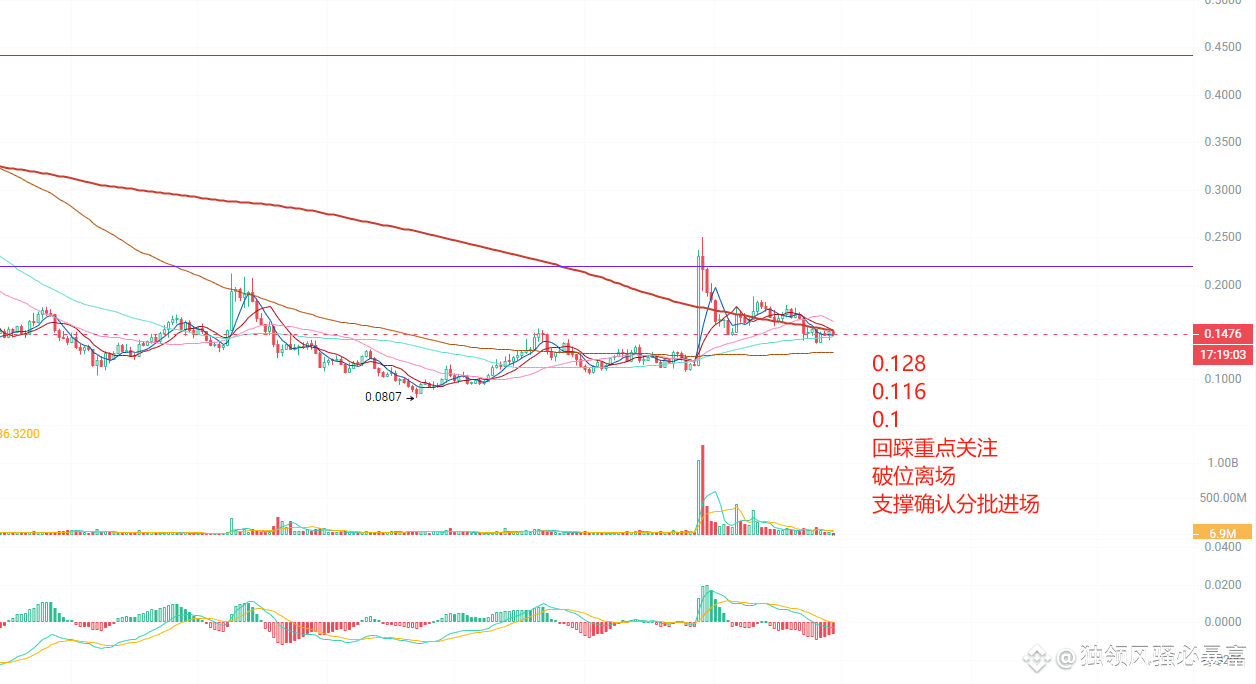
1
1
10
5k

📊 The future of financial data is being redefined by @PythNetwork 🌍. With #PythRoadmap , the vision goes far beyond DeFi — tapping into the $50B+ market data industry! 🚀 $PYTH is powering a new era of transparency, rewarding contributors and fueling DAO growth while delivering institutional-grade feeds that institutions can trust. 🔥
📊 The future of financial data is being redefined by @PythNetwork 🌍. With #PythRoadmap , the vision goes far beyond DeFi — tapping into the $50B+ market data industry! 🚀 $PYTH is powering a new era of transparency, rewarding contributors and fueling DAO growth while delivering institutional-grade feeds that institutions can trust. 🔥
6
48

·
--

Article
Pyth Network: response to the reader regarding his question about the $PYTH tokenFriends, after the post "$PYTH: How the Token Makes You Part of the Financial Revolution?" (if you forgot, here is 👉 [посилання](https://app.binance.com/uni-qr/cart/29361994439737?l=uk-UA&r=863501156&uc=web_square_share_link&uco=FKJSvSw9xak6HI21OjquHA&us=copylink)) I received a few questions from a reader named @Square-Creator-d545a055eedf :
Question from the reader
Since the question is quite interesting and important, and the small size of notifications under the posts does not allow for a quality response, I decided to answer here.
Pyth Network: response to the reader regarding his question about the $PYTH token
Friends, after the post "$PYTH : How the Token Makes You Part of the Financial Revolution?" (if you forgot, here is 👉 посилання) I received a few questions from a reader named @bilder sv :
Question from the reader
Since the question is quite interesting and important, and the small size of notifications under the posts does not allow for a quality response, I decided to answer here.
Question from the reader
Since the question is quite interesting and important, and the small size of notifications under the posts does not allow for a quality response, I decided to answer here.
1
5
707

·
--
Price is the core signal of the financial system, yet it is often controlled by a few institutions. Retail investors often encounter delayed market data by several minutes, and must pay for upgrades to see real-time data. Large institutions can access faster channels, but at a high cost.
The approach of @PythNetwork is very direct. It does not collect and resell through intermediaries, but instead allows trading companies, market makers, and exchanges to directly publish raw prices to the network. Institutions like Jump, Jane Street, and Virtu are already providing data. The prices formed this way are faster and more authentic, requiring no additional processing steps. Developers can directly use the data on-chain through interfaces, covering a wide range of assets, including cryptocurrencies, stocks, foreign exchange, commodities, and macroeconomic indicators.
This model was first validated in DeFi. Derivatives trading, lending markets, and stablecoin protocols are extremely reliant on price data. @PythNetwork has quickly established itself here, currently supporting hundreds of blockchains, integrating over six hundred projects, with a cumulative trading volume exceeding one trillion dollars. The market share in the derivatives field even exceeds sixty percent. In addition to the crypto market, Pyth is also attempting to bring official economic data on-chain, incorporating more real-world indicators into the system.
The PYTH token is the core of the entire network's operation. Data contributors are incentivized, applications pay fees when calling prices, and the income flows back into the DAO. Tokens serve functions such as payment, rewards, and governance, creating a closed loop for incentives and distribution within the ecosystem. Holders can vote on cross-chain expansion, fee structures, and other directions. The growth of the network is gradually tied to the value of the tokens, with the cyclical effect continually amplified.
In terms of price performance, PYTH is currently still far below its historical high, situated between consolidation and rebound. Market sentiment is occasionally cautious, but the long-term logic is clear.
#PythRoadmap $PYTH
{spot}(PYTHUSDT)
Price is the core signal of the financial system, yet it is often controlled by a few institutions. Retail investors often encounter delayed market data by several minutes, and must pay for upgrades to see real-time data. Large institutions can access faster channels, but at a high cost.
The approach of @PythNetwork is very direct. It does not collect and resell through intermediaries, but instead allows trading companies, market makers, and exchanges to directly publish raw prices to the network. Institutions like Jump, Jane Street, and Virtu are already providing data. The prices formed this way are faster and more authentic, requiring no additional processing steps. Developers can directly use the data on-chain through interfaces, covering a wide range of assets, including cryptocurrencies, stocks, foreign exchange, commodities, and macroeconomic indicators.
This model was first validated in DeFi. Derivatives trading, lending markets, and stablecoin protocols are extremely reliant on price data. @PythNetwork has quickly established itself here, currently supporting hundreds of blockchains, integrating over six hundred projects, with a cumulative trading volume exceeding one trillion dollars. The market share in the derivatives field even exceeds sixty percent. In addition to the crypto market, Pyth is also attempting to bring official economic data on-chain, incorporating more real-world indicators into the system.
The PYTH token is the core of the entire network's operation. Data contributors are incentivized, applications pay fees when calling prices, and the income flows back into the DAO. Tokens serve functions such as payment, rewards, and governance, creating a closed loop for incentives and distribution within the ecosystem. Holders can vote on cross-chain expansion, fee structures, and other directions. The growth of the network is gradually tied to the value of the tokens, with the cyclical effect continually amplified.
In terms of price performance, PYTH is currently still far below its historical high, situated between consolidation and rebound. Market sentiment is occasionally cautious, but the long-term logic is clear.
#PythRoadmap $PYTH
The approach of @PythNetwork is very direct. It does not collect and resell through intermediaries, but instead allows trading companies, market makers, and exchanges to directly publish raw prices to the network. Institutions like Jump, Jane Street, and Virtu are already providing data. The prices formed this way are faster and more authentic, requiring no additional processing steps. Developers can directly use the data on-chain through interfaces, covering a wide range of assets, including cryptocurrencies, stocks, foreign exchange, commodities, and macroeconomic indicators.
This model was first validated in DeFi. Derivatives trading, lending markets, and stablecoin protocols are extremely reliant on price data. @PythNetwork has quickly established itself here, currently supporting hundreds of blockchains, integrating over six hundred projects, with a cumulative trading volume exceeding one trillion dollars. The market share in the derivatives field even exceeds sixty percent. In addition to the crypto market, Pyth is also attempting to bring official economic data on-chain, incorporating more real-world indicators into the system.
The PYTH token is the core of the entire network's operation. Data contributors are incentivized, applications pay fees when calling prices, and the income flows back into the DAO. Tokens serve functions such as payment, rewards, and governance, creating a closed loop for incentives and distribution within the ecosystem. Holders can vote on cross-chain expansion, fee structures, and other directions. The growth of the network is gradually tied to the value of the tokens, with the cyclical effect continually amplified.
In terms of price performance, PYTH is currently still far below its historical high, situated between consolidation and rebound. Market sentiment is occasionally cautious, but the long-term logic is clear.
#PythRoadmap $PYTH
1
211
Log in to explore more content
Join global crypto users on Binance Square
⚡️ Get latest and useful information about crypto.
💬 Trusted by the world’s largest crypto exchange.
👍 Discover real insights from verified creators.
Email / Phone number
Trending Topics
1
#BitgetHackerMoves$83MStolenXRP
0 views
0 Discussing
2
#SOLSpotETFWeeklyInflow$188M
67 views
21 Discussing
3
#StrategyStriveAdd2305BitcoinThisWeek
22,572 views
720 Discussing
4
#TrumpRejectsIranHormuzReopening
25,633 views
621 Discussing
5
#CircleTetherFreezeBitgetHackerWallet
44,428 views
705 Discussing
6
#SECSaysTokenBuybacksNotAutoSecurities
21,077 views
367 Discussing
7
#ChinaUSAgreeOn$30BTariffCut
942 views
25 Discussing
8
#CoinMarketCapCompletesCoinglassAcquisition
38,586 views
534 Discussing
9
#CircleMints500MUSDCOnSolana
211,724 views
3,093 Discussing
10
#PolymarketBankFailureBetsDrawFDICConcern
181,555 views
2,371 Discussing