
#pythontrading
pythontrading
1,516 views
20 Discussing
Hot
Latest
$BTC
$ETH
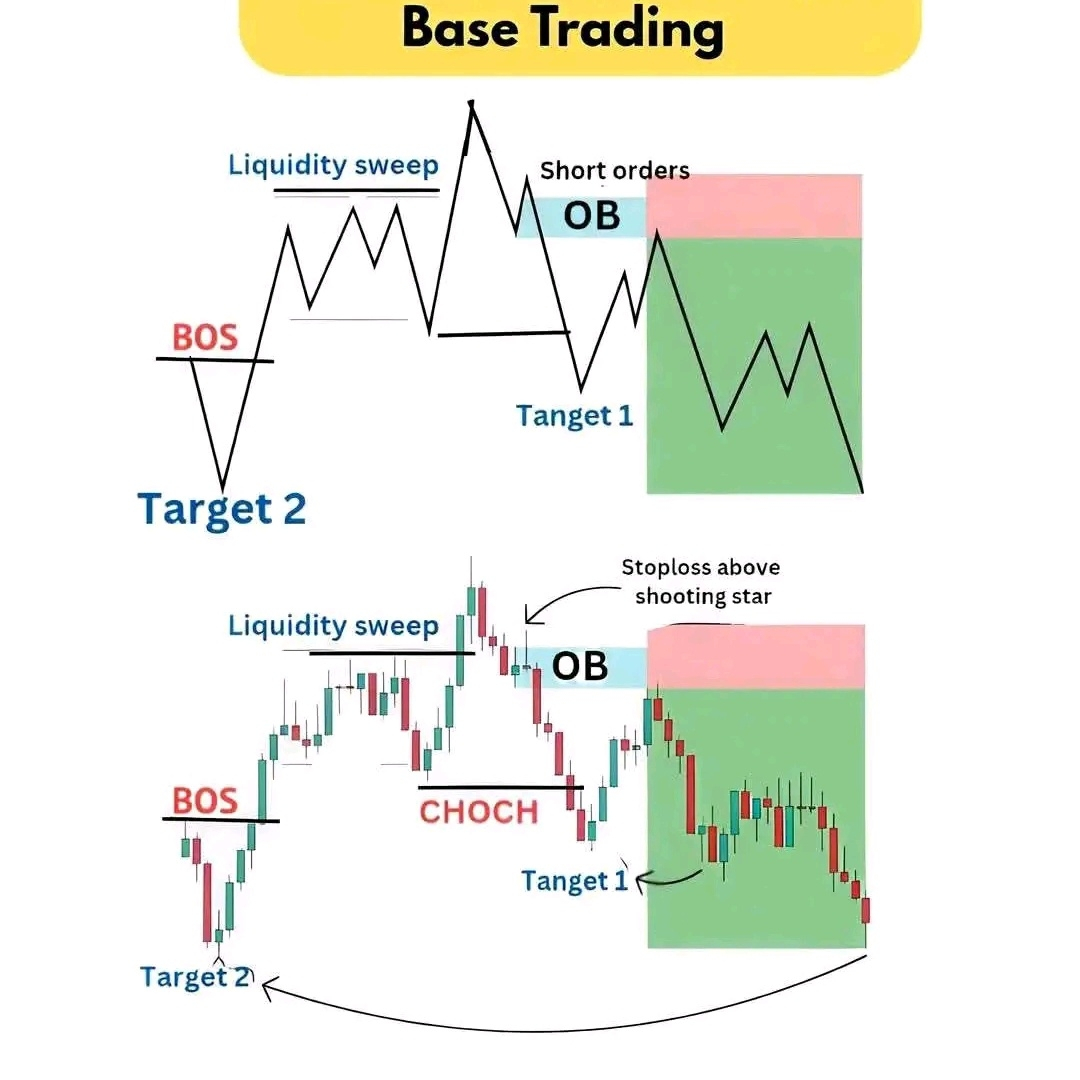
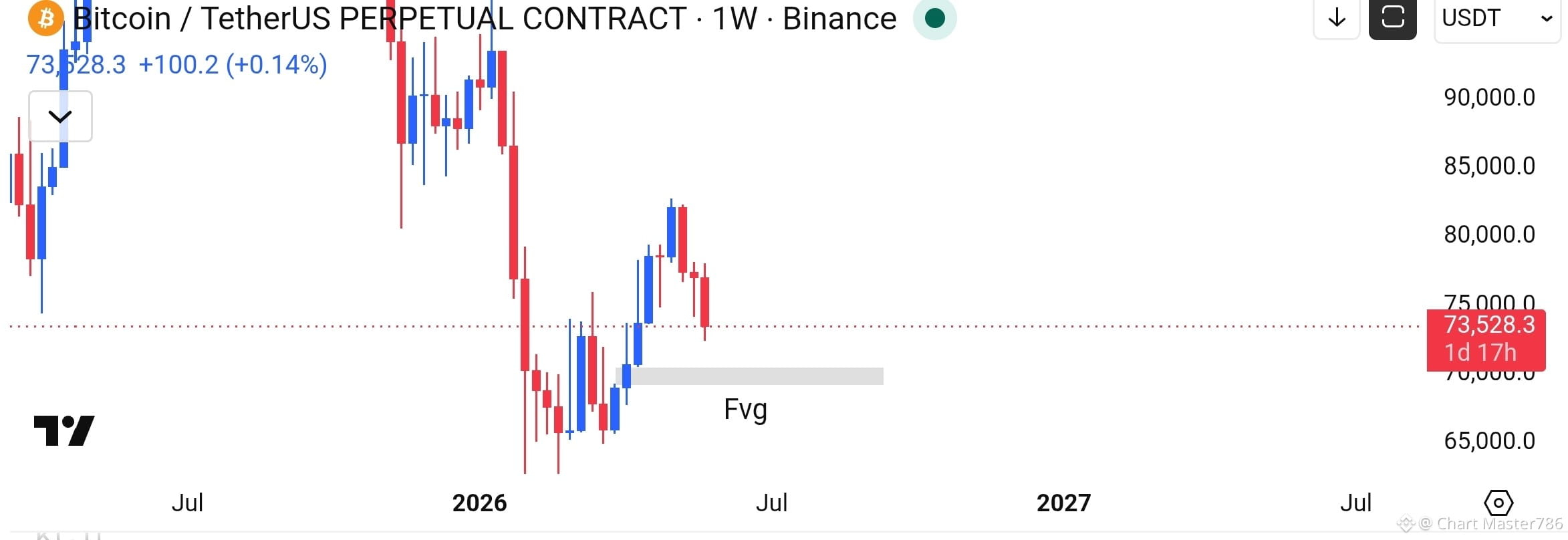
MARKET STRUCTURAL ANALYSIS (1W)
By: ChartMaster786 | Python-Driven Data
ASSET: BTC/USDT
Bullish FVGs (Demand): 3
Bearish FVGs (Supply): 5
Last Bullish Anchor: 2026-04-13
ASSET: ETH/USDT
Bullish FVGs (Demand): 4
Bearish FVGs (Supply): 5
Last Bullish Anchor: 2026-04-13
💡 ANALYST INSIGHT:
The higher frequency of Bearish FVGs confirms a dominant selling pressure over the past year. However, the April 13th Bullish FVG remains our critical structural support zone. I am using Python-based automation to track these levels for institutional re-entry.
📈 About the Analyst:
I am ChartMaster786, a Crypto Technical Analyst specializing in SMC and Python Automation. I turn raw market data into institutional-grade insights.
#ChartMaster786 #SMC #CryptoAnalysis #PythonTrading
123

Article
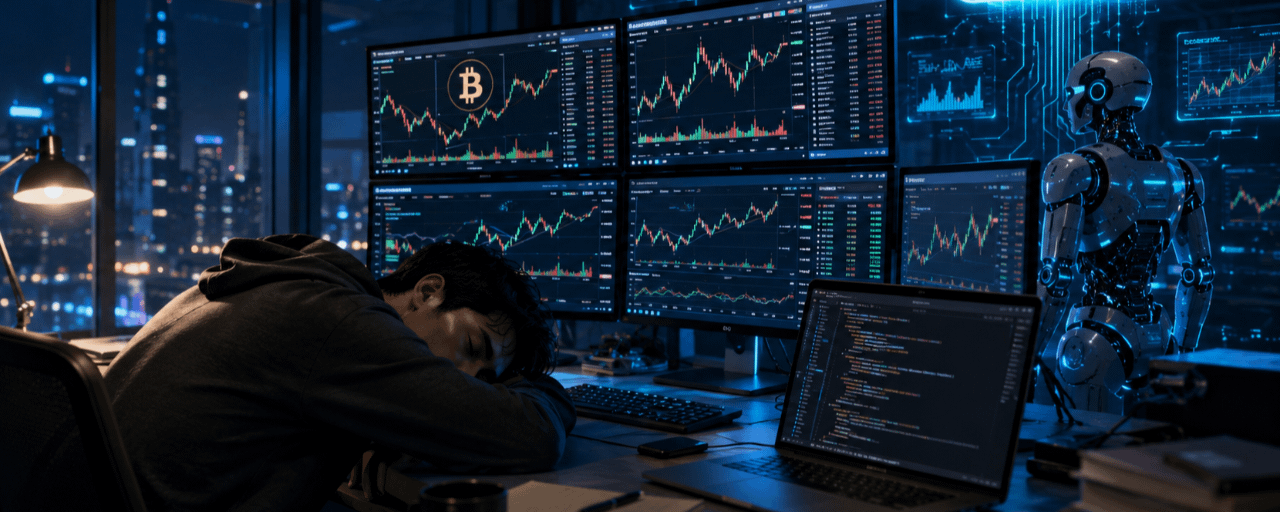
Most Traders Don't Need a Better Strategy — They Need a RobotLet's be honest.
Most traders spend years trying to "master the market" when the real enemy isn't the market at all.
It's themselves.
Fear. Greed. FOMO. Revenge trading. Hesitation. Overconfidence.
Every trader knows the feeling. You have a perfectly good setup, but you hesitate and miss the move. Then you chase the price and enter at the worst possible moment. Or maybe you close a winning trade too early because you're afraid the market will reverse.
Sound familiar?
The funny thing is that many trading strategies don't actually fail because they're bad.
They fail because humans execute them inconsistently.
The Problem Nobody Talks About
Imagine two traders using exactly the same strategy.
One follows every rule perfectly.
The other skips rules when emotions take over.
After 100 trades, their results can be completely different.
This is why consistency is one of the hardest skills in trading.
Not because the rules are complicated.
Because we're human.
And humans are emotional.
The Time Zone Problem
There is another challenge that many traders face but rarely discuss.
Time zones.
Not everyone lives in a region where market activity aligns with normal working hours.
Some traders need to stay awake at midnight to catch important sessions.
Others wake up at 3 AM just to monitor a setup.
A lot of opportunities happen while we're sleeping, working, eating, or spending time with family.
The market doesn't care what time it is where you live.
It never waits.
Enter Algo Trading
This is where algorithmic trading becomes interesting.
An algorithm doesn't get scared.
It doesn't get excited.
It doesn't revenge trade after a loss.
It doesn't suddenly decide to ignore the rules because a Twitter influencer posted a bullish chart.
A trading bot simply follows instructions.
If the conditions are met, it acts.
If the conditions are not met, it waits.
No emotions.
No excuses.
Just execution.
The Advantages Over Manual Trading
Here are some reasons why more traders are exploring algo trading:
✅ Consistent execution
The strategy is applied the same way every time.
✅ 24/7 monitoring
Crypto markets never sleep. A bot can monitor opportunities all day and all night.
✅ No emotional interference
Fear and greed become much less relevant.
✅ Faster reactions
Bots can process conditions and act much faster than humans.
✅ Scalability
Monitoring one chart is easy. Monitoring dozens of symbols simultaneously is not.
For a bot, it's routine.
The Reality Check
Of course, algo trading is not magic.
Many beginners discover this the hard way.
Building a trading bot introduces a completely different set of challenges.
Programming Skills
Most trading ideas are written in plain language.
Turning those ideas into code is another story.
A strategy that sounds simple can require hundreds or even thousands of lines of code.
One small bug can completely change the behavior of a trading system.
Infrastructure Costs
Then comes the infrastructure problem.
A bot that only runs when your computer is on isn't really automated.
You need a machine that stays online 24/7.
Cloud servers, VPS services, databases, monitoring systems—these costs can add up.
Testing and Validation
Perhaps the hardest challenge is proving that a strategy actually works.
Backtests can look amazing.
Live trading can tell a very different story.
The gap between theory and reality is often much larger than people expect.
The Future of Retail Trading?
I don't think manual trading will disappear.
There will always be traders who prefer discretionary decision-making.
But it's becoming increasingly difficult to ignore the advantages of automation.
Even traders who still trade manually are beginning to automate parts of their workflow.
Alerts.
Position management.
Risk controls.
Trade execution.
The line between manual trading and algo trading is becoming thinner every year.
My Current Experiment
Personally, I've been exploring a project that sits at the intersection of trading, automation, and cost efficiency.
I'm currently building a Python-based trading bot designed to automate a trading strategy while keeping operational costs as close to zero as possible.
One of the goals is to run the system using Google Cloud's free-tier resources, proving that algorithmic trading infrastructure doesn't necessarily require expensive servers or enterprise-level budgets.
It's still a work in progress, but the journey itself has been fascinating.
Because at the end of the day, algo trading isn't about replacing traders.
It's about removing the limitations that prevent traders from performing at their best.
[I tested my trading bot on my lead trader account with 500 usdt](https://www.binance.com/en/copy-trading/lead-details/5005818004530622465)
#algotrade #PythonTrading
{future}(XAUUSDT)
{future}(BNBUSDT)
{future}(XAGUSDT)
Most Traders Don't Need a Better Strategy — They Need a Robot
Let's be honest.
Most traders spend years trying to "master the market" when the real enemy isn't the market at all.
It's themselves.
Fear. Greed. FOMO. Revenge trading. Hesitation. Overconfidence.
Every trader knows the feeling. You have a perfectly good setup, but you hesitate and miss the move. Then you chase the price and enter at the worst possible moment. Or maybe you close a winning trade too early because you're afraid the market will reverse.
Sound familiar?
The funny thing is that many trading strategies don't actually fail because they're bad.
They fail because humans execute them inconsistently.
The Problem Nobody Talks About
Imagine two traders using exactly the same strategy.
One follows every rule perfectly.
The other skips rules when emotions take over.
After 100 trades, their results can be completely different.
This is why consistency is one of the hardest skills in trading.
Not because the rules are complicated.
Because we're human.
And humans are emotional.
The Time Zone Problem
There is another challenge that many traders face but rarely discuss.
Time zones.
Not everyone lives in a region where market activity aligns with normal working hours.
Some traders need to stay awake at midnight to catch important sessions.
Others wake up at 3 AM just to monitor a setup.
A lot of opportunities happen while we're sleeping, working, eating, or spending time with family.
The market doesn't care what time it is where you live.
It never waits.
Enter Algo Trading
This is where algorithmic trading becomes interesting.
An algorithm doesn't get scared.
It doesn't get excited.
It doesn't revenge trade after a loss.
It doesn't suddenly decide to ignore the rules because a Twitter influencer posted a bullish chart.
A trading bot simply follows instructions.
If the conditions are met, it acts.
If the conditions are not met, it waits.
No emotions.
No excuses.
Just execution.
The Advantages Over Manual Trading
Here are some reasons why more traders are exploring algo trading:
✅ Consistent execution
The strategy is applied the same way every time.
✅ 24/7 monitoring
Crypto markets never sleep. A bot can monitor opportunities all day and all night.
✅ No emotional interference
Fear and greed become much less relevant.
✅ Faster reactions
Bots can process conditions and act much faster than humans.
✅ Scalability
Monitoring one chart is easy. Monitoring dozens of symbols simultaneously is not.
For a bot, it's routine.
The Reality Check
Of course, algo trading is not magic.
Many beginners discover this the hard way.
Building a trading bot introduces a completely different set of challenges.
Programming Skills
Most trading ideas are written in plain language.
Turning those ideas into code is another story.
A strategy that sounds simple can require hundreds or even thousands of lines of code.
One small bug can completely change the behavior of a trading system.
Infrastructure Costs
Then comes the infrastructure problem.
A bot that only runs when your computer is on isn't really automated.
You need a machine that stays online 24/7.
Cloud servers, VPS services, databases, monitoring systems—these costs can add up.
Testing and Validation
Perhaps the hardest challenge is proving that a strategy actually works.
Backtests can look amazing.
Live trading can tell a very different story.
The gap between theory and reality is often much larger than people expect.
The Future of Retail Trading?
I don't think manual trading will disappear.
There will always be traders who prefer discretionary decision-making.
But it's becoming increasingly difficult to ignore the advantages of automation.
Even traders who still trade manually are beginning to automate parts of their workflow.
Alerts.
Position management.
Risk controls.
Trade execution.
The line between manual trading and algo trading is becoming thinner every year.
My Current Experiment
Personally, I've been exploring a project that sits at the intersection of trading, automation, and cost efficiency.
I'm currently building a Python-based trading bot designed to automate a trading strategy while keeping operational costs as close to zero as possible.
One of the goals is to run the system using Google Cloud's free-tier resources, proving that algorithmic trading infrastructure doesn't necessarily require expensive servers or enterprise-level budgets.
It's still a work in progress, but the journey itself has been fascinating.
Because at the end of the day, algo trading isn't about replacing traders.
It's about removing the limitations that prevent traders from performing at their best.
I tested my trading bot on my lead trader account with 500 usdt
#algotrade #PythonTrading
177

🤖📈 When tech and trading meet! 📊
A special nod to profiles focused on quantitative strategies and cutting-edge technical analysis in our ranking. Congratulations to @Square-Creator-9f8212207d710 (11th) and @HUTMO (4th) for their excellent run in this campaign!
Automation, backtesting, and mathematical rigor remain essential pillars for consistently performing in the markets for digital assets. 🖥️⚡
Which technical indicator are you prioritizing right now?
#PythonTrading #AlgorithmicTrading #TechnicalAnalysis #Binance
🤖📈 When tech and trading meet! 📊
A special nod to profiles focused on quantitative strategies and cutting-edge technical analysis in our ranking. Congratulations to @Python_Trading (11th) and @BlueTokenCapital (4th) for their excellent run in this campaign!
Automation, backtesting, and mathematical rigor remain essential pillars for consistently performing in the markets for digital assets. 🖥️⚡
Which technical indicator are you prioritizing right now?
#PythonTrading #AlgorithmicTrading #TechnicalAnalysis #Binance
38

⚡ ASYMMETRIC RISK MANAGEMENT IN A TWO-SIDED DAY
A professional quantitative system is not judged only when the market moves up in a straight line, but by how it protects the accumulated capital when the structure flips.
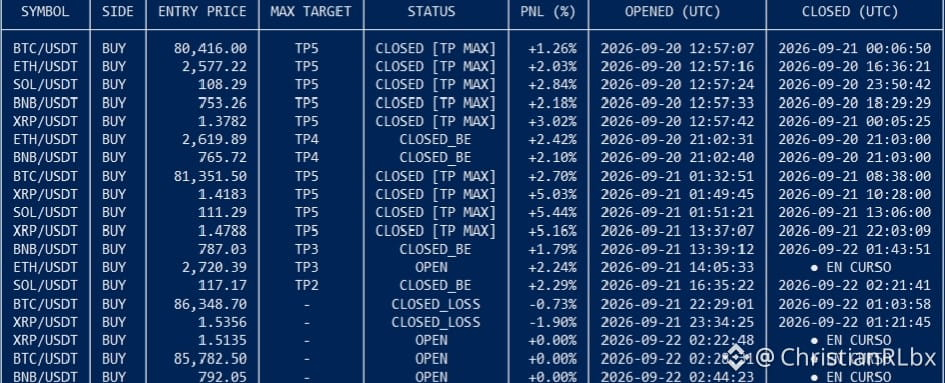
The session on September 21 was a microstructure case study: a first phase of clean trending expansion and a second nighttime phase of strong corrective shakeout.
This is how the Finite State Machine (FSM) of the algorithmic engine responded:
1️⃣ Full capture of the trending expansion:
The algorithm did not close prematurely. It rode the momentum with staggered partial fills until reaching the maximum target (4 fulls at TP5: $BTC +2.70%, $SOL +5.44% and $XRP with two hits of +5.03% and +5.16%).
2️⃣ Neutralization of risk at zero cost (Breakeven):
When the buying impulse began to lose traction in the afternoon (BNB and SOL), the system had already secured partial profits and moved the Stop Loss to the entry price. Instead of turning into pullback losses, both positions closed shielded, totaling +1.79% and +2.29% without exposing the account.
3️⃣ Bounded and deterministic losses:
During the nighttime shakeout before the session close, the dynamic Stop Loss cut risk immediately (-0.73% in BTC and -1.90% in XRP), containing any drawdown without manual intervention.
📊 Consolidated Session Balance (Closed):
• 4 full impacts at TP5
• 2 breakeven exits protected with secured partials
• 2 stop-loss exits controlled
📈 Net Realized PnL: +19.78% (Spot/1x)
The mathematical edge is not about predicting the future, but about letting winning runs play out through asymmetric targets and cutting risk to zero when the market shifts regimes.
Direct audit extracted from the production ledger. We keep building. 🚀
#XRPRises8% #BTC #RiskManagement #CryptoQuant #PythonTrading
1
302
Log in to explore more content
Join global crypto users on Binance Square
⚡️ Get latest and useful information about crypto.
💬 Trusted by the world’s largest crypto exchange.
👍 Discover real insights from verified creators.
Email / Phone number
Trending Topics
1
#WillMarketsStageAThanksgivingReliefRally?
86 views
18 Discussing
2
#BessentSoftensStanceOnHuang’sNvidiaReturn
0 views
2 Discussing
3
#MuskWarnsOfAICashCrunch
0 views
0 Discussing
4
#BTCReboundsAbove$60KAmidWhaleDipBuying
105,535 views
422 Discussing
5
#SolanaSets2027RoadmapToDoubleComputeCapacity
89,541 views
1,223 Discussing
6
#CaliforniaNvidiaProbeExaminesPotentialCriminalViolations
25,240 views
182 Discussing
7
#BlackRockLaunchesHKDollarDigitalLiquidityFund
76,557 views
888 Discussing
8
#NvidiaLoses$2.7TrillionInMonthAndAHalf
90,158 views
344 Discussing
9
#GlobalStocksFaceLongestLosingStreakSince2023
622,411 views
3,615 Discussing
10
#BlackRockIBITPostsRecord$541MSingleDayOutflow
106,357 views
188 Discussing