

#miningpool
miningpool
183,354 views
391 Discussing
Hot
Latest

the 2 hats jack mining pool is flowing, the more $HATS is traded the more funds deposited into the pool. $BTC rewards by depositing $2HATS in the pool.
#2HATSJACK
#2HATS
#DCABTC
#MININGPOOL
[2HATS on Binance](https://web3.binance.com/en/token/bsc/0x40fc200e43725771923e4bd8bec3115af8c6ffff)
the 2 hats jack mining pool is flowing, the more $HATS is traded the more funds deposited into the pool. $BTC rewards by depositing $2HATS in the pool.
#2HATSJACK
#2HATS
#DCABTC
#MININGPOOL
2HATS on Binance
#2HATSJACK
#2HATS
#DCABTC
#MININGPOOL
2HATS on Binance




36
1
4
133

·
--
SBI CRYPTO MINING POOL SHUTTERS ON JULY 31 – OCEAN CLAIMS 3.6% HIGHER REVENUE $BTC 🔥
A structural shift in Bitcoin mining: SBI Crypto's pool is closing on July 31, forcing an unexpected migration for miners. OCEAN's co-founder is inviting them over, citing a 3.6% revenue advantage vs. the best FPPS pool in 2025.
That 3.6% edge is significant for a capital-intensive operation. The timing creates natural urgency — less than 30 days to make a move. For miners, the decision now is about more than just fees; it's about trust in block template autonomy.
Are you sticking with an FPPS model or exploring DATUM for trustless distribution?
Not financial advice. Always manage your risk.
#BTC #BitcoinMining #MiningPool #CryptoNews
⚡
SBI CRYPTO MINING POOL SHUTTERS ON JULY 31 – OCEAN CLAIMS 3.6% HIGHER REVENUE $BTC 🔥
A structural shift in Bitcoin mining: SBI Crypto's pool is closing on July 31, forcing an unexpected migration for miners. OCEAN's co-founder is inviting them over, citing a 3.6% revenue advantage vs. the best FPPS pool in 2025.
That 3.6% edge is significant for a capital-intensive operation. The timing creates natural urgency — less than 30 days to make a move. For miners, the decision now is about more than just fees; it's about trust in block template autonomy.
Are you sticking with an FPPS model or exploring DATUM for trustless distribution?
Not financial advice. Always manage your risk.
#BTC #BitcoinMining #MiningPool #CryptoNews
⚡
A structural shift in Bitcoin mining: SBI Crypto's pool is closing on July 31, forcing an unexpected migration for miners. OCEAN's co-founder is inviting them over, citing a 3.6% revenue advantage vs. the best FPPS pool in 2025.
That 3.6% edge is significant for a capital-intensive operation. The timing creates natural urgency — less than 30 days to make a move. For miners, the decision now is about more than just fees; it's about trust in block template autonomy.
Are you sticking with an FPPS model or exploring DATUM for trustless distribution?
Not financial advice. Always manage your risk.
#BTC #BitcoinMining #MiningPool #CryptoNews
⚡
14

·
--
SBI Group shuts Bitcoin mining pool
Japanese financial giant SBI Group announced closure of its Bitcoin mining pool operations. The move comes amid increasing regulatory scrutiny and shifting market dynamics. SBI had launched the mining operation in 2021 but now discontinues the service as priorities shift toward other blockchain initiatives.
Japanese financial institutions continue reshaping crypto infrastructure. SBI Group's move toward mining pool closure signals maturation of regulatory frameworks. Industry consolidation accelerates as traditional finance adapts blockchain strategies.
Market participants reassess corporate treasury allocations amid evolving compliance requirements. Mining operations increasingly face scrutiny over energy consumption and operational transparency. Corporate balancing of innovation and regulation deepens across Asian markets.
Asian regulatory landscapes shift as institutions pivot strategies. Mining pools face new operational standards globally. The intersection of traditional finance and crypto infrastructure evolves rapidly.
What drives institutional decisions on crypto infrastructure? Drop your take below. 👇
#JapanCrypto #MiningPool #InstitutionalAdoption
SBI Group shuts Bitcoin mining pool
Japanese financial giant SBI Group announced closure of its Bitcoin mining pool operations. The move comes amid increasing regulatory scrutiny and shifting market dynamics. SBI had launched the mining operation in 2021 but now discontinues the service as priorities shift toward other blockchain initiatives.
Japanese financial institutions continue reshaping crypto infrastructure. SBI Group's move toward mining pool closure signals maturation of regulatory frameworks. Industry consolidation accelerates as traditional finance adapts blockchain strategies.
Market participants reassess corporate treasury allocations amid evolving compliance requirements. Mining operations increasingly face scrutiny over energy consumption and operational transparency. Corporate balancing of innovation and regulation deepens across Asian markets.
Asian regulatory landscapes shift as institutions pivot strategies. Mining pools face new operational standards globally. The intersection of traditional finance and crypto infrastructure evolves rapidly.
What drives institutional decisions on crypto infrastructure? Drop your take below. 👇
#JapanCrypto #MiningPool #InstitutionalAdoption
Japanese financial giant SBI Group announced closure of its Bitcoin mining pool operations. The move comes amid increasing regulatory scrutiny and shifting market dynamics. SBI had launched the mining operation in 2021 but now discontinues the service as priorities shift toward other blockchain initiatives.
Japanese financial institutions continue reshaping crypto infrastructure. SBI Group's move toward mining pool closure signals maturation of regulatory frameworks. Industry consolidation accelerates as traditional finance adapts blockchain strategies.
Market participants reassess corporate treasury allocations amid evolving compliance requirements. Mining operations increasingly face scrutiny over energy consumption and operational transparency. Corporate balancing of innovation and regulation deepens across Asian markets.
Asian regulatory landscapes shift as institutions pivot strategies. Mining pools face new operational standards globally. The intersection of traditional finance and crypto infrastructure evolves rapidly.
What drives institutional decisions on crypto infrastructure? Drop your take below. 👇
#JapanCrypto #MiningPool #InstitutionalAdoption
1
14


Article
BTC NEWSBitcoin’s major mining pool “Poolin” has announced that it is bankrupt
One of the world’s largest Bitcoin mining pools based in Singapore, Poolin, has officially announced that it is bankrupt. The company had been in a continuous financial crisis since it froze the ability for users to withdraw funds in 2022, and it has now decided to auction its mining sites in Texas. The purpose of this auction is to pay approximately 11,700 affected users their owed funds.
BTC NEWS
Bitcoin’s major mining pool “Poolin” has announced that it is bankrupt
One of the world’s largest Bitcoin mining pools based in Singapore, Poolin, has officially announced that it is bankrupt. The company had been in a continuous financial crisis since it froze the ability for users to withdraw funds in 2022, and it has now decided to auction its mining sites in Texas. The purpose of this auction is to pay approximately 11,700 affected users their owed funds.
One of the world’s largest Bitcoin mining pools based in Singapore, Poolin, has officially announced that it is bankrupt. The company had been in a continuous financial crisis since it froze the ability for users to withdraw funds in 2022, and it has now decided to auction its mining sites in Texas. The purpose of this auction is to pay approximately 11,700 affected users their owed funds.
119

·
--
Verified
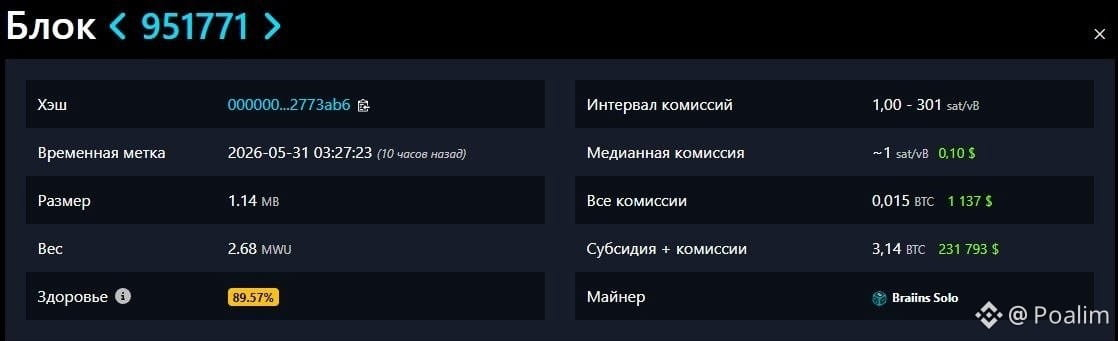
A solo miner just mined Bitcoin block #951771 and snagged a reward of 3.14 BTC. He used the Braiins Solo platform, which operates on CKPool software.
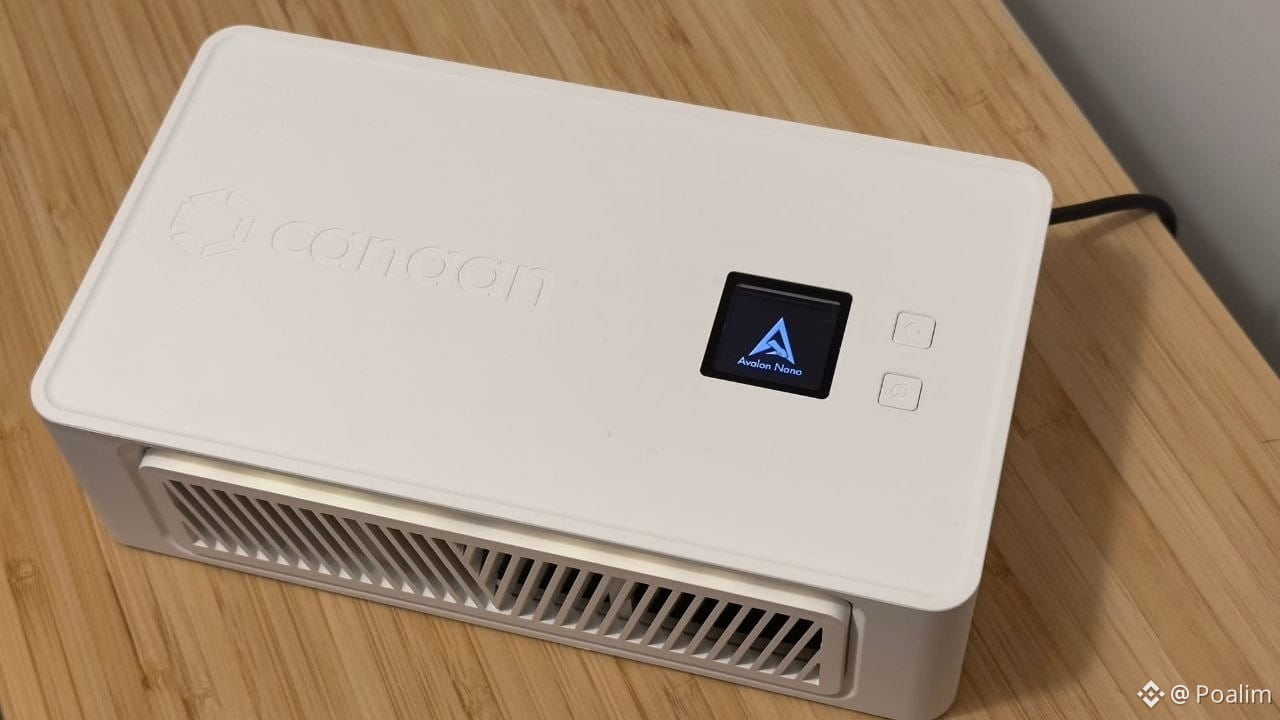
Reportedly, the block was mined using the Avalon Nano 3 from Canaan. This compact device combines mining functions (hashrate of 4 TH/s) and home heating (air output temperature up to 60℃). The device consumes only 140 watts.
#BTC #miningpool
A solo miner just mined Bitcoin block #951771 and snagged a reward of 3.14 BTC. He used the Braiins Solo platform, which operates on CKPool software.
Reportedly, the block was mined using the Avalon Nano 3 from Canaan. This compact device combines mining functions (hashrate of 4 TH/s) and home heating (air output temperature up to 60℃). The device consumes only 140 watts.
#BTC #miningpool
Reportedly, the block was mined using the Avalon Nano 3 from Canaan. This compact device combines mining functions (hashrate of 4 TH/s) and home heating (air output temperature up to 60℃). The device consumes only 140 watts.
#BTC #miningpool
2
4
8.1k

·
--
Mining in America, viable? Central American countries without electrical infrastructure could offer in a niche to aspire to mine profitably? I read you in the comments #miningpool #miners #mineria #MiningOpportunity
Mining in America, viable? Central American countries without electrical infrastructure could offer in a niche to aspire to mine profitably? I read you in the comments #miningpool #miners #mineria #MiningOpportunity
88

🚨 $BTC BLOCK-SPACE EDGE: VIABTC-MEMPOOL TURNS ACCELERATION INTO INFRASTRUCTURE ALPHA
📌 The ViaBTC-Mempool partnership reads as an infrastructure signal, not a cosmetic headline: when congestion rises, confirmed block space becomes the scarce asset. More than 800,000 accelerated transactions since 2016 shows miners have a repeatable route to prioritize eligible flows, not merely chase spot volatility.
⚡ For $BTC holders, this matters because fee pressure, confirmation speed, and miner reliability shape network usage cycles. A tighter accelerator pipeline can smooth user experience during congestion bursts, while keeping miner economics focused on block construction and PoW security. 💬 Are you watching mempool congestion as a leading signal for $BTC network demand?
⚠️ Not financial advice. Always manage your risk. 🛡️
🏷️ #BTC #Bitcoin #MiningPool #NetworkDemand #Crypto
🎯
🚨 $BTC BLOCK-SPACE EDGE: VIABTC-MEMPOOL TURNS ACCELERATION INTO INFRASTRUCTURE ALPHA
📌 The ViaBTC-Mempool partnership reads as an infrastructure signal, not a cosmetic headline: when congestion rises, confirmed block space becomes the scarce asset. More than 800,000 accelerated transactions since 2016 shows miners have a repeatable route to prioritize eligible flows, not merely chase spot volatility.
⚡ For $BTC holders, this matters because fee pressure, confirmation speed, and miner reliability shape network usage cycles. A tighter accelerator pipeline can smooth user experience during congestion bursts, while keeping miner economics focused on block construction and PoW security. 💬 Are you watching mempool congestion as a leading signal for $BTC network demand?
⚠️ Not financial advice. Always manage your risk. 🛡️
🏷️ #BTC #Bitcoin #MiningPool #NetworkDemand #Crypto
🎯
📌 The ViaBTC-Mempool partnership reads as an infrastructure signal, not a cosmetic headline: when congestion rises, confirmed block space becomes the scarce asset. More than 800,000 accelerated transactions since 2016 shows miners have a repeatable route to prioritize eligible flows, not merely chase spot volatility.
⚡ For $BTC holders, this matters because fee pressure, confirmation speed, and miner reliability shape network usage cycles. A tighter accelerator pipeline can smooth user experience during congestion bursts, while keeping miner economics focused on block construction and PoW security. 💬 Are you watching mempool congestion as a leading signal for $BTC network demand?
⚠️ Not financial advice. Always manage your risk. 🛡️
🏷️ #BTC #Bitcoin #MiningPool #NetworkDemand #Crypto
🎯
19

Ever wonder why some big companies ditch their "digital gold" right after snagging it?
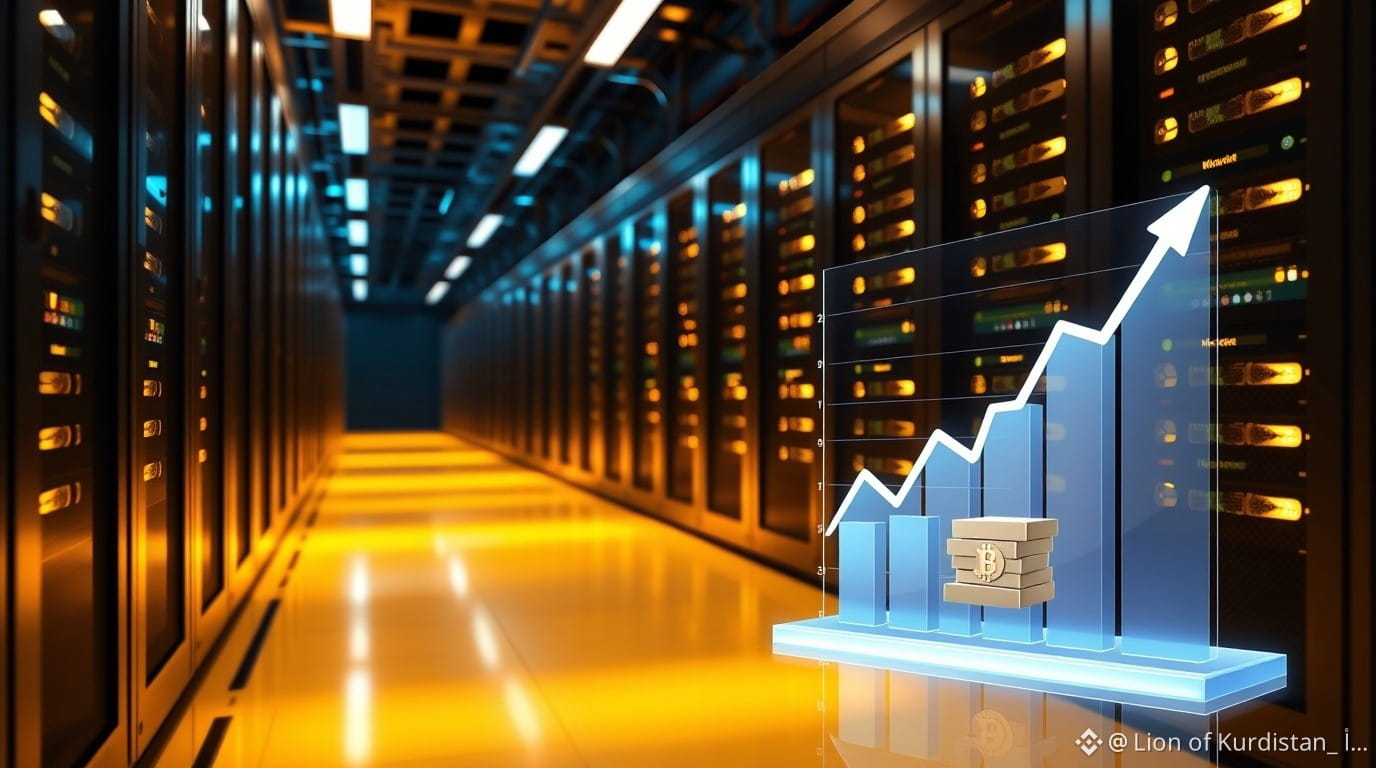
In the mining game, it ain't always about "HODLing"; sometimes, "liquidity" is the real MVP. Bitdeer has been playing it smart, mining 205.3 Bitcoin during the week ending June 5, and sold the whole stash right away.
Here’s the scoop behind the scenes:
Zero Balance Policy: Bitdeer sticks to a "zero balance" strategy, turning everything they mine into cash instantly.
Growth Focus: The company doesn’t hold onto coins; they inject liquidity straight into expanding data centers and cutting-edge mining tech.
Risk Separation: By separating mining from Bitcoin price volatility, the company channels its energy entirely into scaling efficiency and AI projects.
Do you think this "realistic" approach of converting Bitcoin to cash is the smartest move for companies given the current market conditions, or is holding onto Bitcoin as a long-term asset still the winning bet?
Drop your thoughts in the comments, and would you do the same if you were running mining operations of this scale? 📉💡
$BTC
{spot}(BTCUSDT)
#bitcoin #Bitdeer #miningpool #CryptoNews #blockchain
Ever wonder why some big companies ditch their "digital gold" right after snagging it?
In the mining game, it ain't always about "HODLing"; sometimes, "liquidity" is the real MVP. Bitdeer has been playing it smart, mining 205.3 Bitcoin during the week ending June 5, and sold the whole stash right away.
Here’s the scoop behind the scenes:
Zero Balance Policy: Bitdeer sticks to a "zero balance" strategy, turning everything they mine into cash instantly.
Growth Focus: The company doesn’t hold onto coins; they inject liquidity straight into expanding data centers and cutting-edge mining tech.
Risk Separation: By separating mining from Bitcoin price volatility, the company channels its energy entirely into scaling efficiency and AI projects.
Do you think this "realistic" approach of converting Bitcoin to cash is the smartest move for companies given the current market conditions, or is holding onto Bitcoin as a long-term asset still the winning bet?
Drop your thoughts in the comments, and would you do the same if you were running mining operations of this scale? 📉💡
$BTC
#bitcoin #Bitdeer #miningpool #CryptoNews #blockchain
In the mining game, it ain't always about "HODLing"; sometimes, "liquidity" is the real MVP. Bitdeer has been playing it smart, mining 205.3 Bitcoin during the week ending June 5, and sold the whole stash right away.
Here’s the scoop behind the scenes:
Zero Balance Policy: Bitdeer sticks to a "zero balance" strategy, turning everything they mine into cash instantly.
Growth Focus: The company doesn’t hold onto coins; they inject liquidity straight into expanding data centers and cutting-edge mining tech.
Risk Separation: By separating mining from Bitcoin price volatility, the company channels its energy entirely into scaling efficiency and AI projects.
Do you think this "realistic" approach of converting Bitcoin to cash is the smartest move for companies given the current market conditions, or is holding onto Bitcoin as a long-term asset still the winning bet?
Drop your thoughts in the comments, and would you do the same if you were running mining operations of this scale? 📉💡
$BTC
#bitcoin #Bitdeer #miningpool #CryptoNews #blockchain
71

·
--
Bullish
Bluebird Mining Ventures (BMV) Update 🚀
BMV reported its second consecutive month of revenue, driven by its expanding gold and Bitcoin streaming business. A new $BTC
{spot}(BTCUSDT)
streaming asset, launched on June 22, generated ~$3.4K in partial-month revenue, adding another recurring income source.
The company also tested DeFi yield strategies with a small portion of its crypto treasury while continuing to grow its portfolio of income-generating assets.
BMV is developing a gold-backed structured streaming facility that could provide gold producers with flexible, non-dilutive financing while allowing them to retain upside exposure to gold prices.
Treasury holdings remain focused on Bitcoin and gold, with total NAV at $1.14M as of June 30. Management says the strategy is aimed at building long-term recurring cash flow and increasing shareholder value through real assets. 📈 #Bitcoin #Gold #Crypto #DeFi #miningpool
Bluebird Mining Ventures (BMV) Update 🚀
BMV reported its second consecutive month of revenue, driven by its expanding gold and Bitcoin streaming business. A new $BTC
streaming asset, launched on June 22, generated ~$3.4K in partial-month revenue, adding another recurring income source.
The company also tested DeFi yield strategies with a small portion of its crypto treasury while continuing to grow its portfolio of income-generating assets.
BMV is developing a gold-backed structured streaming facility that could provide gold producers with flexible, non-dilutive financing while allowing them to retain upside exposure to gold prices.
Treasury holdings remain focused on Bitcoin and gold, with total NAV at $1.14M as of June 30. Management says the strategy is aimed at building long-term recurring cash flow and increasing shareholder value through real assets. 📈 #Bitcoin #Gold #Crypto #DeFi #miningpool
BMV reported its second consecutive month of revenue, driven by its expanding gold and Bitcoin streaming business. A new $BTC
streaming asset, launched on June 22, generated ~$3.4K in partial-month revenue, adding another recurring income source.
The company also tested DeFi yield strategies with a small portion of its crypto treasury while continuing to grow its portfolio of income-generating assets.
BMV is developing a gold-backed structured streaming facility that could provide gold producers with flexible, non-dilutive financing while allowing them to retain upside exposure to gold prices.
Treasury holdings remain focused on Bitcoin and gold, with total NAV at $1.14M as of June 30. Management says the strategy is aimed at building long-term recurring cash flow and increasing shareholder value through real assets. 📈 #Bitcoin #Gold #Crypto #DeFi #miningpool
2
1
167

Mining website?
Share your top picks for legit mining sites, no fakes, just real deals.
#MiningCompanies #miningpool #MiningCrypto #miningbot
Mining website?
Share your top picks for legit mining sites, no fakes, just real deals.
#MiningCompanies #miningpool #MiningCrypto #miningbot
Share your top picks for legit mining sites, no fakes, just real deals.
#MiningCompanies #miningpool #MiningCrypto #miningbot

12

·
--
Mining Difficulty Hits New Levels
Bitcoin mining difficulty is on the rise, which strengthens the network's security.#miningpool
Mining Difficulty Hits New Levels
Bitcoin mining difficulty is on the rise, which strengthens the network's security.#miningpool
Bitcoin mining difficulty is on the rise, which strengthens the network's security.#miningpool
3
55
·
--
Bullish
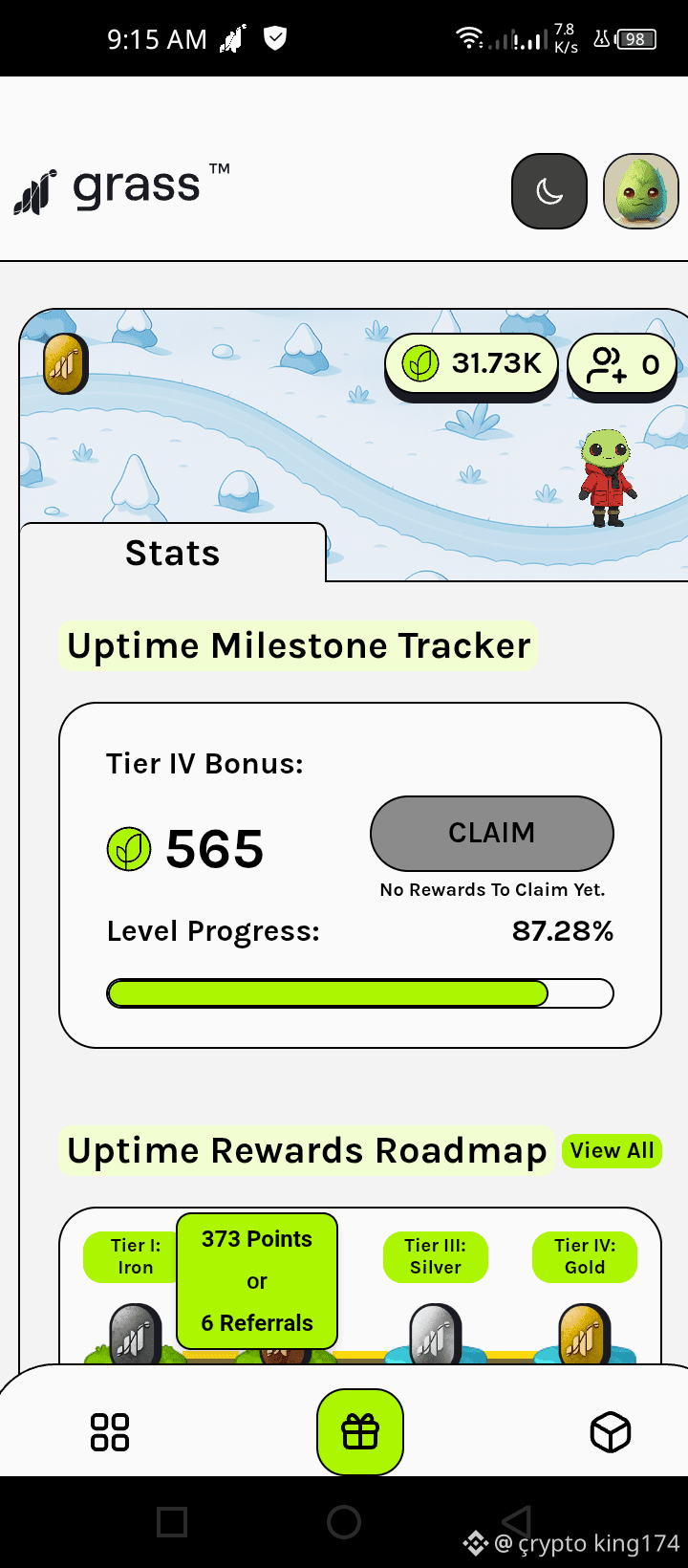
https://app.grass.io/register?referralCode=sp3MCZdmpiUnvug
#news_update #miningpool #TrenddingTopic #viralmypost $BTC
https://app.grass.io/register?referralCode=sp3MCZdmpiUnvug
#news_update #miningpool #TrenddingTopic #viralmypost $BTC
#news_update #miningpool #TrenddingTopic #viralmypost $BTC
1
1
143

·
--
Article
What is Crypto Mining?Are you interested in crypto mining but have reservations and are unsure where to start? Well, you're in luck because in this article, I will take a look at Binance Mining Pool, Binance Cloud Mining, and beyond.
Ultimately, despite inherent barriers, crypto mining holds attractive rewards. Not only do you secure the blockchain, paving the way for further uses of crypto, but crypto miners generate tens of millions in income daily. Therefore, it makes sense why mining is drawing so much attention despite the difficulties.
What is Crypto Mining?
Are you interested in crypto mining but have reservations and are unsure where to start? Well, you're in luck because in this article, I will take a look at Binance Mining Pool, Binance Cloud Mining, and beyond.
Ultimately, despite inherent barriers, crypto mining holds attractive rewards. Not only do you secure the blockchain, paving the way for further uses of crypto, but crypto miners generate tens of millions in income daily. Therefore, it makes sense why mining is drawing so much attention despite the difficulties.
Ultimately, despite inherent barriers, crypto mining holds attractive rewards. Not only do you secure the blockchain, paving the way for further uses of crypto, but crypto miners generate tens of millions in income daily. Therefore, it makes sense why mining is drawing so much attention despite the difficulties.
1
3
6
86

🧠 AI hype pushing $AGIX higher 🚀
#AGİX #AI #Crypto
🌟 $KAS
{future}(KASUSDT)
miners are going all in 💰
#KAS #Crypto #miningpool
🔗 $HBAR
{spot}(HBARUSDT)
backed by big names—don’t ignore
#HBAR #Crypto #Enterprise
🧠 AI hype pushing $AGIX higher 🚀
#AGİX #AI #Crypto
🌟 $KAS
miners are going all in 💰
#KAS #Crypto #miningpool
🔗 $HBAR
backed by big names—don’t ignore
#HBAR #Crypto #Enterprise
#AGİX #AI #Crypto
🌟 $KAS
miners are going all in 💰
#KAS #Crypto #miningpool
🔗 $HBAR
backed by big names—don’t ignore
#HBAR #Crypto #Enterprise
1
63

·
--
Article
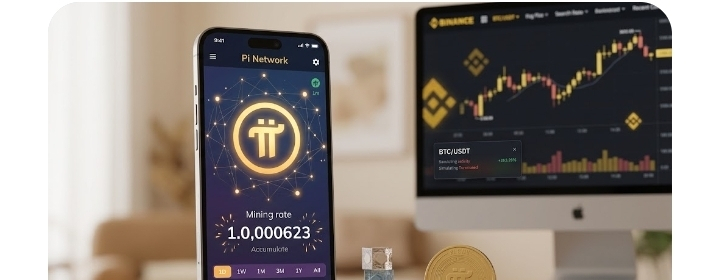
Pi Network: A Digital Revolution or Just a Long Wait? 🚀Pi Network has become one of the most controversial projects in the crypto space. Millions of people around the world are "mining" it via their smartphones, but the burning question everyone is asking is: Are we going to see an official mainnet listing soon, or is this just a distant dream?
💡 What is the current status?
The project is currently in the "Enclosed Mainnet" phase, where the focus is primarily on:
Know Your Customer (KYC): This remains the biggest and most critical hurdle users are currently facing.Building the Ecosystem: The effort is shifting toward making the coin a real medium of exchange rather than just a number on a screen.
⚖️ Why is there so much division?
The Optimists: They see Pi Network as a chance to revolutionize mining by making it accessible to everyone via mobile, with a massive community base that could drive value upon listing.The Skeptics: They argue that the long development phase and the lack of listing on major exchanges are indicators of complex technical or marketing challenges.
🔍 My advice as a creator & trader:
Whether you believe in the project or are skeptical, the golden rule in crypto is: "Don't put all your eggs in one basket." Pi Network is an interesting community experiment, but it shouldn't distract you from studying established, active projects in your Binance portfolio.
A question for you today:
Do you believe Pi Network will succeed in revolutionizing the crypto world upon launch, or has it missed its chance for a real breakout? Share your thoughts in the comments below! 👇
#PiNetworkMainnet #BinanceSquareFamily r#BlockchainNews #miningpool
$BTC $XRP $BNB
💡 Pro-tip for your post:
Since you are engaging an English-speaking audience, you might want to add a high-quality visual to your post. Since you are skilled in CapCut and Motionleap, creating a short "aesthetic" video clip featuring the Pi logo or a sleek graphic about "The Future of Mining" will significantly boost your engagement metrics on Binance Square!
Would you like me to help you brainstorm some video ideas or captions for this specific post?
Pi Network: A Digital Revolution or Just a Long Wait? 🚀
Pi Network has become one of the most controversial projects in the crypto space. Millions of people around the world are "mining" it via their smartphones, but the burning question everyone is asking is: Are we going to see an official mainnet listing soon, or is this just a distant dream?
💡 What is the current status?
The project is currently in the "Enclosed Mainnet" phase, where the focus is primarily on:
Know Your Customer (KYC): This remains the biggest and most critical hurdle users are currently facing.Building the Ecosystem: The effort is shifting toward making the coin a real medium of exchange rather than just a number on a screen.
⚖️ Why is there so much division?
The Optimists: They see Pi Network as a chance to revolutionize mining by making it accessible to everyone via mobile, with a massive community base that could drive value upon listing.The Skeptics: They argue that the long development phase and the lack of listing on major exchanges are indicators of complex technical or marketing challenges.
🔍 My advice as a creator & trader:
Whether you believe in the project or are skeptical, the golden rule in crypto is: "Don't put all your eggs in one basket." Pi Network is an interesting community experiment, but it shouldn't distract you from studying established, active projects in your Binance portfolio.
A question for you today:
Do you believe Pi Network will succeed in revolutionizing the crypto world upon launch, or has it missed its chance for a real breakout? Share your thoughts in the comments below! 👇
#PiNetworkMainnet #BinanceSquareFamily r#BlockchainNews #miningpool
$BTC $XRP $BNB
💡 Pro-tip for your post:
Since you are engaging an English-speaking audience, you might want to add a high-quality visual to your post. Since you are skilled in CapCut and Motionleap, creating a short "aesthetic" video clip featuring the Pi logo or a sleek graphic about "The Future of Mining" will significantly boost your engagement metrics on Binance Square!
Would you like me to help you brainstorm some video ideas or captions for this specific post?
💡 What is the current status?
The project is currently in the "Enclosed Mainnet" phase, where the focus is primarily on:
Know Your Customer (KYC): This remains the biggest and most critical hurdle users are currently facing.Building the Ecosystem: The effort is shifting toward making the coin a real medium of exchange rather than just a number on a screen.
⚖️ Why is there so much division?
The Optimists: They see Pi Network as a chance to revolutionize mining by making it accessible to everyone via mobile, with a massive community base that could drive value upon listing.The Skeptics: They argue that the long development phase and the lack of listing on major exchanges are indicators of complex technical or marketing challenges.
🔍 My advice as a creator & trader:
Whether you believe in the project or are skeptical, the golden rule in crypto is: "Don't put all your eggs in one basket." Pi Network is an interesting community experiment, but it shouldn't distract you from studying established, active projects in your Binance portfolio.
A question for you today:
Do you believe Pi Network will succeed in revolutionizing the crypto world upon launch, or has it missed its chance for a real breakout? Share your thoughts in the comments below! 👇
#PiNetworkMainnet #BinanceSquareFamily r#BlockchainNews #miningpool
$BTC $XRP $BNB
💡 Pro-tip for your post:
Since you are engaging an English-speaking audience, you might want to add a high-quality visual to your post. Since you are skilled in CapCut and Motionleap, creating a short "aesthetic" video clip featuring the Pi logo or a sleek graphic about "The Future of Mining" will significantly boost your engagement metrics on Binance Square!
Would you like me to help you brainstorm some video ideas or captions for this specific post?
107



Jessica Elizabeth
·
--
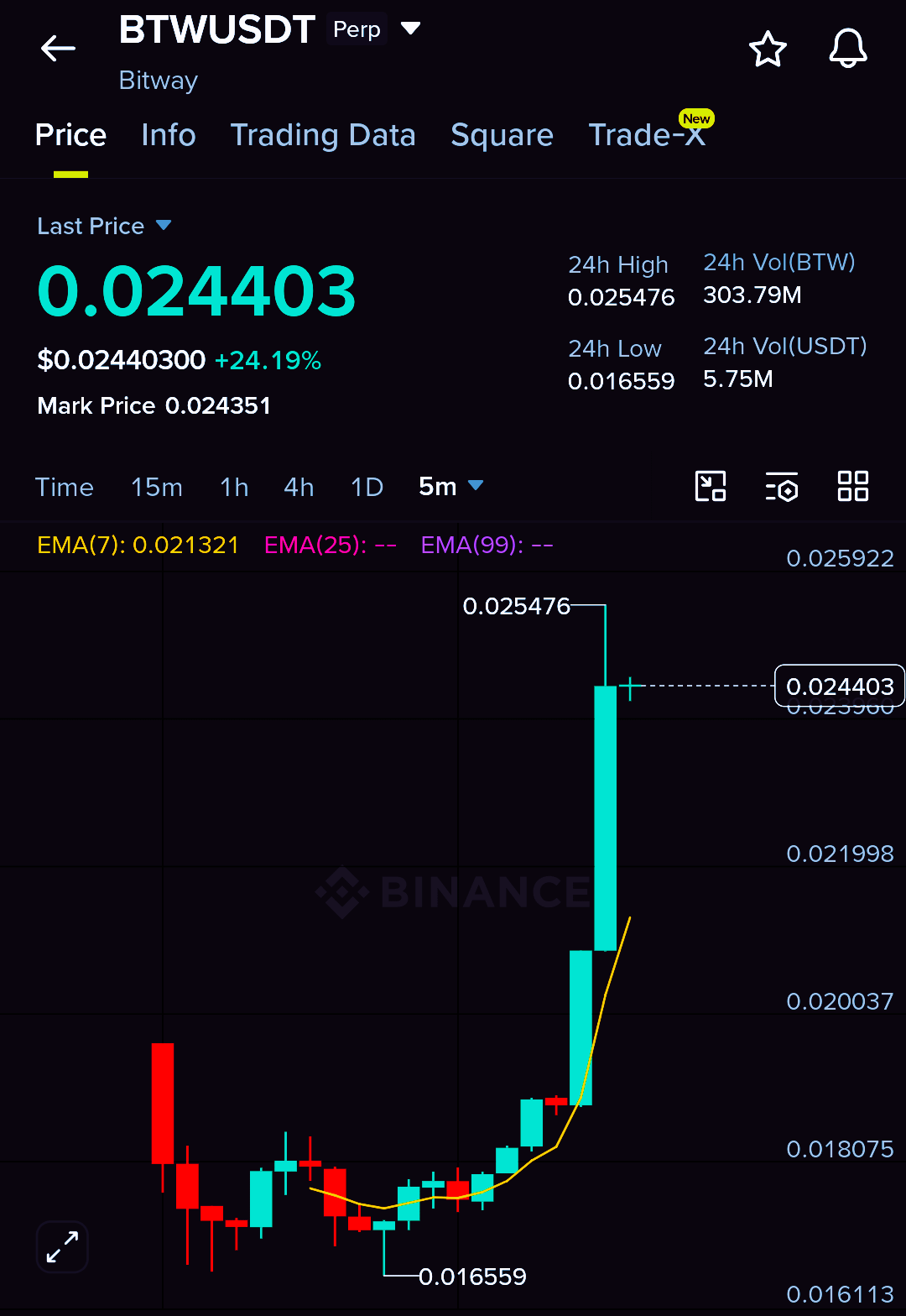
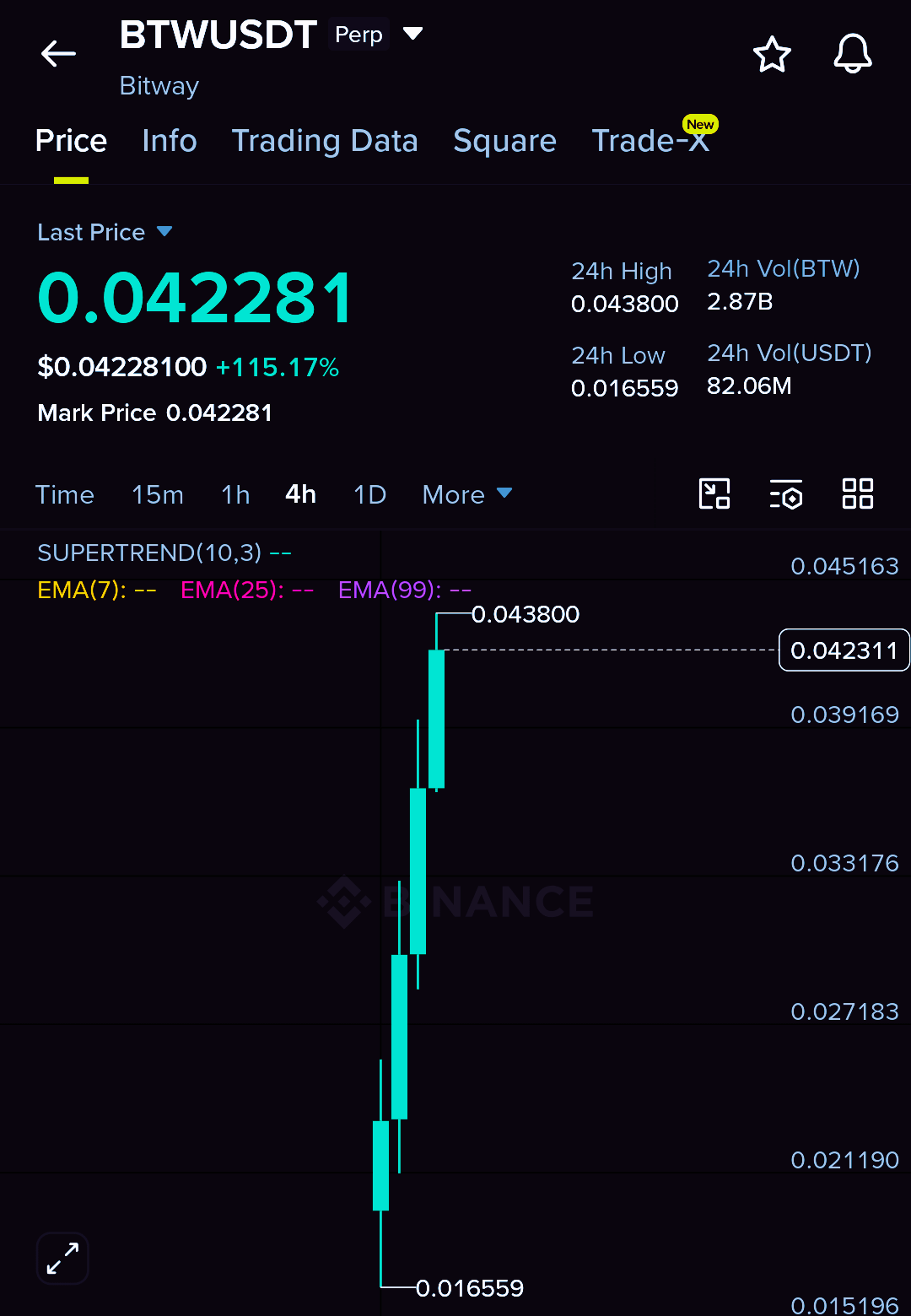
Bullish$BTW 0.10 ON 🥂 #BOOOOOMMM
ONE'S M-O-R-E #CONGRATS🎉✨ I TOLD YOU BUy AT 0.024 & NOw $BTW HIT 🎯 0.044 $BTW Next FLY TO 🔸0.048 🔸0.055
ONE'S M-O-R-E #CONGRATS🎉✨ I TOLD YOU BUy AT 0.024 & NOw $BTW HIT 🎯 0.044 $BTW Next FLY TO 🔸0.048 🔸0.055
87
⚠️ MASTER STRATEGY OR DESPERATION? The clash of two Bitcoin giants ⚖️
The crypto market is split into two extreme realities. While in Asia a firm keeps accumulating, in Wall Street a company linked to the Trump family is racing against time to avoid being expelled from the U.S. stock exchange. Who is playing their cards better?
To understand this chaos, there are 3 key assets under the spotlight that will shape the direction of the debate:
1. Bitcoin $BTC : The central asset. Metaplanet uses it as a definitive strategic reserve to protect itself from yen devaluation, while American Bitcoin suffers from currency-price fluctuations, piling up massive unrealized losses on its balance sheet due to recent market volatility.
2. Metaplanet stock (TYO: 3350): “Asia’s MicroStrategy.” Its aggressive BTC-buying policy aims to attract international investors. Is this the new perfect financial vehicle to get exposure to cryptocurrencies without buying the asset directly?
3. American Bitcoin stock $ABTC: Trading at historical lows below the dollar, the company is forced to execute a reverse split of 1 for 15 so that the value of its share rises artificially and thus meet Nasdaq’s minimum requirements.
American Bitcoin’s move $ABTC dramatically reduces its shares outstanding from 1.090 billion to just 73 million. The company’s value doesn’t change, but the stigma of resorting to a reverse split usually drives away institutional investors.
💬 ENTER THE DEBATE! (For the Binance Square community)
Do you think aggressive institutional accumulation in the style of Metaplanet will support the BTC price in the long run?
Cast your vote and your argument below! 👇 I’ll read your comments.
#bitcoin #Metaplanet #NASDAQ #CryptoNews #miningpool
$BTC
{future}(BTCUSDT)
$META
{future}(METAUSDT)
⚠️ MASTER STRATEGY OR DESPERATION? The clash of two Bitcoin giants ⚖️
The crypto market is split into two extreme realities. While in Asia a firm keeps accumulating, in Wall Street a company linked to the Trump family is racing against time to avoid being expelled from the U.S. stock exchange. Who is playing their cards better?
To understand this chaos, there are 3 key assets under the spotlight that will shape the direction of the debate:
1. Bitcoin $BTC : The central asset. Metaplanet uses it as a definitive strategic reserve to protect itself from yen devaluation, while American Bitcoin suffers from currency-price fluctuations, piling up massive unrealized losses on its balance sheet due to recent market volatility.
2. Metaplanet stock (TYO: 3350): “Asia’s MicroStrategy.” Its aggressive BTC-buying policy aims to attract international investors. Is this the new perfect financial vehicle to get exposure to cryptocurrencies without buying the asset directly?
3. American Bitcoin stock $ABTC: Trading at historical lows below the dollar, the company is forced to execute a reverse split of 1 for 15 so that the value of its share rises artificially and thus meet Nasdaq’s minimum requirements.
American Bitcoin’s move $ABTC dramatically reduces its shares outstanding from 1.090 billion to just 73 million. The company’s value doesn’t change, but the stigma of resorting to a reverse split usually drives away institutional investors.
💬 ENTER THE DEBATE! (For the Binance Square community)
Do you think aggressive institutional accumulation in the style of Metaplanet will support the BTC price in the long run?
Cast your vote and your argument below! 👇 I’ll read your comments.
#bitcoin #Metaplanet #NASDAQ #CryptoNews #miningpool
$BTC
$META
The crypto market is split into two extreme realities. While in Asia a firm keeps accumulating, in Wall Street a company linked to the Trump family is racing against time to avoid being expelled from the U.S. stock exchange. Who is playing their cards better?
To understand this chaos, there are 3 key assets under the spotlight that will shape the direction of the debate:
1. Bitcoin $BTC : The central asset. Metaplanet uses it as a definitive strategic reserve to protect itself from yen devaluation, while American Bitcoin suffers from currency-price fluctuations, piling up massive unrealized losses on its balance sheet due to recent market volatility.
2. Metaplanet stock (TYO: 3350): “Asia’s MicroStrategy.” Its aggressive BTC-buying policy aims to attract international investors. Is this the new perfect financial vehicle to get exposure to cryptocurrencies without buying the asset directly?
3. American Bitcoin stock $ABTC: Trading at historical lows below the dollar, the company is forced to execute a reverse split of 1 for 15 so that the value of its share rises artificially and thus meet Nasdaq’s minimum requirements.
American Bitcoin’s move $ABTC dramatically reduces its shares outstanding from 1.090 billion to just 73 million. The company’s value doesn’t change, but the stigma of resorting to a reverse split usually drives away institutional investors.
💬 ENTER THE DEBATE! (For the Binance Square community)
Do you think aggressive institutional accumulation in the style of Metaplanet will support the BTC price in the long run?
Cast your vote and your argument below! 👇 I’ll read your comments.
#bitcoin #Metaplanet #NASDAQ #CryptoNews #miningpool
$BTC
$META
1
159

·
--
LONG SWING #MILK
TP 0.045
STOPLOSS = MAIL
CAP 12m so cc gi ae ?
#PowellRemarks #MilkyWay #miningpool
LONG SWING #MILK
TP 0.045
STOPLOSS = MAIL
CAP 12m so cc gi ae ?
#PowellRemarks #MilkyWay #miningpool
TP 0.045
STOPLOSS = MAIL
CAP 12m so cc gi ae ?
#PowellRemarks #MilkyWay #miningpool
1
1
2
199

·
--
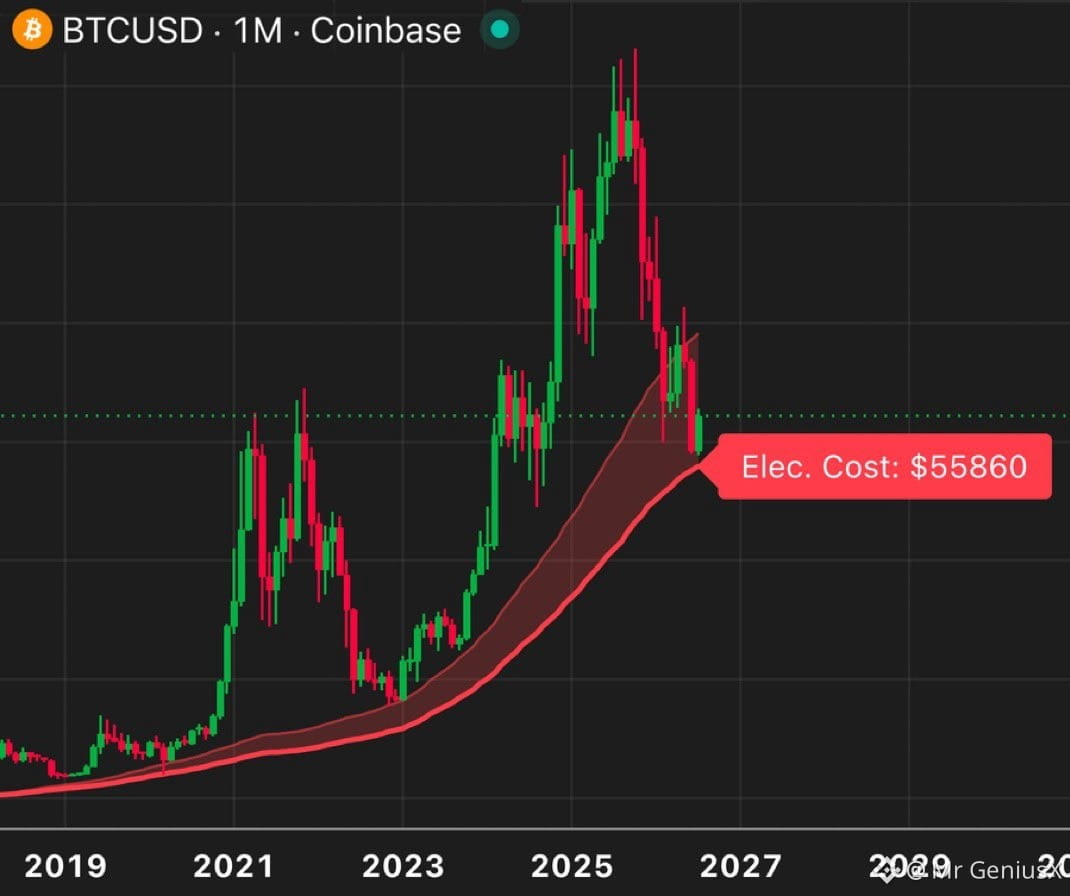
🚨⚡ ONE OF THE MOST IMPORTANT BITCOIN CHARTS YOU'VE PROBABLY NEVER SEEN ⚡🚨
👀 Take a look at the Bitcoin estimated cost of production (the red line).
Time and time again, BTC has found major support around this zone. 📈
Historically, every major bear market has bottomed near or above this production cost level.
Here's why it matters: 🧵👇
⛏️ If Bitcoin falls near miners' production costs, less efficient miners are forced to shut down, reducing the amount of new BTC being sold.
📉 Less miner selling = less supply hitting the market.
⚖️ As supply tightens, price often stabilizes and can begin to recover.
On the chart you'll notice:
✅ Every major cycle low formed near this cost band.
✅ Price may briefly wick below it during periods of panic.
✅ Historically, it hasn't remained below this zone for an extended period.
This doesn't guarantee a bottom, but it's one of the most important structural support zones long-term Bitcoin investors watch. 🧠📊
The market rewards preparation—not emotion. Stay informed, manage your risk, and let the data guide your decisions. 🚀
#Bitcoin #BTC #Crypto #Trading nChain #miningpool $BTC
🚨⚡ ONE OF THE MOST IMPORTANT BITCOIN CHARTS YOU'VE PROBABLY NEVER SEEN ⚡🚨
👀 Take a look at the Bitcoin estimated cost of production (the red line).
Time and time again, BTC has found major support around this zone. 📈
Historically, every major bear market has bottomed near or above this production cost level.
Here's why it matters: 🧵👇
⛏️ If Bitcoin falls near miners' production costs, less efficient miners are forced to shut down, reducing the amount of new BTC being sold.
📉 Less miner selling = less supply hitting the market.
⚖️ As supply tightens, price often stabilizes and can begin to recover.
On the chart you'll notice:
✅ Every major cycle low formed near this cost band.
✅ Price may briefly wick below it during periods of panic.
✅ Historically, it hasn't remained below this zone for an extended period.
This doesn't guarantee a bottom, but it's one of the most important structural support zones long-term Bitcoin investors watch. 🧠📊
The market rewards preparation—not emotion. Stay informed, manage your risk, and let the data guide your decisions. 🚀
#Bitcoin #BTC #Crypto #Trading nChain #miningpool $BTC
👀 Take a look at the Bitcoin estimated cost of production (the red line).
Time and time again, BTC has found major support around this zone. 📈
Historically, every major bear market has bottomed near or above this production cost level.
Here's why it matters: 🧵👇
⛏️ If Bitcoin falls near miners' production costs, less efficient miners are forced to shut down, reducing the amount of new BTC being sold.
📉 Less miner selling = less supply hitting the market.
⚖️ As supply tightens, price often stabilizes and can begin to recover.
On the chart you'll notice:
✅ Every major cycle low formed near this cost band.
✅ Price may briefly wick below it during periods of panic.
✅ Historically, it hasn't remained below this zone for an extended period.
This doesn't guarantee a bottom, but it's one of the most important structural support zones long-term Bitcoin investors watch. 🧠📊
The market rewards preparation—not emotion. Stay informed, manage your risk, and let the data guide your decisions. 🚀
#Bitcoin #BTC #Crypto #Trading nChain #miningpool $BTC
3
59
Log in to explore more content
Join global crypto users on Binance Square
⚡️ Get latest and useful information about crypto.
💬 Trusted by the world’s largest crypto exchange.
👍 Discover real insights from verified creators.
Email / Phone number
Trending Topics
1
#EarningsSeason
160,847 views
1,502 Discussing
2
#BitwiseLaunchesFirstSpotNEARETF
2,836 views
140 Discussing
3
#USJobOpeningsFallToFiveMonthLow
4,351 views
107 Discussing
4
#ECBToTestAIAgentsInDigitalEuroPayments
9,639 views
295 Discussing
5
#JapanFSABacksFourthStablecoinTradeSettlementPilot
10,630 views
346 Discussing
6
#BitgetHackerFailsToMoveStolenFunds
23,933 views
486 Discussing
7
#BitMineETHHoldingsTop6Million
23,169 views
623 Discussing
8
#StrategyAdds1666BTCHoldingsReach847666
19,170 views
432 Discussing
9
#NvidiaApproves$150BBuyback
4,096 views
67 Discussing
10
#OpenAIDelaysGPT6.1OverSafetyIssues
31,799 views
798 Discussing