

#interoperability
interoperability
235,380 views
2,138 Discussing
Hot
Latest

·
--
Verified
🚀 Cosmos ($ATOM) Interchain Interoperability & Tokenomics Upgrade Spotlight! ⚡
As modular blockchain architecture, cross-chain liquidity, and sovereign app-chain adoption expand across Web3, Cosmos ($ATOM) continues to anchor the decentralized interchain economy.
Key catalysts driving Cosmos's long-term growth outlook:
* IBC Expansion Across Major Networks: The Inter-Blockchain Communication (IBC) protocol continues to expand native cross-chain bridges connecting major ecosystems like Solana and Ethereum Layer-2s, solidifying Cosmos as the interoperability standard.
* Tokenomics Overhaul & Inflation Reduction: Ongoing governance initiatives targeting ATOM’s economic model focus on transitioning from high issuance to revenue-based fee models and burned token mechanics, driving value capture back to $ATOM holders.
* Shared Security & Interchain Hub Growth: Expanding Interchain Security (ICS) enables new app-chains to leverage the Cosmos Hub’s validator set, creating compounding staking demand and multi-chain reward streams for $ATOM delegators.
Are you staking $ATOM for interchain yields or following the expansion of the IBC ecosystem? Drop your strategy below! 👇
#ATOM #Cosmos #Interoperability
{spot}(ATOMUSDT)
🚀 Cosmos ($ATOM ) Interchain Interoperability & Tokenomics Upgrade Spotlight! ⚡
As modular blockchain architecture, cross-chain liquidity, and sovereign app-chain adoption expand across Web3, Cosmos ($ATOM ) continues to anchor the decentralized interchain economy.
Key catalysts driving Cosmos's long-term growth outlook:
* IBC Expansion Across Major Networks: The Inter-Blockchain Communication (IBC) protocol continues to expand native cross-chain bridges connecting major ecosystems like Solana and Ethereum Layer-2s, solidifying Cosmos as the interoperability standard.
* Tokenomics Overhaul & Inflation Reduction: Ongoing governance initiatives targeting ATOM’s economic model focus on transitioning from high issuance to revenue-based fee models and burned token mechanics, driving value capture back to $ATOM holders.
* Shared Security & Interchain Hub Growth: Expanding Interchain Security (ICS) enables new app-chains to leverage the Cosmos Hub’s validator set, creating compounding staking demand and multi-chain reward streams for $ATOM delegators.
Are you staking $ATOM for interchain yields or following the expansion of the IBC ecosystem? Drop your strategy below! 👇
#ATOM #Cosmos #Interoperability
As modular blockchain architecture, cross-chain liquidity, and sovereign app-chain adoption expand across Web3, Cosmos ($ATOM ) continues to anchor the decentralized interchain economy.
Key catalysts driving Cosmos's long-term growth outlook:
* IBC Expansion Across Major Networks: The Inter-Blockchain Communication (IBC) protocol continues to expand native cross-chain bridges connecting major ecosystems like Solana and Ethereum Layer-2s, solidifying Cosmos as the interoperability standard.
* Tokenomics Overhaul & Inflation Reduction: Ongoing governance initiatives targeting ATOM’s economic model focus on transitioning from high issuance to revenue-based fee models and burned token mechanics, driving value capture back to $ATOM holders.
* Shared Security & Interchain Hub Growth: Expanding Interchain Security (ICS) enables new app-chains to leverage the Cosmos Hub’s validator set, creating compounding staking demand and multi-chain reward streams for $ATOM delegators.
Are you staking $ATOM for interchain yields or following the expansion of the IBC ecosystem? Drop your strategy below! 👇
#ATOM #Cosmos #Interoperability
4
483

·
--
Cross-chain interoperability is the missing infrastructure layer that most retail traders underestimate — and it may quietly define the next architecture cycle.
Right now, $ETH, $AVAX, and $DOT each have vibrant ecosystems alongside dozens of other chains. But value, users, and liquidity remain largely siloed. Bridging is still clunky, trust-minimized bridges carry exploit risk, and UX friction keeps most capital parked on a single chain.
That is the gap interoperability protocols are racing to fill. The spectrum runs from trust-minimized designs (IBC light-client verification on Cosmos-connected chains) to oracle-based relayers (LayerZero, Wormhole) to intent-based settlement systems that abstract the bridge entirely. Each model trades off security assumptions against speed and composability.
What changes when interoperability matures? Liquidity unifies. A user on one chain can access a lending protocol on another without bridging manually. Yield positions can be funded cross-chain without six steps and four gas fees. Capital efficiency across the whole market improves — not just within one ecosystem.
The protocols that win this layer will not just capture bridge fee revenue. They will become the TCP/IP of on-chain value transfer — infrastructure so foundational it becomes invisible. That is the kind of structural moat worth tracking early.
Interoperability is not a narrative. It is plumbing. And in markets, whoever owns the plumbing tends to capture compounding value over time.
#Interoperability #CrossChain #DeFi #CryptoInfrastructure #Blockchain
Cross-chain interoperability is the missing infrastructure layer that most retail traders underestimate — and it may quietly define the next architecture cycle.
Right now, $ETH , $AVAX , and $DOT each have vibrant ecosystems alongside dozens of other chains. But value, users, and liquidity remain largely siloed. Bridging is still clunky, trust-minimized bridges carry exploit risk, and UX friction keeps most capital parked on a single chain.
That is the gap interoperability protocols are racing to fill. The spectrum runs from trust-minimized designs (IBC light-client verification on Cosmos-connected chains) to oracle-based relayers (LayerZero, Wormhole) to intent-based settlement systems that abstract the bridge entirely. Each model trades off security assumptions against speed and composability.
What changes when interoperability matures? Liquidity unifies. A user on one chain can access a lending protocol on another without bridging manually. Yield positions can be funded cross-chain without six steps and four gas fees. Capital efficiency across the whole market improves — not just within one ecosystem.
The protocols that win this layer will not just capture bridge fee revenue. They will become the TCP/IP of on-chain value transfer — infrastructure so foundational it becomes invisible. That is the kind of structural moat worth tracking early.
Interoperability is not a narrative. It is plumbing. And in markets, whoever owns the plumbing tends to capture compounding value over time.
#Interoperability #CrossChain #DeFi #CryptoInfrastructure #Blockchain
Right now, $ETH , $AVAX , and $DOT each have vibrant ecosystems alongside dozens of other chains. But value, users, and liquidity remain largely siloed. Bridging is still clunky, trust-minimized bridges carry exploit risk, and UX friction keeps most capital parked on a single chain.
That is the gap interoperability protocols are racing to fill. The spectrum runs from trust-minimized designs (IBC light-client verification on Cosmos-connected chains) to oracle-based relayers (LayerZero, Wormhole) to intent-based settlement systems that abstract the bridge entirely. Each model trades off security assumptions against speed and composability.
What changes when interoperability matures? Liquidity unifies. A user on one chain can access a lending protocol on another without bridging manually. Yield positions can be funded cross-chain without six steps and four gas fees. Capital efficiency across the whole market improves — not just within one ecosystem.
The protocols that win this layer will not just capture bridge fee revenue. They will become the TCP/IP of on-chain value transfer — infrastructure so foundational it becomes invisible. That is the kind of structural moat worth tracking early.
Interoperability is not a narrative. It is plumbing. And in markets, whoever owns the plumbing tends to capture compounding value over time.
#Interoperability #CrossChain #DeFi #CryptoInfrastructure #Blockchain
181

·
--
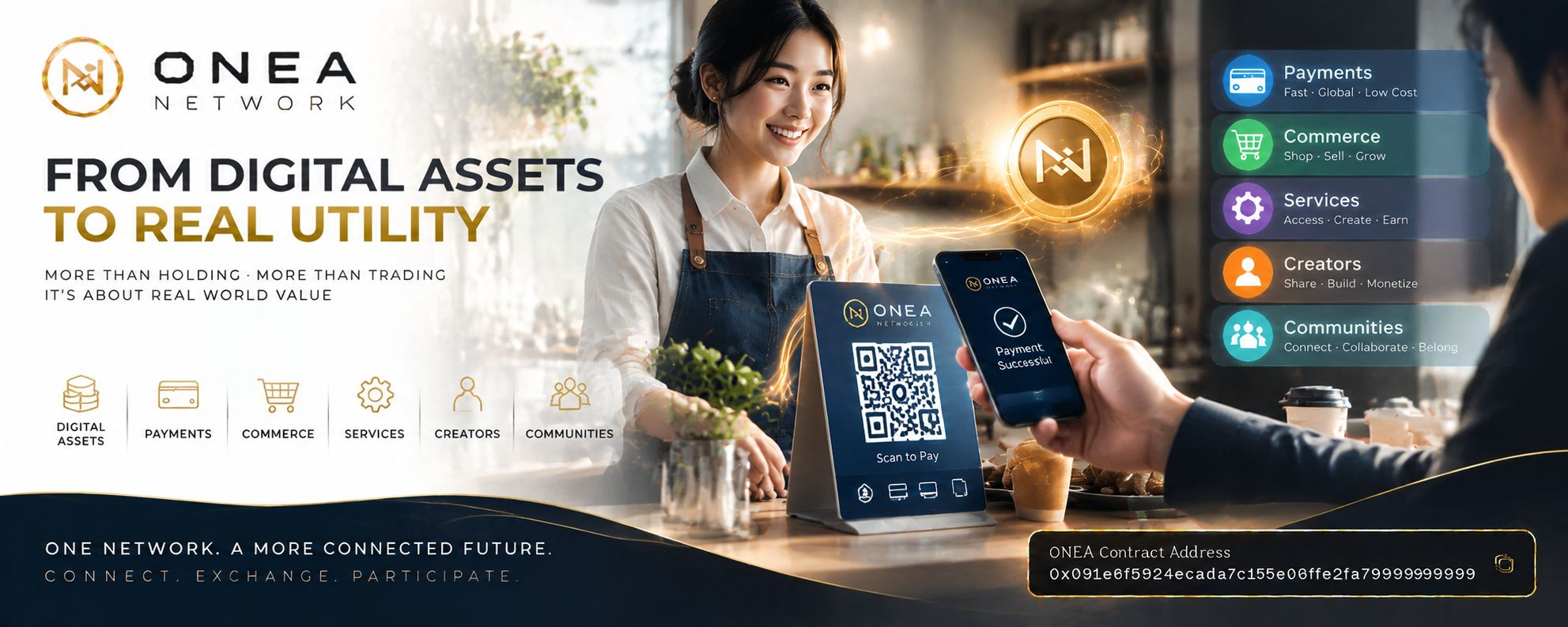
🌐 ONEA NETWORK——The next step in the digital economy isn’t just digitization—it’s interconnection.
The digital economy has created countless new ways for people to work, shop, communicate, and exchange value.
But many digital services still operate in isolated environments.
Users might discover a product on one platform, pay for it on another, manage digital assets somewhere else, and then return to a different app to use follow-up services.
Each tool might work well on its own, but together, the overall experience can feel fragmented.
🔗 The real opportunity lies in connection.
What would happen if different digital services could work together more naturally?
What might change if users could avoid unnecessary steps and move more smoothly between different digital experiences?
Could businesses and creators also explore more possibilities by building services around a more interconnected digital environment?
These possibilities require more than great interface design. They also depend on system compatibility, reliable infrastructure, security, and genuine user needs.
🚀 What ONEA NETWORK is exploring
ONEA Network is exploring a long-term vision for an ecosystem that connects digital assets, payments, commerce, services, and communities.
The goal is to explore how these elements can work together more effectively, making participation in the digital economy more convenient and practical.
This is a long-term vision that will require ongoing development; it does not mean that all these connections have already been achieved.
🌍 The next phase of digital innovation may not be about adding yet another isolated platform.
Instead, it may be about helping existing and emerging services work better together.
Reducing fragmentation, building meaningful connections, and opening up more practical possibilities for digital technology.
#ONEA #ONEANetwork #Web3 #Interoperability
🌐 ONEA NETWORK——The next step in the digital economy isn’t just digitization—it’s interconnection.
The digital economy has created countless new ways for people to work, shop, communicate, and exchange value.
But many digital services still operate in isolated environments.
Users might discover a product on one platform, pay for it on another, manage digital assets somewhere else, and then return to a different app to use follow-up services.
Each tool might work well on its own, but together, the overall experience can feel fragmented.
🔗 The real opportunity lies in connection.
What would happen if different digital services could work together more naturally?
What might change if users could avoid unnecessary steps and move more smoothly between different digital experiences?
Could businesses and creators also explore more possibilities by building services around a more interconnected digital environment?
These possibilities require more than great interface design. They also depend on system compatibility, reliable infrastructure, security, and genuine user needs.
🚀 What ONEA NETWORK is exploring
ONEA Network is exploring a long-term vision for an ecosystem that connects digital assets, payments, commerce, services, and communities.
The goal is to explore how these elements can work together more effectively, making participation in the digital economy more convenient and practical.
This is a long-term vision that will require ongoing development; it does not mean that all these connections have already been achieved.
🌍 The next phase of digital innovation may not be about adding yet another isolated platform.
Instead, it may be about helping existing and emerging services work better together.
Reducing fragmentation, building meaningful connections, and opening up more practical possibilities for digital technology.
#ONEA #ONEANetwork #Web3 #Interoperability
The digital economy has created countless new ways for people to work, shop, communicate, and exchange value.
But many digital services still operate in isolated environments.
Users might discover a product on one platform, pay for it on another, manage digital assets somewhere else, and then return to a different app to use follow-up services.
Each tool might work well on its own, but together, the overall experience can feel fragmented.
🔗 The real opportunity lies in connection.
What would happen if different digital services could work together more naturally?
What might change if users could avoid unnecessary steps and move more smoothly between different digital experiences?
Could businesses and creators also explore more possibilities by building services around a more interconnected digital environment?
These possibilities require more than great interface design. They also depend on system compatibility, reliable infrastructure, security, and genuine user needs.
🚀 What ONEA NETWORK is exploring
ONEA Network is exploring a long-term vision for an ecosystem that connects digital assets, payments, commerce, services, and communities.
The goal is to explore how these elements can work together more effectively, making participation in the digital economy more convenient and practical.
This is a long-term vision that will require ongoing development; it does not mean that all these connections have already been achieved.
🌍 The next phase of digital innovation may not be about adding yet another isolated platform.
Instead, it may be about helping existing and emerging services work better together.
Reducing fragmentation, building meaningful connections, and opening up more practical possibilities for digital technology.
#ONEA #ONEANetwork #Web3 #Interoperability
64

·
--
Bullish
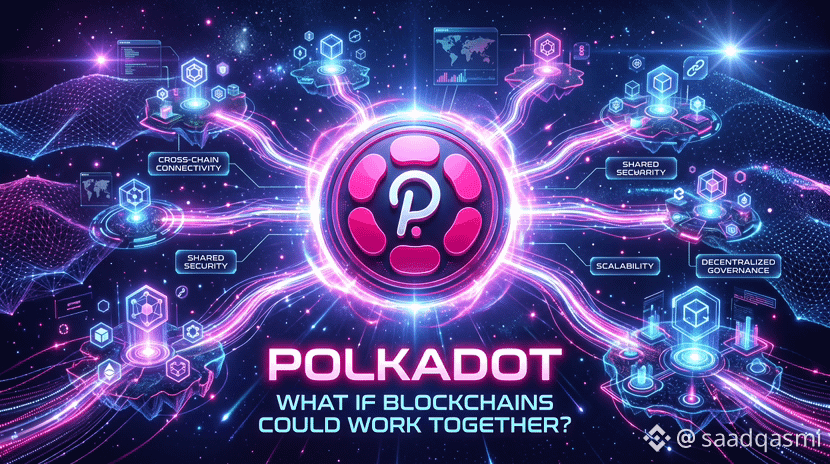
$DOT 🌐 POLKADOT: WHAT IF BLOCKCHAINS COULD WORK TOGETHER? 🔗
The future of Web3 isn’t just about building more blockchains. It’s about connecting them. 🚀
Meet Polkadot ($DOT) — a blockchain ecosystem designed to help different networks communicate, share resources, and build a more connected decentralized internet.
🔥 Why Polkadot stands out:
🔗 Cross-Chain Connectivity: Enables different blockchains to exchange information and interact.
🛡️ Shared Security: Connected networks can benefit from Polkadot’s shared security infrastructure.
⚡ Scalability: Its architecture allows specialized chains to operate in parallel.
🗳️ Decentralized Governance: DOT holders can participate in decisions shaping the network’s future.
💡 The Bigger Vision: Instead of isolated blockchain islands, imagine an interconnected digital world where applications and networks work together seamlessly.
That’s the vision Polkadot is building toward — and interoperability could play a major role in the next chapter of Web3.
📢 Let’s discuss!
Do you believe cross-chain interoperability is the future of crypto, or will a few dominant blockchains control the market?
👇 Drop your thoughts in the comments!
#Polkadot #dot #Web3 #defi #interoperability
🔗 Explore the official website: https://polkadot.com
Educational content only. Not financial advice. Always DYOR before investing.
{spot}(DOTUSDT)
$DOT 🌐 POLKADOT: WHAT IF BLOCKCHAINS COULD WORK TOGETHER? 🔗
The future of Web3 isn’t just about building more blockchains. It’s about connecting them. 🚀
Meet Polkadot ($DOT ) — a blockchain ecosystem designed to help different networks communicate, share resources, and build a more connected decentralized internet.
🔥 Why Polkadot stands out:
🔗 Cross-Chain Connectivity: Enables different blockchains to exchange information and interact.
🛡️ Shared Security: Connected networks can benefit from Polkadot’s shared security infrastructure.
⚡ Scalability: Its architecture allows specialized chains to operate in parallel.
🗳️ Decentralized Governance: DOT holders can participate in decisions shaping the network’s future.
💡 The Bigger Vision: Instead of isolated blockchain islands, imagine an interconnected digital world where applications and networks work together seamlessly.
That’s the vision Polkadot is building toward — and interoperability could play a major role in the next chapter of Web3.
📢 Let’s discuss!
Do you believe cross-chain interoperability is the future of crypto, or will a few dominant blockchains control the market?
👇 Drop your thoughts in the comments!
#Polkadot #dot #Web3 #defi #interoperability
🔗 Explore the official website: https://polkadot.com
Educational content only. Not financial advice. Always DYOR before investing.
The future of Web3 isn’t just about building more blockchains. It’s about connecting them. 🚀
Meet Polkadot ($DOT ) — a blockchain ecosystem designed to help different networks communicate, share resources, and build a more connected decentralized internet.
🔥 Why Polkadot stands out:
🔗 Cross-Chain Connectivity: Enables different blockchains to exchange information and interact.
🛡️ Shared Security: Connected networks can benefit from Polkadot’s shared security infrastructure.
⚡ Scalability: Its architecture allows specialized chains to operate in parallel.
🗳️ Decentralized Governance: DOT holders can participate in decisions shaping the network’s future.
💡 The Bigger Vision: Instead of isolated blockchain islands, imagine an interconnected digital world where applications and networks work together seamlessly.
That’s the vision Polkadot is building toward — and interoperability could play a major role in the next chapter of Web3.
📢 Let’s discuss!
Do you believe cross-chain interoperability is the future of crypto, or will a few dominant blockchains control the market?
👇 Drop your thoughts in the comments!
#Polkadot #dot #Web3 #defi #interoperability
🔗 Explore the official website: https://polkadot.com
Educational content only. Not financial advice. Always DYOR before investing.
56
·
--
🌐 ONEA NETWORK——Connection is just the beginning.
The digital economy continues to evolve, but connecting different systems is only part of the challenge.
The real question is whether these systems can work together effectively.
Payment services can connect users and merchants, digital platforms can connect creators and audiences, and communities can bring together people with shared interests.
But if these experiences remain isolated from one another, users may still face unnecessary steps and barriers.
🔗 Why does interoperability matter?
Simply put, interoperability means enabling different systems to work together more effectively.
It can improve digital experiences, reduce unnecessary barriers, and create more opportunities for different services to interact.
Making this possible requires thoughtful design, security, reliable infrastructure, and clear standards. Connecting systems without making them compatible can still leave users dealing with complicated processes.
🚀 The ONEA NETWORK vision
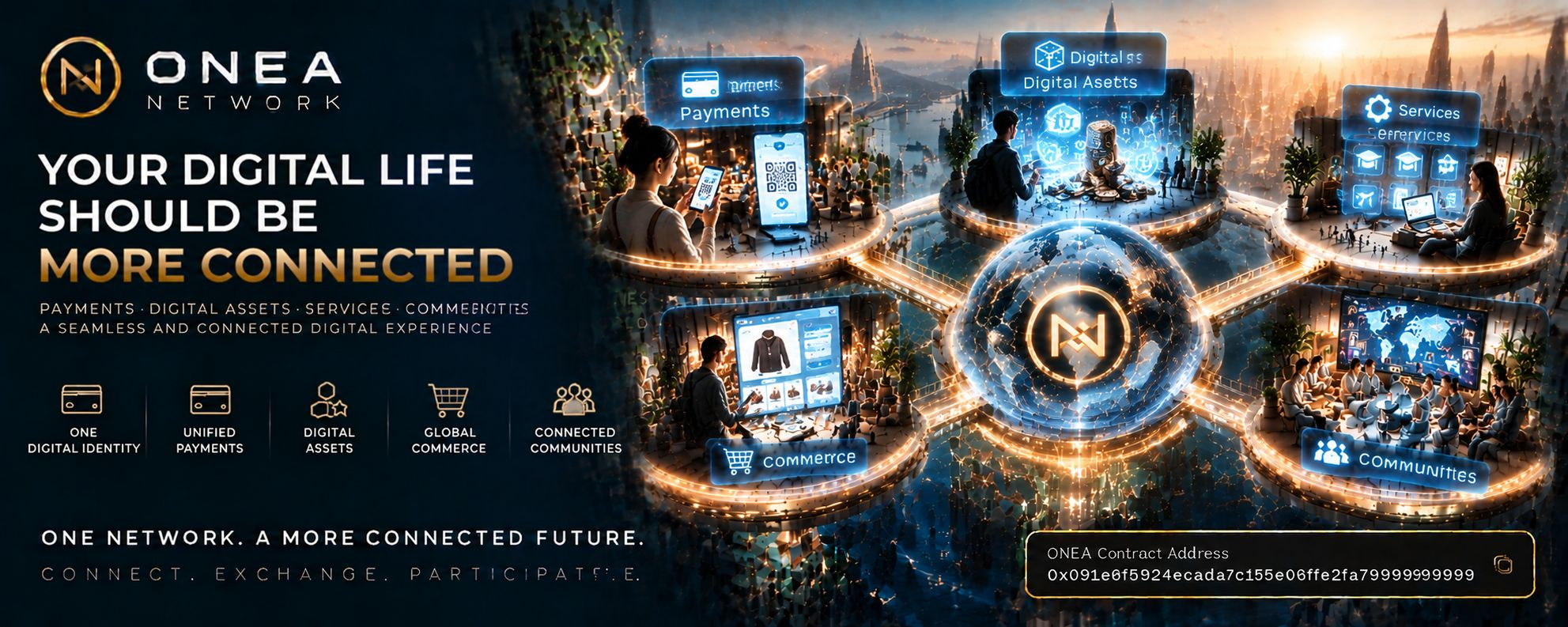
ONEA Network is exploring a more interconnected digital ecosystem spanning payments, digital assets, commerce, services, and communities.
The long-term opportunity lies in helping these elements work together more naturally, laying the foundation for more seamless digital experiences.
This is a direction that requires ongoing exploration and development—not an outcome that happens automatically. Real progress still depends on practical applications and consistent execution.
🌍 The next phase of digital technology may not be about creating more isolated systems.
It may be about helping existing and emerging systems work better together.
Connect with purpose. Build for compatibility. Make technology deliver real value.
ONEA NETWORK——Connecting a more interconnected future.
#ONEA #ONEANetwork #Web3 #Interoperability
🌐 ONEA NETWORK——Connection is just the beginning.
The digital economy continues to evolve, but connecting different systems is only part of the challenge.
The real question is whether these systems can work together effectively.
Payment services can connect users and merchants, digital platforms can connect creators and audiences, and communities can bring together people with shared interests.
But if these experiences remain isolated from one another, users may still face unnecessary steps and barriers.
🔗 Why does interoperability matter?
Simply put, interoperability means enabling different systems to work together more effectively.
It can improve digital experiences, reduce unnecessary barriers, and create more opportunities for different services to interact.
Making this possible requires thoughtful design, security, reliable infrastructure, and clear standards. Connecting systems without making them compatible can still leave users dealing with complicated processes.
🚀 The ONEA NETWORK vision
ONEA Network is exploring a more interconnected digital ecosystem spanning payments, digital assets, commerce, services, and communities.
The long-term opportunity lies in helping these elements work together more naturally, laying the foundation for more seamless digital experiences.
This is a direction that requires ongoing exploration and development—not an outcome that happens automatically. Real progress still depends on practical applications and consistent execution.
🌍 The next phase of digital technology may not be about creating more isolated systems.
It may be about helping existing and emerging systems work better together.
Connect with purpose. Build for compatibility. Make technology deliver real value.
ONEA NETWORK——Connecting a more interconnected future.
#ONEA #ONEANetwork #Web3 #Interoperability
The digital economy continues to evolve, but connecting different systems is only part of the challenge.
The real question is whether these systems can work together effectively.
Payment services can connect users and merchants, digital platforms can connect creators and audiences, and communities can bring together people with shared interests.
But if these experiences remain isolated from one another, users may still face unnecessary steps and barriers.
🔗 Why does interoperability matter?
Simply put, interoperability means enabling different systems to work together more effectively.
It can improve digital experiences, reduce unnecessary barriers, and create more opportunities for different services to interact.
Making this possible requires thoughtful design, security, reliable infrastructure, and clear standards. Connecting systems without making them compatible can still leave users dealing with complicated processes.
🚀 The ONEA NETWORK vision
ONEA Network is exploring a more interconnected digital ecosystem spanning payments, digital assets, commerce, services, and communities.
The long-term opportunity lies in helping these elements work together more naturally, laying the foundation for more seamless digital experiences.
This is a direction that requires ongoing exploration and development—not an outcome that happens automatically. Real progress still depends on practical applications and consistent execution.
🌍 The next phase of digital technology may not be about creating more isolated systems.
It may be about helping existing and emerging systems work better together.
Connect with purpose. Build for compatibility. Make technology deliver real value.
ONEA NETWORK——Connecting a more interconnected future.
#ONEA #ONEANetwork #Web3 #Interoperability
7
·
--
Cross-Chain Interoperability Is the Infrastructure Layer Everyone Is Ignoring
Most crypto narratives focus on individual chains competing for dominance. The more interesting thesis is that interoperability protocols — the infrastructure connecting those chains — may end up capturing more long-term value than any single winner.
Here is why it matters. Right now, liquidity, users, and applications are siloed. A protocol on $SOL cannot natively access collateral locked on $ETH. A user on $DOT cannot seamlessly interact with EVM logic without bridging. These frictions are not just UX annoyances — they represent structural capital inefficiency baked into the entire ecosystem.
Interoperability layers like IBC (Cosmos), Polkadot XCM, LayerZero, and Wormhole are solving different parts of this problem. IBC handles trust-minimized message passing between sovereign chains. XCM allows shared security plus cross-parachain communication. LayerZero takes an omnichain approach through ultra-light nodes. Wormhole bridges both EVM and non-EVM ecosystems.
The architectural question worth tracking: will interoperability compound or fragment? A chain with deep IBC connections or LayerZero integrations becomes more valuable as the network grows — classic Metcalfe dynamics. But every bridge is also an attack surface, and cross-chain security exploits have been some of the largest hacks in crypto history.
The long-term winners in this space will be protocols that solve the security-composability trade-off cleanly. Chains that resist interoperability to preserve purity may find themselves isolated. Chains that embrace it carefully may inherit network effects from the entire ecosystem.
Interoperability is not a feature. It is the foundation.
$ETH $DOT $SOL
#Interoperability #CrossChain #DeFi #Blockchain #CryptoInfrastructure
Cross-Chain Interoperability Is the Infrastructure Layer Everyone Is Ignoring
Most crypto narratives focus on individual chains competing for dominance. The more interesting thesis is that interoperability protocols — the infrastructure connecting those chains — may end up capturing more long-term value than any single winner.
Here is why it matters. Right now, liquidity, users, and applications are siloed. A protocol on $SOL cannot natively access collateral locked on $ETH . A user on $DOT cannot seamlessly interact with EVM logic without bridging. These frictions are not just UX annoyances — they represent structural capital inefficiency baked into the entire ecosystem.
Interoperability layers like IBC (Cosmos), Polkadot XCM, LayerZero, and Wormhole are solving different parts of this problem. IBC handles trust-minimized message passing between sovereign chains. XCM allows shared security plus cross-parachain communication. LayerZero takes an omnichain approach through ultra-light nodes. Wormhole bridges both EVM and non-EVM ecosystems.
The architectural question worth tracking: will interoperability compound or fragment? A chain with deep IBC connections or LayerZero integrations becomes more valuable as the network grows — classic Metcalfe dynamics. But every bridge is also an attack surface, and cross-chain security exploits have been some of the largest hacks in crypto history.
The long-term winners in this space will be protocols that solve the security-composability trade-off cleanly. Chains that resist interoperability to preserve purity may find themselves isolated. Chains that embrace it carefully may inherit network effects from the entire ecosystem.
Interoperability is not a feature. It is the foundation.
$ETH $DOT $SOL
#Interoperability #CrossChain #DeFi #Blockchain #CryptoInfrastructure
Most crypto narratives focus on individual chains competing for dominance. The more interesting thesis is that interoperability protocols — the infrastructure connecting those chains — may end up capturing more long-term value than any single winner.
Here is why it matters. Right now, liquidity, users, and applications are siloed. A protocol on $SOL cannot natively access collateral locked on $ETH . A user on $DOT cannot seamlessly interact with EVM logic without bridging. These frictions are not just UX annoyances — they represent structural capital inefficiency baked into the entire ecosystem.
Interoperability layers like IBC (Cosmos), Polkadot XCM, LayerZero, and Wormhole are solving different parts of this problem. IBC handles trust-minimized message passing between sovereign chains. XCM allows shared security plus cross-parachain communication. LayerZero takes an omnichain approach through ultra-light nodes. Wormhole bridges both EVM and non-EVM ecosystems.
The architectural question worth tracking: will interoperability compound or fragment? A chain with deep IBC connections or LayerZero integrations becomes more valuable as the network grows — classic Metcalfe dynamics. But every bridge is also an attack surface, and cross-chain security exploits have been some of the largest hacks in crypto history.
The long-term winners in this space will be protocols that solve the security-composability trade-off cleanly. Chains that resist interoperability to preserve purity may find themselves isolated. Chains that embrace it carefully may inherit network effects from the entire ecosystem.
Interoperability is not a feature. It is the foundation.
$ETH $DOT $SOL
#Interoperability #CrossChain #DeFi #Blockchain #CryptoInfrastructure
81
·
--
🌐 The future doesn’t need more platforms—it needs better connections.
Think about it: how many digital platforms do we use every day?
One for payments.
One for shopping.
One for communication.
One for digital assets.
And several more for different services and communities.
Each platform solves a problem, but the overall experience can still feel complicated when we need to switch between them.
The next stage of digital technology may not be about creating more standalone apps. It may be about helping the digital services people already use work better together.
🔗 Why does interoperability matter so much?
A truly connected digital economy needs more than a collection of separate tools.
What matters more is enabling different services to work together seamlessly.
Users want simpler experiences.
Businesses want to reach more customers.
Creators want to serve global audiences.
Communities want to connect people across countries and regions.
When digital systems are isolated from one another, many potential opportunities for interaction may be limited as a result.
🌍 From fragmentation to connection
Imagine digital services that are easier to use, payments that fit more naturally into different settings, and digital assets that can play a part in a wider range of everyday activities.
Making this future possible will require reliable infrastructure, thoughtful design, security, and genuinely valuable use cases. It won’t happen overnight.
But it’s a direction worth continuing to explore.
🚀 The vision of ONEA NETWORK
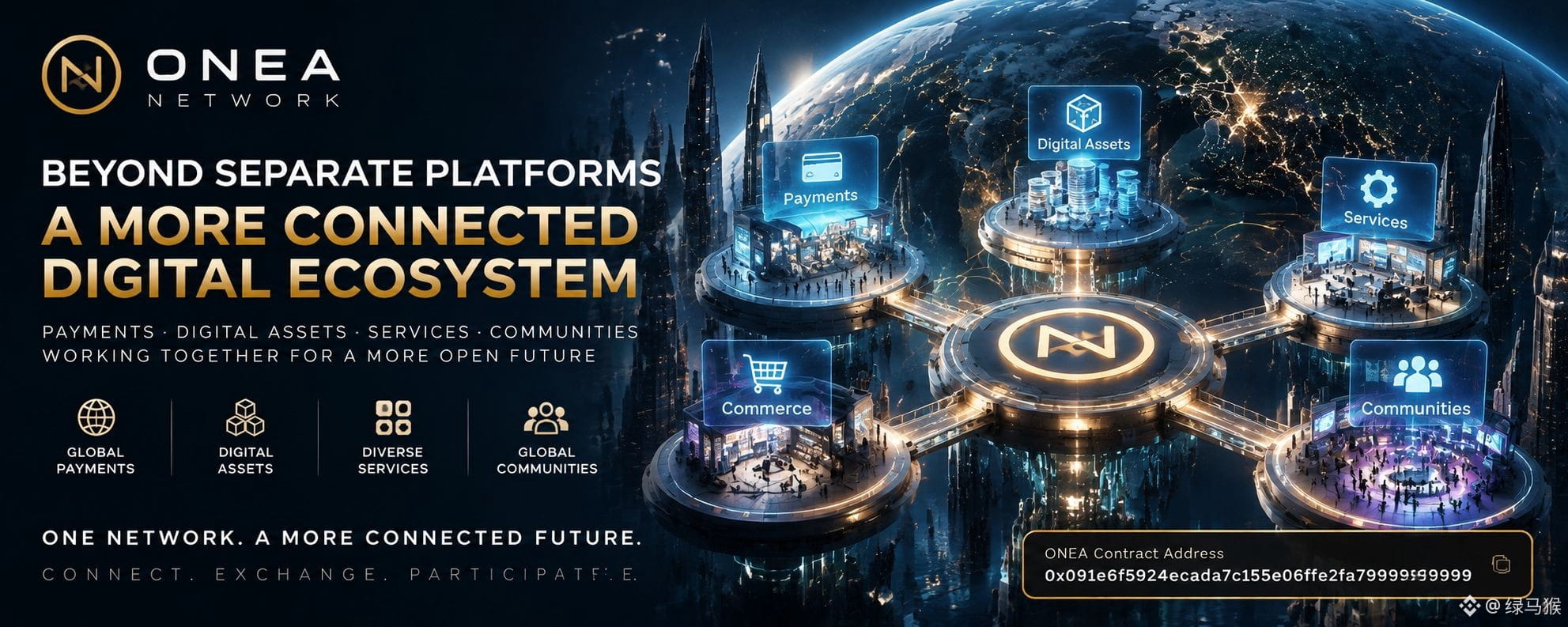
ONEA Network is exploring a more connected digital ecosystem—one where payments, digital assets, services, and communities can connect with less friction.
The goal isn’t simply to add another platform to an already crowded digital world.
It’s to explore how digital experiences can become more connected, convenient, and useful.
The next evolution of the internet may not depend on how many platforms we create.
It may depend on how well those platforms connect with one another.
🌐 Less fragmentation. More connection.
#ONEA #ONEANetwork #Web3 #Interoperability
🌐 The future doesn’t need more platforms—it needs better connections.
Think about it: how many digital platforms do we use every day?
One for payments.
One for shopping.
One for communication.
One for digital assets.
And several more for different services and communities.
Each platform solves a problem, but the overall experience can still feel complicated when we need to switch between them.
The next stage of digital technology may not be about creating more standalone apps. It may be about helping the digital services people already use work better together.
🔗 Why does interoperability matter so much?
A truly connected digital economy needs more than a collection of separate tools.
What matters more is enabling different services to work together seamlessly.
Users want simpler experiences.
Businesses want to reach more customers.
Creators want to serve global audiences.
Communities want to connect people across countries and regions.
When digital systems are isolated from one another, many potential opportunities for interaction may be limited as a result.
🌍 From fragmentation to connection
Imagine digital services that are easier to use, payments that fit more naturally into different settings, and digital assets that can play a part in a wider range of everyday activities.
Making this future possible will require reliable infrastructure, thoughtful design, security, and genuinely valuable use cases. It won’t happen overnight.
But it’s a direction worth continuing to explore.
🚀 The vision of ONEA NETWORK
ONEA Network is exploring a more connected digital ecosystem—one where payments, digital assets, services, and communities can connect with less friction.
The goal isn’t simply to add another platform to an already crowded digital world.
It’s to explore how digital experiences can become more connected, convenient, and useful.
The next evolution of the internet may not depend on how many platforms we create.
It may depend on how well those platforms connect with one another.
🌐 Less fragmentation. More connection.
#ONEA #ONEANetwork #Web3 #Interoperability
Think about it: how many digital platforms do we use every day?
One for payments.
One for shopping.
One for communication.
One for digital assets.
And several more for different services and communities.
Each platform solves a problem, but the overall experience can still feel complicated when we need to switch between them.
The next stage of digital technology may not be about creating more standalone apps. It may be about helping the digital services people already use work better together.
🔗 Why does interoperability matter so much?
A truly connected digital economy needs more than a collection of separate tools.
What matters more is enabling different services to work together seamlessly.
Users want simpler experiences.
Businesses want to reach more customers.
Creators want to serve global audiences.
Communities want to connect people across countries and regions.
When digital systems are isolated from one another, many potential opportunities for interaction may be limited as a result.
🌍 From fragmentation to connection
Imagine digital services that are easier to use, payments that fit more naturally into different settings, and digital assets that can play a part in a wider range of everyday activities.
Making this future possible will require reliable infrastructure, thoughtful design, security, and genuinely valuable use cases. It won’t happen overnight.
But it’s a direction worth continuing to explore.
🚀 The vision of ONEA NETWORK
ONEA Network is exploring a more connected digital ecosystem—one where payments, digital assets, services, and communities can connect with less friction.
The goal isn’t simply to add another platform to an already crowded digital world.
It’s to explore how digital experiences can become more connected, convenient, and useful.
The next evolution of the internet may not depend on how many platforms we create.
It may depend on how well those platforms connect with one another.
🌐 Less fragmentation. More connection.
#ONEA #ONEANetwork #Web3 #Interoperability
1
1
48
·
--
Cross-chain interoperability is becoming one of the most important and most underappreciated infrastructure bets in crypto right now.
For years, blockchains operated as isolated islands. Users had to bridge assets manually, accept custodial risk, and pay friction costs every time they moved value between ecosystems. That model is breaking down fast.
The Inter-Blockchain Communication (IBC) protocol has proven that trust-minimized cross-chain messaging is not just theoretical. Cosmos-based chains now pass billions in value across sovereign networks with no centralized bridge. Security travels with the data — it is not outsourced to a wrapped token contract sitting on a single custodian.
Ethereum is catching up. Cross-chain intent standards and omnichain messaging are laying groundwork for a world where the end-user states what they want, not which chain to use. The execution layer handles routing invisibly.
$DOT takes this further with its shared security model: parachains inherit economic security from the relay chain, so a new chain does not start from zero. $AVAX subnets offer full sovereignty with customizable validator sets and their own fee markets.
$BNB Chain connects BNB Smart Chain, opBNB, and Greenfield into a layered ecosystem — compute, storage, and settlement sharing one address space.
The networks that win long-term will not just be fast or cheap. They will be natively composable across every major ecosystem. Builders will deploy once and reach everywhere.
Interoperability is not a feature. It is the moat.
#Interoperability #CrossChain #IBC #DeFi #CryptoInfrastructure
Cross-chain interoperability is becoming one of the most important and most underappreciated infrastructure bets in crypto right now.
For years, blockchains operated as isolated islands. Users had to bridge assets manually, accept custodial risk, and pay friction costs every time they moved value between ecosystems. That model is breaking down fast.
The Inter-Blockchain Communication (IBC) protocol has proven that trust-minimized cross-chain messaging is not just theoretical. Cosmos-based chains now pass billions in value across sovereign networks with no centralized bridge. Security travels with the data — it is not outsourced to a wrapped token contract sitting on a single custodian.
Ethereum is catching up. Cross-chain intent standards and omnichain messaging are laying groundwork for a world where the end-user states what they want, not which chain to use. The execution layer handles routing invisibly.
$DOT takes this further with its shared security model: parachains inherit economic security from the relay chain, so a new chain does not start from zero. $AVAX subnets offer full sovereignty with customizable validator sets and their own fee markets.
$BNB Chain connects BNB Smart Chain, opBNB, and Greenfield into a layered ecosystem — compute, storage, and settlement sharing one address space.
The networks that win long-term will not just be fast or cheap. They will be natively composable across every major ecosystem. Builders will deploy once and reach everywhere.
Interoperability is not a feature. It is the moat.
#Interoperability #CrossChain #IBC #DeFi #CryptoInfrastructure
For years, blockchains operated as isolated islands. Users had to bridge assets manually, accept custodial risk, and pay friction costs every time they moved value between ecosystems. That model is breaking down fast.
The Inter-Blockchain Communication (IBC) protocol has proven that trust-minimized cross-chain messaging is not just theoretical. Cosmos-based chains now pass billions in value across sovereign networks with no centralized bridge. Security travels with the data — it is not outsourced to a wrapped token contract sitting on a single custodian.
Ethereum is catching up. Cross-chain intent standards and omnichain messaging are laying groundwork for a world where the end-user states what they want, not which chain to use. The execution layer handles routing invisibly.
$DOT takes this further with its shared security model: parachains inherit economic security from the relay chain, so a new chain does not start from zero. $AVAX subnets offer full sovereignty with customizable validator sets and their own fee markets.
$BNB Chain connects BNB Smart Chain, opBNB, and Greenfield into a layered ecosystem — compute, storage, and settlement sharing one address space.
The networks that win long-term will not just be fast or cheap. They will be natively composable across every major ecosystem. Builders will deploy once and reach everywhere.
Interoperability is not a feature. It is the moat.
#Interoperability #CrossChain #IBC #DeFi #CryptoInfrastructure
142


Article
🚨 A lot of people still don’t understand what $QNT is really addressing.They hear “interoperability” and stop there.
That’s too shallow.
$QNT is about helping connect and orchestrate a financial world made up of:
🏦 Banks
🌍 Governments
💳 Payment networks
🪙 Stablecoins
📜 Tokenized assets
🏛️ CBDCs
🔗 Public chains
🔒 Private ledgers
⚡ Legacy infrastructure
🌐 Cross-border rails
But the deeper question is this:
What happens when one part of the system GOES DARK? 👀
When a rail fails.
When a network disconnects.
When a jurisdiction gets isolated.
When infrastructure slows down.
When one system can’t communicate with another.
That’s where the $QNT thesis gets interesting.
Because this is bigger than moving value when everything works.
It’s about helping institutions operate across MULTIPLE systems with:
🔗 Interoperability
🌉 Multi-ledger connectivity
🏦 Banking infrastructure integration
💸 Programmable payments
🌍 Cross-border coordination
🧠 Enterprise APIs
🪪 Compliance + permissioning
🛡️ Identity, governance, and access controls
⚙️ Resilience / continuity across rails
In other words:
QNT is not just about connecting winners…
It’s about helping keep value moving when one rail, one network, or one part of the stack fails.
That’s the security side people miss.
Not just:
“Can it connect systems?”
But also:
“Can institutions maintain continuity, control, permissions, and coordinated movement across systems when conditions get messy?”
That is a MUCH deeper infrastructure problem.
And that’s why I keep saying:
$QNT is not just another crypto.
It’s a serious bet on orchestration, security, resilience, and continuity in a multi-network financial world.
Most people are reading the surface.
I’m looking deeper at the full stack. 🧠🔥
When others only see interoperability…
I see infrastructure built for complexity.
And when one part of the system goes dark?
Who helps keep value moving? 👀
$BTC #interoperability #Tokenization #CBDC #blockchain $ETH
🚨 A lot of people still don’t understand what $QNT is really addressing.
They hear “interoperability” and stop there.
That’s too shallow.
$QNT is about helping connect and orchestrate a financial world made up of:
🏦 Banks
🌍 Governments
💳 Payment networks
🪙 Stablecoins
📜 Tokenized assets
🏛️ CBDCs
🔗 Public chains
🔒 Private ledgers
⚡ Legacy infrastructure
🌐 Cross-border rails
But the deeper question is this:
What happens when one part of the system GOES DARK? 👀
When a rail fails.
When a network disconnects.
When a jurisdiction gets isolated.
When infrastructure slows down.
When one system can’t communicate with another.
That’s where the $QNT thesis gets interesting.
Because this is bigger than moving value when everything works.
It’s about helping institutions operate across MULTIPLE systems with:
🔗 Interoperability
🌉 Multi-ledger connectivity
🏦 Banking infrastructure integration
💸 Programmable payments
🌍 Cross-border coordination
🧠 Enterprise APIs
🪪 Compliance + permissioning
🛡️ Identity, governance, and access controls
⚙️ Resilience / continuity across rails
In other words:
QNT is not just about connecting winners…
It’s about helping keep value moving when one rail, one network, or one part of the stack fails.
That’s the security side people miss.
Not just:
“Can it connect systems?”
But also:
“Can institutions maintain continuity, control, permissions, and coordinated movement across systems when conditions get messy?”
That is a MUCH deeper infrastructure problem.
And that’s why I keep saying:
$QNT is not just another crypto.
It’s a serious bet on orchestration, security, resilience, and continuity in a multi-network financial world.
Most people are reading the surface.
I’m looking deeper at the full stack. 🧠🔥
When others only see interoperability…
I see infrastructure built for complexity.
And when one part of the system goes dark?
Who helps keep value moving? 👀
$BTC #interoperability #Tokenization #CBDC #blockchain $ETH
That’s too shallow.
$QNT is about helping connect and orchestrate a financial world made up of:
🏦 Banks
🌍 Governments
💳 Payment networks
🪙 Stablecoins
📜 Tokenized assets
🏛️ CBDCs
🔗 Public chains
🔒 Private ledgers
⚡ Legacy infrastructure
🌐 Cross-border rails
But the deeper question is this:
What happens when one part of the system GOES DARK? 👀
When a rail fails.
When a network disconnects.
When a jurisdiction gets isolated.
When infrastructure slows down.
When one system can’t communicate with another.
That’s where the $QNT thesis gets interesting.
Because this is bigger than moving value when everything works.
It’s about helping institutions operate across MULTIPLE systems with:
🔗 Interoperability
🌉 Multi-ledger connectivity
🏦 Banking infrastructure integration
💸 Programmable payments
🌍 Cross-border coordination
🧠 Enterprise APIs
🪪 Compliance + permissioning
🛡️ Identity, governance, and access controls
⚙️ Resilience / continuity across rails
In other words:
QNT is not just about connecting winners…
It’s about helping keep value moving when one rail, one network, or one part of the stack fails.
That’s the security side people miss.
Not just:
“Can it connect systems?”
But also:
“Can institutions maintain continuity, control, permissions, and coordinated movement across systems when conditions get messy?”
That is a MUCH deeper infrastructure problem.
And that’s why I keep saying:
$QNT is not just another crypto.
It’s a serious bet on orchestration, security, resilience, and continuity in a multi-network financial world.
Most people are reading the surface.
I’m looking deeper at the full stack. 🧠🔥
When others only see interoperability…
I see infrastructure built for complexity.
And when one part of the system goes dark?
Who helps keep value moving? 👀
$BTC #interoperability #Tokenization #CBDC #blockchain $ETH
1
162
·
--
Cross-chain interoperability has moved past the bridge narrative. What is actually being built now is liquidity unification and it changes everything about how capital moves in crypto.
The original bridge model was simple: lock assets on Chain A, mint a synthetic on Chain B. It worked, but it also created billions in exploitable TVL and fragmented liquidity into isolated siloes. One chain native protocol could not tap another chain liquidity without friction. A subnet could not compose with a Cosmos app-chain without multiple hops and multiple trust assumptions.
Intent-based architectures are solving this differently. Instead of routing assets through a bridge contract, solvers compete to fill a user desired outcome using their own inventory, then settle cross-chain asynchronously. The user gets atomic-feeling execution; bridge risk is absorbed by professional liquidity providers rather than naive users.
$DOT XCM and IBC within Cosmos go further: they treat cross-chain messaging as a first-class primitive baked into the consensus layer, not bolted on top. That matters for composability at scale.
The macro implication: when liquidity unifies, TVL metrics become less meaningful than liquidity depth per execution unit. Networks that win on solver incentive design and finality speed will capture disproportionate order flow, regardless of which chain originally holds the asset.
Interoperability is not a feature. It is the infrastructure layer crypto has been missing.
$ETH $SOL $DOT
#Interoperability #CrossChain #DeFi #CryptoInfrastructure #Web3
Cross-chain interoperability has moved past the bridge narrative. What is actually being built now is liquidity unification and it changes everything about how capital moves in crypto.
The original bridge model was simple: lock assets on Chain A, mint a synthetic on Chain B. It worked, but it also created billions in exploitable TVL and fragmented liquidity into isolated siloes. One chain native protocol could not tap another chain liquidity without friction. A subnet could not compose with a Cosmos app-chain without multiple hops and multiple trust assumptions.
Intent-based architectures are solving this differently. Instead of routing assets through a bridge contract, solvers compete to fill a user desired outcome using their own inventory, then settle cross-chain asynchronously. The user gets atomic-feeling execution; bridge risk is absorbed by professional liquidity providers rather than naive users.
$DOT XCM and IBC within Cosmos go further: they treat cross-chain messaging as a first-class primitive baked into the consensus layer, not bolted on top. That matters for composability at scale.
The macro implication: when liquidity unifies, TVL metrics become less meaningful than liquidity depth per execution unit. Networks that win on solver incentive design and finality speed will capture disproportionate order flow, regardless of which chain originally holds the asset.
Interoperability is not a feature. It is the infrastructure layer crypto has been missing.
$ETH $SOL $DOT
#Interoperability #CrossChain #DeFi #CryptoInfrastructure #Web3
The original bridge model was simple: lock assets on Chain A, mint a synthetic on Chain B. It worked, but it also created billions in exploitable TVL and fragmented liquidity into isolated siloes. One chain native protocol could not tap another chain liquidity without friction. A subnet could not compose with a Cosmos app-chain without multiple hops and multiple trust assumptions.
Intent-based architectures are solving this differently. Instead of routing assets through a bridge contract, solvers compete to fill a user desired outcome using their own inventory, then settle cross-chain asynchronously. The user gets atomic-feeling execution; bridge risk is absorbed by professional liquidity providers rather than naive users.
$DOT XCM and IBC within Cosmos go further: they treat cross-chain messaging as a first-class primitive baked into the consensus layer, not bolted on top. That matters for composability at scale.
The macro implication: when liquidity unifies, TVL metrics become less meaningful than liquidity depth per execution unit. Networks that win on solver incentive design and finality speed will capture disproportionate order flow, regardless of which chain originally holds the asset.
Interoperability is not a feature. It is the infrastructure layer crypto has been missing.
$ETH $SOL $DOT
#Interoperability #CrossChain #DeFi #CryptoInfrastructure #Web3
186

Stablecoins need more than cheap transactions. They need a way to move.
Wanchain connects #Plasma to 12+ chains, expanding the reach of the $XPL ecosystem beyond a single network.
Users are able to bridge in and access stablecoin utility across 180+ countries.
This is why #interoperability matters. The real value of blockchain infrastructure lies in connecting networks, assets and people. 🌍
Stablecoins need more than cheap transactions. They need a way to move.
Wanchain connects #Plasma to 12+ chains, expanding the reach of the $XPL ecosystem beyond a single network.
Users are able to bridge in and access stablecoin utility across 180+ countries.
This is why #interoperability matters. The real value of blockchain infrastructure lies in connecting networks, assets and people. 🌍
Wanchain connects #Plasma to 12+ chains, expanding the reach of the $XPL ecosystem beyond a single network.
Users are able to bridge in and access stablecoin utility across 180+ countries.
This is why #interoperability matters. The real value of blockchain infrastructure lies in connecting networks, assets and people. 🌍
387
·
--
Cross-Chain Interoperability: The Infrastructure Layer Nobody Talks About
Every bull run, the conversation centers on which L1 will "win." But the most durable infrastructure being built right now isn't competing with chains — it's connecting them.
Interoperability protocols are quietly becoming the connective tissue of crypto. IBC has processed hundreds of millions of transactions across 100+ Cosmos chains. Wormhole and LayerZero bridge billions in assets weekly, enabling a single user to move liquidity from $AVAX subnets to Ethereum rollups to BNB Chain in minutes — not days.
Here's the underappreciated dynamic: as the multi-chain world matures, value doesn't converge on one chain. It flows. The protocols that govern that flow capture a toll on every dollar in motion — silently accumulating revenue that rivals some of the chains themselves.
$DOT's architecture was designed around this thesis from day one. Parachains communicate natively. But the broader market is catching up — every major L1 now ships a bridge or cross-chain messaging layer as table stakes.
The macro signal? When cross-chain volume grows faster than any single chain's volume, it's a proxy signal that the ecosystem is maturing beyond tribalism. That's historically a late-cycle accumulation signal for infrastructure-layer assets.
Owning the rails matters more than picking the train.
#Interoperability #CrossChain #DeFi #Web3Infrastructure #CryptoAlpha
Cross-Chain Interoperability: The Infrastructure Layer Nobody Talks About
Every bull run, the conversation centers on which L1 will "win." But the most durable infrastructure being built right now isn't competing with chains — it's connecting them.
Interoperability protocols are quietly becoming the connective tissue of crypto. IBC has processed hundreds of millions of transactions across 100+ Cosmos chains. Wormhole and LayerZero bridge billions in assets weekly, enabling a single user to move liquidity from $AVAX subnets to Ethereum rollups to BNB Chain in minutes — not days.
Here's the underappreciated dynamic: as the multi-chain world matures, value doesn't converge on one chain. It flows. The protocols that govern that flow capture a toll on every dollar in motion — silently accumulating revenue that rivals some of the chains themselves.
$DOT 's architecture was designed around this thesis from day one. Parachains communicate natively. But the broader market is catching up — every major L1 now ships a bridge or cross-chain messaging layer as table stakes.
The macro signal? When cross-chain volume grows faster than any single chain's volume, it's a proxy signal that the ecosystem is maturing beyond tribalism. That's historically a late-cycle accumulation signal for infrastructure-layer assets.
Owning the rails matters more than picking the train.
#Interoperability #CrossChain #DeFi #Web3Infrastructure #CryptoAlpha
Every bull run, the conversation centers on which L1 will "win." But the most durable infrastructure being built right now isn't competing with chains — it's connecting them.
Interoperability protocols are quietly becoming the connective tissue of crypto. IBC has processed hundreds of millions of transactions across 100+ Cosmos chains. Wormhole and LayerZero bridge billions in assets weekly, enabling a single user to move liquidity from $AVAX subnets to Ethereum rollups to BNB Chain in minutes — not days.
Here's the underappreciated dynamic: as the multi-chain world matures, value doesn't converge on one chain. It flows. The protocols that govern that flow capture a toll on every dollar in motion — silently accumulating revenue that rivals some of the chains themselves.
$DOT 's architecture was designed around this thesis from day one. Parachains communicate natively. But the broader market is catching up — every major L1 now ships a bridge or cross-chain messaging layer as table stakes.
The macro signal? When cross-chain volume grows faster than any single chain's volume, it's a proxy signal that the ecosystem is maturing beyond tribalism. That's historically a late-cycle accumulation signal for infrastructure-layer assets.
Owning the rails matters more than picking the train.
#Interoperability #CrossChain #DeFi #Web3Infrastructure #CryptoAlpha
189

Connecting networks remains an important challenge for the crypto industry. Interoperability-related assets can be volatile, so pay attention to liquidity and market structure.
$QNT
Quant focuses on interoperability solutions for enterprise and blockchain systems. Watch for meaningful volume expansion and a confirmed break above resistance.
$ZRO
LayerZero provides cross-chain messaging infrastructure. Monitor ecosystem developments and price action for signs of renewed demand, while keeping token-supply factors in mind.
$AXL
Axelar supports cross-chain communication between blockchain networks. A sustained recovery with stronger volume could signal improving sentiment, but failed breakouts remain a risk.
#QNT #ZRO #AXL #Interoperability #CryptoTrading
Connecting networks remains an important challenge for the crypto industry. Interoperability-related assets can be volatile, so pay attention to liquidity and market structure.
$QNT
Quant focuses on interoperability solutions for enterprise and blockchain systems. Watch for meaningful volume expansion and a confirmed break above resistance.
$ZRO
LayerZero provides cross-chain messaging infrastructure. Monitor ecosystem developments and price action for signs of renewed demand, while keeping token-supply factors in mind.
$AXL
Axelar supports cross-chain communication between blockchain networks. A sustained recovery with stronger volume could signal improving sentiment, but failed breakouts remain a risk.
#QNT #ZRO #AXL #Interoperability #CryptoTrading
$QNT
Quant focuses on interoperability solutions for enterprise and blockchain systems. Watch for meaningful volume expansion and a confirmed break above resistance.
$ZRO
LayerZero provides cross-chain messaging infrastructure. Monitor ecosystem developments and price action for signs of renewed demand, while keeping token-supply factors in mind.
$AXL
Axelar supports cross-chain communication between blockchain networks. A sustained recovery with stronger volume could signal improving sentiment, but failed breakouts remain a risk.
#QNT #ZRO #AXL #Interoperability #CryptoTrading
21
·
--
Cross-Chain Interoperability Is the Internet Layer Crypto Has Been Missing
The early internet worked in silos too. AOL users couldn't email CompuServe users. The breakthrough wasn't a single winner — it was a shared protocol that let every network talk to every other. Crypto is at that inflection point now.
Today, billions in value sit locked in ecosystems that can't natively communicate. A Polkadot parachain can't directly settle with an Avalanche subnet. BNB Chain liquidity can't trustlessly flow to an Ethereum L2 without wrapping hacks and bridge risk. Users pay that cost in friction, slippage, and smart contract exposure every single day.
True interoperability — not wrapped tokens, not centralized bridges — is the infrastructure unlock that turns isolated chains into a unified financial fabric. Projects building canonical messaging layers, shared security zones, and trust-minimized cross-chain state are solving the most underappreciated infrastructure problem in crypto.
When native cross-chain composability matures, the total addressable liquidity for every protocol multiplies. DeFi applications stop optimizing for one chain and start drawing from every chain. That changes the competitive dynamics entirely — the winners won't just be the best chain, they'll be the most connected one.
Interoperability isn't a feature. It's the foundation.
$DOT $AVAX $ETH
#Interoperability #CrossChain #DeFi #CryptoInfrastructure #Web3
Cross-Chain Interoperability Is the Internet Layer Crypto Has Been Missing
The early internet worked in silos too. AOL users couldn't email CompuServe users. The breakthrough wasn't a single winner — it was a shared protocol that let every network talk to every other. Crypto is at that inflection point now.
Today, billions in value sit locked in ecosystems that can't natively communicate. A Polkadot parachain can't directly settle with an Avalanche subnet. BNB Chain liquidity can't trustlessly flow to an Ethereum L2 without wrapping hacks and bridge risk. Users pay that cost in friction, slippage, and smart contract exposure every single day.
True interoperability — not wrapped tokens, not centralized bridges — is the infrastructure unlock that turns isolated chains into a unified financial fabric. Projects building canonical messaging layers, shared security zones, and trust-minimized cross-chain state are solving the most underappreciated infrastructure problem in crypto.
When native cross-chain composability matures, the total addressable liquidity for every protocol multiplies. DeFi applications stop optimizing for one chain and start drawing from every chain. That changes the competitive dynamics entirely — the winners won't just be the best chain, they'll be the most connected one.
Interoperability isn't a feature. It's the foundation.
$DOT $AVAX $ETH
#Interoperability #CrossChain #DeFi #CryptoInfrastructure #Web3
The early internet worked in silos too. AOL users couldn't email CompuServe users. The breakthrough wasn't a single winner — it was a shared protocol that let every network talk to every other. Crypto is at that inflection point now.
Today, billions in value sit locked in ecosystems that can't natively communicate. A Polkadot parachain can't directly settle with an Avalanche subnet. BNB Chain liquidity can't trustlessly flow to an Ethereum L2 without wrapping hacks and bridge risk. Users pay that cost in friction, slippage, and smart contract exposure every single day.
True interoperability — not wrapped tokens, not centralized bridges — is the infrastructure unlock that turns isolated chains into a unified financial fabric. Projects building canonical messaging layers, shared security zones, and trust-minimized cross-chain state are solving the most underappreciated infrastructure problem in crypto.
When native cross-chain composability matures, the total addressable liquidity for every protocol multiplies. DeFi applications stop optimizing for one chain and start drawing from every chain. That changes the competitive dynamics entirely — the winners won't just be the best chain, they'll be the most connected one.
Interoperability isn't a feature. It's the foundation.
$DOT $AVAX $ETH
#Interoperability #CrossChain #DeFi #CryptoInfrastructure #Web3
164
·
--
Cross-chain interoperability is the infrastructure layer crypto still hasn't fully solved — and it may be the most important bottleneck of this cycle.
Right now, most capital and users are siloed. A $DOT holder on the relay chain, a $BNB holder bridging to DeFi, and an $ETH user navigating a fragmented L2 ecosystem — they're all working with incompatible trust models and disconnected liquidity pools. That friction isn't just inconvenient. It actively suppresses the total addressable market for every protocol and every payment rail.
The chains that solve this cleanly will absorb the most value long-term. Polkadot's XCM messaging protocol is the most sophisticated attempt at trustless cross-chain communication at a relay-chain level. BNB Chain's multi-layer architecture and opBNB are quietly becoming a high-throughput settlement hub. And Ethereum's rollup-centric roadmap is betting on shared sequencing as the interoperability glue.
The key metric to watch isn't bridge TVL — it's bridge security. Most of the largest hacks in crypto history targeted cross-chain bridges. The protocols that solve interoperability without reintroducing custodial risk will earn a durable structural premium.
Interoperability isn't a feature. It's the endgame.
$DOT $BNB $ETH
#Interoperability #CrossChain #DeFi #Web3Infrastructure #CryptoInsights
Cross-chain interoperability is the infrastructure layer crypto still hasn't fully solved — and it may be the most important bottleneck of this cycle.
Right now, most capital and users are siloed. A $DOT holder on the relay chain, a $BNB holder bridging to DeFi, and an $ETH user navigating a fragmented L2 ecosystem — they're all working with incompatible trust models and disconnected liquidity pools. That friction isn't just inconvenient. It actively suppresses the total addressable market for every protocol and every payment rail.
The chains that solve this cleanly will absorb the most value long-term. Polkadot's XCM messaging protocol is the most sophisticated attempt at trustless cross-chain communication at a relay-chain level. BNB Chain's multi-layer architecture and opBNB are quietly becoming a high-throughput settlement hub. And Ethereum's rollup-centric roadmap is betting on shared sequencing as the interoperability glue.
The key metric to watch isn't bridge TVL — it's bridge security. Most of the largest hacks in crypto history targeted cross-chain bridges. The protocols that solve interoperability without reintroducing custodial risk will earn a durable structural premium.
Interoperability isn't a feature. It's the endgame.
$DOT $BNB $ETH
#Interoperability #CrossChain #DeFi #Web3Infrastructure #CryptoInsights
Right now, most capital and users are siloed. A $DOT holder on the relay chain, a $BNB holder bridging to DeFi, and an $ETH user navigating a fragmented L2 ecosystem — they're all working with incompatible trust models and disconnected liquidity pools. That friction isn't just inconvenient. It actively suppresses the total addressable market for every protocol and every payment rail.
The chains that solve this cleanly will absorb the most value long-term. Polkadot's XCM messaging protocol is the most sophisticated attempt at trustless cross-chain communication at a relay-chain level. BNB Chain's multi-layer architecture and opBNB are quietly becoming a high-throughput settlement hub. And Ethereum's rollup-centric roadmap is betting on shared sequencing as the interoperability glue.
The key metric to watch isn't bridge TVL — it's bridge security. Most of the largest hacks in crypto history targeted cross-chain bridges. The protocols that solve interoperability without reintroducing custodial risk will earn a durable structural premium.
Interoperability isn't a feature. It's the endgame.
$DOT $BNB $ETH
#Interoperability #CrossChain #DeFi #Web3Infrastructure #CryptoInsights
71

·
--
$GLMR 🌙 Moonbeam is building a connected, interoperable future for Web3.
With Ethereum-compatible smart contracts and cross-chain capabilities, Moonbeam makes it easier for developers to bring dApps and assets into a multichain ecosystem.
🔗 Interoperability
⚡ EVM compatibility
🌐 Multichain development
🛠️ Developer-focused infrastructure
The future of Web3 is multichain — Moonbeam is helping make it possible.
#Moonbeam #GLMR #Web3 #Blockchain #Ethereum #DeFi #interoperability
$GLMR 🌙 Moonbeam is building a connected, interoperable future for Web3.
With Ethereum-compatible smart contracts and cross-chain capabilities, Moonbeam makes it easier for developers to bring dApps and assets into a multichain ecosystem.
🔗 Interoperability
⚡ EVM compatibility
🌐 Multichain development
🛠️ Developer-focused infrastructure
The future of Web3 is multichain — Moonbeam is helping make it possible.
#Moonbeam #GLMR #Web3 #Blockchain #Ethereum #DeFi #interoperability
With Ethereum-compatible smart contracts and cross-chain capabilities, Moonbeam makes it easier for developers to bring dApps and assets into a multichain ecosystem.
🔗 Interoperability
⚡ EVM compatibility
🌐 Multichain development
🛠️ Developer-focused infrastructure
The future of Web3 is multichain — Moonbeam is helping make it possible.
#Moonbeam #GLMR #Web3 #Blockchain #Ethereum #DeFi #interoperability
164
·
--
Cross-chain interoperability is becoming the TCP/IP layer of crypto — and most people are still underestimating it.
Three years ago, bridges were an afterthought. Then a string of nine-figure exploits forced the entire ecosystem to rethink how assets and messages move between chains. That reckoning quietly produced the most important infrastructure upgrade in crypto: secure, battle-hardened messaging protocols.
Here is what has changed:
→ Canonical bridges (backed by L1 validators) now anchor trust for high-value transfers, reducing reliance on third-party multi-sigs.
→ General message passing enables cross-chain smart contract calls, unlocking unified liquidity across ETH L2s, Solana, Avalanche, and Polkadot ecosystems.
→ Light client verification and optimistic fraud proofs are pushing bridge security closer to the underlying chain's own security model.
→ Interoperability is compressing the user experience gap. A DeFi position on one chain can now be collateralized, hedged, or exited from a completely different chain without manual bridging steps.
The fragmented multi-chain world is not the end state — it is the construction zone. Capital naturally pools where it can move freely and safely.
Protocols that control the messaging layer between chains may end up capturing outsized value over the next cycle.
$BNB $ETH $AVAX
#Interoperability #CrossChain #DeFi #CryptoInfrastructure #Web3
Cross-chain interoperability is becoming the TCP/IP layer of crypto — and most people are still underestimating it.
Three years ago, bridges were an afterthought. Then a string of nine-figure exploits forced the entire ecosystem to rethink how assets and messages move between chains. That reckoning quietly produced the most important infrastructure upgrade in crypto: secure, battle-hardened messaging protocols.
Here is what has changed:
→ Canonical bridges (backed by L1 validators) now anchor trust for high-value transfers, reducing reliance on third-party multi-sigs.
→ General message passing enables cross-chain smart contract calls, unlocking unified liquidity across ETH L2s, Solana, Avalanche, and Polkadot ecosystems.
→ Light client verification and optimistic fraud proofs are pushing bridge security closer to the underlying chain's own security model.
→ Interoperability is compressing the user experience gap. A DeFi position on one chain can now be collateralized, hedged, or exited from a completely different chain without manual bridging steps.
The fragmented multi-chain world is not the end state — it is the construction zone. Capital naturally pools where it can move freely and safely.
Protocols that control the messaging layer between chains may end up capturing outsized value over the next cycle.
$BNB $ETH $AVAX
#Interoperability #CrossChain #DeFi #CryptoInfrastructure #Web3
Three years ago, bridges were an afterthought. Then a string of nine-figure exploits forced the entire ecosystem to rethink how assets and messages move between chains. That reckoning quietly produced the most important infrastructure upgrade in crypto: secure, battle-hardened messaging protocols.
Here is what has changed:
→ Canonical bridges (backed by L1 validators) now anchor trust for high-value transfers, reducing reliance on third-party multi-sigs.
→ General message passing enables cross-chain smart contract calls, unlocking unified liquidity across ETH L2s, Solana, Avalanche, and Polkadot ecosystems.
→ Light client verification and optimistic fraud proofs are pushing bridge security closer to the underlying chain's own security model.
→ Interoperability is compressing the user experience gap. A DeFi position on one chain can now be collateralized, hedged, or exited from a completely different chain without manual bridging steps.
The fragmented multi-chain world is not the end state — it is the construction zone. Capital naturally pools where it can move freely and safely.
Protocols that control the messaging layer between chains may end up capturing outsized value over the next cycle.
$BNB $ETH $AVAX
#Interoperability #CrossChain #DeFi #CryptoInfrastructure #Web3
96
·
--
Cross-Chain Interoperability Is the Infrastructure Layer Nobody Prices In
Crypto is no longer a single-chain world. $ETH anchors DeFi and smart contracts. $SOL dominates high-frequency use cases. $AVAX powers institutional subnets. The question isn't which chain wins — it's who builds the rails that connect them all.
Interoperability protocols — IBC, LayerZero, Wormhole, CCIP — are quietly becoming the TCP/IP of crypto. Without cross-chain messaging, every ecosystem is an island. Assets stay siloed. Liquidity fragments. Developer gravity gets diluted across disconnected environments.
Here's the underappreciated dynamic: value doesn't just flow to the best chain — it flows to the best-connected chain. The network effects of bridges and messaging protocols compound over time. Once a chain is deeply integrated into cross-chain liquidity flows, dislodging it requires massive coordination costs.
The maturation signal to watch: when cross-chain volume becomes boring infrastructure — like DNS routing traffic without fanfare — that's when blockchain has crossed into systemic adoption.
Risk? Bridge exploits remain the single largest DeFi attack vector. Security of cross-chain messaging is unsolved. Smart money is watching audit quality, validator set size, and proof system design before capital commits at scale.
The chains that invest in interoperability-first architecture today are quietly positioning for the multi-chain endgame. Connectivity compounds.
#Crypto #Interoperability #CrossChain #DeFi #Blockchain
Cross-Chain Interoperability Is the Infrastructure Layer Nobody Prices In
Crypto is no longer a single-chain world. $ETH anchors DeFi and smart contracts. $SOL dominates high-frequency use cases. $AVAX powers institutional subnets. The question isn't which chain wins — it's who builds the rails that connect them all.
Interoperability protocols — IBC, LayerZero, Wormhole, CCIP — are quietly becoming the TCP/IP of crypto. Without cross-chain messaging, every ecosystem is an island. Assets stay siloed. Liquidity fragments. Developer gravity gets diluted across disconnected environments.
Here's the underappreciated dynamic: value doesn't just flow to the best chain — it flows to the best-connected chain. The network effects of bridges and messaging protocols compound over time. Once a chain is deeply integrated into cross-chain liquidity flows, dislodging it requires massive coordination costs.
The maturation signal to watch: when cross-chain volume becomes boring infrastructure — like DNS routing traffic without fanfare — that's when blockchain has crossed into systemic adoption.
Risk? Bridge exploits remain the single largest DeFi attack vector. Security of cross-chain messaging is unsolved. Smart money is watching audit quality, validator set size, and proof system design before capital commits at scale.
The chains that invest in interoperability-first architecture today are quietly positioning for the multi-chain endgame. Connectivity compounds.
#Crypto #Interoperability #CrossChain #DeFi #Blockchain
Crypto is no longer a single-chain world. $ETH anchors DeFi and smart contracts. $SOL dominates high-frequency use cases. $AVAX powers institutional subnets. The question isn't which chain wins — it's who builds the rails that connect them all.
Interoperability protocols — IBC, LayerZero, Wormhole, CCIP — are quietly becoming the TCP/IP of crypto. Without cross-chain messaging, every ecosystem is an island. Assets stay siloed. Liquidity fragments. Developer gravity gets diluted across disconnected environments.
Here's the underappreciated dynamic: value doesn't just flow to the best chain — it flows to the best-connected chain. The network effects of bridges and messaging protocols compound over time. Once a chain is deeply integrated into cross-chain liquidity flows, dislodging it requires massive coordination costs.
The maturation signal to watch: when cross-chain volume becomes boring infrastructure — like DNS routing traffic without fanfare — that's when blockchain has crossed into systemic adoption.
Risk? Bridge exploits remain the single largest DeFi attack vector. Security of cross-chain messaging is unsolved. Smart money is watching audit quality, validator set size, and proof system design before capital commits at scale.
The chains that invest in interoperability-first architecture today are quietly positioning for the multi-chain endgame. Connectivity compounds.
#Crypto #Interoperability #CrossChain #DeFi #Blockchain
80


Article
Bilkul 👍 My best title for the Binance article:
🔥 QNT: Is Quant Ready for Its Next Big Move? 🚀🚀 Quant (QNT): Interoperability Could Be the Next Big Narrative
Quant (QNT) is one of the crypto projects focused on solving a major challenge in blockchain: interoperability — allowing different blockchain networks and traditional financial systems to communicate with each other.
🔗 Why Quant is interesting?
Quant’s technology aims to connect multiple networks through its Overledger platform, potentially making it easier for institutions and businesses to work across different blockchain ecosystems.
Bilkul 👍 My best title for the Binance article: 🔥 QNT: Is Quant Ready for Its Next Big Move? 🚀
🚀 Quant (QNT): Interoperability Could Be the Next Big Narrative
Quant (QNT) is one of the crypto projects focused on solving a major challenge in blockchain: interoperability — allowing different blockchain networks and traditional financial systems to communicate with each other.
🔗 Why Quant is interesting?
Quant’s technology aims to connect multiple networks through its Overledger platform, potentially making it easier for institutions and businesses to work across different blockchain ecosystems.
Quant (QNT) is one of the crypto projects focused on solving a major challenge in blockchain: interoperability — allowing different blockchain networks and traditional financial systems to communicate with each other.
🔗 Why Quant is interesting?
Quant’s technology aims to connect multiple networks through its Overledger platform, potentially making it easier for institutions and businesses to work across different blockchain ecosystems.
69

·
--
ZRO is up about 15.4% today—but understanding the move starts with knowing what LayerZero actually does.
LayerZero is not one giant bridge holding everyone’s assets. It is cross-chain messaging infrastructure. An application sends a message through an immutable Endpoint; the app’s chosen Decentralized Verifier Networks verify it; then an Executor delivers the verified call to the destination application. This lets developers choose their own security configuration instead of relying on one fixed validator set.
Where $ZRO fits: the protocol supports paying messaging fees in ZRO, and holders participate in governance such as the protocol fee-switch referenda. The token is connected to the network’s economics, but a 24-hour rally alone does not prove usage growth.
The useful metric to watch next is adoption: applications, message activity and the security configurations teams choose—not price in isolation.
Market snapshot: ZRO/USDT $2.006 at 10:59 Beirut, 4 Oct 2026. Sources: Binance spot; LayerZero V2 docs.
#ZRO #Interoperability
ZRO is up about 15.4% today—but understanding the move starts with knowing what LayerZero actually does.
LayerZero is not one giant bridge holding everyone’s assets. It is cross-chain messaging infrastructure. An application sends a message through an immutable Endpoint; the app’s chosen Decentralized Verifier Networks verify it; then an Executor delivers the verified call to the destination application. This lets developers choose their own security configuration instead of relying on one fixed validator set.
Where $ZRO fits: the protocol supports paying messaging fees in ZRO, and holders participate in governance such as the protocol fee-switch referenda. The token is connected to the network’s economics, but a 24-hour rally alone does not prove usage growth.
The useful metric to watch next is adoption: applications, message activity and the security configurations teams choose—not price in isolation.
Market snapshot: ZRO/USDT $2.006 at 10:59 Beirut, 4 Oct 2026. Sources: Binance spot; LayerZero V2 docs.
#ZRO #Interoperability
LayerZero is not one giant bridge holding everyone’s assets. It is cross-chain messaging infrastructure. An application sends a message through an immutable Endpoint; the app’s chosen Decentralized Verifier Networks verify it; then an Executor delivers the verified call to the destination application. This lets developers choose their own security configuration instead of relying on one fixed validator set.
Where $ZRO fits: the protocol supports paying messaging fees in ZRO, and holders participate in governance such as the protocol fee-switch referenda. The token is connected to the network’s economics, but a 24-hour rally alone does not prove usage growth.
The useful metric to watch next is adoption: applications, message activity and the security configurations teams choose—not price in isolation.
Market snapshot: ZRO/USDT $2.006 at 10:59 Beirut, 4 Oct 2026. Sources: Binance spot; LayerZero V2 docs.
#ZRO #Interoperability
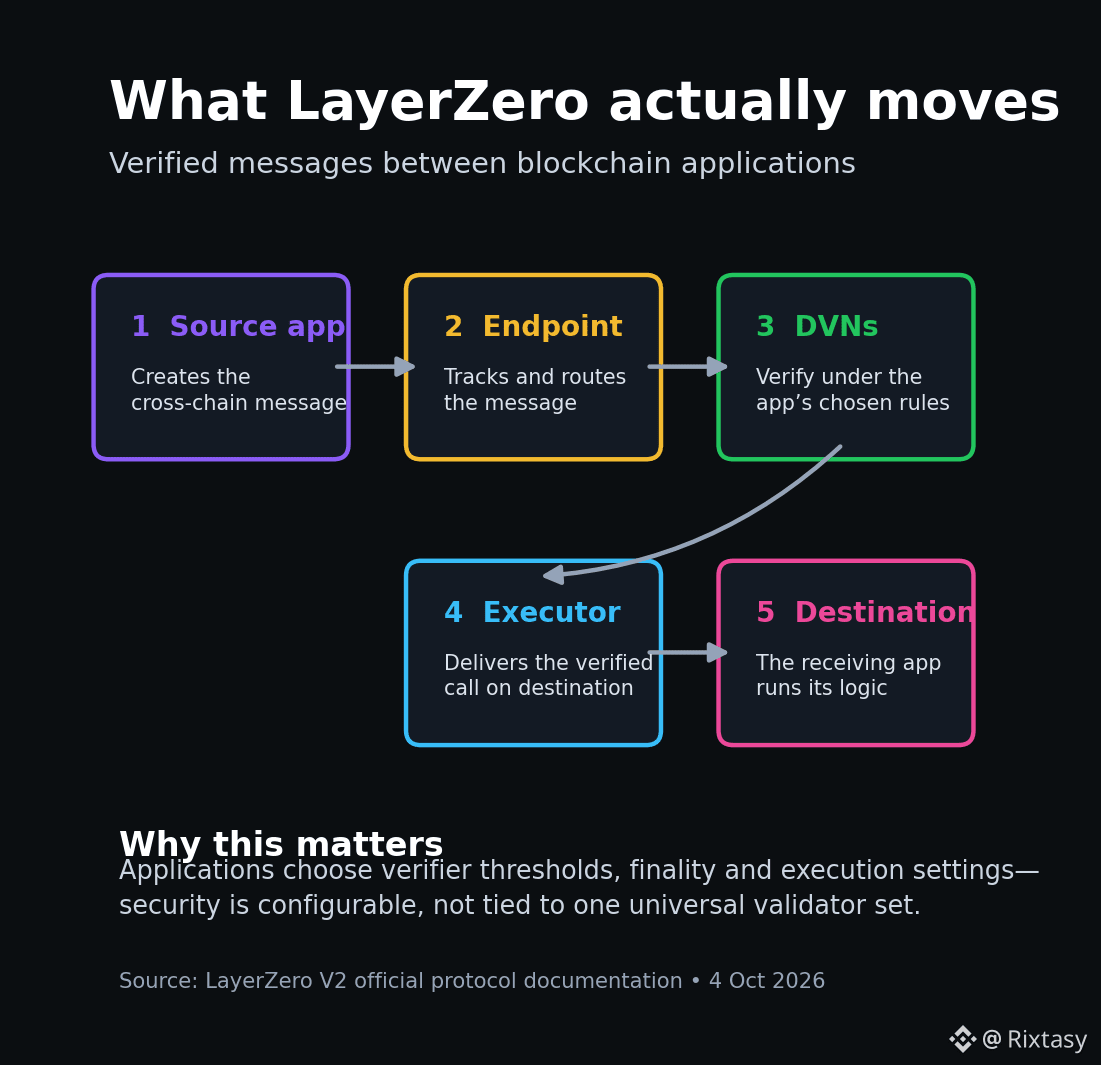
196
Log in to explore more content
Join global crypto users on Binance Square
⚡️ Get latest and useful information about crypto.
💬 Trusted by the world’s largest crypto exchange.
👍 Discover real insights from verified creators.
Email / Phone number
Trending Topics
1
#CanMicrosoftDeliverOnAI
107,375 views
824 Discussing
2
#CanGoogleDefindItsCore
50,770 views
592 Discussing
3
#FOMCWatch
9.1M views
28,061 Discussing
4
#EthereumDropsBelow$2300
11,649 views
161 Discussing
5
#BitcoinSlipsBelow$80KAgain
32,648 views
128 Discussing
6
#ThailandLaunchesWORPTStablecoinToQRPaymentApp
68,287 views
833 Discussing
7
#StrategySkipsBitcoinPurchasesSpends$205MOnSTRCBuybacks
12,733 views
99 Discussing
8
#BitmineAdds10452ETH
116,550 views
1,244 Discussing
9
#SouthKoreaConsidersEducationTaxOnCryptoExchanges
72,807 views
866 Discussing
10
#OCCUrgesCommunityBanksToEnterStablecoinPayments
47,046 views
616 Discussing