

#fxusd
fxusd
169 views
3 Discussing
Hot
Latest

·
--
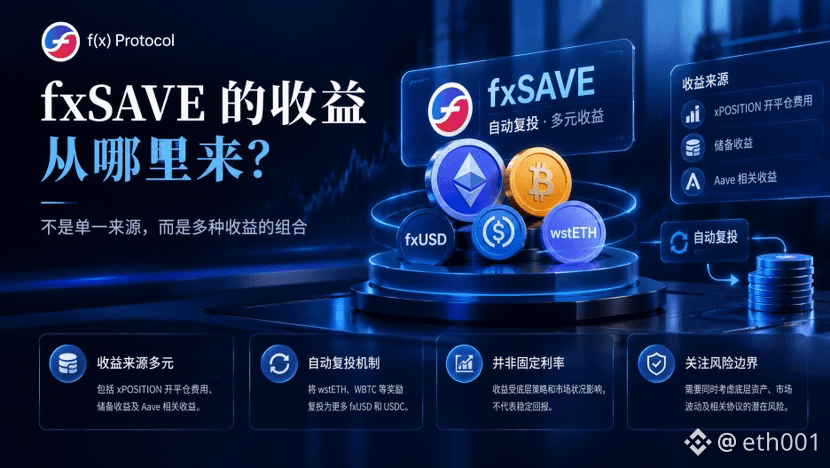
fxUSD, xPOSITION, and sPOSITION are not three unrelated products, but different components of the same collateral system.
The f(x) official documentation explains that with sPOSITION added, the core invariant must take into account the collateral, collateral assets borrowed by shorts, the amount of fxUSD minted and locked, and the net value of xPOSITION and sPOSITION.
Therefore, looking only at the peg of $fxUSD or the leverage of a particular position is not enough to understand the system as a whole.
When evaluating the mechanism, first verify the overall value relationships, then examine the performance of individual products. Local stability does not mean you can skip checking the overall structure.#fxUSD #DeFi
1
68


·
--
Bullish
Ladies, today the market is once again in chaos—within 24 hours, liquidations have broken 100 million USD. $BTC $ETH The volatility is huge, and stablecoin exchange demand is picking up.
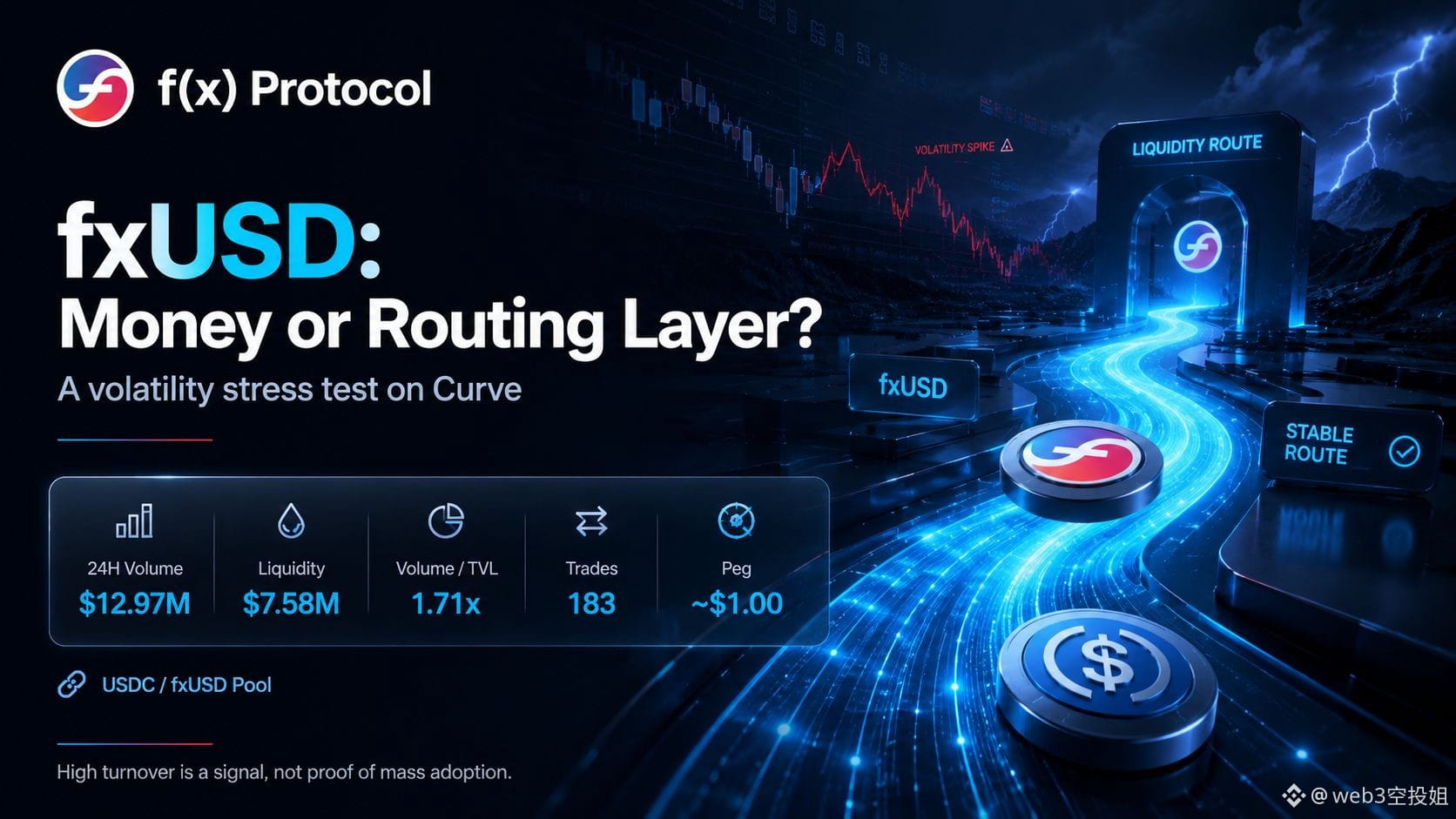
I saw the Curve pool for fxUSD @protocol_fx doing $12.97 million in trading volume over the past 24 hours. At first glance, it looks like it’s starting to gain momentum. Although it’s only 183 trades, the potential is significant.
For those $12.97 million against $7.58 million in TVL, it basically turned over almost twice in a day. That suggests that when volatility spikes, capital really is using it for swaps and arbitrage.
However, the average per trade is close to $70,000. That definitely doesn’t look like small retail transactions—it looks more like aggregators, market makers, and arbitrage bots running.
Arbitrage isn’t fake. The spreads show up, and they help correct the price. And the fact that aggregators can route through it also indicates the pool has real competitiveness.
But arbitrage volume doesn’t necessarily mean users truly stick around.
Whether stablecoins can be genuinely adopted depends mainly on whether, during volatile periods, capital is willing to go through them—whether the price can hold—and how much trading volume and liquidity are left once things calm down.
#fxUSD This round of volatility has already passed the first two stages of testing; the third stage is the key. We need to see whether high trading volume can turn into sustained fees. With incentives reduced, we also have to see whether liquidity providers are still willing to stay.
Minting is just the starting point. The real “money-like” attribute depends on whether, in the messiest moments, capital is willing to go through it—and whether, after things get quiet, it’s still used. When you decide whether a stablecoin is truly being adopted, what matters most: supply and trading volume, or the usage demand that still exists even after the行情 ends?
1
363
Log in to explore more content
Join global crypto users on Binance Square
⚡️ Get latest and useful information about crypto.
💬 Trusted by the world’s largest crypto exchange.
👍 Discover real insights from verified creators.
Email / Phone number
Trending Topics
1
#BinancePick
3M views
152,414 Discussing
2
#EarningsSeason
5.3M views
25,920 Discussing
3
#AnthropicTTMRevenueGrewAbout1200%
25,481 views
380 Discussing
4
#AnthropicS1ExpectedToday
23,997 views
319 Discussing
5
#SouthKoreaReportedlyWeighsFourthCryptoTaxDelay
28,653 views
443 Discussing
6
#FranklinTempletonFilesForTwoDividendToBitcoinETFs
37,732 views
522 Discussing
7
#StrategyMSTRSurpassesNasdaqInMarketCap
28,370 views
378 Discussing
8
#CanadaProposesStablecoinRedemptionWithin3BusinessDays
1,266 views
36 Discussing
9
#ElectrumWalletBugLetRogueServersStealFunds
29,769 views
456 Discussing
10
#ArgentineCourtDismissesLIBRACaseAgainstMilei
44,714 views
562 Discussing