

#cryptomarket
cryptomarket
29.3M views
121,872 Discussing
Hot
Latest

Crypto Market Update — 26 Oct 2026
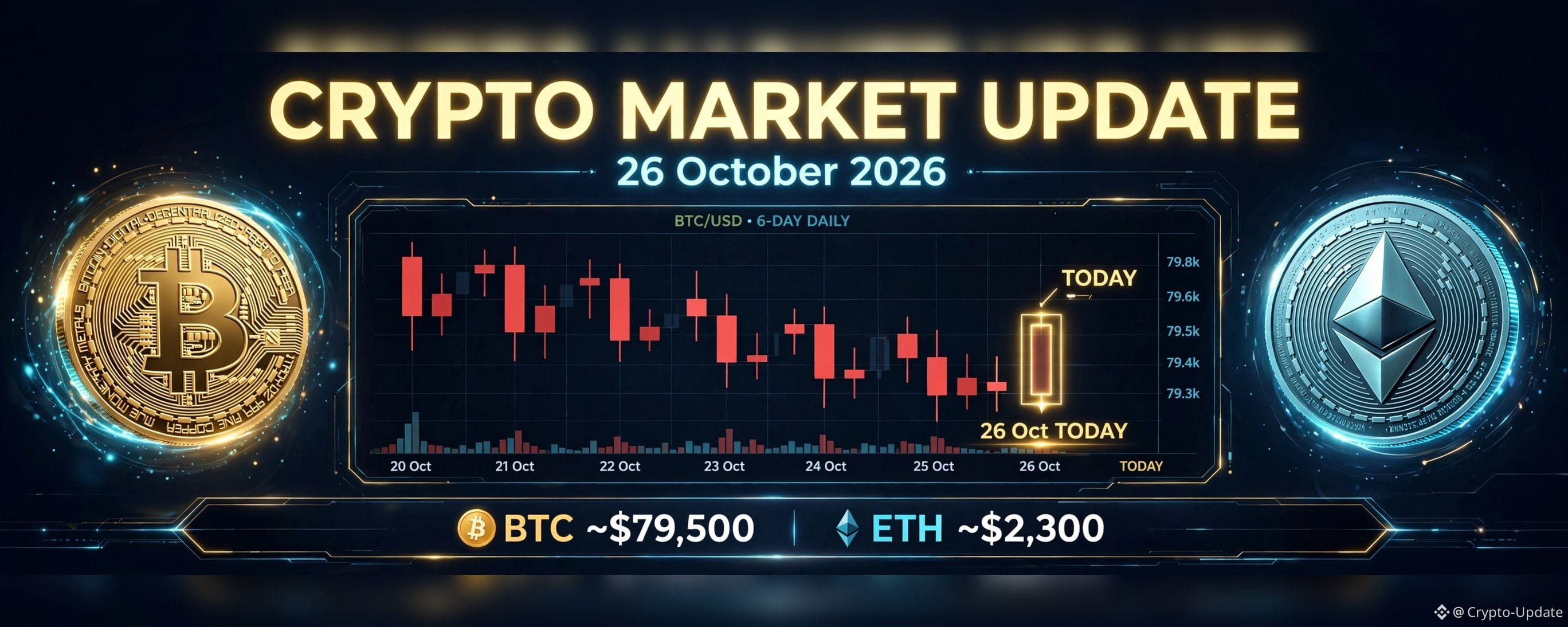
Bitcoin slips under $80K as the market holds its breath before the Fed.
📊 Snapshot
BTC ~$79,500 (-~1.5% in 24h)
ETH ~$2,300 (-~2% in 24h)
📰 What's moving markets
• Fed week: FOMC decision lands Wed 28 Oct. Polymarket puts a hold at 94% (up from 52% on 14 Oct), and a Reuters survey finds 94% of economists expect no change, with rates at 3.75–4.00%.
• ETF flows cooled: spot BTC + ETH ETFs saw ~$549M in net outflows last week — BTC ~$229M, ETH ~$320M — with ETH's October outflows near $955M.
• Caution rules: traders are waiting on the Fed before making big moves, keeping BTC pinned near $80K.
👀 What to watch
Fed decision Wed 28 Oct, then September PCE inflation data Thu 29 Oct — both can swing risk appetite fast.
Are you buying the dip, holding, or sitting this week out? 👇
#Bitcoin #CryptoNews #BTC #Ethereum #ETF #CryptoMarket #Binance #FOMC
Crypto Market Update — 26 Oct 2026
Bitcoin slips under $80K as the market holds its breath before the Fed.
📊 Snapshot
BTC ~$79,500 (-~1.5% in 24h)
ETH ~$2,300 (-~2% in 24h)
📰 What's moving markets
• Fed week: FOMC decision lands Wed 28 Oct. Polymarket puts a hold at 94% (up from 52% on 14 Oct), and a Reuters survey finds 94% of economists expect no change, with rates at 3.75–4.00%.
• ETF flows cooled: spot BTC + ETH ETFs saw ~$549M in net outflows last week — BTC ~$229M, ETH ~$320M — with ETH's October outflows near $955M.
• Caution rules: traders are waiting on the Fed before making big moves, keeping BTC pinned near $80K.
👀 What to watch
Fed decision Wed 28 Oct, then September PCE inflation data Thu 29 Oct — both can swing risk appetite fast.
Are you buying the dip, holding, or sitting this week out? 👇
#Bitcoin #CryptoNews #BTC #Ethereum #ETF #CryptoMarket #Binance #FOMC
Bitcoin slips under $80K as the market holds its breath before the Fed.
📊 Snapshot
BTC ~$79,500 (-~1.5% in 24h)
ETH ~$2,300 (-~2% in 24h)
📰 What's moving markets
• Fed week: FOMC decision lands Wed 28 Oct. Polymarket puts a hold at 94% (up from 52% on 14 Oct), and a Reuters survey finds 94% of economists expect no change, with rates at 3.75–4.00%.
• ETF flows cooled: spot BTC + ETH ETFs saw ~$549M in net outflows last week — BTC ~$229M, ETH ~$320M — with ETH's October outflows near $955M.
• Caution rules: traders are waiting on the Fed before making big moves, keeping BTC pinned near $80K.
👀 What to watch
Fed decision Wed 28 Oct, then September PCE inflation data Thu 29 Oct — both can swing risk appetite fast.
Are you buying the dip, holding, or sitting this week out? 👇
#Bitcoin #CryptoNews #BTC #Ethereum #ETF #CryptoMarket #Binance #FOMC
88

·
--
📉 Crypto Market Update: Bears Have a Slight Edge
The crypto market is showing mild downside pressure, with major assets trading in the red over the last 24 hours.
📊 Market Snapshot:
🔹 BTC: $80,170.07 | -0.30%
🔹 ETH: $2,322.29 | -0.62%
🔹 BNB: $736.96 | -0.66%
🔹 SOL: $100.91 | -0.24%
🔍 What does the data tell us?
• Bitcoin is showing relative strength, recording the smallest decline among these four assets.
• Ethereum and BNB are under slightly greater selling pressure, with BNB posting the largest decline.
• Solana is showing relative resilience, with the smallest percentage drop at -0.24%.
🧠 My takeaway:
This looks like a mild market pullback rather than clear evidence of a major trend reversal. However, one 24-hour snapshot isn't enough to confirm the next move.
The key things to watch next are BTC's price stability, trading volume, and whether ETH, BNB, and SOL can recover their short-term losses.
The next move matters more than the current red candles. 👀
Are we seeing a healthy correction or the beginning of a deeper pullback?
#bitcoin #Ethereum #BNB #solana #CryptoMarket
📉 Crypto Market Update: Bears Have a Slight Edge
The crypto market is showing mild downside pressure, with major assets trading in the red over the last 24 hours.
📊 Market Snapshot:
🔹 BTC: $80,170.07 | -0.30%
🔹 ETH: $2,322.29 | -0.62%
🔹 BNB: $736.96 | -0.66%
🔹 SOL: $100.91 | -0.24%
🔍 What does the data tell us?
• Bitcoin is showing relative strength, recording the smallest decline among these four assets.
• Ethereum and BNB are under slightly greater selling pressure, with BNB posting the largest decline.
• Solana is showing relative resilience, with the smallest percentage drop at -0.24%.
🧠 My takeaway:
This looks like a mild market pullback rather than clear evidence of a major trend reversal. However, one 24-hour snapshot isn't enough to confirm the next move.
The key things to watch next are BTC's price stability, trading volume, and whether ETH, BNB, and SOL can recover their short-term losses.
The next move matters more than the current red candles. 👀
Are we seeing a healthy correction or the beginning of a deeper pullback?
#bitcoin #Ethereum #BNB #solana #CryptoMarket
The crypto market is showing mild downside pressure, with major assets trading in the red over the last 24 hours.
📊 Market Snapshot:
🔹 BTC: $80,170.07 | -0.30%
🔹 ETH: $2,322.29 | -0.62%
🔹 BNB: $736.96 | -0.66%
🔹 SOL: $100.91 | -0.24%
🔍 What does the data tell us?
• Bitcoin is showing relative strength, recording the smallest decline among these four assets.
• Ethereum and BNB are under slightly greater selling pressure, with BNB posting the largest decline.
• Solana is showing relative resilience, with the smallest percentage drop at -0.24%.
🧠 My takeaway:
This looks like a mild market pullback rather than clear evidence of a major trend reversal. However, one 24-hour snapshot isn't enough to confirm the next move.
The key things to watch next are BTC's price stability, trading volume, and whether ETH, BNB, and SOL can recover their short-term losses.
The next move matters more than the current red candles. 👀
Are we seeing a healthy correction or the beginning of a deeper pullback?
#bitcoin #Ethereum #BNB #solana #CryptoMarket
79

·
--
Bullish
🔥 THE CRYPTO MARKET IS HEATING UP! 🚀
💰 BTC vs BNB vs ZEC vs ETH — Which Coin Is Worth Watching?
📊 Current Market Snapshot: 🔸 BTC: $79,894.43 (-1.21%) 🔸 BNB: $739.79 (-0.92%) 🔸 ZEC: $1,197.52 (-1.52%) 🔸 ETH: Price needs a fresh update.
📉 The market is showing selling pressure, but the next move could bring new opportunities.
👑 BTC remains the key market to watch. If Bitcoin stabilizes and buyers step in, we could see a recoverd$BTC attempt. However, if selling pressure continues, further downside remains possible.
⚡ BNB is showing comparatively less downside among the three coins with provided prices.$ETH
🔥 ZEC has a larger percentage decline, making its next price action worth monitoring closely.$ZEC
🎯 My Strategy: Watch key support and resistance levels,$BNB wait for confirmation, and avoid entering trades based on emotions alone.
💬 Your Turn! Which coin has caught your attention right now — $BTC, $BNB, $ZEC, or $ETH? And why?
👇 Share your market view in the comments!
#CryptoMarket #Bitcoin #ZEC #CryptoTrading #MarketAnalysis
🔥 THE CRYPTO MARKET IS HEATING UP! 🚀
💰 BTC vs BNB vs ZEC vs ETH — Which Coin Is Worth Watching?
📊 Current Market Snapshot: 🔸 BTC: $79,894.43 (-1.21%) 🔸 BNB: $739.79 (-0.92%) 🔸 ZEC: $1,197.52 (-1.52%) 🔸 ETH: Price needs a fresh update.
📉 The market is showing selling pressure, but the next move could bring new opportunities.
👑 BTC remains the key market to watch. If Bitcoin stabilizes and buyers step in, we could see a recoverd$BTC attempt. However, if selling pressure continues, further downside remains possible.
⚡ BNB is showing comparatively less downside among the three coins with provided prices.$ETH
🔥 ZEC has a larger percentage decline, making its next price action worth monitoring closely.$ZEC
🎯 My Strategy: Watch key support and resistance levels,$BNB wait for confirmation, and avoid entering trades based on emotions alone.
💬 Your Turn! Which coin has caught your attention right now — $BTC , $BNB, $ZEC , or $ETH ? And why?
👇 Share your market view in the comments!
#CryptoMarket #Bitcoin #ZEC #CryptoTrading #MarketAnalysis
💰 BTC vs BNB vs ZEC vs ETH — Which Coin Is Worth Watching?
📊 Current Market Snapshot: 🔸 BTC: $79,894.43 (-1.21%) 🔸 BNB: $739.79 (-0.92%) 🔸 ZEC: $1,197.52 (-1.52%) 🔸 ETH: Price needs a fresh update.
📉 The market is showing selling pressure, but the next move could bring new opportunities.
👑 BTC remains the key market to watch. If Bitcoin stabilizes and buyers step in, we could see a recoverd$BTC attempt. However, if selling pressure continues, further downside remains possible.
⚡ BNB is showing comparatively less downside among the three coins with provided prices.$ETH
🔥 ZEC has a larger percentage decline, making its next price action worth monitoring closely.$ZEC
🎯 My Strategy: Watch key support and resistance levels,$BNB wait for confirmation, and avoid entering trades based on emotions alone.
💬 Your Turn! Which coin has caught your attention right now — $BTC , $BNB, $ZEC , or $ETH ? And why?
👇 Share your market view in the comments!
#CryptoMarket #Bitcoin #ZEC #CryptoTrading #MarketAnalysis

1
229

📉 Top Crypto Losers Today — October 26, 2026
The crypto market is facing selling pressure, with several tokens recording sharp declines over the past 24 hours. 🔴
📊 Top 5 Losers: 🔻 EPIC: -27.90% | $0.121678
🔻 QUICK: -24.56% | $0.003931
🔻 TREE: -19.03% | $0.036992
🔻 BMT: -15.41% | $0.030902
🔻 ZBT: -14.34% | $0.069207
🌐 Market Outlook: BTC, ETH, and XRP were also modestly lower in the latest public market updates, suggesting weaker market sentiment may be contributing to the sell-off. However, each token may also face its own specific selling pressure.
💡 Trade smart: Monitor volume, support levels, and market momentum before making any decisions. Sharp declines can bring both opportunities and increased risk.
⚠️ This post is for informational purposes only and does not constitute financial advice.
#Binance #CryptoMarket #CryptoLosers #Altcoins #Bitcoin
$BMT $TREE $QUICK
{spot}(BMTUSDT)
{spot}(TREEUSDT)
{spot}(QUICKUSDT)
📉 Top Crypto Losers Today — October 26, 2026
The crypto market is facing selling pressure, with several tokens recording sharp declines over the past 24 hours. 🔴
📊 Top 5 Losers: 🔻 EPIC: -27.90% | $0.121678
🔻 QUICK: -24.56% | $0.003931
🔻 TREE: -19.03% | $0.036992
🔻 BMT: -15.41% | $0.030902
🔻 ZBT: -14.34% | $0.069207
🌐 Market Outlook: BTC, ETH, and XRP were also modestly lower in the latest public market updates, suggesting weaker market sentiment may be contributing to the sell-off. However, each token may also face its own specific selling pressure.
💡 Trade smart: Monitor volume, support levels, and market momentum before making any decisions. Sharp declines can bring both opportunities and increased risk.
⚠️ This post is for informational purposes only and does not constitute financial advice.
#Binance #CryptoMarket #CryptoLosers #Altcoins #Bitcoin
$BMT $TREE $QUICK
The crypto market is facing selling pressure, with several tokens recording sharp declines over the past 24 hours. 🔴
📊 Top 5 Losers: 🔻 EPIC: -27.90% | $0.121678
🔻 QUICK: -24.56% | $0.003931
🔻 TREE: -19.03% | $0.036992
🔻 BMT: -15.41% | $0.030902
🔻 ZBT: -14.34% | $0.069207
🌐 Market Outlook: BTC, ETH, and XRP were also modestly lower in the latest public market updates, suggesting weaker market sentiment may be contributing to the sell-off. However, each token may also face its own specific selling pressure.
💡 Trade smart: Monitor volume, support levels, and market momentum before making any decisions. Sharp declines can bring both opportunities and increased risk.
⚠️ This post is for informational purposes only and does not constitute financial advice.
#Binance #CryptoMarket #CryptoLosers #Altcoins #Bitcoin
$BMT $TREE $QUICK

77

·
--
🚨 MARKET DUMP ALERT 🚨
The crypto market is under pressure today 📉
🔻 $BTC : -1.52%
🔻 $ETH : -2.19%
🔻 $BNB : -0.73%
🔻 $SOL: -1.64%
Red across the board, but remember — one dip doesn’t define the trend.
Stay calm, watch key support levels, and don’t let emotions control your trades. 👀
#Bitcoin #Ethereum #BNB #Solana #CryptoMarket
🚨 MARKET DUMP ALERT 🚨
The crypto market is under pressure today 📉
🔻 $BTC : -1.52%
🔻 $ETH : -2.19%
🔻 $BNB : -0.73%
🔻 $SOL: -1.64%
Red across the board, but remember — one dip doesn’t define the trend.
Stay calm, watch key support levels, and don’t let emotions control your trades. 👀
#Bitcoin #Ethereum #BNB #Solana #CryptoMarket
The crypto market is under pressure today 📉
🔻 $BTC : -1.52%
🔻 $ETH : -2.19%
🔻 $BNB : -0.73%
🔻 $SOL: -1.64%
Red across the board, but remember — one dip doesn’t define the trend.
Stay calm, watch key support levels, and don’t let emotions control your trades. 👀
#Bitcoin #Ethereum #BNB #Solana #CryptoMarket
83

🚨 CRYPTO MARKET ALERT: BITCOIN AT A CRITICAL MOMENT! 📉
Bitcoin ($BTC ) recently dropped below $80,000, shaking the crypto market. Now, traders are watching closely to see whether buyers can regain control or selling pressure will continue. 🐻🐂
🔥 3 THINGS EVERY CRYPTO TRADER SHOULD WATCH:
₿ BITCOIN ($BTC): Can BTC maintain its recovery above $80K?
💎 ETHEREUM ($ETH): Will ETH follow Bitcoin's next move?
⚡ ALTCOINS: Could volatility create opportunities, or bring another wave of losses?
📅 BIG EVENT AHEAD: The Federal Reserve's October 28 decision could influence market sentiment.
⚠️ Remember: A market dip does not guarantee a rebound. Avoid emotional trading, manage your risk, and do your own research.
💬 YOUR TURN:
What comes next for Bitcoin?
🚀 $85,000+
🐻 Below $78,000
Drop your prediction in the comments! 👇
#Bitcoin #CryptoMarket #Ethereum #Altcoins #BinanceSquare
{spot}(BTCUSDT)
🚨 CRYPTO MARKET ALERT: BITCOIN AT A CRITICAL MOMENT! 📉
Bitcoin ($BTC ) recently dropped below $80,000, shaking the crypto market. Now, traders are watching closely to see whether buyers can regain control or selling pressure will continue. 🐻🐂
🔥 3 THINGS EVERY CRYPTO TRADER SHOULD WATCH:
₿ BITCOIN ($BTC ): Can BTC maintain its recovery above $80K?
💎 ETHEREUM ($ETH): Will ETH follow Bitcoin's next move?
⚡ ALTCOINS: Could volatility create opportunities, or bring another wave of losses?
📅 BIG EVENT AHEAD: The Federal Reserve's October 28 decision could influence market sentiment.
⚠️ Remember: A market dip does not guarantee a rebound. Avoid emotional trading, manage your risk, and do your own research.
💬 YOUR TURN:
What comes next for Bitcoin?
🚀 $85,000+
🐻 Below $78,000
Drop your prediction in the comments! 👇
#Bitcoin #CryptoMarket #Ethereum #Altcoins #BinanceSquare
Bitcoin ($BTC ) recently dropped below $80,000, shaking the crypto market. Now, traders are watching closely to see whether buyers can regain control or selling pressure will continue. 🐻🐂
🔥 3 THINGS EVERY CRYPTO TRADER SHOULD WATCH:
₿ BITCOIN ($BTC ): Can BTC maintain its recovery above $80K?
💎 ETHEREUM ($ETH): Will ETH follow Bitcoin's next move?
⚡ ALTCOINS: Could volatility create opportunities, or bring another wave of losses?
📅 BIG EVENT AHEAD: The Federal Reserve's October 28 decision could influence market sentiment.
⚠️ Remember: A market dip does not guarantee a rebound. Avoid emotional trading, manage your risk, and do your own research.
💬 YOUR TURN:
What comes next for Bitcoin?
🚀 $85,000+
🐻 Below $78,000
Drop your prediction in the comments! 👇
#Bitcoin #CryptoMarket #Ethereum #Altcoins #BinanceSquare

124

CRYPTO MARKET ALERT
The October 25 market snapshot showed total crypto market capitalization around $2.66 trillion, with approximately 58 of 83 tracked assets declining over 24 hours.
This shows how quickly weakness in the broader market can affect individual coins.
Stay informed, track volatility and avoid emotional decisions.
#CryptoMarket #Altcoins #BTC #BinanceSquare
CRYPTO MARKET ALERT
The October 25 market snapshot showed total crypto market capitalization around $2.66 trillion, with approximately 58 of 83 tracked assets declining over 24 hours.
This shows how quickly weakness in the broader market can affect individual coins.
Stay informed, track volatility and avoid emotional decisions.
#CryptoMarket #Altcoins #BTC #BinanceSquare
The October 25 market snapshot showed total crypto market capitalization around $2.66 trillion, with approximately 58 of 83 tracked assets declining over 24 hours.
This shows how quickly weakness in the broader market can affect individual coins.
Stay informed, track volatility and avoid emotional decisions.
#CryptoMarket #Altcoins #BTC #BinanceSquare
53

·
--
📉 CRYPTO MARKET UPDATE: MAJOR ASSETS IN THE RED! 🚨
The crypto market is facing selling pressure, with major digital assets posting losses over the last 24 hours. 🔻
📊 Mainstream Asset Performance (24H)
₿ Bitcoin (BTC): -2.3% — $79,756.23
🟡 BNB: -3.6% — $721.01
💎 Ethereum (ETH): -4.3% — $2,304.25
☀️ Solana (SOL): -4.9% — $99.66
⚠️ Market Highlights:
🔹 BTC is showing relative strength compared with other major assets.
🔹 SOL recorded the biggest decline among these four assets.
🔹 ETH and BNB are also under pressure as market volatility continues.
📌 What’s Next?
Traders are watching key support levels and market sentiment for signs of a potential recovery or further downside. Remember, volatility creates opportunities—but also increases risk.
💡 Trade smart.
Manage risk. DYOR
👇
$BNB
{future}(BNBUSDT)
$BTC
{future}(BTCUSDT)
$SOL
{spot}(ETHUSDT)
#Bitcoin #Ethereum #CryptoMarket #Altcoins
#ElectrumFixesHighRiskExploitInVersionsBefore4.8.3
📉 CRYPTO MARKET UPDATE: MAJOR ASSETS IN THE RED! 🚨
The crypto market is facing selling pressure, with major digital assets posting losses over the last 24 hours. 🔻
📊 Mainstream Asset Performance (24H)
₿ Bitcoin (BTC): -2.3% — $79,756.23
🟡 BNB: -3.6% — $721.01
💎 Ethereum (ETH): -4.3% — $2,304.25
☀️ Solana (SOL): -4.9% — $99.66
⚠️ Market Highlights:
🔹 BTC is showing relative strength compared with other major assets.
🔹 SOL recorded the biggest decline among these four assets.
🔹 ETH and BNB are also under pressure as market volatility continues.
📌 What’s Next?
Traders are watching key support levels and market sentiment for signs of a potential recovery or further downside. Remember, volatility creates opportunities—but also increases risk.
💡 Trade smart.
Manage risk. DYOR
👇
$BNB
$BTC
$SOL
#Bitcoin #Ethereum #CryptoMarket #Altcoins
#ElectrumFixesHighRiskExploitInVersionsBefore4.8.3
The crypto market is facing selling pressure, with major digital assets posting losses over the last 24 hours. 🔻
📊 Mainstream Asset Performance (24H)
₿ Bitcoin (BTC): -2.3% — $79,756.23
🟡 BNB: -3.6% — $721.01
💎 Ethereum (ETH): -4.3% — $2,304.25
☀️ Solana (SOL): -4.9% — $99.66
⚠️ Market Highlights:
🔹 BTC is showing relative strength compared with other major assets.
🔹 SOL recorded the biggest decline among these four assets.
🔹 ETH and BNB are also under pressure as market volatility continues.
📌 What’s Next?
Traders are watching key support levels and market sentiment for signs of a potential recovery or further downside. Remember, volatility creates opportunities—but also increases risk.
💡 Trade smart.
Manage risk. DYOR
👇
$BNB
$BTC
$SOL
#Bitcoin #Ethereum #CryptoMarket #Altcoins
#ElectrumFixesHighRiskExploitInVersionsBefore4.8.3

2
132

·
--
📊 Crypto Market Heatmap | Oct 25, 2026
Risk-ON 🟢 — Broad market strength across the board today. Of the top 20 USDT pairs by volume, 13 are in the green vs. only 3 in the red. Average 24h change: +1.29%.
🔥 Standout Movers:
• T (Threshold) +23.14% — biggest breakout of the day, massive volume surge
• ENA (Ethena) +7.25% — strong momentum, bulls firmly in control
• ZEC (Zcash) +6.78% — privacy coin seeing renewed interest
• NEAR +2.93% | BNB +1.97% | XRP +1.97% — mid-caps holding up well
📈 Blue Chips Steady:
• BTC $80,662 (+0.56%) | ETH $2,345 (+0.11%) | SOL $101.42 (+0.98%)
• Gold-backed XAUT quietly up +0.16% — macro hedge still alive
🔴 Laggards:
• BMT -25.93% — sharp reversal after recent pump, caution warranted
• WLD -2.31% | SUI -1.53% — underperforming the broader trend
Overall sentiment is clearly risk-on. Altcoins are outpacing BTC, with speculative interest rotating into mid-caps and meme tokens like PEPE (+1.85%). Stay alert — sharp moves in both directions signal elevated volatility.
#BTC #Crypto #Binance #AltSeason #CryptoMarket
📊 Crypto Market Heatmap | Oct 25, 2026
Risk-ON 🟢 — Broad market strength across the board today. Of the top 20 USDT pairs by volume, 13 are in the green vs. only 3 in the red. Average 24h change: +1.29%.
🔥 Standout Movers:
• T (Threshold) +23.14% — biggest breakout of the day, massive volume surge
• ENA (Ethena) +7.25% — strong momentum, bulls firmly in control
• ZEC (Zcash) +6.78% — privacy coin seeing renewed interest
• NEAR +2.93% | BNB +1.97% | XRP +1.97% — mid-caps holding up well
📈 Blue Chips Steady:
• BTC $80,662 (+0.56%) | ETH $2,345 (+0.11%) | SOL $101.42 (+0.98%)
• Gold-backed XAUT quietly up +0.16% — macro hedge still alive
🔴 Laggards:
• BMT -25.93% — sharp reversal after recent pump, caution warranted
• WLD -2.31% | SUI -1.53% — underperforming the broader trend
Overall sentiment is clearly risk-on. Altcoins are outpacing BTC, with speculative interest rotating into mid-caps and meme tokens like PEPE (+1.85%). Stay alert — sharp moves in both directions signal elevated volatility.
#BTC #Crypto #Binance #AltSeason #CryptoMarket
Risk-ON 🟢 — Broad market strength across the board today. Of the top 20 USDT pairs by volume, 13 are in the green vs. only 3 in the red. Average 24h change: +1.29%.
🔥 Standout Movers:
• T (Threshold) +23.14% — biggest breakout of the day, massive volume surge
• ENA (Ethena) +7.25% — strong momentum, bulls firmly in control
• ZEC (Zcash) +6.78% — privacy coin seeing renewed interest
• NEAR +2.93% | BNB +1.97% | XRP +1.97% — mid-caps holding up well
📈 Blue Chips Steady:
• BTC $80,662 (+0.56%) | ETH $2,345 (+0.11%) | SOL $101.42 (+0.98%)
• Gold-backed XAUT quietly up +0.16% — macro hedge still alive
🔴 Laggards:
• BMT -25.93% — sharp reversal after recent pump, caution warranted
• WLD -2.31% | SUI -1.53% — underperforming the broader trend
Overall sentiment is clearly risk-on. Altcoins are outpacing BTC, with speculative interest rotating into mid-caps and meme tokens like PEPE (+1.85%). Stay alert — sharp moves in both directions signal elevated volatility.
#BTC #Crypto #Binance #AltSeason #CryptoMarket
156

·
--
$BTC 🚨 BITCOIN AT $80K — WHAT HAPPENS NEXT? 🐻🐂
🌙 CRYPTO NIGHT UPDATE
🚨 Bitcoin Is Facing a Crucial Test!
Bitcoin and Ethereum ended the October 19–23 trading week lower as technology-stock weakness, geopolitical
tensions, and uncertainty around US interest rates weighed on crypto sentiment. <Cite refs={["turn873171search1","turn873171news29"]}/>
📉 What traders are watching: ₿ Bitcoin —
the $80,000 level
⏳ US Federal Reserve rate decision — October 28
👀 Whether buyers can restore bullish momentum
🐂 Bulls: A strong recovery could improve market sentiment.
🐻 Bears: Continued selling could put more pressure on crypto prices.
💬 Your opinion: Will Bitcoin recover above $82K, or fall below $80K?
Comment BULLISH 🐂 or BEARISH 🐻 and tell us why!
⚠️ News and market levels can change quickly. This is not financial advice.
#Bitcoin #BTC #CryptoNews #BinanceSquare #CryptoMarket
{spot}(BTCUSDT)
$BTC 🚨 BITCOIN AT $80K — WHAT HAPPENS NEXT? 🐻🐂
🌙 CRYPTO NIGHT UPDATE
🚨 Bitcoin Is Facing a Crucial Test!
Bitcoin and Ethereum ended the October 19–23 trading week lower as technology-stock weakness, geopolitical
tensions, and uncertainty around US interest rates weighed on crypto sentiment. <Cite refs={["turn873171search1","turn873171news29"]}/>
📉 What traders are watching: ₿ Bitcoin —
the $80,000 level
⏳ US Federal Reserve rate decision — October 28
👀 Whether buyers can restore bullish momentum
🐂 Bulls: A strong recovery could improve market sentiment.
🐻 Bears: Continued selling could put more pressure on crypto prices.
💬 Your opinion: Will Bitcoin recover above $82K, or fall below $80K?
Comment BULLISH 🐂 or BEARISH 🐻 and tell us why!
⚠️ News and market levels can change quickly. This is not financial advice.
#Bitcoin #BTC #CryptoNews #BinanceSquare #CryptoMarket
🌙 CRYPTO NIGHT UPDATE
🚨 Bitcoin Is Facing a Crucial Test!
Bitcoin and Ethereum ended the October 19–23 trading week lower as technology-stock weakness, geopolitical
tensions, and uncertainty around US interest rates weighed on crypto sentiment. <Cite refs={["turn873171search1","turn873171news29"]}/>
📉 What traders are watching: ₿ Bitcoin —
the $80,000 level
⏳ US Federal Reserve rate decision — October 28
👀 Whether buyers can restore bullish momentum
🐂 Bulls: A strong recovery could improve market sentiment.
🐻 Bears: Continued selling could put more pressure on crypto prices.
💬 Your opinion: Will Bitcoin recover above $82K, or fall below $80K?
Comment BULLISH 🐂 or BEARISH 🐻 and tell us why!
⚠️ News and market levels can change quickly. This is not financial advice.
#Bitcoin #BTC #CryptoNews #BinanceSquare #CryptoMarket

45

·
--
Bullish
🚨 CRYPTO MARKET: PATIENCE IS BEING TESTED! 📉
Bitcoin struggles to hold the $80K level, while Ethereum and altcoins face selling pressure. Market volatility is keeping traders on edge.
🐂 Bulls say: “The recovery is coming!”
🐻 Bears say: “We’re going lower!”
🧠 Smart traders say: “Let’s wait for confirmation.”
💡 Remember:
The market doesn't reward impatience.
A red day doesn't mean the end.
A green candle doesn't guarantee a new bull run.
🎯 Protect your capital. Manage your risk. Don't trade based on emotions.
Survive the volatility today. Stay ready for tomorrow. 🚀
#Bitcoin #BTC #Ethereum #ETH #CryptoMarket #Altcoins #Trading #CryptoNews🚀🔥 $BTC
{spot}(BTCUSDT)
$ETH
{spot}(ETHUSDT)
$BNB
{spot}(BNBUSDT)
🤑🤑🤑
🚨 CRYPTO MARKET: PATIENCE IS BEING TESTED! 📉
Bitcoin struggles to hold the $80K level, while Ethereum and altcoins face selling pressure. Market volatility is keeping traders on edge.
🐂 Bulls say: “The recovery is coming!”
🐻 Bears say: “We’re going lower!”
🧠 Smart traders say: “Let’s wait for confirmation.”
💡 Remember:
The market doesn't reward impatience.
A red day doesn't mean the end.
A green candle doesn't guarantee a new bull run.
🎯 Protect your capital. Manage your risk. Don't trade based on emotions.
Survive the volatility today. Stay ready for tomorrow. 🚀
#Bitcoin #BTC #Ethereum #ETH #CryptoMarket #Altcoins #Trading #CryptoNews🚀🔥 $BTC
$ETH
$BNB
🤑🤑🤑
Bitcoin struggles to hold the $80K level, while Ethereum and altcoins face selling pressure. Market volatility is keeping traders on edge.
🐂 Bulls say: “The recovery is coming!”
🐻 Bears say: “We’re going lower!”
🧠 Smart traders say: “Let’s wait for confirmation.”
💡 Remember:
The market doesn't reward impatience.
A red day doesn't mean the end.
A green candle doesn't guarantee a new bull run.
🎯 Protect your capital. Manage your risk. Don't trade based on emotions.
Survive the volatility today. Stay ready for tomorrow. 🚀
#Bitcoin #BTC #Ethereum #ETH #CryptoMarket #Altcoins #Trading #CryptoNews🚀🔥 $BTC
$ETH
$BNB
🤑🤑🤑

1
295

·
--
Bearish
CRYPTO MARKET ALERT: SELLING PRESSURE IS RISING
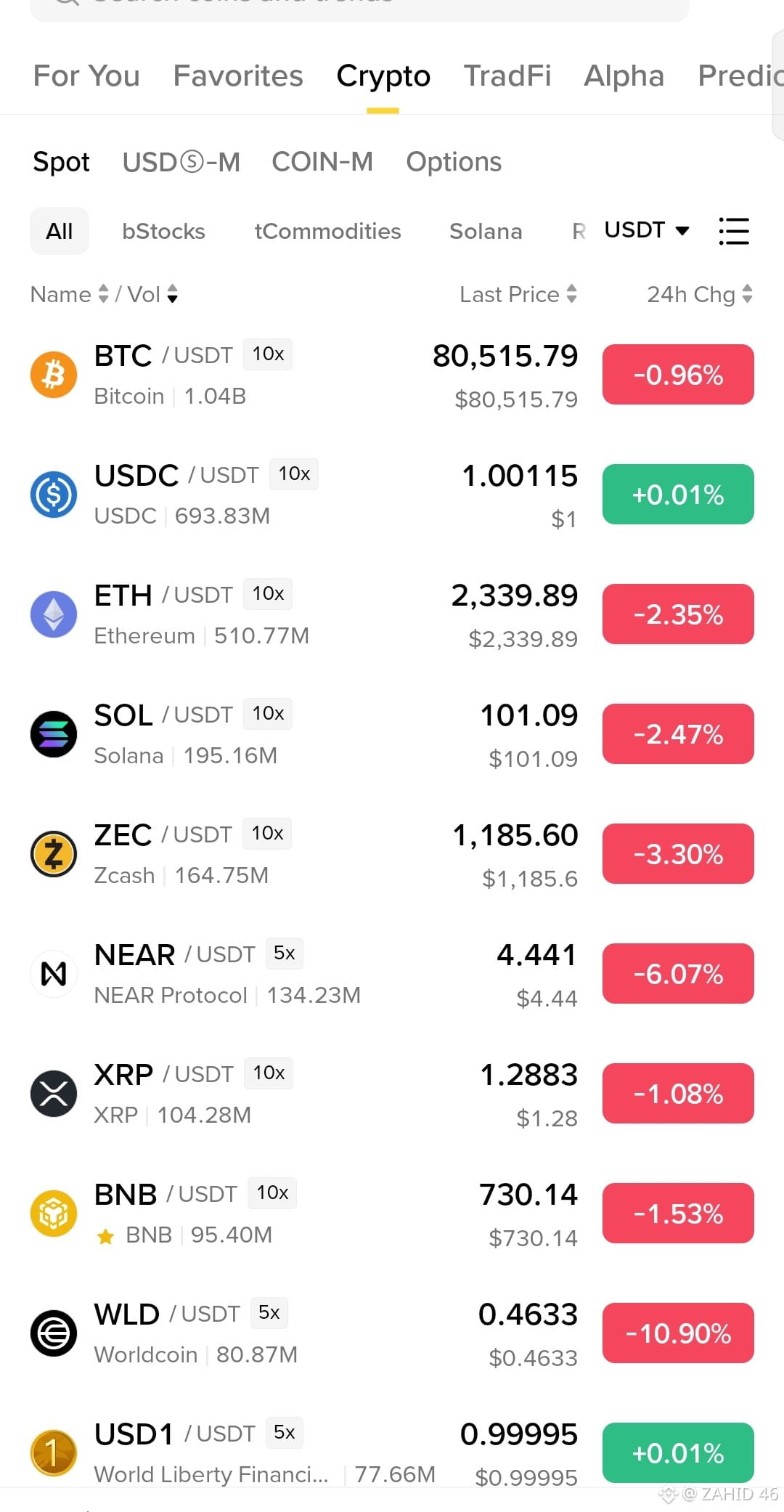
$BTC : $80,515.79 (-0.96%) ETH: $2,339.89 (-2.35%) SOL: $101.09 (-2.47%) ZEC: $1,185.60 (-3.30%) NEAR: $4.441 (-6.07%) XRP: $1.2883 (-1.08%) BNB: $730.14 (-1.53%) WLD: $0.4633 (-10.90%)
USDC and USD1 remain near $1. Altcoins are under pressure, with WLD and NEAR leading the declines. Will BTC stabilize the market or trigger another wave of selling?
{spot}(BTCUSDT)
Tig1: #Bitcoin Tig2: #CryptoMarket Tig3: #Altcoins
CRYPTO MARKET ALERT: SELLING PRESSURE IS RISING
$BTC : $80,515.79 (-0.96%) ETH: $2,339.89 (-2.35%) SOL: $101.09 (-2.47%) ZEC: $1,185.60 (-3.30%) NEAR: $4.441 (-6.07%) XRP: $1.2883 (-1.08%) BNB: $730.14 (-1.53%) WLD: $0.4633 (-10.90%)
USDC and USD1 remain near $1. Altcoins are under pressure, with WLD and NEAR leading the declines. Will BTC stabilize the market or trigger another wave of selling?
Tig1: #Bitcoin Tig2: #CryptoMarket Tig3: #Altcoins
$BTC : $80,515.79 (-0.96%) ETH: $2,339.89 (-2.35%) SOL: $101.09 (-2.47%) ZEC: $1,185.60 (-3.30%) NEAR: $4.441 (-6.07%) XRP: $1.2883 (-1.08%) BNB: $730.14 (-1.53%) WLD: $0.4633 (-10.90%)
USDC and USD1 remain near $1. Altcoins are under pressure, with WLD and NEAR leading the declines. Will BTC stabilize the market or trigger another wave of selling?
Tig1: #Bitcoin Tig2: #CryptoMarket Tig3: #Altcoins
2
791
·
--
🔴 Crypto Market Heatmap | Oct 24, 2026
Top 20 USDT pairs by volume — 15 down, 5 up. Risk-off mode is in full swing.
📊 Price Change Distribution:
• Average: +0.23% (skewed by outliers)
• Gainers: 5 tokens
• Losers: 15 tokens
🟢 Standout Gainers:
• BMT +69.32% 🚀 — biggest mover of the day by far
• ERA +20.96% — strong relative momentum
• USDC/USD1/RLUSD ≈ flat (stablecoins holding peg)
🔴 Biggest Losers:
• WLD -12.91%
• NEAR -10.60%
• PEPE -10.35%
• ENA -8.71%
• ZEC -7.78%
• SUI -6.17%
📉 Blue Chips Under Pressure:
• BTC -1.90% | $80,214
• ETH -2.71% | $2,342
• SOL -4.09% | $100.44
• BNB -2.92% | $727
• XRP -2.99%
Sentiment: Risk-off. Broad selling pressure across majors and alts. Only BMT and ERA bucking the trend with significant upside. Market is cautious — watch for BTC holding the $80K level as a key support.
#BTC #Crypto #Binance #CryptoMarket #Trading
🔴 Crypto Market Heatmap | Oct 24, 2026
Top 20 USDT pairs by volume — 15 down, 5 up. Risk-off mode is in full swing.
📊 Price Change Distribution:
• Average: +0.23% (skewed by outliers)
• Gainers: 5 tokens
• Losers: 15 tokens
🟢 Standout Gainers:
• BMT +69.32% 🚀 — biggest mover of the day by far
• ERA +20.96% — strong relative momentum
• USDC/USD1/RLUSD ≈ flat (stablecoins holding peg)
🔴 Biggest Losers:
• WLD -12.91%
• NEAR -10.60%
• PEPE -10.35%
• ENA -8.71%
• ZEC -7.78%
• SUI -6.17%
📉 Blue Chips Under Pressure:
• BTC -1.90% | $80,214
• ETH -2.71% | $2,342
• SOL -4.09% | $100.44
• BNB -2.92% | $727
• XRP -2.99%
Sentiment: Risk-off. Broad selling pressure across majors and alts. Only BMT and ERA bucking the trend with significant upside. Market is cautious — watch for BTC holding the $80K level as a key support.
#BTC #Crypto #Binance #CryptoMarket #Trading
Top 20 USDT pairs by volume — 15 down, 5 up. Risk-off mode is in full swing.
📊 Price Change Distribution:
• Average: +0.23% (skewed by outliers)
• Gainers: 5 tokens
• Losers: 15 tokens
🟢 Standout Gainers:
• BMT +69.32% 🚀 — biggest mover of the day by far
• ERA +20.96% — strong relative momentum
• USDC/USD1/RLUSD ≈ flat (stablecoins holding peg)
🔴 Biggest Losers:
• WLD -12.91%
• NEAR -10.60%
• PEPE -10.35%
• ENA -8.71%
• ZEC -7.78%
• SUI -6.17%
📉 Blue Chips Under Pressure:
• BTC -1.90% | $80,214
• ETH -2.71% | $2,342
• SOL -4.09% | $100.44
• BNB -2.92% | $727
• XRP -2.99%
Sentiment: Risk-off. Broad selling pressure across majors and alts. Only BMT and ERA bucking the trend with significant upside. Market is cautious — watch for BTC holding the $80K level as a key support.
#BTC #Crypto #Binance #CryptoMarket #Trading
1.1k

·
--
🚨 Traders, Stay Alert! The Crypto Market Is Turning Red Again! 📉
$BTC , $ETH , $PEPE, and $XRP are facing selling pressure as bearish momentum builds across the market. 🔻
Short-term traders should stay cautious, manage risk carefully, and keep an eye on key support levels for a possible further downside move.
⚠️ Remember: Markets can reverse at any time, so avoid overleveraging and stick to your trading strategy.
👇 Do you think another sell-off is coming, or will the bulls fight back?
#BTC #ETH #pepe #xrp #CryptoMarket
{spot}(BTCUSDT)
{spot}(PEPEUSDT)
{spot}(ETHUSDT)
🚨 Traders, Stay Alert! The Crypto Market Is Turning Red Again! 📉
$BTC , $ETH , $PEPE, and $XRP are facing selling pressure as bearish momentum builds across the market. 🔻
Short-term traders should stay cautious, manage risk carefully, and keep an eye on key support levels for a possible further downside move.
⚠️ Remember: Markets can reverse at any time, so avoid overleveraging and stick to your trading strategy.
👇 Do you think another sell-off is coming, or will the bulls fight back?
#BTC #ETH #pepe #xrp #CryptoMarket
$BTC , $ETH , $PEPE, and $XRP are facing selling pressure as bearish momentum builds across the market. 🔻
Short-term traders should stay cautious, manage risk carefully, and keep an eye on key support levels for a possible further downside move.
⚠️ Remember: Markets can reverse at any time, so avoid overleveraging and stick to your trading strategy.
👇 Do you think another sell-off is coming, or will the bulls fight back?
#BTC #ETH #pepe #xrp #CryptoMarket

156
·
--
Bullish
🚨 Why Is the Crypto Market Dumping?
$BTC , $ETH , $SOL and altcoins are facing heavy selling pressure.
📉 Risk-off sentiment
💸 Weak institutional flows
🌍 Macro uncertainty
⚠️ Long liquidations adding fuel to the sell-off
When BTC drops, altcoins often fall even harder.
Stay calm, manage risk, and don’t trade emotionally. 👀
#Bitcoin #CryptoMarket #Ethereum #Solana #Binance
🚨 Why Is the Crypto Market Dumping?
$BTC , $ETH , $SOL and altcoins are facing heavy selling pressure.
📉 Risk-off sentiment
💸 Weak institutional flows
🌍 Macro uncertainty
⚠️ Long liquidations adding fuel to the sell-off
When BTC drops, altcoins often fall even harder.
Stay calm, manage risk, and don’t trade emotionally. 👀
#Bitcoin #CryptoMarket #Ethereum #Solana #Binance
$BTC , $ETH , $SOL and altcoins are facing heavy selling pressure.
📉 Risk-off sentiment
💸 Weak institutional flows
🌍 Macro uncertainty
⚠️ Long liquidations adding fuel to the sell-off
When BTC drops, altcoins often fall even harder.
Stay calm, manage risk, and don’t trade emotionally. 👀
#Bitcoin #CryptoMarket #Ethereum #Solana #Binance
1
114

·
--
Bullish
🚨 $CRYPTO MARKET UNDER HEAVY PRESSURE! 📉💥
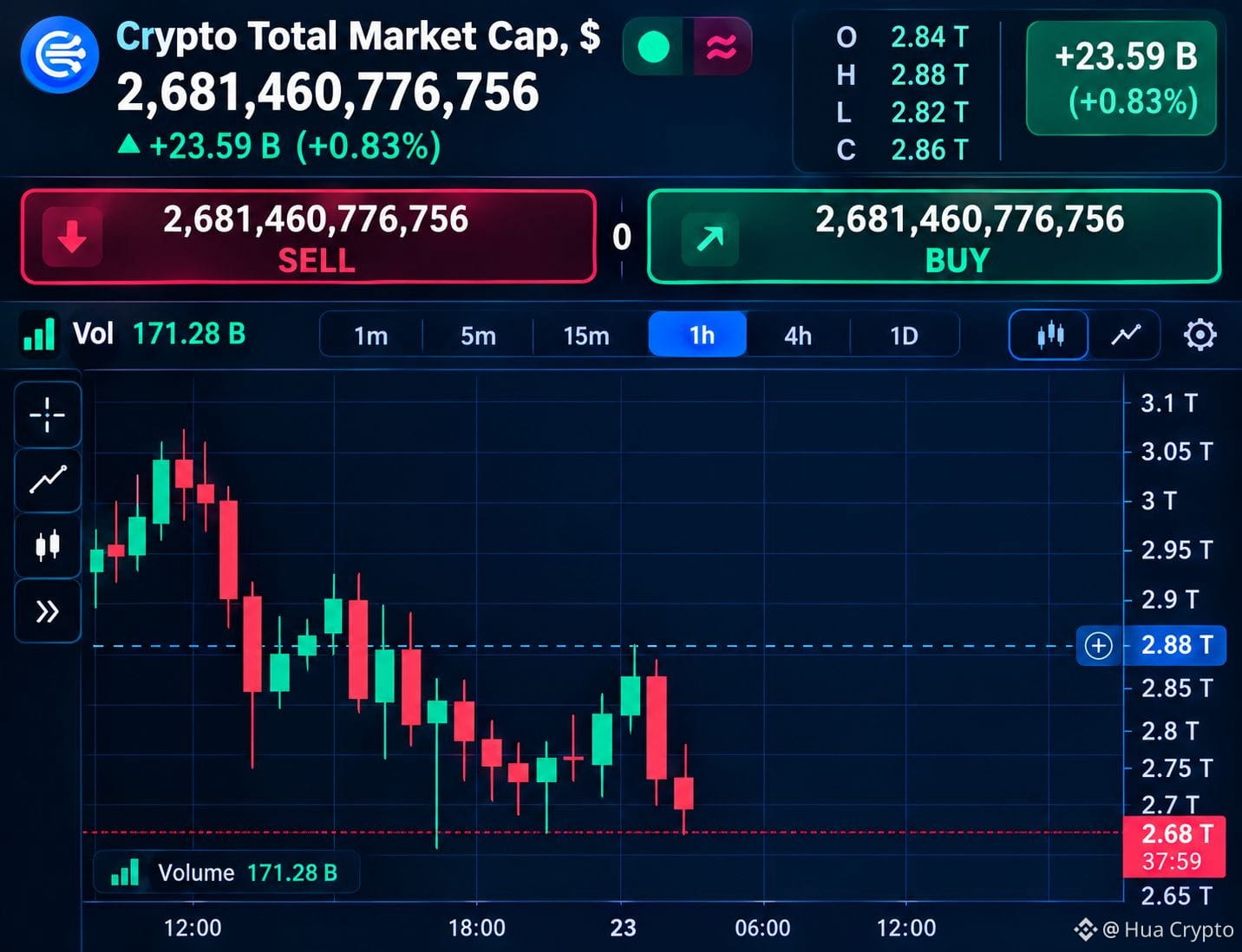
The global crypto market has shed over $200 BILLION in market value in less than a month. 🩸
💰 Billions wiped out
🐻 Bearish sentiment rising
⚠️ Volatility putting traders on edge
Is this just a temporary market correction, or are we heading toward a deeper crypto downturn?
📉 PANIC SELLING OR THE NEXT BIG OPPORTUNITY? 👀
What’s your move right now — BUY THE DIP 🟢 or STAY ON THE SIDELINES 🔴?
💬 Share your thoughts below!
#Crypto #bitcoin #BTC #CryptoMarket #Altcoins #marketcrash #trading #CryptoNews
🚨 $CRYPTO MARKET UNDER HEAVY PRESSURE! 📉💥
The global crypto market has shed over $200 BILLION in market value in less than a month. 🩸
💰 Billions wiped out
🐻 Bearish sentiment rising
⚠️ Volatility putting traders on edge
Is this just a temporary market correction, or are we heading toward a deeper crypto downturn?
📉 PANIC SELLING OR THE NEXT BIG OPPORTUNITY? 👀
What’s your move right now — BUY THE DIP 🟢 or STAY ON THE SIDELINES 🔴?
💬 Share your thoughts below!
#Crypto #bitcoin #BTC #CryptoMarket #Altcoins #marketcrash #trading #CryptoNews
The global crypto market has shed over $200 BILLION in market value in less than a month. 🩸
💰 Billions wiped out
🐻 Bearish sentiment rising
⚠️ Volatility putting traders on edge
Is this just a temporary market correction, or are we heading toward a deeper crypto downturn?
📉 PANIC SELLING OR THE NEXT BIG OPPORTUNITY? 👀
What’s your move right now — BUY THE DIP 🟢 or STAY ON THE SIDELINES 🔴?
💬 Share your thoughts below!
#Crypto #bitcoin #BTC #CryptoMarket #Altcoins #marketcrash #trading #CryptoNews
78

·
--
Why is the cryptocurrency market so volatile?
Price movements are often driven by a combination of factors:
📈 Supply and demand: Buying and selling pressure, along with the circulating supply of tokens, affects prices.
🏛️ Policy and regulation: New rules can change market expectations.
🌍 Macroeconomics: Interest rates, inflation, and investor preferences influence asset allocation.
💧 Capital and liquidity: Large orders and clustered liquidations can amplify volatility.
🧠 Market sentiment: News, fear, and chasing price rallies can reinforce one another.
When markets are volatile, verify the information and assess the risks before deciding whether to act.
Understanding why prices move is more important than blindly chasing gains or losses.
Which factor do you think has the greatest impact on the market?
#ONEA #Web3 #CryptoMarket
Why is the cryptocurrency market so volatile?
Price movements are often driven by a combination of factors:
📈 Supply and demand: Buying and selling pressure, along with the circulating supply of tokens, affects prices.
🏛️ Policy and regulation: New rules can change market expectations.
🌍 Macroeconomics: Interest rates, inflation, and investor preferences influence asset allocation.
💧 Capital and liquidity: Large orders and clustered liquidations can amplify volatility.
🧠 Market sentiment: News, fear, and chasing price rallies can reinforce one another.
When markets are volatile, verify the information and assess the risks before deciding whether to act.
Understanding why prices move is more important than blindly chasing gains or losses.
Which factor do you think has the greatest impact on the market?
#ONEA #Web3 #CryptoMarket
Price movements are often driven by a combination of factors:
📈 Supply and demand: Buying and selling pressure, along with the circulating supply of tokens, affects prices.
🏛️ Policy and regulation: New rules can change market expectations.
🌍 Macroeconomics: Interest rates, inflation, and investor preferences influence asset allocation.
💧 Capital and liquidity: Large orders and clustered liquidations can amplify volatility.
🧠 Market sentiment: News, fear, and chasing price rallies can reinforce one another.
When markets are volatile, verify the information and assess the risks before deciding whether to act.
Understanding why prices move is more important than blindly chasing gains or losses.
Which factor do you think has the greatest impact on the market?
#ONEA #Web3 #CryptoMarket
1
10

Watching $NEAR fall from $6 to around $4.55 hurts, but one correction doesn't always mean the story is over. Sometimes, the hardest part is staying patient while the market finds its direction.
📊 Support: $4.46–$4.28
🚀 Resistance: $4.73 → $4.95 → $5.00
📉 Losing $4.28 could open the door to $4.00.
NEAR needs to reclaim $4.75 to show stronger recovery. The bigger trend still has potential, but confirmation matters.
I'm not waiting for green candles to feel hopeful. I'm waiting for the chart to prove the strength is back. 💙
#NEAR #nearprotocol #CryptoMarket
Watching $NEAR fall from $6 to around $4.55 hurts, but one correction doesn't always mean the story is over. Sometimes, the hardest part is staying patient while the market finds its direction.
📊 Support: $4.46–$4.28
🚀 Resistance: $4.73 → $4.95 → $5.00
📉 Losing $4.28 could open the door to $4.00.
NEAR needs to reclaim $4.75 to show stronger recovery. The bigger trend still has potential, but confirmation matters.
I'm not waiting for green candles to feel hopeful. I'm waiting for the chart to prove the strength is back. 💙
#NEAR #nearprotocol #CryptoMarket
📊 Support: $4.46–$4.28
🚀 Resistance: $4.73 → $4.95 → $5.00
📉 Losing $4.28 could open the door to $4.00.
NEAR needs to reclaim $4.75 to show stronger recovery. The bigger trend still has potential, but confirmation matters.
I'm not waiting for green candles to feel hopeful. I'm waiting for the chart to prove the strength is back. 💙
#NEAR #nearprotocol #CryptoMarket
5
972

·
--
📉 #ETH Market Update:
Ethereum Slips Below $2,300 📉
Ethereum is facing significant downward market pressure, recently falling below the critical $2,300 level. If you are watching the charts, you might be wondering what is driving this bearish momentum.
Key Drivers Behind the Drop: 🔹 ETF Capital Flight: A primary catalyst for this slide is the persistent capital flight from spot Ethereum ETFs. 🔹 Cooling Institutional Demand: The numbers paint a clear picture—Spot ETH ETFs have recorded net outflows on 14 out of 17 trading days so far this October.
As the market absorbs these continuous institutional outflows, traders are closely watching for ETH to establish its next major support zone.
🗣️ What’s your strategy? Are you buying this dip, or waiting on the sidelines for the market to stabilize? Share your thoughts below! 👇
#Ethereum #ETH #CryptoNewss #CryptoMarket
{spot}(ETHUSDT)
$ETH
📉 #ETH Market Update:
Ethereum Slips Below $2,300 📉
Ethereum is facing significant downward market pressure, recently falling below the critical $2,300 level. If you are watching the charts, you might be wondering what is driving this bearish momentum.
Key Drivers Behind the Drop: 🔹 ETF Capital Flight: A primary catalyst for this slide is the persistent capital flight from spot Ethereum ETFs. 🔹 Cooling Institutional Demand: The numbers paint a clear picture—Spot ETH ETFs have recorded net outflows on 14 out of 17 trading days so far this October.
As the market absorbs these continuous institutional outflows, traders are closely watching for ETH to establish its next major support zone.
🗣️ What’s your strategy? Are you buying this dip, or waiting on the sidelines for the market to stabilize? Share your thoughts below! 👇
#Ethereum #ETH #CryptoNewss #CryptoMarket
$ETH
Ethereum Slips Below $2,300 📉
Ethereum is facing significant downward market pressure, recently falling below the critical $2,300 level. If you are watching the charts, you might be wondering what is driving this bearish momentum.
Key Drivers Behind the Drop: 🔹 ETF Capital Flight: A primary catalyst for this slide is the persistent capital flight from spot Ethereum ETFs. 🔹 Cooling Institutional Demand: The numbers paint a clear picture—Spot ETH ETFs have recorded net outflows on 14 out of 17 trading days so far this October.
As the market absorbs these continuous institutional outflows, traders are closely watching for ETH to establish its next major support zone.
🗣️ What’s your strategy? Are you buying this dip, or waiting on the sidelines for the market to stabilize? Share your thoughts below! 👇
#Ethereum #ETH #CryptoNewss #CryptoMarket
$ETH

255


$BTC lost 80k again this evening 😅
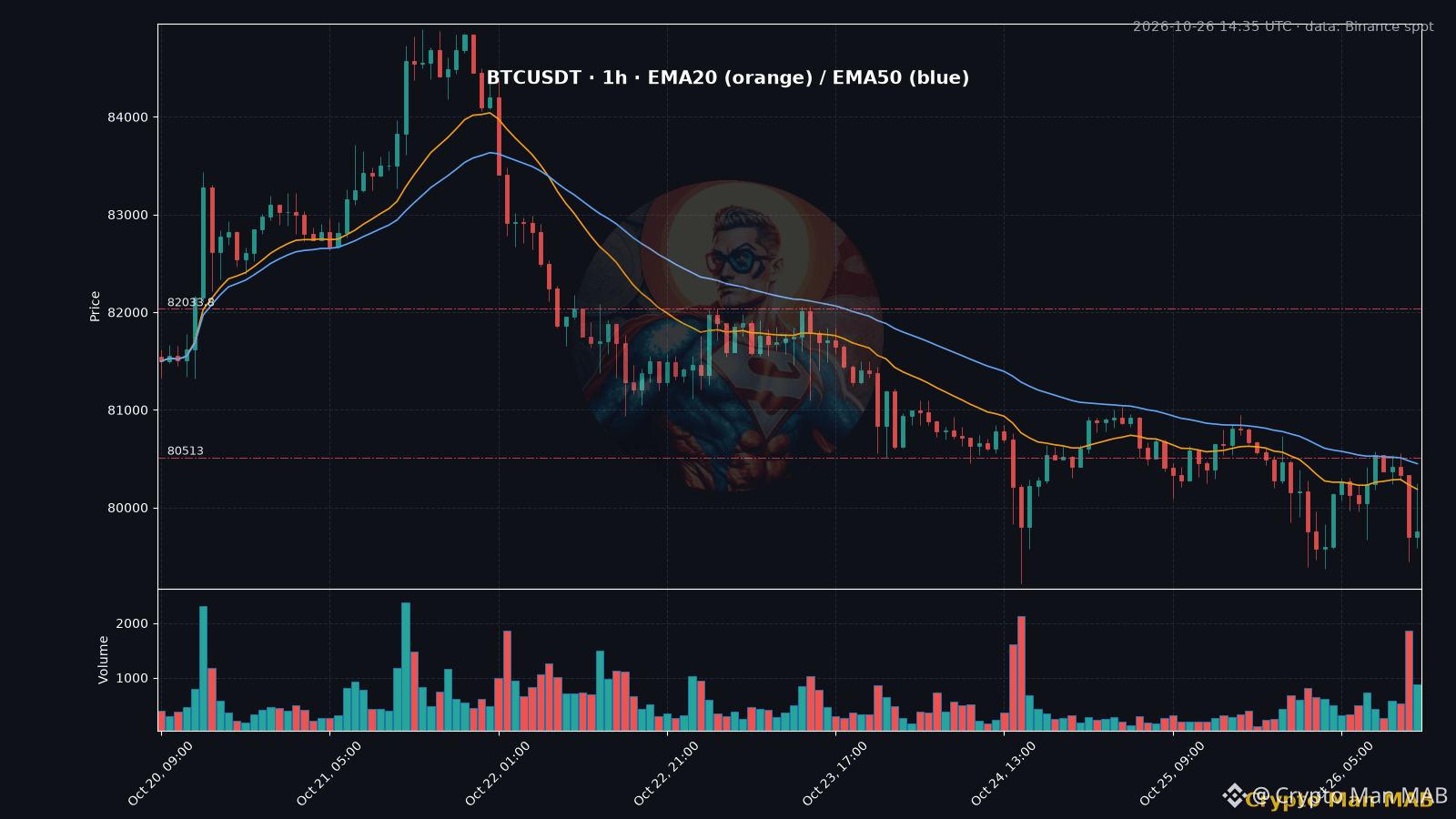
one fat red hourly candle around 6pm, biggest volume of the whole day, dipped to 79.45k. now sitting near 79.7k and the bounce looks tired honestly
this morning it bounced from 79.4k twice so thats the floor im watching. lose that on an hourly close and the Saturday wick at 79.2k is next, below that its open air for a bit
for me nothing changes until it gets back over 80.5k and holds. thats where all the selling came from today
still lower highs since the 84k top last week, so im not in a hurry
anyone buying this dip or waiting like me?
nfa, just thinking out loud
#BTC #Bitcoin #CryptoMarket
$BTC lost 80k again this evening 😅
one fat red hourly candle around 6pm, biggest volume of the whole day, dipped to 79.45k. now sitting near 79.7k and the bounce looks tired honestly
this morning it bounced from 79.4k twice so thats the floor im watching. lose that on an hourly close and the Saturday wick at 79.2k is next, below that its open air for a bit
for me nothing changes until it gets back over 80.5k and holds. thats where all the selling came from today
still lower highs since the 84k top last week, so im not in a hurry
anyone buying this dip or waiting like me?
nfa, just thinking out loud
#BTC #Bitcoin #CryptoMarket
one fat red hourly candle around 6pm, biggest volume of the whole day, dipped to 79.45k. now sitting near 79.7k and the bounce looks tired honestly
this morning it bounced from 79.4k twice so thats the floor im watching. lose that on an hourly close and the Saturday wick at 79.2k is next, below that its open air for a bit
for me nothing changes until it gets back over 80.5k and holds. thats where all the selling came from today
still lower highs since the 84k top last week, so im not in a hurry
anyone buying this dip or waiting like me?
nfa, just thinking out loud
#BTC #Bitcoin #CryptoMarket
3
153
Log in to explore more content
Join global crypto users on Binance Square
⚡️ Get latest and useful information about crypto.
💬 Trusted by the world’s largest crypto exchange.
👍 Discover real insights from verified creators.
Email / Phone number
Trending Topics
1
#BinancePick
3M views
151,940 Discussing
2
#EarningsSeason
5.2M views
25,816 Discussing
3
#AnthropicTTMRevenueGrewAbout1200%
20,994 views
341 Discussing
4
#AnthropicS1ExpectedToday
21,779 views
299 Discussing
5
#SouthKoreaReportedlyWeighsFourthCryptoTaxDelay
26,637 views
420 Discussing
6
#FranklinTempletonFilesForTwoDividendToBitcoinETFs
34,504 views
515 Discussing
7
#StrategyMSTRSurpassesNasdaqInMarketCap
26,460 views
373 Discussing
8
#CanadaProposesStablecoinRedemptionWithin3BusinessDays
1,201 views
34 Discussing
9
#ElectrumWalletBugLetRogueServersStealFunds
28,078 views
449 Discussing
10
#ArgentineCourtDismissesLIBRACaseAgainstMilei
42,596 views
556 Discussing