Binance Square

btcsecurity

696 views
7 Discussing
Crypto Market Trends
·
--
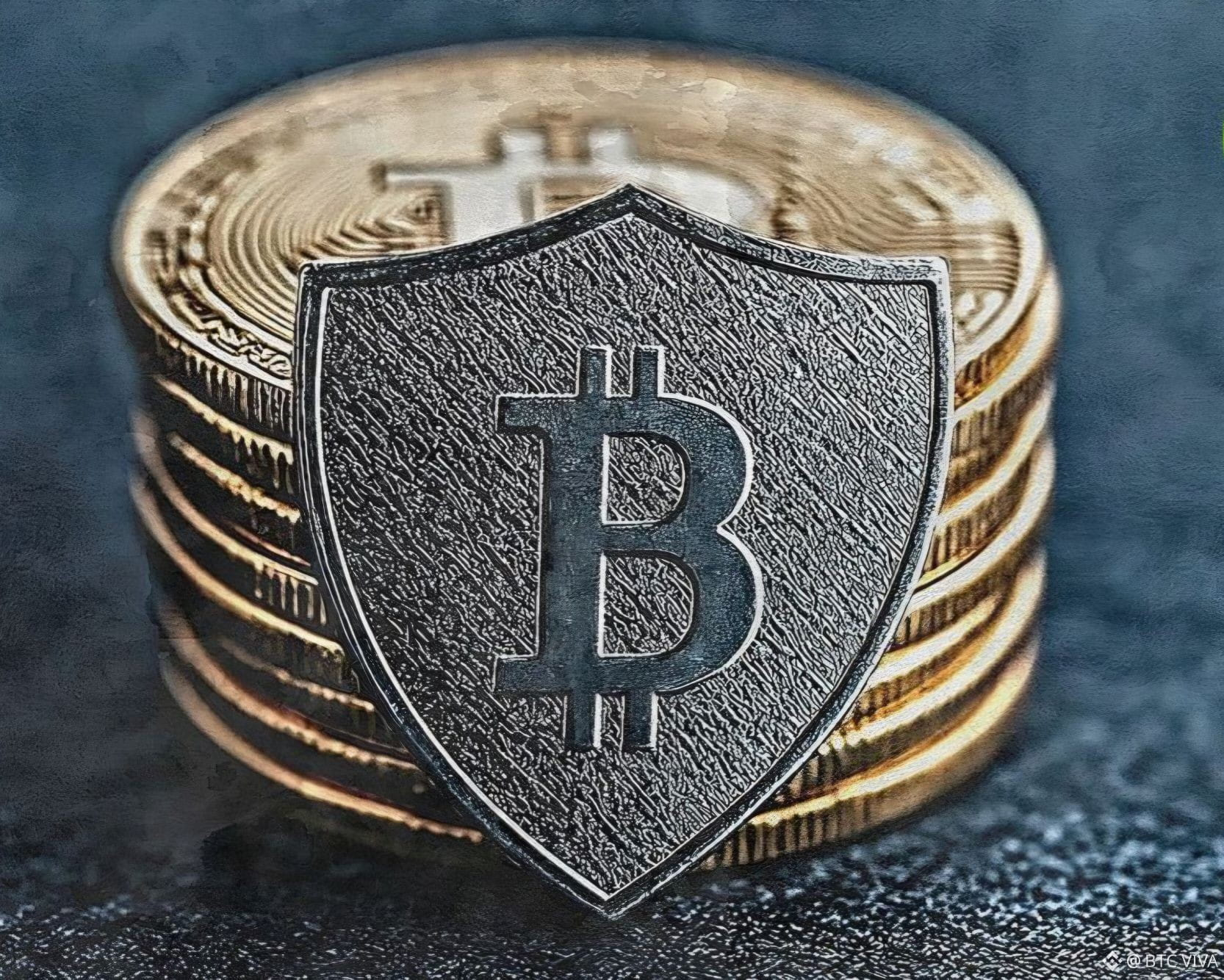
Bitcoin Takes a Major Step Toward Quantum Resistance with BIP 360 and New P2MR Output$BTC The introduction of Bitcoin Improvement Proposal 360 (BIP 360), which has been officially merged into the Bitcoin BIP GitHub repository. BIP 360 proposes a new Bitcoin output type called Pay-to-Merkle-Root (P2MR), designed to enhance Bitcoin’s security against potential future quantum computing threats by eliminating the exposure of public keys via the key-path spend method used in Taproot. This output type maintains compatibility with existing Tapscript infrastructure but reduces the attack surface by committing only to the script path. The proposal is an initial step toward quantum-hardening Bitcoin natively at the protocol level, anticipating the future incorporation of post-quantum signature schemes such as ML-DSA (Dilithium) and SLH-DSA (SPHINCS+). Market Sentiment The news about Bitcoin proactively addressing quantum computing risks engenders a sense of cautious optimism among investors who value Bitcoin's long-term security and technological leadership. While quantum computing remains a nascent threat, this strategic move reflects forward-thinking engineering that can increase confidence in Bitcoin's resilience. Social media and crypto community discussions likely feature support for continued innovation in securing Bitcoin’s cryptography, mitigating anxiety about future vulnerabilities. Quantitatively, this type of fundamental protocol upgrade proposal may contribute to positive sentiment over the medium term but is unlikely to generate immediate market volatility as it has not yet been approved or activated. Past & Future Forecast - Past: Historically, Bitcoin has undergone protocol upgrades such as the Taproot upgrade that introduced significant improvements in privacy and efficiency. Early protocol changes focused on resolving known risks and expanding scripting capabilities. However, active preparations for quantum resistance are more recent, mirroring the growing global concern over quantum computing damage to cryptographic systems. - Future: If BIP 360 and subsequent quantum-resistant protocols are successfully developed and adopted, Bitcoin will maintain its status as the most secure and future-proof blockchain. Investors can anticipate that such advancements will gradually increase Bitcoin’s appeal as a long-term store of value. Quantitative forecasting is challenging but successful implementation could extend Bitcoin’s technological relevance beyond 2030, hedging against systemic risks posed by advances in quantum computing. Resultant Effect The adoption of quantum-resistant technologies in Bitcoin could set a precedent across the cryptocurrency industry, prompting other projects to accelerate their own post-quantum cryptography efforts. This mitigates systemic risks inherent in cryptographic vulnerabilities as quantum computing advances. However, the transition carries uncertainties, including the complexity of soft forks, compatibility challenges, and the timeline for widespread quantum threat realization. Investors should remain aware of upgrade risks impacting short-term network behavior but view quantum resistance development as a critical long-term security evolution. Investment Strategy Recommendation: Buy - Rationale: BIP 360 represents a foundational step toward enhancing Bitcoin’s future security against an emerging, potentially disruptive threat from quantum computing. This proactive approach reflects strong protocol development leadership, supporting a positive medium- to long-term outlook. - Execution Strategy: Initiate a cautious accumulation of Bitcoin, utilizing short- to mid-term technical signals, such as entries near support levels visible in short-term moving averages and RSI indicators. Employ phased buying to capitalize on natural market pullbacks. - Risk Management: Implement stop-loss orders within 5-8% below entry points to limit downside risk amid ongoing market volatility. Maintain a balanced portfolio with diversified assets to guard against sector-specific risks. Continuously monitor technical indicators and news regarding protocol upgrades to adjust exposures accordingly. This measured buy recommendation draws from institutional strategies emphasizing due diligence on fundamental upgrades that strengthen asset durability while managing short-term market fluctuations, aligning well with evolving macro conditions and technical trends. #BTCSecurity #BTC #BTCBIP360 #P2MROutput #QuantumComputingRisk {spot}(BTCUSDT)

Bitcoin Takes a Major Step Toward Quantum Resistance with BIP 360 and New P2MR Output

$BTC
The introduction of Bitcoin Improvement Proposal 360 (BIP 360), which has been officially merged into the Bitcoin BIP GitHub repository. BIP 360 proposes a new Bitcoin output type called Pay-to-Merkle-Root (P2MR), designed to enhance Bitcoin’s security against potential future quantum computing threats by eliminating the exposure of public keys via the key-path spend method used in Taproot. This output type maintains compatibility with existing Tapscript infrastructure but reduces the attack surface by committing only to the script path. The proposal is an initial step toward quantum-hardening Bitcoin natively at the protocol level, anticipating the future incorporation of post-quantum signature schemes such as ML-DSA (Dilithium) and SLH-DSA (SPHINCS+).
Market Sentiment
The news about Bitcoin proactively addressing quantum computing risks engenders a sense of cautious optimism among investors who value Bitcoin's long-term security and technological leadership. While quantum computing remains a nascent threat, this strategic move reflects forward-thinking engineering that can increase confidence in Bitcoin's resilience. Social media and crypto community discussions likely feature support for continued innovation in securing Bitcoin’s cryptography, mitigating anxiety about future vulnerabilities. Quantitatively, this type of fundamental protocol upgrade proposal may contribute to positive sentiment over the medium term but is unlikely to generate immediate market volatility as it has not yet been approved or activated.
Past & Future Forecast
- Past: Historically, Bitcoin has undergone protocol upgrades such as the Taproot upgrade that introduced significant improvements in privacy and efficiency. Early protocol changes focused on resolving known risks and expanding scripting capabilities. However, active preparations for quantum resistance are more recent, mirroring the growing global concern over quantum computing damage to cryptographic systems.
- Future: If BIP 360 and subsequent quantum-resistant protocols are successfully developed and adopted, Bitcoin will maintain its status as the most secure and future-proof blockchain. Investors can anticipate that such advancements will gradually increase Bitcoin’s appeal as a long-term store of value. Quantitative forecasting is challenging but successful implementation could extend Bitcoin’s technological relevance beyond 2030, hedging against systemic risks posed by advances in quantum computing.
Resultant Effect
The adoption of quantum-resistant technologies in Bitcoin could set a precedent across the cryptocurrency industry, prompting other projects to accelerate their own post-quantum cryptography efforts. This mitigates systemic risks inherent in cryptographic vulnerabilities as quantum computing advances. However, the transition carries uncertainties, including the complexity of soft forks, compatibility challenges, and the timeline for widespread quantum threat realization. Investors should remain aware of upgrade risks impacting short-term network behavior but view quantum resistance development as a critical long-term security evolution.
Investment Strategy
Recommendation: Buy
- Rationale: BIP 360 represents a foundational step toward enhancing Bitcoin’s future security against an emerging, potentially disruptive threat from quantum computing. This proactive approach reflects strong protocol development leadership, supporting a positive medium- to long-term outlook.
- Execution Strategy: Initiate a cautious accumulation of Bitcoin, utilizing short- to mid-term technical signals, such as entries near support levels visible in short-term moving averages and RSI indicators. Employ phased buying to capitalize on natural market pullbacks.
- Risk Management: Implement stop-loss orders within 5-8% below entry points to limit downside risk amid ongoing market volatility. Maintain a balanced portfolio with diversified assets to guard against sector-specific risks. Continuously monitor technical indicators and news regarding protocol upgrades to adjust exposures accordingly.
This measured buy recommendation draws from institutional strategies emphasizing due diligence on fundamental upgrades that strengthen asset durability while managing short-term market fluctuations, aligning well with evolving macro conditions and technical trends. #BTCSecurity #BTC #BTCBIP360 #P2MROutput #QuantumComputingRisk
·
--
Bearish
🇺🇸 Justin Bons predicts $BTC could collapse within 7 to 11 years due to falling security budgets and increased 51% attack risk.📉 $DUSK 👉Bons warns about potential bank run scenarios where congestion could leave transactions stuck.😭 He believes Bitcoin faces an impossible choice between raising supply or risking vulnerability.🩸 $DASH #JustinBons #BTC #MarketRebound #BTC100kNext? #BTCsecurity
🇺🇸 Justin Bons predicts $BTC could collapse within 7 to 11 years due to falling security budgets and increased 51% attack risk.📉
$DUSK

👉Bons warns about potential bank run scenarios where congestion could leave transactions stuck.😭

He believes Bitcoin faces an impossible choice between raising supply or risking vulnerability.🩸
$DASH
#JustinBons #BTC #MarketRebound #BTC100kNext? #BTCsecurity
The 'Bitcoin Family' renews security after wave of cryptocurrency-related crimesDidi Taihuttu, patriarch of the so-called 'Bitcoin Family', has reviewed his digital asset security setup following a wave of violent attacks targeting cryptocurrency holders. The family, known for betting everything on Bitcoin $BTC in 2017, now hides portions of their private keys across four continents. In an interview with CNBC, Taihuttu said he now uses a hybrid approach instead of solely relying on hardware wallets. Taihuttu told CNBC that the family has changed everything. 'Even if someone pointed a gun at me, I can't give them more than what is in my wallet or on my phone. And that's not much,' he said.

The 'Bitcoin Family' renews security after wave of cryptocurrency-related crimes

Didi Taihuttu, patriarch of the so-called 'Bitcoin Family', has reviewed his digital asset security setup following a wave of violent attacks targeting cryptocurrency holders.
The family, known for betting everything on Bitcoin $BTC in 2017, now hides portions of their private keys across four continents. In an interview with CNBC, Taihuttu said he now uses a hybrid approach instead of solely relying on hardware wallets.
Taihuttu told CNBC that the family has changed everything. 'Even if someone pointed a gun at me, I can't give them more than what is in my wallet or on my phone. And that's not much,' he said.
The End of Bitcoin Mining: What Happens After 21M BTC? ...When all 21 million Bitcoins are mined, the network faces a critical challenge. Most think this is a distant issue, set for 2140, but the real problem hits much sooner. Current State Miners secure Bitcoin, consuming 1.8M kWh per block ($92,000 at $0.05/kWh). They’re rewarded with 3.125 BTC ($370,800) plus ~$25,000 in fees, making it profitable. The system works—today. The Looming Issue Bitcoin’s block reward halves every 4 years. By 2032, it’s below 1 BTC. By 2040, over 99% of BTC will be mined. When the reward hits zero, miners rely solely on transaction fees—currently just 7% of their revenue. To cover costs, fees must rise 4-10x. Sustainable? Unclear. Fee Challenges Fees spike during bull runs, NFT hype, or congestion, but these are temporary. Bitcoin’s 4MB block size limits transaction volume. For fees to sustain miners, blocks must be consistently full of high-value transactions. Forever. That’s tough. Layer 2 Trade-Offs Solutions like Lightning Network scale Bitcoin but reduce on-chain transactions, cutting fees and miner incentives. Scaling may undermine security. Security Risks Bitcoin’s strength lies in costly 51% attacks. If miner revenue drops, so does security. Estimates suggest $100k per block is needed to stay safe. Low fees could make attacks feasible. Proposed Solutions Tail Emission: A small, ongoing reward (like Monero), but it breaks the 21M cap—a core Bitcoin principle. MEV (Miner Extractable Value): Profiting from on-chain arbitrage, but risks centralization. Global Settlement Layer: High-value transactions drive fees, but it requires massive, sustained demand. The Core Issue Bitcoin’s security hinges on economic incentives, not just code. If fees don’t scale, the network could weaken over time, threatening decentralization and monetary policy. What’s Next? Bitcoin isn’t doomed, but its long-term security isn’t guaranteed. It needs more users, high-value use cases, and consistent fee demand. Without these, the most secure blockchain ever could face silent degradation. No miners = no security. No security = no Bitcoin. The economics must hold. #BitcoinFuture #CryptoMining #BTCSecurity #BlockchainEconomics $BTC {spot}(BTCUSDT) $BNB {spot}(BNBUSDT) $XRP {spot}(XRPUSDT)

The End of Bitcoin Mining: What Happens After 21M BTC? ...

When all 21 million Bitcoins are mined, the network faces a critical challenge. Most think this is a distant issue, set for 2140, but the real problem hits much sooner.
Current State
Miners secure Bitcoin, consuming 1.8M kWh per block ($92,000 at $0.05/kWh). They’re rewarded with 3.125 BTC ($370,800) plus ~$25,000 in fees, making it profitable. The system works—today.
The Looming Issue
Bitcoin’s block reward halves every 4 years. By 2032, it’s below 1 BTC. By 2040, over 99% of BTC will be mined. When the reward hits zero, miners rely solely on transaction fees—currently just 7% of their revenue. To cover costs, fees must rise 4-10x. Sustainable? Unclear.
Fee Challenges
Fees spike during bull runs, NFT hype, or congestion, but these are temporary. Bitcoin’s 4MB block size limits transaction volume. For fees to sustain miners, blocks must be consistently full of high-value transactions. Forever. That’s tough.
Layer 2 Trade-Offs
Solutions like Lightning Network scale Bitcoin but reduce on-chain transactions, cutting fees and miner incentives. Scaling may undermine security.
Security Risks
Bitcoin’s strength lies in costly 51% attacks. If miner revenue drops, so does security. Estimates suggest $100k per block is needed to stay safe. Low fees could make attacks feasible.
Proposed Solutions
Tail Emission: A small, ongoing reward (like Monero), but it breaks the 21M cap—a core Bitcoin principle.
MEV (Miner Extractable Value): Profiting from on-chain arbitrage, but risks centralization.
Global Settlement Layer: High-value transactions drive fees, but it requires massive, sustained demand.
The Core Issue
Bitcoin’s security hinges on economic incentives, not just code. If fees don’t scale, the network could weaken over time, threatening decentralization and monetary policy.
What’s Next?
Bitcoin isn’t doomed, but its long-term security isn’t guaranteed. It needs more users, high-value use cases, and consistent fee demand. Without these, the most secure blockchain ever could face silent degradation.
No miners = no security. No security = no Bitcoin. The economics must hold.
#BitcoinFuture #CryptoMining #BTCSecurity #BlockchainEconomics

$BTC
$BNB
$XRP
Can any existing quantum computers can crash or break crypto? Right now, 0% of existing quantum computers can crash or break crypto. Today’s machines only have a few hundred unstable qubits, but breaking Bitcoin/Ethereum security would need millions of stable qubits—likely 15–30 years away. 👉 The threat is real, but it’s a future problem, not today’s. #quantumcomputers #BTCsecurity
Can any existing quantum computers can crash or break crypto?

Right now, 0% of existing quantum computers can crash or break crypto.

Today’s machines only have a few hundred unstable qubits, but breaking Bitcoin/Ethereum security would need millions of stable qubits—likely 15–30 years away.

👉 The threat is real, but it’s a future problem, not today’s.
#quantumcomputers #BTCsecurity
🔴 The dark side of crypto: an investor was arrested in New York for kidnapping in exchange for a $BTC wallet password — A crypto investor has been arrested in New York, accused of kidnapping and torturing a citizen of Italy. The goal was to extort the password to a bitcoin wallet. — According to the prosecutor's office: • the victim was held for several weeks • beaten, electrocuted, threatened with death • the victim managed to escape and contact the police 📉 The reputational consequences for the crypto market are toxic: such cases fuel the rhetoric about the "wild west" in digital assets and may increase pressure from regulators. Historical fact: crypto has been the cause of violent crimes before — in 2017 in Ukraine, an EXMO analyst was kidnapped, and in 2020 in the Netherlands, the owner of a hardware wallet was tortured. Security ≠ just a seed phrase. Subscribe — we will tell you how to protect yourself both online and in real life 🔴 #bitcoin #crypto #crime #BTCsecurity #$BTC $ETH $USDC
🔴 The dark side of crypto: an investor was arrested in New York for kidnapping in exchange for a $BTC wallet password

— A crypto investor has been arrested in New York, accused of kidnapping and torturing a citizen of Italy. The goal was to extort the password to a bitcoin wallet.

— According to the prosecutor's office:

• the victim was held for several weeks

• beaten, electrocuted, threatened with death

• the victim managed to escape and contact the police

📉 The reputational consequences for the crypto market are toxic: such cases fuel the rhetoric about the "wild west" in digital assets and may increase pressure from regulators.

Historical fact: crypto has been the cause of violent crimes before — in 2017 in Ukraine, an EXMO analyst was kidnapped, and in 2020 in the Netherlands, the owner of a hardware wallet was tortured.

Security ≠ just a seed phrase. Subscribe — we will tell you how to protect yourself both online and in real life 🔴

#bitcoin #crypto #crime #BTCsecurity #$BTC $ETH $USDC
Login to explore more contents
Explore the latest crypto news
⚡️ Be a part of the latests discussions in crypto
💬 Interact with your favorite creators
👍 Enjoy content that interests you
Email / Phone number