
#aichipslumpnasdaq
aichipslumpnasdaq
The Nasdaq fell 3.4% last week as AI chip stocks slumped: Sandisk -27.4%, Micron -22%, and the VanEck Semiconductor ETF -11.2%. Oil fell 12.8% and the 10-year yield hit a two-month low of 4.86%. Berkshire posted a record $9.6B Q3 buyback. Nvidia's board is probing reports that CEO Jensen Huang was targeted by a suspected spy operation. Is this a dip to buy or the start of a deeper slide? 👇
Hot
Latest


·
--
Article
TradFi News | Nasdaq Drops 3.4% in Week as AI Chip Stocks Slump; Berkshire Posts Record $9.6 Billion BuybackUS stock futures open Sunday evening after a damaging week for AI stocks. The Nasdaq Composite fell 3.4% in the week to November 6, the S&P 500 lost 2.7%, the Dow slipped 0.9% and the small-cap Russell 2000 shed 2.05%, according to Investor’s Business Daily.
Nasdaq 100 futures were indicated modestly lower after Nvidia’s board opened an investigation following reports that CEO Jensen Huang was targeted by a suspected Chinese espionage operation, according to IBD, CNBC and NBC News. Lawmakers from both parties have also raised questions about the reports, CNBC said.
AI Hardware Stocks Lead the Losses
After a post-election rally on Wednesday, when the Dow jumped 3%, AI infrastructure stocks fell sharply on Thursday and dragged down the wider market. Friday’s AI-led bounce faded into a mixed close.
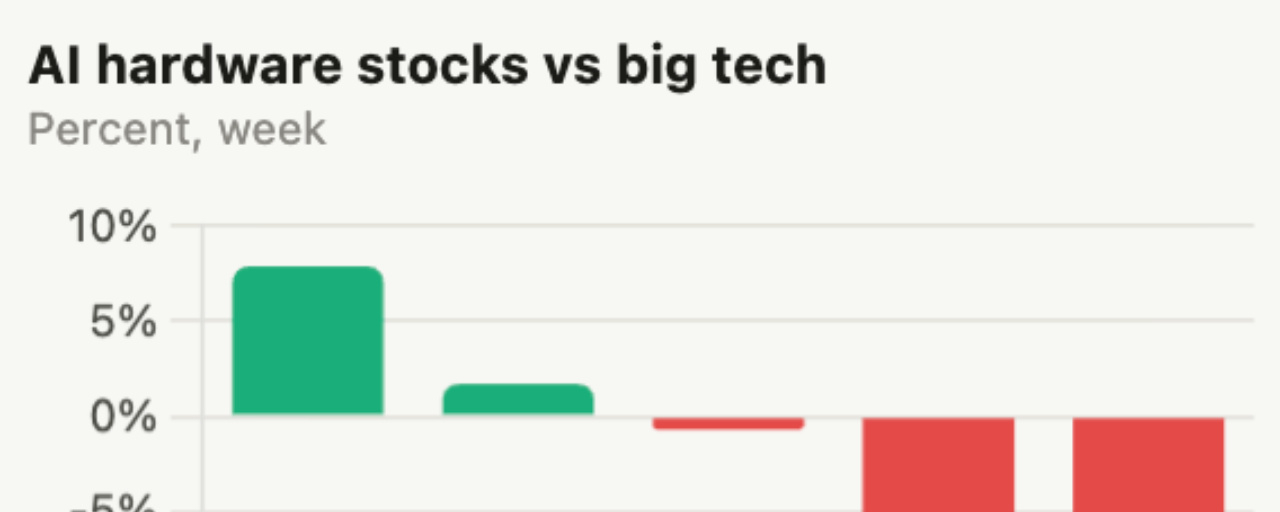
Sandisk (SNDK) rose 3.55% to $835.06 on Friday but fell 27.4% on the week. It is down 64.5% from its late-June peak, according to MarketSurge.Micron (MU) gained 5.1% to $690 on Friday but dropped 22% on the week and is 45% below its high.
The VanEck Semiconductor ETF (SMH) fell 11.2% on the week and the iShares Expanded Tech-Software ETF (IGV) lost 5.2%.
Apple, Microsoft and Amazon Hold Up
Big tech held up better than the rest of the sector:
Amazon (AMZN) jumped 7.9% on the week to $259.30.Microsoft (MSFT) rose 1.7% to $530.62.Apple (AAPL) slipped 0.7% to $342.37.
Microsoft and Amazon rallied Wednesday as investors bet that existing data center operators could gain if rivals’ projects are delayed, according to IBD.
Oil Falls 12.8% as Yields Hit Two-Month Low
US crude futures fell 12.8% on the week to $90.83 a barrel, pressured by hopes for US–Iran diplomacy, according to IBD. President Donald Trump told CNN that renewed US strikes on Iran are “highly unlikely” if talks progress. The Energy Select SPDR ETF (XLE) fell 12%.
The 10-year Treasury yield fell 7 basis points to 4.86%, a two-month low.
Some sectors gained. The US Global Jets ETF (JETS) rose 6.6%, homebuilders gained 1.3% and financials 1.15%.
Berkshire Posts Record Buyback
Berkshire Hathaway bought back $9.6 billion of its own shares in the third quarter, up from $4.5 billion in Q2. That beat its previous record of $9.3 billion, set in Q3 2020.
Operating earnings: fell 6% to $12.7 billion, roughly in line with estimates, as weaker insurance underwriting and investment income weighed. Railroad, utility and other operations improved.Revenue: rose 11% to $105.6 billion, above estimates of $100.96 billion.Cash: rose to $377.4 billion from $365.5 billion in Q2, but remains below Q1’s $397.4 billion.Stock portfolio: Berkshire sold a net $400 million or so of stocks in Q3, after net purchases of about $20 billion in Q2.
Berkshire stock has risen for five straight weeks and hit a record high on Thursday. Under new CEO Greg Abel, the company has largely kept Warren Buffett’s conglomerate-and-investment approach.
Indexes Below Key Moving Averages
All major indexes are below their 50-day moving averages, and the Nasdaq and Russell 2000 are also below their 200-day lines, according to IBD. IBD’s Ed Carson said one weak bounce is not enough to signal a market bottom, and that investors should be defensive and wait for clear evidence of a turnaround.
TradFi News | Nasdaq Drops 3.4% in Week as AI Chip Stocks Slump; Berkshire Posts Record $9.6 Billion Buyback
US stock futures open Sunday evening after a damaging week for AI stocks. The Nasdaq Composite fell 3.4% in the week to November 6, the S&P 500 lost 2.7%, the Dow slipped 0.9% and the small-cap Russell 2000 shed 2.05%, according to Investor’s Business Daily.
Nasdaq 100 futures were indicated modestly lower after Nvidia’s board opened an investigation following reports that CEO Jensen Huang was targeted by a suspected Chinese espionage operation, according to IBD, CNBC and NBC News. Lawmakers from both parties have also raised questions about the reports, CNBC said.
AI Hardware Stocks Lead the Losses
After a post-election rally on Wednesday, when the Dow jumped 3%, AI infrastructure stocks fell sharply on Thursday and dragged down the wider market. Friday’s AI-led bounce faded into a mixed close.
Sandisk (SNDK) rose 3.55% to $835.06 on Friday but fell 27.4% on the week. It is down 64.5% from its late-June peak, according to MarketSurge.Micron (MU) gained 5.1% to $690 on Friday but dropped 22% on the week and is 45% below its high.
The VanEck Semiconductor ETF (SMH) fell 11.2% on the week and the iShares Expanded Tech-Software ETF (IGV) lost 5.2%.
Apple, Microsoft and Amazon Hold Up
Big tech held up better than the rest of the sector:
Amazon (AMZN) jumped 7.9% on the week to $259.30.Microsoft (MSFT) rose 1.7% to $530.62.Apple (AAPL) slipped 0.7% to $342.37.
Microsoft and Amazon rallied Wednesday as investors bet that existing data center operators could gain if rivals’ projects are delayed, according to IBD.
Oil Falls 12.8% as Yields Hit Two-Month Low
US crude futures fell 12.8% on the week to $90.83 a barrel, pressured by hopes for US–Iran diplomacy, according to IBD. President Donald Trump told CNN that renewed US strikes on Iran are “highly unlikely” if talks progress. The Energy Select SPDR ETF (XLE) fell 12%.
The 10-year Treasury yield fell 7 basis points to 4.86%, a two-month low.
Some sectors gained. The US Global Jets ETF (JETS) rose 6.6%, homebuilders gained 1.3% and financials 1.15%.
Berkshire Posts Record Buyback
Berkshire Hathaway bought back $9.6 billion of its own shares in the third quarter, up from $4.5 billion in Q2. That beat its previous record of $9.3 billion, set in Q3 2020.
Operating earnings: fell 6% to $12.7 billion, roughly in line with estimates, as weaker insurance underwriting and investment income weighed. Railroad, utility and other operations improved.Revenue: rose 11% to $105.6 billion, above estimates of $100.96 billion.Cash: rose to $377.4 billion from $365.5 billion in Q2, but remains below Q1’s $397.4 billion.Stock portfolio: Berkshire sold a net $400 million or so of stocks in Q3, after net purchases of about $20 billion in Q2.
Berkshire stock has risen for five straight weeks and hit a record high on Thursday. Under new CEO Greg Abel, the company has largely kept Warren Buffett’s conglomerate-and-investment approach.
Indexes Below Key Moving Averages
All major indexes are below their 50-day moving averages, and the Nasdaq and Russell 2000 are also below their 200-day lines, according to IBD. IBD’s Ed Carson said one weak bounce is not enough to signal a market bottom, and that investors should be defensive and wait for clear evidence of a turnaround.
2.4k
Log in to explore more content
Join global crypto users on Binance Square
⚡️ Get latest and useful information about crypto.
💬 Trusted by the world’s largest crypto exchange.
👍 Discover real insights from verified creators.
Email / Phone number
Trending Topics
1
#BitcoinFiveWeeklyLosses
4 views
9 Discussing
2
#AIChipSlumpNasdaq
6 views
17 Discussing
3
#BinanceReopensWithdrawalsForHYPE&APT
118,082 views
1,085 Discussing
4
#SouthKoreaDraftLawTargets15To20%ShareholderCap
114,820 views
720 Discussing
5
#TradFiForBeginners
200,129 views
1,937 Discussing
6
#KeplrAdvisesSocialLoginUsersToTransferAssets
56,645 views
550 Discussing
7
#TetherPlans€28.8MForJuventusCapitalIncrease
43,770 views
422 Discussing
8
#JobsReportRaisesHikeOdds
914,089 views
4,491 Discussing
9
#CPITestsDecemberRateOutlook
387,101 views
1,917 Discussing
10
#US Data Center Rules May Constrain AI Expansion
140,122 views
260 Discussing