
#adresse
adresse
232 views
2 Discussing
Hot
Latest
·
--
Article
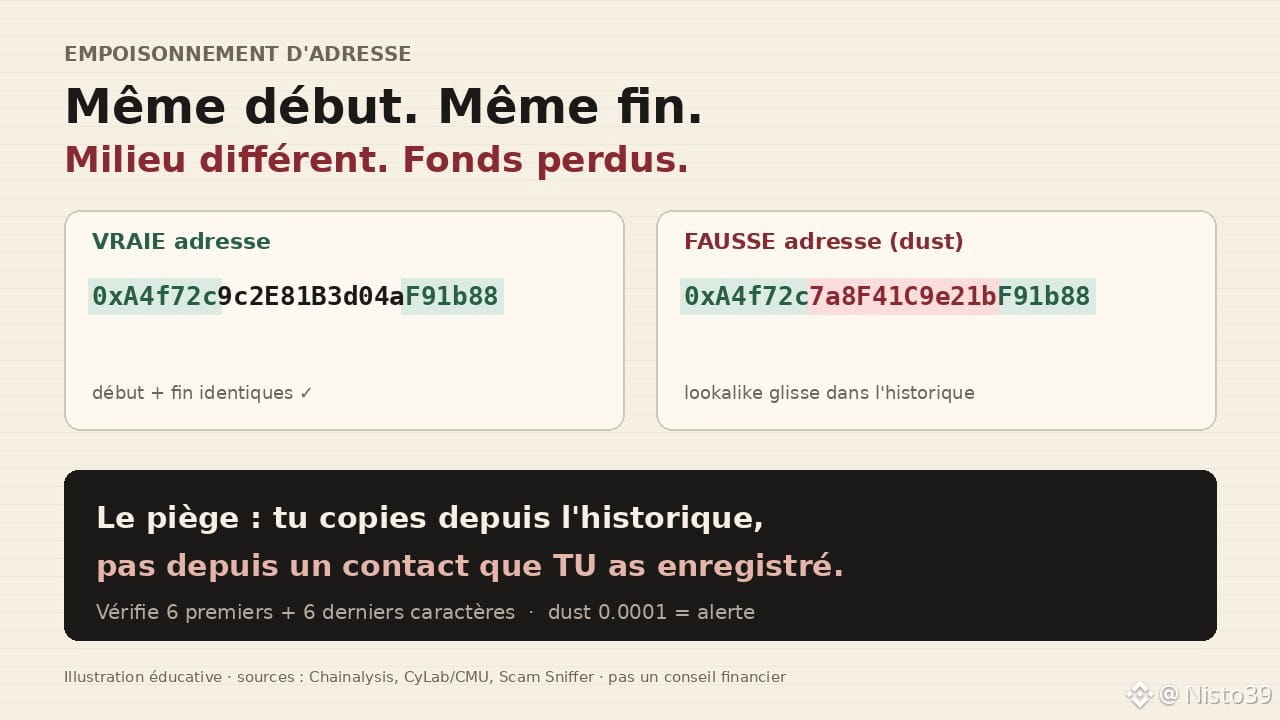
Address poisoning: the trap your history sets for youYou copy an address from your wallet history. The first few characters look right, the last few look right. You send the money. It goes… to someone else. Not a bug. Not a network hack. It’s a trap called address poisoning.
Here’s what no one tells you clearly enough: your transaction history is also a hunting ground. Scammers know it. They use it.
How it works, without unnecessary jargon
A scammer looks at the addresses you often interact with—a friend, an exchange, a contract. Then they generate a lookalike address (using a tool, sometimes bought on the dark web): the same first few characters, the same last few, but a different middle. Next, they send you a tiny amount—dust—from that fake address. Or a zero-value transaction. Your wallet logs the contact. The next time you search for “yesterday’s address,” that one is often the first to come up.
Address poisoning: the trap your history sets for you
You copy an address from your wallet history. The first few characters look right, the last few look right. You send the money. It goes… to someone else. Not a bug. Not a network hack. It’s a trap called address poisoning.
Here’s what no one tells you clearly enough: your transaction history is also a hunting ground. Scammers know it. They use it.
How it works, without unnecessary jargon
A scammer looks at the addresses you often interact with—a friend, an exchange, a contract. Then they generate a lookalike address (using a tool, sometimes bought on the dark web): the same first few characters, the same last few, but a different middle. Next, they send you a tiny amount—dust—from that fake address. Or a zero-value transaction. Your wallet logs the contact. The next time you search for “yesterday’s address,” that one is often the first to come up.
1
753
Log in to explore more content
Join global crypto users on Binance Square
⚡️ Get latest and useful information about crypto.
💬 Trusted by the world’s largest crypto exchange.
👍 Discover real insights from verified creators.
Email / Phone number
Trending Topics
1
#BinanceReopensWithdrawalsForMoreAssets
991,157 views
5,116 Discussing
2
#AnthropicIPOValuationDoubts
2,237 views
82 Discussing
3
#USStocksSlipandCryptoMarketUnderBroadPressure
60,249 views
492 Discussing
4
#USStocksSufferSteepestRoutSince2020
372 views
18 Discussing
5
#StrategySTRCResumesIssuanceAfterOver170Days
41,565 views
570 Discussing
6
#Nasdaq100Tumbles6%
7,958 views
92 Discussing
7
#GreekParliamentPasses10%CryptoCapitalGainsTaxBill
988 views
50 Discussing
8
#KospiSlideTriggersCircuitBreaker
1,786 views
37 Discussing
9
#ADPUSPrivateEmployersAdd86000JobsInOctober
58,821 views
674 Discussing
10
#KazakhstanReportedlyInvests$100MInCryptoFunds
4,203 views
65 Discussing