
#12312
12312
1 views
2 Discussing
Hot
Latest

·
--
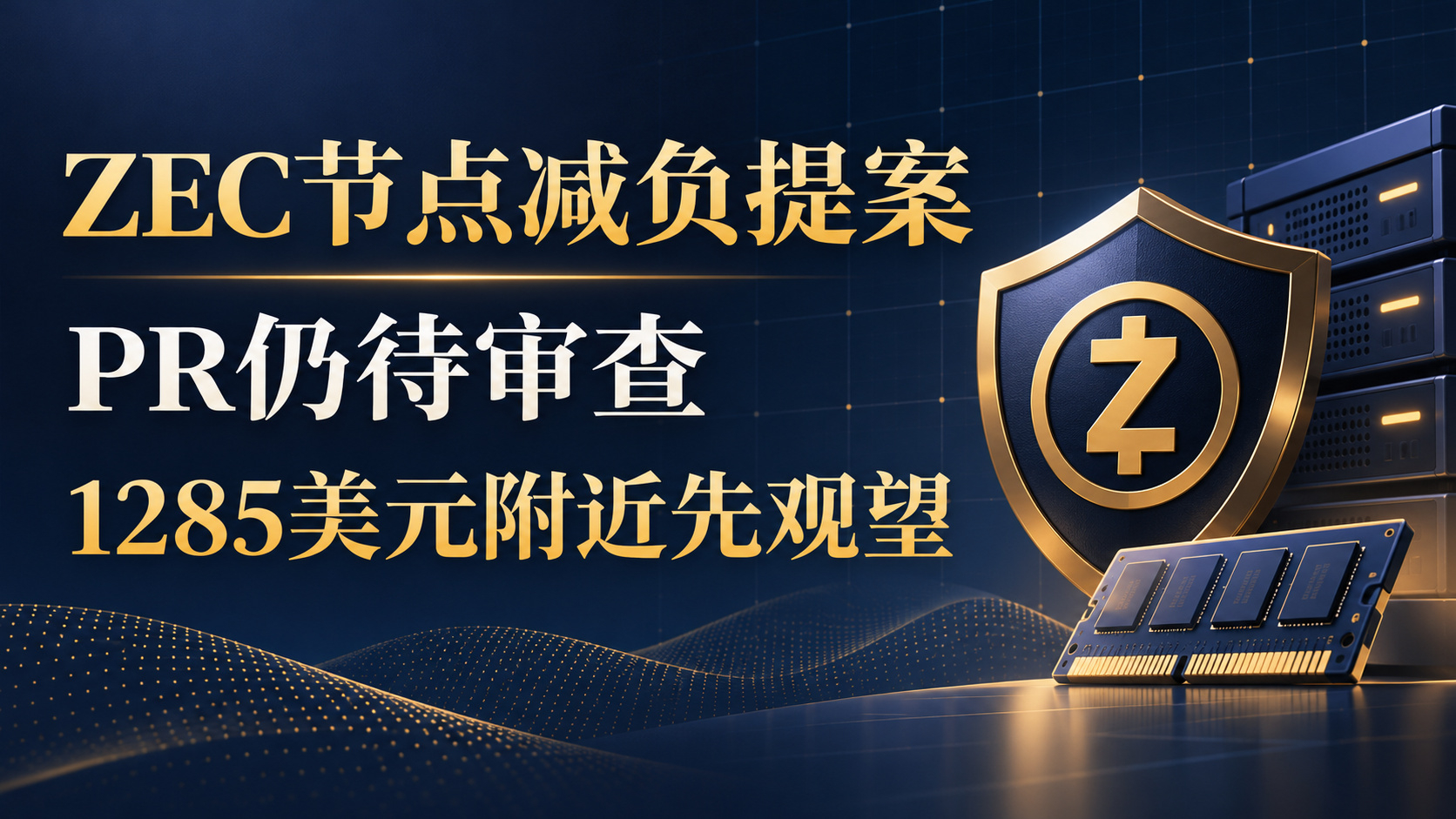
ZEC node load-reduction proposal|Verification keys may become permanently resident|Wait for confirmation near $1,285
My view is cautious: improvements to the Zcash node implementation are worth following, but a code proposal still under review cannot be directly translated into a bullish catalyst for the coin price. On November 6, the Zcash Foundation’s Zebra repository opened PR #12319, which proposes loading the Sapling verification key as validated, fixed data; the corresponding proving parameters would only be read when a miner actually constructs a Sapling coinbase output, and the Sapling Spend proving parameters, which are not used in production, would be removed. Repository issue #12312 explains the current situation: nodes mainly verify proofs, but load larger proving parameters at startup, causing additional memory use. Both official records point to the same specific problem. As of writing, the PR is still Open, has not been merged, and is not part of a newly deployed version.
Why does this matter for ZEC? Lower memory and program-size requirements for running a node could reduce maintenance costs over the long term and help more participants independently verify on-chain data. More widely distributed verification capacity is meaningful for the infrastructure resilience of privacy coins. However, lower node costs do not immediately mean more users, higher transaction volume, or increased inflows. The startup memory figures described in the PR come from local Regtest and also include a separate memory allocator change, so not all of the savings can be attributed to this PR, much less treated as a mainnet performance test. The code change also depends on another PR, and its final impact will depend on merging, testing, and an official release.
As for the market reaction, the most recent Kraken ZEC/USD trade was around $1,285.62 at the time of writing, below today’s open of $1,321.10, with an intraday low of $1,277.31 and a high of $1,361.60. These are price facts and do not prove that the decline was caused by the proposal. ZEC appeared on Binance Square’s six-hour Most Searched list, but was not marked as a Rapid Riser; that level of interest is also no substitute for spot-market buying support. On the fund-flow side, Farside’s earlier records show net inflows of about $1.8 million into ZCSH on November 6 and net outflows of about $11 million on November 5. A single day of positive inflows is not enough to prove a sustained return of institutional capital. For now, I care more about whether the price can hold around $1,277 and whether it can stay above the daily open at $1,321 after reclaiming it, rather than rushing into a “node optimization” narrative.
If I were trading this myself: I would stay out for now. The only direction I would consider is a small, unleveraged spot position in the direction of the trend, with a planned position size of no more than 0.25% of total capital. The entry trigger is for ZEC to regain and hold above $1,321, then hold that level on a retest during the next observation window, while also confirming that the official PR has completed review or that verifiable follow-up progress has been made. If either condition is missing, I would remain flat. If triggered, I would first look toward around $1,361 and take half off there; I would target around $1,388 with the remaining position, closing early if price and volume weaken. I would set the stop at whichever comes first: a level about 3% below the entry price or a decisive break below $1,277. If official testing fails, the PR is closed without being merged, or the market breaks below $1,277 and cannot reclaim it, I would immediately withdraw my bullish view and close the remaining position. I would not describe a conditional order that is still waiting as if it had already been filled.
#ZEC
The above is solely my personal market observation and does not constitute investment advice.
6
Log in to explore more content
Join global crypto users on Binance Square
⚡️ Get latest and useful information about crypto.
💬 Trusted by the world’s largest crypto exchange.
👍 Discover real insights from verified creators.
Email / Phone number
Trending Topics
1
#JobsReportRaisesHikeOdds
297,690 views
2,311 Discussing
2
#CPITestsDecemberRateOutlook
39,729 views
503 Discussing
3
#BitcoinRebounds$75KAsChipsLead
24,216 views
237 Discussing
4
#US Data Center Rules May Constrain AI Expansion
45,294 views
165 Discussing
5
#ARKPlans14ThematicETFsCoveringAIAndTokenizedMarkets
362 views
18 Discussing
6
#WillAnthropicListOnTime
77,230 views
921 Discussing
7
#WillUS-IranTensionsBoostSafe-HavenDemand?
20,584 views
210 Discussing
8
#BitcoinETFsSee$412MNetOutflows
5,515 views
46 Discussing
9
#HKSFCPlansToRestrictCryptoAndExchangeTerms
18,684 views
317 Discussing
10
#TradFiForBeginners
47,121 views
708 Discussing