

#11632
11632
4 views
2 Discussing
Hot
Latest

·
--
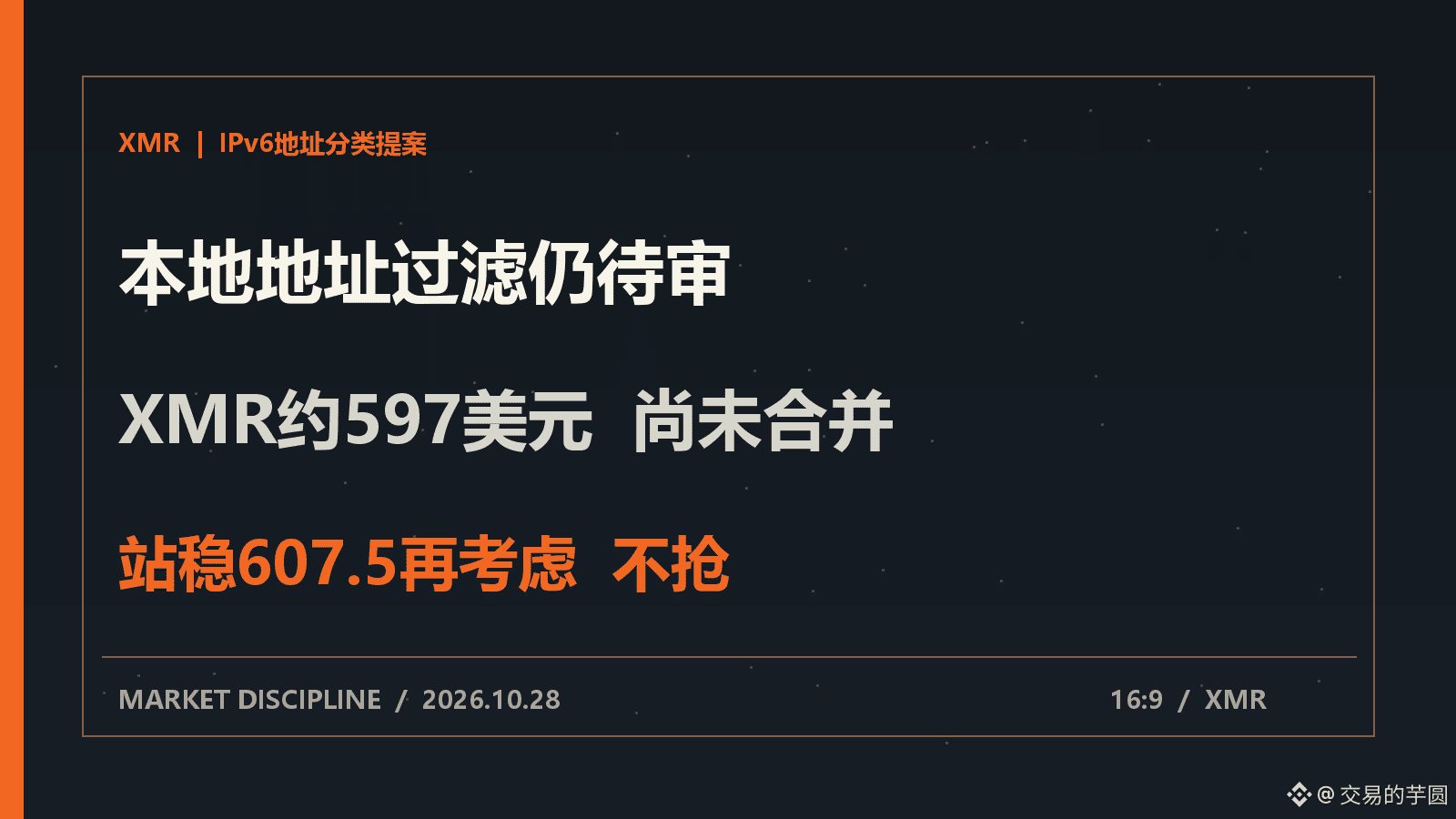
Cautious on XMR node maintenance | IPv6 local-address proposal awaits review | Wait for 607 confirmation before judging price
My stance is to wait and see. On October 27, a PR, #11632, appeared in Monero’s official code repository. The developer noted that the current checks for whether an IPv6 address is “local” mainly cover link-local addresses, while IPv6 unique local addresses—similar to IPv4 private network ranges—may not be filtered in the same way when peer lists are propagated. The proposal would also classify unique local and site-local IPv6 addresses as local and add unit tests. As of writing, the page still showed the PR as open and awaiting review. It should not be described as a fix that has been merged, nor should this be taken as evidence that the network has been attacked or users have suffered losses.
Why do code details like this matter to the market? Nodes exchange block and transaction information through peer connections. If node lists include addresses that cannot be reached normally from the public internet, this could make it less efficient to discover available peers and increase the time operators spend troubleshooting synchronization issues. For a network that emphasizes privacy and censorship resistance, connection stability is part of its infrastructure. However, this PR concerns address-classification logic; it does not change Monero’s privacy protocol, issuance, or transaction-fee structure. A single code change awaiting review is not enough to infer a sudden increase in demand for XMR. Next, watch for review, a merge, an official release, and actual node upgrades—not a misreading of a GitHub page as a mainnet announcement.
Market action also does not support the claim that “technical news immediately drove a rally.” At the time of writing, XMR/USD on Kraken was around $596.87, with a 24-hour low of about $584.80 and a high of about $611.77. It opened the trading day at around $606 before returning to near $597. First, watch $596 and $585 below; $607.5–$612 above is the zone where a rebound would need confirmation. Price movements are also affected by Bitcoin, macroeconomic rate expectations, and trading liquidity, so I would not attribute them to this PR. If XMR repeatedly fails to hold $585, my short-term support assessment is invalidated. If the PR is merged and a broader impact is disclosed, I’ll reassess node risk, but that would not automatically become a buy signal.
If I were trading this myself, I would stay out for now. The only direction I would consider is a small, spot-only long position, with no high leverage. I would wait for two complete 15-minute candles to close above $607.5, followed by a retest that holds between $605 and $608, before considering an entry with 1% of total capital. I would take half off at the first target of $612 and reduce the position further at the second target of $625. If a 15-minute candle closes back below $596 after entry, I would stop out and close the entire position. If price first breaks below $585, I would cancel the long setup and wait for the next price structure. The plan has not been triggered, so it should not be described as a completed or profitable trade. #XMR
The above is solely my personal market observation and does not constitute investment advice.
9
Log in to explore more content
Join global crypto users on Binance Square
⚡️ Get latest and useful information about crypto.
💬 Trusted by the world’s largest crypto exchange.
👍 Discover real insights from verified creators.
Email / Phone number
Trending Topics
1
#BinanceProcesses$4.65BWithdrawals
49,997 views
201 Discussing
2
#WithdrawalsBack: 15 networks live
10,976 views
158 Discussing
3
#EthereumSurpasses$2300
124 views
26 Discussing
4
#BitcoinSpotETFsPost$203MWeeklyOutflow
246 views
9 Discussing
5
#SouthKoreanLawmakerProposesReviewOfAllListedDigitalAssets
312 views
12 Discussing
6
#BrazilVirtualAssetLicenseDeadlineDrawsAbout40Firms
11,365 views
211 Discussing
7
#BTCPayServerUrgesOperatorsToShutDownInstances
10,729 views
195 Discussing
8
#BankOfKoreaSurveysFinancialFirmsOnVirtualAssetRisks
447 views
12 Discussing
9
#BinanceUpdatesProofofReservesAddresses
185,309 views
1,893 Discussing
10
#StudyFindsCircleAIAgentWalletLimitsCanBeBypassed
5,217 views
110 Discussing