
水工-WaterMan
71 Posts

水工-WaterMan
Report
Block User
人生不如意十之八九
待我重整旗鼓
杀他个回马枪
11 Following
95 Followers
92 Liked
Posts
All
Quotes
·
--
$ai and $zoe
are completely opposite narratives
One is ai, one is anti-ai
When ai rises, zoe must inevitably fall
When ai falls—especially during deep washouts—you can buy some zoe
$ai and $zoe
are completely opposite narratives
One is ai, one is anti-ai
When ai rises, zoe must inevitably fall
When ai falls—especially during deep washouts—you can buy some zoe
are completely opposite narratives
One is ai, one is anti-ai
When ai rises, zoe must inevitably fall
When ai falls—especially during deep washouts—you can buy some zoe
121
·
--
Over the past two days, BSC has been really hard to play. The washouts have been so brutal that it’s hard to tell whether it’s a rinse (stop hunt) or a true zero.
Let me give two examples:
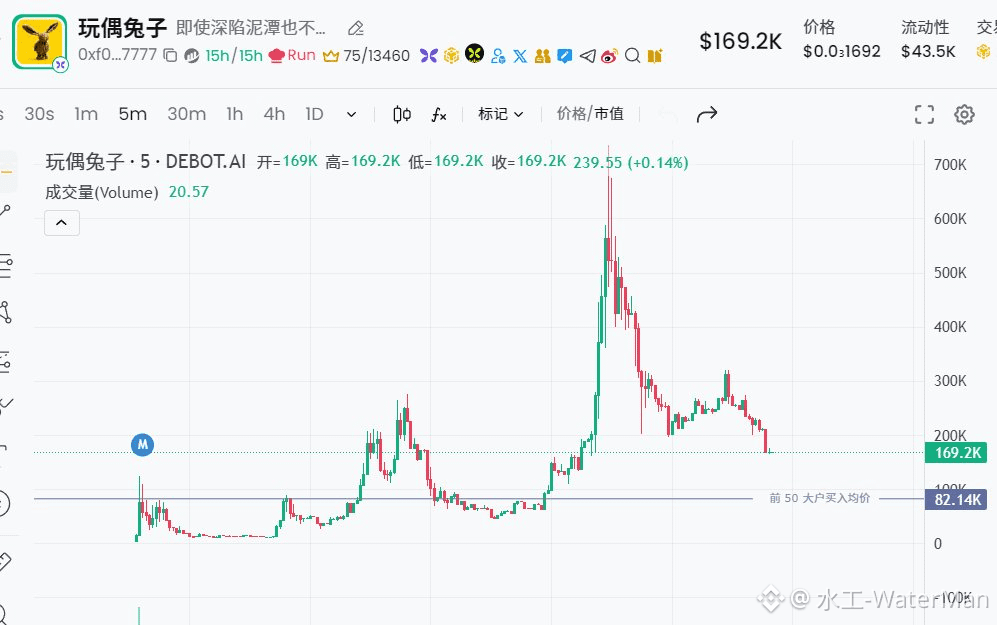
Yesterday’s plaything—rabbit doll. Looking at the 1k chart: after it shot, it dropped straight to below 10k. Then it gradually rose—starting from 250k, it washed down to 40k. After that, it took off again to 700k.
This kind of chart only suits a “pick up trash” style. If it drops to 10k and you’re the first wave to enter, once it hits 10k, who can really hold it? You don’t know whether it’s truly going to zero or just getting washed out.
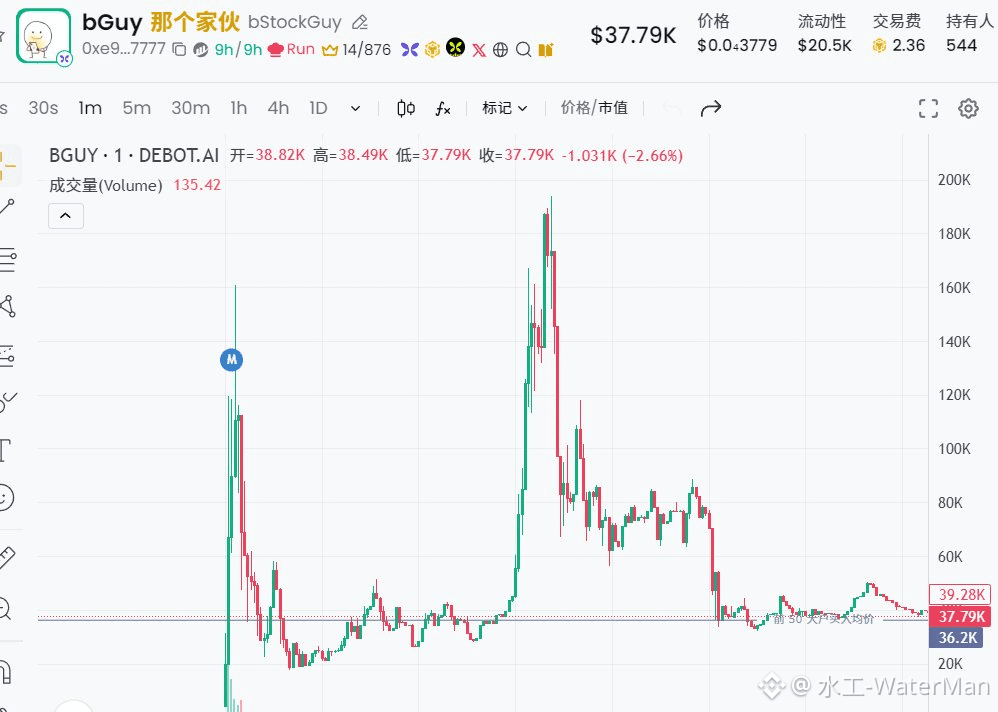
And then bGuy—after the first wave at 120k, it washed down to 20k, then rose again to 190k. If you can’t hold, you really can’t.
I actually like both of these setups, but I ended up losing money and getting out.
How do you trade charts like this? What if it really goes to zero? After all, plenty of “good” coins have ended up at zero.
I need to adjust my strategy. These setups only work for a “pick up trash” approach. For the ones I like, since they haven’t reached the ideal height, when they drop to 10k or 20k, I’ll just pick up a bit for fun.
Have you noticed? BSC has been slowly moving into a branching/divergence phase. Recently, the tokens have been hard to “route”/divert. These recent K-lines also indicate that BSC is gradually entering a two-stage market.
This is a good thing.
Over the past two days, BSC has been really hard to play. The washouts have been so brutal that it’s hard to tell whether it’s a rinse (stop hunt) or a true zero.
Let me give two examples:
Yesterday’s plaything—rabbit doll. Looking at the 1k chart: after it shot, it dropped straight to below 10k. Then it gradually rose—starting from 250k, it washed down to 40k. After that, it took off again to 700k.
This kind of chart only suits a “pick up trash” style. If it drops to 10k and you’re the first wave to enter, once it hits 10k, who can really hold it? You don’t know whether it’s truly going to zero or just getting washed out.
And then bGuy—after the first wave at 120k, it washed down to 20k, then rose again to 190k. If you can’t hold, you really can’t.
I actually like both of these setups, but I ended up losing money and getting out.
How do you trade charts like this? What if it really goes to zero? After all, plenty of “good” coins have ended up at zero.
I need to adjust my strategy. These setups only work for a “pick up trash” approach. For the ones I like, since they haven’t reached the ideal height, when they drop to 10k or 20k, I’ll just pick up a bit for fun.
Have you noticed? BSC has been slowly moving into a branching/divergence phase. Recently, the tokens have been hard to “route”/divert. These recent K-lines also indicate that BSC is gradually entering a two-stage market.
This is a good thing.
Let me give two examples:
Yesterday’s plaything—rabbit doll. Looking at the 1k chart: after it shot, it dropped straight to below 10k. Then it gradually rose—starting from 250k, it washed down to 40k. After that, it took off again to 700k.
This kind of chart only suits a “pick up trash” style. If it drops to 10k and you’re the first wave to enter, once it hits 10k, who can really hold it? You don’t know whether it’s truly going to zero or just getting washed out.
And then bGuy—after the first wave at 120k, it washed down to 20k, then rose again to 190k. If you can’t hold, you really can’t.
I actually like both of these setups, but I ended up losing money and getting out.
How do you trade charts like this? What if it really goes to zero? After all, plenty of “good” coins have ended up at zero.
I need to adjust my strategy. These setups only work for a “pick up trash” approach. For the ones I like, since they haven’t reached the ideal height, when they drop to 10k or 20k, I’ll just pick up a bit for fun.
Have you noticed? BSC has been slowly moving into a branching/divergence phase. Recently, the tokens have been hard to “route”/divert. These recent K-lines also indicate that BSC is gradually entering a two-stage market.
This is a good thing.
161
·
--
No one knows how much I made today—20 million
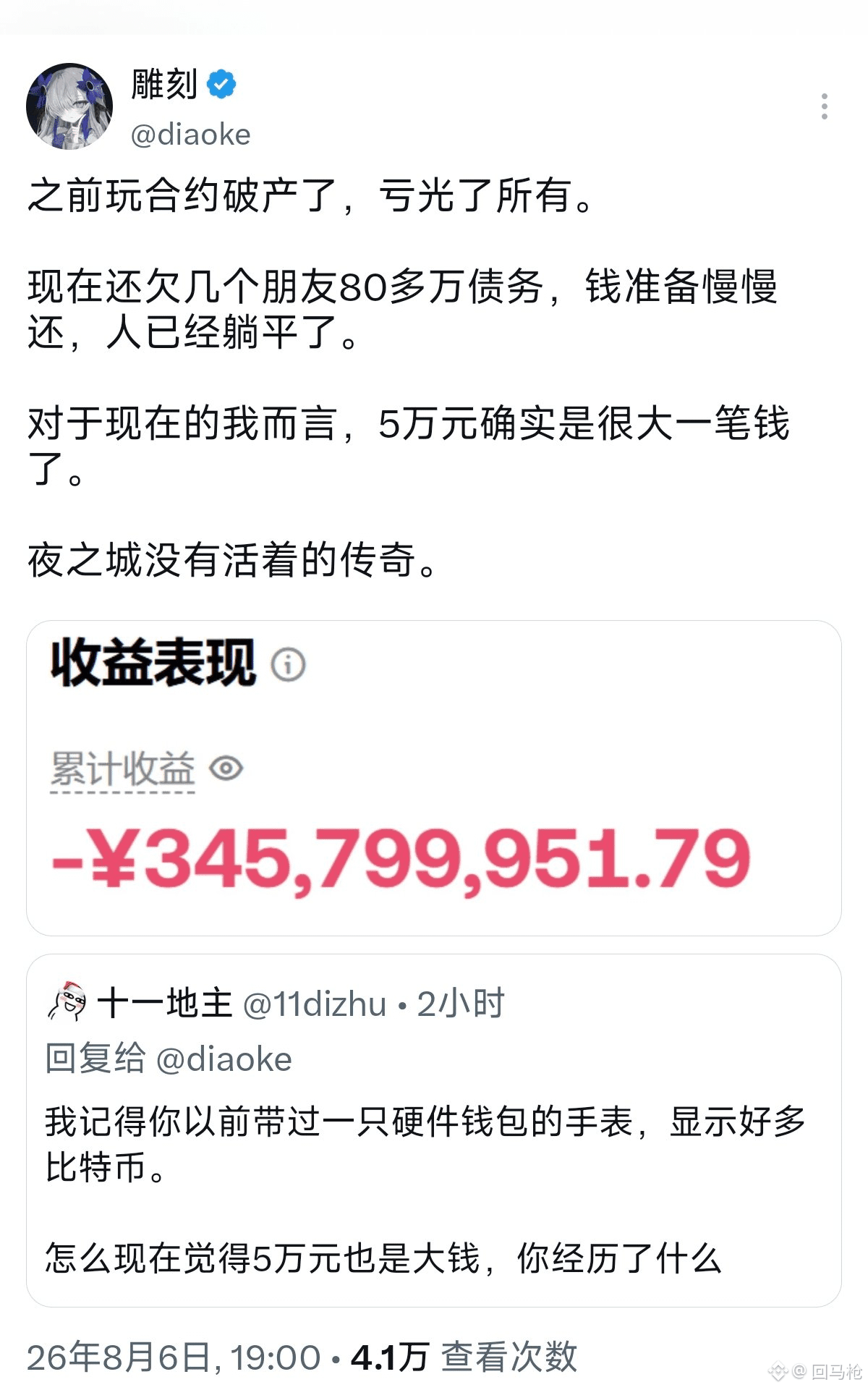
The person who owns this meme went bankrupt after the engraving business; 300 million RMB went to zero.
Earlier iconic moment: “This morning I went out to run some errands. I left a little early, so when I arrived at the place, I found it wasn’t open for business yet.
Right next door there was a small barbershop. I thought, since there was still time, I’d just get my hair trimmed quickly. So I went in, lined up, got my hair washed, had a haircut, chatted with the barber, then paid by scan after it was done. The sun outside was shining perfectly.
No one knows how much I made today—20 million”
No one knows how much I made today—20 million
The person who owns this meme went bankrupt after the engraving business; 300 million RMB went to zero.
Earlier iconic moment: “This morning I went out to run some errands. I left a little early, so when I arrived at the place, I found it wasn’t open for business yet.
Right next door there was a small barbershop. I thought, since there was still time, I’d just get my hair trimmed quickly. So I went in, lined up, got my hair washed, had a haircut, chatted with the barber, then paid by scan after it was done. The sun outside was shining perfectly.
No one knows how much I made today—20 million”
The person who owns this meme went bankrupt after the engraving business; 300 million RMB went to zero.
Earlier iconic moment: “This morning I went out to run some errands. I left a little early, so when I arrived at the place, I found it wasn’t open for business yet.
Right next door there was a small barbershop. I thought, since there was still time, I’d just get my hair trimmed quickly. So I went in, lined up, got my hair washed, had a haircut, chatted with the barber, then paid by scan after it was done. The sun outside was shining perfectly.
No one knows how much I made today—20 million”
3
·
--
I saw a post: a young person studying finance took his 400,000 yuan principal and grew it to over 7 million, only to lose it all back again this year—down more than 2 million. He wrote six takeaways, and I read them twice. Every one of them was bought with real money.
He said his bachelor’s and master’s were both in finance—undergrad from Australia, master’s in the top 30. His starting point wasn’t low, but once he entered the stock market, he still got beaten.
In 2024, he used the 400,000 yuan his family bought him a car with as his trading capital. He tested with a few tens of thousands here and there—adding when he profited, pulling back when he lost. Later he got onto leverage, and with good luck he reached more than 7 million—yet this year he lost more than 2 million again.
No matter who it happens to, they’d need some time to recover from an experience like that.
He listed several points. I picked the one that resonated most with me to talk about:
First takeaway: Never use leverage. You’ve probably heard this a hundred times, but it still doesn’t work—because people still do it. Why? Because when you’re making money, you feel, “This time is different.” Then what happens when the market drops? Your mindset breaks first. Once your mindset breaks, all your decisions become wrong. “Poor management today is permanent forever”—only those who’ve lost money really take this seriously.
Second takeaway: Control your position size and leave room to maneuver. He said averaging down isn’t about adding just because the price drops a couple of percentage points. Instead, you set stages: if it drops 10% or 15%, you add a certain amount. Many people die by the logic of: “It dropped, so I averaged down; I averaged down, so now I’m full; I’m full, so I got trapped.” Only by averaging in batches, with defined spacing and a plan, can you last long.
Third takeaway: When prices rise, learn to reduce positions—especially after a blow-off volume spike. This line is worth a lot of money. The biggest problem for retail investors is that when it goes up they can’t bear to sell, and when it falls they can’t bear to cut. A blow-off volume surge is often the emotional peak. Reducing exposure at emotional peaks will never be too far from being right.
Fourth takeaway: Drawdown is the biggest enemy. He turned 7 million into a loss of 2 million—drawdown of nearly 30%. The psychological gap from 7 million to 5 million is even larger than from 400,000 to 7 million. Losing back the money you made is more miserable than never having made it at all.
Fifth takeaway: You can do only one stock. If you consistently trade just one stock—doing swing trades and doing T—this sounds simple, but the threshold is actually very high. You have to know that company well enough, be familiar with its price fluctuations, and be confident enough in its value. Not many can do it.
Sixth takeaway: Learn to hold cash. He said holding cash is the biggest form of loss control. I truly believe that. Many people lose money not because they made a wrong call, but because there was clearly no opportunity—and they still forced themselves to find one. Holding cash isn’t being timid; it’s waiting. Wait for a market crash, wait for panic, wait until others can’t hold on—then you enter.
I saw a post: a young person studying finance took his 400,000 yuan principal and grew it to over 7 million, only to lose it all back again this year—down more than 2 million. He wrote six takeaways, and I read them twice. Every one of them was bought with real money.
He said his bachelor’s and master’s were both in finance—undergrad from Australia, master’s in the top 30. His starting point wasn’t low, but once he entered the stock market, he still got beaten.
In 2024, he used the 400,000 yuan his family bought him a car with as his trading capital. He tested with a few tens of thousands here and there—adding when he profited, pulling back when he lost. Later he got onto leverage, and with good luck he reached more than 7 million—yet this year he lost more than 2 million again.
No matter who it happens to, they’d need some time to recover from an experience like that.
He listed several points. I picked the one that resonated most with me to talk about:
First takeaway: Never use leverage. You’ve probably heard this a hundred times, but it still doesn’t work—because people still do it. Why? Because when you’re making money, you feel, “This time is different.” Then what happens when the market drops? Your mindset breaks first. Once your mindset breaks, all your decisions become wrong. “Poor management today is permanent forever”—only those who’ve lost money really take this seriously.
Second takeaway: Control your position size and leave room to maneuver. He said averaging down isn’t about adding just because the price drops a couple of percentage points. Instead, you set stages: if it drops 10% or 15%, you add a certain amount. Many people die by the logic of: “It dropped, so I averaged down; I averaged down, so now I’m full; I’m full, so I got trapped.” Only by averaging in batches, with defined spacing and a plan, can you last long.
Third takeaway: When prices rise, learn to reduce positions—especially after a blow-off volume spike. This line is worth a lot of money. The biggest problem for retail investors is that when it goes up they can’t bear to sell, and when it falls they can’t bear to cut. A blow-off volume surge is often the emotional peak. Reducing exposure at emotional peaks will never be too far from being right.
Fourth takeaway: Drawdown is the biggest enemy. He turned 7 million into a loss of 2 million—drawdown of nearly 30%. The psychological gap from 7 million to 5 million is even larger than from 400,000 to 7 million. Losing back the money you made is more miserable than never having made it at all.
Fifth takeaway: You can do only one stock. If you consistently trade just one stock—doing swing trades and doing T—this sounds simple, but the threshold is actually very high. You have to know that company well enough, be familiar with its price fluctuations, and be confident enough in its value. Not many can do it.
Sixth takeaway: Learn to hold cash. He said holding cash is the biggest form of loss control. I truly believe that. Many people lose money not because they made a wrong call, but because there was clearly no opportunity—and they still forced themselves to find one. Holding cash isn’t being timid; it’s waiting. Wait for a market crash, wait for panic, wait until others can’t hold on—then you enter.
He said his bachelor’s and master’s were both in finance—undergrad from Australia, master’s in the top 30. His starting point wasn’t low, but once he entered the stock market, he still got beaten.
In 2024, he used the 400,000 yuan his family bought him a car with as his trading capital. He tested with a few tens of thousands here and there—adding when he profited, pulling back when he lost. Later he got onto leverage, and with good luck he reached more than 7 million—yet this year he lost more than 2 million again.
No matter who it happens to, they’d need some time to recover from an experience like that.
He listed several points. I picked the one that resonated most with me to talk about:
First takeaway: Never use leverage. You’ve probably heard this a hundred times, but it still doesn’t work—because people still do it. Why? Because when you’re making money, you feel, “This time is different.” Then what happens when the market drops? Your mindset breaks first. Once your mindset breaks, all your decisions become wrong. “Poor management today is permanent forever”—only those who’ve lost money really take this seriously.
Second takeaway: Control your position size and leave room to maneuver. He said averaging down isn’t about adding just because the price drops a couple of percentage points. Instead, you set stages: if it drops 10% or 15%, you add a certain amount. Many people die by the logic of: “It dropped, so I averaged down; I averaged down, so now I’m full; I’m full, so I got trapped.” Only by averaging in batches, with defined spacing and a plan, can you last long.
Third takeaway: When prices rise, learn to reduce positions—especially after a blow-off volume spike. This line is worth a lot of money. The biggest problem for retail investors is that when it goes up they can’t bear to sell, and when it falls they can’t bear to cut. A blow-off volume surge is often the emotional peak. Reducing exposure at emotional peaks will never be too far from being right.
Fourth takeaway: Drawdown is the biggest enemy. He turned 7 million into a loss of 2 million—drawdown of nearly 30%. The psychological gap from 7 million to 5 million is even larger than from 400,000 to 7 million. Losing back the money you made is more miserable than never having made it at all.
Fifth takeaway: You can do only one stock. If you consistently trade just one stock—doing swing trades and doing T—this sounds simple, but the threshold is actually very high. You have to know that company well enough, be familiar with its price fluctuations, and be confident enough in its value. Not many can do it.
Sixth takeaway: Learn to hold cash. He said holding cash is the biggest form of loss control. I truly believe that. Many people lose money not because they made a wrong call, but because there was clearly no opportunity—and they still forced themselves to find one. Holding cash isn’t being timid; it’s waiting. Wait for a market crash, wait for panic, wait until others can’t hold on—then you enter.
59
·
--
For most of the past two months, the funding rate has remained negative. The longs were already excessively crowded before this rally, and they still are. This rally is largely due to short covering.
#HEI
For most of the past two months, the funding rate has remained negative. The longs were already excessively crowded before this rally, and they still are. This rally is largely due to short covering.
#HEI
#HEI
41
·
--
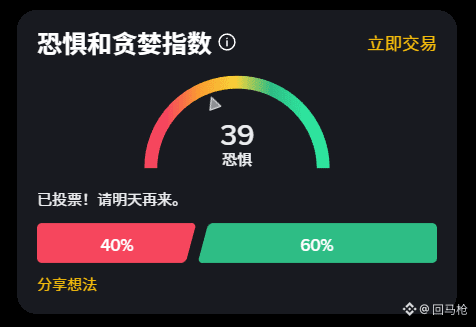
Bullish
Long risk is limited; short risk is unlimited
Cherish life—stay away from shorting
Long risk is limited; short risk is unlimited
Cherish life—stay away from shorting
Cherish life—stay away from shorting
42
·
--
The real risks in the crypto market may not be just the cycle.
If Trump loses the midterm elections, or if the Democrats regain power, it could mean a major shift in the direction of crypto regulation.
The policy window of the past two years may close again.
So this round of the market isn’t just a bull run for the crypto industry—it’s also a window to buy time.
If the window disappears, what the industry may face won’t be just a bear market, but a global regulatory crackdown.
The real risks in the crypto market may not be just the cycle.
If Trump loses the midterm elections, or if the Democrats regain power, it could mean a major shift in the direction of crypto regulation.
The policy window of the past two years may close again.
So this round of the market isn’t just a bull run for the crypto industry—it’s also a window to buy time.
If the window disappears, what the industry may face won’t be just a bear market, but a global regulatory crackdown.
If Trump loses the midterm elections, or if the Democrats regain power, it could mean a major shift in the direction of crypto regulation.
The policy window of the past two years may close again.
So this round of the market isn’t just a bull run for the crypto industry—it’s also a window to buy time.
If the window disappears, what the industry may face won’t be just a bear market, but a global regulatory crackdown.
78
·
--
I want to make a family rule: for any of my descendants, if they ever engage in short selling, break their legs.
I want to make a family rule: for any of my descendants, if they ever engage in short selling, break their legs.
66
·
--
Bearish
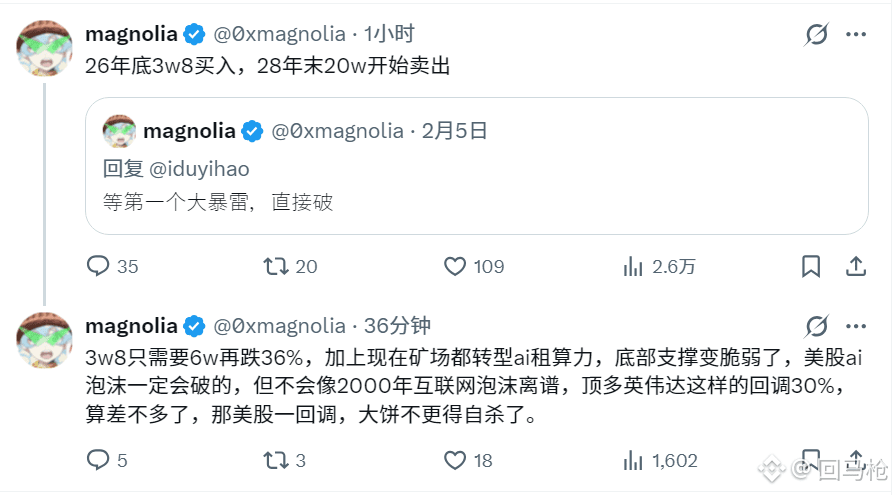
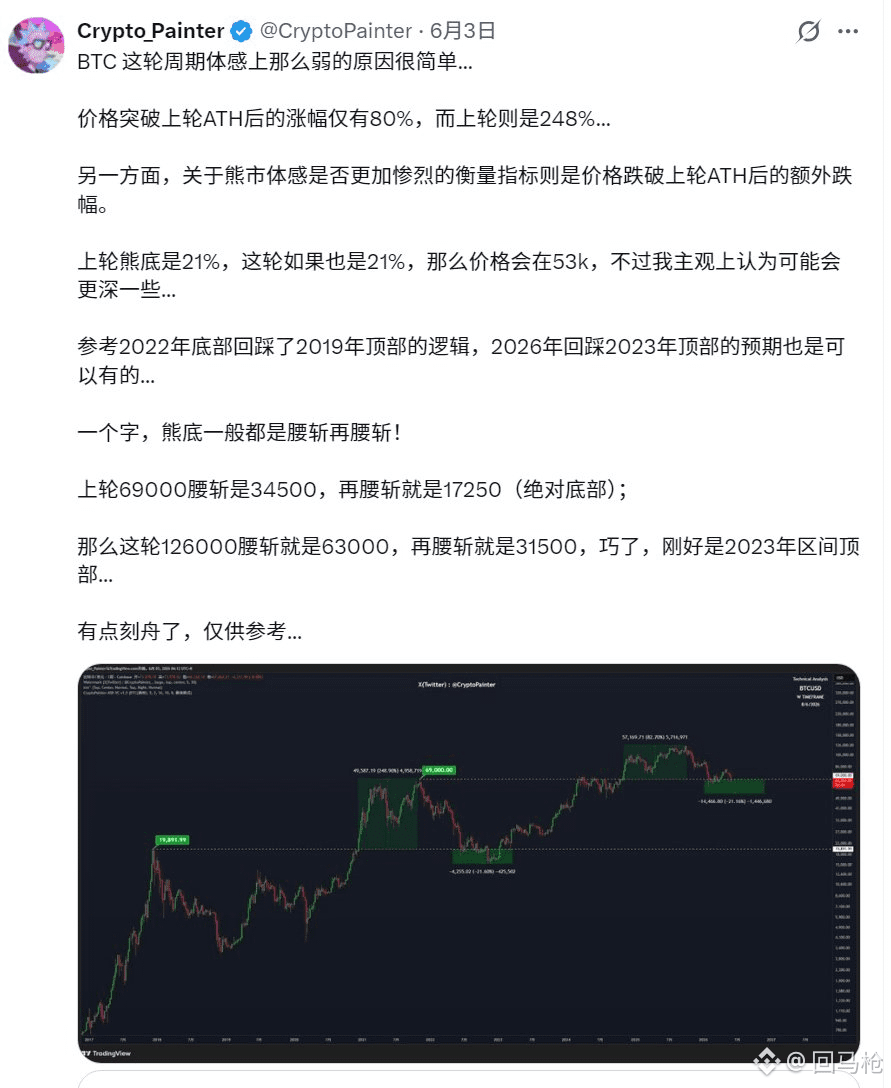
Seeing the artist and Hat Sister both predicting BTC to hit 30k
It's necessary to sort this out; if BTC really hits 30k, what should we do?
What assets should we buy to potentially outperform the market?
Gotta do some solid research to survive this bear market.
Seeing the artist and Hat Sister both predicting BTC to hit 30k
It's necessary to sort this out; if BTC really hits 30k, what should we do?
What assets should we buy to potentially outperform the market?
Gotta do some solid research to survive this bear market.
It's necessary to sort this out; if BTC really hits 30k, what should we do?
What assets should we buy to potentially outperform the market?
Gotta do some solid research to survive this bear market.
水工-WaterMan
·
--
If BTC really drops to $30K, what should you buy?
Yesterday, the fear index was 11, ZEC surged 14%, and a whale with a 23-win streak on shorts opened a $48 million BTC short position.
When BTC crashes, the fleeing capital flows along a fixed path—finding the bottlenecks in the capital escape supply chain is the key.
① Bottleneck Scanner
BTC dropped from $63K to $30K, and money will follow this 'escape supply chain':
BTC long positions got liquidated → stablecoins (USDT/USDC)
→ ① Stay in CeFi to earn interest (lending/investing)
→ ② Buy yield-generating RWAs (T-bills, BUIDL, sDAI)
→ ③ Swap for privacy coins and hide (ZEC/XMR)
When BTC crashes, the fleeing capital flows along a fixed path—finding the bottlenecks in the capital escape supply chain is the key.
① Bottleneck Scanner
BTC dropped from $63K to $30K, and money will follow this 'escape supply chain':
BTC long positions got liquidated → stablecoins (USDT/USDC)
→ ① Stay in CeFi to earn interest (lending/investing)
→ ② Buy yield-generating RWAs (T-bills, BUIDL, sDAI)
→ ③ Swap for privacy coins and hide (ZEC/XMR)
154
·
--

Article
If BTC really drops to $30K, what should you buy?Yesterday, the fear index was 11, ZEC surged 14%, and a whale with a 23-win streak on shorts opened a $48 million BTC short position.
When BTC crashes, the fleeing capital flows along a fixed path—finding the bottlenecks in the capital escape supply chain is the key.
① Bottleneck Scanner
BTC dropped from $63K to $30K, and money will follow this 'escape supply chain':
BTC long positions got liquidated → stablecoins (USDT/USDC)
→ ① Stay in CeFi to earn interest (lending/investing)
→ ② Buy yield-generating RWAs (T-bills, BUIDL, sDAI)
→ ③ Swap for privacy coins and hide (ZEC/XMR)
If BTC really drops to $30K, what should you buy?
Yesterday, the fear index was 11, ZEC surged 14%, and a whale with a 23-win streak on shorts opened a $48 million BTC short position.
When BTC crashes, the fleeing capital flows along a fixed path—finding the bottlenecks in the capital escape supply chain is the key.
① Bottleneck Scanner
BTC dropped from $63K to $30K, and money will follow this 'escape supply chain':
BTC long positions got liquidated → stablecoins (USDT/USDC)
→ ① Stay in CeFi to earn interest (lending/investing)
→ ② Buy yield-generating RWAs (T-bills, BUIDL, sDAI)
→ ③ Swap for privacy coins and hide (ZEC/XMR)
When BTC crashes, the fleeing capital flows along a fixed path—finding the bottlenecks in the capital escape supply chain is the key.
① Bottleneck Scanner
BTC dropped from $63K to $30K, and money will follow this 'escape supply chain':
BTC long positions got liquidated → stablecoins (USDT/USDC)
→ ① Stay in CeFi to earn interest (lending/investing)
→ ② Buy yield-generating RWAs (T-bills, BUIDL, sDAI)
→ ③ Swap for privacy coins and hide (ZEC/XMR)
1
457
·
--
Bullish
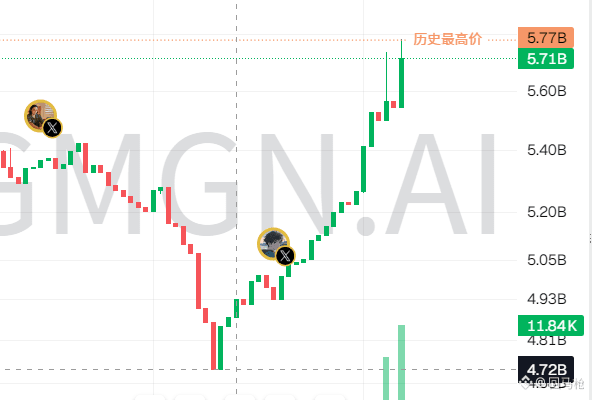
$WLD is on fire, up 1B in just 1 hour, from 4.7B to 5.7B
Who’s the whale buying in?
$WLD is on fire, up 1B in just 1 hour, from 4.7B to 5.7B
Who’s the whale buying in?
Who’s the whale buying in?
266
·
--
Bullish
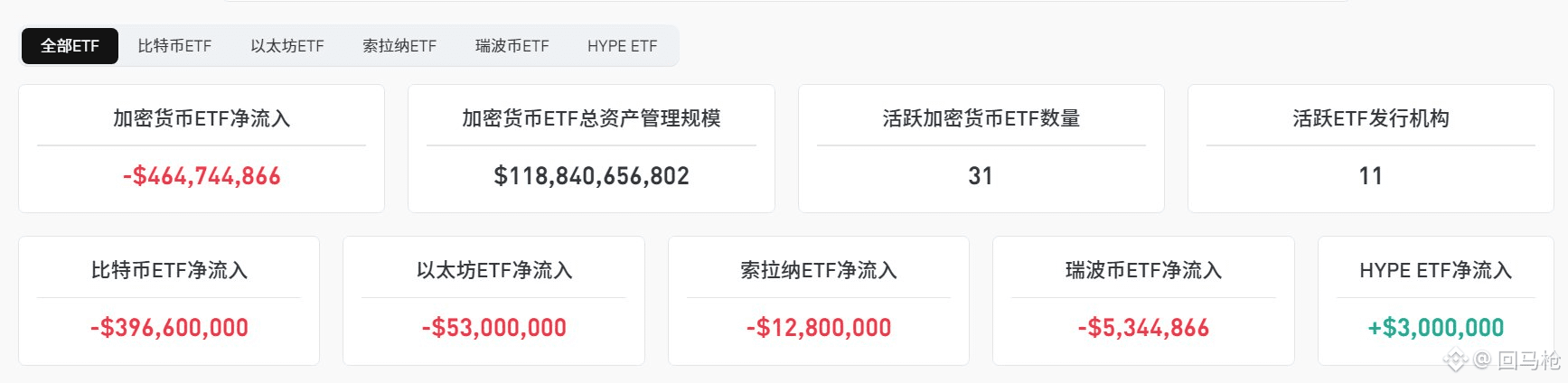
Who's out there leading the charge, standing tall and clear?
Who's out there leading the charge, standing tall and clear?
389
·
--
Bullish
$three just hit a new high at 11M
The market is rallying, and projects with real substance stand out, especially during this narrative vacuum.
$three just hit a new high at 11M
The market is rallying, and projects with real substance stand out, especially during this narrative vacuum.
The market is rallying, and projects with real substance stand out, especially during this narrative vacuum.
68
·
--
Bearish
Shorting BTC is a gamble right now; with this market, I can't see any bullish signals at all.
Shorting BTC is a gamble right now; with this market, I can't see any bullish signals at all.
162
·
--
Bearish
Micro Strategy: Guys, I can't hold on any longer, I'm starting to get ready to pull out.
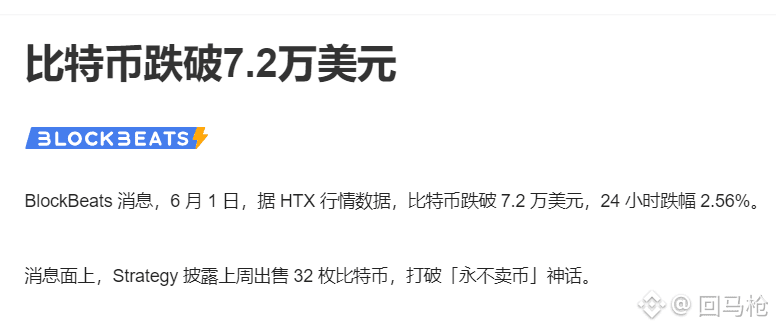
The myth of never selling coins has been shattered; Strategy has sold BTC for the first time!
Last week, they sold 32 coins at an average price of $77,135. While that's just a drop in the bucket of their 840k+ holdings, it’s a significant move. After all, if the biggest bulls can't hold, believers might get disappointed and choose to exit, adding uncertainty to the market.
Moreover, once the first shot is fired, it can trigger a broken window effect, and other institutions might follow suit. Just wait and see.
Short the hell out of it!
$btc #BTC
Micro Strategy: Guys, I can't hold on any longer, I'm starting to get ready to pull out.
The myth of never selling coins has been shattered; Strategy has sold BTC for the first time!
Last week, they sold 32 coins at an average price of $77,135. While that's just a drop in the bucket of their 840k+ holdings, it’s a significant move. After all, if the biggest bulls can't hold, believers might get disappointed and choose to exit, adding uncertainty to the market.
Moreover, once the first shot is fired, it can trigger a broken window effect, and other institutions might follow suit. Just wait and see.
Short the hell out of it!
$btc #BTC
The myth of never selling coins has been shattered; Strategy has sold BTC for the first time!
Last week, they sold 32 coins at an average price of $77,135. While that's just a drop in the bucket of their 840k+ holdings, it’s a significant move. After all, if the biggest bulls can't hold, believers might get disappointed and choose to exit, adding uncertainty to the market.
Moreover, once the first shot is fired, it can trigger a broken window effect, and other institutions might follow suit. Just wait and see.
Short the hell out of it!
$btc #BTC
132
·
--
The undisputed leader of the Base AI season, the privacy-focused ChatGPT version used by 3 million users, what exactly is Venice (VVV)?The undisputed leader of the Base AI season, the privacy-focused ChatGPT version used by 3 million users, what exactly is Venice (VVV)?
Venice AI @AskVenice
A generative AI platform focused on privacy protection, censorship-free, and ethically sound practices.
Simply put, it's an AI that doesn't interfere with or record your privacy to the greatest extent possible, and it's uncensored. It won't act as a moral policeman like mainstream AI, but it still adheres to legal boundaries. For example, it won't allow access to children or serious crimes. Otherwise, things like pornography are basically allowed freely; it's very open and much freer than OpenAI/Claude.
The undisputed leader of the Base AI season, the privacy-focused ChatGPT version used by 3 million users, what exactly is Venice (VVV)?
The undisputed leader of the Base AI season, the privacy-focused ChatGPT version used by 3 million users, what exactly is Venice (VVV)?
Venice AI @AskVenice
A generative AI platform focused on privacy protection, censorship-free, and ethically sound practices.
Simply put, it's an AI that doesn't interfere with or record your privacy to the greatest extent possible, and it's uncensored. It won't act as a moral policeman like mainstream AI, but it still adheres to legal boundaries. For example, it won't allow access to children or serious crimes. Otherwise, things like pornography are basically allowed freely; it's very open and much freer than OpenAI/Claude.
Venice AI @AskVenice
A generative AI platform focused on privacy protection, censorship-free, and ethically sound practices.
Simply put, it's an AI that doesn't interfere with or record your privacy to the greatest extent possible, and it's uncensored. It won't act as a moral policeman like mainstream AI, but it still adheres to legal boundaries. For example, it won't allow access to children or serious crimes. Otherwise, things like pornography are basically allowed freely; it's very open and much freer than OpenAI/Claude.
445
·
--
I've been doing some deeper thinking about the Meme scene on the BSC chain these past few days.
In the beginning, BSC had no problem riding the Meme wave as a nascent chain, mainly just riding the coattails of the founding teams. That was fine; looking back at SOL's history, it started out similarly. SOL evolved naturally over time, of course, with some operational fingerprints along the way, but overall it was a market-driven evolution.
The issue with BSC is that the introduction of new tokens has forked the natural evolution path. Everyone wants to launch a coin, and everyone’s waiting for their turn, but the slots for new tokens are limited—who gets listed?
Here’s my conclusion, or rather my guess, which might not be right:
I suspect that Binance's listing team and the operations team are separate. This leads to a situation where those who handle listings don’t care much about operations, and those who manage operations don’t have the authority to list coins.
The listing team only looks at data—market cap, token distribution, that sort of thing. They don’t pay much attention to the narrative or the relative weight of the token, so they don’t really consider whether listing a particular coin could negatively impact the overall ecosystem of the chain.
On the other hand, those in operations do care. Maybe they want to list more tokens with different narratives, but they don’t have a say in listings.
It's frustrating for everyone involved. Fun and interesting tokens can’t meet the listing criteria, and not getting listed just leads to stagnation, with the ceiling getting lower and lower—it's a vicious cycle.
Looking back, if the listing team hadn’t pushed so many Binance concept tokens and had swapped in a couple of narrative-driven tokens—like one or two from the Musk concept—then the narrative around asteroids wouldn’t have played out this way. BSC definitely wouldn’t have been without a stable 1M ASTEROID token.
I've been doing some deeper thinking about the Meme scene on the BSC chain these past few days.
In the beginning, BSC had no problem riding the Meme wave as a nascent chain, mainly just riding the coattails of the founding teams. That was fine; looking back at SOL's history, it started out similarly. SOL evolved naturally over time, of course, with some operational fingerprints along the way, but overall it was a market-driven evolution.
The issue with BSC is that the introduction of new tokens has forked the natural evolution path. Everyone wants to launch a coin, and everyone’s waiting for their turn, but the slots for new tokens are limited—who gets listed?
Here’s my conclusion, or rather my guess, which might not be right:
I suspect that Binance's listing team and the operations team are separate. This leads to a situation where those who handle listings don’t care much about operations, and those who manage operations don’t have the authority to list coins.
The listing team only looks at data—market cap, token distribution, that sort of thing. They don’t pay much attention to the narrative or the relative weight of the token, so they don’t really consider whether listing a particular coin could negatively impact the overall ecosystem of the chain.
On the other hand, those in operations do care. Maybe they want to list more tokens with different narratives, but they don’t have a say in listings.
It's frustrating for everyone involved. Fun and interesting tokens can’t meet the listing criteria, and not getting listed just leads to stagnation, with the ceiling getting lower and lower—it's a vicious cycle.
Looking back, if the listing team hadn’t pushed so many Binance concept tokens and had swapped in a couple of narrative-driven tokens—like one or two from the Musk concept—then the narrative around asteroids wouldn’t have played out this way. BSC definitely wouldn’t have been without a stable 1M ASTEROID token.
In the beginning, BSC had no problem riding the Meme wave as a nascent chain, mainly just riding the coattails of the founding teams. That was fine; looking back at SOL's history, it started out similarly. SOL evolved naturally over time, of course, with some operational fingerprints along the way, but overall it was a market-driven evolution.
The issue with BSC is that the introduction of new tokens has forked the natural evolution path. Everyone wants to launch a coin, and everyone’s waiting for their turn, but the slots for new tokens are limited—who gets listed?
Here’s my conclusion, or rather my guess, which might not be right:
I suspect that Binance's listing team and the operations team are separate. This leads to a situation where those who handle listings don’t care much about operations, and those who manage operations don’t have the authority to list coins.
The listing team only looks at data—market cap, token distribution, that sort of thing. They don’t pay much attention to the narrative or the relative weight of the token, so they don’t really consider whether listing a particular coin could negatively impact the overall ecosystem of the chain.
On the other hand, those in operations do care. Maybe they want to list more tokens with different narratives, but they don’t have a say in listings.
It's frustrating for everyone involved. Fun and interesting tokens can’t meet the listing criteria, and not getting listed just leads to stagnation, with the ceiling getting lower and lower—it's a vicious cycle.
Looking back, if the listing team hadn’t pushed so many Binance concept tokens and had swapped in a couple of narrative-driven tokens—like one or two from the Musk concept—then the narrative around asteroids wouldn’t have played out this way. BSC definitely wouldn’t have been without a stable 1M ASTEROID token.
91
·
--
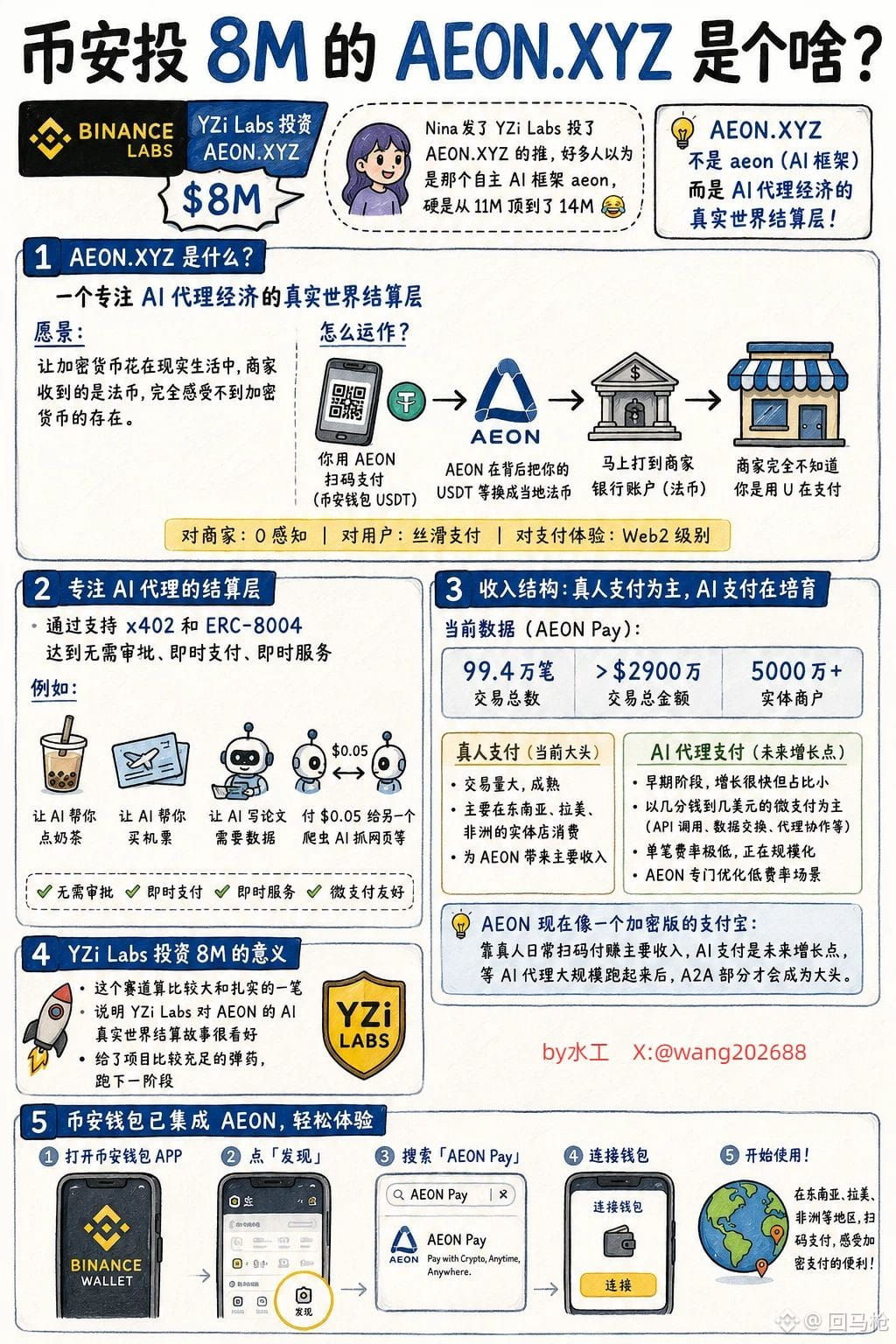
What’s AEON.XYZ that Binance just dropped 8M on?
LOL, Nina posted about YZi Labs investing in AEON.XYZ, and a ton of people thought it was that self-sovereign AI framework aeon, which shot from 11M to 14M.
Out of curiosity, I checked what AEON.XYZ is all about.
It’s another real-world settlement layer, but this one focuses on the AI agent economy.
So-called real-world settlement layers are all about making crypto spendable in everyday life, but the merchants receiving payments get fiat, so they don't feel the presence of crypto at all.
For example, if you use AEON to scan and pay for your meal with USDT from your Binance wallet, AEON converts your USDT to local fiat behind the scenes and instantly transfers it to the merchant’s bank account. The merchant has no idea you paid with U.
AEON focuses on AI agent settlement, supporting x402 and ERC-8004, enabling no approval, instant payments, and immediate service. For instance, if you want AI to order a bubble tea, book a flight, or need data for AI to write a paper, you just pay $0.05 for another crawlers' AI to grab web pages, and so on.
While AI agent settlements are their main narrative, AEON's big revenue still comes from real human payments, which are already mature and primarily happening in brick-and-mortar stores in Southeast Asia, Latin America, and Africa.
AEON Pay has processed 994,000 transactions, with a total amount exceeding $29 million.
Supporting over 50 million merchants.
Payments between AIs are still in early days, growing fast but making up a much smaller share, since AI payments mainly involve microtransactions of a few cents to a few dollars, like API calls, data exchanges, and agent collaborations, with extremely low fees, still in the scaling phase.
AEON is currently like a crypto version of Alipay, mainly earning revenue from real people scanning and paying, while AI payments are the growth point for the future, still in the nurturing stage. Once AI agents scale up, the A2A part will become the major revenue stream.
This 8M investment from YZi Labs is considered quite substantial and solid for this sector, indicating that YZi Labs is optimistic about AEON's AI real-world settlement narrative, providing the project with ample ammo for the next phase.
Binance Wallet has already integrated AEON; just hit Discover in the app and search for AEON Pay, connect your wallet, and you’re good to go. If you're in Southeast Asia or Latin America, you can give it a try and feel it out.
What’s AEON.XYZ that Binance just dropped 8M on?
LOL, Nina posted about YZi Labs investing in AEON.XYZ, and a ton of people thought it was that self-sovereign AI framework aeon, which shot from 11M to 14M.
Out of curiosity, I checked what AEON.XYZ is all about.
It’s another real-world settlement layer, but this one focuses on the AI agent economy.
So-called real-world settlement layers are all about making crypto spendable in everyday life, but the merchants receiving payments get fiat, so they don't feel the presence of crypto at all.
For example, if you use AEON to scan and pay for your meal with USDT from your Binance wallet, AEON converts your USDT to local fiat behind the scenes and instantly transfers it to the merchant’s bank account. The merchant has no idea you paid with U.
AEON focuses on AI agent settlement, supporting x402 and ERC-8004, enabling no approval, instant payments, and immediate service. For instance, if you want AI to order a bubble tea, book a flight, or need data for AI to write a paper, you just pay $0.05 for another crawlers' AI to grab web pages, and so on.
While AI agent settlements are their main narrative, AEON's big revenue still comes from real human payments, which are already mature and primarily happening in brick-and-mortar stores in Southeast Asia, Latin America, and Africa.
AEON Pay has processed 994,000 transactions, with a total amount exceeding $29 million.
Supporting over 50 million merchants.
Payments between AIs are still in early days, growing fast but making up a much smaller share, since AI payments mainly involve microtransactions of a few cents to a few dollars, like API calls, data exchanges, and agent collaborations, with extremely low fees, still in the scaling phase.
AEON is currently like a crypto version of Alipay, mainly earning revenue from real people scanning and paying, while AI payments are the growth point for the future, still in the nurturing stage. Once AI agents scale up, the A2A part will become the major revenue stream.
This 8M investment from YZi Labs is considered quite substantial and solid for this sector, indicating that YZi Labs is optimistic about AEON's AI real-world settlement narrative, providing the project with ample ammo for the next phase.
Binance Wallet has already integrated AEON; just hit Discover in the app and search for AEON Pay, connect your wallet, and you’re good to go. If you're in Southeast Asia or Latin America, you can give it a try and feel it out.
LOL, Nina posted about YZi Labs investing in AEON.XYZ, and a ton of people thought it was that self-sovereign AI framework aeon, which shot from 11M to 14M.
Out of curiosity, I checked what AEON.XYZ is all about.
It’s another real-world settlement layer, but this one focuses on the AI agent economy.
So-called real-world settlement layers are all about making crypto spendable in everyday life, but the merchants receiving payments get fiat, so they don't feel the presence of crypto at all.
For example, if you use AEON to scan and pay for your meal with USDT from your Binance wallet, AEON converts your USDT to local fiat behind the scenes and instantly transfers it to the merchant’s bank account. The merchant has no idea you paid with U.
AEON focuses on AI agent settlement, supporting x402 and ERC-8004, enabling no approval, instant payments, and immediate service. For instance, if you want AI to order a bubble tea, book a flight, or need data for AI to write a paper, you just pay $0.05 for another crawlers' AI to grab web pages, and so on.
While AI agent settlements are their main narrative, AEON's big revenue still comes from real human payments, which are already mature and primarily happening in brick-and-mortar stores in Southeast Asia, Latin America, and Africa.
AEON Pay has processed 994,000 transactions, with a total amount exceeding $29 million.
Supporting over 50 million merchants.
Payments between AIs are still in early days, growing fast but making up a much smaller share, since AI payments mainly involve microtransactions of a few cents to a few dollars, like API calls, data exchanges, and agent collaborations, with extremely low fees, still in the scaling phase.
AEON is currently like a crypto version of Alipay, mainly earning revenue from real people scanning and paying, while AI payments are the growth point for the future, still in the nurturing stage. Once AI agents scale up, the A2A part will become the major revenue stream.
This 8M investment from YZi Labs is considered quite substantial and solid for this sector, indicating that YZi Labs is optimistic about AEON's AI real-world settlement narrative, providing the project with ample ammo for the next phase.
Binance Wallet has already integrated AEON; just hit Discover in the app and search for AEON Pay, connect your wallet, and you’re good to go. If you're in Southeast Asia or Latin America, you can give it a try and feel it out.


95
Log in to explore more content
Join global crypto users on Binance Square
⚡️ Get latest and useful information about crypto.
💬 Trusted by the world’s largest crypto exchange.
👍 Discover real insights from verified creators.
Email / Phone number
Trending Topics
USAugustPPIRisesLessThanExpected
14,221 views
385 Discussing
🚨 US AUG PPI: Rises LESS Than Expected! Bullish for Crypto? 🚀
PPI +0.4% MoM as expected, but CORE PPI only +0.2% vs +0.3% expected - cooling!
What it means:
• Wholesale inflation softer than feared
• Fed rate hike chance now 62% - but dovish signals coming
• Core PCE revisions expected downward - bullish
• BTC usually pumps on softer PPI
Fed meeting Sep 15-16 - Market now expects pause, not hike?
Is this the green light for Q4 rally?
#Bitcoin #PPI #Fed #CryptoNews #BTC#usaugustppiriseslessthanexpected
True News
·1 Likes
·1.2k views
SECApprovesNasdaqTexasCommodityTrustRule
11,079 views
346 Discussing
ECBRaisesRatesSecondTimeTo2.5%
7,425 views
248 Discussing