
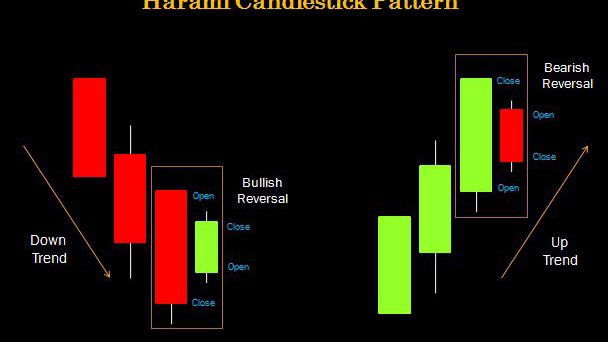

Harami candlestick patterns are valuable tools used by traders to identify potential trend reversals in financial markets. There are two main types of Harami patterns - #Bullish Harami and #Bearish Harami.
1. Bullish Harami Candle:
The Bullish Harami is a pattern that suggests a possible shift from a bearish to a bullish trend. It occurs when there is a large bearish (red) candlestick followed by a smaller bullish (green) candlestick. The open price of the smaller candlestick should be within the range of the larger one. Traders often find this pattern more reliable when the market is oversold. A confirmation of a bullish reversal is a subsequent candlestick closing as bullish.
2. Bearish Harami Candle:
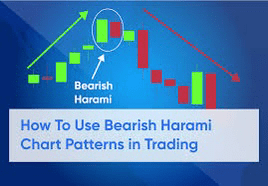
Conversely, the Bearish Harami suggests a potential reversal from a bullish to a bearish trend. It forms when a large bullish (green) candlestick is followed by a smaller bearish (red) candlestick within its body. This pattern indicates that bears might be taking control as the bulls lose momentum. To confirm the bearish reversal, traders watch for a subsequent bearish candlestick after the Bearish Harami pattern.
3. Harami Cross Candle:
The Harami Cross pattern is a variant of the regular Harami, featuring a very small real body, resembling a Doji. This small body after a significant price move suggests a possible trend reversal. Like the regular Harami, Harami Cross patterns can be Bullish or Bearish.
- Bullish Harami Cross:
Appearing during a downward trend, it signals a potential shift to a neutral or upward trend. The first candle is a large red body, followed by a smaller green Bullish Doji that fits within the previous red candle's range.
- Bearish Harami Cross:
Emerging during an upward trend, it indicates a possible shift to a neutral or downward trend. The first candle is a large green body, succeeded by a smaller red Bearish Doji contained within the previous green candle's range.
Conclusion:
While Harami candlestick patterns can offer valuable insights into potential trend reversals, it is crucial not to base trading decisions solely on them. Traders should consider other factors such as historical trends, price actions, market developments, and macroeconomic conditions before making informed decisions. These additional pieces of information can help reduce risk and improve the accuracy of trading strategies.
Remember that prudent #traders use Harami patterns as part of a comprehensive analysis to strengthen their positions in the market.