
I had a weird realization the other day.
Crypto promised a borderless future, but somehow we ended up building more borders.
Ethereum here.
BNB Chain there.
Solana doing its own thing.
Base growing in another corner.
And users? We're stuck in the middle, constantly moving assets, switching networks, signing transactions, and praying we don't send funds to the wrong address.
Sometimes it feels like we're traveling the world with ten different passports.
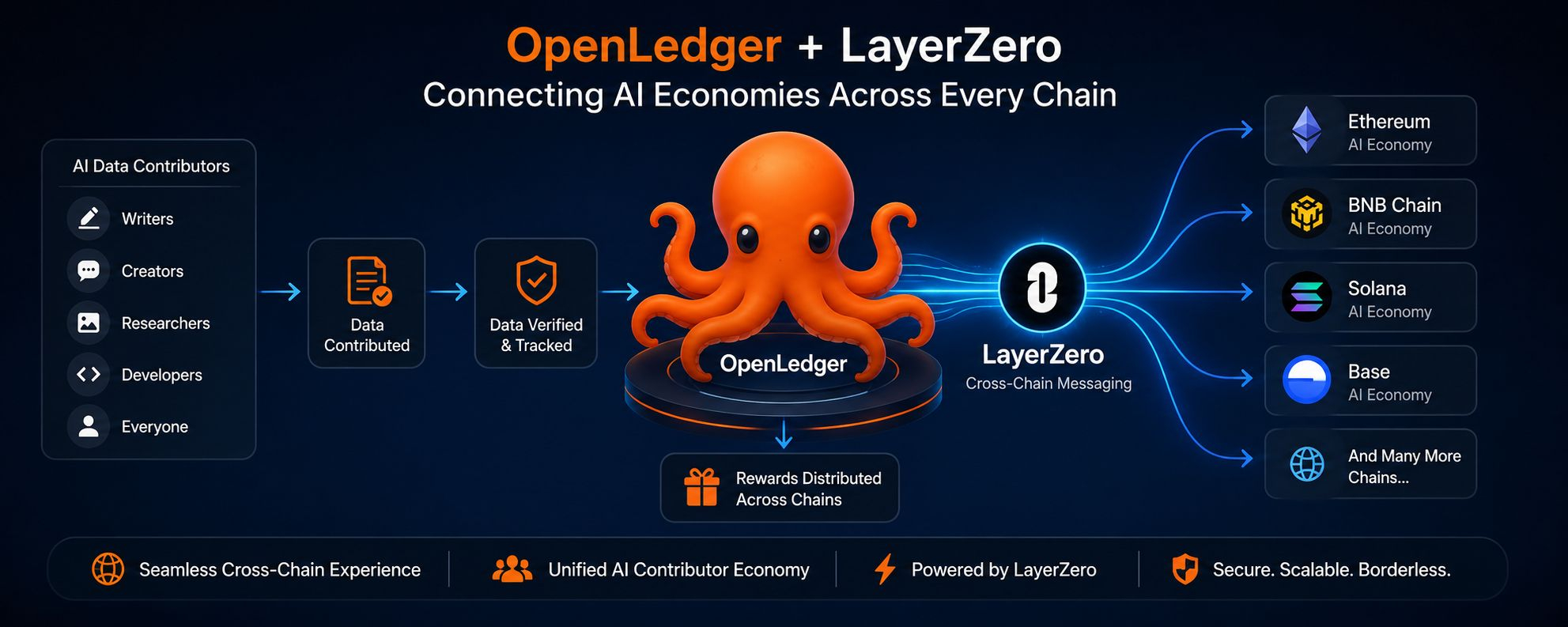
That's why the connection between @OpenLedger and LayerZero feels bigger than most people realize.
At first glance, it looks like another technical integration story.But the deeper I looked, the more I started seeing a completely different picture.
OpenLedger is building around a simple but powerful idea: the people who contribute valuable data to AI should actually benefit from it.
Sounds obvious, right?
Yet today's AI economy works very differently.
Millions of people create content, share knowledge, generate conversations, and provide data every day. AI models learn from that information, companies build billion-dollar products, and the original contributors often receive nothing in return.
The value flows upward.
The contributors are forgotten.
#OpenLedger is trying to flip that model by creating an ecosystem where data contributions can be tracked, verified, and rewarded.
Now imagine combining that vision with LayerZero's cross-chain messaging infrastructure.
Suddenly, you're not building AI economies that live on a single blockchain.
You're building AI economies that can move across many blockchains.
And that's where things get interesting.
Because the future of AI probably won't exist on one chain.
Developers are everywhere.
Users are everywhere.
Communities are everywhere.
Data is everywhere.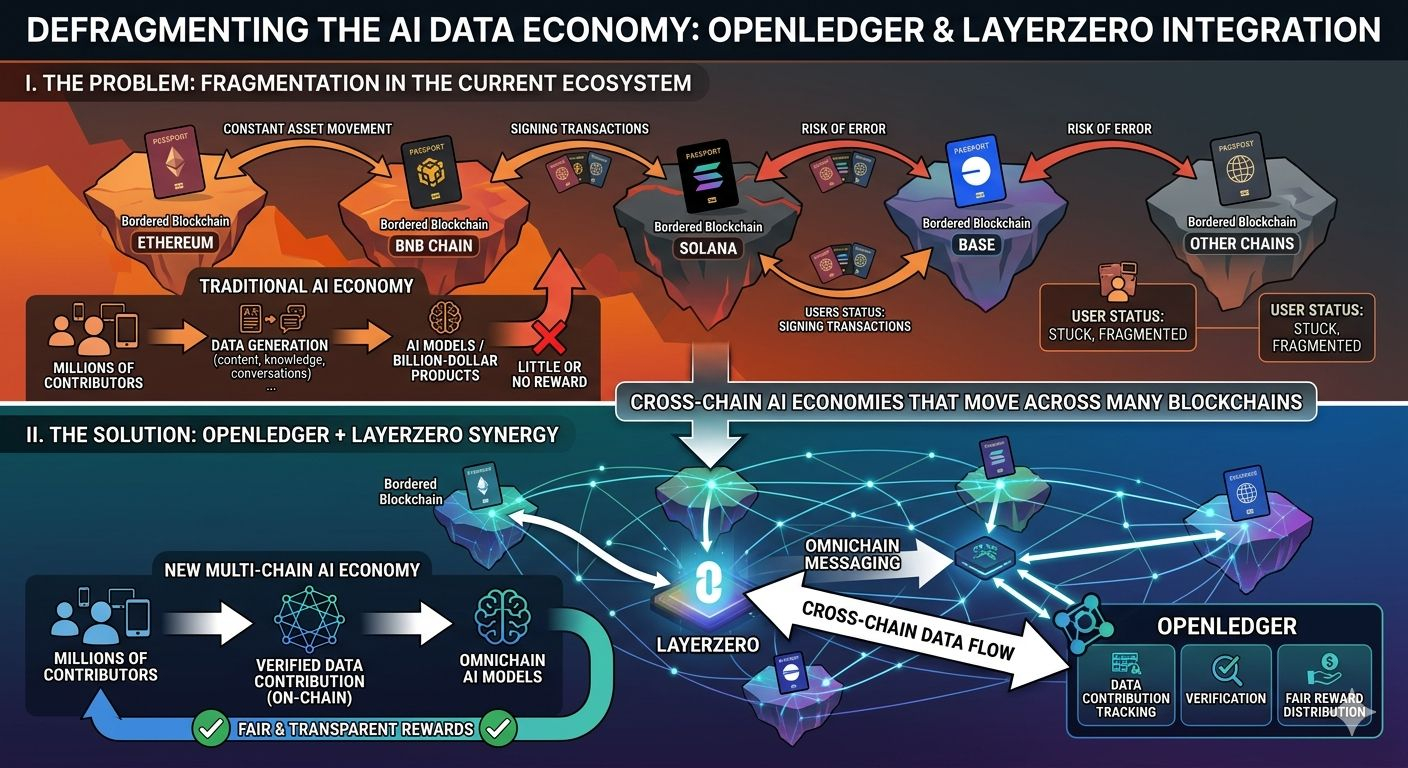
If intelligence is going to become a global digital asset, then it needs the ability to move freely between ecosystems.
LayerZero's technology is designed to help applications communicate across different networks without forcing users to constantly bridge assets themselves.
Think of it like creating highways between previously isolated cities.
The cities still exist.
But now people, information, and economic activity can move between them much more efficiently.
For @OpenLedger , that could mean AI contributors from different ecosystems participating in the same economic network.
Rewards could flow across chains.
Applications could access data from multiple environments.
Users could interact with AI systems without caring where the underlying infrastructure lives.
And honestly, that's the part that excites me most.
Not the buzzwords.
Not the token speculation.
The user experience.
Because the biggest winners in technology are rarely the systems with the most complexity.
They're usually the systems that hide complexity the best.
Most people don't think about internet protocols when they send a message.
Most people don't think about server infrastructure when they watch a video.
One day, people probably won't think about blockchains either.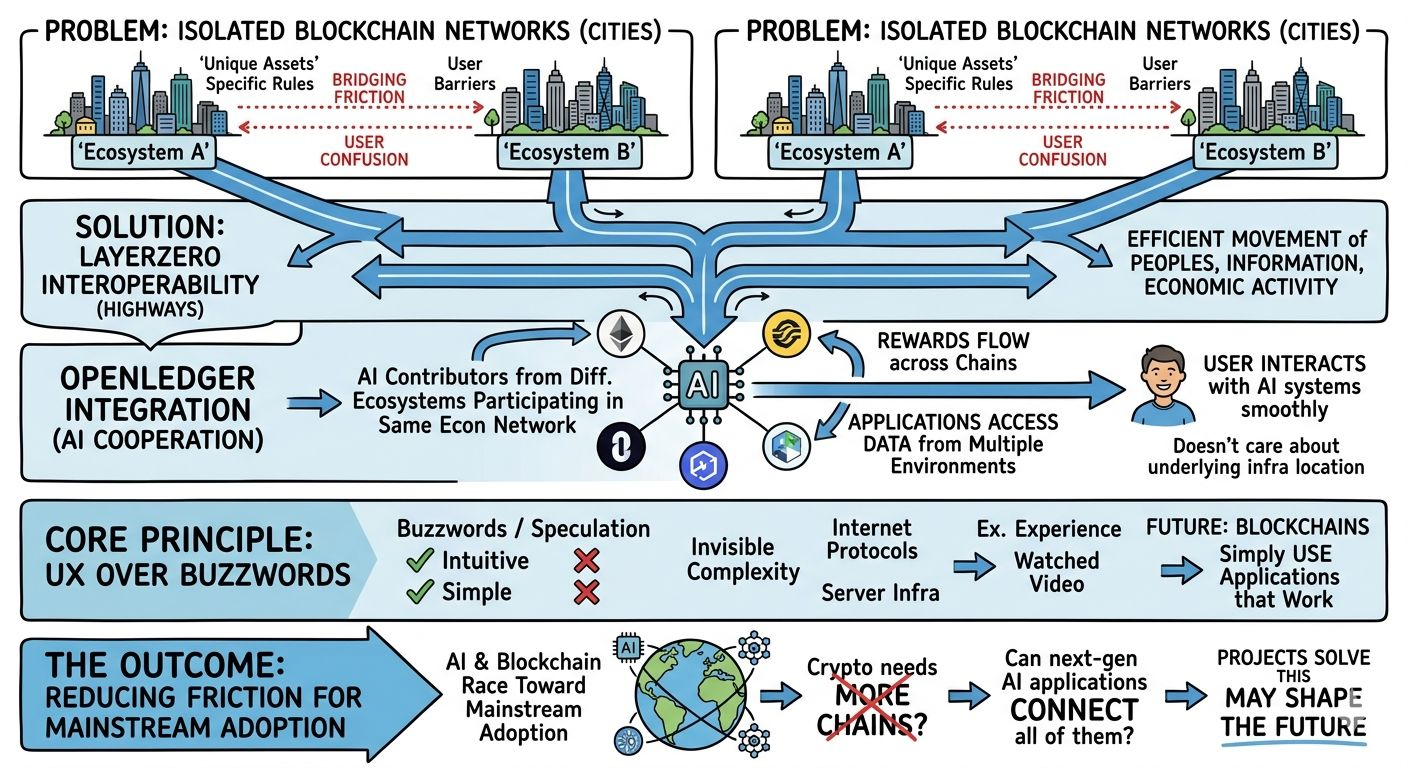
They'll simply use applications that work.
Maybe that's where OpenLedger's cross-network vision becomes important.
Not because it adds another feature.
But because it removes another barrier.
And in a world where AI and blockchain are both racing toward mainstream adoption, removing friction might be one of the most valuable innovations of all.
The question isn't whether crypto needs more chains.
The question is whether the next generation of AI applications can connect all of them together.
Projects that solve that challenge may end up shaping the future far more than anyone expects.