
What We’re Seeing Right Now
As of February 2026, the crypto market’s mood has shifted decisively into risk-off territory:
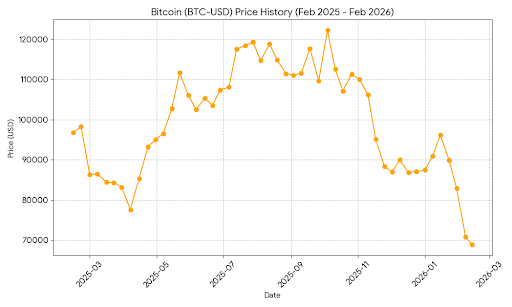
Bitcoin prices have slid back sharply from late‑2025 highs, dipping below key support levels near $66,000–$70,000 after losing nearly half of its peak value. Recent analyst warnings even highlight potential deeper drops toward $31,000 if bearish dynamics persist.
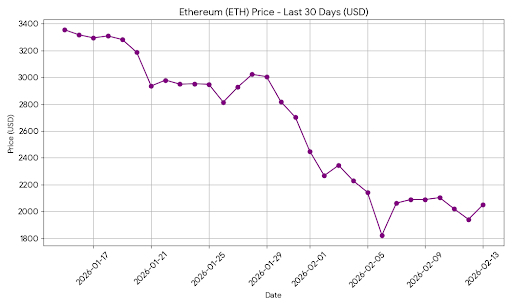
Ethereum, which once traded well above $3,000, is struggling with renewed downside pressure around $1,900–$2,000.
XRP is also under stress, with prices falling below $2 and broad market commentary describing a potential further slump
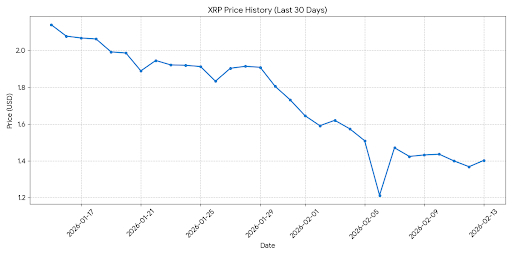
This persistent selloff, across majors and altcoins alike, reflects elements commonly associated with a crypto winter. Investors are seeing diminished participation, weaker liquidity, and heightened fear, factors that extend beyond normal market corrections.
Why This Downturn Feels Like a Crypto Winter
A crypto winter is typically defined as a prolonged period of declining or stagnant prices coupled with reduced market activity and investor enthusiasm. Several interconnected forces are at play:
1. Macro Conditions & Risk Appetite
Broader risk assets have retreated, and appetite for speculative investments like cryptos has faded as investors pivot to traditional safe havens.
Ongoing macro uncertainty especially around interest rates and global growth is putting pressure on risk assets.
2. ETF and Institutional Flow Dynamics
Contrary to the surge of institutional involvement in 2025, recent data shows:
Outflows from Bitcoin and Ethereum ETFs have outweighed inflows in early 2026, signaling traditional investors pulling capital out of crypto exposure.
Some analysts argue institutional demand has become selective focused on a few large assets like BTC/ $ETH rather than broad market support which can sap broader liquidity.
This shift away from fear of missing out (FOMO) driven capital has contributed to weakening price structures.
3. Technical and Sentiment Pressures
Key technical support levels in Bitcoin and Ethereum have broken, prompting stop‑loss cascades and further liquidations.
Market sentiment indicators like the Fear & Greed Index are displaying extreme fear, often a hallmark of extended market bleakness.
Thinner liquidity makes prices more sensitive to downside news and exacerbates volatility also consistent with extended downturn phases.
4. Regulatory and Structural Headwinds
Regulatory tightening across major markets has also played a role:
Enforcement actions, compliance pressures, and unclear frameworks for key assets have dampened retail and institutional confidence.
Broader market participation has been affected as platforms face stricter scrutiny and operations become more constrained.
Is This Just a Correction or a True Crypto Winter?
Many analysts agree that the crypto market is either in the early stages of a new crypto winter or on the verge of entering one. This is driven by ongoing price declines across major cryptocurrencies, reduced liquidity among both retail and institutional investors, increasing macroeconomic pressures, and technical breakdowns that amplify selling momentum. What makes this downturn feel particularly severe is that any rebounds so far have been brief and weak, suggesting the market still lacks the confidence or momentum needed for a sustained bull run.
What Comes Next?
Crypto winters are never short-lived. A potential turnaround would likely require factors such as renewed institutional inflows to restore liquidity, clearer regulatory frameworks to ease uncertainty, and macroeconomic catalysts like interest rate cuts or stronger growth data that boost risk appetite. Until these conditions come into play, market confidence is likely to remain low, making the current phase feel more like a prolonged downturn than a temporary correction.
In conclusion
The evidence strongly suggests that the crypto market is experiencing a new crypto winter in early 2026 a phase defined by weakening prices, thin liquidity, cautious investors, and macro headwinds that suppress conviction across Bitcoin, Ethereum, $XRP , and the broader market.
Whether this winter will deepen or pave the way for the next leg up depends on a complex mix of institutional capital flows, regulatory clarity, macroeconomic shifts, and renewed retail/institutional interest factors that will define the market’s trajectory throughout 2026.


