


Bybit vs. Pi Network: Exchange Listing Dispute
Bybit CEO Ben Zhou has openly accused Pi Network of fraudulent activities, referencing a 2023 Chinese police report that labeled the project as a "scam targeting elderly citizens."
The controversy began when an unofficial Pi Network technical team account claimed that Bybit had failed to meet the requirements for listing the Pi token. However, Zhou strongly denied these allegations, stating:
"Bybit never applied for Pi listing. Any claim that Pi rejected Bybit or that we failed some Pi verification process is complete nonsense."
Chinese Police Warned About Pi Network Fraud
Zhou backed his claims with a 2023 warning from Chinese authorities, which described Pi Network as a fraudulent virtual currency preying on vulnerable individuals with promises of overnight riches.
"Many fraudsters claim that people can mine 'π Coin' for free simply by downloading an app. They mainly target elderly individuals, luring them with promises of profit and rewards for referring more people. In reality, this is a pyramid scheme that sells users’ personal data and exploits them for financial gain," stated the Wuxi Public Security Bureau in the translated police notice.
The report further explains how scammers use free rewards and gifts to attract victims. Once enough people join, their personal information is sold to third parties. Some elderly individuals lost their life savings due to these fraudulent schemes.
Bybit Refuses to List Pi Network
Citing these concerns, Zhou announced that Bybit will not list Pi Network. Unlike other major exchanges like OKX and Bitget, which have already listed the token, Bybit has chosen to take a more cautious stance.
"Our exchange will never support something associated with fraudulent practices," Zhou added.
Interestingly, Binance, the world’s largest cryptocurrency exchange, has yet to make a decision and recently held a community vote on whether Pi Network should be listed.
Pi Network Defends Itself & Warns Against Scams
Pi Network co-founders Dr. Nicolas Kokkalis and Chengdiao Fan responded by clarifying their vision. According to them, the project's goal is to ensure fair token distribution and enable real-world usage.
They claim that Pi Network has implemented security measures, including:
✅ Identity verification (KYC) for users
✅ Security circles to protect participants
✅ A mining algorithm designed to prevent manipulation
Additionally, Pi Network issued a warning about potential scams using its name:
"Pi Network has no connection with illegal activities or individuals falsely claiming to represent us. Any schemes requiring users to pay fees or promising monetary rewards through MLM structures are strictly prohibited."
Users were urged to verify information only through official channels to avoid falling victim to scams.
Pi Token Price Drops
Despite the company’s defense, Pi Network’s market value has plummeted. As of writing, the token’s price has dropped over 50%, currently trading at $0.65. The 24-hour trading volume exceeds $1.2 billion, reflecting high market activity.
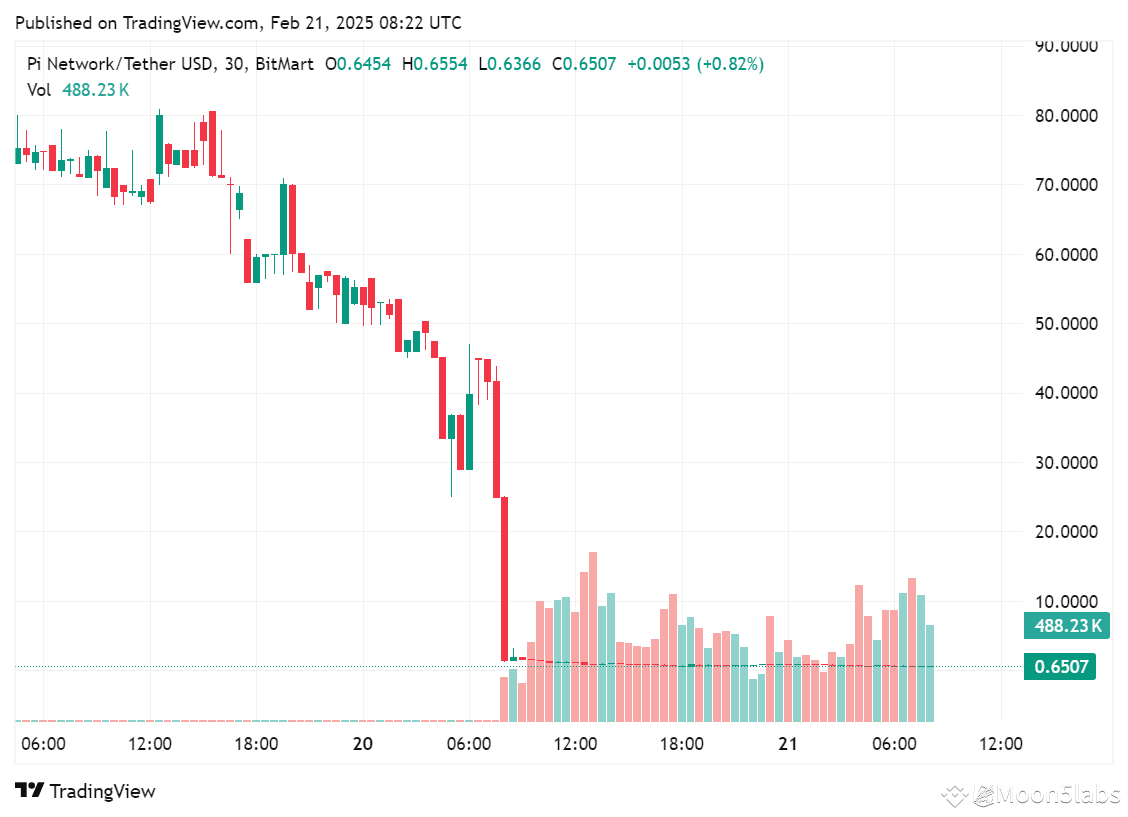
With mounting allegations and uncertainty surrounding Pi Network, the project’s future remains in question. Will it manage to clear its name, or will it be exposed as a large-scale crypto scam?
#PiNetwork , #pinetworknews , #CyberSecurity , #CryptoScamAlert , #crypto
Stay one step ahead – follow our profile and stay informed about everything important in the world of cryptocurrencies!
Notice:
,,The information and views presented in this article are intended solely for educational purposes and should not be taken as investment advice in any situation. The content of these pages should not be regarded as financial, investment, or any other form of advice. We caution that investing in cryptocurrencies can be risky and may lead to financial losses.“