

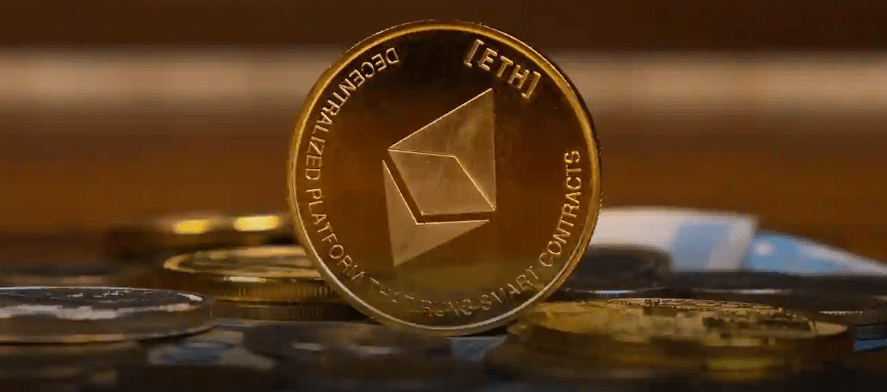
Despite predictions that Ethereum will become “ultrasonic money,” the global supply of ETH is still surging.
A decrease in trading activity, including NFT and DeFi transactions, has driven an increase in ETH circulation.
Ethereum core developers remain unwavering, stressing how insignificant the effort is in the bigger picture.
Ethereum has added 30,000 ETH in just one month, and its transition to a deflationary model has faced unexpected inflationary pressures, calling its long-term financial viability into question.
Ethereum supply unexpectedly increases
Is Ethereum inflationary again? Yes, yes, that’s because Ethereum fees are everywhere, but not on Ethereum: Ethereum’s own L2 (Arbitrum, Polygon, etc.) and EVM competitors (BNB, Avalanche C, etc.) limit the doom of L1 cryptocurrencies.
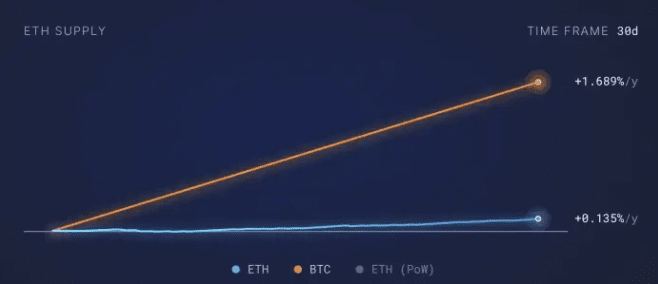
Ethereum's dramatic shift from proof-of-work to proof-of-stake last September reduced ETH issuance by 90%, with many enthusiasts viewing ETH as a deflationary asset. Contrary to expectations, the latest data from ultrason.money shows that the global ETH supply has surged by nearly 30,000 ETH, equivalent to approximately $47.9 million. The surge is primarily attributed to a decrease in Ethereum network transaction traffic, which was marked by a decline in NFT trading and DeFi activity.
Impact of the Burn Fee Mechanism
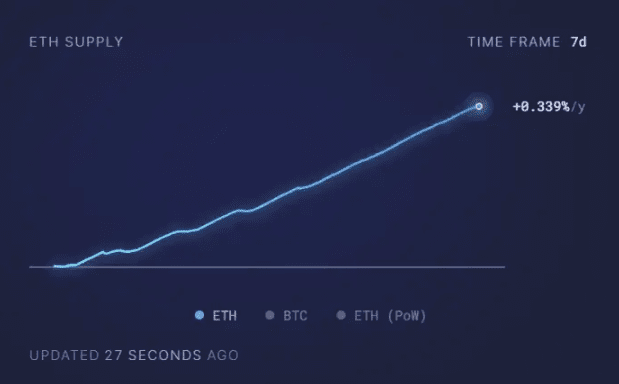
The key problem with Ethereum is that its future supply is unknown, unpredictable, and potentially inflationary. In order for Ethereum to be deflationary, transaction fees must be high, which means it must not scale and transaction volume must not shift to other crypto-securities like Solana.
Since 2021, Ethereum's operational dynamics have depended on a fee-burning mechanism. This mechanism ensures that as network traffic increases, causing the gas price required for on-chain transactions to rise, more ETH is "burned" or permanently removed from circulation. However, recent trends show a significant drop in Ethereum gas fees, with the average network transaction fee being just $0.24. Such low gas fees, while beneficial to users, result in a decrease in the amount of ETH being burned, leading to an increase in its global supply.
Ethereum development community reaction
Despite growing concerns among cryptocurrency enthusiasts and investors about Ethereum’s inflationary trends, the Ethereum core development team appears largely unperturbed. Ethereum core developer Micah Zoltu recently shared his views, saying that inflationary trends are “insignificant” in the greater scheme of things. This sentiment was echoed by another core developer, Danno Ferrin, who stressed that ETH’s current supply remains below its all-time high, and its short-term inflation remains relatively low compared to other chains and the broader economy.
Global Inflation Trends and Cryptocurrencies
Inflation has become a global concern. The United States recently experienced its largest year-over-year price increase since 1981. In response to inflationary pressures, the Federal Reserve has been steadily raising interest rates, subsequently affecting the value of major cryptocurrencies including Bitcoin and Ethereum. Given the broader economic context, Ethereum’s current inflationary trends may not be as worrisome as it might seem at first glance.
in conclusion
The recent surge in Ethereum supply, combined with its expected deflationary transition, raises interesting questions about its future as a financial asset. While the immediate impact suggests an inflationary trend, the perspectives of core developers and the global economic landscape offer a more nuanced view. As the world of cryptocurrency continues to evolve, it remains necessary for investors and enthusiasts to keep up with these developments, ensuring that they make informed decisions in an ever-changing market.