
jinxfi
288 Beiträge

jinxfi
I'm always with you, even when we're worlds apart.
3 Following
4.9K+ Follower
311 Like gegeben
Beiträge
Die kleinsten Details in einem Transaktionsmodell können manchmal größere Folgen haben als die Schlagzeileneigenschaften.
Dusk verwendet einen Nonce, der an das Absenderkonto gebunden ist; dieser Wert wird erhöht, wenn eine Transaktion erfolgreich ausgeführt wurde. Seine einfache Aufgabe ist wichtig: Das Netzwerk kann eine neue Transaktion von einer bereits verwendeten unterscheiden, statt identische Anfragen als unabhängige Aktionen zu behandeln.
Ich finde, wie langweilig dieses Mechanismus ist, irgendwie gut.
Gute Transaktionsinfrastruktur braucht oft Regeln, an die Nutzer nie denken, bis etwas schiefgeht. Nonces liefern eine klare Reihenfolge dafür, was ein Konto bereits ausgeführt hat.
Aber es gibt noch eine andere Seite dieser Einfachheit.
Wenn Transaktionen aus demselben Konto von einer geordneten Nonce-Sequenz abhängen, können unabhängige Aktionen sich nicht immer so verhalten, als wären sie völlig voneinander getrennt. Die Ordnungsregel gibt der Ausführung Struktur, kann aber auch Einschränkungen dafür mit sich bringen, wie Transaktionen durch das System laufen.
Gibt die Nonce-Reihenfolge auf Kontenebene Dusk also die richtige Transaktionsdisziplin, oder würde eine strikte Sequenzierung zu Reibung führen, wenn Finanzanwendungen mehr parallele Ausführung benötigen??
#dusk @Dusk $DUSK
Dusk verwendet einen Nonce, der an das Absenderkonto gebunden ist; dieser Wert wird erhöht, wenn eine Transaktion erfolgreich ausgeführt wurde. Seine einfache Aufgabe ist wichtig: Das Netzwerk kann eine neue Transaktion von einer bereits verwendeten unterscheiden, statt identische Anfragen als unabhängige Aktionen zu behandeln.
Ich finde, wie langweilig dieses Mechanismus ist, irgendwie gut.
Gute Transaktionsinfrastruktur braucht oft Regeln, an die Nutzer nie denken, bis etwas schiefgeht. Nonces liefern eine klare Reihenfolge dafür, was ein Konto bereits ausgeführt hat.
Aber es gibt noch eine andere Seite dieser Einfachheit.
Wenn Transaktionen aus demselben Konto von einer geordneten Nonce-Sequenz abhängen, können unabhängige Aktionen sich nicht immer so verhalten, als wären sie völlig voneinander getrennt. Die Ordnungsregel gibt der Ausführung Struktur, kann aber auch Einschränkungen dafür mit sich bringen, wie Transaktionen durch das System laufen.
Gibt die Nonce-Reihenfolge auf Kontenebene Dusk also die richtige Transaktionsdisziplin, oder würde eine strikte Sequenzierung zu Reibung führen, wenn Finanzanwendungen mehr parallele Ausführung benötigen??
#dusk @Dusk $DUSK
Better discipline
0%
Parallelism matters more
0%
Depends on the app
0%
Too much sequencing friction
0%
0 Stimmen • Abstimmung beendet
Ich habe darüber nachgedacht, was passiert, wenn eine Transaktion in Dusk ankommt.
Zuerst fühlt es sich so an, als gäbe es nur eine Frage:
**„Soll das Netzwerk diese Transaktion akzeptieren?“**
Doch bei genauerem Hinsehen gibt es tatsächlich zwei verschiedene Fragen.
Erstens: Hält sich die Transaktion an die Regeln des Protokolls?
Dann, vorausgesetzt, das ist der Fall: Stimmen die Teilnehmenden über den Zustand überein, der daraus resultiert?
Diese Unterscheidung ist leicht zu übersehen, weil von außen beide Schritte zum gleichen Ergebnis führen: einem akzeptierten Zustand.
Aber architektonisch sind das unterschiedliche Aufgaben.
Wenn etwas schiefgeht, macht es die Trennung einfacher herauszufinden, was tatsächlich fehlgeschlagen ist. War die Transaktion ungültig? Oder war sie gültig, aber die Teilnehmenden waren sich über den resultierenden Zustand uneinig?
Ich finde, diese Trennung ist eine starke Designentscheidung.
Aber sie wirft auch eine neue Frage auf.
Jede Grenze zwischen Verantwortlichkeiten ist ein weiterer Übergabepunkt. Und jede Übergabe muss sich korrekt verhalten, wenn etwas Unerwartetes passiert.
Also komme ich immer wieder zu dieser Überlegung:
**Wird Dusk durch die Trennung von Gültigkeit und Konsens leichter unter Ausfällen zu durchdenken, oder schafft jede zusätzliche Grenze eine weitere Stelle, an der das System kaputtgehen kann?**
#Dusk @Dusk $DUSK
Zuerst fühlt es sich so an, als gäbe es nur eine Frage:
**„Soll das Netzwerk diese Transaktion akzeptieren?“**
Doch bei genauerem Hinsehen gibt es tatsächlich zwei verschiedene Fragen.
Erstens: Hält sich die Transaktion an die Regeln des Protokolls?
Dann, vorausgesetzt, das ist der Fall: Stimmen die Teilnehmenden über den Zustand überein, der daraus resultiert?
Diese Unterscheidung ist leicht zu übersehen, weil von außen beide Schritte zum gleichen Ergebnis führen: einem akzeptierten Zustand.
Aber architektonisch sind das unterschiedliche Aufgaben.
Wenn etwas schiefgeht, macht es die Trennung einfacher herauszufinden, was tatsächlich fehlgeschlagen ist. War die Transaktion ungültig? Oder war sie gültig, aber die Teilnehmenden waren sich über den resultierenden Zustand uneinig?
Ich finde, diese Trennung ist eine starke Designentscheidung.
Aber sie wirft auch eine neue Frage auf.
Jede Grenze zwischen Verantwortlichkeiten ist ein weiterer Übergabepunkt. Und jede Übergabe muss sich korrekt verhalten, wenn etwas Unerwartetes passiert.
Also komme ich immer wieder zu dieser Überlegung:
**Wird Dusk durch die Trennung von Gültigkeit und Konsens leichter unter Ausfällen zu durchdenken, oder schafft jede zusätzliche Grenze eine weitere Stelle, an der das System kaputtgehen kann?**
#Dusk @Dusk $DUSK
Easier to isolate failures
0%
Clearer system boundaries
0%
More coordination risks
0%
Both equally
0%
0 Stimmen • Abstimmung beendet
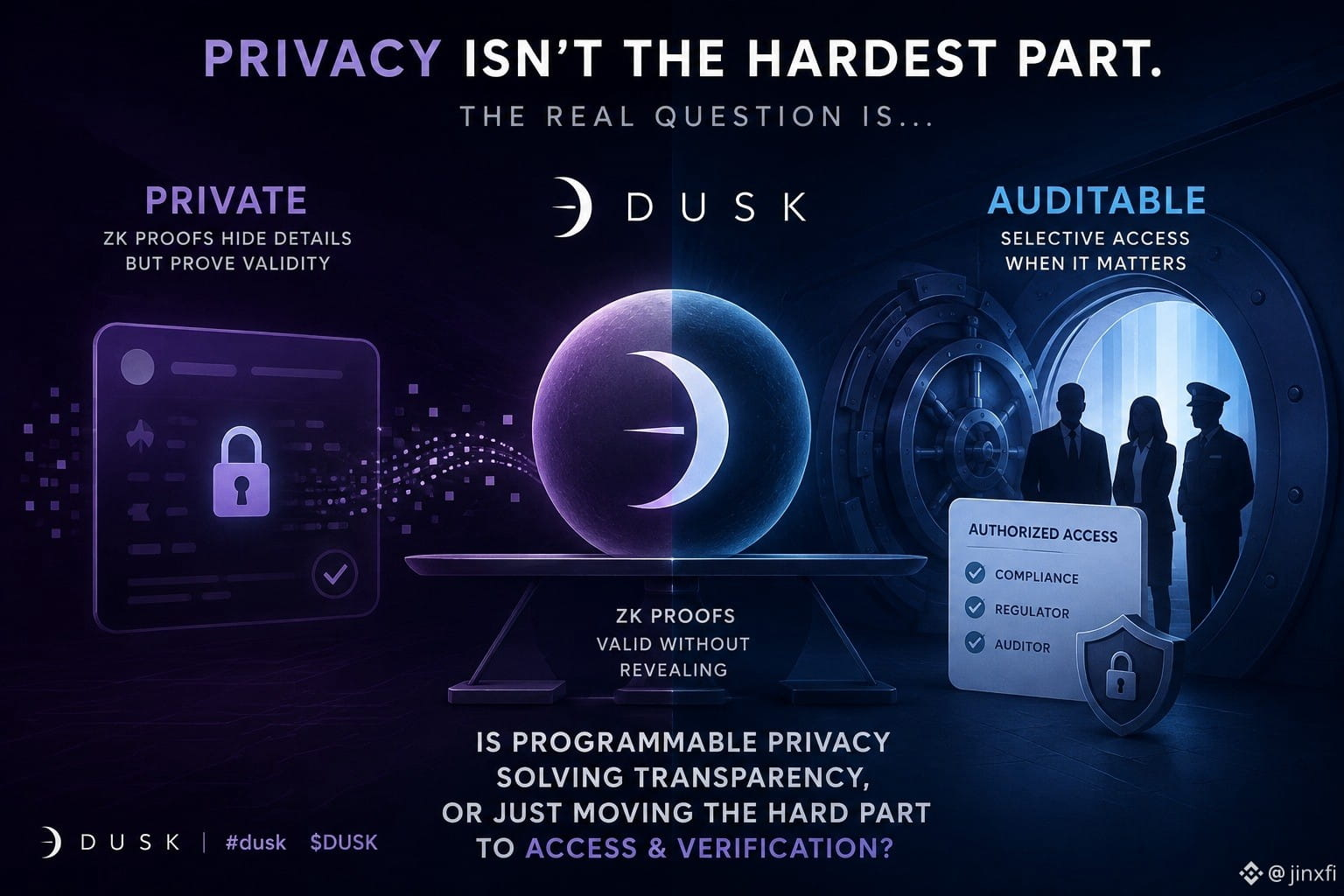
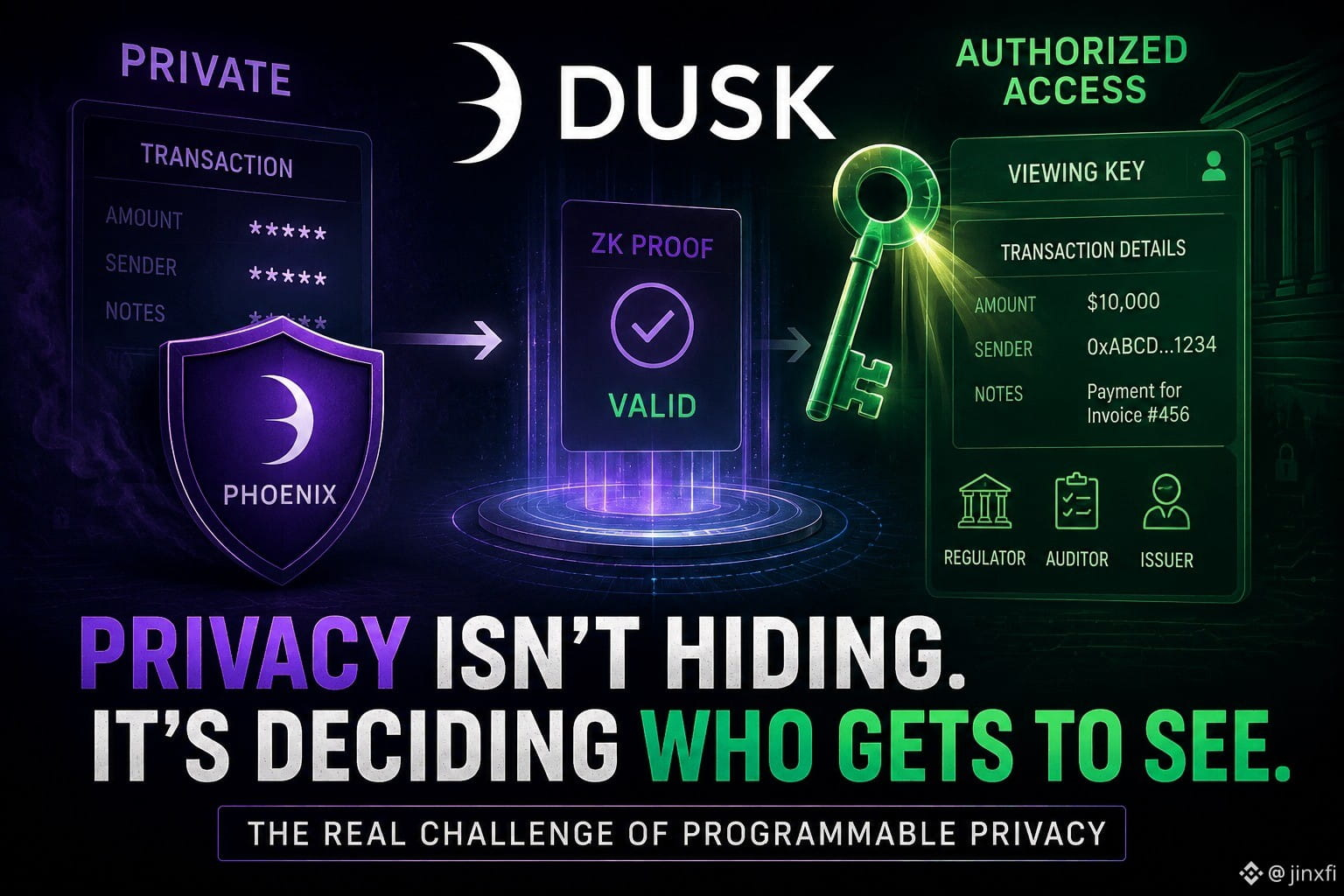
Je mehr ich über @Dusk _Foundation lese, desto mehr denke ich, dass Datenschutz selbst nicht das schwierigste Problem ist.
Dusk nutzt Zero-Knowledge-Beweise, um Transaktionsdetails privat zu halten und gleichzeitig nachzuweisen, dass die Transaktion gültig ist.
Das klingt hilfreich für regulierte Finanzen, bei denen du möglicherweise nicht möchtest, dass jede Transaktionsdetails für alle sichtbar sind.
Doch dann kommt die größere Frage:
Wenn die Details verborgen sind – wer kann sie sehen, wenn sie gebraucht werden?
Ich mag, dass Dusk Datenschutz und Nachvollziehbarkeit als Dinge behandelt, die zusammen funktionieren können.
Aber je selektiver die Sichtbarkeit wird, desto wichtiger werden die Regeln rund um den Zugriff.
Deshalb frage ich mich weiterhin:
Löst programmierbarer Datenschutz wirklich das Transparenzproblem für regulierte Märkte, oder verlagert er einfach den schwierigen Teil zu Zugriff und Verifizierung?
#dusk @Dusk $DUSK
Dusk nutzt Zero-Knowledge-Beweise, um Transaktionsdetails privat zu halten und gleichzeitig nachzuweisen, dass die Transaktion gültig ist.
Das klingt hilfreich für regulierte Finanzen, bei denen du möglicherweise nicht möchtest, dass jede Transaktionsdetails für alle sichtbar sind.
Doch dann kommt die größere Frage:
Wenn die Details verborgen sind – wer kann sie sehen, wenn sie gebraucht werden?
Ich mag, dass Dusk Datenschutz und Nachvollziehbarkeit als Dinge behandelt, die zusammen funktionieren können.
Aber je selektiver die Sichtbarkeit wird, desto wichtiger werden die Regeln rund um den Zugriff.
Deshalb frage ich mich weiterhin:
Löst programmierbarer Datenschutz wirklich das Transparenzproblem für regulierte Märkte, oder verlagert er einfach den schwierigen Teil zu Zugriff und Verifizierung?
#dusk @Dusk $DUSK
Etwas anderes, worüber ich bei TermMax immer wieder nachdenke, ist die Reihenfolge von Transaktionen.
Das Protokoll kann sorgfältig definierte Kredit- und Borrowing-Mechaniken haben, aber die Transaktion muss dennoch durch eine Blockchain-Umgebung gelangen, in der die Reihenfolge eine Rolle spielen kann.
Das schafft eine andere Art von Risiko.
MEV ist nicht zwangsläufig ein Versagen des Lending-Designs an sich. Es ist eine Folge davon, wie Transaktionen rund um dieses Design verarbeitet werden, und es kann die Ausführung beeinflussen, zum Beispiel durch ungünstige Reihenfolge oder Slippage.
Ich finde, das ist eine wichtige Unterscheidung, weil ein Protokoll stimmige finanzielle Mechaniken haben kann und Nutzer dennoch Problemen auf Ausführungsebene aussetzt.
Sollte die Protokollanalyse die Reihenfolge von Transaktionen als Teil des Kern-Risikomodells von TermMax behandeln, oder als ein separates Risiko, das durch die umgebende Ausführungsumgebung entsteht??
@TermMax #TermMax
Das Protokoll kann sorgfältig definierte Kredit- und Borrowing-Mechaniken haben, aber die Transaktion muss dennoch durch eine Blockchain-Umgebung gelangen, in der die Reihenfolge eine Rolle spielen kann.
Das schafft eine andere Art von Risiko.
MEV ist nicht zwangsläufig ein Versagen des Lending-Designs an sich. Es ist eine Folge davon, wie Transaktionen rund um dieses Design verarbeitet werden, und es kann die Ausführung beeinflussen, zum Beispiel durch ungünstige Reihenfolge oder Slippage.
Ich finde, das ist eine wichtige Unterscheidung, weil ein Protokoll stimmige finanzielle Mechaniken haben kann und Nutzer dennoch Problemen auf Ausführungsebene aussetzt.
Sollte die Protokollanalyse die Reihenfolge von Transaktionen als Teil des Kern-Risikomodells von TermMax behandeln, oder als ein separates Risiko, das durch die umgebende Ausführungsumgebung entsteht??
@TermMax #TermMax
Core protocol risk
100%
Execution-layer risk
0%
Both matter equally
0%
Depends on the mechanism
0%
1 Stimmen • Abstimmung beendet
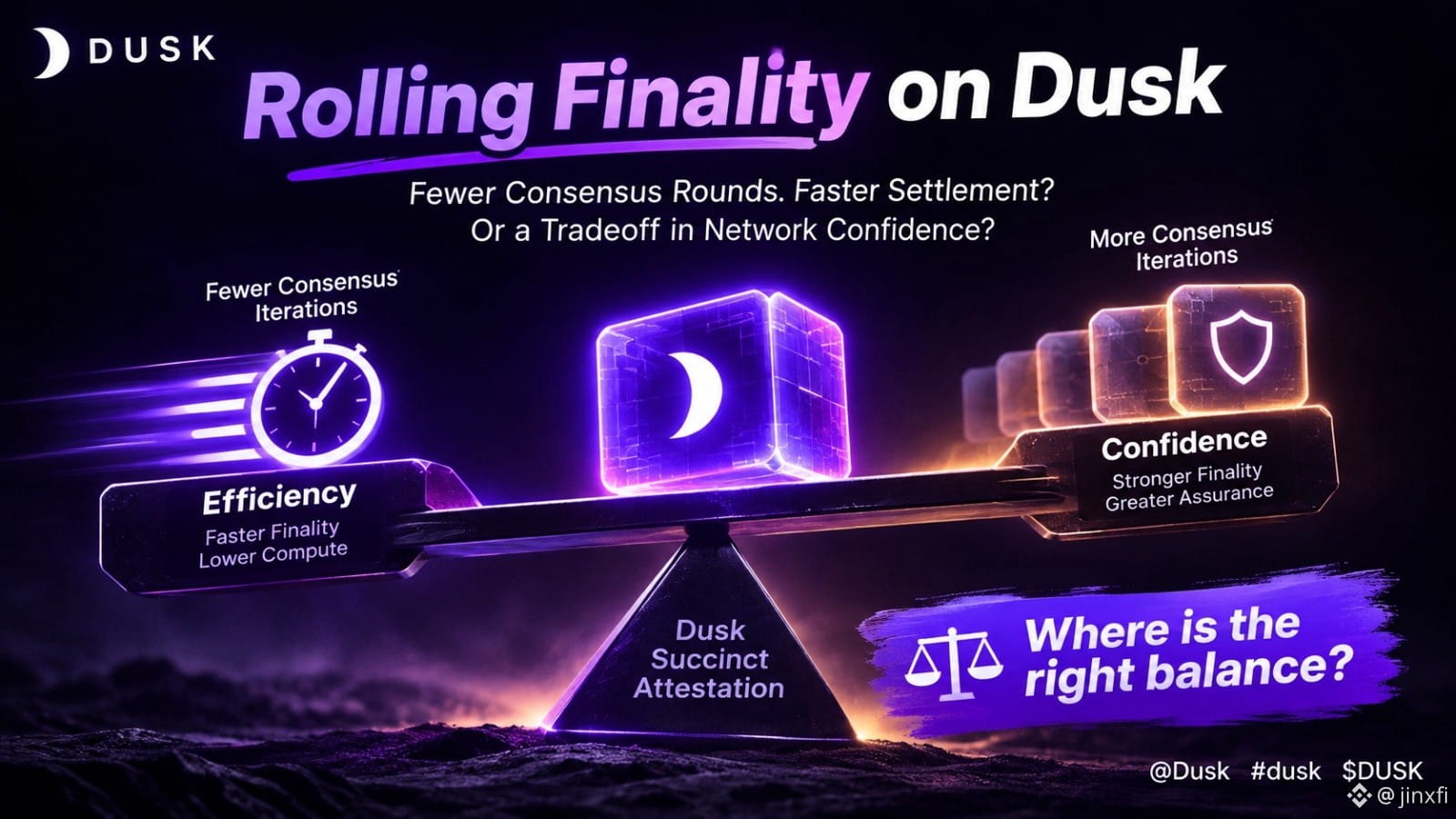
Ich dachte ständig, „schnelle Finalität“ ginge es größtenteils darum, dass ein Block schneller bestätigt wird – bis ich mir angeschaut habe, wie Dusk das Rolling-Finality-Mechanismus beschreibt, und das ist nicht wirklich der interessante Teil.
Dusk's Succinct Attestation-Konsens zielt nicht nur darauf ab, Finalität in Sekunden zu erreichen. Das Whitepaper beschreibt Rolling Finality als eine Möglichkeit, die Anzahl der Konsens-Iterationen zu begrenzen, die nötig sind, bevor ein Block endgültig ist.
Dieser kleine Unterschied ist entscheidend.
Anstatt wiederholt Netzwerkressourcen dafür aufzuwenden, dasselbe Block-Final wirklich erneut zu beweisen, geht der Prozess weiter, während die Finalisierungsarbeit in einem überschaubaren Rahmen bleibt. Ich mag dieses Design für finanzielle Infrastruktur, weil Abwicklung nicht allzu nützlich ist, wenn jeder zusätzliche Schritt noch eine weitere Ebene des Wartens und der Berechnung hinzufügt.
Aber darunter steckt eine Frage.
Je weniger Konsens-Iterationen du benötigst, desto effizienter wird die Finalität. Gleichzeitig sind diese Iterationen Teil dessen, was dem Netzwerk das Vertrauen gibt, dass ein Block final sein sollte.
Also wo ist das richtige Gleichgewicht?
Macht die Begrenzung der Finalisierungsrunden Dusk besser geeignet für finanzielle Abwicklung, oder wird Effizienz irgendwann zum Kompromiss gegenüber dem, wie viel Konsensarbeit wünschenswert ist?
@Dusk #dusk $DUSK
Dusk's Succinct Attestation-Konsens zielt nicht nur darauf ab, Finalität in Sekunden zu erreichen. Das Whitepaper beschreibt Rolling Finality als eine Möglichkeit, die Anzahl der Konsens-Iterationen zu begrenzen, die nötig sind, bevor ein Block endgültig ist.
Dieser kleine Unterschied ist entscheidend.
Anstatt wiederholt Netzwerkressourcen dafür aufzuwenden, dasselbe Block-Final wirklich erneut zu beweisen, geht der Prozess weiter, während die Finalisierungsarbeit in einem überschaubaren Rahmen bleibt. Ich mag dieses Design für finanzielle Infrastruktur, weil Abwicklung nicht allzu nützlich ist, wenn jeder zusätzliche Schritt noch eine weitere Ebene des Wartens und der Berechnung hinzufügt.
Aber darunter steckt eine Frage.
Je weniger Konsens-Iterationen du benötigst, desto effizienter wird die Finalität. Gleichzeitig sind diese Iterationen Teil dessen, was dem Netzwerk das Vertrauen gibt, dass ein Block final sein sollte.
Also wo ist das richtige Gleichgewicht?
Macht die Begrenzung der Finalisierungsrunden Dusk besser geeignet für finanzielle Abwicklung, oder wird Effizienz irgendwann zum Kompromiss gegenüber dem, wie viel Konsensarbeit wünschenswert ist?
@Dusk #dusk $DUSK
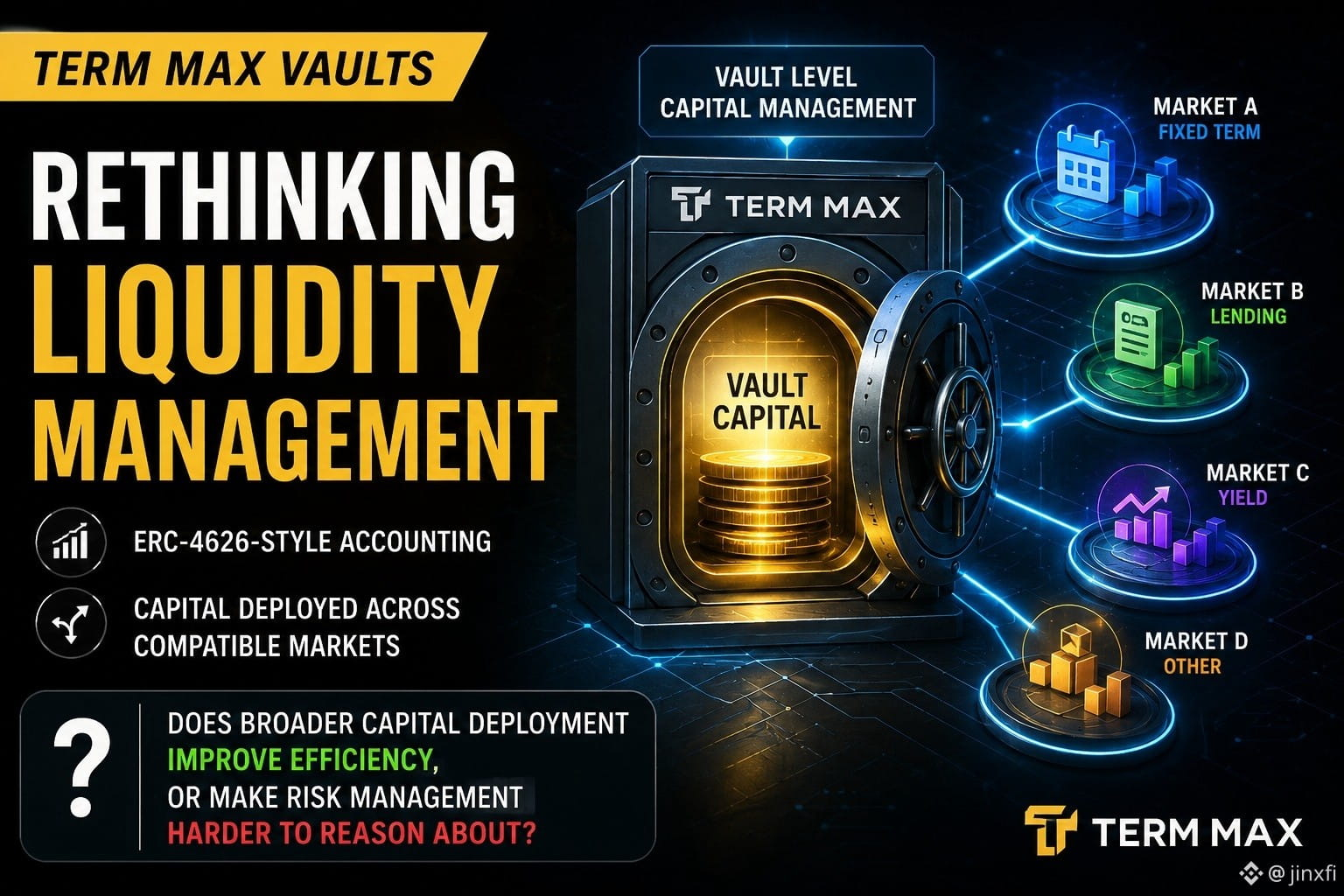
Etwas an der Vault-Struktur von TermMax hat mich darüber nachdenken lassen, was „Liquidity Management“ eigentlich bedeutet.
Eine Vault ist nicht einfach nur ein weiterer Ort, um Kapital zu parken. Das Design nutzt Accounting im Stil von ERC-4626 und ermöglicht es, Kapital über kompatible Märkte hinweg einzusetzen – statt jede Marktposition als völlig isoliert zu behandeln.
Ich mag diese Trennung, weil das Kapitalmanagement oberhalb der einzelnen Marktebene stattfinden kann.
Aber genau dort wird die Frage auch schwieriger.
Je mehr Märkte eine Vault miteinander interagieren kann, desto nützlicher kann das Kapital werden. Gleichzeitig wird aber auch die Entscheidung darüber, wo dieses Kapital sitzen soll, immer wichtiger.
Verbessert eine breitere Kapitalbereitstellung tatsächlich die Effizienz – oder macht es das Risikomanagement schwieriger, nachvollziehbar zu steuern??
@TermMax #TermMax
Eine Vault ist nicht einfach nur ein weiterer Ort, um Kapital zu parken. Das Design nutzt Accounting im Stil von ERC-4626 und ermöglicht es, Kapital über kompatible Märkte hinweg einzusetzen – statt jede Marktposition als völlig isoliert zu behandeln.
Ich mag diese Trennung, weil das Kapitalmanagement oberhalb der einzelnen Marktebene stattfinden kann.
Aber genau dort wird die Frage auch schwieriger.
Je mehr Märkte eine Vault miteinander interagieren kann, desto nützlicher kann das Kapital werden. Gleichzeitig wird aber auch die Entscheidung darüber, wo dieses Kapital sitzen soll, immer wichtiger.
Verbessert eine breitere Kapitalbereitstellung tatsächlich die Effizienz – oder macht es das Risikomanagement schwieriger, nachvollziehbar zu steuern??
@TermMax #TermMax
Ich bin der Frage nachgegangen, warum Dusk Wähler belohnt, die Kandidaten aus früheren, fehlgeschlagenen Iterationen unterstützen.
Zunächst wirkt der Ablauf einfach:
Vorschlag → Validierung → Ratifizierung
Interessant wird es, wenn eine Iteration fehlschlägt.
Dusk lässt den fehlgeschlagenen Block nicht einfach verschwinden, sondern gibt späteren Ausschüssen einen Grund, ihn wieder aufzugreifen.
Überrascht hat mich, dass diese Belohnung für einen konkreten Zweck hinzugefügt wurde: zukünftige Ausschüsse dazu zu bewegen, Kandidaten aus früheren Iterationen zu wählen.
Dafür hat das Protokoll einen finanziellen Anreiz geschaffen, damit die Wiederherstellung eines fehlgeschlagenen Blocks lohnenswert wird.
So fühlt sich eine fehlgeschlagene Iteration weniger wie eine Sackgasse an und mehr wie etwas, das das Netzwerk weiterhin zu retten bereit ist.
Die spannende Frage bleibt:
Belohnt Dusk Ausschüsse klug dafür, unerledigte Arbeit abzuschließen – oder zeigt es, dass Wiederherstellung erst durch einen finanziellen Anstoß möglich wird?
#dusk @Dusk $DUSK
Kurz machen
Zunächst wirkt der Ablauf einfach:
Vorschlag → Validierung → Ratifizierung
Interessant wird es, wenn eine Iteration fehlschlägt.
Dusk lässt den fehlgeschlagenen Block nicht einfach verschwinden, sondern gibt späteren Ausschüssen einen Grund, ihn wieder aufzugreifen.
Überrascht hat mich, dass diese Belohnung für einen konkreten Zweck hinzugefügt wurde: zukünftige Ausschüsse dazu zu bewegen, Kandidaten aus früheren Iterationen zu wählen.
Dafür hat das Protokoll einen finanziellen Anreiz geschaffen, damit die Wiederherstellung eines fehlgeschlagenen Blocks lohnenswert wird.
So fühlt sich eine fehlgeschlagene Iteration weniger wie eine Sackgasse an und mehr wie etwas, das das Netzwerk weiterhin zu retten bereit ist.
Die spannende Frage bleibt:
Belohnt Dusk Ausschüsse klug dafür, unerledigte Arbeit abzuschließen – oder zeigt es, dass Wiederherstellung erst durch einen finanziellen Anstoß möglich wird?
#dusk @Dusk $DUSK
Kurz machen
Smart recovery incentive
0%
Necessary financial push
0%
Better without rewards
0%
depend on incentive
0%
0 Stimmen • Abstimmung beendet
Ich habe TMX-Governance anders betrachtet, sobald ich bemerkt habe, was Staking eigentlich ändern soll.
TMX-Inhaber können an der Governance teilnehmen, aber Staking kann auch erweiterte Governance-Rechte für Themen wie Markt-Risiko-Parameter und die Whitelisting von Curatoren bereitstellen.
Das ist für mich weitaus interessanter als einfach nur ein weiteres Abstimmungssystem.
Diese Entscheidungen können direkt beeinflussen, wie Fixed-Rate-Märkte verwaltet werden, sodass Governance mit der tatsächlichen Protokollkonfiguration verknüpft wird – statt nur mit allgemeinen Vorschlägen.
Der positive Aspekt ist offensichtlich: Menschen mit einer längerfristigen Beteiligung können mehr Einfluss haben.
Aber das wirft eine schwierigere Frage auf. Eine stärker konzentrierte Entscheidungsfindung kann die Verantwortlichkeit verbessern – oder sie kann dazu führen, dass die Qualität des Urteils einer kleineren Gruppe viel stärker ins Gewicht fällt.
Führen erweiterte Governance-Rechte zu besseren Protokollentscheidungen, oder machen sie die Governance-Macht einfach nur noch stärker konzentriert??
@TermMax #TermMax
TMX-Inhaber können an der Governance teilnehmen, aber Staking kann auch erweiterte Governance-Rechte für Themen wie Markt-Risiko-Parameter und die Whitelisting von Curatoren bereitstellen.
Das ist für mich weitaus interessanter als einfach nur ein weiteres Abstimmungssystem.
Diese Entscheidungen können direkt beeinflussen, wie Fixed-Rate-Märkte verwaltet werden, sodass Governance mit der tatsächlichen Protokollkonfiguration verknüpft wird – statt nur mit allgemeinen Vorschlägen.
Der positive Aspekt ist offensichtlich: Menschen mit einer längerfristigen Beteiligung können mehr Einfluss haben.
Aber das wirft eine schwierigere Frage auf. Eine stärker konzentrierte Entscheidungsfindung kann die Verantwortlichkeit verbessern – oder sie kann dazu führen, dass die Qualität des Urteils einer kleineren Gruppe viel stärker ins Gewicht fällt.
Führen erweiterte Governance-Rechte zu besseren Protokollentscheidungen, oder machen sie die Governance-Macht einfach nur noch stärker konzentriert??
@TermMax #TermMax
Better decisions
100%
More concentrated power
0%
Depends on design
0%
Both can happen
0%
1 Stimmen • Abstimmung beendet
Etwas an der nativen Emission auf Dusk hat mich einfach nicht losgelassen.
Früher dachte ich, Tokenisierung und native Emission wären im Grunde dasselbe, nur mit anderer Formulierung. Sind sie nicht.
Tokenisierung beginnt mit einem bestehenden Vermögenswert und erstellt davon eine Onchain-Repräsentation. Native Emission geht weiter: Das Wertpapier selbst kann seinen Lebenszyklus Onchain strukturieren – vom Zeitpunkt der Emission an.
Dusk-Design für Zedger ist hier interessant, weil es nicht auf das reine Halten einer tokenisierten Repräsentation beschränkt ist. Das Whitepaper beschreibt Unterstützung für Wertpapiere, die entweder tokenisiert oder nativ emittiert sind, wobei Lebenszyklus-Funktionen wie Prägung (Minting), Löschung (Burning) und Corporate Actions direkt in das Asset-Modell eingebaut sind.
Das klingt für mich klarer.
Aber es wirft auch eine schwierigere Frage auf. Wenn mehr vom Lebenszyklus des Wertpapiers auf die Kette verlagert wird, muss ein größerer Teil dieses Lebenszyklus in die Regeln von Emittent, Handelsplatz und Rechtsraum passen. Die technische Fähigkeit allein macht das Asset in der Praxis noch nicht „native“.
Das ist der Punkt, zu dem ich immer wieder zurückkomme.
Macht das Verschieben des Lebenszyklus des Wertpapiers näher an die Chain regulierte Märkte wirklich „nativere“, oder verlagert es einfach mehr regulatorische Komplexität in das Asset selbst??
@Dusk $DUSK #dusk
Früher dachte ich, Tokenisierung und native Emission wären im Grunde dasselbe, nur mit anderer Formulierung. Sind sie nicht.
Tokenisierung beginnt mit einem bestehenden Vermögenswert und erstellt davon eine Onchain-Repräsentation. Native Emission geht weiter: Das Wertpapier selbst kann seinen Lebenszyklus Onchain strukturieren – vom Zeitpunkt der Emission an.
Dusk-Design für Zedger ist hier interessant, weil es nicht auf das reine Halten einer tokenisierten Repräsentation beschränkt ist. Das Whitepaper beschreibt Unterstützung für Wertpapiere, die entweder tokenisiert oder nativ emittiert sind, wobei Lebenszyklus-Funktionen wie Prägung (Minting), Löschung (Burning) und Corporate Actions direkt in das Asset-Modell eingebaut sind.
Das klingt für mich klarer.
Aber es wirft auch eine schwierigere Frage auf. Wenn mehr vom Lebenszyklus des Wertpapiers auf die Kette verlagert wird, muss ein größerer Teil dieses Lebenszyklus in die Regeln von Emittent, Handelsplatz und Rechtsraum passen. Die technische Fähigkeit allein macht das Asset in der Praxis noch nicht „native“.
Das ist der Punkt, zu dem ich immer wieder zurückkomme.
Macht das Verschieben des Lebenszyklus des Wertpapiers näher an die Chain regulierte Märkte wirklich „nativere“, oder verlagert es einfach mehr regulatorische Komplexität in das Asset selbst??
@Dusk $DUSK #dusk
More native
0%
More complexity
0%
Both
0%
Too early to tell
0%
0 Stimmen • Abstimmung beendet
Ich denke immer wieder, dass Skalierbarkeit in der Blockchain zu eng beschrieben wird.
Eine Kette kann mehr Transaktionen verarbeiten und dennoch für Finanzanwendungen unhandlich sein, wenn die Ausführung mit zunehmender Aktivität unvorhersehbar wird.
Was mich an Dusk interessiert hat, ist, dass Skalierbarkeit als ein Problem der Systemgestaltung behandelt wird – und nicht nur als eine größere Durchsatz-Zahl. Die Architektur trennt die Aufgabenbereiche in Konsens, Networking und Ausführung, sodass jede Schicht eine spezifischere Aufgabe hat.
Das klingt aufgeräumter als nur einer Schlagzeilen-TPS-Zahl hinterherzulaufen.
Aber darunter steckt eine Frage: Finanzanwendungen brauchen nicht nur Kapazität, wenn die Nachfrage niedrig ist. Sie müssen auch dann vorhersehbar bleiben, wenn mehrere Workflows gleichzeitig um Ressourcen konkurrieren.
Höhere theoretische Kapazität ist nützlich. Vorhersagbare Kapazität ist schwieriger.
Ist Dasks geschichteter Ansatz also tatsächlich ein besserer Weg hin zu skalierbarer Finanzinfrastruktur – oder erzeugt das Aufteilen des Systems in mehr spezialisierte Komponenten nur zusätzliche Komplexität, die man verwalten muss??
#dusk @Dusk $DUSK
Eine Kette kann mehr Transaktionen verarbeiten und dennoch für Finanzanwendungen unhandlich sein, wenn die Ausführung mit zunehmender Aktivität unvorhersehbar wird.
Was mich an Dusk interessiert hat, ist, dass Skalierbarkeit als ein Problem der Systemgestaltung behandelt wird – und nicht nur als eine größere Durchsatz-Zahl. Die Architektur trennt die Aufgabenbereiche in Konsens, Networking und Ausführung, sodass jede Schicht eine spezifischere Aufgabe hat.
Das klingt aufgeräumter als nur einer Schlagzeilen-TPS-Zahl hinterherzulaufen.
Aber darunter steckt eine Frage: Finanzanwendungen brauchen nicht nur Kapazität, wenn die Nachfrage niedrig ist. Sie müssen auch dann vorhersehbar bleiben, wenn mehrere Workflows gleichzeitig um Ressourcen konkurrieren.
Höhere theoretische Kapazität ist nützlich. Vorhersagbare Kapazität ist schwieriger.
Ist Dasks geschichteter Ansatz also tatsächlich ein besserer Weg hin zu skalierbarer Finanzinfrastruktur – oder erzeugt das Aufteilen des Systems in mehr spezialisierte Komponenten nur zusätzliche Komplexität, die man verwalten muss??
#dusk @Dusk $DUSK
Better scalability
0%
More complexity
0%
Depends on execution
0%
Too early to tell
0%
0 Stimmen • Abstimmung beendet
Ich habe eine Weile lang die Networking-Layer @Dusk untersucht und mich dabei mehr auf etwas konzentriert, das die meisten Nutzer nie sehen: wie Blöcke tatsächlich durch das Netzwerk wandern.
Kadcast nutzt ein strukturiertes Peer-to-Peer-Design, das auf Kademlia-ähnlichem Routing basiert, statt einfach jede Nachricht an jeden verbundenen Peer weiterzuleiten. Die Idee ist, die Weitergabe gezielter zu gestalten und die Menge an redundanter Kommunikation im Netzwerk zu reduzieren.
Das klingt nach einem Backend-Detail.
Vermutlich ist es das nicht.
Für eine Chain, die mit finanziellen Aktivitäten zu tun hat, wird Netzwerk-Effizienz irgendwann Teil der Nutzererfahrung. Wenn Knoten weniger Aufwand damit verbringen, dieselben Informationen immer wieder weiterzugeben, gibt es mehr Platz für das Netzwerk, sinnvolle Arbeit zu leisten – statt für Kommunikations-Overhead.
Der Teil, bei dem ich weniger sicher bin, ist der Tradeoff. Ein stärker strukturiertes Propagation-System kann zwar Verschwendung reduzieren, führt aber auch mehr Annahmen darüber ein, wie das Netzwerk organisiert ist und wie Knoten miteinander in Kontakt kommen.
Heißt das, dass eine intelligentere Block-Propagation die Grundlage für finanzielle Abwicklung spürbar verbessert, oder schafft die zusätzliche Netzwerkstruktur Komplexität, die sich im Maßstab irgendwann schwerer zu managen wird??
#dusk @Dusk $DUSK
Kadcast nutzt ein strukturiertes Peer-to-Peer-Design, das auf Kademlia-ähnlichem Routing basiert, statt einfach jede Nachricht an jeden verbundenen Peer weiterzuleiten. Die Idee ist, die Weitergabe gezielter zu gestalten und die Menge an redundanter Kommunikation im Netzwerk zu reduzieren.
Das klingt nach einem Backend-Detail.
Vermutlich ist es das nicht.
Für eine Chain, die mit finanziellen Aktivitäten zu tun hat, wird Netzwerk-Effizienz irgendwann Teil der Nutzererfahrung. Wenn Knoten weniger Aufwand damit verbringen, dieselben Informationen immer wieder weiterzugeben, gibt es mehr Platz für das Netzwerk, sinnvolle Arbeit zu leisten – statt für Kommunikations-Overhead.
Der Teil, bei dem ich weniger sicher bin, ist der Tradeoff. Ein stärker strukturiertes Propagation-System kann zwar Verschwendung reduzieren, führt aber auch mehr Annahmen darüber ein, wie das Netzwerk organisiert ist und wie Knoten miteinander in Kontakt kommen.
Heißt das, dass eine intelligentere Block-Propagation die Grundlage für finanzielle Abwicklung spürbar verbessert, oder schafft die zusätzliche Netzwerkstruktur Komplexität, die sich im Maßstab irgendwann schwerer zu managen wird??
#dusk @Dusk $DUSK
Better efficiency
0%
Stronger settlement
0%
Complexity risk
0%
Both matter
0%
0 Stimmen • Abstimmung beendet
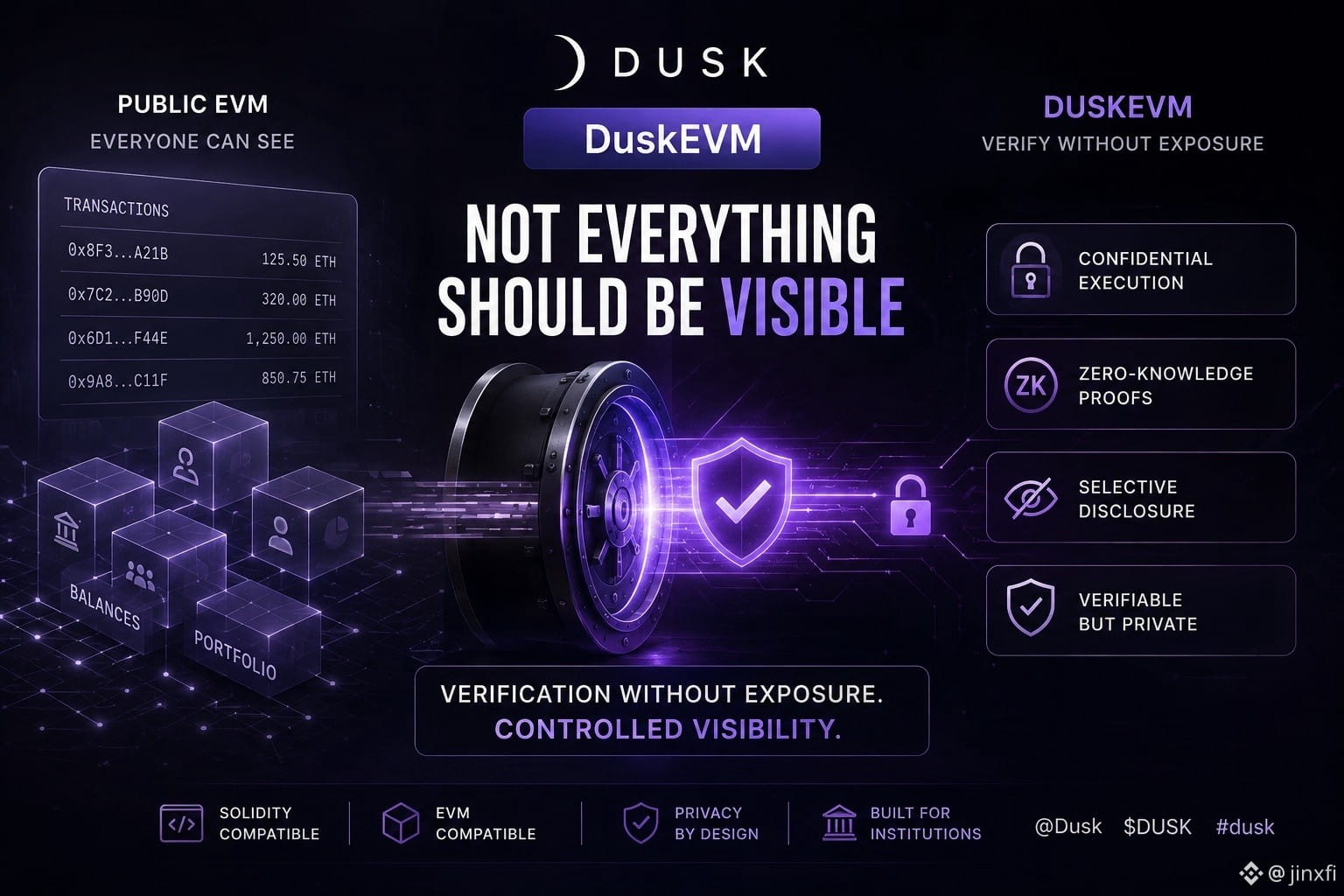
Die meisten EVM-Anwendungen betrachten Transparenz als eine Funktion. Aber im institutionellen Finanzwesen beginnt diese Annahme zu bröckeln.
DeFi funktioniert gut mit öffentlichen Salden und Transaktionen. Institutionen benötigen oft etwas anderes: zu beweisen, dass ein Handel gültig ist, ohne das gesamte Portfolio, die Bilanz oder die Gegenparteien offenzulegen.
Genau hier wird DuskEVM interessant.
Dusk hält die vertraute Solidity- und EVM-Umgebung bei und nutzt zugleich vertrauliche Ausführung, Verschlüsselung und Zero-Knowledge-Beweise, um Verifikation von Sichtbarkeit zu trennen.
Das Netzwerk kann überprüfen, dass die Regeln eingehalten wurden, ohne dass alle die zugrunde liegenden Daten sehen müssen.
Dieser Unterschied ist entscheidend.
Privatsphäre muss nicht bedeuten, auf Verifikation zu verzichten. Sie kann bedeuten, zu steuern, wer was sieht, während der Status dennoch nachweisbar bleibt.
Die eigentliche Herausforderung besteht darin, Proof-Generierung, Performance, Integration und selektive Offenlegung zuverlässig und in großem Maßstab zum Laufen zu bringen.
Mit dem Wachstum tokenisierter Vermögenswerte und der Einführung von Blockchain im institutionellen Bereich stellt sich möglicherweise nicht mehr die Frage, ob Finanzdaten onchain gehören.
Sondern wie viel dieser Daten tatsächlich sichtbar sein muss.
Das nächste EVM-Designproblem könnte nicht die Ausführung sein.
Es könnte die kontrollierte Sichtbarkeit sein.
@Dusk $DUSK #dusk
DeFi funktioniert gut mit öffentlichen Salden und Transaktionen. Institutionen benötigen oft etwas anderes: zu beweisen, dass ein Handel gültig ist, ohne das gesamte Portfolio, die Bilanz oder die Gegenparteien offenzulegen.
Genau hier wird DuskEVM interessant.
Dusk hält die vertraute Solidity- und EVM-Umgebung bei und nutzt zugleich vertrauliche Ausführung, Verschlüsselung und Zero-Knowledge-Beweise, um Verifikation von Sichtbarkeit zu trennen.
Das Netzwerk kann überprüfen, dass die Regeln eingehalten wurden, ohne dass alle die zugrunde liegenden Daten sehen müssen.
Dieser Unterschied ist entscheidend.
Privatsphäre muss nicht bedeuten, auf Verifikation zu verzichten. Sie kann bedeuten, zu steuern, wer was sieht, während der Status dennoch nachweisbar bleibt.
Die eigentliche Herausforderung besteht darin, Proof-Generierung, Performance, Integration und selektive Offenlegung zuverlässig und in großem Maßstab zum Laufen zu bringen.
Mit dem Wachstum tokenisierter Vermögenswerte und der Einführung von Blockchain im institutionellen Bereich stellt sich möglicherweise nicht mehr die Frage, ob Finanzdaten onchain gehören.
Sondern wie viel dieser Daten tatsächlich sichtbar sein muss.
Das nächste EVM-Designproblem könnte nicht die Ausführung sein.
Es könnte die kontrollierte Sichtbarkeit sein.
@Dusk $DUSK #dusk
Ich habe heute in @Dusk Konsens-Dokumenten gestöbert, und der Teil, der mich am meisten gepackt hat, war nicht die Datenschutz-Seite.
Es ging darum, wie stark Dusk den Fokus darauf legt, was nach der Annahme einer Transaktion passiert.
Succinct Attestation ist darauf ausgelegt, Dusk deterministische Endgültigkeit zu verleihen, sobald ein Block ratifiziert wurde. Das bedeutet: Die Transaktion wird nicht nur „wahrscheinlicher“, dort zu bleiben, während weitere Blöcke hinzukommen. Sie erreicht einen definierten Endzustand.
Das klingt zunächst nach einem technischen Detail, bis man an finanzielle Vermögenswerte denkt.
Wenn Sie eine tokenisierte Sicherheit abwickeln oder eine Lieferung-gegen-Zahlung-Transaktion durchführen, wird die Unsicherheit darüber, ob sich der Ledger-Status noch ändern kann, zu einem operativen Problem.
Also habe ich angefangen, Dusk weniger als Privacy-Chain und mehr als Abwicklungssystem zu betrachten.
Die spannende Frage für mich ist, ob deterministische Endgültigkeit tatsächlich wichtiger wird als Datenschutz, sobald echte Finanzwerte onchain zu bewegen beginnen.
Denn Transaktionen zu verbergen ist nützlich.
Aber zu wissen, genau wann diese Transaktion endgültig ist, ist möglicherweise genauso wichtig.
#dusk $DUSK @Dusk
Es ging darum, wie stark Dusk den Fokus darauf legt, was nach der Annahme einer Transaktion passiert.
Succinct Attestation ist darauf ausgelegt, Dusk deterministische Endgültigkeit zu verleihen, sobald ein Block ratifiziert wurde. Das bedeutet: Die Transaktion wird nicht nur „wahrscheinlicher“, dort zu bleiben, während weitere Blöcke hinzukommen. Sie erreicht einen definierten Endzustand.
Das klingt zunächst nach einem technischen Detail, bis man an finanzielle Vermögenswerte denkt.
Wenn Sie eine tokenisierte Sicherheit abwickeln oder eine Lieferung-gegen-Zahlung-Transaktion durchführen, wird die Unsicherheit darüber, ob sich der Ledger-Status noch ändern kann, zu einem operativen Problem.
Also habe ich angefangen, Dusk weniger als Privacy-Chain und mehr als Abwicklungssystem zu betrachten.
Die spannende Frage für mich ist, ob deterministische Endgültigkeit tatsächlich wichtiger wird als Datenschutz, sobald echte Finanzwerte onchain zu bewegen beginnen.
Denn Transaktionen zu verbergen ist nützlich.
Aber zu wissen, genau wann diese Transaktion endgültig ist, ist möglicherweise genauso wichtig.
#dusk $DUSK @Dusk
Deterministic finality
0%
Privacy
0%
Both equally
0%
Fast settlement
0%
0 Stimmen • Abstimmung beendet
Ich habe mir etwas Zeit genommen, die Transaktionsdokumente von Dusk durchzugehen, und der Teil, der mich zum Stoppen brachte, war nicht der ZK-Beweis selbst.
Es war das, was passiert, nachdem die Transaktion privat wird.
Phoenix versteckt den Betrag, den Absender und bestimmte Notizen vor öffentlichen Beobachtern, aber Dusk unterstützt auch Viewing-Keys und selektive Offenlegung, wenn eine autorisierte Partei tatsächlich Belege benötigt.
Das ergibt ein interessanteres Modell als „Privatsphäre = niemand kann irgendetwas sehen“.
Ein Regulierer, ein Auditor oder ein Emittent muss möglicherweise etwas sehen können, ohne dass der Rest des Marktes es sieht.
Das eigentliche Designproblem liegt also nicht darin, die Transaktion zu verstecken.
Sondern darin, festzulegen, wer die versteckten Informationen sehen darf und aus welchem Grund.
Da beginnt Privatsphäre weniger wie ein binärer Schalter auszusehen und mehr wie ein Zugriffssteuerungsproblem.
Das lässt mich darüber nachdenken, wie viel institutionelle Privatsphäre letztlich von der Kryptografie selbst abhängt – im Vergleich zu den Regeln, die die Offenlegung steuern.
#dusk $DUSK @Dusk
Es war das, was passiert, nachdem die Transaktion privat wird.
Phoenix versteckt den Betrag, den Absender und bestimmte Notizen vor öffentlichen Beobachtern, aber Dusk unterstützt auch Viewing-Keys und selektive Offenlegung, wenn eine autorisierte Partei tatsächlich Belege benötigt.
Das ergibt ein interessanteres Modell als „Privatsphäre = niemand kann irgendetwas sehen“.
Ein Regulierer, ein Auditor oder ein Emittent muss möglicherweise etwas sehen können, ohne dass der Rest des Marktes es sieht.
Das eigentliche Designproblem liegt also nicht darin, die Transaktion zu verstecken.
Sondern darin, festzulegen, wer die versteckten Informationen sehen darf und aus welchem Grund.
Da beginnt Privatsphäre weniger wie ein binärer Schalter auszusehen und mehr wie ein Zugriffssteuerungsproblem.
Das lässt mich darüber nachdenken, wie viel institutionelle Privatsphäre letztlich von der Kryptografie selbst abhängt – im Vergleich zu den Regeln, die die Offenlegung steuern.
#dusk $DUSK @Dusk
Anmelden und weiter Inhalte entdecken