
SmartBoy_007
16.6k Beiträge

SmartBoy_007
 Square Verified+
Content Creator | Crypto Market Analysis | My Own Trading Ideas | Follow Me & Join The Journey | 100K Followers Is My Dream
Trade eröffnen
Hochfrequenz-Trader
1.6 Jahre
219 Following
38.3K+ Follower
21.3K+ Like gegeben
Beiträge
Portfolio
Alle
Zitierungen
Live
Übersetzung ansehen
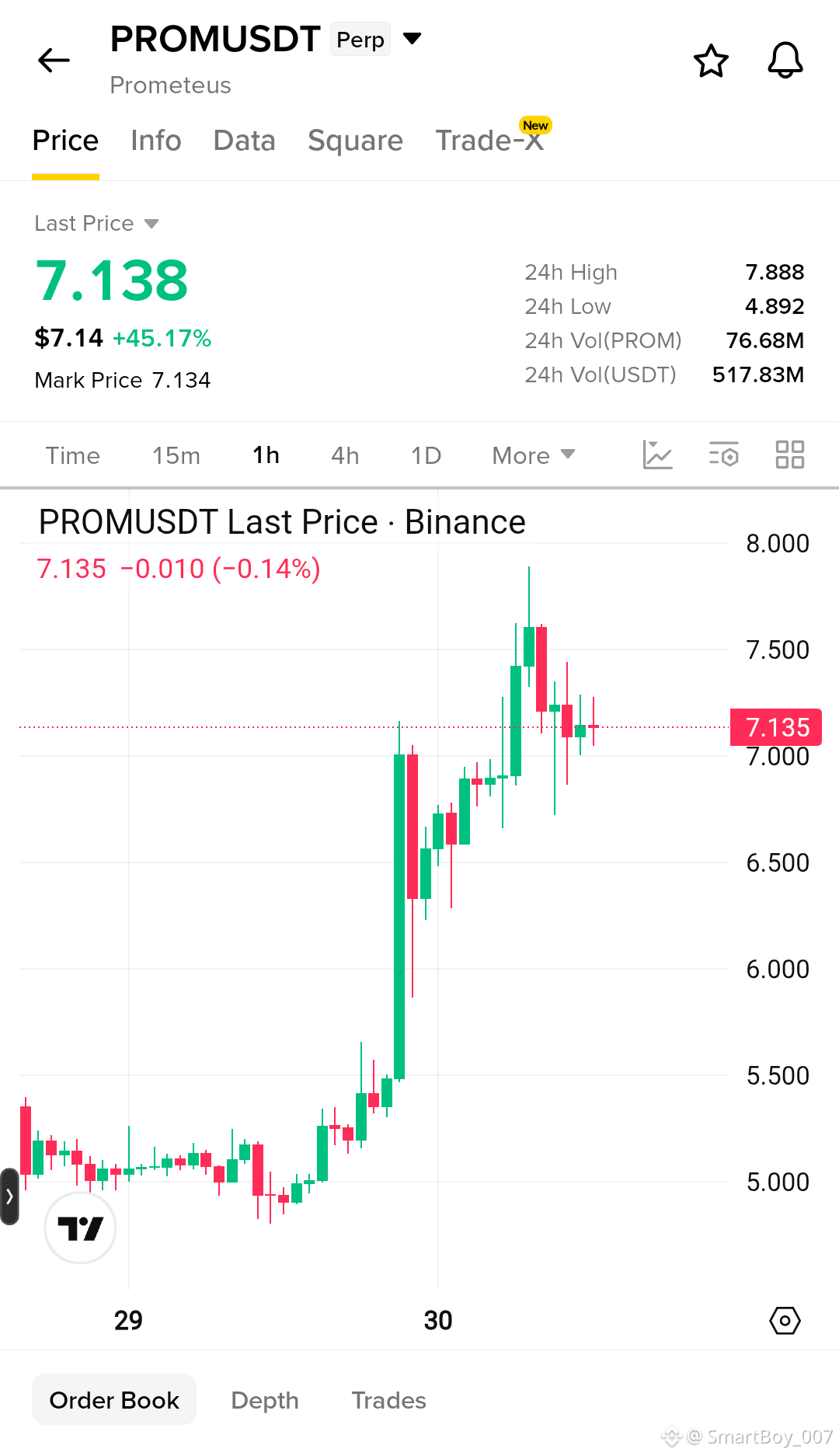
$PROM — That 7.5–7.8 zone already rejected price hard 🔥
PROM pushed into the highs, failed to hold them, and slipped back toward 7.1.
SHORT 🔴
EP: $7.10–$7.30
TP 1: $7.00
TP 2: $6.50
TP 3: $6.00
SL: $7.80
If 7.5–7.8 gets reclaimed, this short setup weakens fast. 👀⚡ $PROM
PROM pushed into the highs, failed to hold them, and slipped back toward 7.1.
SHORT 🔴
EP: $7.10–$7.30
TP 1: $7.00
TP 2: $6.50
TP 3: $6.00
SL: $7.80
If 7.5–7.8 gets reclaimed, this short setup weakens fast. 👀⚡ $PROM
Übersetzung ansehen
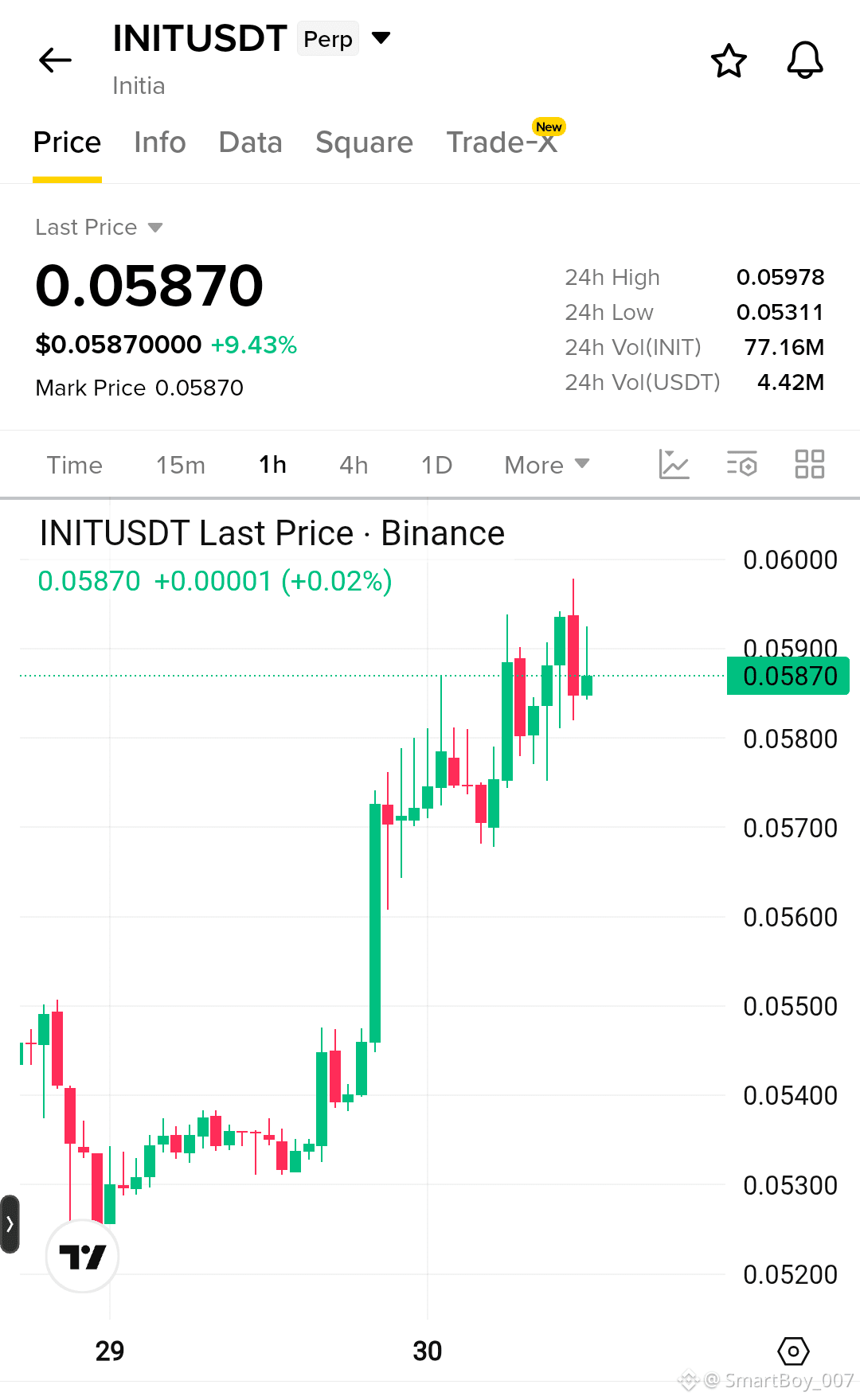
$INIT — That spike toward $0.0596 still couldn’t break through 🔥
Price rejected the $0.0595–$0.0600 zone with a clear upper wick, followed by a pullback toward $0.0587.
If that resistance keeps holding, the short setup has room to unwind lower. 👀
SHORT 🔴
EP: $0.0587–$0.0590
TP 1: $0.0580
TP 2: $0.0570
TP 3: $0.0560
SL: $0.0600
Let the rejection stay confirmed before forcing the move, g. ⚡$INIT
Price rejected the $0.0595–$0.0600 zone with a clear upper wick, followed by a pullback toward $0.0587.
If that resistance keeps holding, the short setup has room to unwind lower. 👀
SHORT 🔴
EP: $0.0587–$0.0590
TP 1: $0.0580
TP 2: $0.0570
TP 3: $0.0560
SL: $0.0600
Let the rejection stay confirmed before forcing the move, g. ⚡$INIT
Übersetzung ansehen
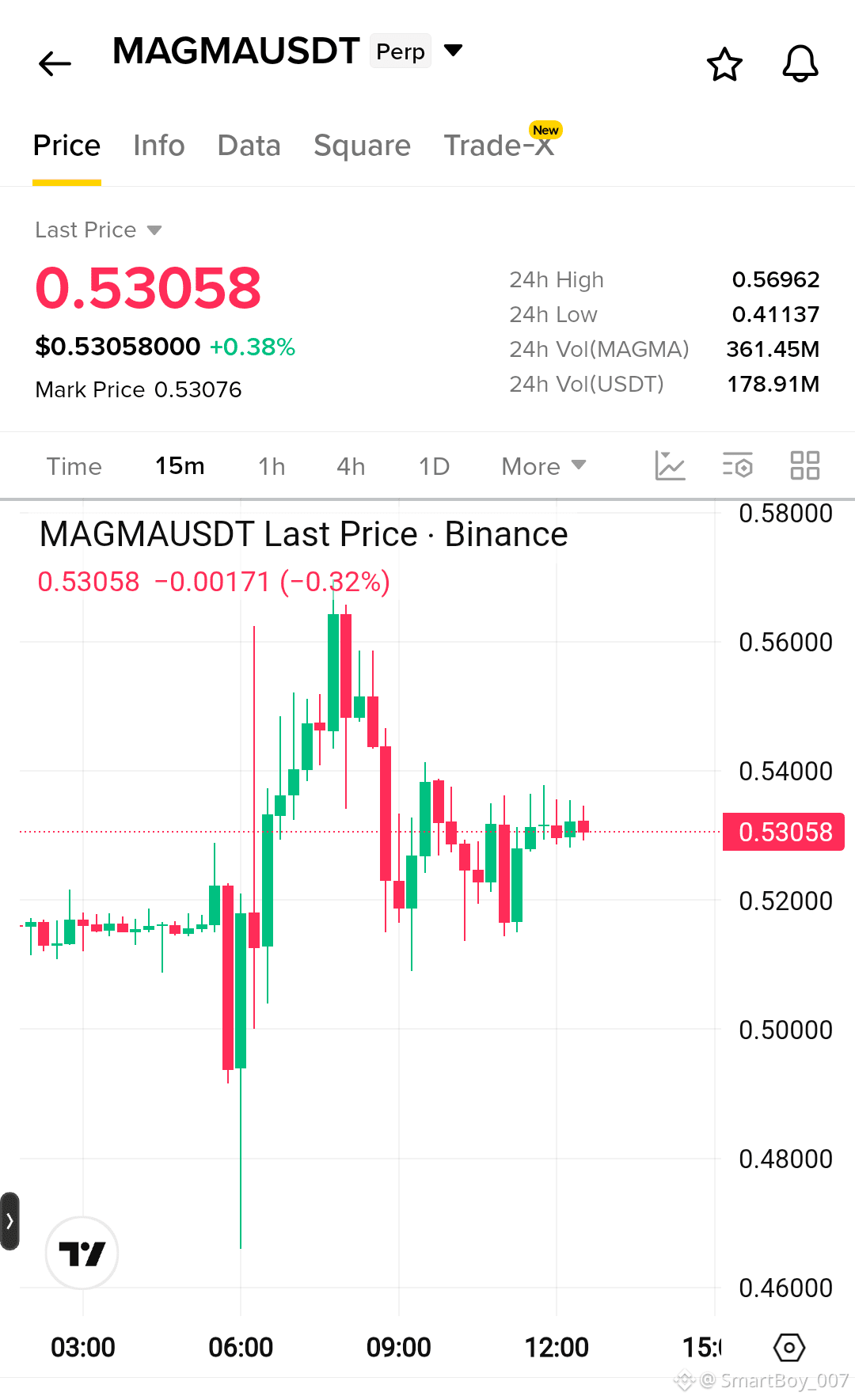
$MAGMA — That 0.565 spike got completely rejected 🔥
MAGMA dumped hard from the 0.565 area, and every rebound since has stayed below the 0.538–0.540 zone.
SHORT 🔴
EP: $0.530 –$0.535
TP 1: $0.520
TP 2: $0.500
TP 3: $0.480
SL: $0.540
If 0.540 keeps rejecting, the downside structure remains in play g 👀⚡ $MAGMA
MAGMA dumped hard from the 0.565 area, and every rebound since has stayed below the 0.538–0.540 zone.
SHORT 🔴
EP: $0.530 –$0.535
TP 1: $0.520
TP 2: $0.500
TP 3: $0.480
SL: $0.540
If 0.540 keeps rejecting, the downside structure remains in play g 👀⚡ $MAGMA
Übersetzung ansehen
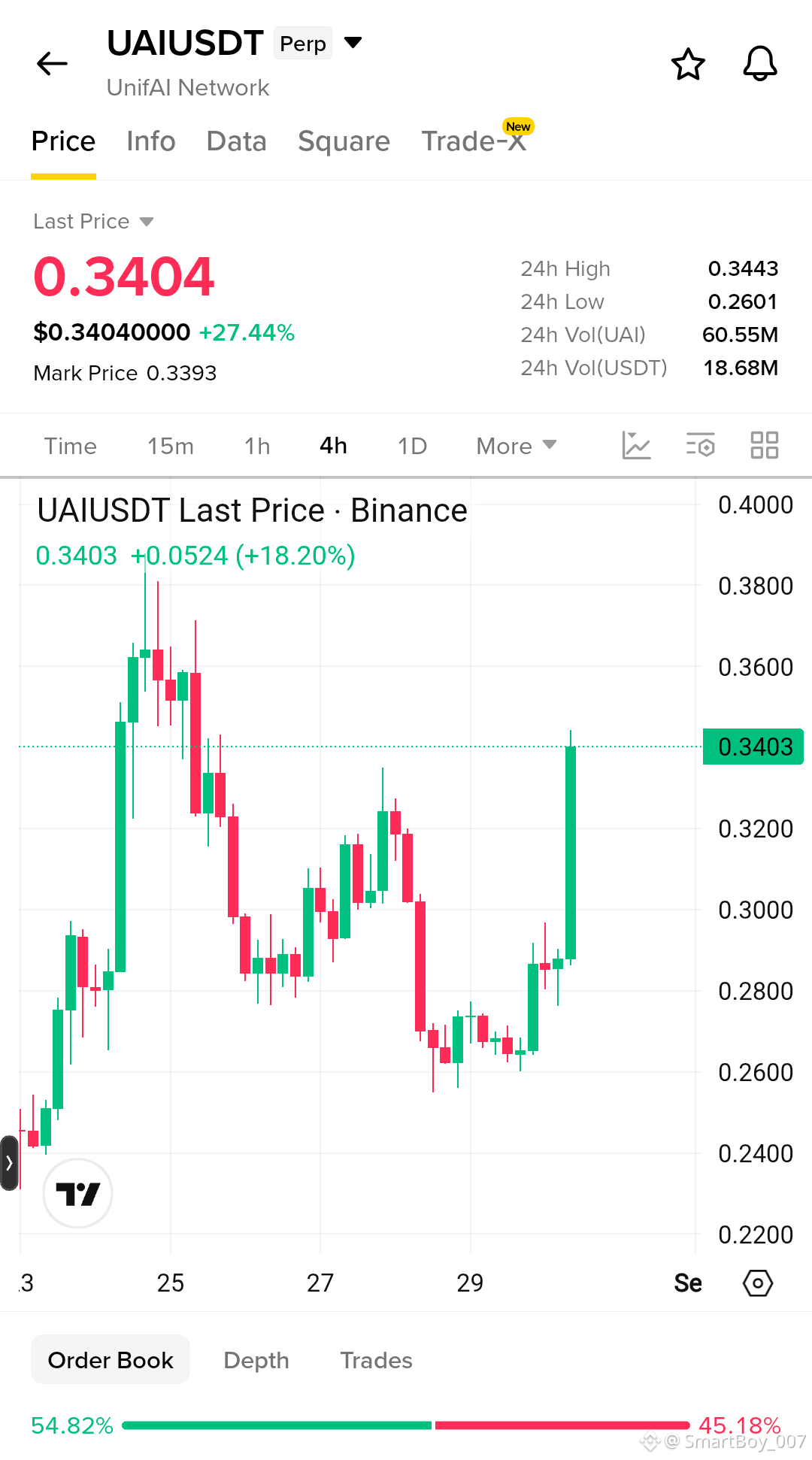
$UAI — UAI just pushed through the ceiling that capped the latest rebound 🔥
Price broke above the $0.32–$0.33 resistance area with a strong 4H expansion candle.
If that breakout holds, the next visible resistance zones come into play. 👀⚡
LONG 🟢
EP: $0.332–$0.340
TP 1: $0.360
TP 2: $0.380
TP 3: $0.400
SL: $0.319
Let the breakout hold the reclaimed zone, g. 🟢
$UAI
Price broke above the $0.32–$0.33 resistance area with a strong 4H expansion candle.
If that breakout holds, the next visible resistance zones come into play. 👀⚡
LONG 🟢
EP: $0.332–$0.340
TP 1: $0.360
TP 2: $0.380
TP 3: $0.400
SL: $0.319
Let the breakout hold the reclaimed zone, g. 🟢
$UAI
Übersetzung ansehen
Healthy body.
No stress or anxiety.
My parents love me.
No money lost.
No weed or alcohol.
Touching grass with friends.
No bags to hold.
No looking at charts 24x7
This was my peak, I was 12 years old.
No stress or anxiety.
My parents love me.
No money lost.
No weed or alcohol.
Touching grass with friends.
No bags to hold.
No looking at charts 24x7
This was my peak, I was 12 years old.
Übersetzung ansehen
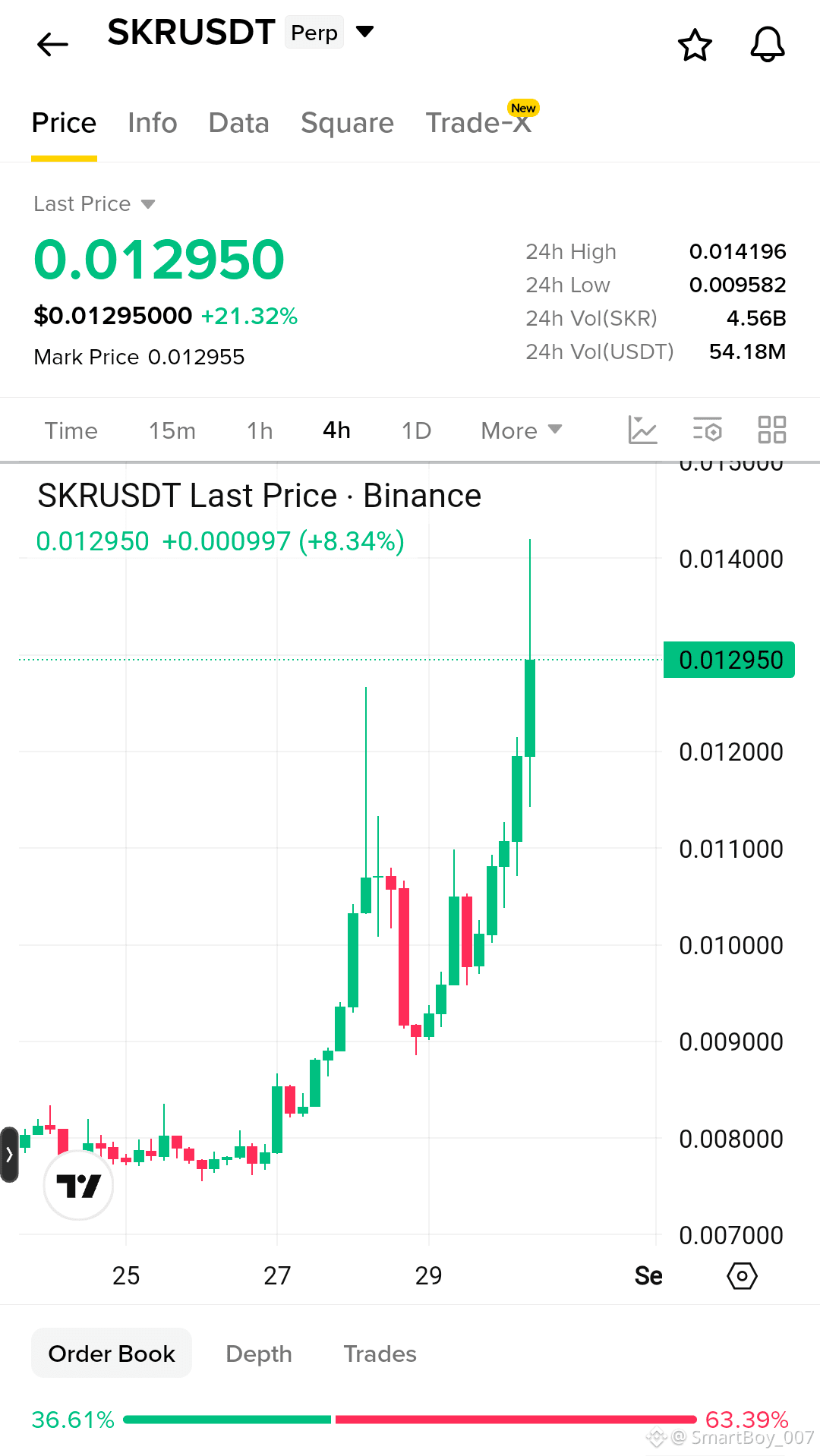
$SKR — SKR just ran straight into a wall at 0.0142 🔥
The latest 4H candle wicked sharply into 0.0142 before settling back near 0.01295.
As long as the 0.0120 area holds, the higher-low structure keeps the LONG setup alive. 👀
LONG 🟢
EP: $0.0120 –$0.0130
TP 1: $0.0135
TP 2: $0.0142
TP 3: $0.0150
SL: $0.0110
Let the key levels confirm before chasing the move, g. ⚡
$SKR
The latest 4H candle wicked sharply into 0.0142 before settling back near 0.01295.
As long as the 0.0120 area holds, the higher-low structure keeps the LONG setup alive. 👀
LONG 🟢
EP: $0.0120 –$0.0130
TP 1: $0.0135
TP 2: $0.0142
TP 3: $0.0150
SL: $0.0110
Let the key levels confirm before chasing the move, g. ⚡
$SKR
Übersetzung ansehen
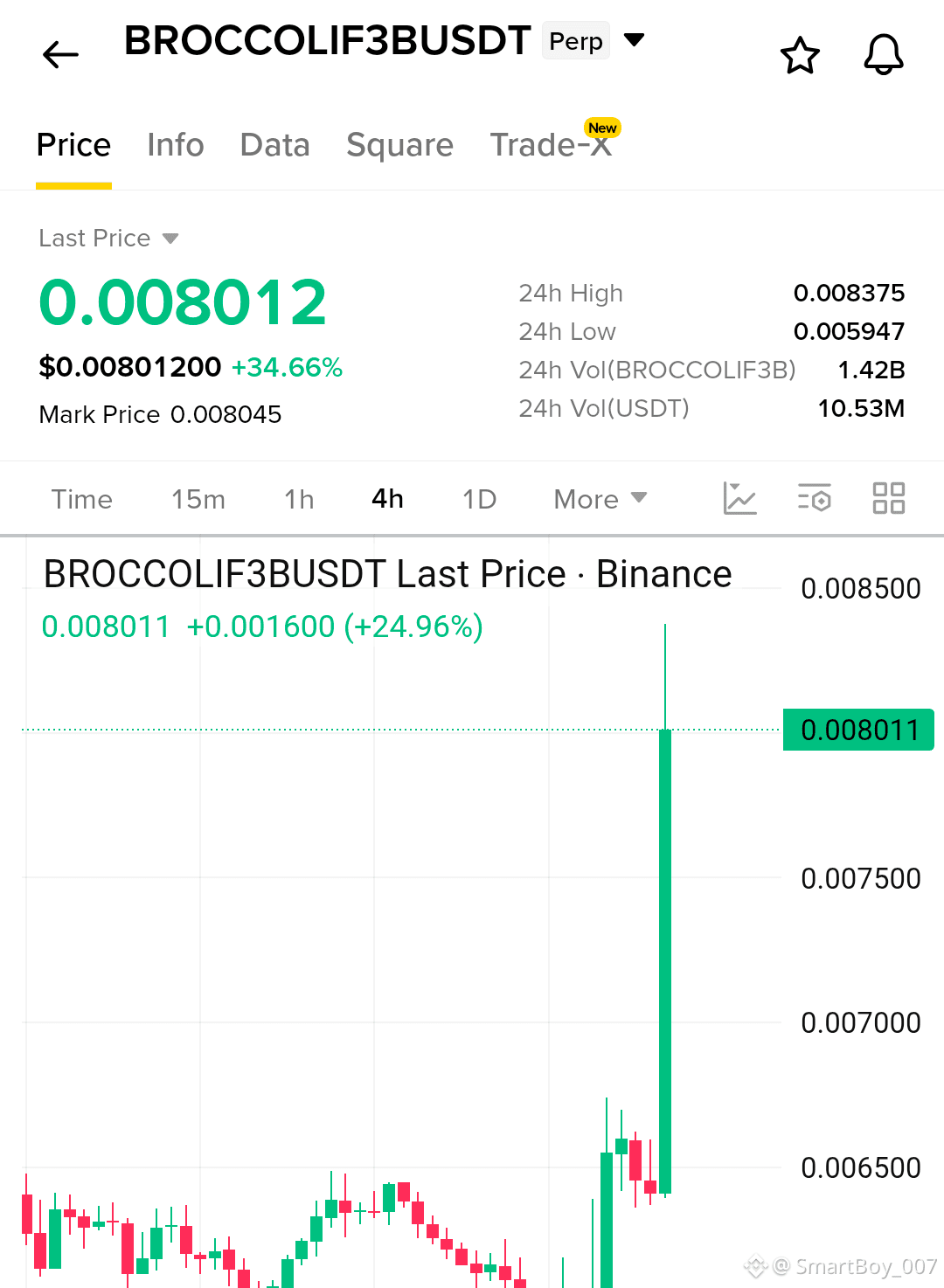
$BROCCOLIF3B — A single 4H candle just ripped through the old ceiling around $0.0065 🔥
Price exploded out of the prior consolidation and pushed into the $0.0080 area.
The key now is whether that breakout zone can hold on a pullback. 👀
LONG 🟢
EP: $0.0079–$0.0081
TP 1: $0.0082
TP 2: $0.00835
TP 3: $0.0085
SL: $0.0065
Let the breakout level prove itself, g. ⚡
Price exploded out of the prior consolidation and pushed into the $0.0080 area.
The key now is whether that breakout zone can hold on a pullback. 👀
LONG 🟢
EP: $0.0079–$0.0081
TP 1: $0.0082
TP 2: $0.00835
TP 3: $0.0085
SL: $0.0065
Let the breakout level prove itself, g. ⚡
Übersetzung ansehen
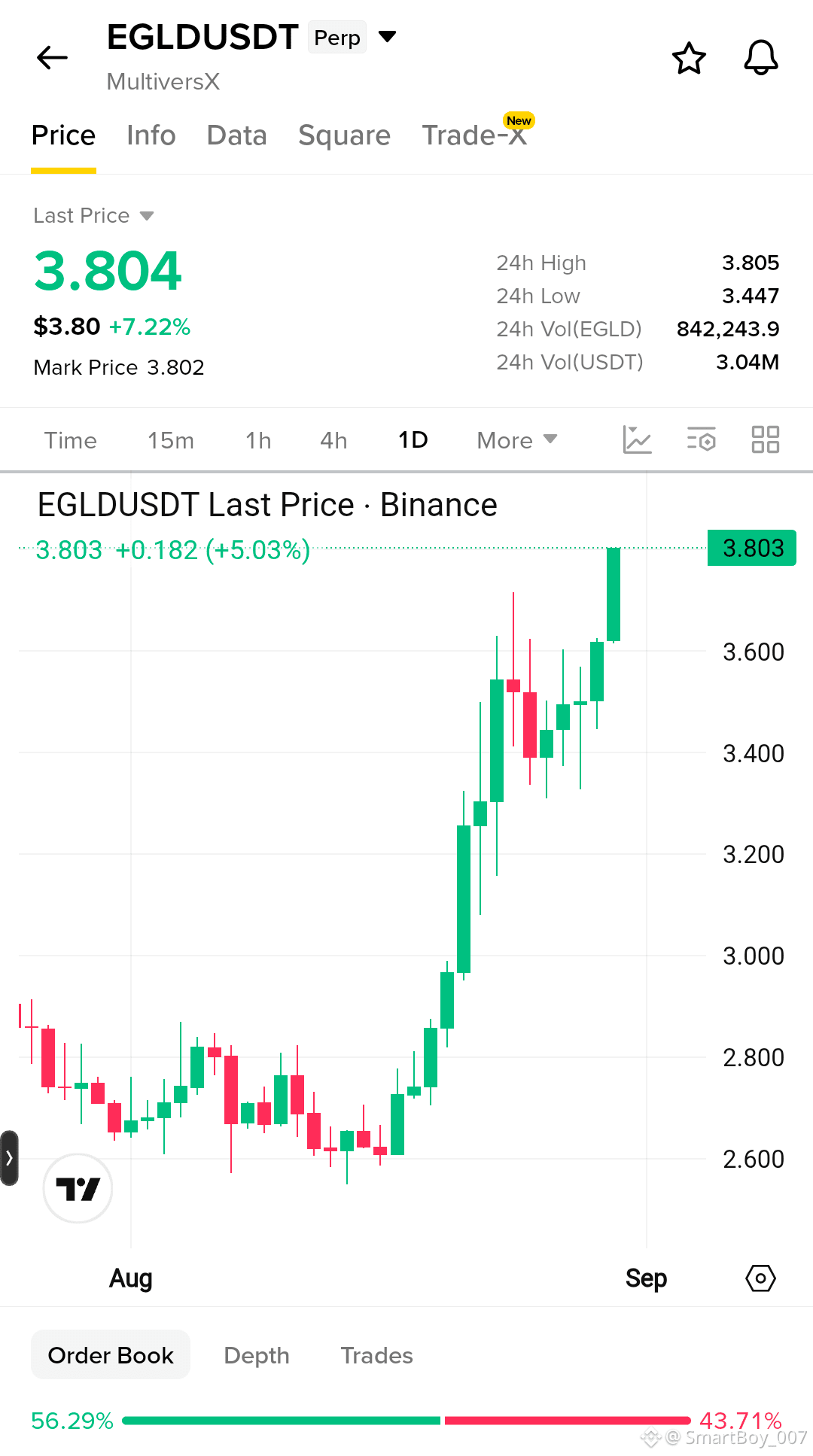
$EGLD — The $3.80 test is where this move gets interesting 👀🔥
EGLD has surged into the $3.80–$3.805 area, now sitting right at the visible high after a strong run higher.
A clean break above this zone would favor continuation, while rejection could trigger a pullback toward the recent support area.
LONG 🟢
Key Entry Area: $3.60–$3.65
Target 1 Area: $3.80–$3.805 $3.90
Invalidation Area: $3.40
⚡ Watch the $3.80 level closely — this is the key decision zone.
EGLD has surged into the $3.80–$3.805 area, now sitting right at the visible high after a strong run higher.
A clean break above this zone would favor continuation, while rejection could trigger a pullback toward the recent support area.
LONG 🟢
Key Entry Area: $3.60–$3.65
Target 1 Area: $3.80–$3.805 $3.90
Invalidation Area: $3.40
⚡ Watch the $3.80 level closely — this is the key decision zone.
Übersetzung ansehen
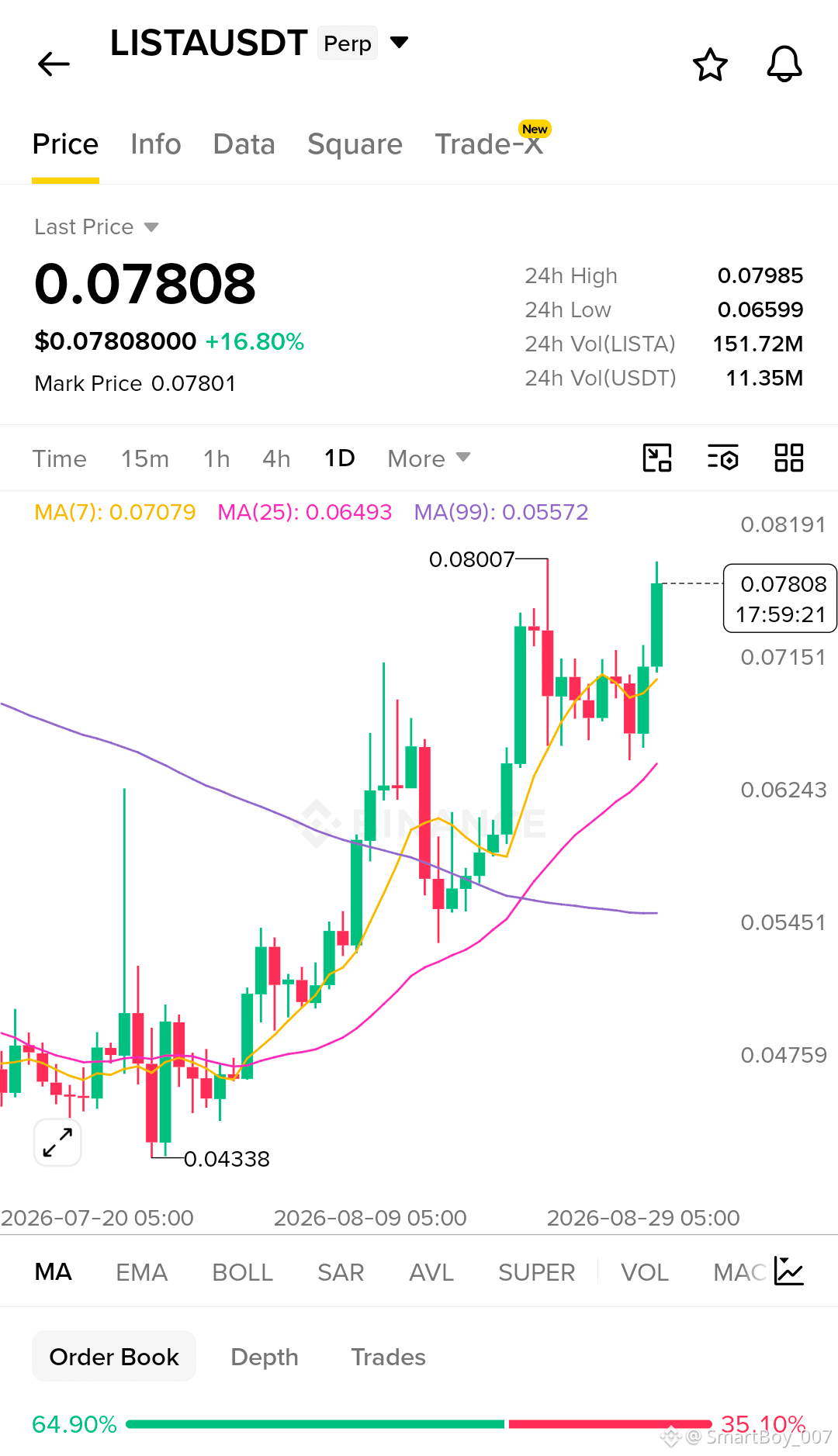
$LISTA — One obvious test stands between this move and a fresh breakout 🔥
LISTA is pressing into the previous daily high at $0.08007 after reclaiming the $0.07151 area.
A clean break above that prior high would strengthen the LONG setup; rejection there could turn this into a double-top watch. 👀
LONG 🟢
Key Entry Area: $0.07079–$0.07151
Target 1 Area: $0.08007
Invalidation Area: $0.06493
The next move around $0.08007 is the level to watch. ⚡ $LISTA
LISTA is pressing into the previous daily high at $0.08007 after reclaiming the $0.07151 area.
A clean break above that prior high would strengthen the LONG setup; rejection there could turn this into a double-top watch. 👀
LONG 🟢
Key Entry Area: $0.07079–$0.07151
Target 1 Area: $0.08007
Invalidation Area: $0.06493
The next move around $0.08007 is the level to watch. ⚡ $LISTA
Übersetzung ansehen
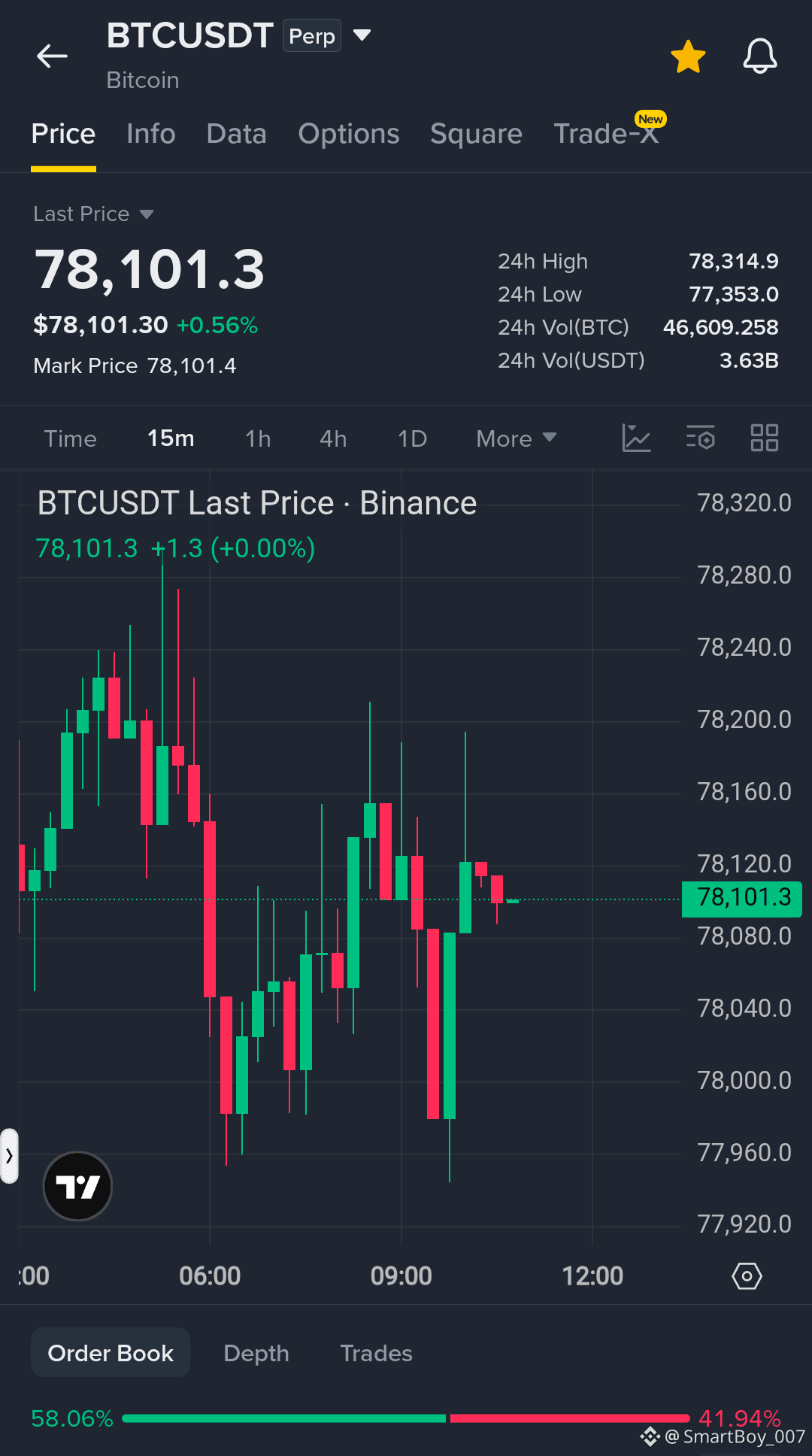
$BTC — 78,120–78,160 is still acting like a ceiling 👀🔥
BTC keeps pushing into this zone, but the upper wicks show the breakout hasn’t stuck yet.
SHORT 🔴
Key Entry Area: $78,120–$78,160
Target 1 Area: $78,080
Target 2 Area: $78,040
Target 3 Area: $77,960
Invalidation Area: $78,200
If BTC finally holds above that resistance, the short setup loses its edge. ⚡ $BTC
BTC keeps pushing into this zone, but the upper wicks show the breakout hasn’t stuck yet.
SHORT 🔴
Key Entry Area: $78,120–$78,160
Target 1 Area: $78,080
Target 2 Area: $78,040
Target 3 Area: $77,960
Invalidation Area: $78,200
If BTC finally holds above that resistance, the short setup loses its edge. ⚡ $BTC
Übersetzung ansehen
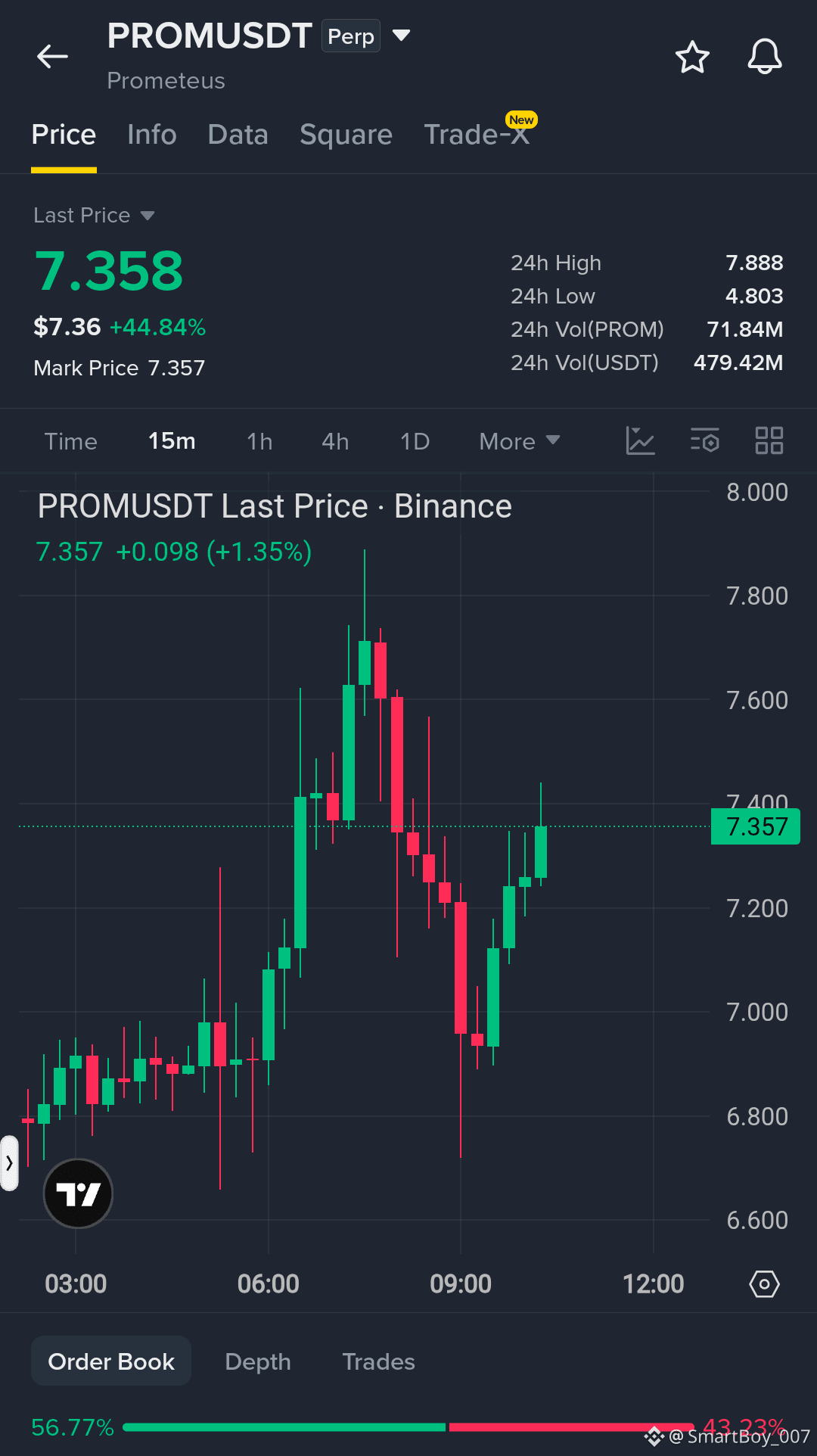
$PROM — From sharp selloff to a higher-low rebound 🔥
PROM dropped toward the 6.95 area, found support, and has now climbed back above 7.20 with a strong sequence of 15m green candles.
The rebound structure favors the LONG side as long as the reclaimed zone holds. 👀
LONG 🟢
Key Entry Area: $7.20–$7.35
Target 1 Area: $7.40
Target 2 Area: $7.60
Target 3 Area: $7.80
Invalidation Area: Below $6.95
A clean break through $7.40 would give the recovery more room to run. ⚡
PROM dropped toward the 6.95 area, found support, and has now climbed back above 7.20 with a strong sequence of 15m green candles.
The rebound structure favors the LONG side as long as the reclaimed zone holds. 👀
LONG 🟢
Key Entry Area: $7.20–$7.35
Target 1 Area: $7.40
Target 2 Area: $7.60
Target 3 Area: $7.80
Invalidation Area: Below $6.95
A clean break through $7.40 would give the recovery more room to run. ⚡
Übersetzung ansehen
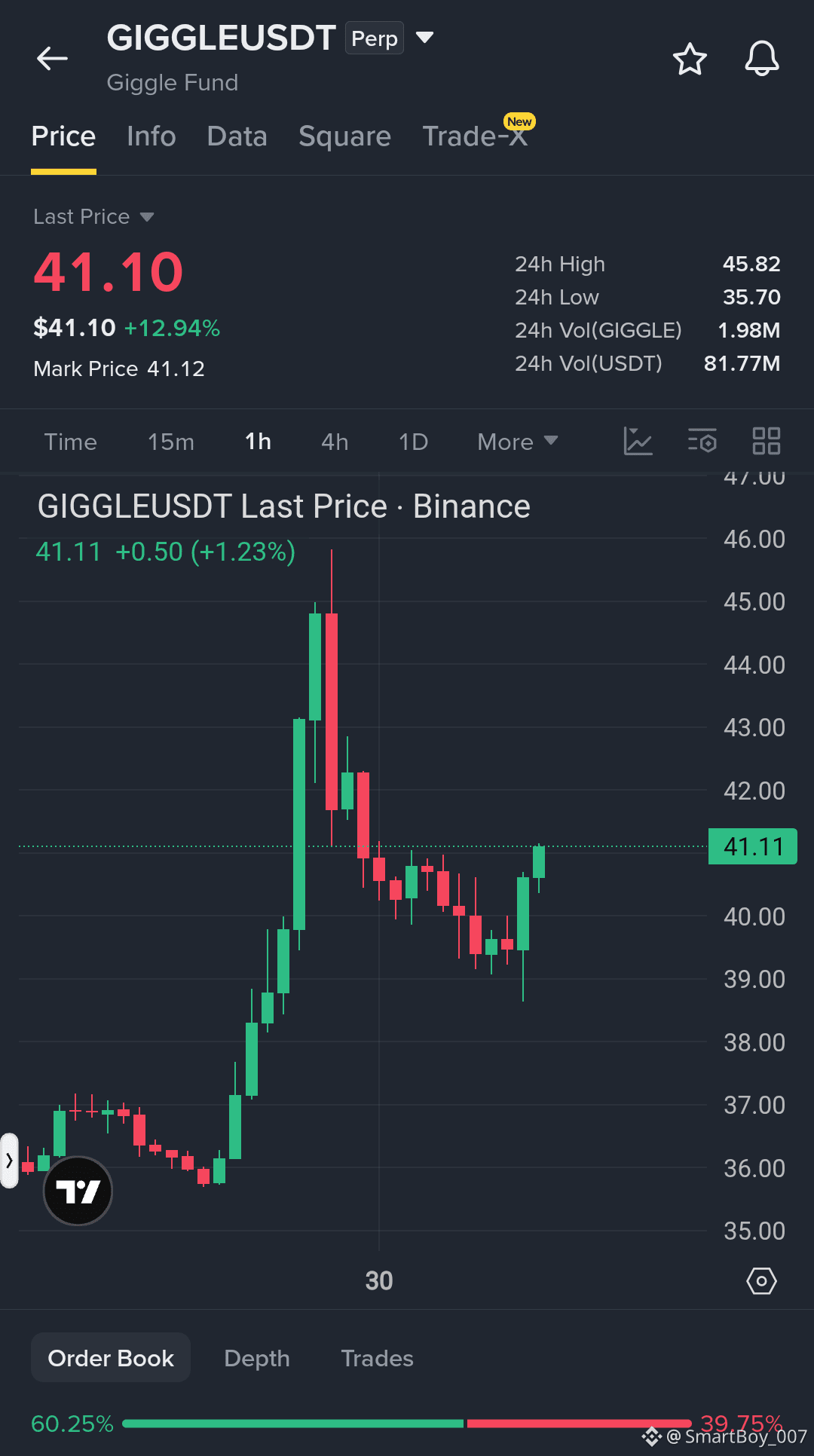
$GIGGLE $40 reclaimed, now the $41–$42 zone is the real test 🔥
After holding the $39–$40 area, GIGGLE has pushed back above $40 and is now pressing into the first major resistance cluster.
A clean move through $42 could open the door back toward the previous spike high 👀
LONG 🟢
Key Entry Area: $40–$41
Target 1 Area: $42
Target 2 Area: $45
Target 3 Area: $45.8
Invalidation Area: $38.7
⚡ As long as the recent $39 area holds, the rebound structure remains interesting.
After holding the $39–$40 area, GIGGLE has pushed back above $40 and is now pressing into the first major resistance cluster.
A clean move through $42 could open the door back toward the previous spike high 👀
LONG 🟢
Key Entry Area: $40–$41
Target 1 Area: $42
Target 2 Area: $45
Target 3 Area: $45.8
Invalidation Area: $38.7
⚡ As long as the recent $39 area holds, the rebound structure remains interesting.
Übersetzung ansehen
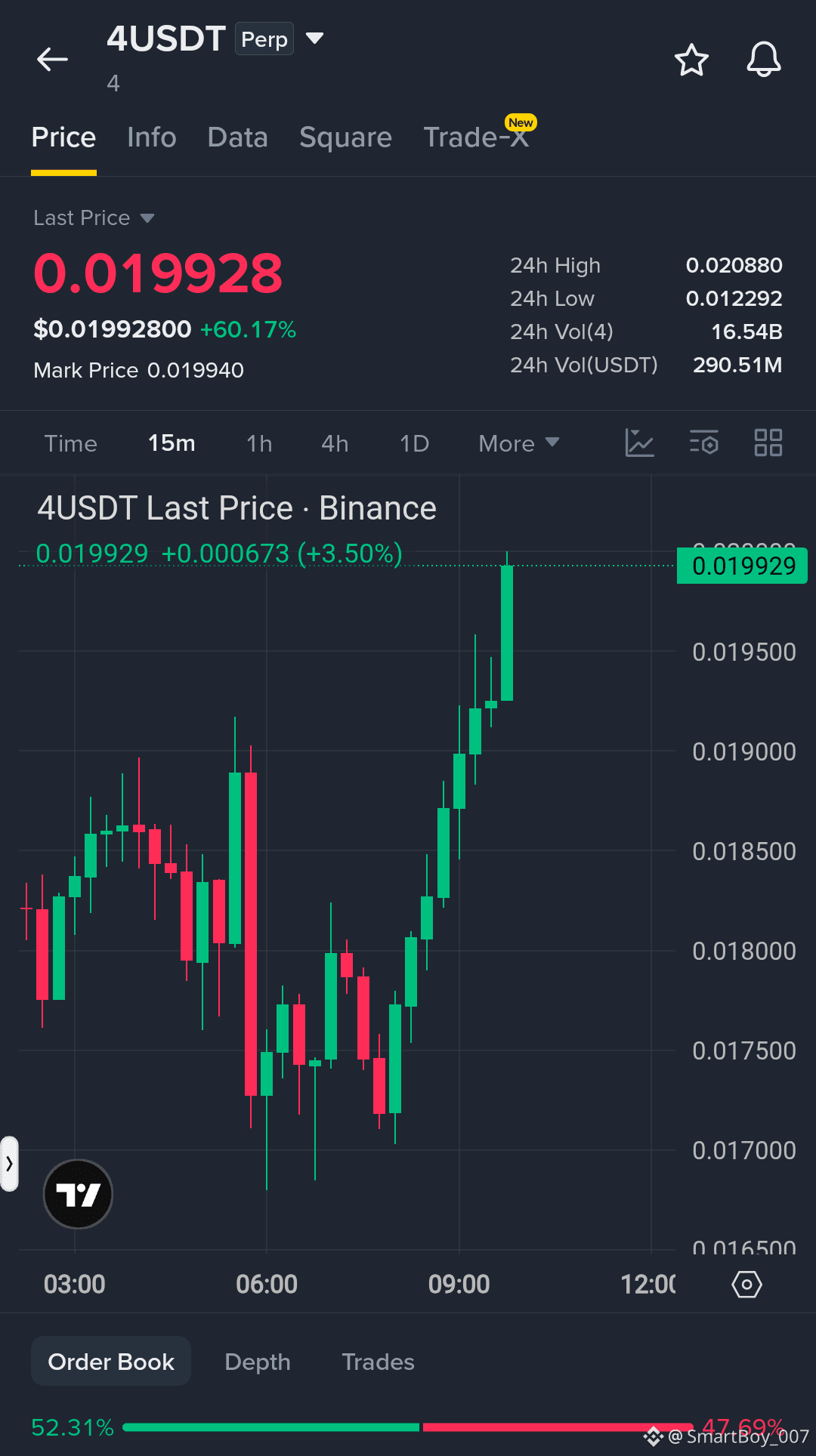
$4 USDT — One level stands directly in front of this move: $0.0200 🔥
Price has climbed sharply from the $0.0172 area and is now pressing right into the psychological $0.0200 level.
A clean hold above it could open the way toward the visible 24h high at $0.02088 👀
LONG 🟢
Key Entry Area: $0.0190–$0.0193
Target 1 Area: $0.0200
Target 2 Area: $0.02088
Invalidation Area: $0.0185
Watch the $0.0200 reaction closely… that’s the key level now. ⚡
$4
Price has climbed sharply from the $0.0172 area and is now pressing right into the psychological $0.0200 level.
A clean hold above it could open the way toward the visible 24h high at $0.02088 👀
LONG 🟢
Key Entry Area: $0.0190–$0.0193
Target 1 Area: $0.0200
Target 2 Area: $0.02088
Invalidation Area: $0.0185
Watch the $0.0200 reaction closely… that’s the key level now. ⚡
$4
Übersetzung ansehen
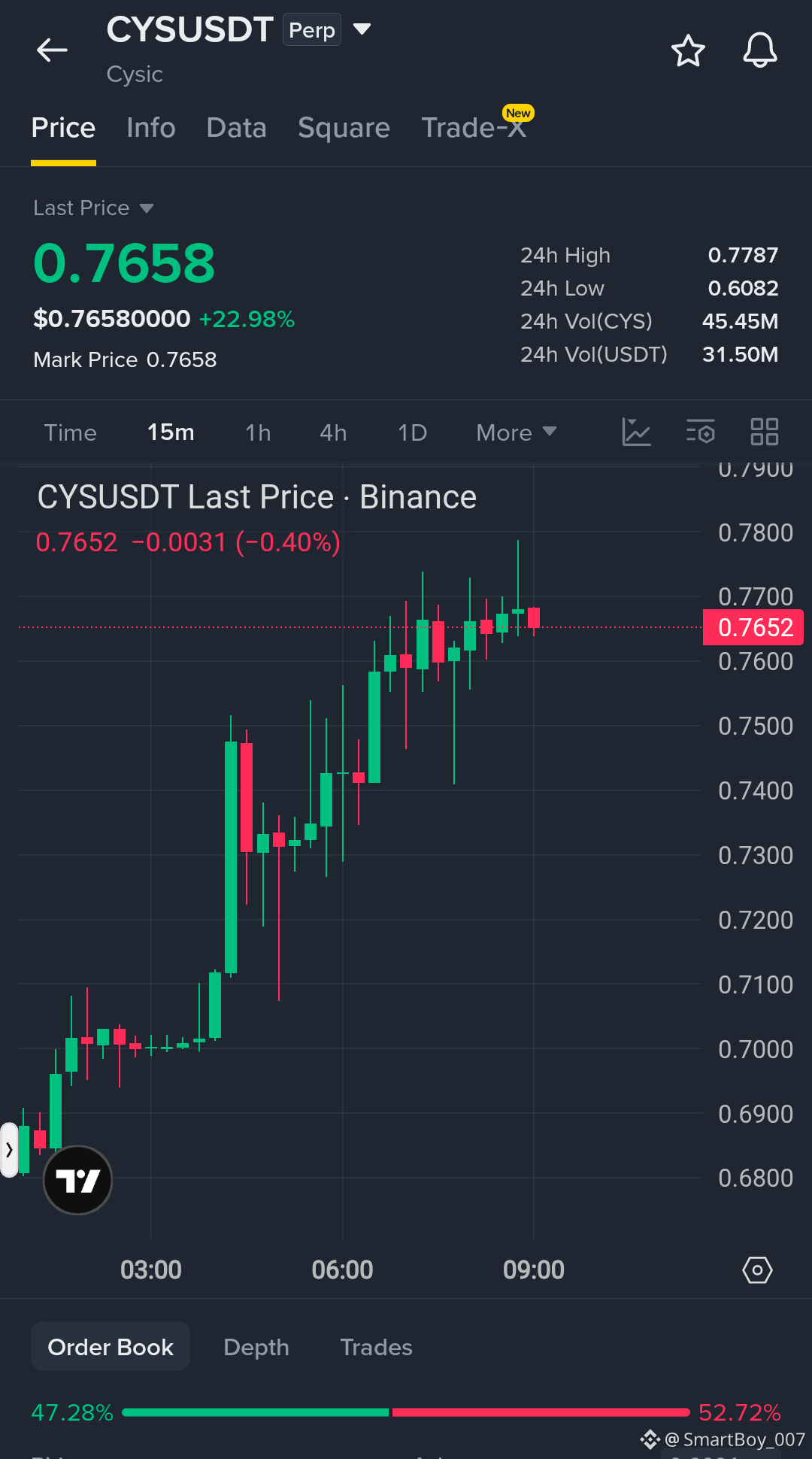
$CYS USDT LONG — higher lows are tightening beneath $0.7700 resistance, signaling a breakout setup. Entry $0.7640 + TP1 $0.7750 + TP2 $0.7870 + TP3 $0.8000 SL $0.7530
Übersetzung ansehen
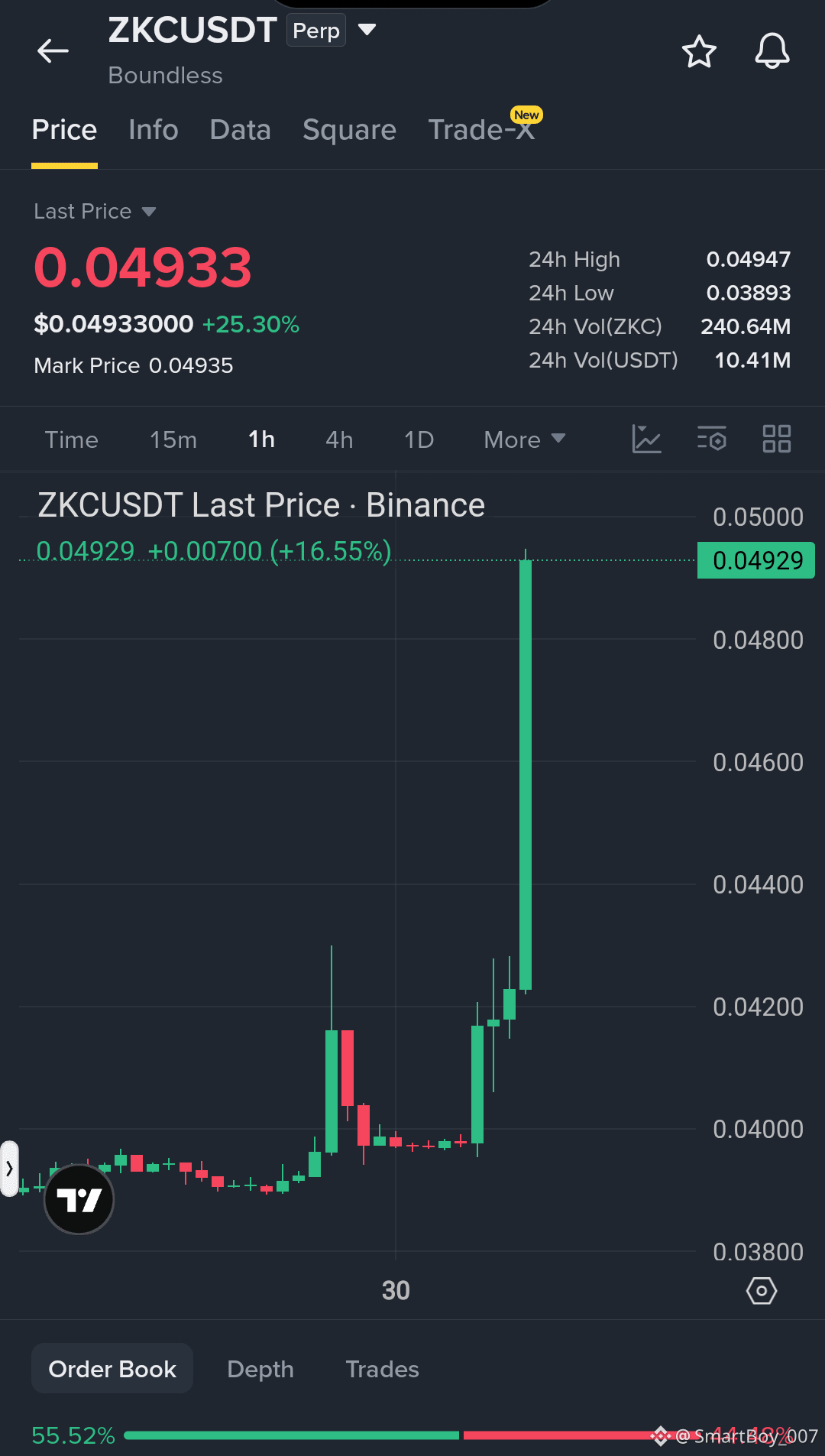
$ZKC USDT LONG — BIG 1H BREAKOUT, NOW WATCH THE RETEST 🔥
Entry: $0.04800
TP1: $0.04940
TP2: $0.05000
TP3: $0.05100
SL: $0.04690
ZKC just ripped out of the $0.0420–$0.0425 range with a powerful 1H candle and is now pressing the $0.0494–$0.0500 resistance zone.
I wouldn’t chase the vertical candle here. The cleaner LONG is a pullback into $0.0480, followed by a hold/reclaim. If buyers defend that area, continuation toward $0.050 and above makes sense.
Confirmation: 1H holds above $0.0480 and pushes back through $0.0494.
Invalidation: clean loss of $0.0469.
$ZKC my
Entry: $0.04800
TP1: $0.04940
TP2: $0.05000
TP3: $0.05100
SL: $0.04690
ZKC just ripped out of the $0.0420–$0.0425 range with a powerful 1H candle and is now pressing the $0.0494–$0.0500 resistance zone.
I wouldn’t chase the vertical candle here. The cleaner LONG is a pullback into $0.0480, followed by a hold/reclaim. If buyers defend that area, continuation toward $0.050 and above makes sense.
Confirmation: 1H holds above $0.0480 and pushes back through $0.0494.
Invalidation: clean loss of $0.0469.
$ZKC my
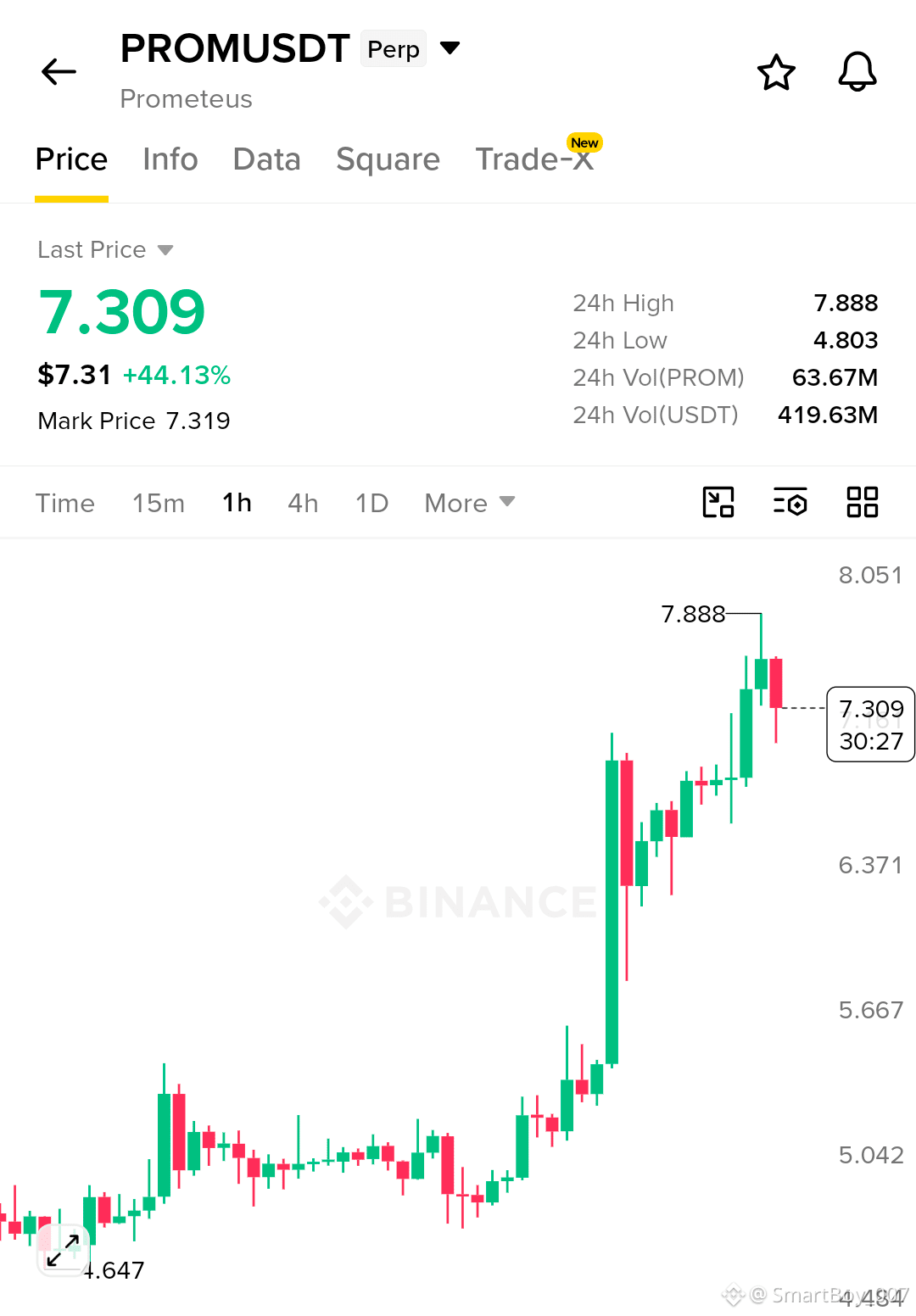
$PROM USDT LONG.. frischer Ausbruch-Impuls hält sich über dem Bereich von 7,00, nachdem er ... getippt hat.
$7.888. Einstieg $7.25–$7.35 | TP1 $7.70 | TP2 $8.05 | TP3 $8.50 SL $6.90
$7.888. Einstieg $7.25–$7.35 | TP1 $7.70 | TP2 $8.05 | TP3 $8.50 SL $6.90
Übersetzung ansehen
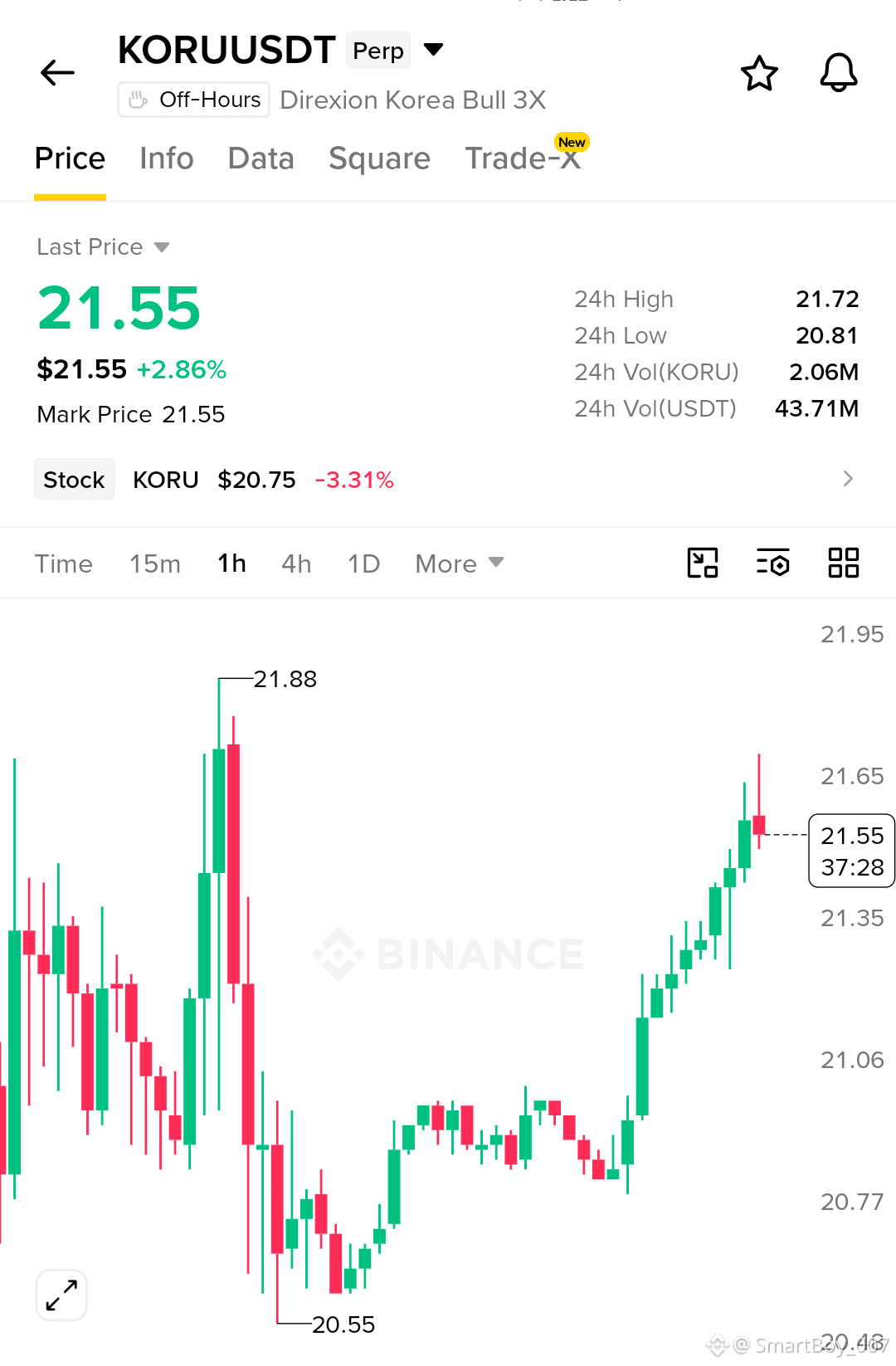
$KORU is pressing into 21.65 resistance after a sharp 1H climb — breakout setup looks clean above the current range.
Entry: 21.50–21.55 | TP1: 21.65 | TP2: 21.88 | SL: 21.35
Entry: 21.50–21.55 | TP1: 21.65 | TP2: 21.88 | SL: 21.35
Übersetzung ansehen
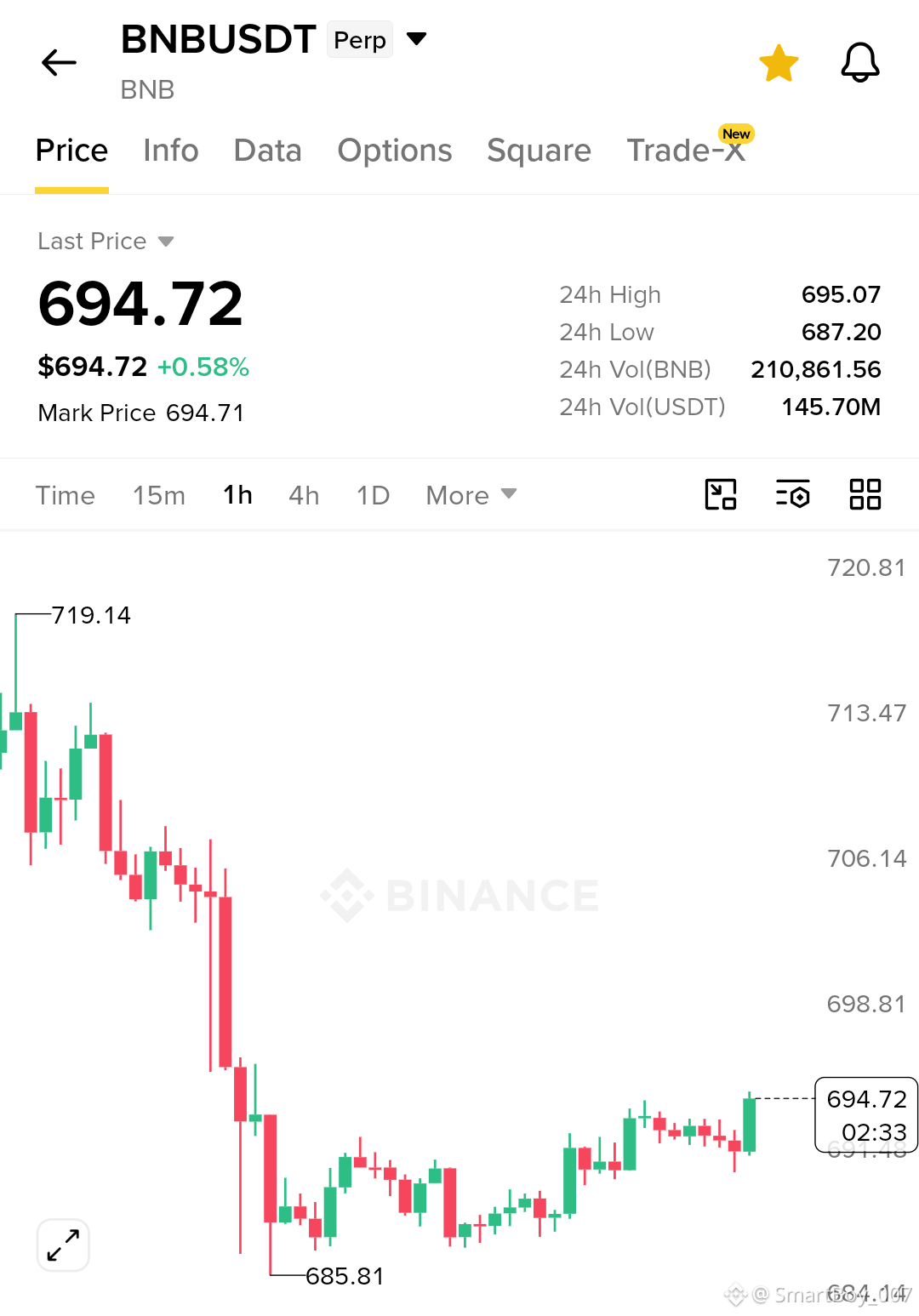
Just pulled up $BNB and the rebound is getting interesting, but I’m staying patient here.
$BNB /USDT — NO TRADE
Why no trade?
$BNB has recovered from the 685.81 low, but the move is now pressing into the 694–695 resistance area and the recent 24h high at 695.07.
The broader 1H structure is still recovering from a sharp selloff, so I don’t have enough confirmation for a clean continuation trade.
Volume and moving-average confirmation are also not visible on this chart. I’d rather wait for a decisive breakout and retest than chase resistance.
No entry until the structure gives a clearer signal.
$BNB /USDT — NO TRADE
Why no trade?
$BNB has recovered from the 685.81 low, but the move is now pressing into the 694–695 resistance area and the recent 24h high at 695.07.
The broader 1H structure is still recovering from a sharp selloff, so I don’t have enough confirmation for a clean continuation trade.
Volume and moving-average confirmation are also not visible on this chart. I’d rather wait for a decisive breakout and retest than chase resistance.
No entry until the structure gives a clearer signal.
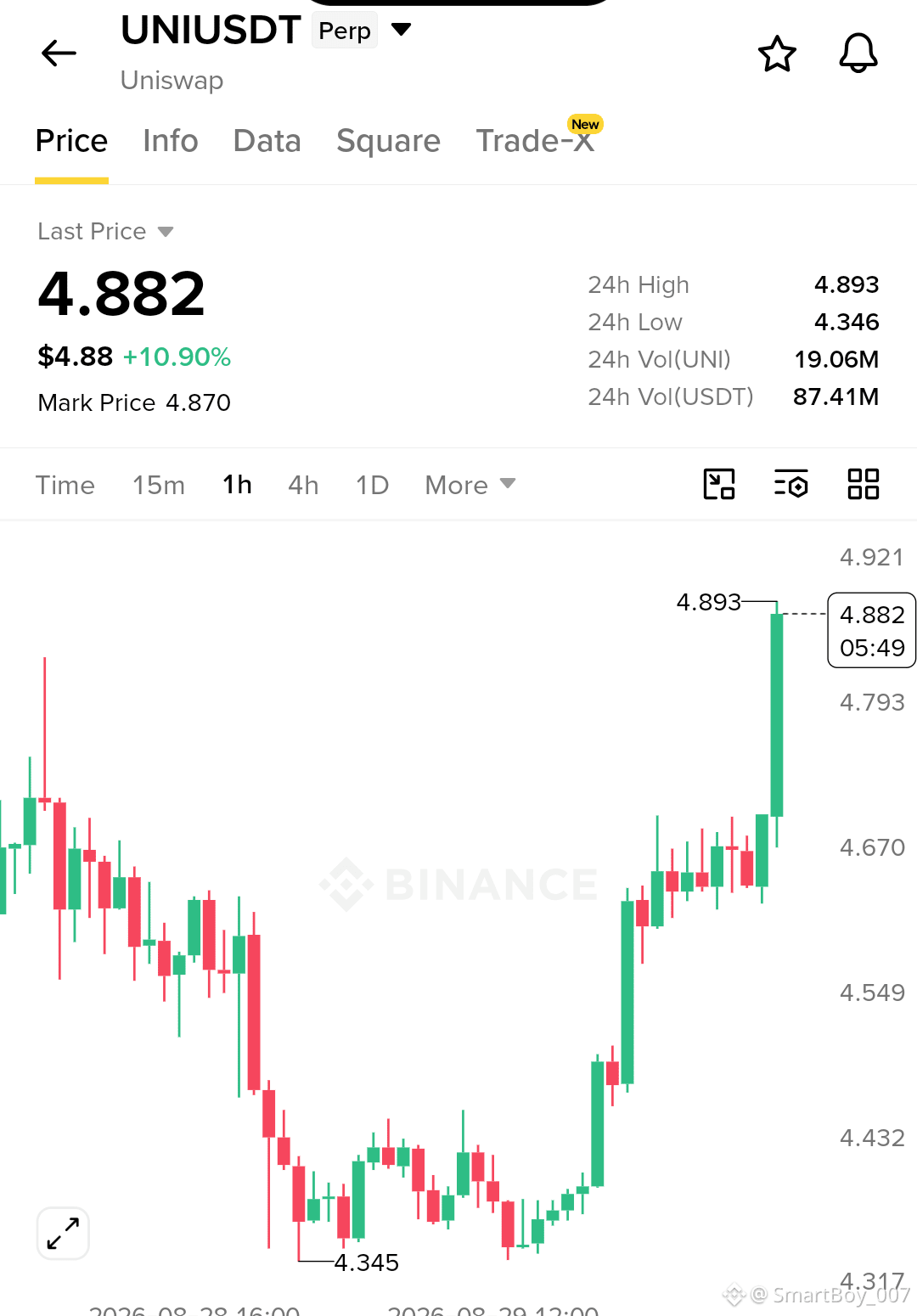
$UNI USDT 🚀 SCHNELLE BEWEGUNG — AUSBRUCH-IMPE TUS‼️
UNI ist deutlich durch den $4,67-Widerstandsbereich gedrückt und testet nun das $4,893-Hoch. Der Momentum bleibt nach dem Ausbruch stark.....
LONG-SETUP
Einstieg: $4,79–$4,85
TP1: $4,893
TP2: $4,921
TP3: Exakter Level nicht vom Chart angegeben
SL: $4,549
.....
Starker Ausbruch + anhaltender Kaufdruck machen das Long-Setup weiterhin interessant.
Ein Halten über $4,67 würde die Fortsetzung begünstigen.....
Die Ausbruchsstärke ist der Schlüssel.$UNI
UNI ist deutlich durch den $4,67-Widerstandsbereich gedrückt und testet nun das $4,893-Hoch. Der Momentum bleibt nach dem Ausbruch stark.....
LONG-SETUP
Einstieg: $4,79–$4,85
TP1: $4,893
TP2: $4,921
TP3: Exakter Level nicht vom Chart angegeben
SL: $4,549
.....
Starker Ausbruch + anhaltender Kaufdruck machen das Long-Setup weiterhin interessant.
Ein Halten über $4,67 würde die Fortsetzung begünstigen.....
Die Ausbruchsstärke ist der Schlüssel.$UNI
Übersetzung ansehen
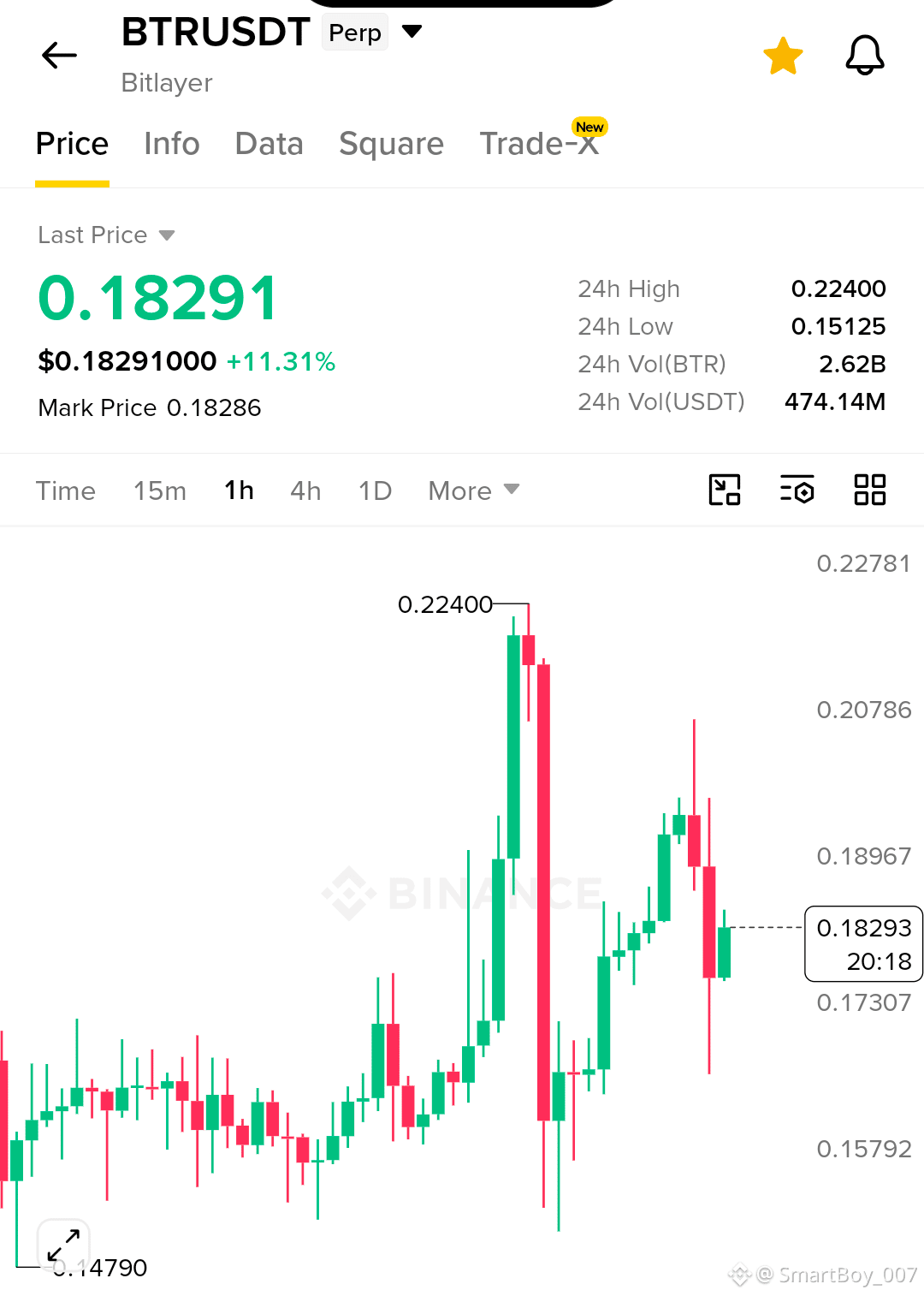
$BTR USDT 🚀 FAST MOVE — SUPPORT BOUNCE SETUP‼️
$BTR is bouncing from the $0.173 support area after the recent pullback, with price reclaiming $0.18. A hold above support could open another push higher.....
LONG SETUP
Entry: $0.176–$0.183
TP1: $0.18967
TP2: $0.20786
TP3: $0.22400
SL: $0.17200
.....
Support is holding and buyers are stepping back in.
A clean move above $0.19 would strengthen the continuation.....
Let the bounce prove itself.
$BTR
$BTR is bouncing from the $0.173 support area after the recent pullback, with price reclaiming $0.18. A hold above support could open another push higher.....
LONG SETUP
Entry: $0.176–$0.183
TP1: $0.18967
TP2: $0.20786
TP3: $0.22400
SL: $0.17200
.....
Support is holding and buyers are stepping back in.
A clean move above $0.19 would strengthen the continuation.....
Let the bounce prove itself.
$BTR
Anmelden und weiter Inhalte entdecken