
RAZIQ17
3.2k Beiträge

RAZIQ17
Trade eröffnen
Hochfrequenz-Trader
6.8 Monate
2 Following
10.2K+ Follower
2.4K+ Like gegeben
Beiträge
Portfolio
Alle
Live
PINNED
Verifiziert
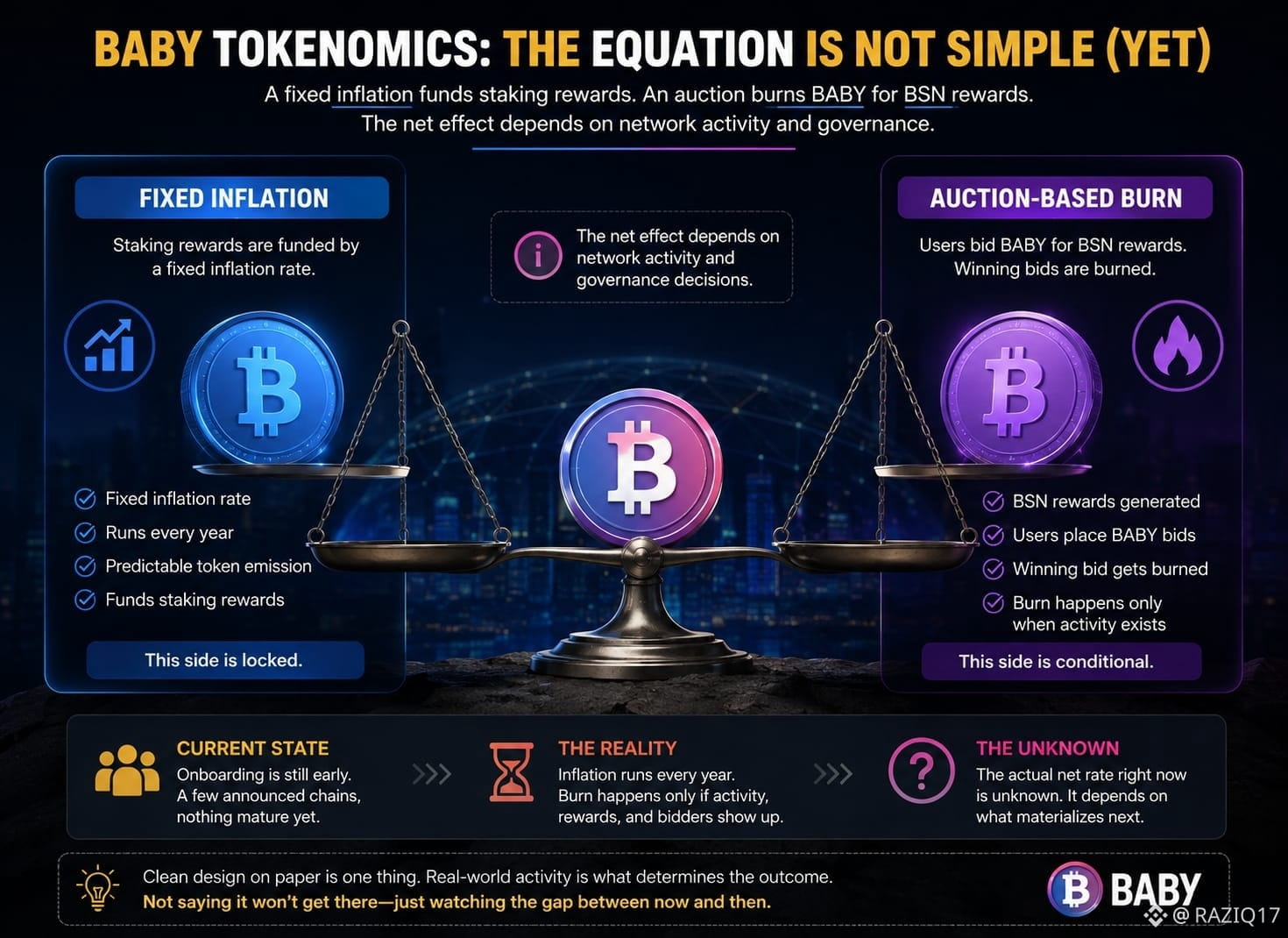
Ich habe genug Jahre in diesem Bereich verbracht, um zu bemerken, wenn der Bericht und die Realität auseinanderdriften. Ich bin heute durch die eigene Seite von BABY gegangen. Es gibt eine feste Inflationszahl, die die Staking-Rewards finanziert, unabhängig davon, was sonst passiert. Auf der anderen Seite steht diese Auktion: Dort bieten die Leute BABY für die BSN-Rewards, und das Gewinnergebot wird verbrannt. Es liegt nahe, diese beiden miteinander in Einklang zu bringen und sich eine Art stilles Gleichgewicht vorzustellen. Die Seite sagt das jedoch nie ausdrücklich. Sie stellt nur fest, dass der Nettoeffekt von der Aktivität im Netzwerk und davon abhängt, wofür die Governance sich entscheidet.
Eine Seite der Gleichung ist festgelegt. Sie erscheint jedes Jahr. Die Verbrennung tritt nur auf, wenn genug BSNs tatsächlich online kommen, echte Rewards erzeugen, und jemand vorbeikommt, um zu bieten. Im Moment wirkt das Onboarding noch früh – ein paar angekündigte Chains, aber nichts, das sich schon reif anfühlt. Ich habe das schon früher gesehen. Designs, die auf dem Papier sauber aussehen, bis die Aktivität, auf die sie angewiesen sind, sich doch nicht so skaliert, wie sich die Leute erhofft haben. Ich behaupte nicht, dass es nicht irgendwann dort ankommt. Ich betrachte nur die Tatsache, dass die Inflation weiterläuft, während der Ausgleich noch auf etwas wartet, das erst noch Realität werden muss. In dieser Phase ist die tatsächliche Netto-Rate das, worauf niemand schon eine solide Zahl nennen kann.
$BABY @BabylonLabs_io #baby
Eine Seite der Gleichung ist festgelegt. Sie erscheint jedes Jahr. Die Verbrennung tritt nur auf, wenn genug BSNs tatsächlich online kommen, echte Rewards erzeugen, und jemand vorbeikommt, um zu bieten. Im Moment wirkt das Onboarding noch früh – ein paar angekündigte Chains, aber nichts, das sich schon reif anfühlt. Ich habe das schon früher gesehen. Designs, die auf dem Papier sauber aussehen, bis die Aktivität, auf die sie angewiesen sind, sich doch nicht so skaliert, wie sich die Leute erhofft haben. Ich behaupte nicht, dass es nicht irgendwann dort ankommt. Ich betrachte nur die Tatsache, dass die Inflation weiterläuft, während der Ausgleich noch auf etwas wartet, das erst noch Realität werden muss. In dieser Phase ist die tatsächliche Netto-Rate das, worauf niemand schon eine solide Zahl nennen kann.
$BABY @BabylonLabs_io #baby
PINNED
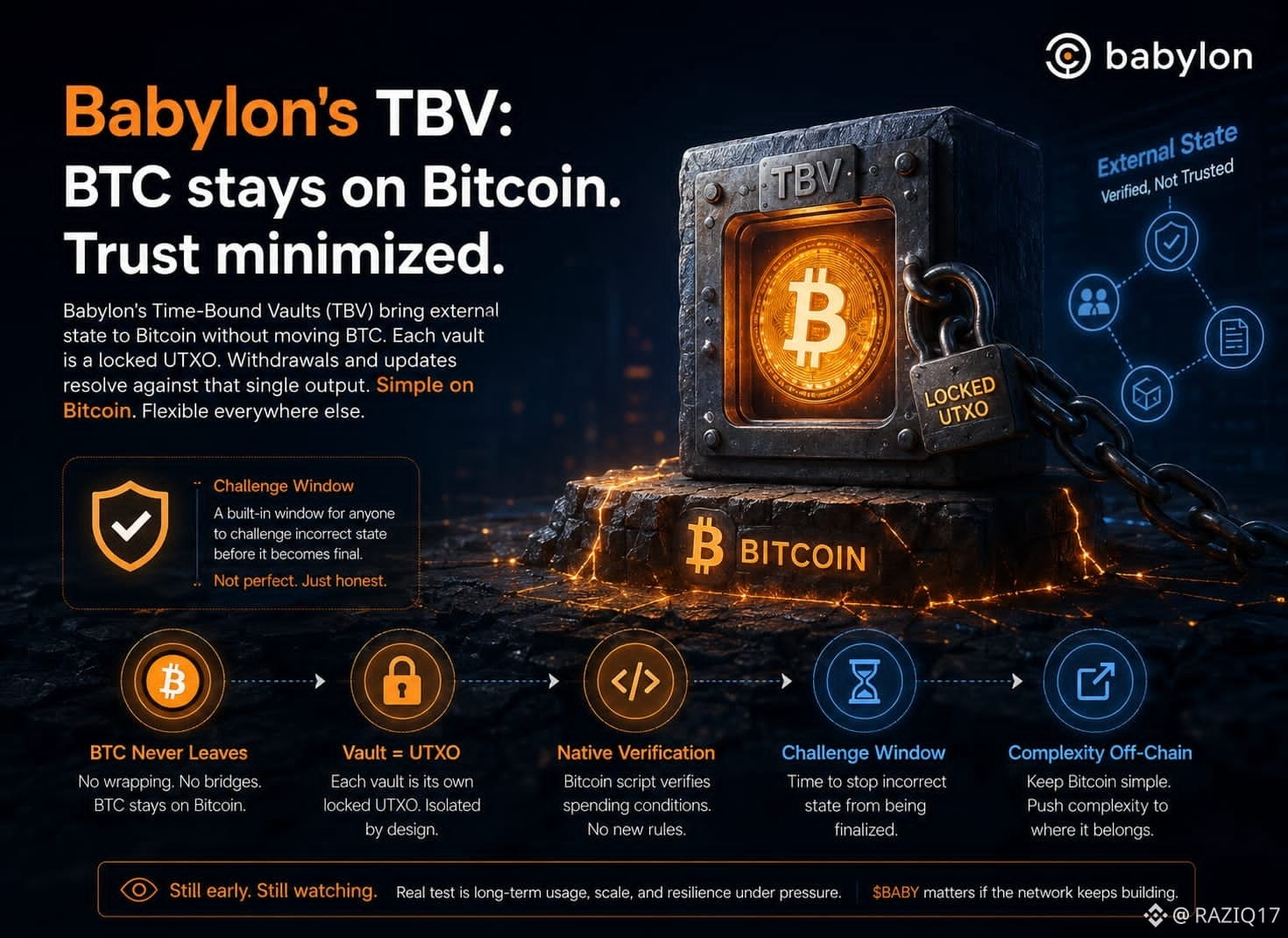
Ich habe mir diese TBV-Sache von Babylon schon eine Weile angeschaut, und irgendwie fühlt sie sich anders an als die üblichen Bridge-and-Wrap-Geschichten.
Ich bin spät nach Hause gekommen und habe dann deutlich länger als erwartet mit den Unterlagen gesessen. Die Rückzugs-Pfade haben sich immer wieder in meinem Kopf geschleift. Die meisten Designs verlagern BTC irgendwohin und bitten dich dann, einer völlig neuen Reihe von Parteien zu vertrauen, die es wieder zurückbringen. Den Film habe ich oft genug gesehen. Wenn Dinge kaputtgehen, verschwimmt die Verantwortung viel zu schnell.
Was sie hier tun, versucht nicht, Bitcoin neue Tricks beizubringen. Es macht aus dem externen Zustand Ausgabebedingungen, die das vorhandene Skript bereits verifizieren kann. BTC verlässt niemals seine eigene Kette. Jedes Vault ist sein eigenes UTXO, von Anfang an gesperrt und nicht in irgendeinen gemeinsamen Pool gemischt. Dieser Teil wirkt ganz bewusst. Die Gelder bleiben isoliert. Auszahlungen und Zustandsänderungen müssen immer gegen genau diesen einen Output aufgelöst werden.
Auch das Challenge-Fenster ist interessant. Es tut nicht so, als sei das System perfekt. Es lässt lediglich Raum dafür, dass jemand einen falschen Zustand daran hindern kann, finalisiert zu werden. Die Verifikation auf der Bitcoin-Seite bleibt eng gefasst, während mehr von der Komplexität nach außen verlagert wird.
Ich bin immer noch nicht vollständig überzeugt. Skalierung, echter Bedarf und wie sich der Withdrawal-Flow verhält, wenn das Netzwerk unter Druck steht, sind alles noch offene Fragen. BABY wird nur dann wirklich etwas bedeuten, wenn Menschen das Netzwerk weiter nutzen, nachdem die erste Welle abgeebbt ist. Aber die Vorsicht, die ich normalerweise mit mir trage, fühlt sich hier ein bisschen leiser an. Nicht weg. Nur leiser.
Ich behalte die Zahlen im Blick.🧐
$BABY @BabylonLabs_io #baby
Ich bin spät nach Hause gekommen und habe dann deutlich länger als erwartet mit den Unterlagen gesessen. Die Rückzugs-Pfade haben sich immer wieder in meinem Kopf geschleift. Die meisten Designs verlagern BTC irgendwohin und bitten dich dann, einer völlig neuen Reihe von Parteien zu vertrauen, die es wieder zurückbringen. Den Film habe ich oft genug gesehen. Wenn Dinge kaputtgehen, verschwimmt die Verantwortung viel zu schnell.
Was sie hier tun, versucht nicht, Bitcoin neue Tricks beizubringen. Es macht aus dem externen Zustand Ausgabebedingungen, die das vorhandene Skript bereits verifizieren kann. BTC verlässt niemals seine eigene Kette. Jedes Vault ist sein eigenes UTXO, von Anfang an gesperrt und nicht in irgendeinen gemeinsamen Pool gemischt. Dieser Teil wirkt ganz bewusst. Die Gelder bleiben isoliert. Auszahlungen und Zustandsänderungen müssen immer gegen genau diesen einen Output aufgelöst werden.
Auch das Challenge-Fenster ist interessant. Es tut nicht so, als sei das System perfekt. Es lässt lediglich Raum dafür, dass jemand einen falschen Zustand daran hindern kann, finalisiert zu werden. Die Verifikation auf der Bitcoin-Seite bleibt eng gefasst, während mehr von der Komplexität nach außen verlagert wird.
Ich bin immer noch nicht vollständig überzeugt. Skalierung, echter Bedarf und wie sich der Withdrawal-Flow verhält, wenn das Netzwerk unter Druck steht, sind alles noch offene Fragen. BABY wird nur dann wirklich etwas bedeuten, wenn Menschen das Netzwerk weiter nutzen, nachdem die erste Welle abgeebbt ist. Aber die Vorsicht, die ich normalerweise mit mir trage, fühlt sich hier ein bisschen leiser an. Nicht weg. Nur leiser.
Ich behalte die Zahlen im Blick.🧐
$BABY @BabylonLabs_io #baby
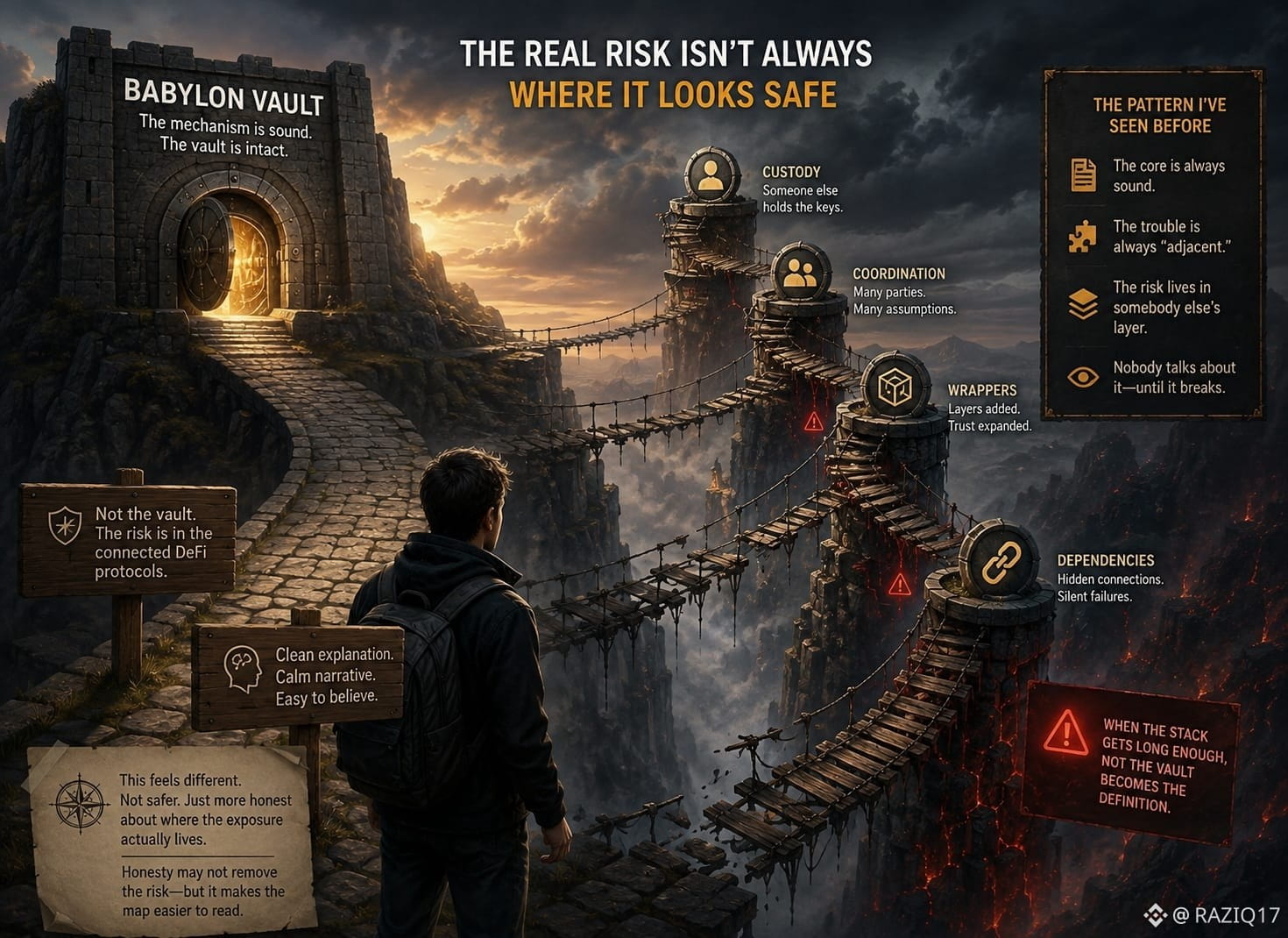
Ich merke, dass mir etwas schon mal begegnet ist – aber nicht ganz so. Babylon sagt, das Risiko liege in den verbundenen DeFi-Protokollen, nicht im eigentlichen Vault, und auf dem Papier klingt das ordentlich. Sauber genug, um die Leute zu beruhigen. Sauber genug, damit die Geschichte weitergeht.
Aber ich vertraue in Krypto nicht mehr voll und ganz auf „saubere“ Erklärungen. Ich habe zu viele Systeme erlebt, die die Schlagzeilen überlebt haben, während der echte Schaden irgendwo anders saß: in der Verwahrung, in der Koordination, im Wrapper, in der Abhängigkeit, über die niemand sprechen wollte, bis es kaputtging. Genau dieser Teil lässt mich hier nicht los. Der Vault mag intakt sein – aber wenn jede Einzahlung durch eine Kette fremder Annahmen laufen muss, dann ist das Risiko immer noch da. Es wirkt nur manierlicher.
Ich habe dieses Muster immer wieder gesehen. Die Zusage lautet immer: Das Kernmechanismus ist solide. Das Problem ist immer „angrenzend“. Das Problem ist immer die Schicht eines anderen. Und vielleicht ist das technisch gesehen wirklich so. Vielleicht ist das sogar der ganze Punkt. Aber wenn der Stack lang genug wird, fängt „nicht der Vault“ an, weniger wie eine Verteidigung zu klingen und mehr wie eine Definition.
Irgendetwas an dem Ganzen wirkt jedoch anders. Nicht sicherer. Eher ehrlicher darüber, wo die Exponierung tatsächlich wohnt. Ich bin mir noch nicht sicher, ob diese Ehrlichkeit etwas bedeutet – oder ob sie nur die Karte leichter lesbar macht, während das Gelände weiterhin genauso rau bleibt.
@BabylonLabs_io #baby $BABY
Aber ich vertraue in Krypto nicht mehr voll und ganz auf „saubere“ Erklärungen. Ich habe zu viele Systeme erlebt, die die Schlagzeilen überlebt haben, während der echte Schaden irgendwo anders saß: in der Verwahrung, in der Koordination, im Wrapper, in der Abhängigkeit, über die niemand sprechen wollte, bis es kaputtging. Genau dieser Teil lässt mich hier nicht los. Der Vault mag intakt sein – aber wenn jede Einzahlung durch eine Kette fremder Annahmen laufen muss, dann ist das Risiko immer noch da. Es wirkt nur manierlicher.
Ich habe dieses Muster immer wieder gesehen. Die Zusage lautet immer: Das Kernmechanismus ist solide. Das Problem ist immer „angrenzend“. Das Problem ist immer die Schicht eines anderen. Und vielleicht ist das technisch gesehen wirklich so. Vielleicht ist das sogar der ganze Punkt. Aber wenn der Stack lang genug wird, fängt „nicht der Vault“ an, weniger wie eine Verteidigung zu klingen und mehr wie eine Definition.
Irgendetwas an dem Ganzen wirkt jedoch anders. Nicht sicherer. Eher ehrlicher darüber, wo die Exponierung tatsächlich wohnt. Ich bin mir noch nicht sicher, ob diese Ehrlichkeit etwas bedeutet – oder ob sie nur die Karte leichter lesbar macht, während das Gelände weiterhin genauso rau bleibt.
@BabylonLabs_io #baby $BABY
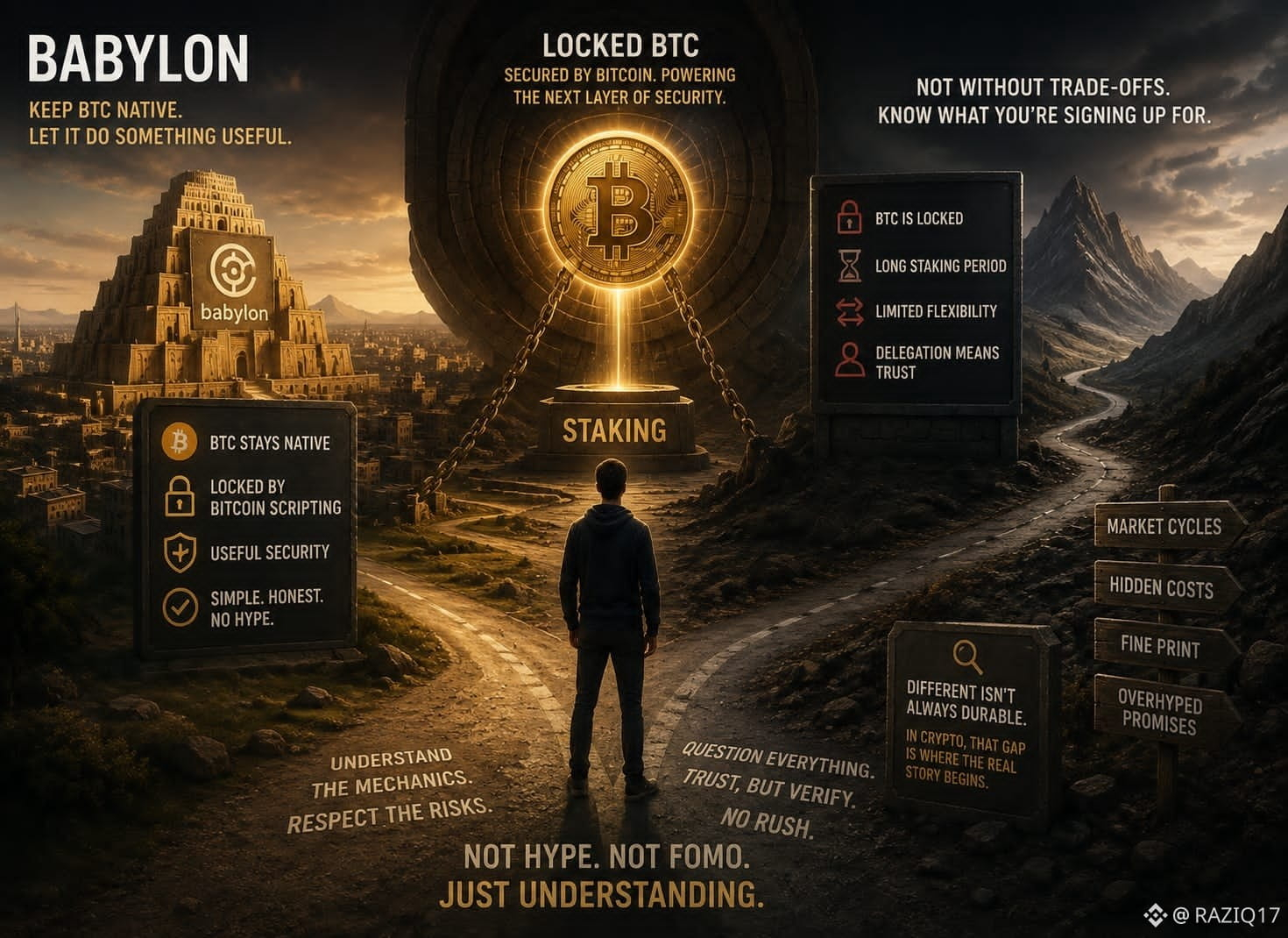
Ich merke, dass mir diese Tage weniger die Story wichtig ist und viel mehr, wie die Dinge tatsächlich funktionieren. Babylon hat mich genau aus diesem Grund angesprochen. Es versucht nicht, mir noch eine weitere Brücke zu verkaufen, eine verpackte Version von Bitcoin oder ein glänzendes Versprechen, das auf Schichten von Vertrauen gebaut ist, die ich nie angefragt habe. Die Idee wirkt erfrischend einfach: BTC nativ behalten, es über das eigene Skript von Bitcoin verblocken und es etwas Nützliches tun lassen, ohne so zu tun, als gäbe es keine Trade-offs.
An diesem Punkt verlangsame ich auch ganz natürlich. Das BTC ist gesperrt. Die Staking-Periode ist lang. Die Flexibilität ist begrenzt. Und wenn du delegierst, verlässt du dich immer noch darauf, dass jemand anderes das Richtige tut. Dieser Teil bedeutet mir viel mehr als irgendeine Belohnung es je könnte.
Ich habe genug Zyklen gesehen, um zu wissen, dass jede „neue Anwendung“ mit einer stillen Gegenleistung einhergeht. Meistens ist dieser Preis in den Kleingedruckten versteckt oder wird erst deutlich, wenn die Aufregung verflogen ist. Ich werfe Babylon also nicht weg, aber ich eile auch nicht darauf zu. Irgendetwas daran fühlt sich anders an. Doch „anders“ heißt nicht automatisch „beständig“. In Krypto liegt genau diese Lücke meistens dort, wo die eigentliche Geschichte beginnt.🤔
@BabylonLabs_io #baby $BABY
An diesem Punkt verlangsame ich auch ganz natürlich. Das BTC ist gesperrt. Die Staking-Periode ist lang. Die Flexibilität ist begrenzt. Und wenn du delegierst, verlässt du dich immer noch darauf, dass jemand anderes das Richtige tut. Dieser Teil bedeutet mir viel mehr als irgendeine Belohnung es je könnte.
Ich habe genug Zyklen gesehen, um zu wissen, dass jede „neue Anwendung“ mit einer stillen Gegenleistung einhergeht. Meistens ist dieser Preis in den Kleingedruckten versteckt oder wird erst deutlich, wenn die Aufregung verflogen ist. Ich werfe Babylon also nicht weg, aber ich eile auch nicht darauf zu. Irgendetwas daran fühlt sich anders an. Doch „anders“ heißt nicht automatisch „beständig“. In Krypto liegt genau diese Lücke meistens dort, wo die eigentliche Geschichte beginnt.🤔
@BabylonLabs_io #baby $BABY
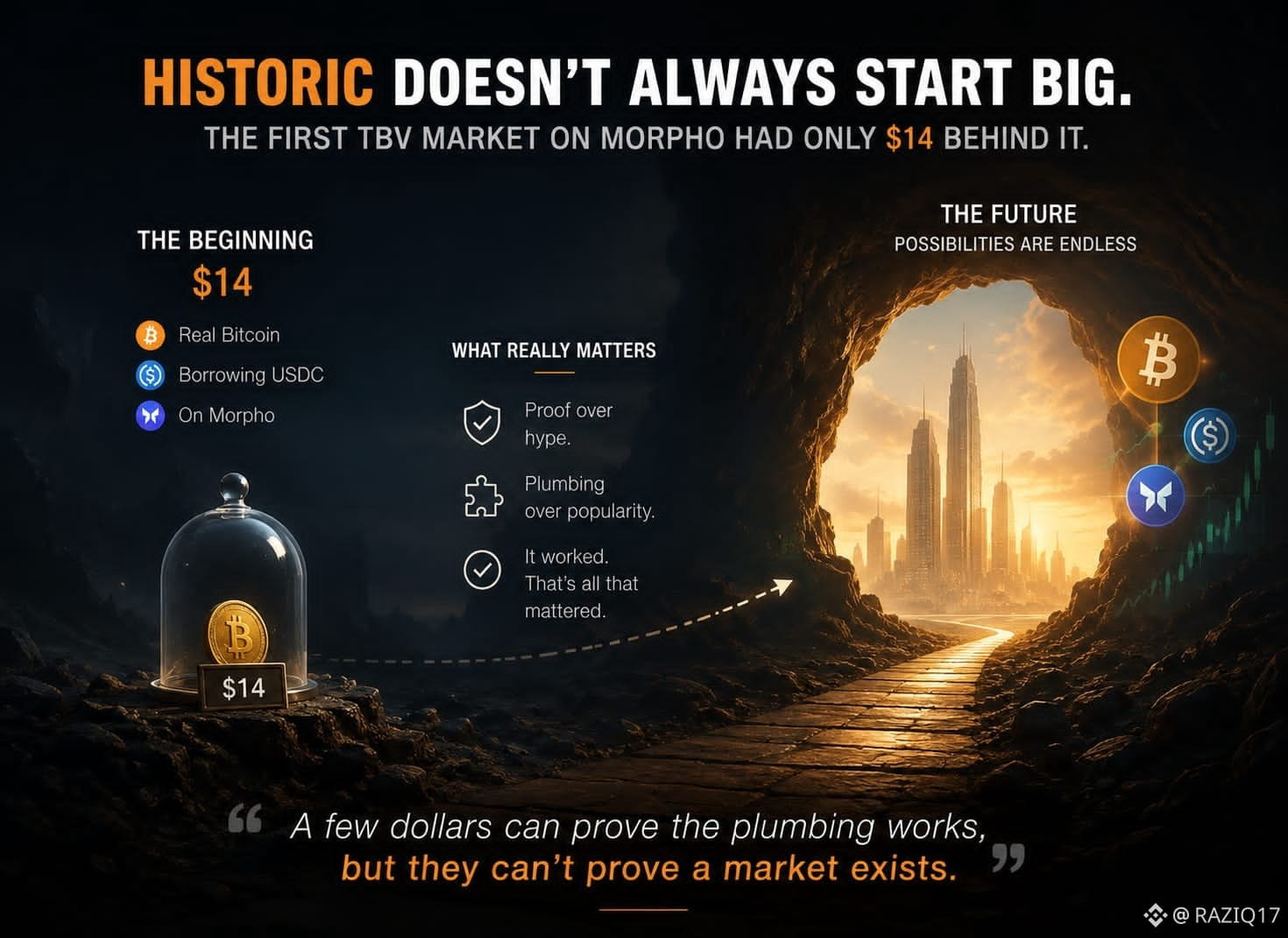
Ich merke etwas, das immer wieder unter dem üblichen Krypto-Rauschen begraben wird: Der erste TBV-Markt auf Morpho war kein großer, offensichtlicher Moment mit tiefer Liquidität im Hintergrund. Es waren 14 US-Dollar. Genau vierzehn. Das stand hinter dem Wort „historisch“, sobald ich an der Ankündigung selbst vorbeigeschaut habe.
Ich habe so etwas schon öfter gesehen. Ein Projekt kündigt ein Meilenstein an, und mit der Zeit fangen die Leute an, sich daran zu erinnern, als wäre es von Anfang an riesig gewesen. Aber so beginnen diese Dinge selten wirklich. Manchmal ist die echte Geschichte viel kleiner, ein bisschen unbeholfen und vor allem viel ungewisser. Echte Bitcoin. Mainnet. USDC gegen natives BTC zum ersten Mal ausleihen. Das ist passiert. Ich bin nur nicht sicher, wie vielen Menschen klar ist, wie wenig Kapital dort anfangs tatsächlich vorhanden war, als es zum ersten Mal wirklich wurde.
Ich habe immer wieder den Eindruck, dass Krypto dazu neigt, Beweise mit Skalierung zu verwechseln. Etwas kann funktionieren, auch wenn es noch niemand wirklich vollständig vertraut. Ein paar Dollar können beweisen, dass die Technik läuft, aber sie können nicht beweisen, dass es einen Markt gibt.
Genau daran denke ich immer wieder. Nicht an die Ankündigung oder die Schlagzeilen, sondern an die Idee, dass etwas so Wichtiges vielleicht begonnen hat, ohne dass fast jemand hingeschaut hat. Nur eine winzige Menge Liquidität, die leise die einzige Frage beantwortet hat, die wirklich zählte: Funktioniert es eigentlich?🌱
@BabylonLabs_io #baby $BABY
Ich habe so etwas schon öfter gesehen. Ein Projekt kündigt ein Meilenstein an, und mit der Zeit fangen die Leute an, sich daran zu erinnern, als wäre es von Anfang an riesig gewesen. Aber so beginnen diese Dinge selten wirklich. Manchmal ist die echte Geschichte viel kleiner, ein bisschen unbeholfen und vor allem viel ungewisser. Echte Bitcoin. Mainnet. USDC gegen natives BTC zum ersten Mal ausleihen. Das ist passiert. Ich bin nur nicht sicher, wie vielen Menschen klar ist, wie wenig Kapital dort anfangs tatsächlich vorhanden war, als es zum ersten Mal wirklich wurde.
Ich habe immer wieder den Eindruck, dass Krypto dazu neigt, Beweise mit Skalierung zu verwechseln. Etwas kann funktionieren, auch wenn es noch niemand wirklich vollständig vertraut. Ein paar Dollar können beweisen, dass die Technik läuft, aber sie können nicht beweisen, dass es einen Markt gibt.
Genau daran denke ich immer wieder. Nicht an die Ankündigung oder die Schlagzeilen, sondern an die Idee, dass etwas so Wichtiges vielleicht begonnen hat, ohne dass fast jemand hingeschaut hat. Nur eine winzige Menge Liquidität, die leise die einzige Frage beantwortet hat, die wirklich zählte: Funktioniert es eigentlich?🌱
@BabylonLabs_io #baby $BABY
Teilweise korrekt
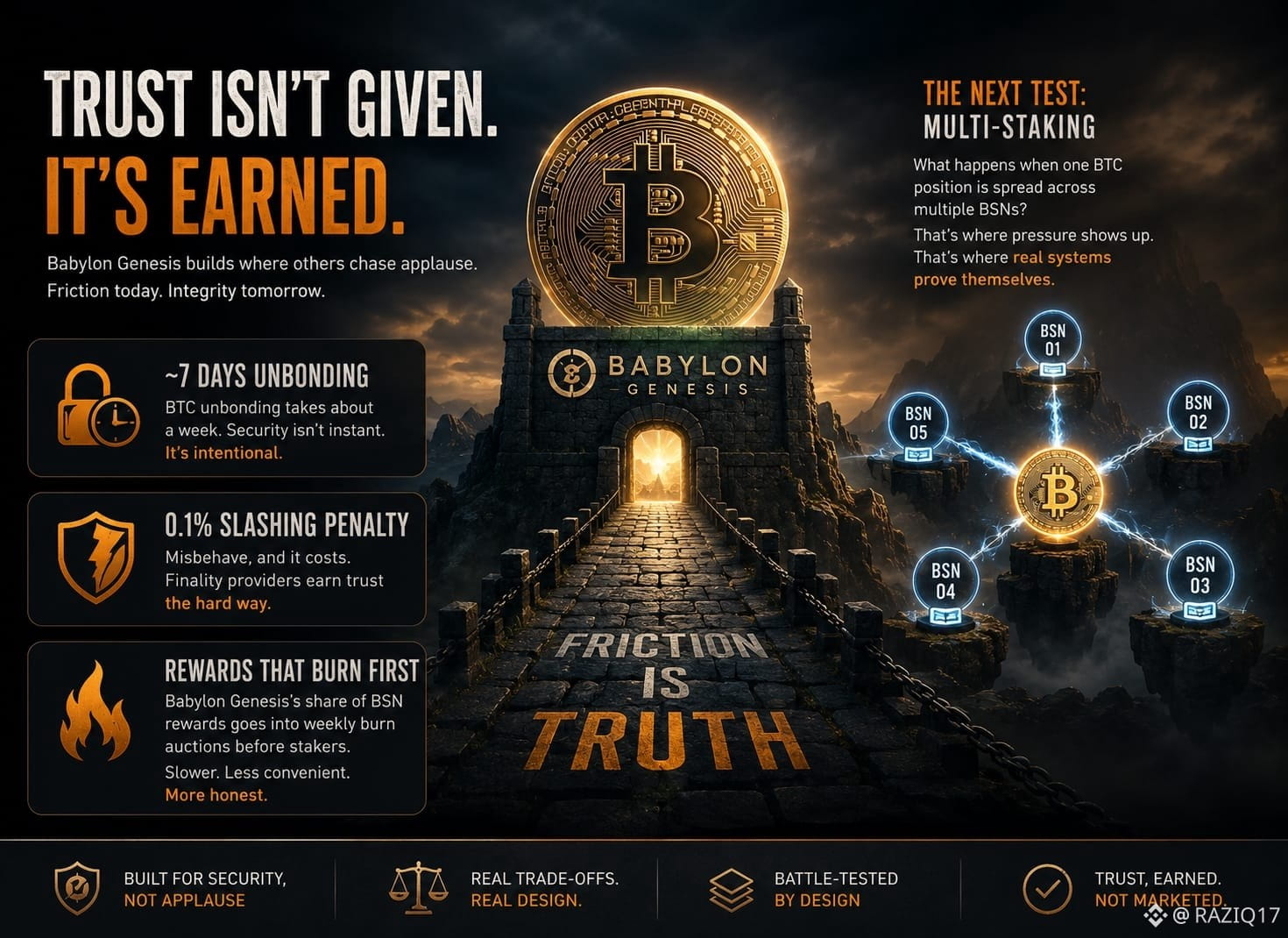
Ich habe diesen Markt lange genug beobachtet, um zu wissen, wann etwas größtenteils nur Rauschen ist. Bei diesem hier wirkt es ein wenig anders. Ich komme immer wieder zurück zu den Teilen, die die meisten normalerweise überspringen: Das BTC-Unbonding dauert etwa eine Woche, und es gibt immer noch eine 0,1%-Sanktionsstrafe (Slashing) für Fehlverhalten von Finality-Providern. Das fühlt sich nicht nach einem System an, das für einfaches Applaudieren gebaut wurde. Es fühlt sich an, als wäre es um die Idee herum gebaut, dass Vertrauen hart erarbeitet werden muss.
Was bei mir noch stärker hängen geblieben ist, war die Belohnungsseite. Der Anteil von Babylon Genesis an BSN-Belohnungen geht nicht einfach direkt an Staker; er fließt zuerst in wöchentliche Burn-Auktionen. Langsamer. Weniger poliert. Vielleicht etwas unpraktischer, aber ehrlicher in Bezug auf die Abwägungen. Ich habe genug Krypto-Geschichten gesehen, die unter ihrem eigenen Marketing zusammengebrochen sind, um zu wissen: Reibung ist oft genau dort, wo die Wahrheit wohnt.
Ich denke jedoch noch über eine Sache nach: Was passiert, wenn Multi-Staking anfängt, eine BTC-Position gleichzeitig auf mehrere BSNs zu verteilen? Genau dort werden normalerweise die cleveren Ideen getestet. Genau dort zeigt sich meistens der echte Druck.
@BabylonLabs_io #baby $BABY
Was bei mir noch stärker hängen geblieben ist, war die Belohnungsseite. Der Anteil von Babylon Genesis an BSN-Belohnungen geht nicht einfach direkt an Staker; er fließt zuerst in wöchentliche Burn-Auktionen. Langsamer. Weniger poliert. Vielleicht etwas unpraktischer, aber ehrlicher in Bezug auf die Abwägungen. Ich habe genug Krypto-Geschichten gesehen, die unter ihrem eigenen Marketing zusammengebrochen sind, um zu wissen: Reibung ist oft genau dort, wo die Wahrheit wohnt.
Ich denke jedoch noch über eine Sache nach: Was passiert, wenn Multi-Staking anfängt, eine BTC-Position gleichzeitig auf mehrere BSNs zu verteilen? Genau dort werden normalerweise die cleveren Ideen getestet. Genau dort zeigt sich meistens der echte Druck.
@BabylonLabs_io #baby $BABY
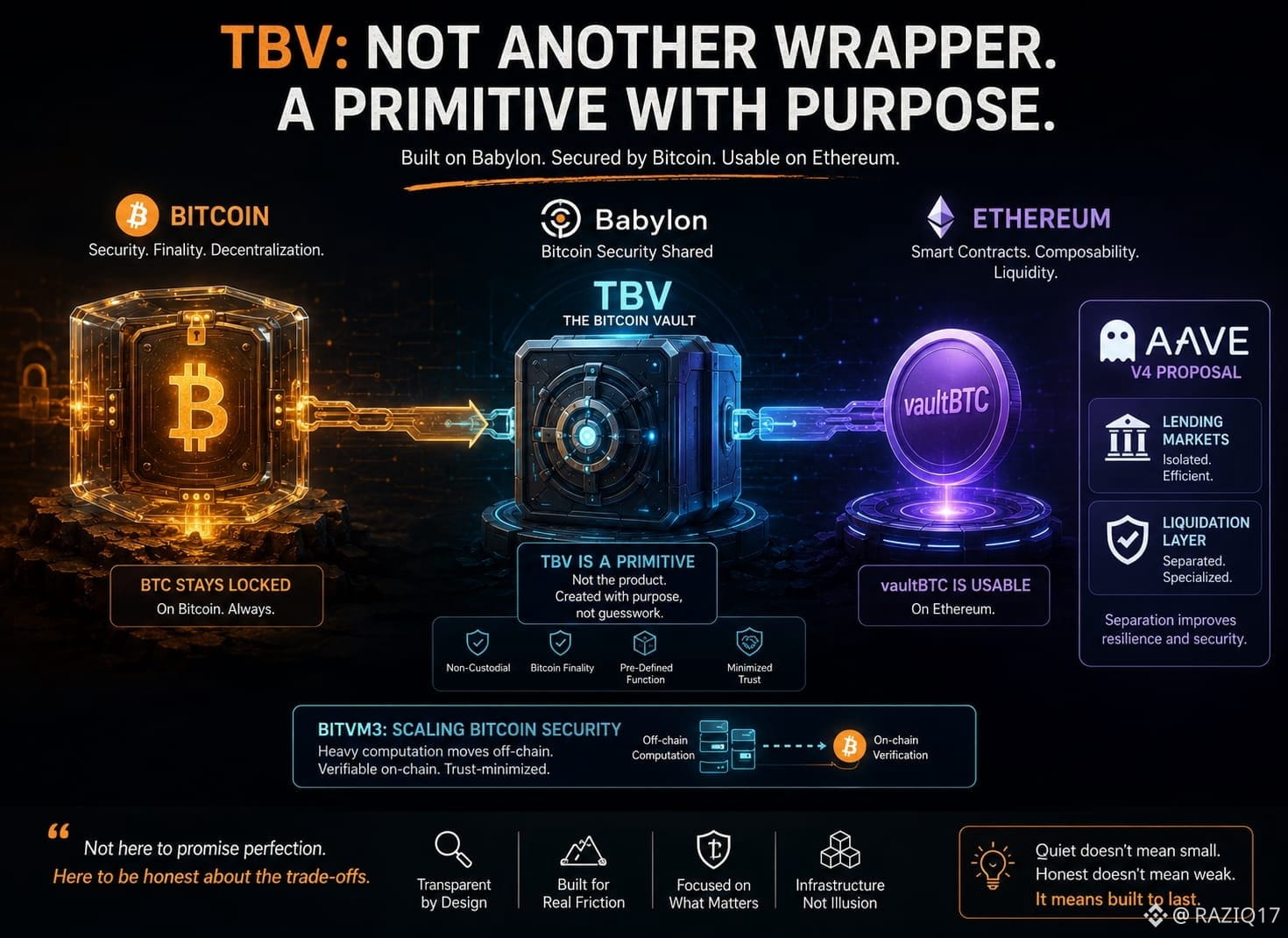
Ich bin lange genug im Krypto-Bereich, um das übliche Skript zu erkennen. Das Asset einwickeln, noch eine zusätzliche Vertrauensebene darüber legen, es „Infrastruktur“ nennen und darauf hoffen, dass die Abwägungen niemand irgendwann sofort bemerkt – sondern erst viel später. TBV fühlt sich für mich anders an, nicht weil ich denke, dass es alles löst, sondern weil es damit beginnt, dort ehrlich zu sein, wo das eigentliche Problem liegt. Babylon sagt immer wieder, dass TBV nur ein primitiver Baustein ist, nicht das Produkt – und aus irgendeinem Grund ist mir das hängen geblieben, mehr als alles andere. Das Vault wird bereits so erstellt, dass es das ausführt, wofür es gedacht ist, statt diese Entscheidungen später offenzulassen. Vielleicht ist das nur ein kleines Detail, vielleicht auch nicht.
Ich komme immer wieder auf den Aave-V4-Vorschlag zurück, weil er die ganze Idee weniger abstrakt wirken lässt. BTC bleibt auf Bitcoin gesperrt, vaultBTC wird auf Ethereum nutzbar, und die Kreditvergabe-Seite wird von der Liquidations-Seite getrennt – statt so zu tun, als seien sie dasselbe. BitVM3 verlagert einen großen Teil der schweren Arbeit weg von der Kette, was auf dem Papier „sauberer“ klingt, aber ich habe genug Systeme scheitern sehen, sobald echtes Volumen da ist, um zu wissen, dass das weiterhin eine offene Frage ist.
Ich vertraue Krypto nicht vollständig, sobald es anfängt, das nächste Wrapper-„Versprechen“ zu feiern. Ich habe zu viele Zyklen erlebt, in denen die Story längst ankam, bevor das Produkt überhaupt da war. Aber irgendetwas daran wirkt leiser. Nicht unbedingt besser, nur ehrlicher in Bezug auf die Reibung. Nach all den Jahren ist genau das der Teil, der meine Aufmerksamkeit wirklich bekommt.⚡
@BabylonLabs_io #baby $BABY
Ich komme immer wieder auf den Aave-V4-Vorschlag zurück, weil er die ganze Idee weniger abstrakt wirken lässt. BTC bleibt auf Bitcoin gesperrt, vaultBTC wird auf Ethereum nutzbar, und die Kreditvergabe-Seite wird von der Liquidations-Seite getrennt – statt so zu tun, als seien sie dasselbe. BitVM3 verlagert einen großen Teil der schweren Arbeit weg von der Kette, was auf dem Papier „sauberer“ klingt, aber ich habe genug Systeme scheitern sehen, sobald echtes Volumen da ist, um zu wissen, dass das weiterhin eine offene Frage ist.
Ich vertraue Krypto nicht vollständig, sobald es anfängt, das nächste Wrapper-„Versprechen“ zu feiern. Ich habe zu viele Zyklen erlebt, in denen die Story längst ankam, bevor das Produkt überhaupt da war. Aber irgendetwas daran wirkt leiser. Nicht unbedingt besser, nur ehrlicher in Bezug auf die Reibung. Nach all den Jahren ist genau das der Teil, der meine Aufmerksamkeit wirklich bekommt.⚡
@BabylonLabs_io #baby $BABY
Verifiziert
Ich merke, dass Babylon mit der Zeit interessanter wird, je länger ich auf seine Infrastruktur schaue, und zugleich mit der Zeit weniger angenehm.
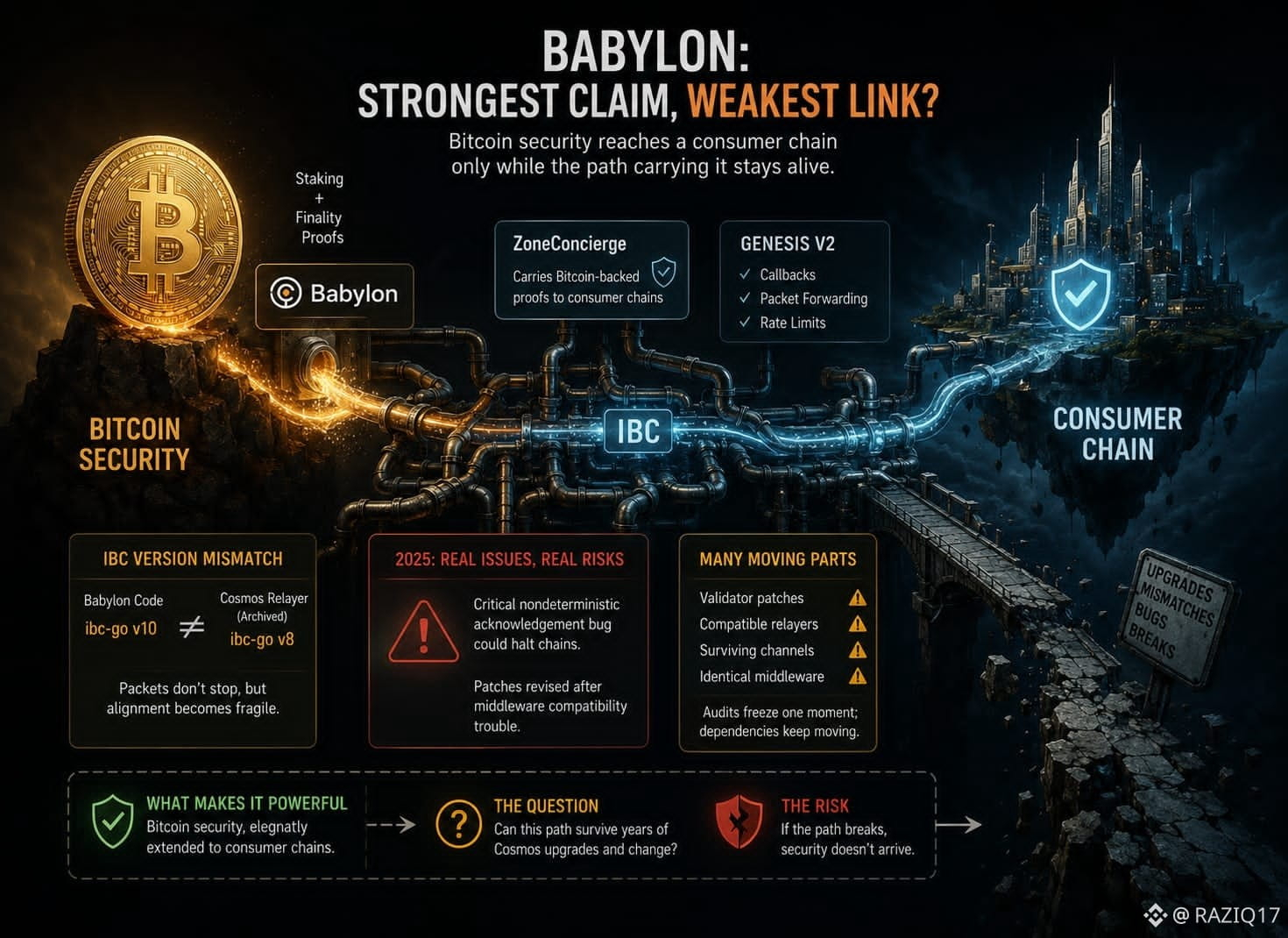
Am Montag fragte unser technischer Direktor, was mit IBC passiert, wenn Cosmos sich ständig ändert. Ich erwartete eine weitere Geschichte à la „Bitcoin-Sicherheit überall“. Stattdessen fand ich Substanz: ZoneConcierge trägt bitcoin-gestützte Beweise zu Consumer-Chains, während Genesis V2 Callbacks, Packet Forwarding und Rate Limits ergänzt hat.
Aber das habe ich schon einmal gesehen. Bablon’s aktueller Code bindet ibc-go v10 fest, während der inzwischen archivierte Cosmos-Relayer-Code immer noch v8-Typen importiert. Diese Diskrepanz bedeutet nicht, dass Pakete stoppen – die beiden sind separate Binärdateien –, aber sie zeigt, wie viele Teile aufeinander abgestimmt bleiben müssen. 2025 hat ibc-go einen kritischen nichtdeterministischen Bug bei Bestätigungen offengelegt, der Ketten zum Stillstand bringen könnte, und die Patches dann überarbeitet, nachdem Probleme bei der Middleware-Kompatibilität aufgetaucht waren. Das ist die Reibung, die saubere Diagramme verdecken.
Ich vertraue Versprechen nicht vollständig, die von schnellen Validator-Patches, kompatiblen Relayern, überlebenden Channels und identischer Middleware abhängen. Audits und Rate Limits sind wichtig, aber Audits frieren einen Moment ein; Abhängigkeiten bewegen sich weiter.
Irgendetwas an Babylon fühlt sich anders an, doch sein stärkstes Argument könnte auch sein schwächstes Glied sein: Bitcoin-Sicherheit erreicht eine Consumer-Chain nur dann, wenn der Pfad, der sie trägt, am Leben bleibt. Ich bin nicht sicher, dass dieser Pfad jahrelange Cosmos-Updates übersteht. Was denkst du?🤔
@BabylonLabs_io #baby $BABY
Am Montag fragte unser technischer Direktor, was mit IBC passiert, wenn Cosmos sich ständig ändert. Ich erwartete eine weitere Geschichte à la „Bitcoin-Sicherheit überall“. Stattdessen fand ich Substanz: ZoneConcierge trägt bitcoin-gestützte Beweise zu Consumer-Chains, während Genesis V2 Callbacks, Packet Forwarding und Rate Limits ergänzt hat.
Aber das habe ich schon einmal gesehen. Bablon’s aktueller Code bindet ibc-go v10 fest, während der inzwischen archivierte Cosmos-Relayer-Code immer noch v8-Typen importiert. Diese Diskrepanz bedeutet nicht, dass Pakete stoppen – die beiden sind separate Binärdateien –, aber sie zeigt, wie viele Teile aufeinander abgestimmt bleiben müssen. 2025 hat ibc-go einen kritischen nichtdeterministischen Bug bei Bestätigungen offengelegt, der Ketten zum Stillstand bringen könnte, und die Patches dann überarbeitet, nachdem Probleme bei der Middleware-Kompatibilität aufgetaucht waren. Das ist die Reibung, die saubere Diagramme verdecken.
Ich vertraue Versprechen nicht vollständig, die von schnellen Validator-Patches, kompatiblen Relayern, überlebenden Channels und identischer Middleware abhängen. Audits und Rate Limits sind wichtig, aber Audits frieren einen Moment ein; Abhängigkeiten bewegen sich weiter.
Irgendetwas an Babylon fühlt sich anders an, doch sein stärkstes Argument könnte auch sein schwächstes Glied sein: Bitcoin-Sicherheit erreicht eine Consumer-Chain nur dann, wenn der Pfad, der sie trägt, am Leben bleibt. Ich bin nicht sicher, dass dieser Pfad jahrelange Cosmos-Updates übersteht. Was denkst du?🤔
@BabylonLabs_io #baby $BABY
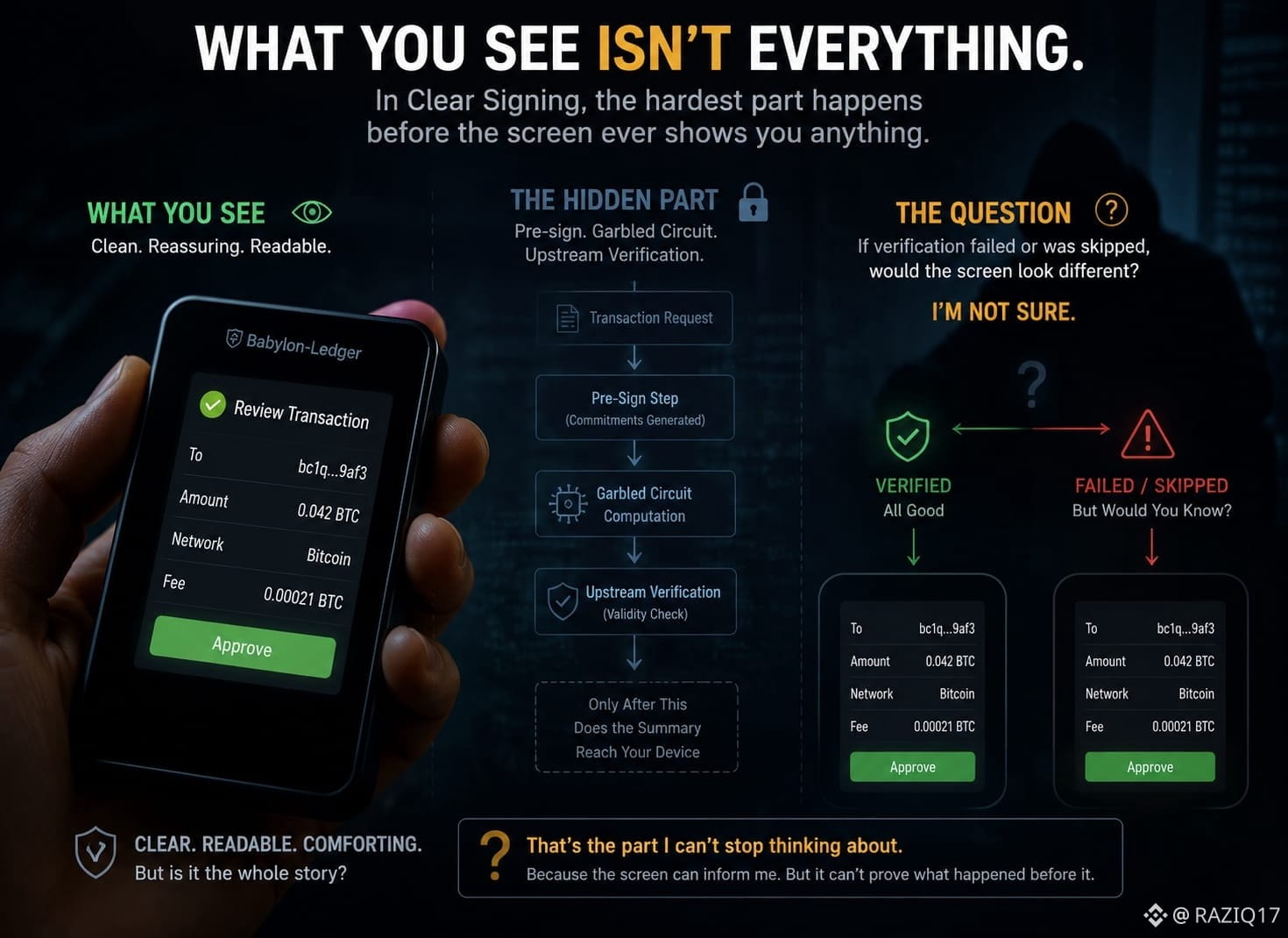
Ich bin schon lange genug in der Krypto-Szene unterwegs, um zu wissen, wann eine Funktion den Menschen ein besseres Gefühl geben soll, statt den schwierigen Teil wirklich zu lösen. Das Clear Signing von Babylon-Ledger hat mir genau dieses Gefühl vermittelt. Auf den ersten Blick wirkt es beruhigend: gut lesbare Details auf dem Gerät, eine klare Zusammenfassung, eine Vault-Einrichtung, die sich endlich leichter verstehen lässt. Ich verstehe, warum das so vielen gefällt. Ich hätte das auch gern.
Aber ich komme immer wieder zu dem Teil, den auf dem Bildschirm eigentlich niemand sieht. Der Pre-Sign-Schritt. Der vermurkste Schaltkreis. Die Verifikation, die irgendwo „upstream“ stattfinden soll, außerhalb des Blickfelds, bevor jemals diese nette kleine Zusammenfassung angezeigt wird. Genau daran denke ich immer wieder – und das kann mir ein Hardware-Display nicht wirklich beweisen.
Ich habe so etwas schon öfter in Krypto gesehen. Die Benutzeroberfläche wird immer „sauberer“, während das Vertrauensmodell still und leise komplizierter wird. Also bin ich noch nicht vollständig überzeugt. Vielleicht sind es einfach Jahre, in denen ich beobachte, wie sich die gleichen Muster immer wiederholen. Aber etwas an diesem Thema zieht mich immer wieder zu einer Frage zurück.
Wenn diese Verifikation jemals fehlschlagen würde oder übersprungen worden wäre: Würde der Bildschirm in meiner Hand anders aussehen? Ich bin mir immer noch nicht sicher, und das ist der Teil, an dem ich einfach nicht aufhören kann zu denken.
@BabylonLabs_io #baby $BABY
Aber ich komme immer wieder zu dem Teil, den auf dem Bildschirm eigentlich niemand sieht. Der Pre-Sign-Schritt. Der vermurkste Schaltkreis. Die Verifikation, die irgendwo „upstream“ stattfinden soll, außerhalb des Blickfelds, bevor jemals diese nette kleine Zusammenfassung angezeigt wird. Genau daran denke ich immer wieder – und das kann mir ein Hardware-Display nicht wirklich beweisen.
Ich habe so etwas schon öfter in Krypto gesehen. Die Benutzeroberfläche wird immer „sauberer“, während das Vertrauensmodell still und leise komplizierter wird. Also bin ich noch nicht vollständig überzeugt. Vielleicht sind es einfach Jahre, in denen ich beobachte, wie sich die gleichen Muster immer wiederholen. Aber etwas an diesem Thema zieht mich immer wieder zu einer Frage zurück.
Wenn diese Verifikation jemals fehlschlagen würde oder übersprungen worden wäre: Würde der Bildschirm in meiner Hand anders aussehen? Ich bin mir immer noch nicht sicher, und das ist der Teil, an dem ich einfach nicht aufhören kann zu denken.
@BabylonLabs_io #baby $BABY
$BANK USDT steht in Flammen! 🚀🔥
BANKUSDT hat gerade einen starken Anstieg von +11,89% geliefert und handelt bei $0,40027, nachdem ein 24H-Hoch von $0,67205 erreicht wurde 📈. Das 24H-Tief liegt bei $0,34010 – das zeigt massive Volatilität und starkes Händlerinteresse ⚡.
📊 Wichtige Kennzahlen: • 💰 Letzter Preis: $0,40027 • 📈 24H-Hoch: $0,67205 • 📉 24H-Tief: $0,34010 • 💹 24H-Volumen: 2,26 Mrd. BANK • 💵 24H-Volumen (USDT): 914,10 Mio. • 📍 Mark Price: $0,39888 • ⏱️ Zeitrahmen: 15M
Das explosive Volumen und die scharfe Kursbewegung deuten darauf hin, dass BANKUSDT erhebliche Aufmerksamkeit auf sich zieht. Behalte die Volatilität im Blick und steuere das Risiko sorgfältig! 👀📊
$AKE
$BTW
#BANKUSDT #BANK #BİNANCEFUTURES #CryptoTrading #Altcoin #Perpetual #PriceAction #TradingView #Bullish #CryptoNews
BANKUSDT hat gerade einen starken Anstieg von +11,89% geliefert und handelt bei $0,40027, nachdem ein 24H-Hoch von $0,67205 erreicht wurde 📈. Das 24H-Tief liegt bei $0,34010 – das zeigt massive Volatilität und starkes Händlerinteresse ⚡.
📊 Wichtige Kennzahlen: • 💰 Letzter Preis: $0,40027 • 📈 24H-Hoch: $0,67205 • 📉 24H-Tief: $0,34010 • 💹 24H-Volumen: 2,26 Mrd. BANK • 💵 24H-Volumen (USDT): 914,10 Mio. • 📍 Mark Price: $0,39888 • ⏱️ Zeitrahmen: 15M
Das explosive Volumen und die scharfe Kursbewegung deuten darauf hin, dass BANKUSDT erhebliche Aufmerksamkeit auf sich zieht. Behalte die Volatilität im Blick und steuere das Risiko sorgfältig! 👀📊
$AKE
$BTW
#BANKUSDT #BANK #BİNANCEFUTURES #CryptoTrading #Altcoin #Perpetual #PriceAction #TradingView #Bullish #CryptoNews
BANK USDT price 0.4111
5%
Next stop: $0.67? 🚀
69%
Pump or pullback? 👀
5%
Just getting started? 🔥
21%
19 Stimmen • Abstimmung beendet
$BANK /USDT brennt! 🚀 Der Preis handelt bei $0.38713 und verzeichnet in den letzten 24 Stunden einen beeindruckenden Anstieg von +12.19% 📈. Die Bullen behalten die Kontrolle, nachdem der Token kürzlich ein 24H-Hoch von $0.40800 berührt hat, während das 24H-Tief bei $0.33246 liegt 🔥.
Starke Marktteilnahme ist sichtbar mit 24H-Volumen: 1.93B BANK und 714.94M USDT, was großes Trader-Interesse widerspiegelt 💰⚡. Das tägliche Chart bleibt bullisch: MA(7): 0.284237, MA(25): 0.120261 und MA(99): 0.057906 zeigen einen starken Aufwärtstrend 📊.
Wenn BANK über $0.40800 ausbricht, könnte die nächste bullische Welle beginnen 🚀. Händler sollten jedoch auch auf Gewinnmitnahmen achten und das Risiko sorgfältig steuern 🎯.
$EUL
$DIA
#BANK #BANKUSDT #LorenzoProtocol #Crypto #BinanceSquareTalks #Altcoin #Bullish #Trading #CryptoTrading #DeFi #Blockchain #CryptoNews #MarketUpdate #Breakout #TrendingCoin
Starke Marktteilnahme ist sichtbar mit 24H-Volumen: 1.93B BANK und 714.94M USDT, was großes Trader-Interesse widerspiegelt 💰⚡. Das tägliche Chart bleibt bullisch: MA(7): 0.284237, MA(25): 0.120261 und MA(99): 0.057906 zeigen einen starken Aufwärtstrend 📊.
Wenn BANK über $0.40800 ausbricht, könnte die nächste bullische Welle beginnen 🚀. Händler sollten jedoch auch auf Gewinnmitnahmen achten und das Risiko sorgfältig steuern 🎯.
$EUL
$DIA
#BANK #BANKUSDT #LorenzoProtocol #Crypto #BinanceSquareTalks #Altcoin #Bullish #Trading #CryptoTrading #DeFi #Blockchain #CryptoNews #MarketUpdate #Breakout #TrendingCoin
Bank price New price 0.3883
100%
What's your BANK price target?
0%
Bull run or correction? 📈
0%
Will BANK hit a new ATH? 🚀
0%
2 Stimmen • Abstimmung beendet
$AKE Raketen 25,79 % – Starker Aufbau von Momentum! 🚀
AKE macht mit einem beeindruckenden Plus von 25,79 % heute Schlagzeilen! 📈 Der aktuelle Preis liegt bei 0.0033523 (≈ Rs 0.93186) und zeigt starken Kaufdruck sowie wachsendes Marktinteresse. 👀 Wenn dieses Momentum anhält, könnte AKE noch mehr Trader anziehen, die kurzfristige Chancen suchen. 🔥 Verwalte immer das Risiko und mach deine eigene Recherche, bevor du investierst. 💰
$EUL
$BANK
#AKE #Crypto #Altcoins! #BullishMomentum #CryptoTrading #Binance #MarketUpdate2025 #CryptonewswithJack #Blockchain #DYOR
AKE macht mit einem beeindruckenden Plus von 25,79 % heute Schlagzeilen! 📈 Der aktuelle Preis liegt bei 0.0033523 (≈ Rs 0.93186) und zeigt starken Kaufdruck sowie wachsendes Marktinteresse. 👀 Wenn dieses Momentum anhält, könnte AKE noch mehr Trader anziehen, die kurzfristige Chancen suchen. 🔥 Verwalte immer das Risiko und mach deine eigene Recherche, bevor du investierst. 💰
$EUL
$BANK
#AKE #Crypto #Altcoins! #BullishMomentum #CryptoTrading #Binance #MarketUpdate2025 #CryptonewswithJack #Blockchain #DYOR
ARAI ($AA ) Springt 22,03% – Bullen übernehmen die Kontrolle! 📊
ARAI (AA) zeigt eine ausgezeichnete Stärke mit einem Anstieg von +22,03%! 🚀 Der aktuelle Preis liegt bei 0,028587 (≈ Rs 7,94653) und spiegelt eine zunehmende Nachfrage sowie eine positive Markteinstellung wider. 📈 Diese starke Bewegung hat AA auf die Beobachtungsliste vieler Trader gebracht. Achte auf Volumen und Kursverhalten für den nächsten Ausbruch. 💎
#ARAI #AA #Krypto #Altcoin #KryptoTrading #BullRun #Blockchain #MarketUpdate #Binance #DYOR
ARAI (AA) zeigt eine ausgezeichnete Stärke mit einem Anstieg von +22,03%! 🚀 Der aktuelle Preis liegt bei 0,028587 (≈ Rs 7,94653) und spiegelt eine zunehmende Nachfrage sowie eine positive Markteinstellung wider. 📈 Diese starke Bewegung hat AA auf die Beobachtungsliste vieler Trader gebracht. Achte auf Volumen und Kursverhalten für den nächsten Ausbruch. 💎
#ARAI #AA #Krypto #Altcoin #KryptoTrading #BullRun #Blockchain #MarketUpdate #Binance #DYOR
Quack AI ($Q ) steigt um 20,99 % – KI-Krypto brennt! 🤖🔥
Quack AI (Q) gewinnt nach einem Anstieg von +20,99 % ernsthaft an Aufmerksamkeit! 📈 Der Token wird derzeit bei 0,023551 gehandelt (≈ 6,54653 Rs) und zeigt eine starke Dynamik sowie wachsendes Vertrauen der Anleger. 🚀 KI-bezogene Krypto-Projekte ziehen weiterhin Interesse auf sich, wodurch Q besonders im Blick bleibt. 👀
$EUL
$LAB
#QuackAI #Q #AICrypto #Krypto #Altcoin #Blockchain #KryptoTrading #MarktUpdate #Binance #DYOR
Quack AI (Q) gewinnt nach einem Anstieg von +20,99 % ernsthaft an Aufmerksamkeit! 📈 Der Token wird derzeit bei 0,023551 gehandelt (≈ 6,54653 Rs) und zeigt eine starke Dynamik sowie wachsendes Vertrauen der Anleger. 🚀 KI-bezogene Krypto-Projekte ziehen weiterhin Interesse auf sich, wodurch Q besonders im Blick bleibt. 👀
$EUL
$LAB
#QuackAI #Q #AICrypto #Krypto #Altcoin #Blockchain #KryptoTrading #MarktUpdate #Binance #DYOR
Bitlight Labs ($LIGHT ) strahlt mit einem Gewinn von 19,37 %! 💡✨
Bitlight Labs (LIGHT) erhellt den Markt mit einem soliden Plus von 19,37 %! 🚀 Der aktuelle Kurs liegt bei 0,16049 (≈ Rs 44,61) und wird von starkem bullischem Momentum gestützt. 📊 Trader beobachten genau, wie LIGHT weiterhin positives Kursverhalten und Marktstärke zeigt. 💰
$EUL
$VELVET
#BitlightLabs #LIGHT #Crypto #Altcoin #Bullish #CryptoTrading #Blockchain #MarketUpdate #Binance #DYOR
Bitlight Labs (LIGHT) erhellt den Markt mit einem soliden Plus von 19,37 %! 🚀 Der aktuelle Kurs liegt bei 0,16049 (≈ Rs 44,61) und wird von starkem bullischem Momentum gestützt. 📊 Trader beobachten genau, wie LIGHT weiterhin positives Kursverhalten und Marktstärke zeigt. 💰
$EUL
$VELVET
#BitlightLabs #LIGHT #Crypto #Altcoin #Bullish #CryptoTrading #Blockchain #MarketUpdate #Binance #DYOR
YOOLDO ($ESPORTS ) steigt um 10,99% – Gaming-Token im Aufwind! 🎮🚀
YOOLDO (ESPORTS) verzeichnet einen gesunden Zuwachs von +10,99% und handelt bei 0,05127 (≈ Rs 14,25). 📈 Die stetige Aufwärtsbewegung zeigt ein wachsendes Interesse an kryptobasierten Projekten mit Fokus auf Gaming. 🎯 Wenn der Kaufimpuls anhält, könnte ESPORTS weiterhin im Blickfeld der Trader für weitere Bewegungen bleiben. Trade immer klug und steuere das Risiko. 💎
#YOOLDO #ESPORTS #GamingCrypto #Crypto #Altcoin #CryptoTrading #Blockchain #MarketUpdate #Binance #DYOR
$ESPORTS
$EUL
YOOLDO (ESPORTS) verzeichnet einen gesunden Zuwachs von +10,99% und handelt bei 0,05127 (≈ Rs 14,25). 📈 Die stetige Aufwärtsbewegung zeigt ein wachsendes Interesse an kryptobasierten Projekten mit Fokus auf Gaming. 🎯 Wenn der Kaufimpuls anhält, könnte ESPORTS weiterhin im Blickfeld der Trader für weitere Bewegungen bleiben. Trade immer klug und steuere das Risiko. 💎
#YOOLDO #ESPORTS #GamingCrypto #Crypto #Altcoin #CryptoTrading #Blockchain #MarketUpdate #Binance #DYOR
$ESPORTS
$EUL
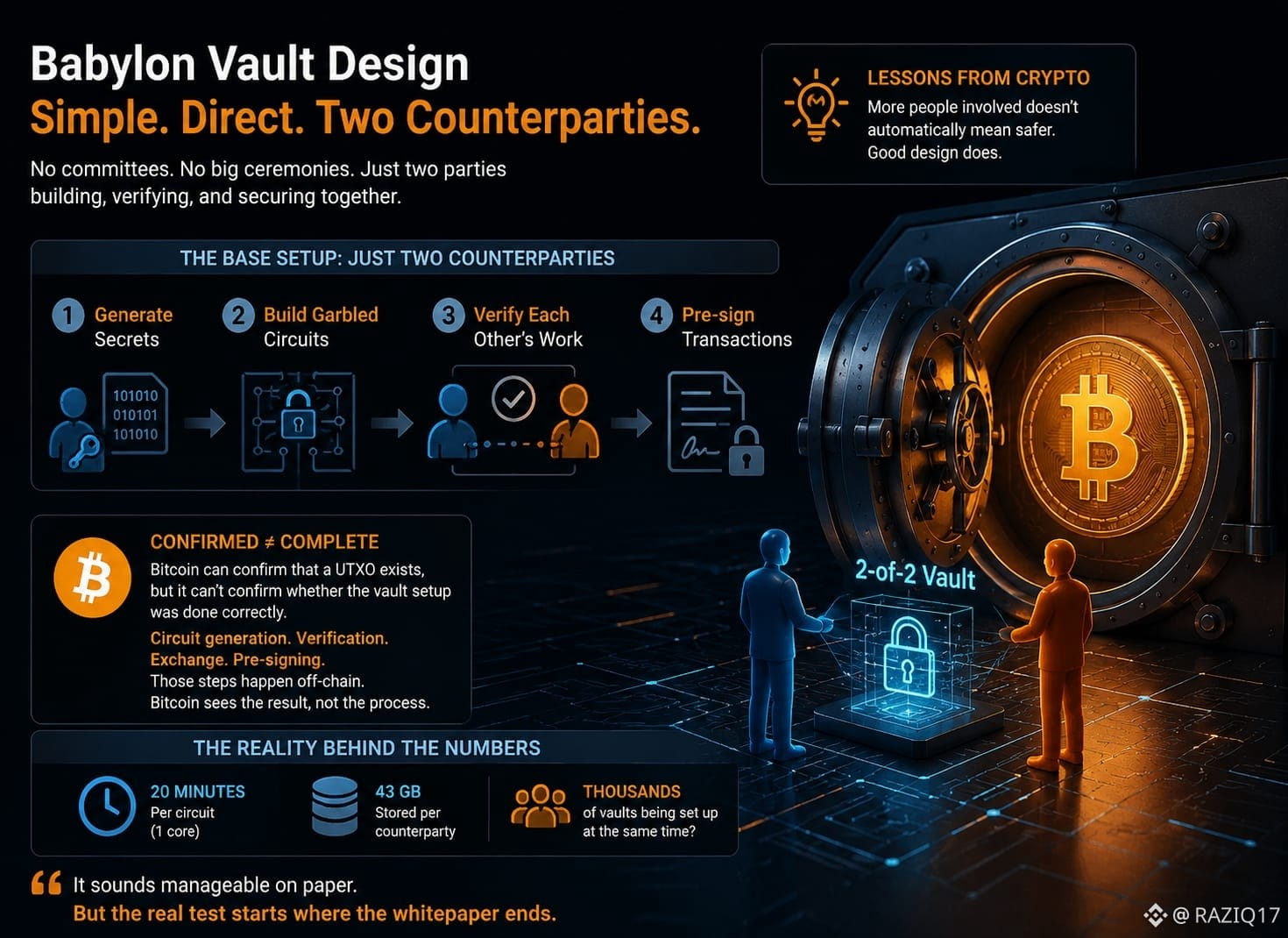
Ich komme immer wieder auf dieses Babylon-Tresor-Design zurück, weil es eine der beliebtesten Illusionen in der Krypto-Welt entlarvt: dass mehr Beteiligte automatisch etwas sicherer machen. Davon bin ich nicht überzeugt. Zumindest nicht hier. Was meine Aufmerksamkeit geweckt hat, ist, wie schlicht das Grundsetup eigentlich ist. Nur zwei Gegenparteien. Kein Signer-Komitee. Keine große Zeremonie. Beide Seiten erzeugen ihre eigenen Geheimnisse, bauen die verschlüsselten (garbled) Schaltungen, prüfen die Arbeit der jeweils anderen und signieren erst dann die Ausgabetransaktionen vor. Da steckt etwas angenehm Unkompliziertes drin.🏛️
Ich bin lange genug dabei, um zu wissen: In Krypto behandeln Leute „bestätigt“ oft so, als würde das bedeuten, dass wirklich alles abgeschlossen ist. Meistens ist das nicht der Fall. Bitcoin kann dir zeigen, dass ein UTXO existiert, aber es kann dir nicht sagen, ob die Arbeit hinter dem Tresor tatsächlich korrekt erledigt wurde – oder ob beide Schaltungen erzeugt, verifiziert und ausgetauscht wurden, ohne Ecken und Kanten zu beschneiden. Genau das lässt mich nicht los.🔍
Die Zahlen sind außerdem nicht gerade klein. Zwanzig Minuten pro Schaltung, ein Core und 43 GB, die pro Gegenpartei gespeichert werden. Das klingt auf dem Papier gut machbar. Ich bin nur nicht sicher, wie es aussieht, wenn gleichzeitig tausende Tresore eingerichtet werden. Vielleicht skaliert es gut, vielleicht auch nicht. Nach Jahren, in denen ich diesen Markt beobachtet habe, habe ich gelernt: Der echte Test beginnt normalerweise dort, wo das Whitepaper endet.⚖️
@BabylonLabs_io #baby $BABY
Ich bin lange genug dabei, um zu wissen: In Krypto behandeln Leute „bestätigt“ oft so, als würde das bedeuten, dass wirklich alles abgeschlossen ist. Meistens ist das nicht der Fall. Bitcoin kann dir zeigen, dass ein UTXO existiert, aber es kann dir nicht sagen, ob die Arbeit hinter dem Tresor tatsächlich korrekt erledigt wurde – oder ob beide Schaltungen erzeugt, verifiziert und ausgetauscht wurden, ohne Ecken und Kanten zu beschneiden. Genau das lässt mich nicht los.🔍
Die Zahlen sind außerdem nicht gerade klein. Zwanzig Minuten pro Schaltung, ein Core und 43 GB, die pro Gegenpartei gespeichert werden. Das klingt auf dem Papier gut machbar. Ich bin nur nicht sicher, wie es aussieht, wenn gleichzeitig tausende Tresore eingerichtet werden. Vielleicht skaliert es gut, vielleicht auch nicht. Nach Jahren, in denen ich diesen Markt beobachtet habe, habe ich gelernt: Der echte Test beginnt normalerweise dort, wo das Whitepaper endet.⚖️
@BabylonLabs_io #baby $BABY
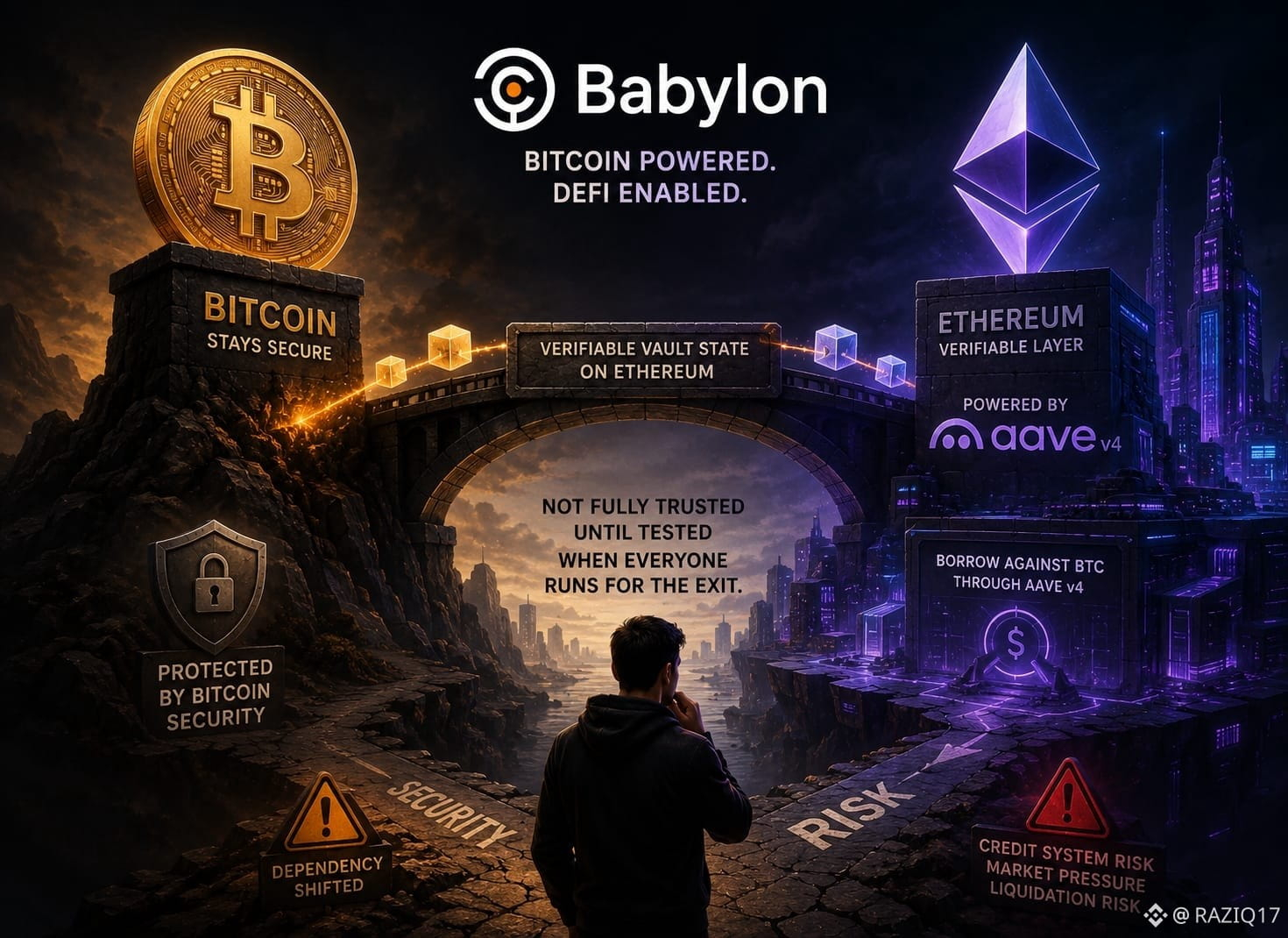
Ich habe genug Krypto-Zyklen gesehen, um zu wissen, wann etwas „sauberer“ klingt als es wahrscheinlich ist. Babylon ist einer dieser Namen, bei dem ich kurz innehalte. Auf dem Papier sieht das Setup ziemlich clever aus: BTC bleibt dort, wo es hingehört, der Vault-Status wird auf Ethereum verifizierbar, und plötzlich kannst du dagegen über Aave v4 Kredite aufnehmen, statt zu versuchen, die Liquidität bei null aufzubauen. Ich verstehe den Reiz. Liquidität ist immer der harte Teil, und Babylon tut nicht so, als wäre das anders.🧐
Aber ich denke auch immer wieder an die Naht in der Mitte. Die Bitcoin-Seite mag geschützt sein, aber die Kredit-Seite hängt weiterhin von einem separaten System ab – mit eigenen Risikoregeln, eigenen Druckpunkten und einer eigenen Art, zu brechen, wenn sich die Märkte schnell bewegen. Das habe ich schon mal gesehen: Leute reden so, als würde das Entfernen einer Brücke die Abhängigkeit beseitigen, dabei verändert man nur, wo die Abhängigkeit sitzt.⚖️
Deshalb bin ich nicht in Eile, es als gelöst zu bezeichnen. Babylon wirkt interessant, vielleicht sogar wirklich nützlich, aber ich vertraue in Krypto nichts vollständig, bevor ich sehe, wie es sich verhält, wenn alle gleichzeitig anfangen, nach dem Ausgang zu greifen.🚪
@BabylonLabs_io #baby $BABY
Aber ich denke auch immer wieder an die Naht in der Mitte. Die Bitcoin-Seite mag geschützt sein, aber die Kredit-Seite hängt weiterhin von einem separaten System ab – mit eigenen Risikoregeln, eigenen Druckpunkten und einer eigenen Art, zu brechen, wenn sich die Märkte schnell bewegen. Das habe ich schon mal gesehen: Leute reden so, als würde das Entfernen einer Brücke die Abhängigkeit beseitigen, dabei verändert man nur, wo die Abhängigkeit sitzt.⚖️
Deshalb bin ich nicht in Eile, es als gelöst zu bezeichnen. Babylon wirkt interessant, vielleicht sogar wirklich nützlich, aber ich vertraue in Krypto nichts vollständig, bevor ich sehe, wie es sich verhält, wenn alle gleichzeitig anfangen, nach dem Ausgang zu greifen.🚪
@BabylonLabs_io #baby $BABY
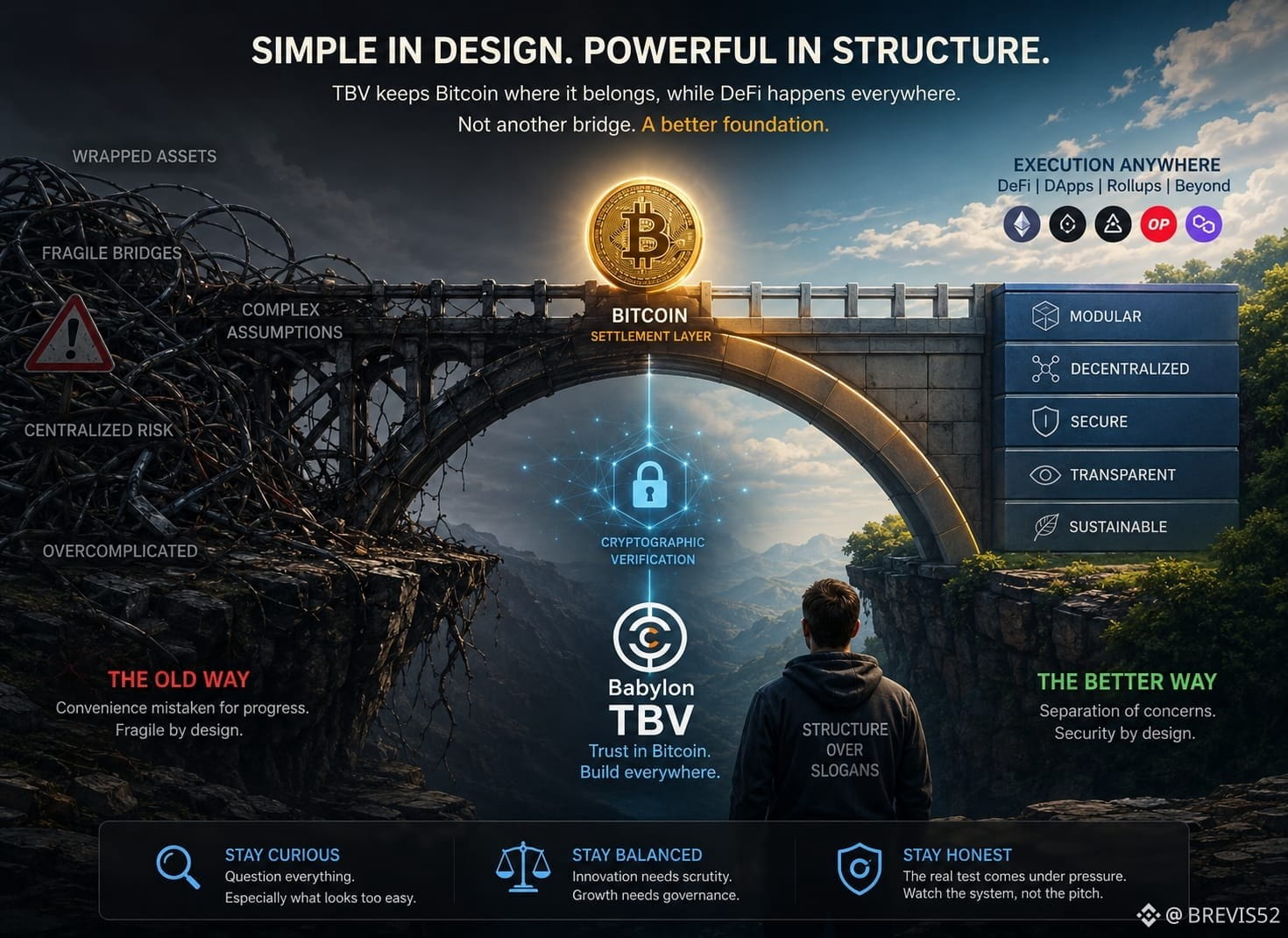
Ich kenne den Krypto-Bereich lange genug, um zu wissen, dass die saubersten Ideen meistens die sind, die später von Leuten unnötig verkompliziert werden. Babylon’s TBV zieht mich genau deshalb immer wieder an. Auf den ersten Blick wirkt es fast schon verdächtig einfach – und genau dort beginnt normalerweise die eigentliche Frage. Ich merke immer wieder, wie der Markt „Bequemlichkeit“ oft „Fortschritt“ nennt, kurz bevor er uns wieder ein fragiles Setup andreht, das in besseres Branding verpackt ist.🤔
Was mir besonders im Kopf bleibt, ist die Trennung zwischen Settlement und Ausführung. BTC bleibt auf Bitcoin, während die DeFi-Logik anderswo über kryptografische Verifikation passiert – statt der üblichen Spielereien mit Wrapped Assets. Ich habe genug Zyklen gesehen, um zu wissen, dass die Struktur mehr zählt als Slogans. Irgendetwas daran fühlt sich anders an: nicht, weil es perfekt ist, sondern weil es sich weigert, so zu tun, als wäre das alte Brückenmodell jemals elegant gewesen.🔍
Trotzdem traue ich allem, was neue Annahmen fordert, nicht vollständig. Komplexität schafft es, auf leisen Pfoten wieder zurückzukommen, und Governance kann ins Trudeln geraten, sobald Wachstum nach Überleben klingt. Genau das beobachte ich. Nicht den Pitch. Nicht die Story. Nur ob das System unter Druck noch immer ehrlich aussieht.⚖️
@BabylonLabs_io $BABY #baby
Was mir besonders im Kopf bleibt, ist die Trennung zwischen Settlement und Ausführung. BTC bleibt auf Bitcoin, während die DeFi-Logik anderswo über kryptografische Verifikation passiert – statt der üblichen Spielereien mit Wrapped Assets. Ich habe genug Zyklen gesehen, um zu wissen, dass die Struktur mehr zählt als Slogans. Irgendetwas daran fühlt sich anders an: nicht, weil es perfekt ist, sondern weil es sich weigert, so zu tun, als wäre das alte Brückenmodell jemals elegant gewesen.🔍
Trotzdem traue ich allem, was neue Annahmen fordert, nicht vollständig. Komplexität schafft es, auf leisen Pfoten wieder zurückzukommen, und Governance kann ins Trudeln geraten, sobald Wachstum nach Überleben klingt. Genau das beobachte ich. Nicht den Pitch. Nicht die Story. Nur ob das System unter Druck noch immer ehrlich aussieht.⚖️
@BabylonLabs_io $BABY #baby
Anmelden und weiter Inhalte entdecken