
James 詹姆
8.6k Beiträge

James 詹姆
 Square Verified+
Trade eröffnen
Hochfrequenz-Trader
11 Monate
1.3K+ Following
30.5K+ Follower
15.8K+ Like gegeben
Beiträge
Portfolio
Alle
Live
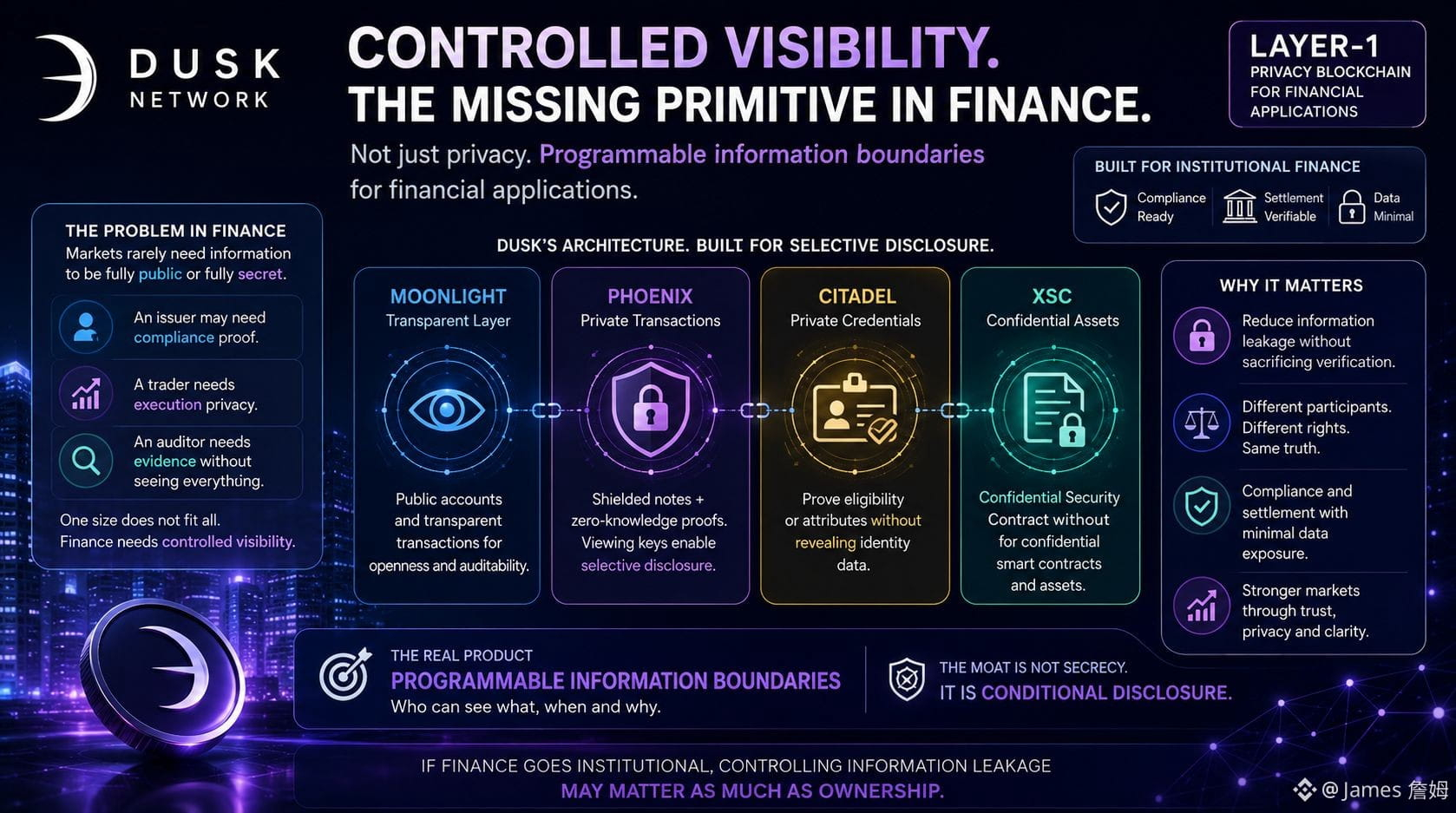
Dusk lässt sich leicht als eine weitere Datenschutzkette missverstehen. Ich denke, die stärkere These ist ein fehlender primitiver Baustein im Finanzwesen: gesteuerte Sichtbarkeit. Märkte brauchen Informationen selten entweder öffentlich oder geheim. Ein Emittent kann Compliance-Nachweise für eine Ausführungsprivatsphäre eines Traders benötigen, und ein Prüfer Belege, ohne alles sehen zu müssen.
Die Architektur von Dusk zeigt auf genau dieses Problem. Moonlight hält Transaktionen transparent, während Phoenix verschlüsselte Notizen und Zero-Knowledge-Beweise nutzt, wobei Viewing Keys eine selektive Offenlegung ermöglichen. Citadel erweitert die Idee auf Zertifikate: Eignung nachweisen, ohne Identitätsdaten offenzulegen. XSC schiebt die Vertraulichkeit in die Asset-Ebene.
Das macht Dusk spannend – weit über das „Privacy-Label“ hinaus. Das eigentliche Produkt könnte programmierbare Informationsgrenzen sein: Wer wann und warum etwas sehen darf. Wenn Finanzen stärker institutionell werden, könnte die Steuerung von Informationslecks genauso wichtig sein wie das Eigentum. Der Graben ist nicht Geheimhaltung, sondern bedingte Offenlegung.
@Dusk #dusk $DUSK
Die Architektur von Dusk zeigt auf genau dieses Problem. Moonlight hält Transaktionen transparent, während Phoenix verschlüsselte Notizen und Zero-Knowledge-Beweise nutzt, wobei Viewing Keys eine selektive Offenlegung ermöglichen. Citadel erweitert die Idee auf Zertifikate: Eignung nachweisen, ohne Identitätsdaten offenzulegen. XSC schiebt die Vertraulichkeit in die Asset-Ebene.
Das macht Dusk spannend – weit über das „Privacy-Label“ hinaus. Das eigentliche Produkt könnte programmierbare Informationsgrenzen sein: Wer wann und warum etwas sehen darf. Wenn Finanzen stärker institutionell werden, könnte die Steuerung von Informationslecks genauso wichtig sein wie das Eigentum. Der Graben ist nicht Geheimhaltung, sondern bedingte Offenlegung.
@Dusk #dusk $DUSK
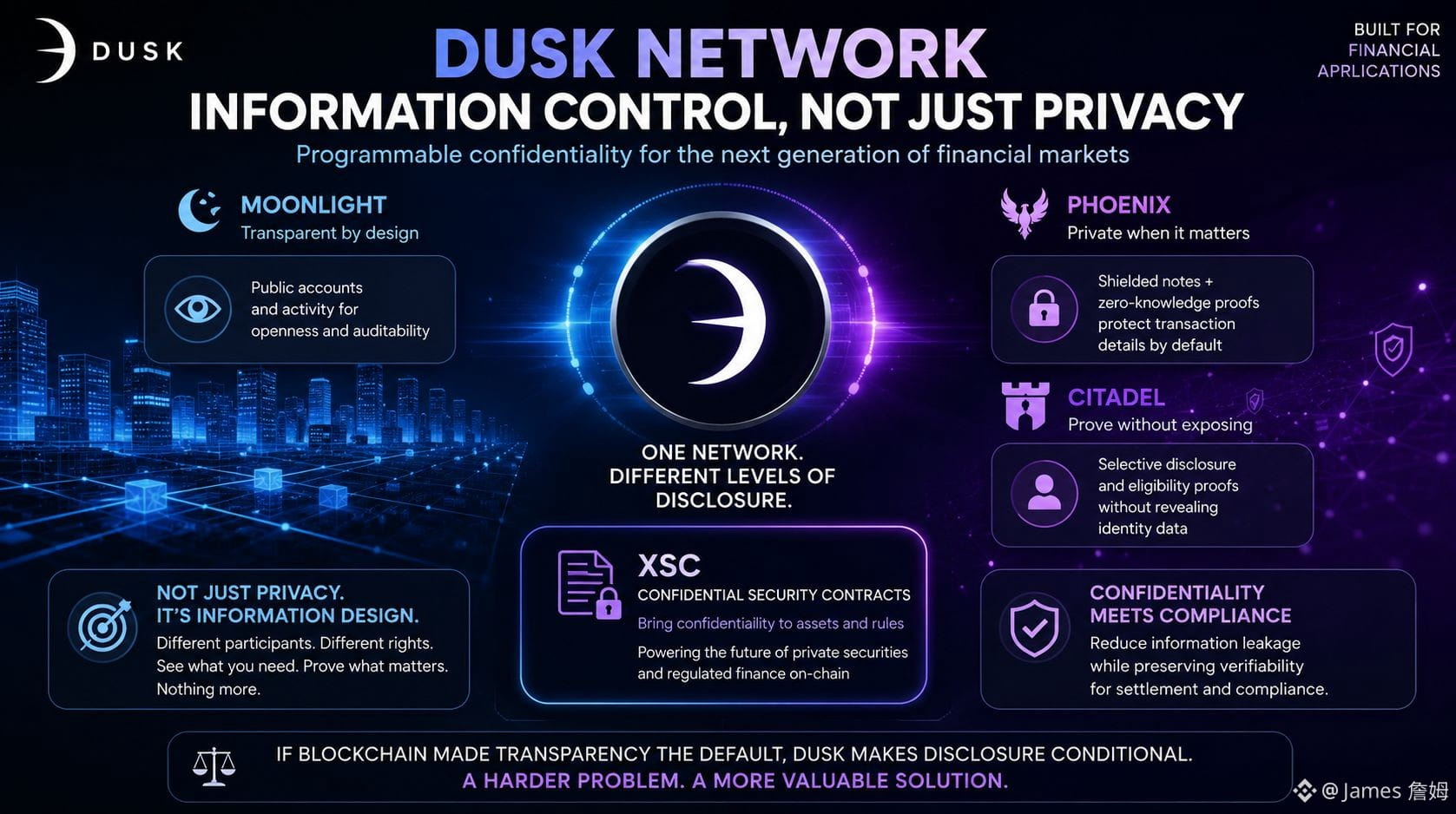
Der Dämmerung ist aus einem Grund interessant: Ihr echtes Produkt könnte die Kontrolle von Informationen sein, nicht der Datenschutz an sich. Finanzmärkte brauchen nicht einfach Transaktionen, die verborgen sind – sie brauchen unterschiedliche Teilnehmer, die unterschiedliche Fakten sehen. Die Architektur von Dusk spiegelt das wider: Moonlight unterstützt transparente Aktivitäten, während Phoenix geschützte Notizen und Zero-Knowledge-Beweise mit Betrachtungsschlüsseln verwendet, um selektive Offenlegung zu ermöglichen. Citadel erweitert die Idee, indem es Zulassungsnachweise ermöglicht, ohne Identitätsdaten offenzulegen. XSC wendet dieselbe Logik auf vertrauliche Vermögenswerte an.
Meine These: Dusk sollte weniger wie eine Privacy-Münze beurteilt werden und mehr wie eine programmierbare Vertraulichkeitsschicht für Märkte. Der Nutzen liegt darin, Informationslecks zu reduzieren und gleichzeitig die Nachprüfbarkeit für Abwicklung und Compliance zu bewahren. Wenn öffentliche Blockchains Transparenz zur Grundeinstellung machen, dann experimentiert Dusk damit, Offenlegung bedingt zu gestalten. Das ist eine schwierigere Aufgabe – und möglicherweise eine wertvollere.
@Dusk #dusk $DUSK
Meine These: Dusk sollte weniger wie eine Privacy-Münze beurteilt werden und mehr wie eine programmierbare Vertraulichkeitsschicht für Märkte. Der Nutzen liegt darin, Informationslecks zu reduzieren und gleichzeitig die Nachprüfbarkeit für Abwicklung und Compliance zu bewahren. Wenn öffentliche Blockchains Transparenz zur Grundeinstellung machen, dann experimentiert Dusk damit, Offenlegung bedingt zu gestalten. Das ist eine schwierigere Aufgabe – und möglicherweise eine wertvollere.
@Dusk #dusk $DUSK
Verifiziert
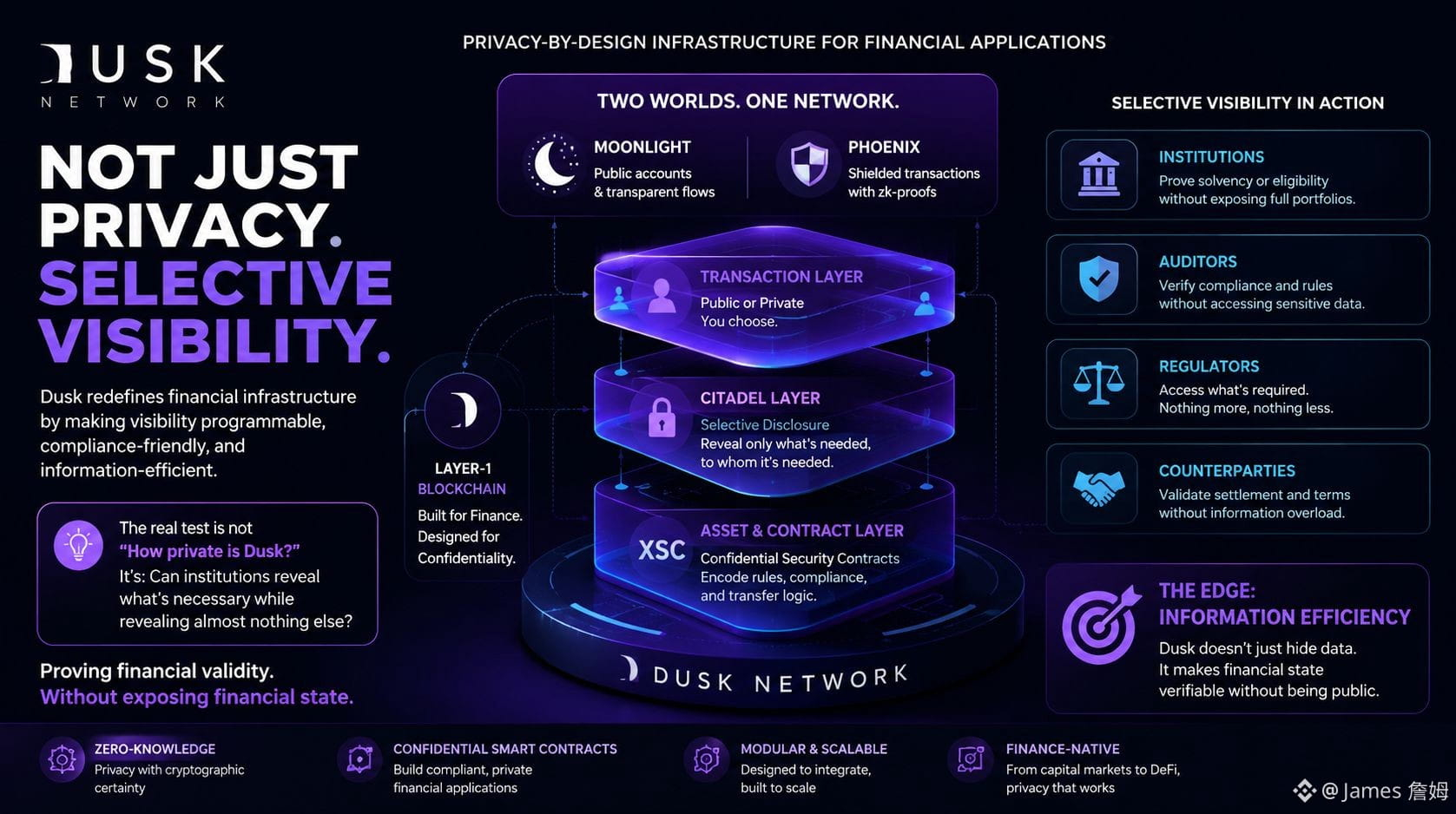
Der übersehene Wert in Dusk ist nicht die Privatsphäre selbst – sondern selektive Sichtbarkeit. Öffentliche Blockchains machten Transparenz zum Standard, aber Finanzmärkte funktionieren selten so: Ein Fonds muss möglicherweise seine Eignung oder Abwicklung nachweisen, ohne sein gesamtes Orderbuch offenzulegen. Dusk greift diese Unstimmigkeit auf Protokollebene an. Moonlight hält Kontoflüsse öffentlich, während Phoenix geschützte Notizen und Zero-Knowledge-Beweise nutzt, um übertragene Werte und Beteiligte zu verbergen; Citadel ergänzt selektive Offenlegung. XSC treibt die Idee in die Asset-Ebene, in der Transferregeln und Compliance-Einschränkungen zu Vertragslogik werden können. Mein Eindruck ist, dass dadurch eine bessere Frage entsteht als „Wie privat ist Dusk?“. Der eigentliche Test lautet: Kann eine Institution dem nachweisenden Gegenparteiaudit, oder dem Regulator genau das offenlegen, was benötigt wird – und fast nichts anderes? Wenn ja, konkurriert Dusk bei der Informationseffizienz: Finanzielle Gültigkeit nachweisen, ohne den finanziellen Zustand in öffentliche Daten zu verwandeln.
@Dusk #dusk $DUSK
@Dusk #dusk $DUSK
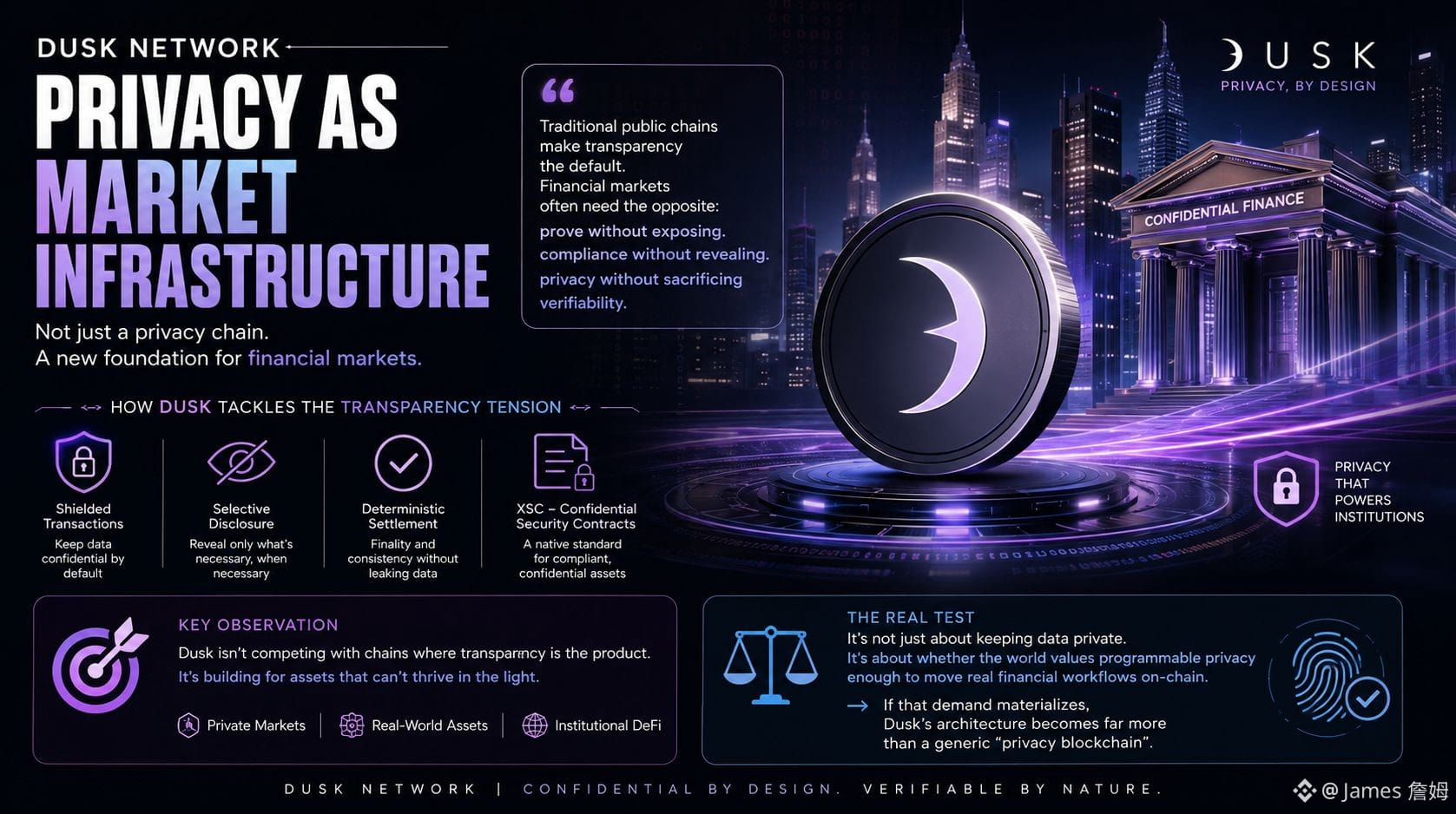
Das Interessante an Dusk ist nicht einfach, dass es Blockchain-Transaktionen privat macht. Die größere Idee ist, dass es Privatsphäre als Markt-Infrastruktur behandelt.
Traditionelle öffentliche Chains machen Transparenz zum Standard, aber Finanzmärkte brauchen oft das Gegenteil: Teilnehmende müssen möglicherweise die Berechtigung, Eigentümerschaft oder die Einhaltung von Vorschriften nachweisen, ohne Positionen, Salden oder Geschäftspartner allen offenlegen zu müssen. Dusk behandelt diese Spannung mit verschlüsselten Transaktionen, selektiver Offenlegung, deterministischem Settlement und dem XSC-Modell für vertrauliche Wertpapiere.
Daraus ergibt sich meine zentrale Beobachtung: Dusk konkurriert eigentlich nicht um dieselben Use Cases wie Chains, bei denen maximale öffentliche Sichtbarkeit das Produkt ist. Wetteinsatz ist, dass die nächste große Welle der Blockchain-Adoption durch Assets kommen könnte, die sich nicht komfortabel in einer vollständig transparenten Umgebung betreiben lassen.
Der eigentliche Test ist daher nicht, ob Dusk Daten privat halten kann. Entscheidend ist, ob Entwickelnde und Finanzinstitute programmierbare Privatsphäre tatsächlich genug wertschätzen, um Workflows auf die Chain zu verlagern. Wenn diese Nachfrage entsteht, wird Dusk’s Architektur deutlich spannender, als es ein generisches Label „Privacy-Blockchain“ vermuten ließe.
@Dusk #dusk $DUSK
Traditionelle öffentliche Chains machen Transparenz zum Standard, aber Finanzmärkte brauchen oft das Gegenteil: Teilnehmende müssen möglicherweise die Berechtigung, Eigentümerschaft oder die Einhaltung von Vorschriften nachweisen, ohne Positionen, Salden oder Geschäftspartner allen offenlegen zu müssen. Dusk behandelt diese Spannung mit verschlüsselten Transaktionen, selektiver Offenlegung, deterministischem Settlement und dem XSC-Modell für vertrauliche Wertpapiere.
Daraus ergibt sich meine zentrale Beobachtung: Dusk konkurriert eigentlich nicht um dieselben Use Cases wie Chains, bei denen maximale öffentliche Sichtbarkeit das Produkt ist. Wetteinsatz ist, dass die nächste große Welle der Blockchain-Adoption durch Assets kommen könnte, die sich nicht komfortabel in einer vollständig transparenten Umgebung betreiben lassen.
Der eigentliche Test ist daher nicht, ob Dusk Daten privat halten kann. Entscheidend ist, ob Entwickelnde und Finanzinstitute programmierbare Privatsphäre tatsächlich genug wertschätzen, um Workflows auf die Chain zu verlagern. Wenn diese Nachfrage entsteht, wird Dusk’s Architektur deutlich spannender, als es ein generisches Label „Privacy-Blockchain“ vermuten ließe.
@Dusk #dusk $DUSK
Je mehr ich über Dusk Network nachdenke, desto interessanter wird sein Ausgangspunkt: Finanzielle Anwendungen benötigen möglicherweise Blockchain-Infrastruktur, aber das bedeutet nicht automatisch, dass jeder einzelne Teil finanzieller Aktivitäten öffentlich offengelegt werden sollte.
Dusk setzt hier auf eine datenschutzorientierte Layer-1 für Finanzanwendungen. Ihr Confidential Security Contract (XSC)-Standard unterstützt vertrauliche Smart Contracts und bringt die Privatsphäre näher an die Grundlage der Funktionsweise dieser Anwendungen heran.
Die Idee ist wichtig, weil Finanzinformationen sensibel sein können. Wenn Blockchain ernsthafte Finanzanwendungsfälle unterstützen soll, kann Vertraulichkeit genauso bedeutsam sein wie die Programmierbarkeit.
Doch hier gibt es eine offensichtliche Spannung: Blockchain-Systeme werden oft mit Transparenz in Verbindung gebracht, während vertrauliche Verträge ein anderes Modell einführen. Der schwierige Teil besteht nicht nur darin, Privatsphäre zu schaffen – es geht darum, ein sinnvolles Gleichgewicht zwischen Privatsphäre und dem Vertrauen zu finden, das Transparenz bieten kann.
Das macht Dusk als Infrastrukturidee bemerkenswert – nicht nur als eine Sammlung von Funktionen.
Können vertrauliche Smart Contracts eine bedeutungsvolle Privatsphäre erreichen, während gleichzeitig das Vertrauen erhalten bleibt, das Menschen von Blockchain erwarten?
@Dusk #dusk $DUSK
Dusk setzt hier auf eine datenschutzorientierte Layer-1 für Finanzanwendungen. Ihr Confidential Security Contract (XSC)-Standard unterstützt vertrauliche Smart Contracts und bringt die Privatsphäre näher an die Grundlage der Funktionsweise dieser Anwendungen heran.
Die Idee ist wichtig, weil Finanzinformationen sensibel sein können. Wenn Blockchain ernsthafte Finanzanwendungsfälle unterstützen soll, kann Vertraulichkeit genauso bedeutsam sein wie die Programmierbarkeit.
Doch hier gibt es eine offensichtliche Spannung: Blockchain-Systeme werden oft mit Transparenz in Verbindung gebracht, während vertrauliche Verträge ein anderes Modell einführen. Der schwierige Teil besteht nicht nur darin, Privatsphäre zu schaffen – es geht darum, ein sinnvolles Gleichgewicht zwischen Privatsphäre und dem Vertrauen zu finden, das Transparenz bieten kann.
Das macht Dusk als Infrastrukturidee bemerkenswert – nicht nur als eine Sammlung von Funktionen.
Können vertrauliche Smart Contracts eine bedeutungsvolle Privatsphäre erreichen, während gleichzeitig das Vertrauen erhalten bleibt, das Menschen von Blockchain erwarten?
@Dusk #dusk $DUSK
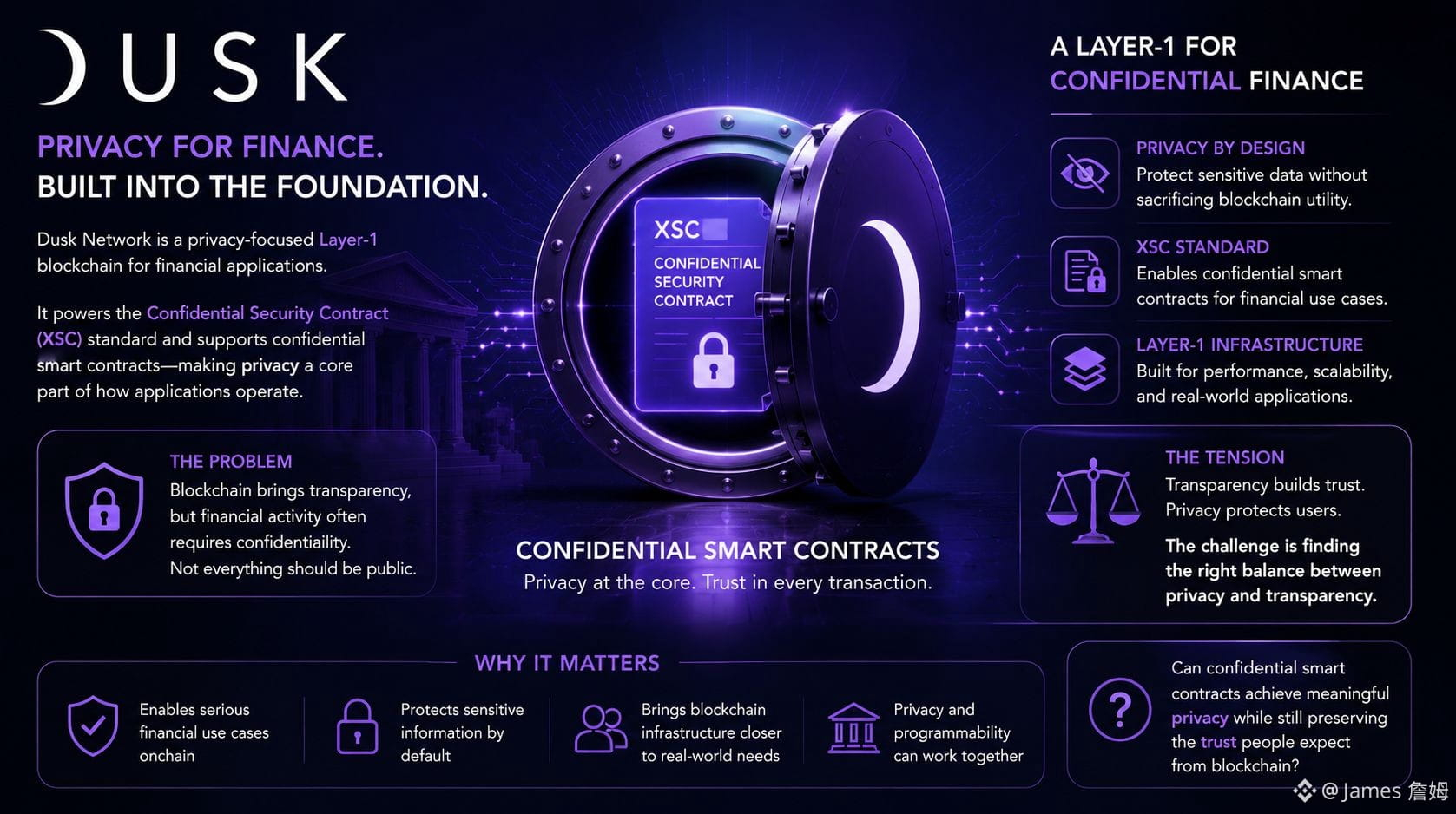
Eine Sache, die ich an Dusk Network interessant finde, ist, dass es mit einem Problem beginnt, über das Krypto oft herumredet: Wie bringt man blockchainbasierte Anwendungen in finanzielle Umgebungen, ohne dass jede Aktivität vollständig öffentlich wird?
Dusk ist als Layer-1-Blockchain aufgebaut, die sich auf Datenschutz für Finanzanwendungen konzentriert. Sein Confidential Security Contract (XSC)-Standard ist darauf ausgelegt, vertrauliche Smart Contracts zu unterstützen. Ziel ist, dass Privatsphäre Teil dessen ist, wie diese Anwendungen funktionieren, und nicht nur ein nachträglicher Gedanke.
Das ist wichtig, weil Finanzanwendungsfälle sowohl Blockchain-Programmierung als auch ein gewisses Maß an Vertraulichkeit erfordern können. Wenn sensible Informationen nicht geschützt werden können, kann der praktische Nutzen von On-Chain-Finanzanwendungen eingeschränkt sein.
Doch Privatsphäre wirft auch eine schwierige Frage auf: Wie balanciert man Vertraulichkeit mit Transparenz und Vertrauen, die Blockchains überhaupt erst nützlich machen?
Diese Spannung könnte letztlich eines der wichtigsten Dinge sein, die man bei Dusk im Blick behalten sollte.
Können vertrauliche Smart Contracts die richtige Balance zwischen Privatsphäre und Transparenz finden?
@Dusk #dusk $DUSK
Dusk ist als Layer-1-Blockchain aufgebaut, die sich auf Datenschutz für Finanzanwendungen konzentriert. Sein Confidential Security Contract (XSC)-Standard ist darauf ausgelegt, vertrauliche Smart Contracts zu unterstützen. Ziel ist, dass Privatsphäre Teil dessen ist, wie diese Anwendungen funktionieren, und nicht nur ein nachträglicher Gedanke.
Das ist wichtig, weil Finanzanwendungsfälle sowohl Blockchain-Programmierung als auch ein gewisses Maß an Vertraulichkeit erfordern können. Wenn sensible Informationen nicht geschützt werden können, kann der praktische Nutzen von On-Chain-Finanzanwendungen eingeschränkt sein.
Doch Privatsphäre wirft auch eine schwierige Frage auf: Wie balanciert man Vertraulichkeit mit Transparenz und Vertrauen, die Blockchains überhaupt erst nützlich machen?
Diese Spannung könnte letztlich eines der wichtigsten Dinge sein, die man bei Dusk im Blick behalten sollte.
Können vertrauliche Smart Contracts die richtige Balance zwischen Privatsphäre und Transparenz finden?
@Dusk #dusk $DUSK
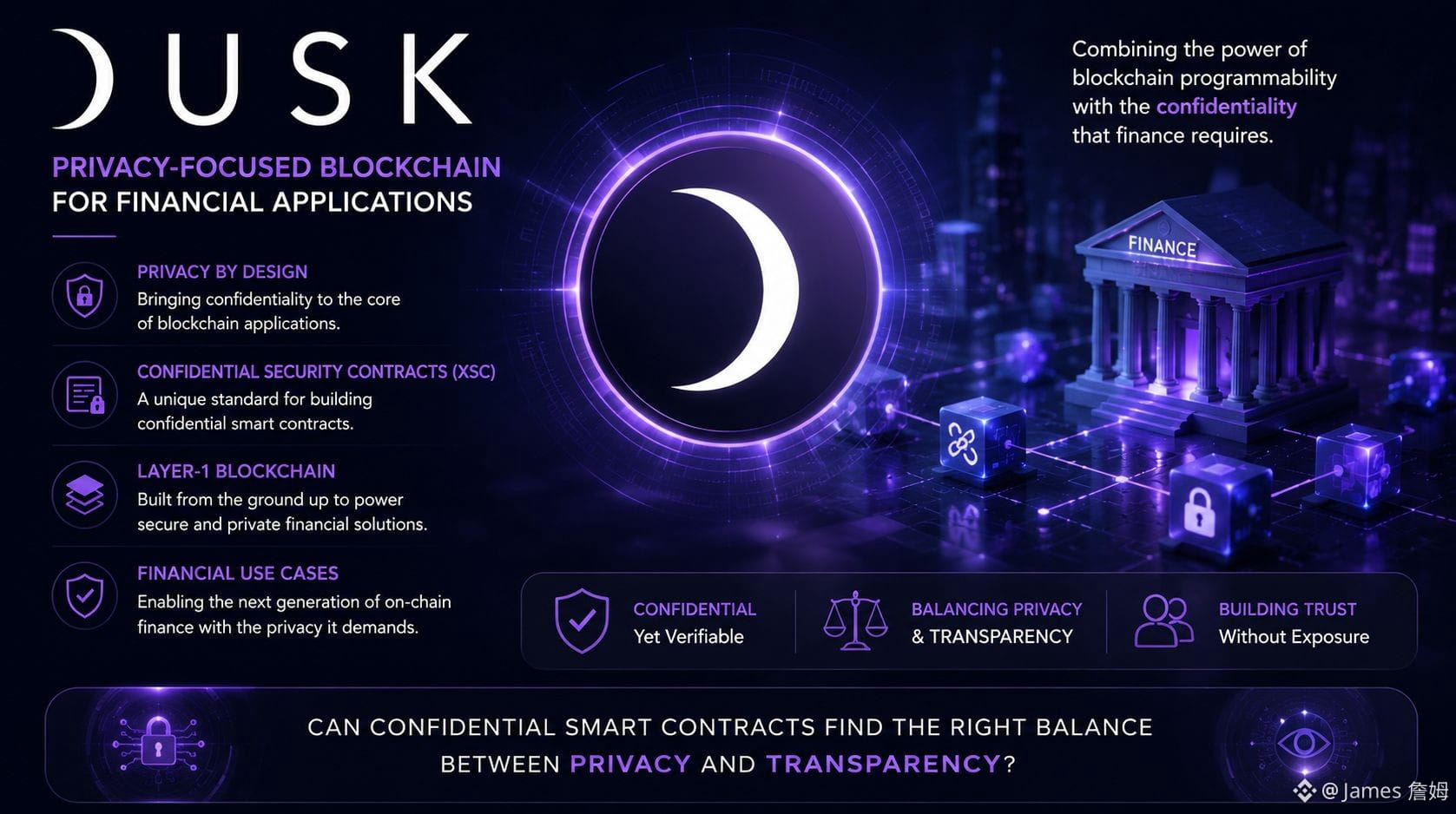
🔐 WAS WENN PRIVATSPHÄRE ZUM NÄCHSTEN GROSSEN BLOCKCHAIN-KAMPF WIRD?
Der Markt liebt Hype.
Aber echte Geschichten beginnen oft mit einem Problem, das niemand ignorieren kann.
Dusk Network setzt auf Privatsphäre für Finanzanwendungen. 👀
Als Layer-1-Blockchain betreibt Dusk den Confidential Security Contract (XSC) Standard und unterstützt vertrauliche Smart Contracts.
Und das schafft eine spannende Spannung.
Finanzanwendungen brauchen Blockchain-Infrastruktur—aber sensible Informationen können nicht immer für alle sichtbar gemacht werden.
Hier trifft Unsicherheit auf Chance. Angst sagt, Privatsphäre könnte eine Nischen-Erzählung bleiben. Hoffnung sagt, dass vertrauliche Finanzanwendungen zunehmend wichtiger werden könnten.
Keine Garantien. Keine erfundenen Zahlen. Nur eine überzeugende Idee, die man genau im Blick behalten sollte. 🔥
Manchmal beginnen die größten Schritte, bevor die Masse sicher wird.
Also stellt sich die Frage:
Könnte Privatsphäre zu einer der prägenden Erzählungen für blockchainbasierte Finanzen werden?
@Dusk #dusk $DUSK
Der Markt liebt Hype.
Aber echte Geschichten beginnen oft mit einem Problem, das niemand ignorieren kann.
Dusk Network setzt auf Privatsphäre für Finanzanwendungen. 👀
Als Layer-1-Blockchain betreibt Dusk den Confidential Security Contract (XSC) Standard und unterstützt vertrauliche Smart Contracts.
Und das schafft eine spannende Spannung.
Finanzanwendungen brauchen Blockchain-Infrastruktur—aber sensible Informationen können nicht immer für alle sichtbar gemacht werden.
Hier trifft Unsicherheit auf Chance. Angst sagt, Privatsphäre könnte eine Nischen-Erzählung bleiben. Hoffnung sagt, dass vertrauliche Finanzanwendungen zunehmend wichtiger werden könnten.
Keine Garantien. Keine erfundenen Zahlen. Nur eine überzeugende Idee, die man genau im Blick behalten sollte. 🔥
Manchmal beginnen die größten Schritte, bevor die Masse sicher wird.
Also stellt sich die Frage:
Könnte Privatsphäre zu einer der prägenden Erzählungen für blockchainbasierte Finanzen werden?
@Dusk #dusk $DUSK
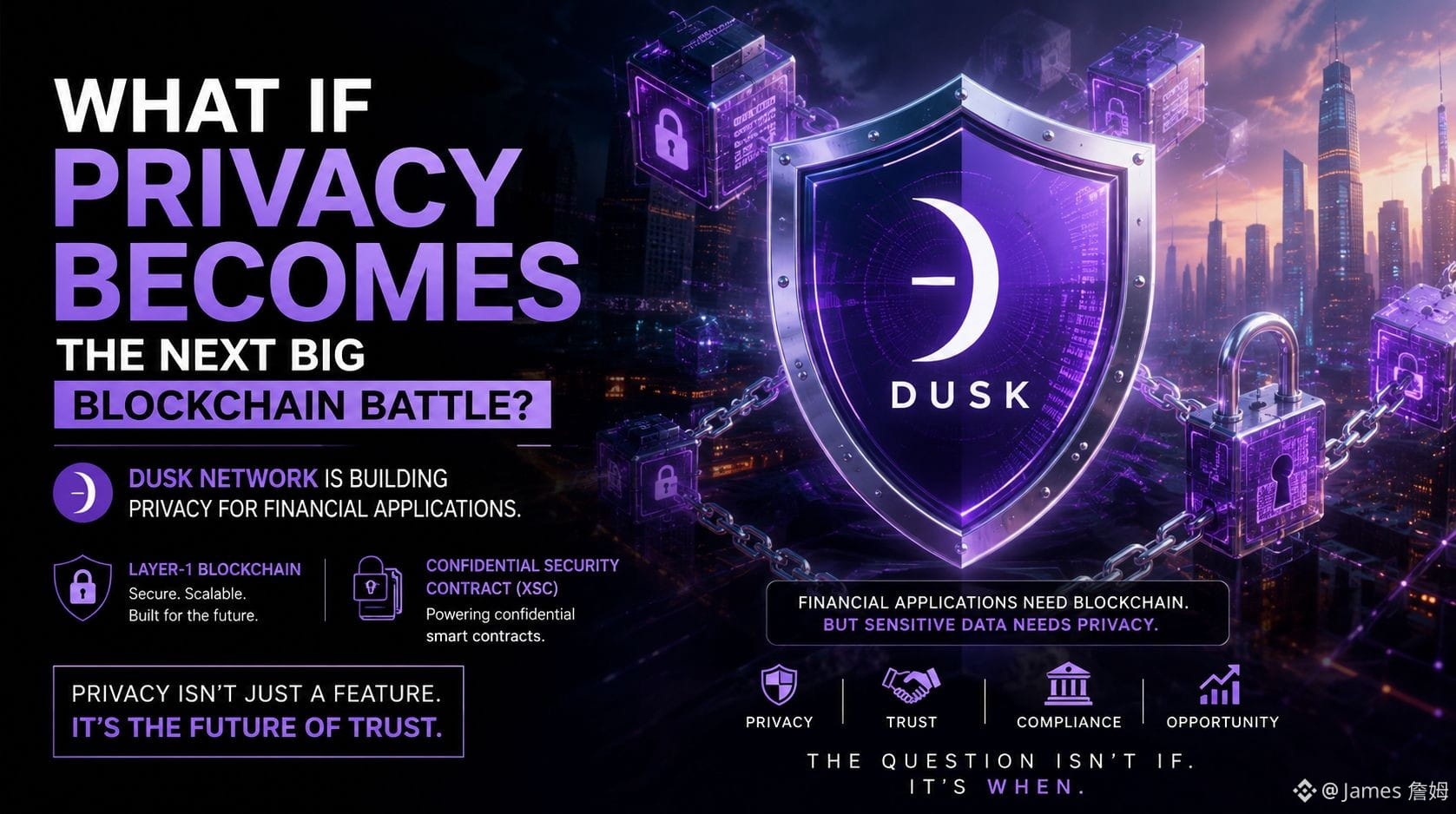
🔥 DER ABEND SPIELT EIN ANDERES SPIEL… ABER IST DER MARKT BEREIT?
Während die Aufmerksamkeit oft den lautesten Erzählungen folgt, baut Dusk Network leise an einer starken Idee: Datenschutz für Finanzanwendungen. 🔐
Als Layer-1 treibt Dusk den Confidential Security Contract (XSC)-Standard an und unterstützt vertrauliche Smart Contracts.
Das schafft eine interessante Marktpsychologie.
Es gibt Hoffnung auf das Potenzial privater Finanzanwendungen. Es gibt Vorfreude darauf, was vertrauliche Smart Contracts ermöglichen könnten. Aber es gibt auch Unsicherheit, weil sich eine spannende Story nicht automatisch in Marktdynamik übersetzt.
Und genau dort wird es interessant. 👀
Wenn ein Projekt Datenschutz + Finanzanwendungen + vertrauliche Smart Contracts kombiniert, beginnen Trader ganz natürlich die Frage zu stellen, ob die Story irgendwann stärkere Aufmerksamkeit anziehen könnte.
Keine Garantien. Kein blindes Hype.
Nur eine Erzählung, die es sich lohnt, genau im Blick zu behalten, bevor die Menge entscheidet, was sie davon hält.
Könnte Dusk zu den Projekten gehören, die der Markt erst bemerkt, nachdem die Story größer geworden ist? 🤔
@Dusk #dusk $DUSK
Während die Aufmerksamkeit oft den lautesten Erzählungen folgt, baut Dusk Network leise an einer starken Idee: Datenschutz für Finanzanwendungen. 🔐
Als Layer-1 treibt Dusk den Confidential Security Contract (XSC)-Standard an und unterstützt vertrauliche Smart Contracts.
Das schafft eine interessante Marktpsychologie.
Es gibt Hoffnung auf das Potenzial privater Finanzanwendungen. Es gibt Vorfreude darauf, was vertrauliche Smart Contracts ermöglichen könnten. Aber es gibt auch Unsicherheit, weil sich eine spannende Story nicht automatisch in Marktdynamik übersetzt.
Und genau dort wird es interessant. 👀
Wenn ein Projekt Datenschutz + Finanzanwendungen + vertrauliche Smart Contracts kombiniert, beginnen Trader ganz natürlich die Frage zu stellen, ob die Story irgendwann stärkere Aufmerksamkeit anziehen könnte.
Keine Garantien. Kein blindes Hype.
Nur eine Erzählung, die es sich lohnt, genau im Blick zu behalten, bevor die Menge entscheidet, was sie davon hält.
Könnte Dusk zu den Projekten gehören, die der Markt erst bemerkt, nachdem die Story größer geworden ist? 🤔
@Dusk #dusk $DUSK
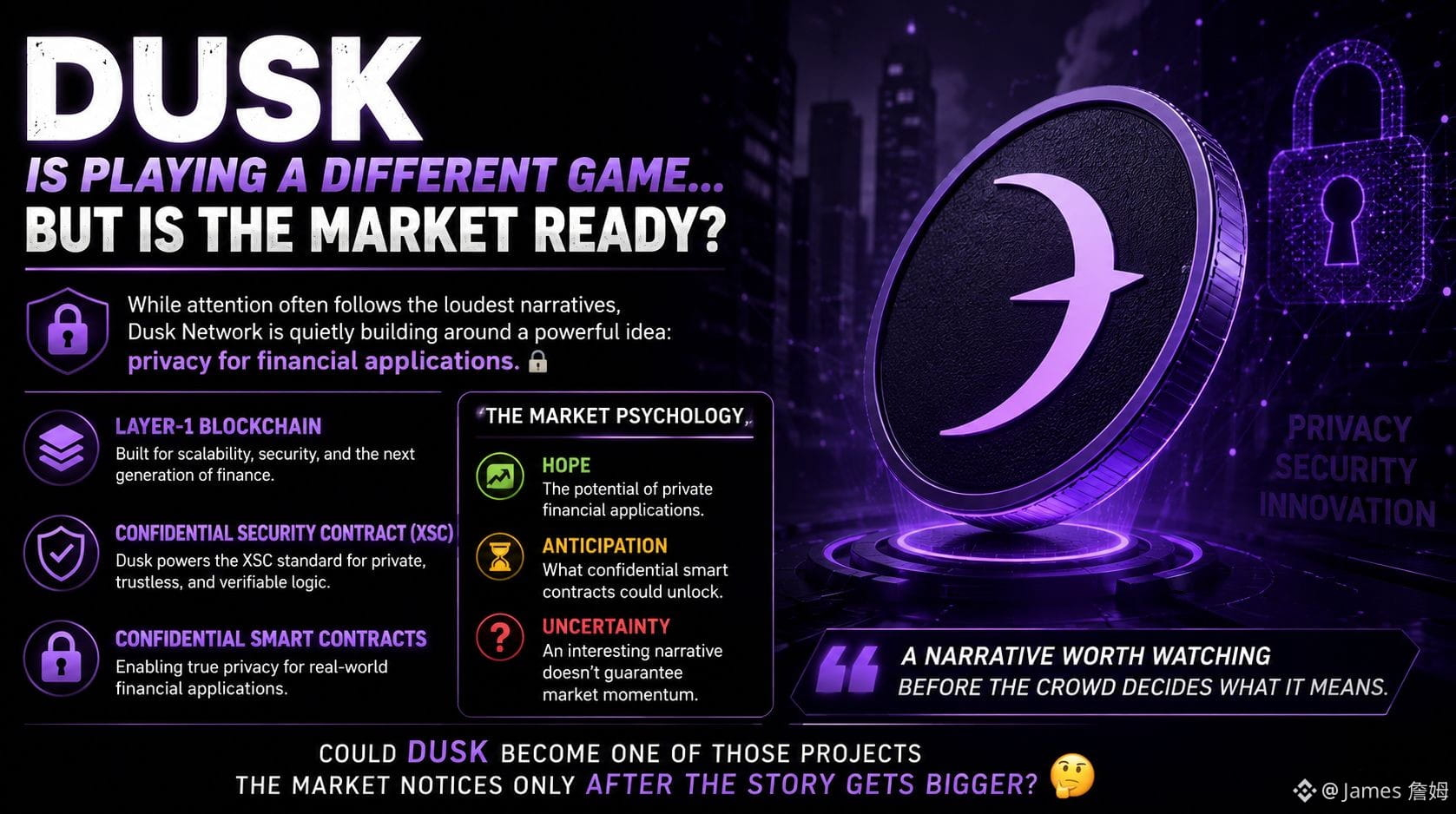
Je öfter ich auf Dusk blicke, desto interessanter fühlt sich das Problem an: Privatsphäre geht nicht einfach darum, Informationen zu verbergen – sie geht darum, sensible finanzielle Aktivitäten nutzbar zu machen, ohne alles öffentlich offenzulegen.
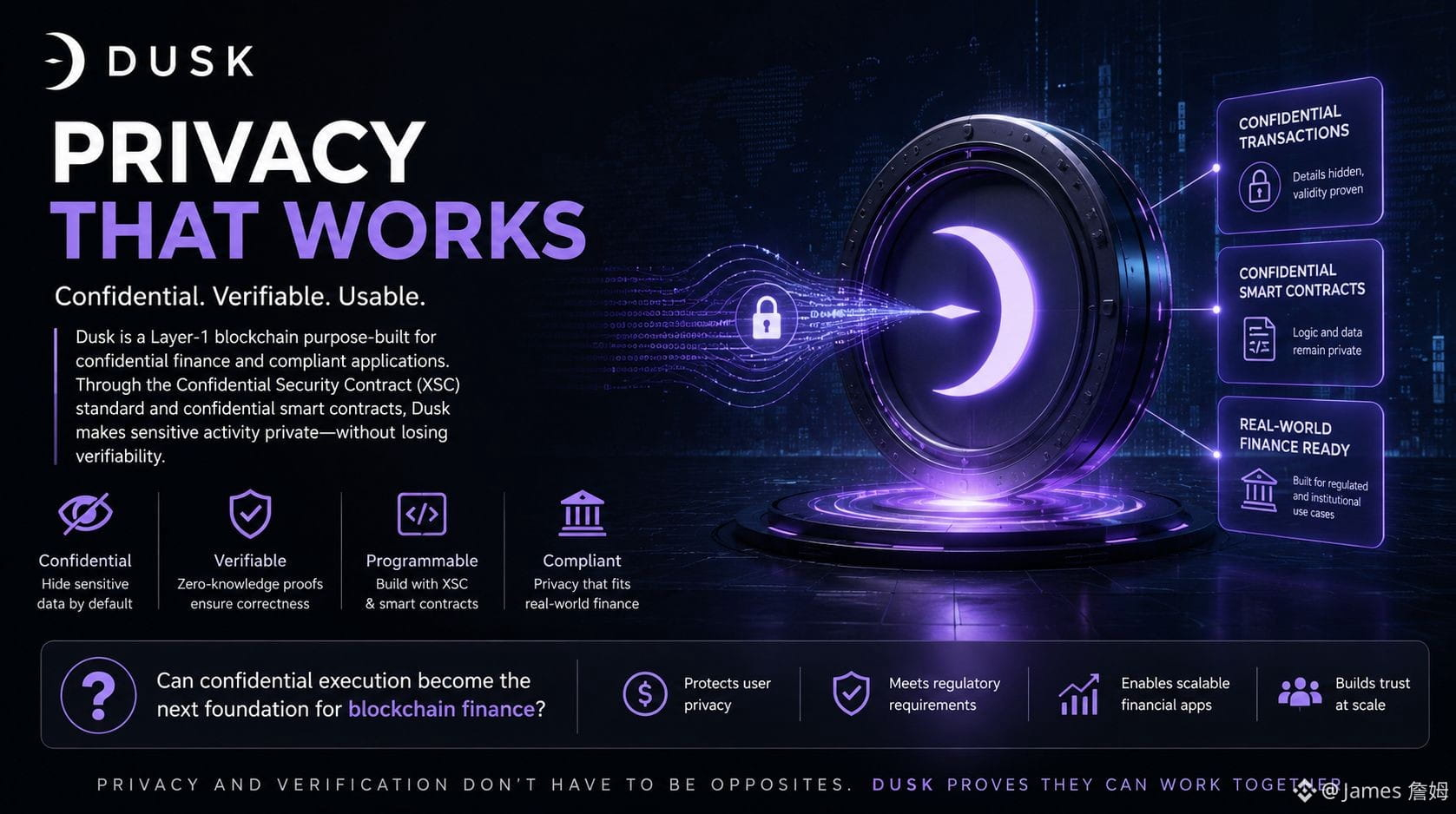
Dusk ist eine Layer-1-Blockchain, die auf dieser Idee aufbaut, mit dem Confidential Security Contract (XSC)-Standard und Unterstützung für vertrauliche Smart Contracts. Das tiefere Ziel ist es, eine Umgebung zu schaffen, in der Transaktionen und Anwendungen Vertraulichkeit bewahren können, während sie gleichzeitig weiterhin überprüfbar bleiben.
Das ist vor allem für Finanzanwendungen relevant, bei denen Transparenz nützlich sein kann, aber das Offenlegen jeder Einzelheit kann zu praktischen und regulatorischen Problemen führen. Dusk's Ansatz zeigt, dass Privatsphäre und Verifizierbarkeit nicht zwangsläufig Gegensätze sein müssen.
Doch die schwierige Frage bleibt: Wie gut können vertrauliche Blockchain-Anwendungen Privatsphäre, Verifizierbarkeit, Nutzbarkeit und reale finanzielle Anforderungen in Einklang bringen?
Wenn Dusk diese Balance effektiv lösen kann: Könnte vertrauliche Ausführung zu einer wichtigeren Grundlage für blockchainbasiertes Finanzwesen werden?
@Dusk #dusk $DUSK
Dusk ist eine Layer-1-Blockchain, die auf dieser Idee aufbaut, mit dem Confidential Security Contract (XSC)-Standard und Unterstützung für vertrauliche Smart Contracts. Das tiefere Ziel ist es, eine Umgebung zu schaffen, in der Transaktionen und Anwendungen Vertraulichkeit bewahren können, während sie gleichzeitig weiterhin überprüfbar bleiben.
Das ist vor allem für Finanzanwendungen relevant, bei denen Transparenz nützlich sein kann, aber das Offenlegen jeder Einzelheit kann zu praktischen und regulatorischen Problemen führen. Dusk's Ansatz zeigt, dass Privatsphäre und Verifizierbarkeit nicht zwangsläufig Gegensätze sein müssen.
Doch die schwierige Frage bleibt: Wie gut können vertrauliche Blockchain-Anwendungen Privatsphäre, Verifizierbarkeit, Nutzbarkeit und reale finanzielle Anforderungen in Einklang bringen?
Wenn Dusk diese Balance effektiv lösen kann: Könnte vertrauliche Ausführung zu einer wichtigeren Grundlage für blockchainbasiertes Finanzwesen werden?
@Dusk #dusk $DUSK
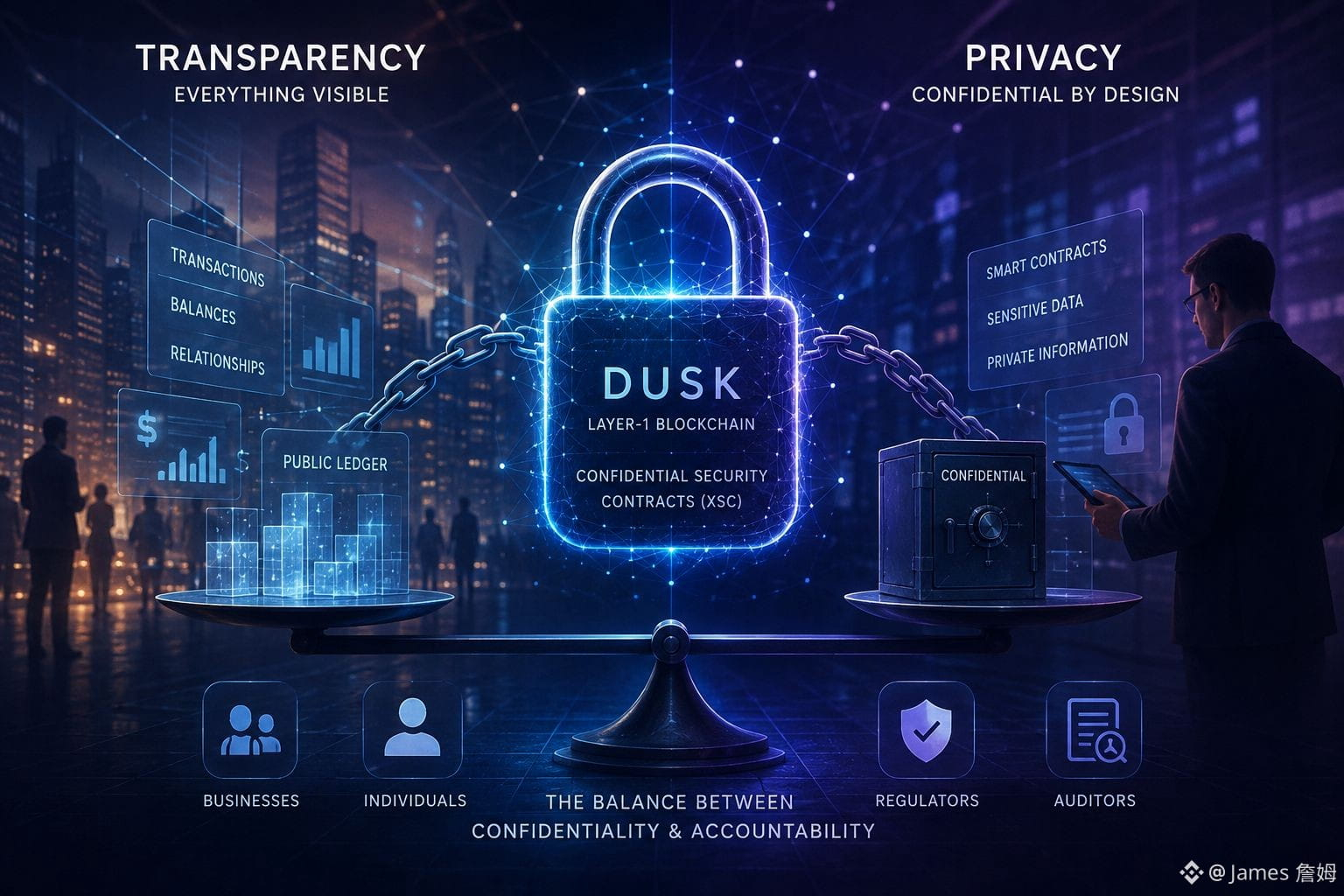
Ich stoße immer wieder auf eine unangenehme Frage im Zusammenhang mit Blockchain: Wenn standardmäßig alles sichtbar ist, wie praktisch ist das wirklich für finanzielle Aktivitäten? Transparenz ist hilfreich zur Verifizierung, aber Unternehmen und Einzelpersonen möchten selten jede Transaktion, jeden Kontostand oder jede finanzielle Beziehung für immer offengelegt haben.
Diese Spannung macht Dusk Network für mich interessant. Es betrachtet die Blockchain-Infrastruktur aus der Perspektive von Finanzanwendungen: Privatsphäre ist im Design integriert und nicht bloß ein nachträglicher Zusatz. Dusk ist eine Layer-1-Blockchain, die ihr Confidential Security Contract (XSC)-Standard unterstützt. Dieser soll es ermöglichen, dass Smart Contracts sensible Informationen verarbeiten, während die Vorteile eines verifizierbaren Netzwerks erhalten bleiben.
Die Idee klingt zunächst unkompliziert, bis man die Details bedenkt. Finanzsysteme brauchen Privatsphäre, aber Regulierungsbehörden, Geschäftspartner und Wirtschaftsprüfer benötigen möglicherweise dennoch bestimmte Informationen, um sie nachweisbar zu machen. Alles vollständig zu verbergen kann auch eigene Probleme schaffen. Die spannendere Herausforderung besteht darin zu entscheiden, was privat bleiben sollte, was verifizierbar sein muss und wer welchen Teil sehen darf.
Das macht Dusk weniger zu einer Frage des schlichten „Hinzufügens von Privatsphäre“ und mehr zu einem Ansatz, auszuloten, wie Vertraulichkeit und Verantwortlichkeit nebeneinander existieren können. Ob dieses Gleichgewicht in realen Finanzanwendungen gut funktioniert, ist nach wie vor die größere Frage – und wahrscheinlich der Teil, den man am genauesten im Blick behalten sollte.
@Dusk #dusk $DUSK
Diese Spannung macht Dusk Network für mich interessant. Es betrachtet die Blockchain-Infrastruktur aus der Perspektive von Finanzanwendungen: Privatsphäre ist im Design integriert und nicht bloß ein nachträglicher Zusatz. Dusk ist eine Layer-1-Blockchain, die ihr Confidential Security Contract (XSC)-Standard unterstützt. Dieser soll es ermöglichen, dass Smart Contracts sensible Informationen verarbeiten, während die Vorteile eines verifizierbaren Netzwerks erhalten bleiben.
Die Idee klingt zunächst unkompliziert, bis man die Details bedenkt. Finanzsysteme brauchen Privatsphäre, aber Regulierungsbehörden, Geschäftspartner und Wirtschaftsprüfer benötigen möglicherweise dennoch bestimmte Informationen, um sie nachweisbar zu machen. Alles vollständig zu verbergen kann auch eigene Probleme schaffen. Die spannendere Herausforderung besteht darin zu entscheiden, was privat bleiben sollte, was verifizierbar sein muss und wer welchen Teil sehen darf.
Das macht Dusk weniger zu einer Frage des schlichten „Hinzufügens von Privatsphäre“ und mehr zu einem Ansatz, auszuloten, wie Vertraulichkeit und Verantwortlichkeit nebeneinander existieren können. Ob dieses Gleichgewicht in realen Finanzanwendungen gut funktioniert, ist nach wie vor die größere Frage – und wahrscheinlich der Teil, den man am genauesten im Blick behalten sollte.
@Dusk #dusk $DUSK
Ich stoße immer wieder auf ein seltsames Problem in der Blockchain: Transparenz ist eine ihrer größten Stärken, kann aber auch zu einer ernsthaften Einschränkung werden. Ein Finanzsystem, in dem jede Transaktion dauerhaft sichtbar ist, klingt für die Überprüfung vielleicht nützlich – doch echte Unternehmen möchten selten, dass jedes Detail ihrer Aktivitäten offengelegt wird.
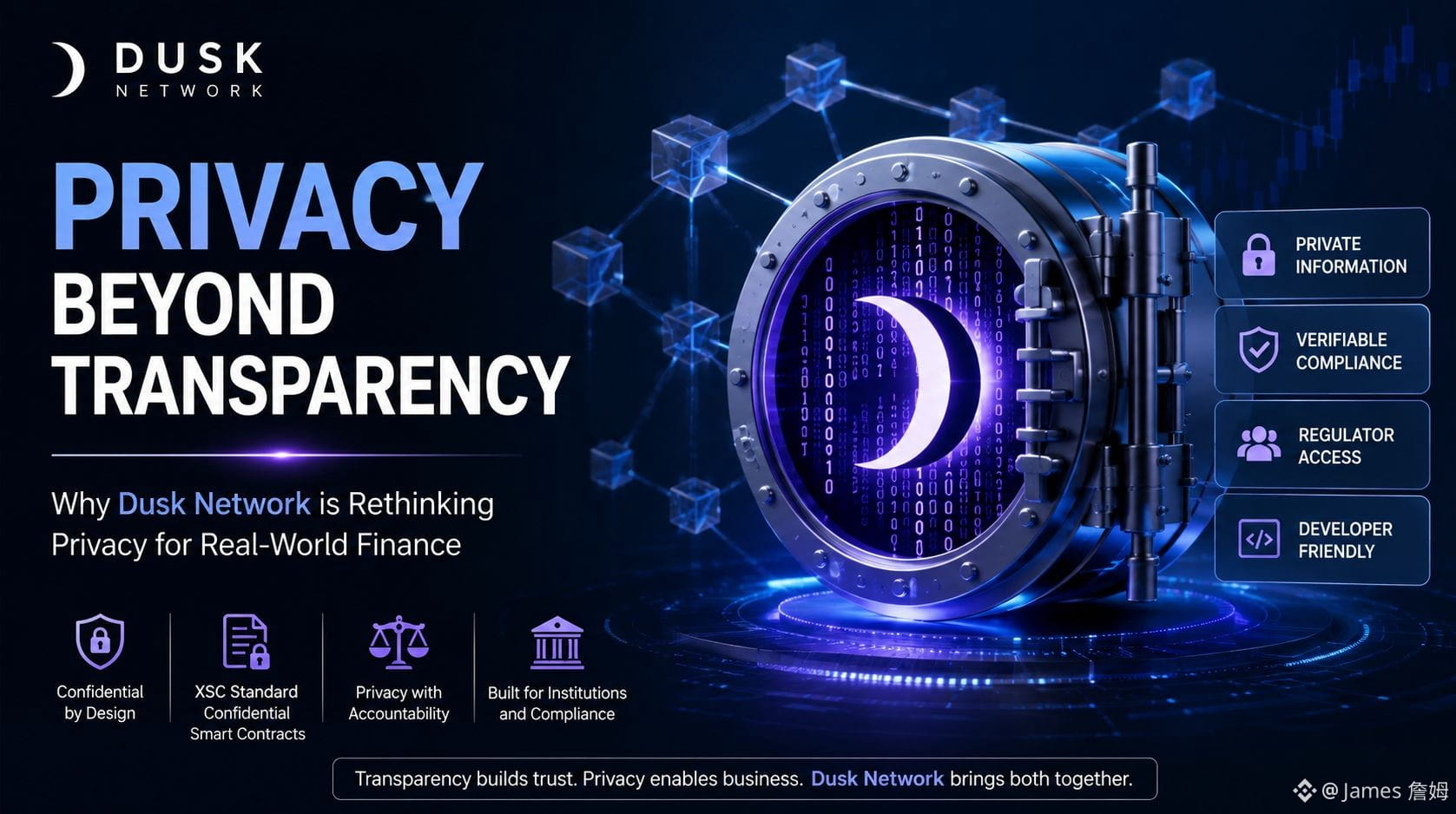
Hier lohnt es sich, sich Dusk Network anzusehen: nicht als Versprechen eines perfekten Finanzsystems, sondern als Versuch, diese Spannung auf andere Weise anzugehen. Dusk ist eine Layer-1-Blockchain, die sich auf Datenschutz für Finanzanwendungen konzentriert, mit dem Confidential Security Contract, also dem XSC-Standard, der vertrauliche Smart Contracts unterstützt.
Spannend ist das Gleichgewicht. Vertraulichkeit sollte nicht einfach bedeuten, alles zu verstecken. Finanzanwendungen brauchen weiterhin Regeln, Verifikation und Verantwortlichkeit. Die Herausforderung besteht darin, sensible Informationen privat zu halten, während das Netzwerk dennoch nachweisen kann, dass Transaktionen und Verträge sich korrekt verhalten.
Das klingt zunächst unkompliziert, bis man an echte Nutzer denkt. Entwickler brauchen praktische Werkzeuge, Institutionen benötigen planbare Infrastruktur, und Regulierer verlangen möglicherweise, dass bestimmte Informationen zugänglich bleiben. Datenschutz wirft daher gleichzeitig technische und gesellschaftliche Fragen auf.
Ich finde die Unsicherheit interessanter als den üblichen Blockchain-Hype. Der eigentliche Test für Dusk ist nicht, ob Datenschutz wertvoll klingt. Entscheidend ist, ob vertrauliche Berechnungen einfach genug, zuverlässig genug und nützlich genug werden können, um finanzielle Aktivitäten in der realen Welt zu unterstützen. Dieses Experiment läuft noch.
@Dusk #dusk $DUSK
Hier lohnt es sich, sich Dusk Network anzusehen: nicht als Versprechen eines perfekten Finanzsystems, sondern als Versuch, diese Spannung auf andere Weise anzugehen. Dusk ist eine Layer-1-Blockchain, die sich auf Datenschutz für Finanzanwendungen konzentriert, mit dem Confidential Security Contract, also dem XSC-Standard, der vertrauliche Smart Contracts unterstützt.
Spannend ist das Gleichgewicht. Vertraulichkeit sollte nicht einfach bedeuten, alles zu verstecken. Finanzanwendungen brauchen weiterhin Regeln, Verifikation und Verantwortlichkeit. Die Herausforderung besteht darin, sensible Informationen privat zu halten, während das Netzwerk dennoch nachweisen kann, dass Transaktionen und Verträge sich korrekt verhalten.
Das klingt zunächst unkompliziert, bis man an echte Nutzer denkt. Entwickler brauchen praktische Werkzeuge, Institutionen benötigen planbare Infrastruktur, und Regulierer verlangen möglicherweise, dass bestimmte Informationen zugänglich bleiben. Datenschutz wirft daher gleichzeitig technische und gesellschaftliche Fragen auf.
Ich finde die Unsicherheit interessanter als den üblichen Blockchain-Hype. Der eigentliche Test für Dusk ist nicht, ob Datenschutz wertvoll klingt. Entscheidend ist, ob vertrauliche Berechnungen einfach genug, zuverlässig genug und nützlich genug werden können, um finanzielle Aktivitäten in der realen Welt zu unterstützen. Dieses Experiment läuft noch.
@Dusk #dusk $DUSK
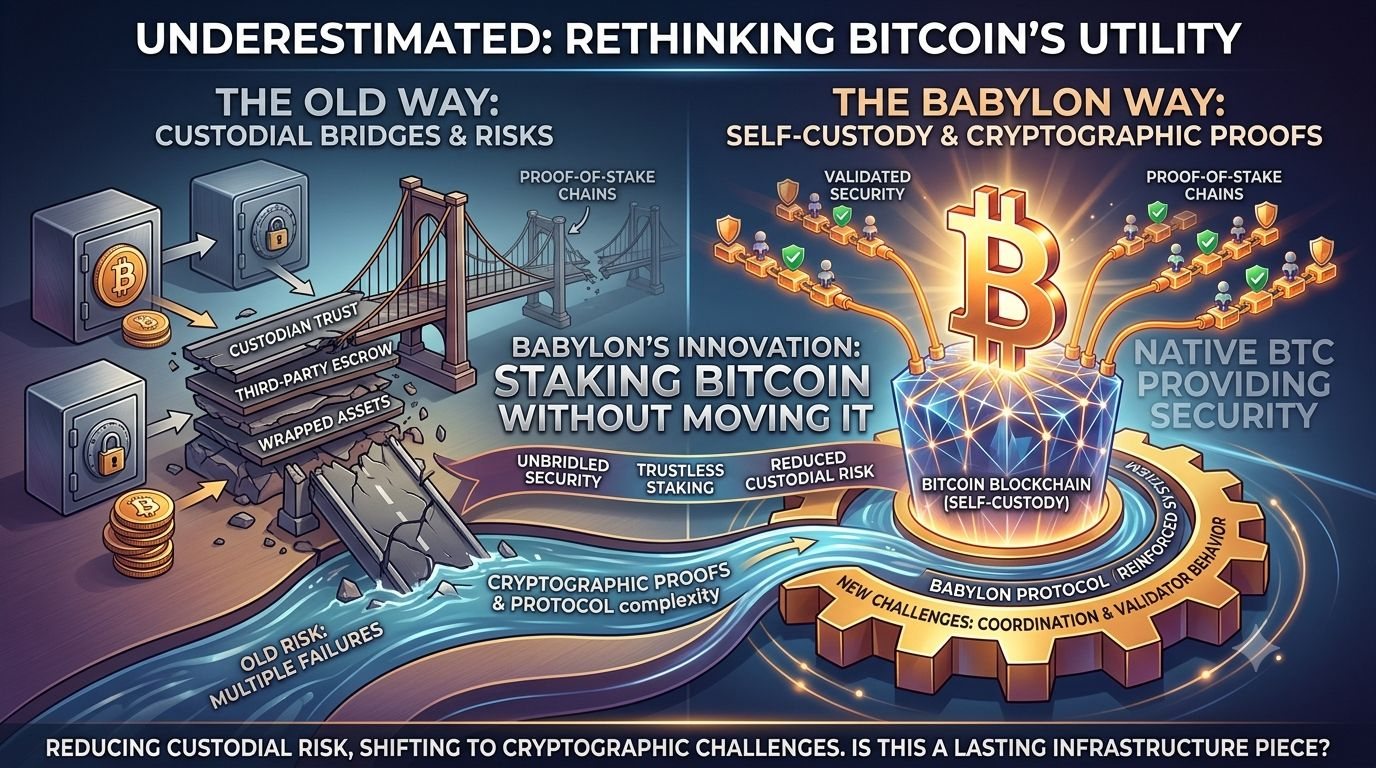
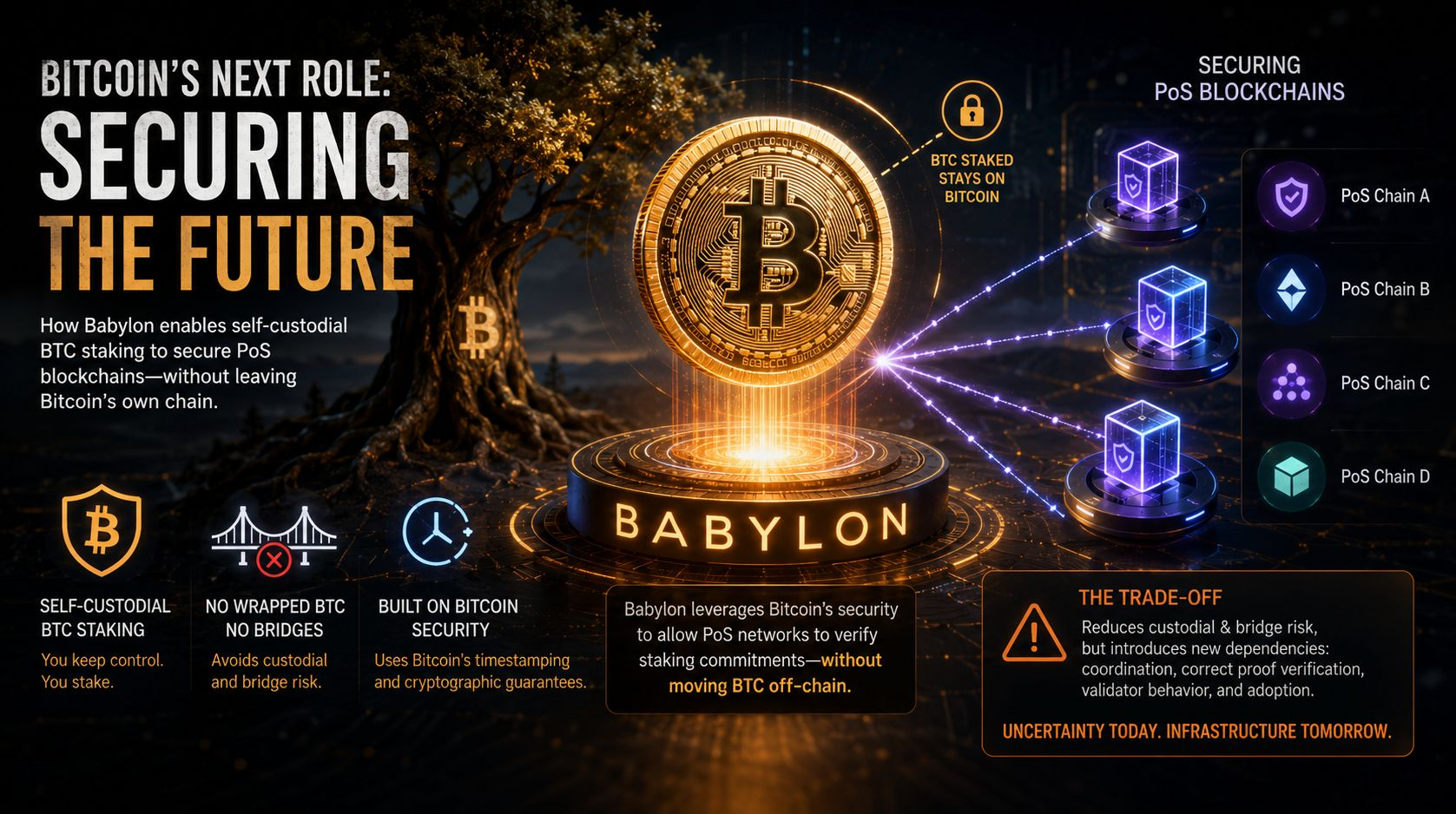
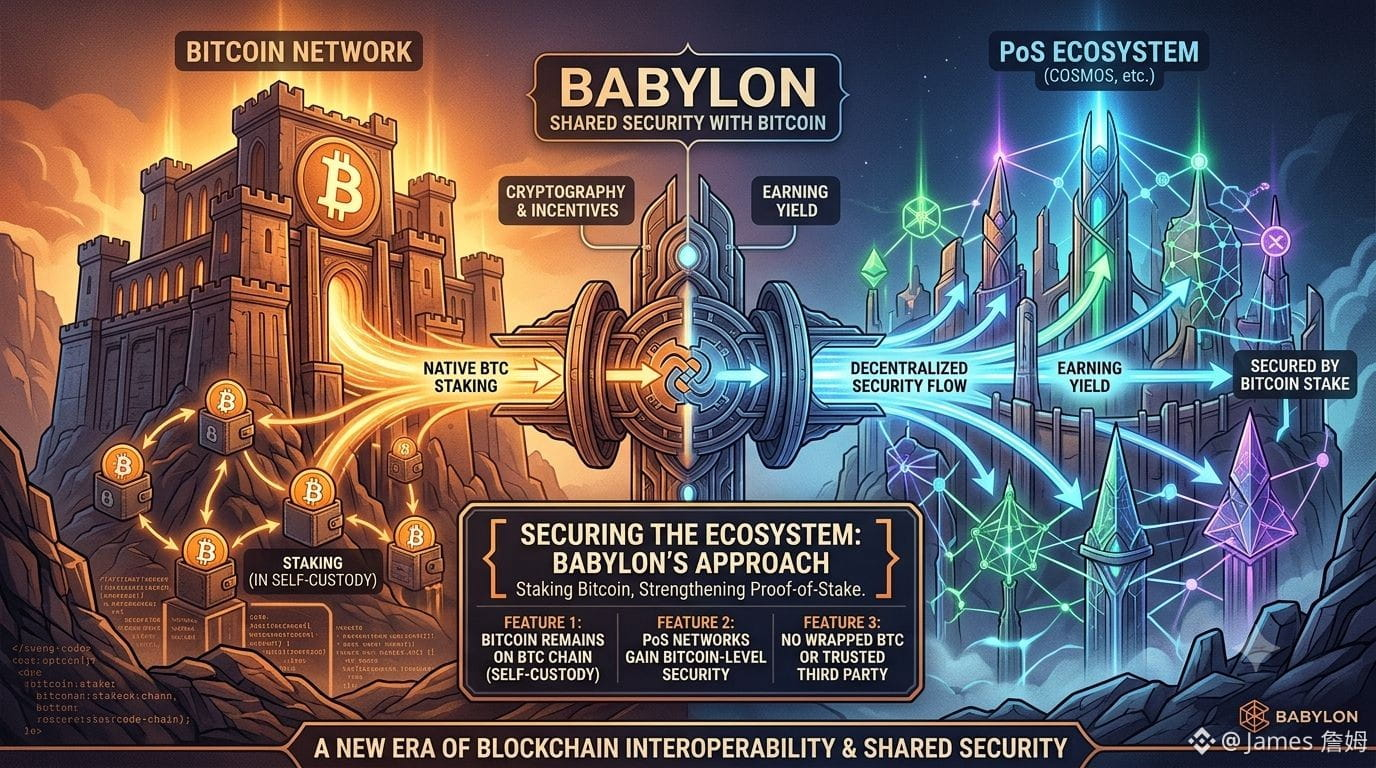
Ich frage mich seit Jahren, ob Bitcoin unterschätzt wurde – nicht wegen seines Werts, sondern weil wir uns zu eng vorgestellt haben, wofür es eingesetzt werden könnte. Babylon hat mich dazu anders nachdenken lassen. Anstatt Bitcoin aufzufordern, sein eigenes Netzwerk über Brücken oder verpackte Assets zu verlassen, untersucht es, ob BTC dabei helfen kann, Proof-of-Stake-Blockchains abzusichern, während es gleichzeitig weiterhin selbst verwahrt auf Bitcoin bleibt.
Diese Idee wirkt elegant, wirft aber auch schwierige Fragen auf. Wenn man Custodians entfernt, reduziert man zwar eine Vertrauensebene, doch das System ist immer noch von kryptografischen Beweisen, dem Verhalten der Validatoren und der Koordination über verschiedene Netzwerke hinweg abhängig. Es beseitigt das Risiko nicht; es verlagert, wo das Risiko verortet ist. Wie eine Brücke zu verstärken, ohne den Fluss darunter zu verändern: Babylon stärkt einen Teil der Reise, lässt aber andere Herausforderungen unangetastet. Ob dieser Ansatz zu einem dauerhaft tragfähigen Bestandteil der Blockchain-Infrastruktur wird, bleibt eine offene Frage – und genau diese Ungewissheit macht ihn interessant.
@BabylonLabs_io #baby $BABY
Diese Idee wirkt elegant, wirft aber auch schwierige Fragen auf. Wenn man Custodians entfernt, reduziert man zwar eine Vertrauensebene, doch das System ist immer noch von kryptografischen Beweisen, dem Verhalten der Validatoren und der Koordination über verschiedene Netzwerke hinweg abhängig. Es beseitigt das Risiko nicht; es verlagert, wo das Risiko verortet ist. Wie eine Brücke zu verstärken, ohne den Fluss darunter zu verändern: Babylon stärkt einen Teil der Reise, lässt aber andere Herausforderungen unangetastet. Ob dieser Ansatz zu einem dauerhaft tragfähigen Bestandteil der Blockchain-Infrastruktur wird, bleibt eine offene Frage – und genau diese Ungewissheit macht ihn interessant.
@BabylonLabs_io #baby $BABY
Verifiziert
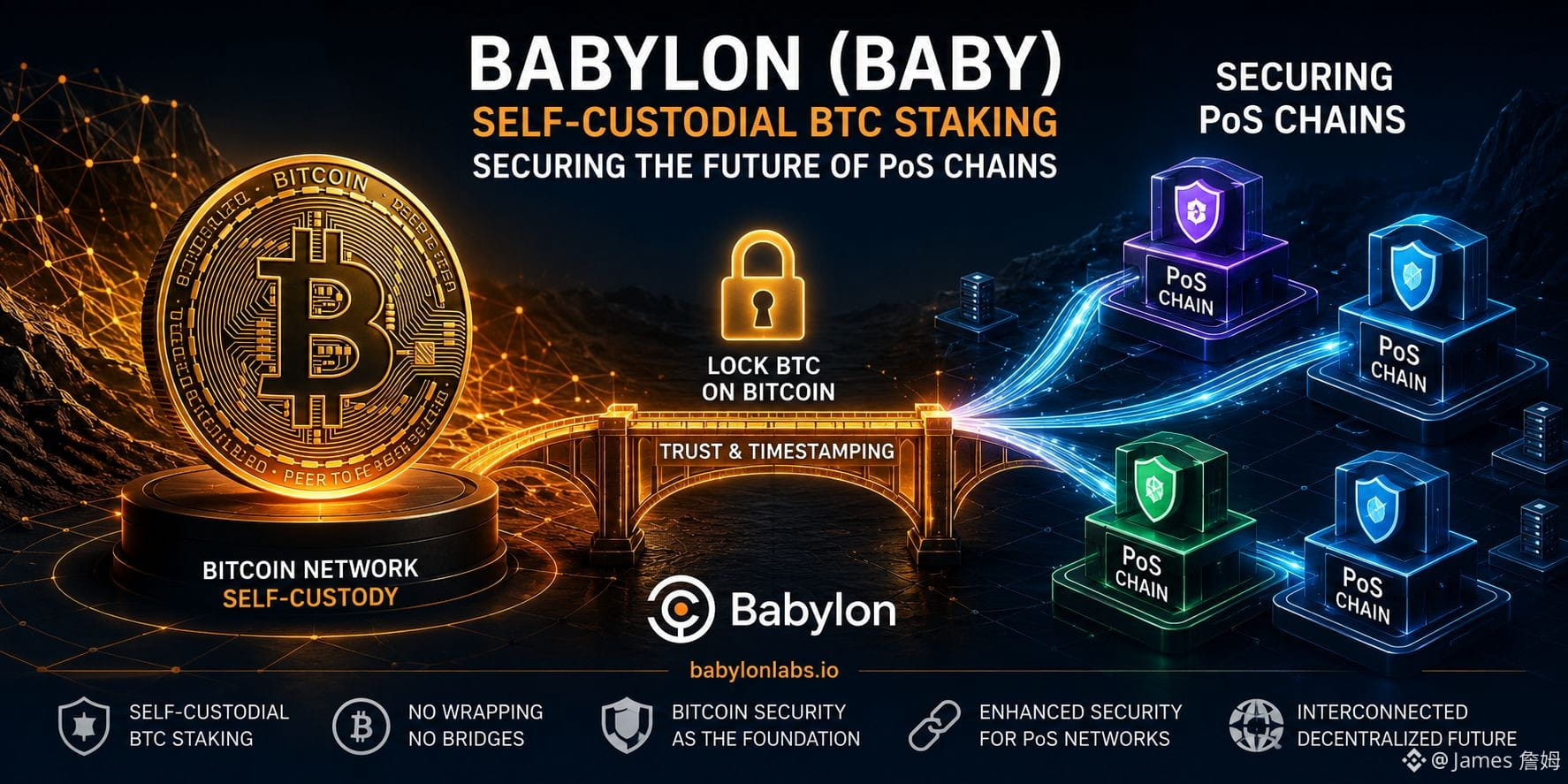
Ich komme immer wieder auf eine Frage zurück: Warum wird Bitcoin so viele Jahre lang als etwas behandelt, das größtenteils stillsteht? Diese Annahme scheint so tief verankert zu sein, dass jeder Versuch, sie zu verändern, sofort Skepsis auslöst. Babylon hat meine Aufmerksamkeit deshalb erregt, weil es nicht versucht, Bitcoin in ein anderes Netzwerk zu verwandeln. Stattdessen fragt es, ob Bitcoin still und leise dazu beitragen kann, Proof-of-Stake-Blockchains abzusichern, ohne jemals seine eigene Kette zu verlassen.
Das Spannende ist dabei der Mechanismus und nicht die Schlagzeile. Babylon ermöglicht es BTC-Inhabern zu staken, während sie selbstverantwortlich (self-custodial) bleiben, und vermeidet so eingepackte Assets sowie traditionelle Bridges. Anstatt Bitcoin an einen anderen Ort zu verschieben, setzt das Protokoll auf Bitcoins Zeitstempel und kryptografische Zusicherungen, damit PoS-Netzwerke Staking-Verpflichtungen verifizieren können. Das verlagert zwar das Vertrauen weg von Verwahrstellen, schafft aber eine andere Abhängigkeit: Jede teilnehmende Kette muss diese Beweise korrekt interpretieren und die Anreize mit dem Sicherheitsmodell des Protokolls in Einklang bringen.
Dieser Trade-off ist es, der Babylon so sehenswert macht. Es reduziert eine Kategorie von Risiko, führt aber eine andere ein – basierend auf Koordination, dem Verhalten der Validatoren und der Adoption. Die Idee funktioniert nur, wenn viele unabhängige Systeme weiterhin unter Druck so handeln, wie erwartet. Ob das zu einem dauerhaften Bestandteil der Blockchain-Infrastruktur wird oder „nur“ ein interessantes Experiment bleibt, ist nach wie vor ungewiss – und genau diese Ungewissheit hält mich aufmerksam.
@BabylonLabs_io #baby $BABY
Das Spannende ist dabei der Mechanismus und nicht die Schlagzeile. Babylon ermöglicht es BTC-Inhabern zu staken, während sie selbstverantwortlich (self-custodial) bleiben, und vermeidet so eingepackte Assets sowie traditionelle Bridges. Anstatt Bitcoin an einen anderen Ort zu verschieben, setzt das Protokoll auf Bitcoins Zeitstempel und kryptografische Zusicherungen, damit PoS-Netzwerke Staking-Verpflichtungen verifizieren können. Das verlagert zwar das Vertrauen weg von Verwahrstellen, schafft aber eine andere Abhängigkeit: Jede teilnehmende Kette muss diese Beweise korrekt interpretieren und die Anreize mit dem Sicherheitsmodell des Protokolls in Einklang bringen.
Dieser Trade-off ist es, der Babylon so sehenswert macht. Es reduziert eine Kategorie von Risiko, führt aber eine andere ein – basierend auf Koordination, dem Verhalten der Validatoren und der Adoption. Die Idee funktioniert nur, wenn viele unabhängige Systeme weiterhin unter Druck so handeln, wie erwartet. Ob das zu einem dauerhaften Bestandteil der Blockchain-Infrastruktur wird oder „nur“ ein interessantes Experiment bleibt, ist nach wie vor ungewiss – und genau diese Ungewissheit hält mich aufmerksam.
@BabylonLabs_io #baby $BABY
@BabylonLabs_io #baby $BABY
Je mehr Zeit ich in diesem Bereich verbringe, desto mehr erkenne ich, dass die coolsten Innovationen nicht die glänzend neuen L1s sind. Sie kommen meistens von jemandem, der auf ein altes Werkzeug schaut und fragt: „Moment mal, können wir das anders nutzen?
Das war im Grunde auch das, was mich zu Babylon gezogen hat.
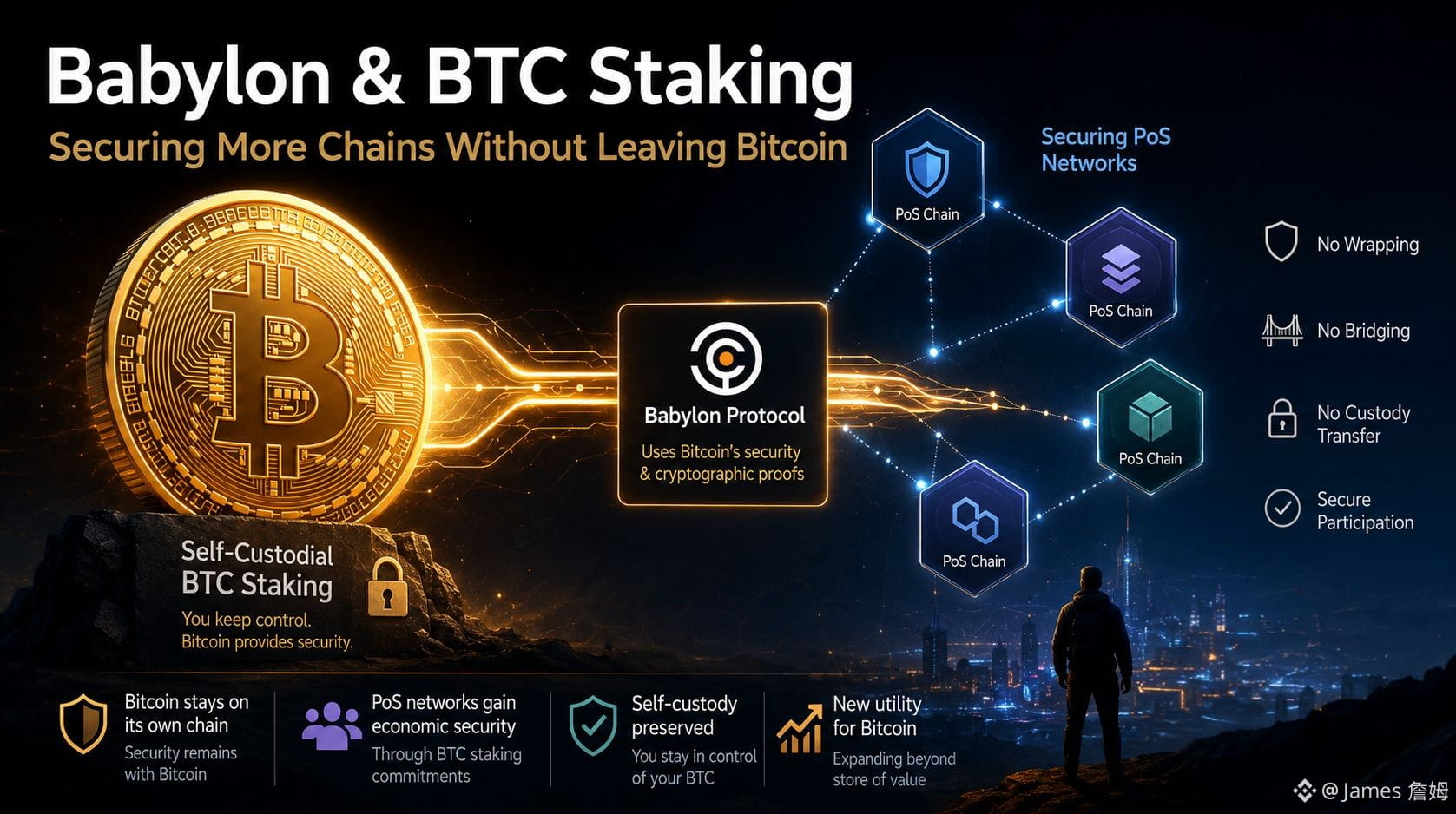
Anstatt zuzulassen, dass Bitcoin einfach in Cold Storage herumliegt und nichts tut, versucht Babylon, ihn zu verwenden, um Proof-of-Stake-Netzwerke abzusichern. Aber hier kommt der clevere Teil: Du verpackst deinen BTC nicht, und du schickst ihn nicht über irgendeine riskante Bridge. Du sperrst ihn direkt im Bitcoin-Netzwerk, während du weiterhin die Selbstverwahrung beibehältst. Bitcoin selbst führt den Konsens für diese anderen Chains nicht aus – es wirkt nur als Anker für Vertrauen und Times Tamping.
Nun, offensichtlich ist das keine Wunderwaffe.
Die ganze Idee hängt davon ab, ob andere Chains es tatsächlich integrieren wollen. Außerdem gehst du ein Risiko ein, das sich über die Basisschicht von Bitcoin hinaus erstreckt – hinein in Validator-Setups und die Koordination zwischen Chains. Auf dem Papier sieht die Architektur brillant aus. In der Realität? Wir werden erst sehen, ob sie wirklich standhält, wenn sie unter echtem Marktchaos stressgetestet wurde.
Trotzdem ist es mit Sicherheit eines der spannendsten Experimente, die gerade stattfinden. Es versucht nicht, Bitcoin zu etwas zu machen, das es nicht ist. Es fragt nur, ob die älteste Chain im Raum still und leise zum Rückhalt für alles andere werden kann.
#baby $BABY
Je mehr Zeit ich in diesem Bereich verbringe, desto mehr erkenne ich, dass die coolsten Innovationen nicht die glänzend neuen L1s sind. Sie kommen meistens von jemandem, der auf ein altes Werkzeug schaut und fragt: „Moment mal, können wir das anders nutzen?
Das war im Grunde auch das, was mich zu Babylon gezogen hat.
Anstatt zuzulassen, dass Bitcoin einfach in Cold Storage herumliegt und nichts tut, versucht Babylon, ihn zu verwenden, um Proof-of-Stake-Netzwerke abzusichern. Aber hier kommt der clevere Teil: Du verpackst deinen BTC nicht, und du schickst ihn nicht über irgendeine riskante Bridge. Du sperrst ihn direkt im Bitcoin-Netzwerk, während du weiterhin die Selbstverwahrung beibehältst. Bitcoin selbst führt den Konsens für diese anderen Chains nicht aus – es wirkt nur als Anker für Vertrauen und Times Tamping.
Nun, offensichtlich ist das keine Wunderwaffe.
Die ganze Idee hängt davon ab, ob andere Chains es tatsächlich integrieren wollen. Außerdem gehst du ein Risiko ein, das sich über die Basisschicht von Bitcoin hinaus erstreckt – hinein in Validator-Setups und die Koordination zwischen Chains. Auf dem Papier sieht die Architektur brillant aus. In der Realität? Wir werden erst sehen, ob sie wirklich standhält, wenn sie unter echtem Marktchaos stressgetestet wurde.
Trotzdem ist es mit Sicherheit eines der spannendsten Experimente, die gerade stattfinden. Es versucht nicht, Bitcoin zu etwas zu machen, das es nicht ist. Es fragt nur, ob die älteste Chain im Raum still und leise zum Rückhalt für alles andere werden kann.
#baby $BABY
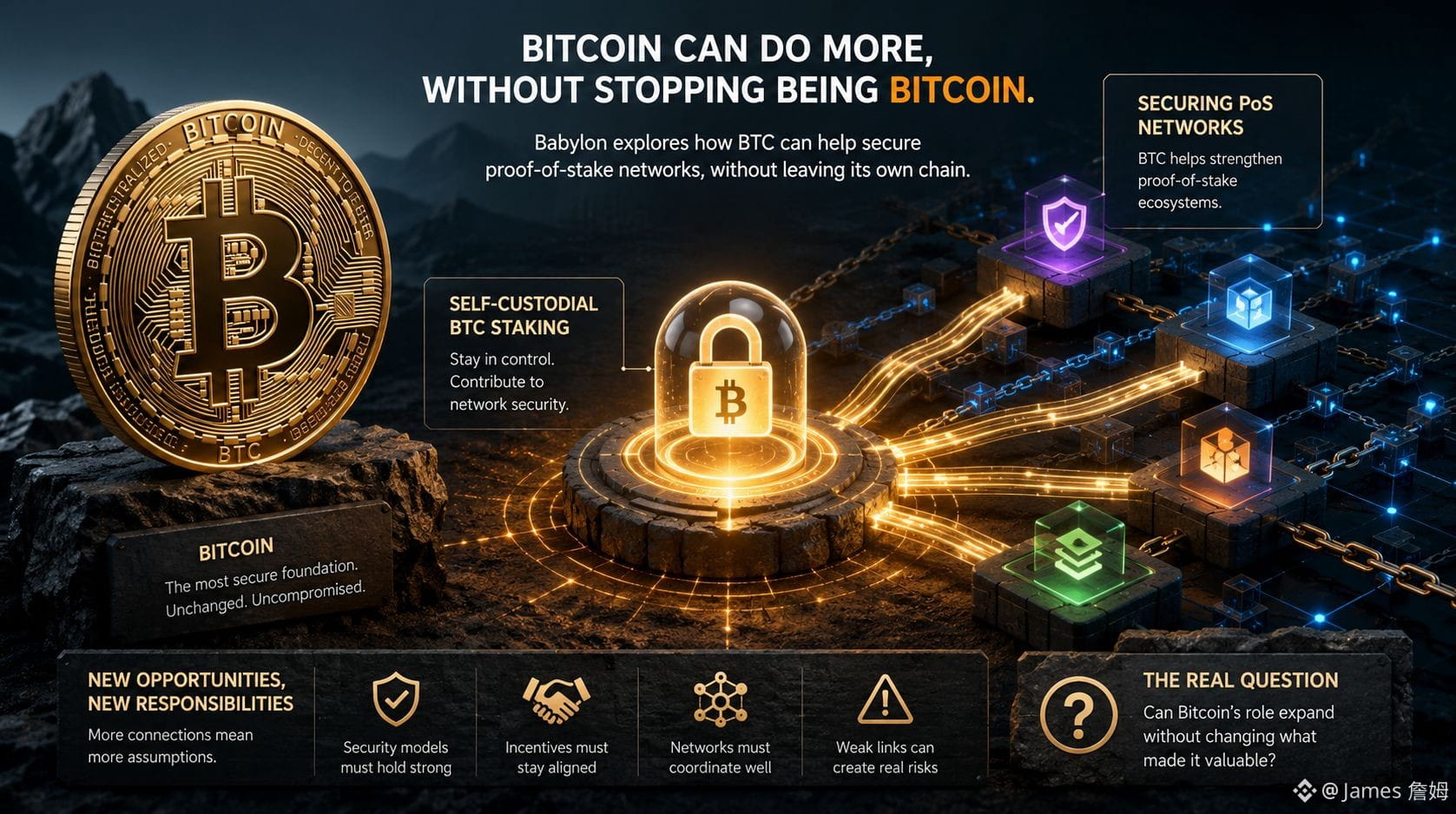
Ich merke immer wieder, dass einige der interessantesten Ideen im Blockchain-Bereich nicht darum gehen, Bitcoin zu ersetzen, sondern neue Wege zu finden, wie es in ein breiteres Ökosystem eingebunden werden kann. Babylon hat mich innehalten lassen, weil es eine einfache Frage stellt: Kann Bitcoin andere Netzwerke absichern, ohne jemals seine eigene Kette zu verlassen?
Das Protokoll führt ein selbstverwaltetes BTC-Staking ein: Bitcoin-Inhaber können Coins sperren und dabei die Kontrolle über ihre Vermögenswerte behalten, statt sie anderswo einzuwickeln oder zu bridgen. Anstatt BTC auf eine PoS-Kette zu verlagern, nutzt Babylon die eigene Sicherheit und kryptografischen Nachweise von Bitcoin, damit teilnehmende PoS-Netzwerke Staking-Zusagen erkennen. Diese architektonische Entscheidung reduziert die Abhängigkeit von plattformübergreifendem Verwahrungsdienst (Cross-Chain Custody), verlagert aber auch den Fokus darauf, wie zuverlässig diese Nachweise interpretiert und durchgesetzt werden.
Am meisten interessiert mich der Trade-off. Babylon vermeidet ein vertrautes Risiko, führt jedoch eine weitere Ebene der Koordination zwischen unabhängigen Netzwerken ein. Das Modell hängt davon ab, dass PoS-Ketten das System übernehmen, Validatoren sich ehrlich verhalten und das Protokoll unter realem wirtschaftlichem Druck weiterhin wie vorgesehen funktioniert.
Es fühlt sich weniger an, als würde man Bitcoin in ein anderes Asset verwandeln, und eher so, als würde man ihm eine weitere Rolle geben. Ob diese Rolle zu einem dauerhaften Bestandteil der Blockchain-Infrastruktur wird, hängt wahrscheinlich weniger von der Idee selbst ab, sondern davon, wie sie sich bewährt, wenn Theorie auf Realität trifft.
@BabylonLabs_io #baby $BABY
Das Protokoll führt ein selbstverwaltetes BTC-Staking ein: Bitcoin-Inhaber können Coins sperren und dabei die Kontrolle über ihre Vermögenswerte behalten, statt sie anderswo einzuwickeln oder zu bridgen. Anstatt BTC auf eine PoS-Kette zu verlagern, nutzt Babylon die eigene Sicherheit und kryptografischen Nachweise von Bitcoin, damit teilnehmende PoS-Netzwerke Staking-Zusagen erkennen. Diese architektonische Entscheidung reduziert die Abhängigkeit von plattformübergreifendem Verwahrungsdienst (Cross-Chain Custody), verlagert aber auch den Fokus darauf, wie zuverlässig diese Nachweise interpretiert und durchgesetzt werden.
Am meisten interessiert mich der Trade-off. Babylon vermeidet ein vertrautes Risiko, führt jedoch eine weitere Ebene der Koordination zwischen unabhängigen Netzwerken ein. Das Modell hängt davon ab, dass PoS-Ketten das System übernehmen, Validatoren sich ehrlich verhalten und das Protokoll unter realem wirtschaftlichem Druck weiterhin wie vorgesehen funktioniert.
Es fühlt sich weniger an, als würde man Bitcoin in ein anderes Asset verwandeln, und eher so, als würde man ihm eine weitere Rolle geben. Ob diese Rolle zu einem dauerhaften Bestandteil der Blockchain-Infrastruktur wird, hängt wahrscheinlich weniger von der Idee selbst ab, sondern davon, wie sie sich bewährt, wenn Theorie auf Realität trifft.
@BabylonLabs_io #baby $BABY
Je mehr Zeit ich damit verbringe, zu beobachten, wie sich die Blockchain weiterentwickelt, desto stärker fällt mir auf, dass Fortschritt oft daher kommt, dass man ändert, wie bestehende Netzwerke miteinander interagieren – statt sie einfach zu ersetzen. Babylon hat mich dazu gebracht, Bitcoin aus einem anderen Blickwinkel zu betrachten. Anstatt es als ein Asset zu behandeln, das einfach in einer Wallet liegt, untersucht das Protokoll, ob es still und leise dazu beitragen kann, andere Blockchain-Netzwerke abzusichern, ohne die eigene Kette von Bitcoin zu verlassen.
Die Idee von Self-Custodial-BTC-Staking ist interessant, weil sie versucht, ein bekanntes Dilemma zu vermeiden. Bitcoin-Inhaber müssen nicht zwangsläufig die Verwahrung abgeben oder Assets anderswo hinüberbrücken, um mitzuwirken. Theoretisch kann ihr BTC dazu beitragen, Proof-of-Stake-Blockchains zu stärken, während es weiterhin unter ihrer eigenen Kontrolle bleibt. Das klingt unkompliziert, aber die Infrastruktur bleibt selten simpel, sobald verschiedene Systeme miteinander verbunden werden.
Jede neue Ebene schafft neue Annahmen. Sicherheitsmodelle, Anreize und die Abstimmung zwischen Netzwerken werden alle Teil des Gesprächs. Wenn ein Baustein Probleme macht, können sich die Auswirkungen weiter ausdehnen, als erwartet. Deshalb sollten Protokolle wie Babylon nicht nur danach beurteilt werden, welche Möglichkeiten sie eröffnen, sondern auch danach, wie sie sich verhalten, wenn die Bedingungen schwierig werden.
Vielleicht ist die größere Frage nicht, ob Bitcoin mehr tun sollte. Sondern ob die Ausweitung seiner Rolle geschehen kann, ohne dabei langsam die Eigenschaften zu verändern, die es von Anfang an wertvoll gemacht haben.
@BabylonLabs_io #baby $BABY
Die Idee von Self-Custodial-BTC-Staking ist interessant, weil sie versucht, ein bekanntes Dilemma zu vermeiden. Bitcoin-Inhaber müssen nicht zwangsläufig die Verwahrung abgeben oder Assets anderswo hinüberbrücken, um mitzuwirken. Theoretisch kann ihr BTC dazu beitragen, Proof-of-Stake-Blockchains zu stärken, während es weiterhin unter ihrer eigenen Kontrolle bleibt. Das klingt unkompliziert, aber die Infrastruktur bleibt selten simpel, sobald verschiedene Systeme miteinander verbunden werden.
Jede neue Ebene schafft neue Annahmen. Sicherheitsmodelle, Anreize und die Abstimmung zwischen Netzwerken werden alle Teil des Gesprächs. Wenn ein Baustein Probleme macht, können sich die Auswirkungen weiter ausdehnen, als erwartet. Deshalb sollten Protokolle wie Babylon nicht nur danach beurteilt werden, welche Möglichkeiten sie eröffnen, sondern auch danach, wie sie sich verhalten, wenn die Bedingungen schwierig werden.
Vielleicht ist die größere Frage nicht, ob Bitcoin mehr tun sollte. Sondern ob die Ausweitung seiner Rolle geschehen kann, ohne dabei langsam die Eigenschaften zu verändern, die es von Anfang an wertvoll gemacht haben.
@BabylonLabs_io #baby $BABY
Ich habe angefangen, mehr Aufmerksamkeit auf die Teile von Krypto zu richten, die selten Schlagzeilen machen. Kursbewegungen kommen und gehen, aber die darunterliegende Infrastruktur prägt oft noch Jahre später, wie das Ökosystem aussieht. Babylon hat meine Aufmerksamkeit genau aus diesem Grund geweckt, weil es eine einfache Frage stellt: Kann Bitcoin dazu beitragen, andere Blockchain-Netzwerke zu sichern, ohne die Bitcoin-Kette zu verlassen oder auf Selbstverwahrung zu verzichten?
Die Idee klingt unkompliziert, berührt aber eine alte Spannung. Bitcoin-Inhaber stehen traditionell vor der Wahl, ihre Coins entweder sicher aufzubewahren oder sie anderswohin zu verlagern, um zusätzliches Yield zu erzielen. Babylon geht einen anderen Weg: Es ermöglicht BTC-Staking, während die Vermögenswerte weiterhin unter der Kontrolle des Eigentümers im Bitcoin-Netzwerk verbleiben, wobei das Staking dabei hilft, Proof-of-Stake-Blockchains zu stärken, statt auf verpackte Versionen von Bitcoin zu setzen.
Dieser Ansatz wirkt zwar praktikabel, wirft aber auch Fragen auf. Sicherheit ist selten nur Kryptografie; sie hängt von Anreizen, der Implementierung und davon ab, wie sich verschiedene Systeme im Laufe der Zeit miteinander verhalten. Jede neue Verbindung zwischen Netzwerken fügt eine weitere Ebene hinzu, die zuverlässig funktionieren muss, wenn die Bedingungen schwierig werden.
Vielleicht ist der interessanteste Teil von Babylon nicht das Staking-Modell selbst, sondern das, was es darüber aussagt, wohin sich die Blockchain-Infrastruktur entwickelt. Anstatt eine einzelne Kette dazu zu drängen, eine andere zu ersetzen, legt es nahe, dass verschiedene Netzwerke stärker werden könnten, wenn sie sorgfältig teilen, was jeweils bereits besonders gut funktioniert.
@BabylonLabs_io #baby $BABY
Die Idee klingt unkompliziert, berührt aber eine alte Spannung. Bitcoin-Inhaber stehen traditionell vor der Wahl, ihre Coins entweder sicher aufzubewahren oder sie anderswohin zu verlagern, um zusätzliches Yield zu erzielen. Babylon geht einen anderen Weg: Es ermöglicht BTC-Staking, während die Vermögenswerte weiterhin unter der Kontrolle des Eigentümers im Bitcoin-Netzwerk verbleiben, wobei das Staking dabei hilft, Proof-of-Stake-Blockchains zu stärken, statt auf verpackte Versionen von Bitcoin zu setzen.
Dieser Ansatz wirkt zwar praktikabel, wirft aber auch Fragen auf. Sicherheit ist selten nur Kryptografie; sie hängt von Anreizen, der Implementierung und davon ab, wie sich verschiedene Systeme im Laufe der Zeit miteinander verhalten. Jede neue Verbindung zwischen Netzwerken fügt eine weitere Ebene hinzu, die zuverlässig funktionieren muss, wenn die Bedingungen schwierig werden.
Vielleicht ist der interessanteste Teil von Babylon nicht das Staking-Modell selbst, sondern das, was es darüber aussagt, wohin sich die Blockchain-Infrastruktur entwickelt. Anstatt eine einzelne Kette dazu zu drängen, eine andere zu ersetzen, legt es nahe, dass verschiedene Netzwerke stärker werden könnten, wenn sie sorgfältig teilen, was jeweils bereits besonders gut funktioniert.
@BabylonLabs_io #baby $BABY
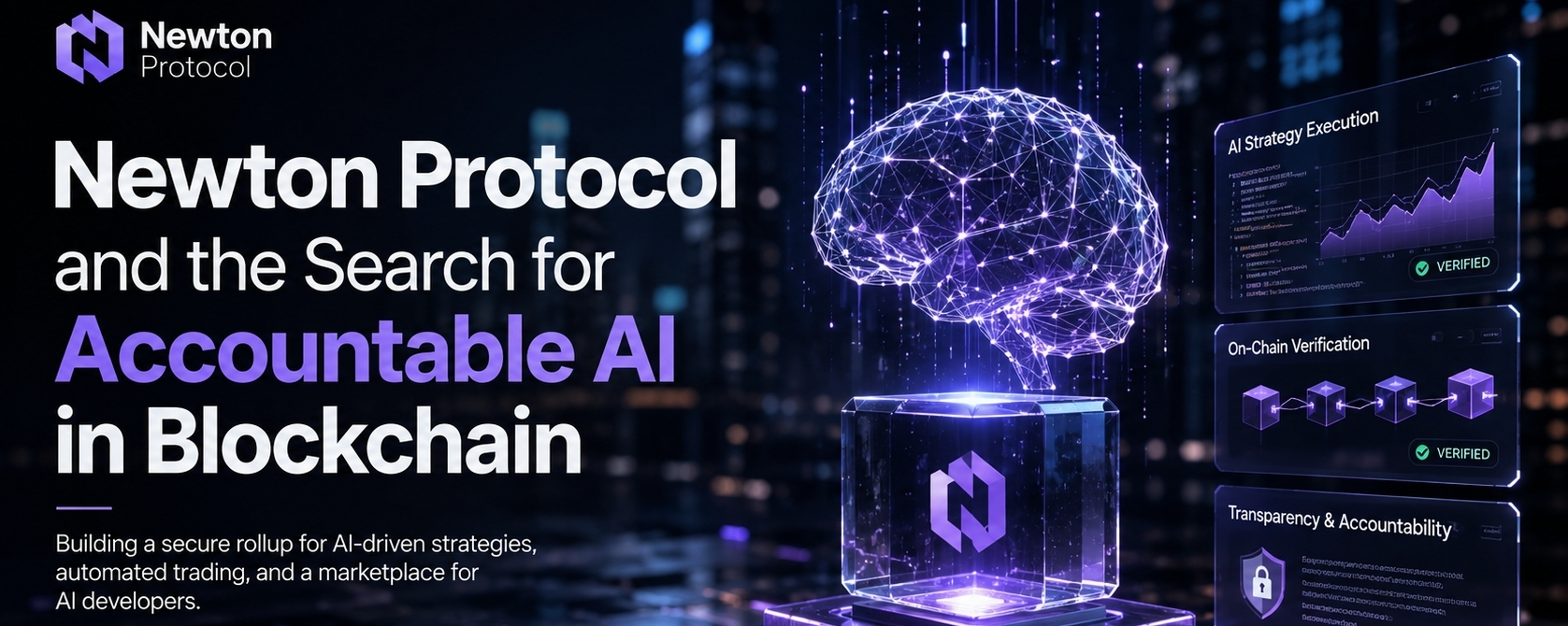
Ich merke immer wieder, dass das schwierigste Problem in der Blockchain nicht mehr darin besteht, Vermögenswerte von einem Ort zum anderen zu bewegen. Es geht darum zu entscheiden, ob wir Software darauf vertrauen können, Entscheidungen in unserem Namen zu treffen. Wenn KI zunehmend in den Handel und in Onchain-Aktivitäten eingebunden wird, wirkt diese Frage viel greifbarer, als sie es vor ein paar Jahren noch war.
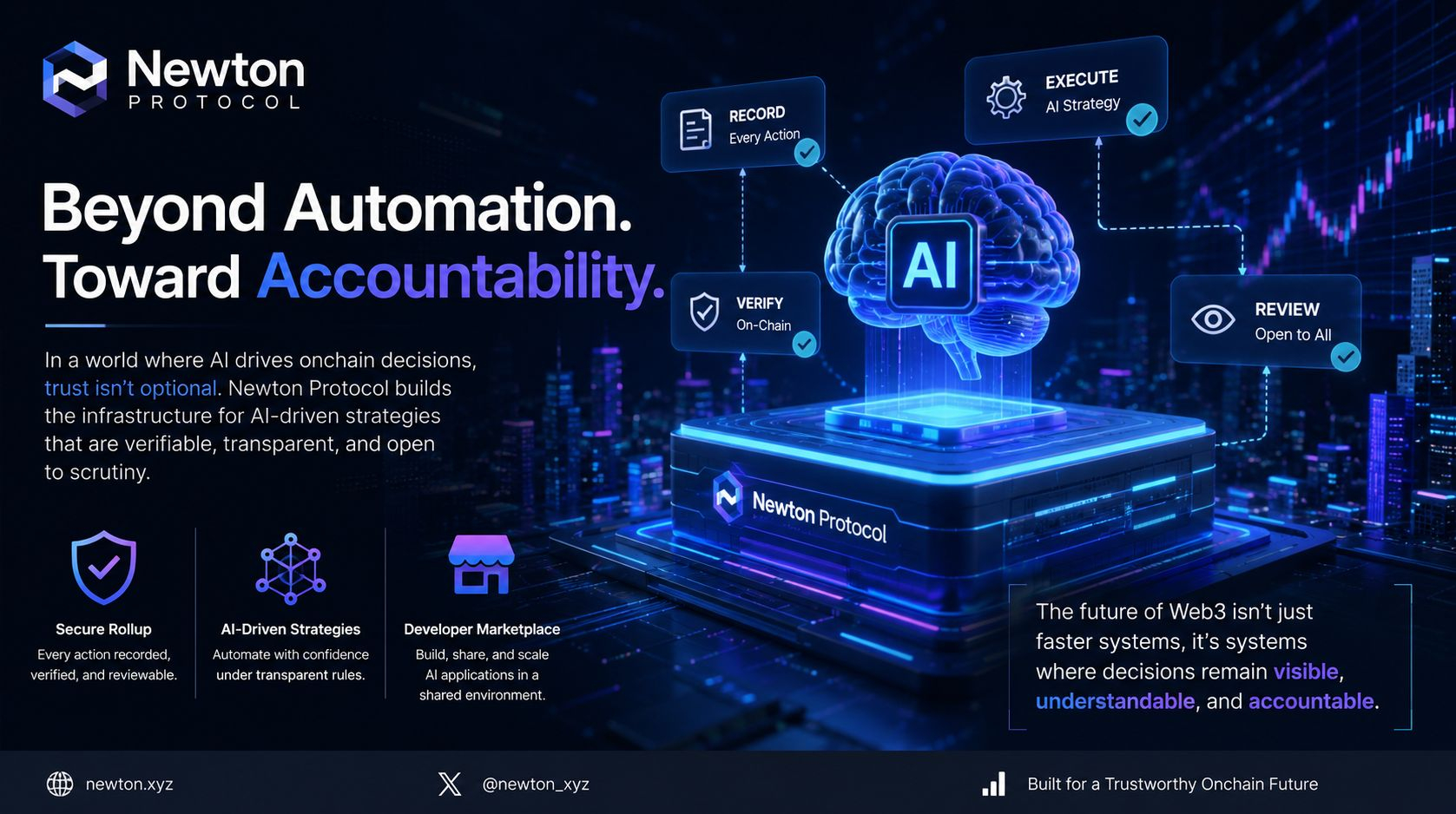
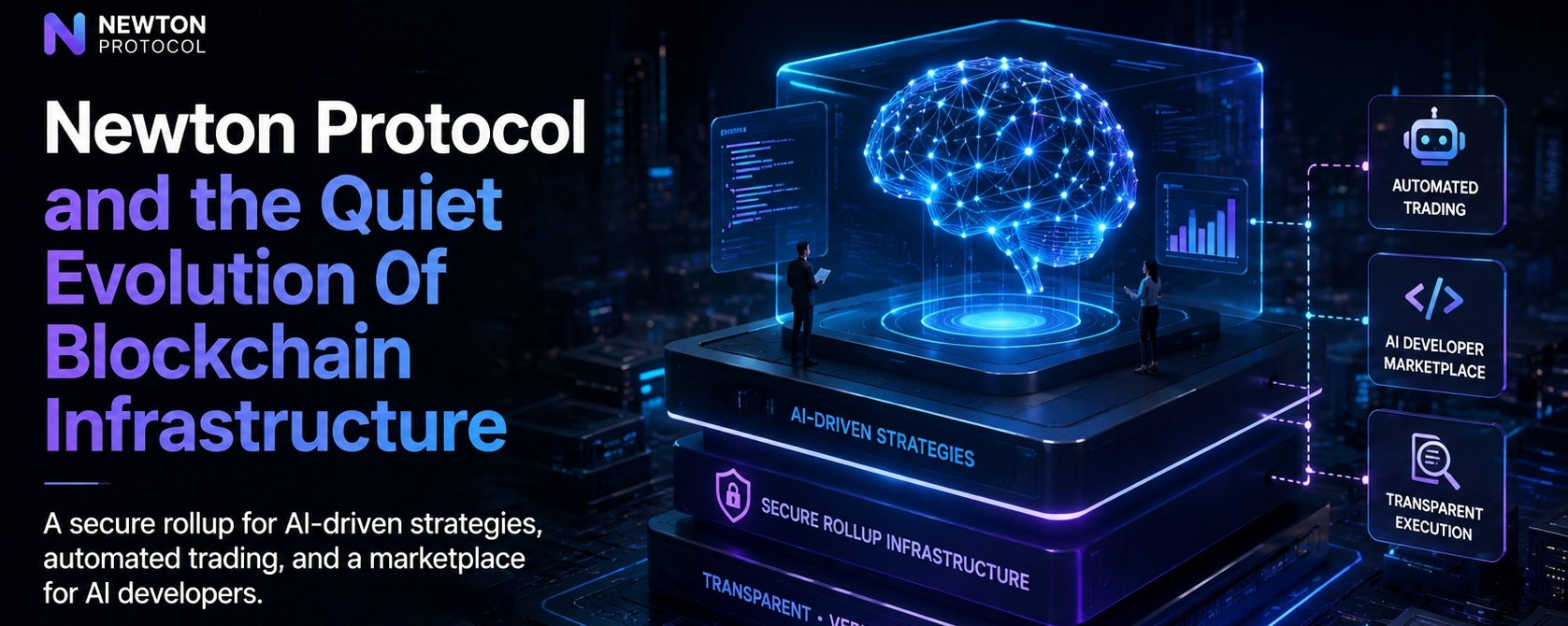
Newton Protocol hat meine Aufmerksamkeit geweckt, weil es dieses Problem aus einem Infrastruktur-Blickwinkel angeht, statt smartere Algorithmen zu versprechen. Die Idee eines sicheren Rollups für KI-gesteuerte Strategien deutet darauf hin, dass automatisierte Aktionen aufgezeichnet, verifiziert und überprüft werden können – statt hinter einer Blackbox zu verschwinden. In Kombination mit einem Marktplatz für KI-Entwickler entsteht außerdem eine gemeinsame Umgebung, in der verschiedene Strategien unter denselben Regeln existieren können, statt in isolierten Systemen zu verharren.
Das bedeutet jedoch nicht automatisch, dass die Ergebnisse besser werden. Eine KI-Strategie kann transparent sein und trotzdem Geld verlieren – genauso wie ein menschlicher Trader jede Entscheidung erklären kann und trotzdem falsch liegt. Verantwortlichkeit ist etwas anderes als Genauigkeit, und es ist leicht, das zu verwechseln.
Ich glaube, das ist die spannendere Gesprächsrunde, die Newton Protocol eröffnet. Wenn Automatisierung zu einem normalen Bestandteil von Web3 wird, dann liegt die eigentliche Herausforderung vielleicht nicht darin, schnellere Systeme zu bauen, sondern solche zu schaffen, bei denen Entscheidungen sichtbar, verständlich und überprüfbar bleiben. Ob sich dadurch das Vertrauen ändert, ist weiterhin eine offene Frage – aber eine, der es sich lohnt, nachzugehen.
@NewtonProtocol #Newt $NEWT
Newton Protocol hat meine Aufmerksamkeit geweckt, weil es dieses Problem aus einem Infrastruktur-Blickwinkel angeht, statt smartere Algorithmen zu versprechen. Die Idee eines sicheren Rollups für KI-gesteuerte Strategien deutet darauf hin, dass automatisierte Aktionen aufgezeichnet, verifiziert und überprüft werden können – statt hinter einer Blackbox zu verschwinden. In Kombination mit einem Marktplatz für KI-Entwickler entsteht außerdem eine gemeinsame Umgebung, in der verschiedene Strategien unter denselben Regeln existieren können, statt in isolierten Systemen zu verharren.
Das bedeutet jedoch nicht automatisch, dass die Ergebnisse besser werden. Eine KI-Strategie kann transparent sein und trotzdem Geld verlieren – genauso wie ein menschlicher Trader jede Entscheidung erklären kann und trotzdem falsch liegt. Verantwortlichkeit ist etwas anderes als Genauigkeit, und es ist leicht, das zu verwechseln.
Ich glaube, das ist die spannendere Gesprächsrunde, die Newton Protocol eröffnet. Wenn Automatisierung zu einem normalen Bestandteil von Web3 wird, dann liegt die eigentliche Herausforderung vielleicht nicht darin, schnellere Systeme zu bauen, sondern solche zu schaffen, bei denen Entscheidungen sichtbar, verständlich und überprüfbar bleiben. Ob sich dadurch das Vertrauen ändert, ist weiterhin eine offene Frage – aber eine, der es sich lohnt, nachzugehen.
@NewtonProtocol #Newt $NEWT
Anmelden und weiter Inhalte entdecken