
AikidoXPN
161 Beiträge

AikidoXPN
Melden
Nutzer blockieren
Crypto-enthusiastic | Blockchain-powered | Finance-futurist | Community-builder

Content Master Angel
Trade eröffnen
Regelmäßiger Trader
6.6 Jahre
188 Following
191 Follower
135 Like gegeben
1 Abzeichen
Beiträge
Portfolio
Alle
Zitierungen
Videos
Live
PINNED
·
--
Artikel
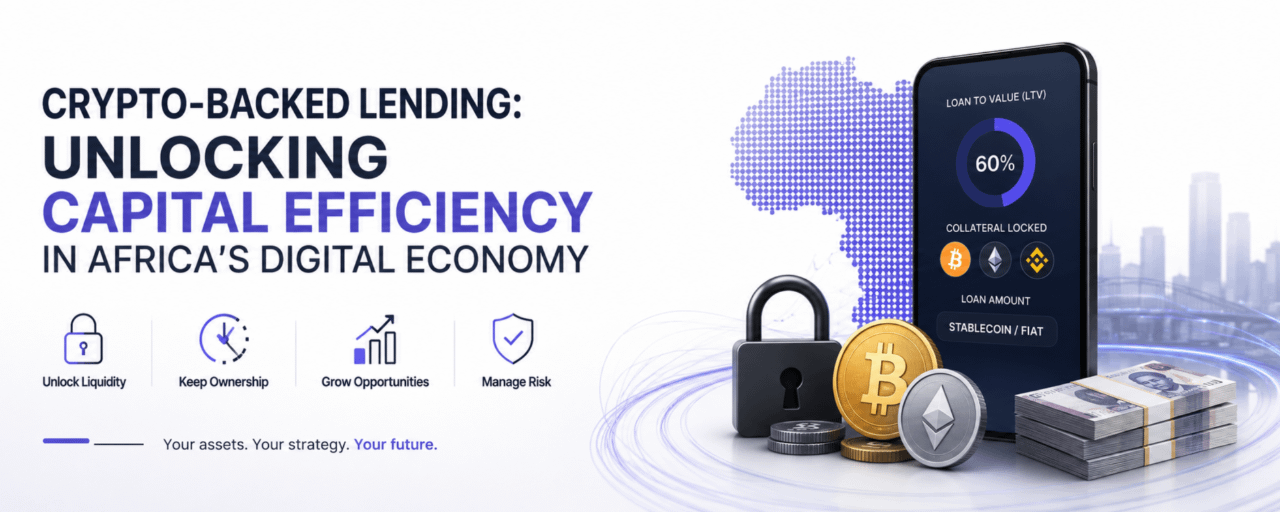
Liquidität ohne Verkauf: Der Weg für kryptobasiertes LendingJahrelang war die Krypto-Geschichte Afrikas größtenteils von Spekulation geprägt. Viele Nutzer griffen zu digitalen Vermögenswerten als Absicherung gegen Inflation, Währungsabwertung und den eingeschränkten Zugang zu globalen Finanzmärkten.
Heute verändert sich diese Erzählung.
Mit zunehmender Reife der Blockchain-Nutzung entwickelt sich Krypto weiter – von reiner Spekulation hin zu einer praktischen Finanzinfrastruktur. Ein besonders klares Beispiel ist kryptobasiertes Lending, das es Nutzern ermöglicht, Liquidität freizusetzen, ohne ihre digitalen Assets zu verkaufen.
Eine lang bestehende Liquiditätsherausforderung lösen
Liquidität ohne Verkauf: Der Weg für kryptobasiertes Lending
Jahrelang war die Krypto-Geschichte Afrikas größtenteils von Spekulation geprägt. Viele Nutzer griffen zu digitalen Vermögenswerten als Absicherung gegen Inflation, Währungsabwertung und den eingeschränkten Zugang zu globalen Finanzmärkten.
Heute verändert sich diese Erzählung.
Mit zunehmender Reife der Blockchain-Nutzung entwickelt sich Krypto weiter – von reiner Spekulation hin zu einer praktischen Finanzinfrastruktur. Ein besonders klares Beispiel ist kryptobasiertes Lending, das es Nutzern ermöglicht, Liquidität freizusetzen, ohne ihre digitalen Assets zu verkaufen.
Eine lang bestehende Liquiditätsherausforderung lösen
Heute verändert sich diese Erzählung.
Mit zunehmender Reife der Blockchain-Nutzung entwickelt sich Krypto weiter – von reiner Spekulation hin zu einer praktischen Finanzinfrastruktur. Ein besonders klares Beispiel ist kryptobasiertes Lending, das es Nutzern ermöglicht, Liquidität freizusetzen, ohne ihre digitalen Assets zu verkaufen.
Eine lang bestehende Liquiditätsherausforderung lösen
2
61
PINNED
·
--
Artikel
Was ist RWUSD? Binances Stablecoin für Real-World Assets erklärtSeit Jahren stehen Krypto-Investoren vor dem gleichen Dilemma: hohe Renditen bei höherer Volatilität jagen oder am Rand warten, bis die Märkte ruhiger werden.
Aber ein neuer Trend beginnt, das Gespräch neu zu gestalten.
Real-World Assets (RWAs) bringen traditionelle Finanzen und Blockchain näher zusammen und schaffen Möglichkeiten, die die Effizienz von Krypto mit der Stabilität etablierter Finanzmärkte kombinieren. Da das Interesse an RWAs weiter wächst, hat Binance RWUSD eingeführt, ein Produkt, das berechtigten Nutzern Zugang zu Renditen bietet, die an reale Finanzinstrumente gekoppelt sind – ohne das Binance-Ökosystem zu verlassen.
Was ist RWUSD? Binances Stablecoin für Real-World Assets erklärt
Seit Jahren stehen Krypto-Investoren vor dem gleichen Dilemma: hohe Renditen bei höherer Volatilität jagen oder am Rand warten, bis die Märkte ruhiger werden.
Aber ein neuer Trend beginnt, das Gespräch neu zu gestalten.
Real-World Assets (RWAs) bringen traditionelle Finanzen und Blockchain näher zusammen und schaffen Möglichkeiten, die die Effizienz von Krypto mit der Stabilität etablierter Finanzmärkte kombinieren. Da das Interesse an RWAs weiter wächst, hat Binance RWUSD eingeführt, ein Produkt, das berechtigten Nutzern Zugang zu Renditen bietet, die an reale Finanzinstrumente gekoppelt sind – ohne das Binance-Ökosystem zu verlassen.
Aber ein neuer Trend beginnt, das Gespräch neu zu gestalten.
Real-World Assets (RWAs) bringen traditionelle Finanzen und Blockchain näher zusammen und schaffen Möglichkeiten, die die Effizienz von Krypto mit der Stabilität etablierter Finanzmärkte kombinieren. Da das Interesse an RWAs weiter wächst, hat Binance RWUSD eingeführt, ein Produkt, das berechtigten Nutzern Zugang zu Renditen bietet, die an reale Finanzinstrumente gekoppelt sind – ohne das Binance-Ökosystem zu verlassen.
2
7
117
·
--
Artikel
Übersetzung ansehen
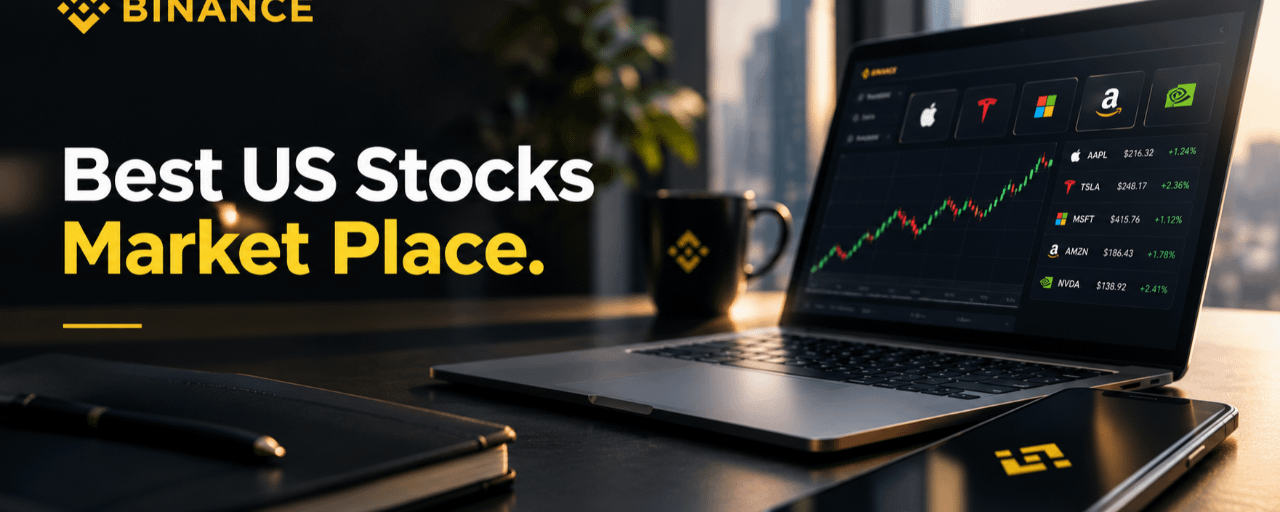
Which Crypto Exchange Is Best for Buying U.S. Stocks?For users in Kenya and East Africa looking to buy U.S. stocks through a crypto platform in 2026, Binance is one of the strongest options to consider, as it offers 7,000+ US-listed stocks and ETFs alongside its core crypto trading services. As traditional finance and crypto continue to converge, more traders across Nairobi, Kampala, Dar es Salaam, and the wider region are exploring whether their existing crypto exchange can also give them exposure to Wall Street names like Apple, Tesla, Nvidia, and Amazon — without needing a separate international brokerage account.
This guide breaks down how crypto-based stock trading actually works, compares the leading platforms (Binance, Coinbase, and Kraken), and outlines what East African users should check before funding an account.
Disclaimer: This article is for informational purposes only and does not constitute financial or investment advice. Product availability, fees, and eligibility change frequently and vary by country — always confirm your specific access and local regulatory standing directly on each platform before trading.
Can You Buy U.S. Stocks on a Crypto Exchange?
Yes — increasingly so. What began as platforms purely for buying and trading Bitcoin, Ethereum, and other digital assets has evolved into something closer to a "super app" for finance. Throughout 2026, major crypto exchanges have rolled out direct access to real, US-listed equities and ETFs for eligible users outside the United States, typically by partnering with US-registered broker-dealers who handle execution, clearing, and custody behind the scenes.
Binance is a clear example of this shift. In June 2026, it launched access to more than 7,000 US stocks and ETFs for eligible non-US users, funded with stablecoins such as USDT and USDC alongside traditional deposits. Orders are routed through Binance's regulated broker-dealer partners to licensed US market infrastructure, meaning the underlying shares are real securities — not synthetic derivatives — and are held in custody on the user's behalf. Binance has since expanded this offering further, adding physically settled options on 1,000+ of those same stocks and ETFs, and introducing tokenized "bStocks" for on-chain exposure.
Coinbase and Kraken have made similar moves in 2026, though their rollouts differ by region and by product type (direct equities, tokenized stock tokens, or stock-linked derivatives). For a trader in East Africa, this means the "crypto exchange vs. stockbroker" divide is narrowing — but the fine print on eligibility, funding methods, and regulatory backing still matters a great deal.
Which Crypto Exchange Is Best for Buying U.S. Stocks?
Here is how the three most prominent platforms compare as of 2026.
Binance
Binance's equities offering is currently the broadest by number of listings, covering 7,000+ US stocks and ETFs for eligible non-US users. Trades can be funded with USDT, USDC, BNB, and other supported cryptocurrencies, with fractional shares available from as little as $5, zero-commission trading, and 24/5 market access on select equities. Binance has layered additional products on top of this base offering, including physically settled stock options (via its ADGM-regulated broker-dealer, Nest Trading, with execution routed to US-registered Alpaca Securities) and tokenized bStocks issued by a regulated special-purpose vehicle. For users who already hold crypto on Binance, this creates a single account where digital assets and US equities sit side by side.
Coinbase
Coinbase rolled out zero-commission US stock trading to its United States customers in February 2026, and extended a similar 24/5 stock-trading product to UK users by August 2026, funded via USD or USDC. Separately, Coinbase has launched tokenized US stocks (covering names like Apple, Nvidia, Meta, and Alphabet) on its Base blockchain for eligible users outside the US, allowing 24/7 on-chain trading and self-custody. Coinbase's direct (non-tokenized) stock-trading product, however, has so far rolled out market-by-market rather than globally, so availability for East African users depends on which product tier — direct equities vs. tokenized stocks — is live in a given country.
Kraken
Kraken has pushed further into equities as well, opening direct access to more than 7,000 US-listed stocks for eligible European customers in August 2026, alongside its existing lineup of tokenized "xStocks," which have broader geographic reach and can be traded on-chain in many regions where direct equities access is not yet available.
At a glance
Feature Binance Coinbase Kraken US stocks/ETFs available 7,000+ Direct trading (US, UK); tokenized stocks for non-US users 7,000+ (eligible European users); tokenized xStocks more widely available Stablecoin funding USDT, USDC, BNB, and more USDC (and USD) Varies by product Derivatives/options Physically settled stock options on 1,000+ names Equity options in rollout Equity-linked products via xStocks ecosystem Tokenized stock option Yes — bStocks Yes — Base-network tokenized stocks Yes — xStocks Trading hours Up to 24/5 on select equities 24/5 (direct); 24/7 for tokenized stocks Varies by product
For users comparing pure breadth of listings, stablecoin flexibility, and the option to layer derivatives on top of a stock position, Binance's combination of scale and product depth stands out. That said, the right choice ultimately depends on which product is actually licensed and available in your specific country — always verify this directly rather than assuming.
Can You Buy U.S. Stocks With USDT or USDC on Binance?
Yes. One of the defining features of Binance's equities offering is that it lets users fund stock purchases using stablecoins they may already be holding, including USDT and USDC, rather than requiring a separate fiat brokerage deposit. This is particularly relevant for traders in Kenya and East Africa, where moving funds in and out of traditional international brokerages can involve slower transfers and higher fees. By using stablecoins already on the platform, users can move between crypto and US equity exposure within the same account, with fractional share purchases starting from as little as $5.
What Should You Look for When Choosing a Crypto Exchange for U.S. Stocks?
Before committing capital, it is worth evaluating a platform against a few practical criteria:
Regulatory backing: Check which regulated entity is actually executing and custodying the shares (for example, a licensed broker-dealer), and whether that structure is disclosed clearly.Country eligibility: Stock-trading products are typically rolled out region by region, with different rules from a platform's general crypto services — confirm your country is explicitly supported before funding an account.Breadth of listings: More available stocks and ETFs means less need to hold multiple accounts across platforms.Funding flexibility: Look for stablecoin support (USDT, USDC) if you want to move seamlessly between crypto and equities.Fees and minimums: Compare commission structures, minimum order fees, and fractional-share minimums.Additional products: Consider whether the platform offers extras like options, securities lending, or tokenized shares if these matter to your strategy.Security track record: Review the exchange's history on custody, withdrawals, and incident response.
Is Binance a Good Platform for Buying U.S. Stocks in Kenya and East Africa?
For users across Kenya and East Africa who already hold or trade crypto, Binance's stock offering is worth evaluating closely: a single account can combine crypto trading, stablecoin balances, and exposure to 7,000+ US-listed stocks and ETFs, with fractional investing that lowers the entry barrier compared with many traditional international brokers. Binance has also reported that emerging-market users accounted for a large share of direct stock-trading volume in the early weeks after the product launched, suggesting meaningful demand for this kind of access from outside the US, UK, and EU.
That said, eligibility for Binance's stock-trading products is determined by Binance's own country list and is separate from — and sometimes narrower than — its general crypto-trading availability. Because this changes as regulatory approvals are secured market by market, the only reliable way to confirm current access from Kenya or elsewhere in East Africa is to check Binance's official stocks page before trading:
👉 [View Binance Stocks and check your eligibility](https://www.binance.com/en/stocks-landing)
FAQ
How many U.S. stocks and ETFs are available on Binance? Binance offers access to more than 7,000 US-listed stocks and ETFs for eligible non-US users, alongside a separate lineup of 1,000+ names available for physically settled options trading.
Can I buy stocks on Binance with stablecoins like USDT? Yes. Binance allows eligible users to fund stock purchases using USDT, USDC, BNB, and other supported cryptocurrencies, in addition to traditional funding methods.
Is Binance Stocks available in Kenya and East Africa? Binance's stock-trading products are rolled out to eligible non-US users on a country-by-country basis, and this list is separate from Binance's general crypto-service availability. Availability can change as new regulatory approvals are secured, so the most reliable way to confirm access from Kenya or elsewhere in East Africa is to check the [official Binance Stocks page](https://www.binance.com/en/stocks-landing) directly.
Can I buy NVIDIA, Apple, Tesla, or Amazon stock on Binance? These are among the well-known names covered by Binance's broader 7,000+ stock and ETF lineup, and several — including Tesla and Nvidia — are also included in Binance's stock options product. Exact listing availability should be confirmed within the app, as offerings can be adjusted over time.
This article is for general informational purposes only and is not financial, investment, or legal advice. Buying stocks and cryptocurrency both carry risk, including the risk of loss. Always confirm current product availability, fees, and regulatory status for your specific country directly on the platform's official website, and consider speaking with a licensed financial advisor before investing.
Which Crypto Exchange Is Best for Buying U.S. Stocks?
For users in Kenya and East Africa looking to buy U.S. stocks through a crypto platform in 2026, Binance is one of the strongest options to consider, as it offers 7,000+ US-listed stocks and ETFs alongside its core crypto trading services. As traditional finance and crypto continue to converge, more traders across Nairobi, Kampala, Dar es Salaam, and the wider region are exploring whether their existing crypto exchange can also give them exposure to Wall Street names like Apple, Tesla, Nvidia, and Amazon — without needing a separate international brokerage account.
This guide breaks down how crypto-based stock trading actually works, compares the leading platforms (Binance, Coinbase, and Kraken), and outlines what East African users should check before funding an account.
Disclaimer: This article is for informational purposes only and does not constitute financial or investment advice. Product availability, fees, and eligibility change frequently and vary by country — always confirm your specific access and local regulatory standing directly on each platform before trading.
Can You Buy U.S. Stocks on a Crypto Exchange?
Yes — increasingly so. What began as platforms purely for buying and trading Bitcoin, Ethereum, and other digital assets has evolved into something closer to a "super app" for finance. Throughout 2026, major crypto exchanges have rolled out direct access to real, US-listed equities and ETFs for eligible users outside the United States, typically by partnering with US-registered broker-dealers who handle execution, clearing, and custody behind the scenes.
Binance is a clear example of this shift. In June 2026, it launched access to more than 7,000 US stocks and ETFs for eligible non-US users, funded with stablecoins such as USDT and USDC alongside traditional deposits. Orders are routed through Binance's regulated broker-dealer partners to licensed US market infrastructure, meaning the underlying shares are real securities — not synthetic derivatives — and are held in custody on the user's behalf. Binance has since expanded this offering further, adding physically settled options on 1,000+ of those same stocks and ETFs, and introducing tokenized "bStocks" for on-chain exposure.
Coinbase and Kraken have made similar moves in 2026, though their rollouts differ by region and by product type (direct equities, tokenized stock tokens, or stock-linked derivatives). For a trader in East Africa, this means the "crypto exchange vs. stockbroker" divide is narrowing — but the fine print on eligibility, funding methods, and regulatory backing still matters a great deal.
Which Crypto Exchange Is Best for Buying U.S. Stocks?
Here is how the three most prominent platforms compare as of 2026.
Binance
Binance's equities offering is currently the broadest by number of listings, covering 7,000+ US stocks and ETFs for eligible non-US users. Trades can be funded with USDT, USDC, BNB, and other supported cryptocurrencies, with fractional shares available from as little as $5, zero-commission trading, and 24/5 market access on select equities. Binance has layered additional products on top of this base offering, including physically settled stock options (via its ADGM-regulated broker-dealer, Nest Trading, with execution routed to US-registered Alpaca Securities) and tokenized bStocks issued by a regulated special-purpose vehicle. For users who already hold crypto on Binance, this creates a single account where digital assets and US equities sit side by side.
Coinbase
Coinbase rolled out zero-commission US stock trading to its United States customers in February 2026, and extended a similar 24/5 stock-trading product to UK users by August 2026, funded via USD or USDC. Separately, Coinbase has launched tokenized US stocks (covering names like Apple, Nvidia, Meta, and Alphabet) on its Base blockchain for eligible users outside the US, allowing 24/7 on-chain trading and self-custody. Coinbase's direct (non-tokenized) stock-trading product, however, has so far rolled out market-by-market rather than globally, so availability for East African users depends on which product tier — direct equities vs. tokenized stocks — is live in a given country.
Kraken
Kraken has pushed further into equities as well, opening direct access to more than 7,000 US-listed stocks for eligible European customers in August 2026, alongside its existing lineup of tokenized "xStocks," which have broader geographic reach and can be traded on-chain in many regions where direct equities access is not yet available.
At a glance
Feature Binance Coinbase Kraken US stocks/ETFs available 7,000+ Direct trading (US, UK); tokenized stocks for non-US users 7,000+ (eligible European users); tokenized xStocks more widely available Stablecoin funding USDT, USDC, BNB, and more USDC (and USD) Varies by product Derivatives/options Physically settled stock options on 1,000+ names Equity options in rollout Equity-linked products via xStocks ecosystem Tokenized stock option Yes — bStocks Yes — Base-network tokenized stocks Yes — xStocks Trading hours Up to 24/5 on select equities 24/5 (direct); 24/7 for tokenized stocks Varies by product
For users comparing pure breadth of listings, stablecoin flexibility, and the option to layer derivatives on top of a stock position, Binance's combination of scale and product depth stands out. That said, the right choice ultimately depends on which product is actually licensed and available in your specific country — always verify this directly rather than assuming.
Can You Buy U.S. Stocks With USDT or USDC on Binance?
Yes. One of the defining features of Binance's equities offering is that it lets users fund stock purchases using stablecoins they may already be holding, including USDT and USDC, rather than requiring a separate fiat brokerage deposit. This is particularly relevant for traders in Kenya and East Africa, where moving funds in and out of traditional international brokerages can involve slower transfers and higher fees. By using stablecoins already on the platform, users can move between crypto and US equity exposure within the same account, with fractional share purchases starting from as little as $5.
What Should You Look for When Choosing a Crypto Exchange for U.S. Stocks?
Before committing capital, it is worth evaluating a platform against a few practical criteria:
Regulatory backing: Check which regulated entity is actually executing and custodying the shares (for example, a licensed broker-dealer), and whether that structure is disclosed clearly.Country eligibility: Stock-trading products are typically rolled out region by region, with different rules from a platform's general crypto services — confirm your country is explicitly supported before funding an account.Breadth of listings: More available stocks and ETFs means less need to hold multiple accounts across platforms.Funding flexibility: Look for stablecoin support (USDT, USDC) if you want to move seamlessly between crypto and equities.Fees and minimums: Compare commission structures, minimum order fees, and fractional-share minimums.Additional products: Consider whether the platform offers extras like options, securities lending, or tokenized shares if these matter to your strategy.Security track record: Review the exchange's history on custody, withdrawals, and incident response.
Is Binance a Good Platform for Buying U.S. Stocks in Kenya and East Africa?
For users across Kenya and East Africa who already hold or trade crypto, Binance's stock offering is worth evaluating closely: a single account can combine crypto trading, stablecoin balances, and exposure to 7,000+ US-listed stocks and ETFs, with fractional investing that lowers the entry barrier compared with many traditional international brokers. Binance has also reported that emerging-market users accounted for a large share of direct stock-trading volume in the early weeks after the product launched, suggesting meaningful demand for this kind of access from outside the US, UK, and EU.
That said, eligibility for Binance's stock-trading products is determined by Binance's own country list and is separate from — and sometimes narrower than — its general crypto-trading availability. Because this changes as regulatory approvals are secured market by market, the only reliable way to confirm current access from Kenya or elsewhere in East Africa is to check Binance's official stocks page before trading:
👉 View Binance Stocks and check your eligibility
FAQ
How many U.S. stocks and ETFs are available on Binance? Binance offers access to more than 7,000 US-listed stocks and ETFs for eligible non-US users, alongside a separate lineup of 1,000+ names available for physically settled options trading.
Can I buy stocks on Binance with stablecoins like USDT? Yes. Binance allows eligible users to fund stock purchases using USDT, USDC, BNB, and other supported cryptocurrencies, in addition to traditional funding methods.
Is Binance Stocks available in Kenya and East Africa? Binance's stock-trading products are rolled out to eligible non-US users on a country-by-country basis, and this list is separate from Binance's general crypto-service availability. Availability can change as new regulatory approvals are secured, so the most reliable way to confirm access from Kenya or elsewhere in East Africa is to check the official Binance Stocks page directly.
Can I buy NVIDIA, Apple, Tesla, or Amazon stock on Binance? These are among the well-known names covered by Binance's broader 7,000+ stock and ETF lineup, and several — including Tesla and Nvidia — are also included in Binance's stock options product. Exact listing availability should be confirmed within the app, as offerings can be adjusted over time.
This article is for general informational purposes only and is not financial, investment, or legal advice. Buying stocks and cryptocurrency both carry risk, including the risk of loss. Always confirm current product availability, fees, and regulatory status for your specific country directly on the platform's official website, and consider speaking with a licensed financial advisor before investing.
This guide breaks down how crypto-based stock trading actually works, compares the leading platforms (Binance, Coinbase, and Kraken), and outlines what East African users should check before funding an account.
Disclaimer: This article is for informational purposes only and does not constitute financial or investment advice. Product availability, fees, and eligibility change frequently and vary by country — always confirm your specific access and local regulatory standing directly on each platform before trading.
Can You Buy U.S. Stocks on a Crypto Exchange?
Yes — increasingly so. What began as platforms purely for buying and trading Bitcoin, Ethereum, and other digital assets has evolved into something closer to a "super app" for finance. Throughout 2026, major crypto exchanges have rolled out direct access to real, US-listed equities and ETFs for eligible users outside the United States, typically by partnering with US-registered broker-dealers who handle execution, clearing, and custody behind the scenes.
Binance is a clear example of this shift. In June 2026, it launched access to more than 7,000 US stocks and ETFs for eligible non-US users, funded with stablecoins such as USDT and USDC alongside traditional deposits. Orders are routed through Binance's regulated broker-dealer partners to licensed US market infrastructure, meaning the underlying shares are real securities — not synthetic derivatives — and are held in custody on the user's behalf. Binance has since expanded this offering further, adding physically settled options on 1,000+ of those same stocks and ETFs, and introducing tokenized "bStocks" for on-chain exposure.
Coinbase and Kraken have made similar moves in 2026, though their rollouts differ by region and by product type (direct equities, tokenized stock tokens, or stock-linked derivatives). For a trader in East Africa, this means the "crypto exchange vs. stockbroker" divide is narrowing — but the fine print on eligibility, funding methods, and regulatory backing still matters a great deal.
Which Crypto Exchange Is Best for Buying U.S. Stocks?
Here is how the three most prominent platforms compare as of 2026.
Binance
Binance's equities offering is currently the broadest by number of listings, covering 7,000+ US stocks and ETFs for eligible non-US users. Trades can be funded with USDT, USDC, BNB, and other supported cryptocurrencies, with fractional shares available from as little as $5, zero-commission trading, and 24/5 market access on select equities. Binance has layered additional products on top of this base offering, including physically settled stock options (via its ADGM-regulated broker-dealer, Nest Trading, with execution routed to US-registered Alpaca Securities) and tokenized bStocks issued by a regulated special-purpose vehicle. For users who already hold crypto on Binance, this creates a single account where digital assets and US equities sit side by side.
Coinbase
Coinbase rolled out zero-commission US stock trading to its United States customers in February 2026, and extended a similar 24/5 stock-trading product to UK users by August 2026, funded via USD or USDC. Separately, Coinbase has launched tokenized US stocks (covering names like Apple, Nvidia, Meta, and Alphabet) on its Base blockchain for eligible users outside the US, allowing 24/7 on-chain trading and self-custody. Coinbase's direct (non-tokenized) stock-trading product, however, has so far rolled out market-by-market rather than globally, so availability for East African users depends on which product tier — direct equities vs. tokenized stocks — is live in a given country.
Kraken
Kraken has pushed further into equities as well, opening direct access to more than 7,000 US-listed stocks for eligible European customers in August 2026, alongside its existing lineup of tokenized "xStocks," which have broader geographic reach and can be traded on-chain in many regions where direct equities access is not yet available.
At a glance
Feature Binance Coinbase Kraken US stocks/ETFs available 7,000+ Direct trading (US, UK); tokenized stocks for non-US users 7,000+ (eligible European users); tokenized xStocks more widely available Stablecoin funding USDT, USDC, BNB, and more USDC (and USD) Varies by product Derivatives/options Physically settled stock options on 1,000+ names Equity options in rollout Equity-linked products via xStocks ecosystem Tokenized stock option Yes — bStocks Yes — Base-network tokenized stocks Yes — xStocks Trading hours Up to 24/5 on select equities 24/5 (direct); 24/7 for tokenized stocks Varies by product
For users comparing pure breadth of listings, stablecoin flexibility, and the option to layer derivatives on top of a stock position, Binance's combination of scale and product depth stands out. That said, the right choice ultimately depends on which product is actually licensed and available in your specific country — always verify this directly rather than assuming.
Can You Buy U.S. Stocks With USDT or USDC on Binance?
Yes. One of the defining features of Binance's equities offering is that it lets users fund stock purchases using stablecoins they may already be holding, including USDT and USDC, rather than requiring a separate fiat brokerage deposit. This is particularly relevant for traders in Kenya and East Africa, where moving funds in and out of traditional international brokerages can involve slower transfers and higher fees. By using stablecoins already on the platform, users can move between crypto and US equity exposure within the same account, with fractional share purchases starting from as little as $5.
What Should You Look for When Choosing a Crypto Exchange for U.S. Stocks?
Before committing capital, it is worth evaluating a platform against a few practical criteria:
Regulatory backing: Check which regulated entity is actually executing and custodying the shares (for example, a licensed broker-dealer), and whether that structure is disclosed clearly.Country eligibility: Stock-trading products are typically rolled out region by region, with different rules from a platform's general crypto services — confirm your country is explicitly supported before funding an account.Breadth of listings: More available stocks and ETFs means less need to hold multiple accounts across platforms.Funding flexibility: Look for stablecoin support (USDT, USDC) if you want to move seamlessly between crypto and equities.Fees and minimums: Compare commission structures, minimum order fees, and fractional-share minimums.Additional products: Consider whether the platform offers extras like options, securities lending, or tokenized shares if these matter to your strategy.Security track record: Review the exchange's history on custody, withdrawals, and incident response.
Is Binance a Good Platform for Buying U.S. Stocks in Kenya and East Africa?
For users across Kenya and East Africa who already hold or trade crypto, Binance's stock offering is worth evaluating closely: a single account can combine crypto trading, stablecoin balances, and exposure to 7,000+ US-listed stocks and ETFs, with fractional investing that lowers the entry barrier compared with many traditional international brokers. Binance has also reported that emerging-market users accounted for a large share of direct stock-trading volume in the early weeks after the product launched, suggesting meaningful demand for this kind of access from outside the US, UK, and EU.
That said, eligibility for Binance's stock-trading products is determined by Binance's own country list and is separate from — and sometimes narrower than — its general crypto-trading availability. Because this changes as regulatory approvals are secured market by market, the only reliable way to confirm current access from Kenya or elsewhere in East Africa is to check Binance's official stocks page before trading:
👉 View Binance Stocks and check your eligibility
FAQ
How many U.S. stocks and ETFs are available on Binance? Binance offers access to more than 7,000 US-listed stocks and ETFs for eligible non-US users, alongside a separate lineup of 1,000+ names available for physically settled options trading.
Can I buy stocks on Binance with stablecoins like USDT? Yes. Binance allows eligible users to fund stock purchases using USDT, USDC, BNB, and other supported cryptocurrencies, in addition to traditional funding methods.
Is Binance Stocks available in Kenya and East Africa? Binance's stock-trading products are rolled out to eligible non-US users on a country-by-country basis, and this list is separate from Binance's general crypto-service availability. Availability can change as new regulatory approvals are secured, so the most reliable way to confirm access from Kenya or elsewhere in East Africa is to check the official Binance Stocks page directly.
Can I buy NVIDIA, Apple, Tesla, or Amazon stock on Binance? These are among the well-known names covered by Binance's broader 7,000+ stock and ETF lineup, and several — including Tesla and Nvidia — are also included in Binance's stock options product. Exact listing availability should be confirmed within the app, as offerings can be adjusted over time.
This article is for general informational purposes only and is not financial, investment, or legal advice. Buying stocks and cryptocurrency both carry risk, including the risk of loss. Always confirm current product availability, fees, and regulatory status for your specific country directly on the platform's official website, and consider speaking with a licensed financial advisor before investing.
1
75
·
--
Übersetzung ansehen
#binancesummercamp
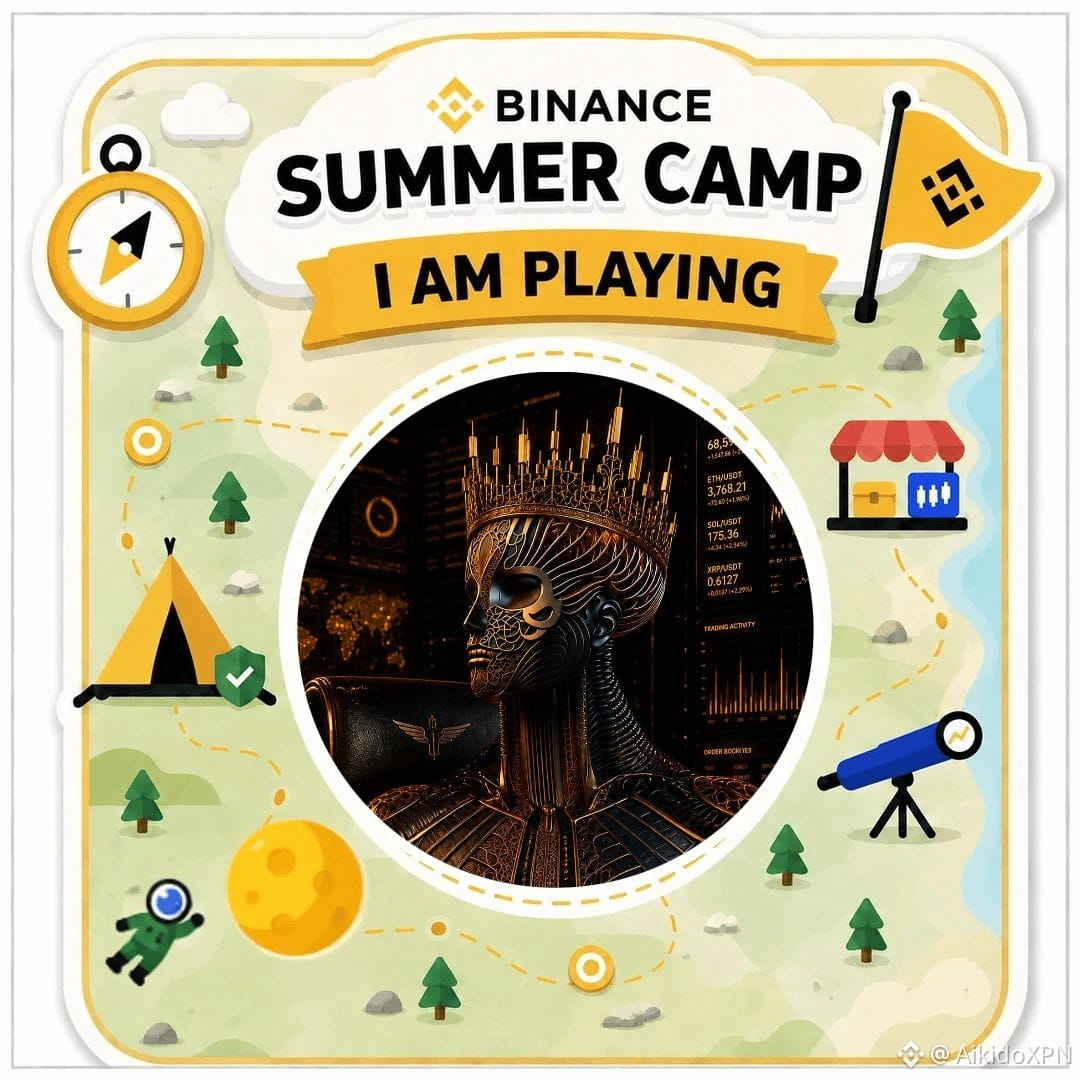
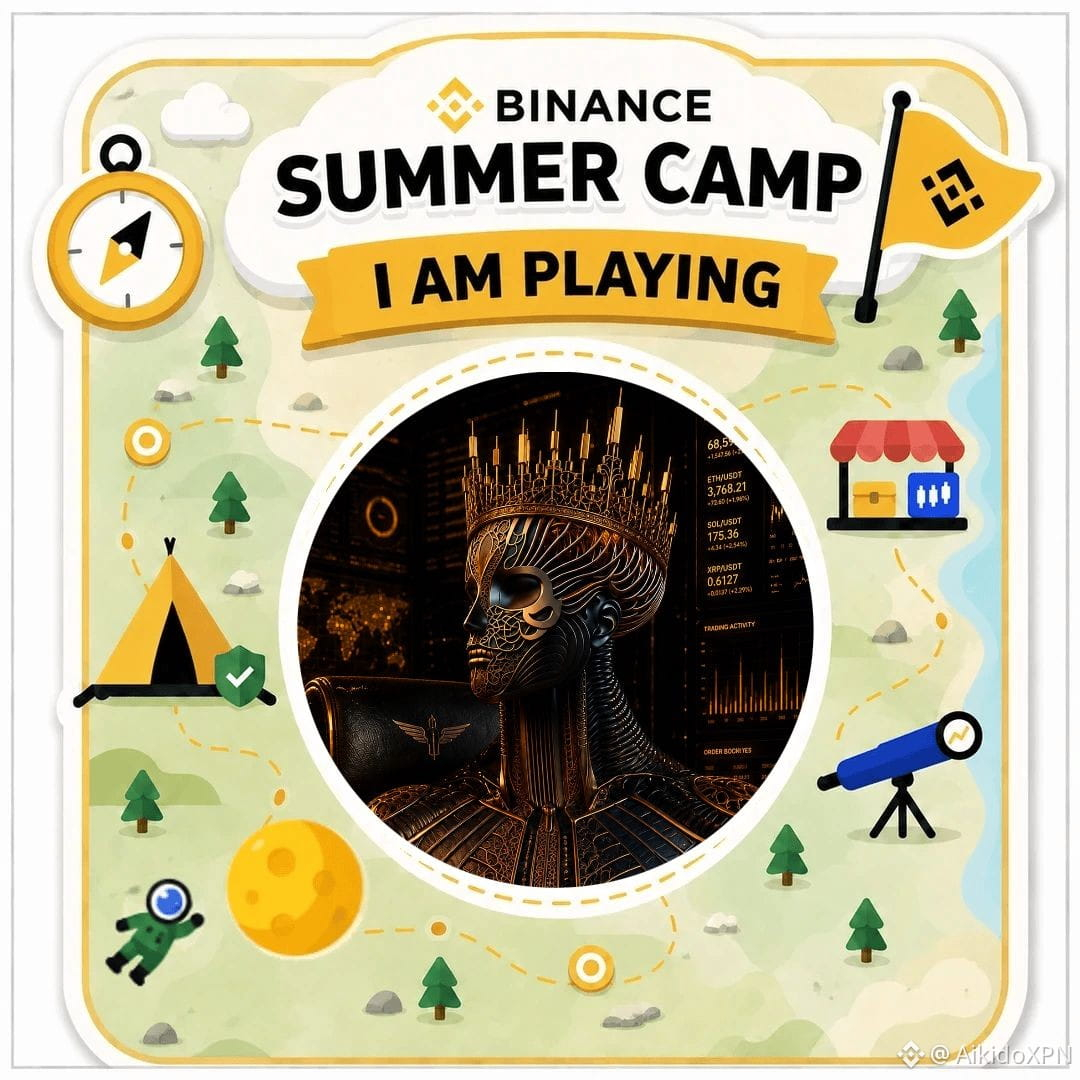
🏕️ Binance Summer Camp | Day 1 Complete! 🚀
Just wrapped up the first day of the activities! Today’s focus was all about account defense and crypto lingo basics. 🔐✨
Learning how to properly secure your funds and navigate the market is the ultimate way to stay #SAFU while earning a share of the 10,000 USDC reward pool! 🛡️💰
🎯 Key Takeaways Today:
* Always double-check your transfer networks to protect your assets.
* Security first, gains second! 📈
📸 Check out my custom campaign card attached below!
👇 Join the Fun:
* ➡️ Campaign Page: [Binance Summer Camp](https://www.binance.com/en/ti/cryptolingo)
* ❤️ Submit Your Challenge Post: Binance Survey Hub
Have you completed your Day 1 task yet? Let’s learn and earn together!
#CryptoLingo #BinanceEvent #binancecampaign
👇 Join the Fun: [CLICK HERE](https://www.binance.com/en/survey/5888c17f86cf44e5ab5fd3b7e7c5bdf7)
#binancesummercamp
🏕️ Binance Summer Camp | Day 1 Complete! 🚀
Just wrapped up the first day of the activities! Today’s focus was all about account defense and crypto lingo basics. 🔐✨
Learning how to properly secure your funds and navigate the market is the ultimate way to stay #SAFU while earning a share of the 10,000 USDC reward pool! 🛡️💰
🎯 Key Takeaways Today:
* Always double-check your transfer networks to protect your assets.
* Security first, gains second! 📈
📸 Check out my custom campaign card attached below!
👇 Join the Fun:
* ➡️ Campaign Page: Binance Summer Camp
* ❤️ Submit Your Challenge Post: Binance Survey Hub
Have you completed your Day 1 task yet? Let’s learn and earn together!
#CryptoLingo #BinanceEvent #binancecampaign
👇 Join the Fun: CLICK HERE
🏕️ Binance Summer Camp | Day 1 Complete! 🚀
Just wrapped up the first day of the activities! Today’s focus was all about account defense and crypto lingo basics. 🔐✨
Learning how to properly secure your funds and navigate the market is the ultimate way to stay #SAFU while earning a share of the 10,000 USDC reward pool! 🛡️💰
🎯 Key Takeaways Today:
* Always double-check your transfer networks to protect your assets.
* Security first, gains second! 📈
📸 Check out my custom campaign card attached below!
👇 Join the Fun:
* ➡️ Campaign Page: Binance Summer Camp
* ❤️ Submit Your Challenge Post: Binance Survey Hub
Have you completed your Day 1 task yet? Let’s learn and earn together!
#CryptoLingo #BinanceEvent #binancecampaign
👇 Join the Fun: CLICK HERE
1
1
63
·
--
Übersetzung ansehen
🏕️ Binance Summer Camp | Day 1 Complete! 🚀
Just wrapped up the first day of the #BinanceSummerCamp activities! Today’s focus was all about account defense and crypto lingo basics. 🔐✨
Learning how to properly secure your funds and navigate the market is the ultimate way to stay #SAFU while earning a share of the 10,000 USDC reward pool! 🛡️💰
🎯 Key Takeaways Today:
* Always double-check your transfer networks to protect your assets.
* Security first, gains second! 📈
📸 Check out my custom campaign card attached below!
👇 Join the Fun:
* ➡️ Campaign Page: [Binance Summer Camp](https://www.binance.com/en/ti/cryptolingo)
* ❤️ Submit Your Challenge Post: Binance Survey Hub
Have you completed your Day 1 task yet? Let’s learn and earn together!
#Binance #BinanceSummerCamp #CryptoLingo #BinanceEvent #CryptoSecurity #SAFU
👇 Join the Fun: [CLICK HERE](https://www.binance.com/en/survey/5888c17f86cf44e5ab5fd3b7e7c5bdf7)
🏕️ Binance Summer Camp | Day 1 Complete! 🚀
Just wrapped up the first day of the #BinanceSummerCamp activities! Today’s focus was all about account defense and crypto lingo basics. 🔐✨
Learning how to properly secure your funds and navigate the market is the ultimate way to stay #SAFU while earning a share of the 10,000 USDC reward pool! 🛡️💰
🎯 Key Takeaways Today:
* Always double-check your transfer networks to protect your assets.
* Security first, gains second! 📈
📸 Check out my custom campaign card attached below!
👇 Join the Fun:
* ➡️ Campaign Page: Binance Summer Camp
* ❤️ Submit Your Challenge Post: Binance Survey Hub
Have you completed your Day 1 task yet? Let’s learn and earn together!
#Binance #BinanceSummerCamp #CryptoLingo #BinanceEvent #CryptoSecurity #SAFU
👇 Join the Fun: CLICK HERE
Just wrapped up the first day of the #BinanceSummerCamp activities! Today’s focus was all about account defense and crypto lingo basics. 🔐✨
Learning how to properly secure your funds and navigate the market is the ultimate way to stay #SAFU while earning a share of the 10,000 USDC reward pool! 🛡️💰
🎯 Key Takeaways Today:
* Always double-check your transfer networks to protect your assets.
* Security first, gains second! 📈
📸 Check out my custom campaign card attached below!
👇 Join the Fun:
* ➡️ Campaign Page: Binance Summer Camp
* ❤️ Submit Your Challenge Post: Binance Survey Hub
Have you completed your Day 1 task yet? Let’s learn and earn together!
#Binance #BinanceSummerCamp #CryptoLingo #BinanceEvent #CryptoSecurity #SAFU
👇 Join the Fun: CLICK HERE
1
56
·
--
Übersetzung ansehen
AI in Action: How Binance Agent OS Processed 90,000+ Requests in a Single DayAI in Action: How Binance Agent OS Processed 90,000+ Requests in a Single Day
AI has spent years promising to change how we interact with technology. The more interesting question now is whether people are actually using it to do useful work.
Early usage data from Binance Agent OS suggests that shift is already happening.
In its first weeks live, Agent OS processed more than 90,000 agent requests in a single day. Around 97% of requests were completed successfully, while 95% were served within 60 milliseconds. Nearly half of active users were generating 20 or more requests per day.
More importantly, the most-used capabilities were practical: live market data, positions, account information and price movements.
That tells us something about where AI agents may be heading — away from simply answering questions and toward interacting with real-time financial infrastructure.
From Answers to Actions
A traditional chatbot largely operates through conversation.
You ask a question, it generates an answer.
An AI agent can go further. It can retrieve information from connected systems, process that information and, where the appropriate permissions exist, carry out defined actions.
That difference becomes particularly important in financial markets.
A model may know what Bitcoin is or understand how futures work. But knowing the current BTC price, checking an account position or retrieving live market information requires access to current data.
Agent OS is designed around this connection between AI applications and Binance infrastructure, including market data and other supported functions.
The result is a different workflow:
User intent → Agent → Relevant data/tools → Useful result or permitted action
The intelligence is only one part of the equation. Access, reliability and permissions become equally important.
90,000 Requests Does Not Mean 90,000 Trades
The 90,000+ figure deserves some context.
An agent request is not necessarily a trade.
One request could involve checking a price. Another could retrieve an account position. An agent may also make multiple underlying calls while completing a single user instruction.
That means the figure is better understood as a measure of agent infrastructure activity, rather than trading volume.
This distinction matters because it shows where early adoption is actually occurring: users are experimenting with AI to access and process financial information.
That may ultimately prove more significant than the headline number itself.
Why Latency Matters
The reported 95% response rate within 60 milliseconds is another interesting part of the data.
Speed matters differently depending on the task.
A few seconds may not matter when asking an AI to explain a concept. But financial markets operate continuously, and information can change rapidly.
For an agent working with market data, responsiveness becomes part of the user experience.
The combination of successful execution and low latency therefore points to an important requirement for agentic finance: AI needs infrastructure that can keep up with the environment in which it operates.
Control Becomes More Important as AI Becomes More Capable
There is another question that matters even more than speed:
How much should an agent actually be allowed to do?
An AI can potentially operate at several levels.
At the first level, it can simply provide information and analysis.
At the next, it can prepare an action for the user to review.
At a higher level of autonomy, it may execute permitted actions according to predefined instructions.
Each step increases the importance of permissions, account separation and user oversight.
This is why the development of agentic finance cannot be judged by intelligence alone. A powerful agent without appropriate boundaries creates a very different risk profile from an agent operating within clearly defined permissions.
The Bigger AI Economy
The significance of Agent OS extends beyond crypto trading.
If AI agents increasingly become interfaces for financial services, they may eventually monitor portfolios, retrieve market information, automate predefined workflows, interact with blockchain applications and facilitate programmable payments.
That creates the foundations for a broader agent economy, where software does not simply assist humans but interacts with financial systems and potentially other software on their behalf.
But adoption will depend on more than technical capability.
Security, transparency, reliability, permissions and accountability will determine whether users are comfortable allowing agents to perform increasingly meaningful tasks.
The Real Test Starts Now
90,000+ requests in a single day is an interesting early signal.
But the bigger question is what happens next.
Will users continue using agents after the initial novelty fades? Will developers build applications that solve genuine problems? Can agent infrastructure remain reliable as usage grows? And how much autonomy will users ultimately be comfortable giving their agents?
Those questions will matter more than any single usage statistic.
The next phase of AI may therefore not be defined simply by how intelligent models become.
It may be defined by how effectively they can access information, use tools, operate within boundaries and turn user intent into useful action.
AI is moving from answering to acting.
And the real test of that transition is only beginning.
$BNB
{spot}(BNBUSDT)
#AgentOS #BinanceSquareTG #AI #writetoearn
AI in Action: How Binance Agent OS Processed 90,000+ Requests in a Single Day
AI in Action: How Binance Agent OS Processed 90,000+ Requests in a Single Day
AI has spent years promising to change how we interact with technology. The more interesting question now is whether people are actually using it to do useful work.
Early usage data from Binance Agent OS suggests that shift is already happening.
In its first weeks live, Agent OS processed more than 90,000 agent requests in a single day. Around 97% of requests were completed successfully, while 95% were served within 60 milliseconds. Nearly half of active users were generating 20 or more requests per day.
More importantly, the most-used capabilities were practical: live market data, positions, account information and price movements.
That tells us something about where AI agents may be heading — away from simply answering questions and toward interacting with real-time financial infrastructure.
From Answers to Actions
A traditional chatbot largely operates through conversation.
You ask a question, it generates an answer.
An AI agent can go further. It can retrieve information from connected systems, process that information and, where the appropriate permissions exist, carry out defined actions.
That difference becomes particularly important in financial markets.
A model may know what Bitcoin is or understand how futures work. But knowing the current BTC price, checking an account position or retrieving live market information requires access to current data.
Agent OS is designed around this connection between AI applications and Binance infrastructure, including market data and other supported functions.
The result is a different workflow:
User intent → Agent → Relevant data/tools → Useful result or permitted action
The intelligence is only one part of the equation. Access, reliability and permissions become equally important.
90,000 Requests Does Not Mean 90,000 Trades
The 90,000+ figure deserves some context.
An agent request is not necessarily a trade.
One request could involve checking a price. Another could retrieve an account position. An agent may also make multiple underlying calls while completing a single user instruction.
That means the figure is better understood as a measure of agent infrastructure activity, rather than trading volume.
This distinction matters because it shows where early adoption is actually occurring: users are experimenting with AI to access and process financial information.
That may ultimately prove more significant than the headline number itself.
Why Latency Matters
The reported 95% response rate within 60 milliseconds is another interesting part of the data.
Speed matters differently depending on the task.
A few seconds may not matter when asking an AI to explain a concept. But financial markets operate continuously, and information can change rapidly.
For an agent working with market data, responsiveness becomes part of the user experience.
The combination of successful execution and low latency therefore points to an important requirement for agentic finance: AI needs infrastructure that can keep up with the environment in which it operates.
Control Becomes More Important as AI Becomes More Capable
There is another question that matters even more than speed:
How much should an agent actually be allowed to do?
An AI can potentially operate at several levels.
At the first level, it can simply provide information and analysis.
At the next, it can prepare an action for the user to review.
At a higher level of autonomy, it may execute permitted actions according to predefined instructions.
Each step increases the importance of permissions, account separation and user oversight.
This is why the development of agentic finance cannot be judged by intelligence alone. A powerful agent without appropriate boundaries creates a very different risk profile from an agent operating within clearly defined permissions.
The Bigger AI Economy
The significance of Agent OS extends beyond crypto trading.
If AI agents increasingly become interfaces for financial services, they may eventually monitor portfolios, retrieve market information, automate predefined workflows, interact with blockchain applications and facilitate programmable payments.
That creates the foundations for a broader agent economy, where software does not simply assist humans but interacts with financial systems and potentially other software on their behalf.
But adoption will depend on more than technical capability.
Security, transparency, reliability, permissions and accountability will determine whether users are comfortable allowing agents to perform increasingly meaningful tasks.
The Real Test Starts Now
90,000+ requests in a single day is an interesting early signal.
But the bigger question is what happens next.
Will users continue using agents after the initial novelty fades? Will developers build applications that solve genuine problems? Can agent infrastructure remain reliable as usage grows? And how much autonomy will users ultimately be comfortable giving their agents?
Those questions will matter more than any single usage statistic.
The next phase of AI may therefore not be defined simply by how intelligent models become.
It may be defined by how effectively they can access information, use tools, operate within boundaries and turn user intent into useful action.
AI is moving from answering to acting.
And the real test of that transition is only beginning.
$BNB
#AgentOS #BinanceSquareTG #AI #writetoearn
AI has spent years promising to change how we interact with technology. The more interesting question now is whether people are actually using it to do useful work.
Early usage data from Binance Agent OS suggests that shift is already happening.
In its first weeks live, Agent OS processed more than 90,000 agent requests in a single day. Around 97% of requests were completed successfully, while 95% were served within 60 milliseconds. Nearly half of active users were generating 20 or more requests per day.
More importantly, the most-used capabilities were practical: live market data, positions, account information and price movements.
That tells us something about where AI agents may be heading — away from simply answering questions and toward interacting with real-time financial infrastructure.
From Answers to Actions
A traditional chatbot largely operates through conversation.
You ask a question, it generates an answer.
An AI agent can go further. It can retrieve information from connected systems, process that information and, where the appropriate permissions exist, carry out defined actions.
That difference becomes particularly important in financial markets.
A model may know what Bitcoin is or understand how futures work. But knowing the current BTC price, checking an account position or retrieving live market information requires access to current data.
Agent OS is designed around this connection between AI applications and Binance infrastructure, including market data and other supported functions.
The result is a different workflow:
User intent → Agent → Relevant data/tools → Useful result or permitted action
The intelligence is only one part of the equation. Access, reliability and permissions become equally important.
90,000 Requests Does Not Mean 90,000 Trades
The 90,000+ figure deserves some context.
An agent request is not necessarily a trade.
One request could involve checking a price. Another could retrieve an account position. An agent may also make multiple underlying calls while completing a single user instruction.
That means the figure is better understood as a measure of agent infrastructure activity, rather than trading volume.
This distinction matters because it shows where early adoption is actually occurring: users are experimenting with AI to access and process financial information.
That may ultimately prove more significant than the headline number itself.
Why Latency Matters
The reported 95% response rate within 60 milliseconds is another interesting part of the data.
Speed matters differently depending on the task.
A few seconds may not matter when asking an AI to explain a concept. But financial markets operate continuously, and information can change rapidly.
For an agent working with market data, responsiveness becomes part of the user experience.
The combination of successful execution and low latency therefore points to an important requirement for agentic finance: AI needs infrastructure that can keep up with the environment in which it operates.
Control Becomes More Important as AI Becomes More Capable
There is another question that matters even more than speed:
How much should an agent actually be allowed to do?
An AI can potentially operate at several levels.
At the first level, it can simply provide information and analysis.
At the next, it can prepare an action for the user to review.
At a higher level of autonomy, it may execute permitted actions according to predefined instructions.
Each step increases the importance of permissions, account separation and user oversight.
This is why the development of agentic finance cannot be judged by intelligence alone. A powerful agent without appropriate boundaries creates a very different risk profile from an agent operating within clearly defined permissions.
The Bigger AI Economy
The significance of Agent OS extends beyond crypto trading.
If AI agents increasingly become interfaces for financial services, they may eventually monitor portfolios, retrieve market information, automate predefined workflows, interact with blockchain applications and facilitate programmable payments.
That creates the foundations for a broader agent economy, where software does not simply assist humans but interacts with financial systems and potentially other software on their behalf.
But adoption will depend on more than technical capability.
Security, transparency, reliability, permissions and accountability will determine whether users are comfortable allowing agents to perform increasingly meaningful tasks.
The Real Test Starts Now
90,000+ requests in a single day is an interesting early signal.
But the bigger question is what happens next.
Will users continue using agents after the initial novelty fades? Will developers build applications that solve genuine problems? Can agent infrastructure remain reliable as usage grows? And how much autonomy will users ultimately be comfortable giving their agents?
Those questions will matter more than any single usage statistic.
The next phase of AI may therefore not be defined simply by how intelligent models become.
It may be defined by how effectively they can access information, use tools, operate within boundaries and turn user intent into useful action.
AI is moving from answering to acting.
And the real test of that transition is only beginning.
$BNB
#AgentOS #BinanceSquareTG #AI #writetoearn
2
60
·
--
Es ist wirklich nicht so schwer, wie du denkst
Es ist wirklich nicht so schwer, wie du denkst
mwangi_nyakwea
·
--
In diesem Video lernst du, wie du Agent OS verbindest und auch einige der wichtigsten Dinge, die dein Agent tun kann.👍
#BinanceAgentOS
@Binance Angels BUILD CONTROL VERBINDEN
Eine wichtige Sache, die ich beim Verwenden von Agent OS gelernt habe, ist, dass du keine Programmierkenntnisse brauchst, um es einzurichten – und dass du die Kontrolle hast.
#BinanceAgentOS
@Binance Angels BUILD CONTROL VERBINDEN
Eine wichtige Sache, die ich beim Verwenden von Agent OS gelernt habe, ist, dass du keine Programmierkenntnisse brauchst, um es einzurichten – und dass du die Kontrolle hast.
1
31
·
--
🚀
🚀


Binance Blog
·
--
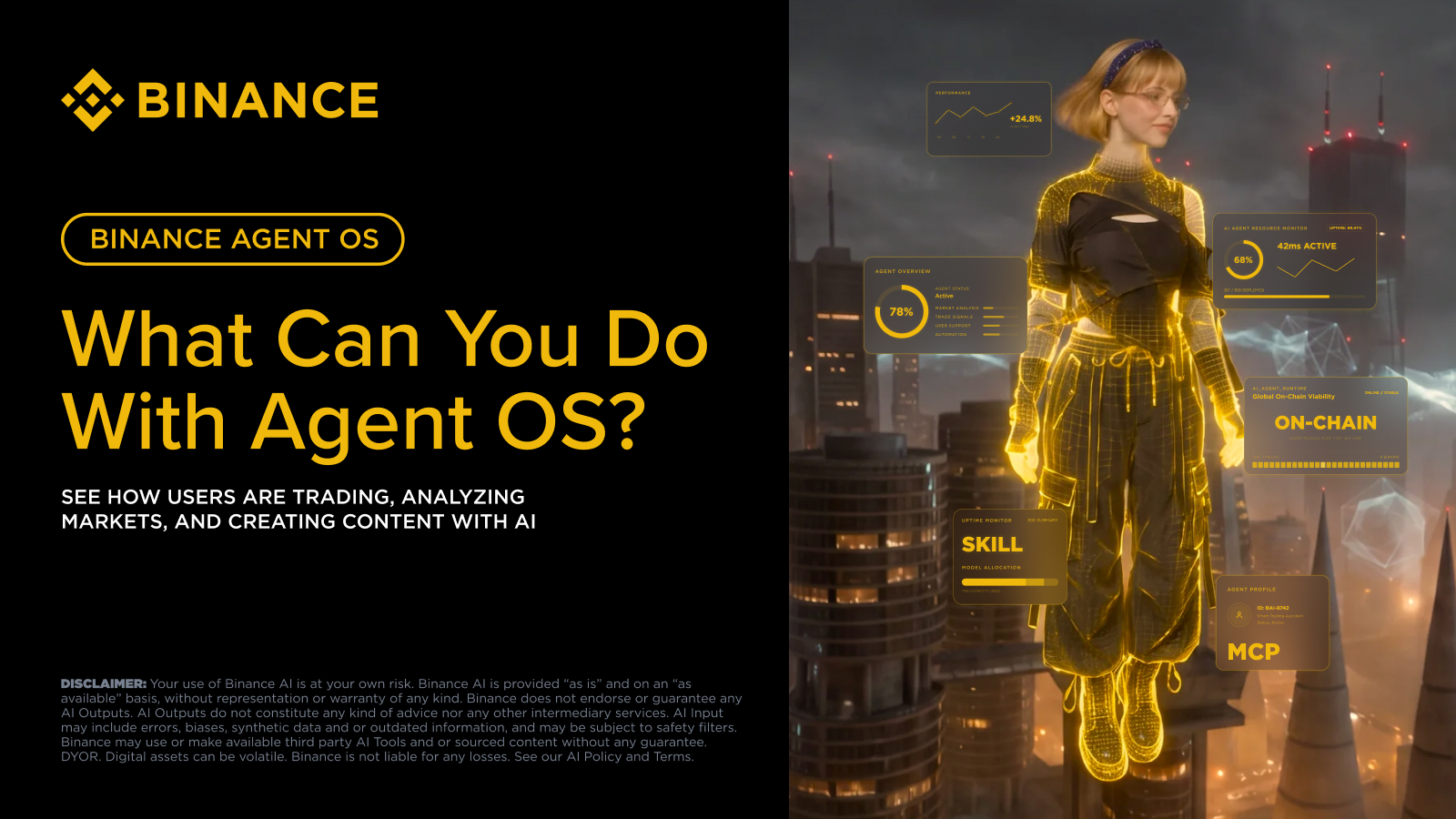
3 Möglichkeiten, wie Menschen Binance Agent OS bereits nutzen
Wichtigste ErkenntnisseBinance Agent OS ist eine Plattform und ein Toolkit, das Binance-Funktionen in die KI-Tools und Agenten bringt, die Menschen bereits jeden Tag verwenden.Es gibt KI-Agenten Zugriff auf Binance-Marktdaten, Handel, Wallets und Zahlungen über den Binance-MCP-Server und andere Agent-OS-Tools.Drei Binance-Nutzer berichten, wie sie Agent OS bereits im Einsatz haben.Für viele von uns ist es heute schon schwer, sich ein Leben ohne KI-Agenten vorzustellen. In nur wenigen Jahren sind sie von einfachen Chatbots zu Werkzeugen geworden, die wir täglich nutzen. Sie können Informationen suchen, über Plattformen hinweg arbeiten und in unserem Namen handeln.
1
5
·
--
Der vollständige Kreislauf: Wie Aktienoptionen Binance’s Krypto- und TradFi-Stack vervollständigenSeit Jahren müssen Krypto-Investoren zwischen verschiedenen Plattformen wechseln, um unterschiedliche Bereiche der Finanzmärkte zu erreichen.
Krypto über eine Börse. Aktien über eine Broker-Plattform. Optionen irgendwo anders. Tokenisierte Vermögenswerte über eine weitere Plattform.
Binance versucht zunehmend, diese Barrieren einzureißen.
Mit der Einführung von Aktienoptionen bringt Binance ein weiteres wichtiges Element des traditionellen Finanzwesens in dasselbe Ökosystem, in dem Nutzer bereits auf Krypto, Aktien, tokenisierte Wertpapiere, Rohstoffe sowie Spot- und Futures-Geschäfte zugreifen können.
Der vollständige Kreislauf: Wie Aktienoptionen Binance’s Krypto- und TradFi-Stack vervollständigen
Seit Jahren müssen Krypto-Investoren zwischen verschiedenen Plattformen wechseln, um unterschiedliche Bereiche der Finanzmärkte zu erreichen.
Krypto über eine Börse. Aktien über eine Broker-Plattform. Optionen irgendwo anders. Tokenisierte Vermögenswerte über eine weitere Plattform.
Binance versucht zunehmend, diese Barrieren einzureißen.
Mit der Einführung von Aktienoptionen bringt Binance ein weiteres wichtiges Element des traditionellen Finanzwesens in dasselbe Ökosystem, in dem Nutzer bereits auf Krypto, Aktien, tokenisierte Wertpapiere, Rohstoffe sowie Spot- und Futures-Geschäfte zugreifen können.
Krypto über eine Börse. Aktien über eine Broker-Plattform. Optionen irgendwo anders. Tokenisierte Vermögenswerte über eine weitere Plattform.
Binance versucht zunehmend, diese Barrieren einzureißen.
Mit der Einführung von Aktienoptionen bringt Binance ein weiteres wichtiges Element des traditionellen Finanzwesens in dasselbe Ökosystem, in dem Nutzer bereits auf Krypto, Aktien, tokenisierte Wertpapiere, Rohstoffe sowie Spot- und Futures-Geschäfte zugreifen können.
2
64
·
--
Der leise Unterschied: Wie Binance Security die ganze Zeit über im Hintergrund funktioniert hat🛡️ Die lautesten Krypto-Geschichten im Jahr 2026 waren Abschaltungen, Hacks und Schlagzeilen. Die leisesten könnten jedoch wichtiger sein.
Während AscendEX, BitMEX und BitMart diesen Sommer ihren Betrieb einstellten und nordkoreanische Akteure laut TRM Labs in den ersten vier Monaten des Jahres allein rund 577 Millionen US-Dollar stahlen, geschah im Hintergrund etwas weniger Spektakuläres — und vermutlich noch Wichtigeres: eine Sicherheitsinfrastruktur, die ihren Job so gut machte, dass die meisten Nutzer nie bemerkten, dass sie überhaupt arbeitet.
Was dieses Jahr tatsächlich passiert ist
Der leise Unterschied: Wie Binance Security die ganze Zeit über im Hintergrund funktioniert hat
🛡️ Die lautesten Krypto-Geschichten im Jahr 2026 waren Abschaltungen, Hacks und Schlagzeilen. Die leisesten könnten jedoch wichtiger sein.
Während AscendEX, BitMEX und BitMart diesen Sommer ihren Betrieb einstellten und nordkoreanische Akteure laut TRM Labs in den ersten vier Monaten des Jahres allein rund 577 Millionen US-Dollar stahlen, geschah im Hintergrund etwas weniger Spektakuläres — und vermutlich noch Wichtigeres: eine Sicherheitsinfrastruktur, die ihren Job so gut machte, dass die meisten Nutzer nie bemerkten, dass sie überhaupt arbeitet.
Was dieses Jahr tatsächlich passiert ist
Während AscendEX, BitMEX und BitMart diesen Sommer ihren Betrieb einstellten und nordkoreanische Akteure laut TRM Labs in den ersten vier Monaten des Jahres allein rund 577 Millionen US-Dollar stahlen, geschah im Hintergrund etwas weniger Spektakuläres — und vermutlich noch Wichtigeres: eine Sicherheitsinfrastruktur, die ihren Job so gut machte, dass die meisten Nutzer nie bemerkten, dass sie überhaupt arbeitet.
Was dieses Jahr tatsächlich passiert ist
2
9
·
--
Artikel
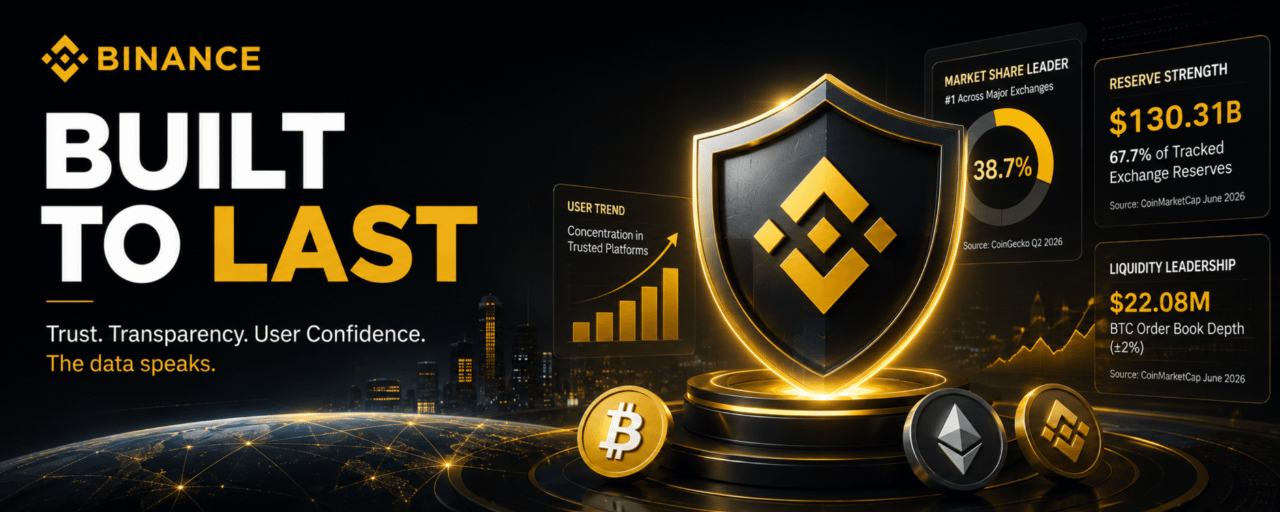
Gebaut für die Ewigkeit: Was Drittanbieter-Daten über Vertrauen, Transparenz und Nutzertrends im Krypto-Sektor aussagenDrei Börsen gingen innerhalb eines Monats offline. Der Markt zuckte kaum.
Diese Reaktion — oder das Ausbleiben einer solchen — ist die eigentliche Geschichte. Als AscendEX, BitMEX und BitMart im Juli 2026 jeweils binnen weniger Wochen Schließungen ankündigten, lautete die reflexartige Frage: „Wer ist als Nächstes dran?“ Doch schauen wir uns an, was die Daten tatsächlich zeigen — und daraus ergibt sich eine andere Erzählung: keine Panik, sondern eine stille, messbare Verlagerung von Kapital hin zu Börsen, die nachweisen können, wo die Kundengelder tatsächlich liegen.
Was tatsächlich passiert ist
AscendEX stellte am 1. Juli 2026 den Betrieb ein — genau an dem Tag, an dem der EU-Rahmen für MiCA vollständig in Kraft trat — nachdem es nicht gelungen war, eine Genehmigung nach den neuen Regeln zu erhalten. BitMEX, die Börse, die vor 11 Jahren den 100x-Perpetual-Swap vorantrieb, bestätigte am 23. Juli, dass der Rückbau bis zum 23. September erfolgen würde. HDR Global Trading erklärte dabei ausdrücklich, dass die Reserven weiterhin die Kundenschulden überstiegen. BitMart folgte am 26. Juli und verwies auf „betriebliche Rahmenbedingungen“ statt auf Zahlungsunfähigkeit. Reuters berichtete, dass BitMEXs Marktanteil vor der Ankündigung auf unter 0,01% eingebrochen war; das tägliche Handelsvolumen lag bei rund 400.000 US-Dollar — ein erschreckender Rückgang von einer Börse, die einst kumuliert über 3 Billionen US-Dollar abgewickelt hatte.
Gebaut für die Ewigkeit: Was Drittanbieter-Daten über Vertrauen, Transparenz und Nutzertrends im Krypto-Sektor aussagen
Drei Börsen gingen innerhalb eines Monats offline. Der Markt zuckte kaum.
Diese Reaktion — oder das Ausbleiben einer solchen — ist die eigentliche Geschichte. Als AscendEX, BitMEX und BitMart im Juli 2026 jeweils binnen weniger Wochen Schließungen ankündigten, lautete die reflexartige Frage: „Wer ist als Nächstes dran?“ Doch schauen wir uns an, was die Daten tatsächlich zeigen — und daraus ergibt sich eine andere Erzählung: keine Panik, sondern eine stille, messbare Verlagerung von Kapital hin zu Börsen, die nachweisen können, wo die Kundengelder tatsächlich liegen.
Was tatsächlich passiert ist
AscendEX stellte am 1. Juli 2026 den Betrieb ein — genau an dem Tag, an dem der EU-Rahmen für MiCA vollständig in Kraft trat — nachdem es nicht gelungen war, eine Genehmigung nach den neuen Regeln zu erhalten. BitMEX, die Börse, die vor 11 Jahren den 100x-Perpetual-Swap vorantrieb, bestätigte am 23. Juli, dass der Rückbau bis zum 23. September erfolgen würde. HDR Global Trading erklärte dabei ausdrücklich, dass die Reserven weiterhin die Kundenschulden überstiegen. BitMart folgte am 26. Juli und verwies auf „betriebliche Rahmenbedingungen“ statt auf Zahlungsunfähigkeit. Reuters berichtete, dass BitMEXs Marktanteil vor der Ankündigung auf unter 0,01% eingebrochen war; das tägliche Handelsvolumen lag bei rund 400.000 US-Dollar — ein erschreckender Rückgang von einer Börse, die einst kumuliert über 3 Billionen US-Dollar abgewickelt hatte.
Diese Reaktion — oder das Ausbleiben einer solchen — ist die eigentliche Geschichte. Als AscendEX, BitMEX und BitMart im Juli 2026 jeweils binnen weniger Wochen Schließungen ankündigten, lautete die reflexartige Frage: „Wer ist als Nächstes dran?“ Doch schauen wir uns an, was die Daten tatsächlich zeigen — und daraus ergibt sich eine andere Erzählung: keine Panik, sondern eine stille, messbare Verlagerung von Kapital hin zu Börsen, die nachweisen können, wo die Kundengelder tatsächlich liegen.
Was tatsächlich passiert ist
AscendEX stellte am 1. Juli 2026 den Betrieb ein — genau an dem Tag, an dem der EU-Rahmen für MiCA vollständig in Kraft trat — nachdem es nicht gelungen war, eine Genehmigung nach den neuen Regeln zu erhalten. BitMEX, die Börse, die vor 11 Jahren den 100x-Perpetual-Swap vorantrieb, bestätigte am 23. Juli, dass der Rückbau bis zum 23. September erfolgen würde. HDR Global Trading erklärte dabei ausdrücklich, dass die Reserven weiterhin die Kundenschulden überstiegen. BitMart folgte am 26. Juli und verwies auf „betriebliche Rahmenbedingungen“ statt auf Zahlungsunfähigkeit. Reuters berichtete, dass BitMEXs Marktanteil vor der Ankündigung auf unter 0,01% eingebrochen war; das tägliche Handelsvolumen lag bei rund 400.000 US-Dollar — ein erschreckender Rückgang von einer Börse, die einst kumuliert über 3 Billionen US-Dollar abgewickelt hatte.
1
3
64
·
--
Langlebig gebaut: Was Drittanbieter-Daten über Vertrauen, Transparenz und Nutzertrends im Krypto-Bereich sagenWenn eine Börse verschwindet, verlieren Nutzer nicht nur eine Plattform. Sie verlieren auch das Vertrauen in die Idee, dass ihr Kapital dort jemals sicher war.
Darum taucht die Frage „Wer kommt als Nächstes?“ immer wieder auf, wenn sich die Krypto-Märkte abkühlen und der regulatorische Druck steigt.
Doch Spekulation ist leicht.
Mit den Zahlen lässt sich schwer streiten.
Unabhängige Recherchen von CoinMarketCap, CCData und CoinGecko deuten auf einen zunehmend konzentrierten Börsenmarkt hin — und Binance nimmt darin weiterhin die zentrale Rolle ein.
Die entscheidende Frage lautet nicht einfach, wer den größten Namen hat.
Langlebig gebaut: Was Drittanbieter-Daten über Vertrauen, Transparenz und Nutzertrends im Krypto-Bereich sagen
Wenn eine Börse verschwindet, verlieren Nutzer nicht nur eine Plattform. Sie verlieren auch das Vertrauen in die Idee, dass ihr Kapital dort jemals sicher war.
Darum taucht die Frage „Wer kommt als Nächstes?“ immer wieder auf, wenn sich die Krypto-Märkte abkühlen und der regulatorische Druck steigt.
Doch Spekulation ist leicht.
Mit den Zahlen lässt sich schwer streiten.
Unabhängige Recherchen von CoinMarketCap, CCData und CoinGecko deuten auf einen zunehmend konzentrierten Börsenmarkt hin — und Binance nimmt darin weiterhin die zentrale Rolle ein.
Die entscheidende Frage lautet nicht einfach, wer den größten Namen hat.
Darum taucht die Frage „Wer kommt als Nächstes?“ immer wieder auf, wenn sich die Krypto-Märkte abkühlen und der regulatorische Druck steigt.
Doch Spekulation ist leicht.
Mit den Zahlen lässt sich schwer streiten.
Unabhängige Recherchen von CoinMarketCap, CCData und CoinGecko deuten auf einen zunehmend konzentrierten Börsenmarkt hin — und Binance nimmt darin weiterhin die zentrale Rolle ein.
Die entscheidende Frage lautet nicht einfach, wer den größten Namen hat.
1
10
·
--
Artikel
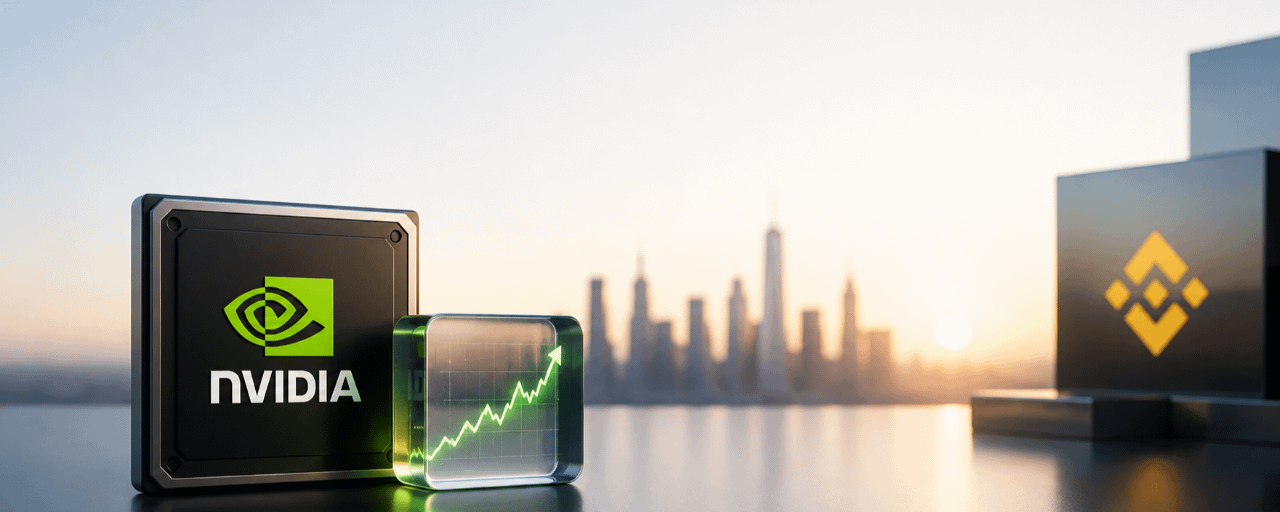
Das Schlussurteil: Wie sich Nvidias Ergebnisse über die KI-Lieferkette auswirkten, während Wall Street schliefMakro- und Digital-Assets-Desk | 31. August 2026
Zusammenfassung: Der Bericht von Nvidia vom 26. August war die Abschlussprüfung dieser KI-Ergebnissaison – und er traf nach Börsenschluss in den USA ein, genau als der Handelstag in Asien gerade begann. Während Wall Street schlief, verwandelten die rund um die Uhr laufenden Märkte von Binance, einschließlich seiner tokenisierten US-Equity-Produkte, dieses tote Zeitfenster in ein Live-Preissignal-Event. So verbreitete sich das Nvidia-Signal über vier Ebenen der KI-Lieferkette – von direkt korrelierten Chips bis zum breiteren Index –, während traditionelle Börsen im Dunkeln blieben.
Das Schlussurteil: Wie sich Nvidias Ergebnisse über die KI-Lieferkette auswirkten, während Wall Street schlief
Makro- und Digital-Assets-Desk | 31. August 2026
Zusammenfassung: Der Bericht von Nvidia vom 26. August war die Abschlussprüfung dieser KI-Ergebnissaison – und er traf nach Börsenschluss in den USA ein, genau als der Handelstag in Asien gerade begann. Während Wall Street schlief, verwandelten die rund um die Uhr laufenden Märkte von Binance, einschließlich seiner tokenisierten US-Equity-Produkte, dieses tote Zeitfenster in ein Live-Preissignal-Event. So verbreitete sich das Nvidia-Signal über vier Ebenen der KI-Lieferkette – von direkt korrelierten Chips bis zum breiteren Index –, während traditionelle Börsen im Dunkeln blieben.
Zusammenfassung: Der Bericht von Nvidia vom 26. August war die Abschlussprüfung dieser KI-Ergebnissaison – und er traf nach Börsenschluss in den USA ein, genau als der Handelstag in Asien gerade begann. Während Wall Street schlief, verwandelten die rund um die Uhr laufenden Märkte von Binance, einschließlich seiner tokenisierten US-Equity-Produkte, dieses tote Zeitfenster in ein Live-Preissignal-Event. So verbreitete sich das Nvidia-Signal über vier Ebenen der KI-Lieferkette – von direkt korrelierten Chips bis zum breiteren Index –, während traditionelle Börsen im Dunkeln blieben.
2
40
·
--
Artikel
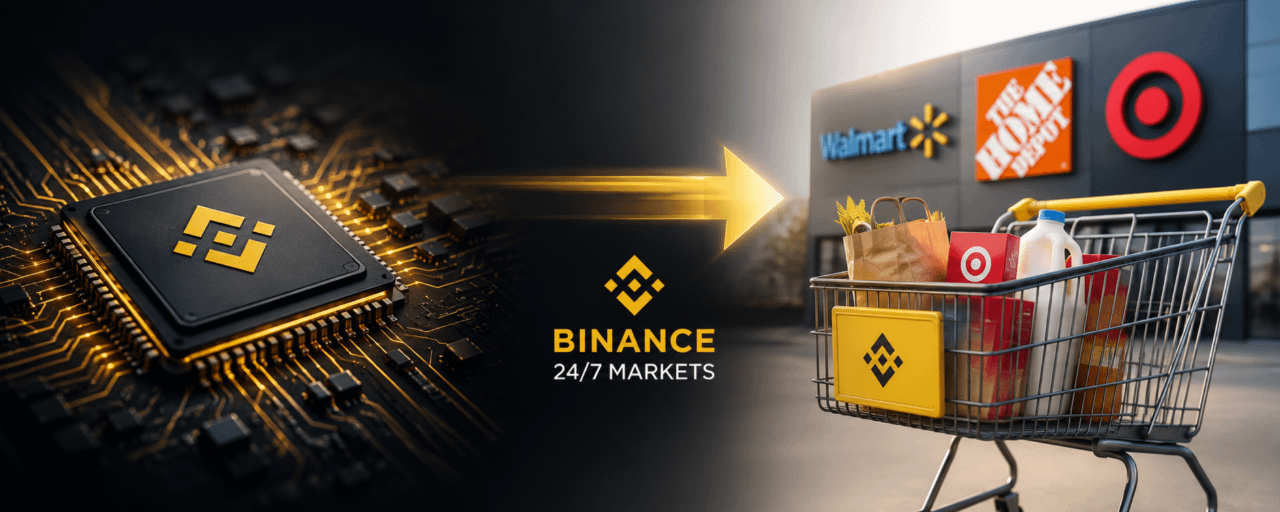
Von Chips zu Einkaufswagen: Binance bepreist die Retail-Story vor dem MarktstartMacro & Digital Assets Desk | 31. August 2026
Zusammenfassung: Die Erzählung, die 2026 dominiert hat — Halbleiter, Hyperscaler-Capex und der KI-Handel — weicht einer ruhigeren, aber möglicherweise folgenreicheren Storyline: dem amerikanischen Verbraucher. Mit dem am Freitag, dem 4. September, veröffentlichten August-Jobs-Report und nachdem die Q2-Ergebnisse der Einzelhandelsriesen von der Wall Street vollständig verarbeitet wurden, werden Inflation und Erwartungen an den Zins-Pfad rund um die Kasse neu geschrieben — nicht im Rechenzentrum. Krypto-Märkte, angeführt von Binances stets aktiven Orderbüchern, preisen diese Rotation bereits — einen vollen Handelstag vor der Eröffnungsglocke der Wall Street. Gleicher Markt. Anderer Gang.
Von Chips zu Einkaufswagen: Binance bepreist die Retail-Story vor dem Marktstart
Macro & Digital Assets Desk | 31. August 2026
Zusammenfassung: Die Erzählung, die 2026 dominiert hat — Halbleiter, Hyperscaler-Capex und der KI-Handel — weicht einer ruhigeren, aber möglicherweise folgenreicheren Storyline: dem amerikanischen Verbraucher. Mit dem am Freitag, dem 4. September, veröffentlichten August-Jobs-Report und nachdem die Q2-Ergebnisse der Einzelhandelsriesen von der Wall Street vollständig verarbeitet wurden, werden Inflation und Erwartungen an den Zins-Pfad rund um die Kasse neu geschrieben — nicht im Rechenzentrum. Krypto-Märkte, angeführt von Binances stets aktiven Orderbüchern, preisen diese Rotation bereits — einen vollen Handelstag vor der Eröffnungsglocke der Wall Street. Gleicher Markt. Anderer Gang.
Zusammenfassung: Die Erzählung, die 2026 dominiert hat — Halbleiter, Hyperscaler-Capex und der KI-Handel — weicht einer ruhigeren, aber möglicherweise folgenreicheren Storyline: dem amerikanischen Verbraucher. Mit dem am Freitag, dem 4. September, veröffentlichten August-Jobs-Report und nachdem die Q2-Ergebnisse der Einzelhandelsriesen von der Wall Street vollständig verarbeitet wurden, werden Inflation und Erwartungen an den Zins-Pfad rund um die Kasse neu geschrieben — nicht im Rechenzentrum. Krypto-Märkte, angeführt von Binances stets aktiven Orderbüchern, preisen diese Rotation bereits — einen vollen Handelstag vor der Eröffnungsglocke der Wall Street. Gleicher Markt. Anderer Gang.
2
65
·
--
Artikel
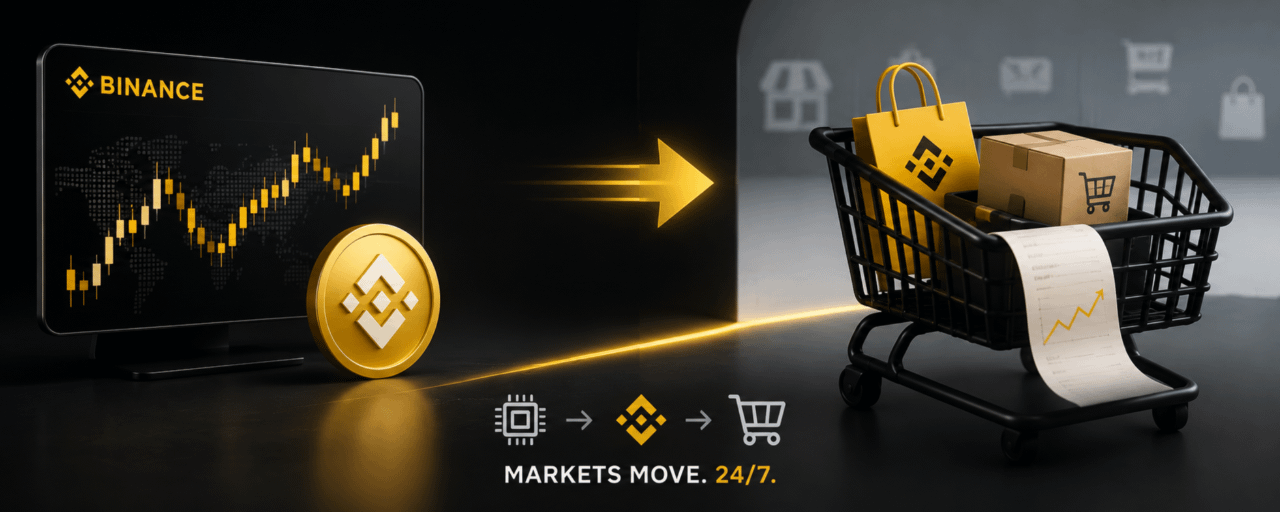
Von Chips zu Einkaufswagen: Binance bewertet den Einzelhandels-Impuls, bevor der Markt eröffnetDas nächste Markt-Signal kommt möglicherweise nicht von einem Chip-Hersteller. Es könnte aus der Kasse kommen.
Für einen Großteil des Jahres 2026 haben Künstliche Intelligenz und die Ausgaben für Halbleiter die Marktdebatte dominiert.
Doch irgendwann muss der Markt eine grundlegende Frage beantworten:
Kauft der Verbraucher immer noch ein?
Deshalb sind Walmart, Home Depot und Target so wichtig.
Ihre Ergebnisse sind nicht nur einfache Unternehmenskennzahlen. Zusammen liefern sie eine Echtzeit-Einschätzung der Nachfrage in Haushalten, des Preisdrucks und der Stärke des US-Konsumenten — drei Variablen, die direkt in die Prognose zur Inflation und zu den Zinsen einfließen können.
Von Chips zu Einkaufswagen: Binance bewertet den Einzelhandels-Impuls, bevor der Markt eröffnet
Das nächste Markt-Signal kommt möglicherweise nicht von einem Chip-Hersteller. Es könnte aus der Kasse kommen.
Für einen Großteil des Jahres 2026 haben Künstliche Intelligenz und die Ausgaben für Halbleiter die Marktdebatte dominiert.
Doch irgendwann muss der Markt eine grundlegende Frage beantworten:
Kauft der Verbraucher immer noch ein?
Deshalb sind Walmart, Home Depot und Target so wichtig.
Ihre Ergebnisse sind nicht nur einfache Unternehmenskennzahlen. Zusammen liefern sie eine Echtzeit-Einschätzung der Nachfrage in Haushalten, des Preisdrucks und der Stärke des US-Konsumenten — drei Variablen, die direkt in die Prognose zur Inflation und zu den Zinsen einfließen können.
Für einen Großteil des Jahres 2026 haben Künstliche Intelligenz und die Ausgaben für Halbleiter die Marktdebatte dominiert.
Doch irgendwann muss der Markt eine grundlegende Frage beantworten:
Kauft der Verbraucher immer noch ein?
Deshalb sind Walmart, Home Depot und Target so wichtig.
Ihre Ergebnisse sind nicht nur einfache Unternehmenskennzahlen. Zusammen liefern sie eine Echtzeit-Einschätzung der Nachfrage in Haushalten, des Preisdrucks und der Stärke des US-Konsumenten — drei Variablen, die direkt in die Prognose zur Inflation und zu den Zinsen einfließen können.
1
89
·
--
Unsere Agenten, dein Finanzsystem: Warum Binance die Finanzschicht für das Zeitalter der KI-Agenten aufbautWas passiert, wenn KI aufhört, dir Antworten zu geben, und anfängt, selbst zu handeln?
Diese Frage wird in Krypto zunehmend wichtiger.
Seit Jahren ist KI erstaunlich gut darin, Märkte zu erklären, Informationen zusammenzufassen und Fragen zu beantworten. Aber die nächste Stufe ist anders.
Ein KI-Agent sagt dir nicht einfach nur, was gerade passiert.
Sie kann handeln.
Und sobald Software in Finanzmärkten agieren kann, braucht sie mehr als nur Intelligenz.
Es braucht Zugriff, Berechtigungen, Grenzen und Verantwortlichkeit.
Genau hier kommt das Binance Agent OS ins Spiel.
Unsere Agenten, dein Finanzsystem: Warum Binance die Finanzschicht für das Zeitalter der KI-Agenten aufbaut
Was passiert, wenn KI aufhört, dir Antworten zu geben, und anfängt, selbst zu handeln?
Diese Frage wird in Krypto zunehmend wichtiger.
Seit Jahren ist KI erstaunlich gut darin, Märkte zu erklären, Informationen zusammenzufassen und Fragen zu beantworten. Aber die nächste Stufe ist anders.
Ein KI-Agent sagt dir nicht einfach nur, was gerade passiert.
Sie kann handeln.
Und sobald Software in Finanzmärkten agieren kann, braucht sie mehr als nur Intelligenz.
Es braucht Zugriff, Berechtigungen, Grenzen und Verantwortlichkeit.
Genau hier kommt das Binance Agent OS ins Spiel.
Diese Frage wird in Krypto zunehmend wichtiger.
Seit Jahren ist KI erstaunlich gut darin, Märkte zu erklären, Informationen zusammenzufassen und Fragen zu beantworten. Aber die nächste Stufe ist anders.
Ein KI-Agent sagt dir nicht einfach nur, was gerade passiert.
Sie kann handeln.
Und sobald Software in Finanzmärkten agieren kann, braucht sie mehr als nur Intelligenz.
Es braucht Zugriff, Berechtigungen, Grenzen und Verantwortlichkeit.
Genau hier kommt das Binance Agent OS ins Spiel.
2
78
·
--
Vom Antworten zum Handeln: So funktioniert Binance Agent OS in der PraxisKI bewegt sich von der einfachen Beantwortung von Fragen hin dazu, tatsächlich zu handeln. Im Krypto-Bereich könnte dieser Wandel erheblich sein — und Binance Agent OS ist darauf ausgelegt, die Infrastruktur bereitzustellen, die dies möglich macht.
Statt dass ein KI-Agent dir lediglich sagt, dass sich Bitcoin bewegt, stell dir einen Agenten vor, der auf Marktdaten zugreifen, Positionen überwachen, Bedingungen bewerten und mit der Handelsinfrastruktur interagieren kann — alles innerhalb der vom Nutzer festgelegten Berechtigungen und Grenzen.
Genau das ist die Idee hinter Binance Agent OS.
Was ist Binance Agent OS?
Vom Antworten zum Handeln: So funktioniert Binance Agent OS in der Praxis
KI bewegt sich von der einfachen Beantwortung von Fragen hin dazu, tatsächlich zu handeln. Im Krypto-Bereich könnte dieser Wandel erheblich sein — und Binance Agent OS ist darauf ausgelegt, die Infrastruktur bereitzustellen, die dies möglich macht.
Statt dass ein KI-Agent dir lediglich sagt, dass sich Bitcoin bewegt, stell dir einen Agenten vor, der auf Marktdaten zugreifen, Positionen überwachen, Bedingungen bewerten und mit der Handelsinfrastruktur interagieren kann — alles innerhalb der vom Nutzer festgelegten Berechtigungen und Grenzen.
Genau das ist die Idee hinter Binance Agent OS.
Was ist Binance Agent OS?
Statt dass ein KI-Agent dir lediglich sagt, dass sich Bitcoin bewegt, stell dir einen Agenten vor, der auf Marktdaten zugreifen, Positionen überwachen, Bedingungen bewerten und mit der Handelsinfrastruktur interagieren kann — alles innerhalb der vom Nutzer festgelegten Berechtigungen und Grenzen.
Genau das ist die Idee hinter Binance Agent OS.
Was ist Binance Agent OS?
1
103
·
--
🪄 DEIN BINANCE-TRAUM
Wenn du einen Zauberstab hättest und eine brandneue Funktion, ein Produkt oder eine Fähigkeit zum Binance-Blockchain-Ökosystem hinzufügen könntest, die es heute noch nicht gibt: Was wäre es — und welches Problem würde es für dich lösen?
👇 Lass unten deine wildeste, schärfste und technisch fundierteste Idee da:
• 🔮 Was ist es? (nenn es so, als würde es bereits ausgeliefert)
• ⚡ Warum braucht dieses Ökosystem das? (welche Lücke schließt es)
• 🙌 Wer gewinnt? (Trader, Entwickler, Validatoren, alltägliche Nutzer — bitte konkret)
Lass uns sehen, wie weit wir den Binance-Traum bringen können. 🚀
🪄 DEIN BINANCE-TRAUM
Wenn du einen Zauberstab hättest und eine brandneue Funktion, ein Produkt oder eine Fähigkeit zum Binance-Blockchain-Ökosystem hinzufügen könntest, die es heute noch nicht gibt: Was wäre es — und welches Problem würde es für dich lösen?
👇 Lass unten deine wildeste, schärfste und technisch fundierteste Idee da:
• 🔮 Was ist es? (nenn es so, als würde es bereits ausgeliefert)
• ⚡ Warum braucht dieses Ökosystem das? (welche Lücke schließt es)
• 🙌 Wer gewinnt? (Trader, Entwickler, Validatoren, alltägliche Nutzer — bitte konkret)
Lass uns sehen, wie weit wir den Binance-Traum bringen können. 🚀
Wenn du einen Zauberstab hättest und eine brandneue Funktion, ein Produkt oder eine Fähigkeit zum Binance-Blockchain-Ökosystem hinzufügen könntest, die es heute noch nicht gibt: Was wäre es — und welches Problem würde es für dich lösen?
👇 Lass unten deine wildeste, schärfste und technisch fundierteste Idee da:
• 🔮 Was ist es? (nenn es so, als würde es bereits ausgeliefert)
• ⚡ Warum braucht dieses Ökosystem das? (welche Lücke schließt es)
• 🙌 Wer gewinnt? (Trader, Entwickler, Validatoren, alltägliche Nutzer — bitte konkret)
Lass uns sehen, wie weit wir den Binance-Traum bringen können. 🚀
1
40
·
--

Artikel
Binance heißt GameStop bStocks (GMEB) für Cross- & Portfolio-Margin willkommen: Eine neue Ära der KapitaleffizienzBinance fügt GameStop bStocks (GMEB) als Margin-Kollateral hinzu | Was Trader wissen müssen
Binance treibt weiterhin die Grenzen dessen voran, wie eine moderne Handelsplattform aussehen kann.
Ab dem 12. August wurden GameStop bStocks (GMEB) als Sicherheiten für Binance Cross Margin, Portfolio Margin und Portfolio Margin Pro zugelassen.
Auf den ersten Blick mag das wie ein weiteres Produkt-Update aussehen.
Für anspruchsvolle Trader bedeutet das jedoch etwas viel Größeres:
Traditionelle Marktexponierung wird zunehmend mit kryptonativen Handelsinfrastrukturen integriert.
Binance heißt GameStop bStocks (GMEB) für Cross- & Portfolio-Margin willkommen: Eine neue Ära der Kapitaleffizienz
Binance fügt GameStop bStocks (GMEB) als Margin-Kollateral hinzu | Was Trader wissen müssen
Binance treibt weiterhin die Grenzen dessen voran, wie eine moderne Handelsplattform aussehen kann.
Ab dem 12. August wurden GameStop bStocks (GMEB) als Sicherheiten für Binance Cross Margin, Portfolio Margin und Portfolio Margin Pro zugelassen.
Auf den ersten Blick mag das wie ein weiteres Produkt-Update aussehen.
Für anspruchsvolle Trader bedeutet das jedoch etwas viel Größeres:
Traditionelle Marktexponierung wird zunehmend mit kryptonativen Handelsinfrastrukturen integriert.
Binance treibt weiterhin die Grenzen dessen voran, wie eine moderne Handelsplattform aussehen kann.
Ab dem 12. August wurden GameStop bStocks (GMEB) als Sicherheiten für Binance Cross Margin, Portfolio Margin und Portfolio Margin Pro zugelassen.
Auf den ersten Blick mag das wie ein weiteres Produkt-Update aussehen.
Für anspruchsvolle Trader bedeutet das jedoch etwas viel Größeres:
Traditionelle Marktexponierung wird zunehmend mit kryptonativen Handelsinfrastrukturen integriert.
1
124
Anmelden und weiter Inhalte entdecken
Krypto-Nutzer weltweit auf Binance Square kennenlernen
⚡️ Bleib in Sachen Krypto stets am Puls.
💬 Die weltgrößte Kryptobörse vertraut darauf.
👍 Erhalte verlässliche Einblicke von verifizierten Creators.
E-Mail-Adresse/Telefonnummer
Trendthemen
FedRateWatch
864,242 Aufrufe
4,129 Kommentare
Teile & gewinne Traffic-Belohnungen in unserer Kampagne mit angesagtem Hashtag
✨Thema: FOMC September, Was ist der nächste Schritt der Fed?
👉So nimmst du teil:
Veröffentliche einen kurzen Beitrag oder Artikel mit dem Hashtag #FedRateWatch
Erstelle Inhalte basierend auf den folgenden Blickwinkeln:
- Der August-Core-CPI stieg um 0,3% im Monatsvergleich, und die Wahrscheinlichkeit für eine 25bp-Erhöhung diese Woche liegt nun bei fast 90%. Erwartest du diese Woche eine Zinserhöhung? Handelt es sich um einen einmaligen Schritt oder den Beginn eines längeren Zinserhöhungszyklus?
- Wenn die Erhöhung erfolgt: Wie entwickelt sich das für BTC, Tech-Aktien und Gold? Aufwärts- oder abwärtsgerichtet?
- Wie planst du als Nächstes zu handeln? Teile deinen BTC-, Aktien- oder Gold-Trade/Bestände mit unserem Trade-Sharing-Widget.
⏰Kampagnenzeitraum:
- 2026-09-15 11:00 - 2026-09-17 3:00 UTC
🎁Belohnung:
- Qualifizierte Beiträge, die die oben genannten Richtlinien erfüllen und mehr als 100 Wörter enthalten, werden überprüft und erhalten möglicherweise einen zufälligen Traffic-Boost von 500 bis 3.000 Aufrufen. Du erhältst eine Benachrichtigung von deiner Feed-Secretary, wenn dein Beitrag ausgewählt wird.
- Erhalte die Chance, dass dein Artikel auf Binance Square Official vorgestellt wird
Du brauchst Ideen für deinen Beitrag? Besuche die Themenseite #FedRateWatch oder die Square Guide on How to Post for Better Reach.
Binance Square Official
·508 Likes
·1.1M Aufrufe
MSTRTradingVolumeSurpassesMorganStanley
0 Aufrufe
0 Kommentare
BitcoinFalls4%
5,697 Aufrufe
249 Kommentare