$THE : The Role of Explicit Uncertainty Logging in Volatile Markets
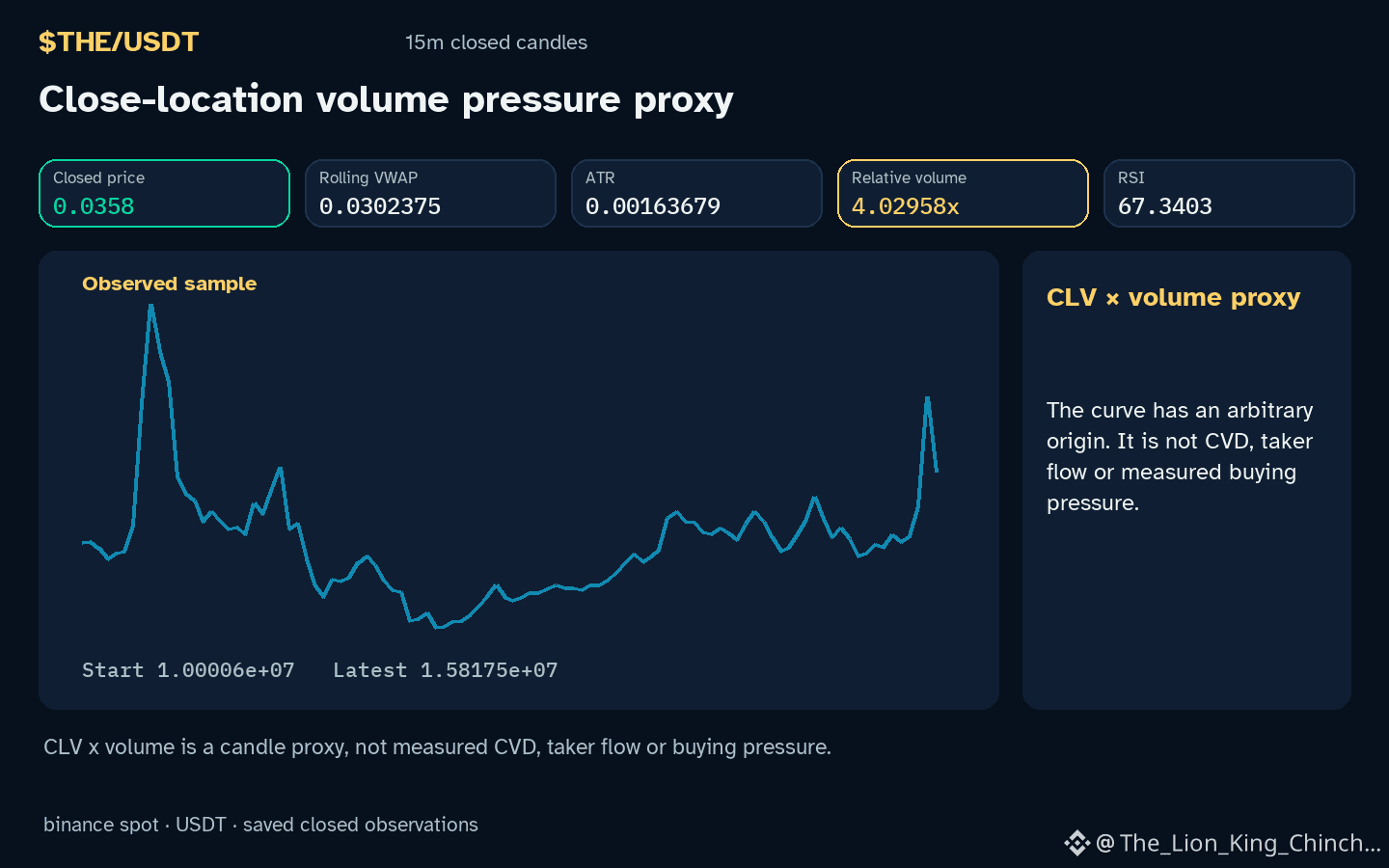
$THE : Does recording what we do not know improve our response to rapid changes? The current $THE data shows an hourly up direction with volume 4.03x the baseline.
Explicit uncertainty logging is a hypothetical mechanism where a researcher writes down every unverified assumption before acting. For instance, an observer might see the daily change of 36.6412% and assume a trend will continue. However, the exact reason for the move remains unknown. By logging this gap in knowledge, one might choose a wider invalidation point to account for volatility, accepting a smaller position size to keep total risk constant. This illustrates the trade-off between entry quality and the distance to a meaningful stop.
Consider a thought experiment where two different interpretations exist for the same data. One view sees the RSI 67.3 as a sign of strength, while another sees it as a limit of the current move. Without a log of uncertainty, a person might ignore the second possibility entirely. A self-check involves asking if the plan relies on the asset staying within the local support 0.0296 and resistance 0.0374. If a future hourly candle closes below that support, it would suggest the initial assumption of a sustained move was incorrect, requiring a full reassessment of the observation.
Probabilistic market research, not a recommendation or guaranteed return.
#THE #RiskManagement #CryptoLearning