𝗧𝗥𝗢𝗡 𝗗𝗘𝗙𝗜: 𝗛𝗢𝗪 𝘀𝗧𝗥𝗫, 𝗨𝗦𝗗𝗗 𝗔𝗡𝗗 𝗝𝗨𝗦𝗧𝗟𝗘𝗡𝗗 𝗧𝗨𝗥𝗡 𝗦𝗧𝗔𝗞𝗘𝗗 𝗖𝗔𝗣𝗜𝗧𝗔𝗟 𝗜𝗡𝗧𝗢 𝗔 𝗠𝗨𝗟𝗧𝗜-𝗟𝗔𝗬𝗘𝗥 𝗙𝗜𝗡𝗔𝗡𝗖𝗜𝗔𝗟 𝗦𝗧𝗥𝗔𝗧𝗘𝗚𝗬
𝟭. 𝗧𝗛𝗘 𝗣𝗥𝗢𝗕𝗟𝗘𝗠: 𝗧𝗥𝗔𝗗𝗜𝗧𝗜𝗢𝗡𝗔𝗟 𝗦𝗧𝗔𝗞𝗜𝗡𝗚 𝗖𝗥𝗘𝗔𝗧𝗘𝗦 𝗔𝗡 𝗢𝗣𝗣𝗢𝗥𝗧𝗨𝗡𝗜𝗧𝗬 𝗖𝗢𝗦𝗧
Traditional staking allows cryptocurrency holders to participate in network security and earn rewards, but it can also reduce the flexibility of their capital.
When assets are committed to staking, accessing liquidity may require unstaking and waiting through the applicable withdrawal period.
This creates a financial trade-off between earning staking rewards and maintaining access to capital for other opportunities.
TRON DeFi addresses this limitation through the composability of liquid staking, collateral-backed stablecoin issuance, and decentralized lending.
Instead of treating staking as the final destination for capital, the ecosystem allows eligible staked assets to become the foundation of additional financial activities.
The combination of sTRX, USDD, and JustLend DAO demonstrates how different protocols can work together to expand the utility of an existing asset position.
𝟮. 𝗧𝗛𝗘 𝗠𝗘𝗖𝗛𝗔𝗡𝗜𝗦𝗠: 𝗧𝗛𝗥𝗘𝗘 𝗣𝗥𝗢𝗧𝗢𝗖𝗢𝗟 𝗙𝗨𝗡𝗖𝗧𝗜𝗢𝗡𝗦, 𝗢𝗡𝗘 𝗖𝗢𝗡𝗡𝗘𝗖𝗧𝗘𝗗 𝗖𝗔𝗣𝗜𝗧𝗔𝗟 𝗙𝗟𝗢𝗪
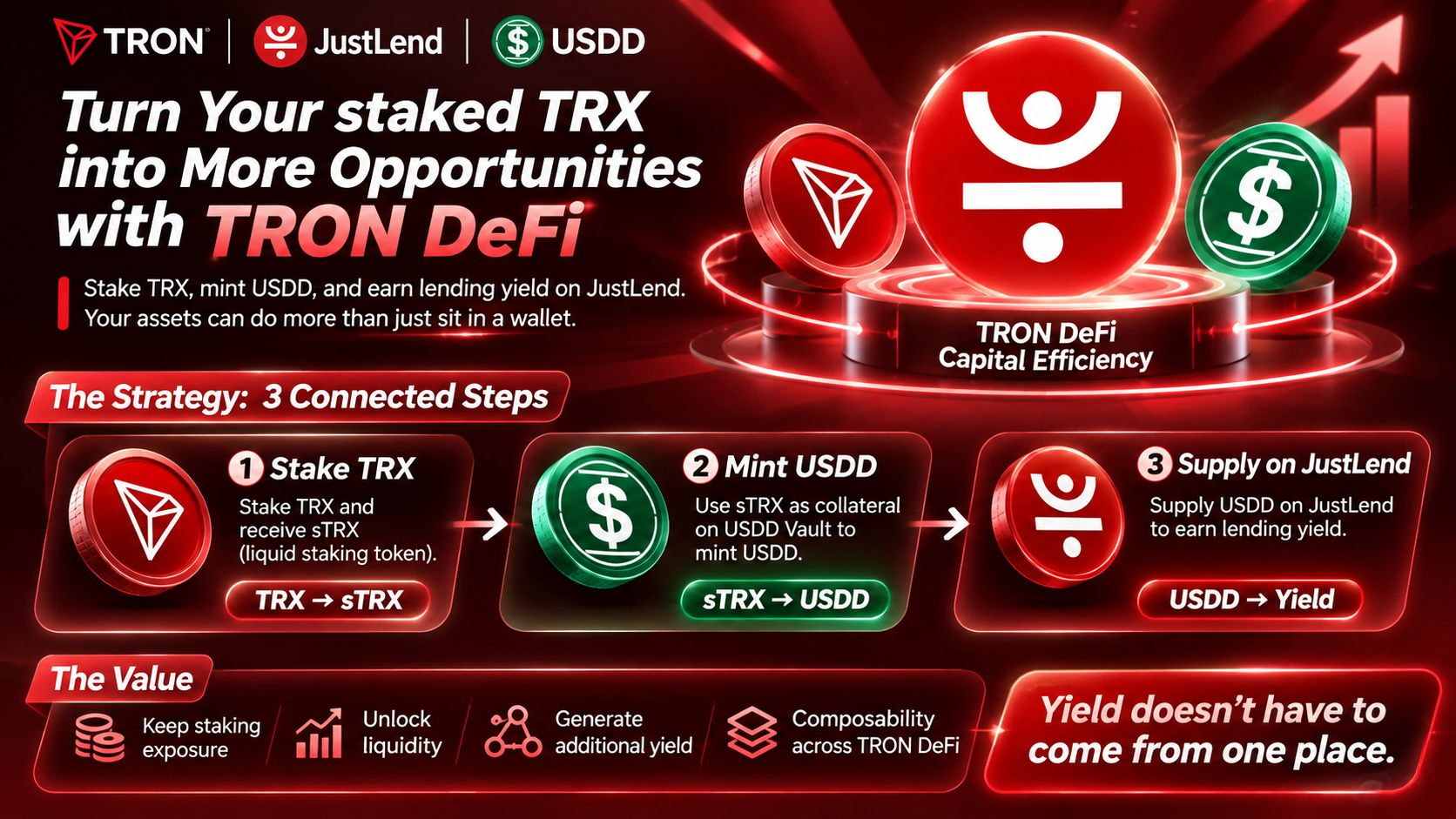
The strategy consists of three interconnected steps:
• Stake TRX and receive sTRX, a liquid staking token representing a position in staked TRX.
• Deposit eligible sTRX into a USDD Vault as collateral to mint USDD while retaining exposure to the underlying staking position.
• Supply the generated USDD to JustLend DAO to access additional lending yield.
The economic significance lies in the distinct functions performed by each component.
sTRX provides staking exposure.
USDD unlocks collateral-backed liquidity.
JustLend provides an opportunity to earn lending income from that liquidity.
Together, these mechanisms demonstrate DeFi composability, where the output of one financial protocol becomes an input for another.
However, minting USDD creates a debt obligation. It does not generate free capital, and the deposited sTRX remains subject to collateralization and liquidation requirements.
𝟯. 𝗧𝗛𝗘 𝗡𝗨𝗠𝗕𝗘𝗥𝗦: 𝗪𝗛𝗬 𝗡𝗘𝗧 𝗬𝗜𝗘𝗟𝗗 𝗠𝗔𝗧𝗧𝗘𝗥𝗦 𝗠𝗢𝗥𝗘 𝗧𝗛𝗔𝗡 𝗖𝗢𝗠𝗕𝗜𝗡𝗘𝗗 𝗔𝗣𝗬
Consider a hypothetical position using $10,000 worth of sTRX as collateral.
Assume the following illustrative parameters:
• Annualized staking return: 4%.
• USDD minted: 3,000 USDD.
• Initial collateralization ratio: 333.33%.
• Annualized Vault stability fee: 1%.
• Annualized USDD lending return: 4%.
Estimated annual financial outcome, assuming unchanged prices and rates:
• Staking rewards: $400.
• USDD lending income: $120.
• USDD borrowing cost: $30.
• Combined net return: $490.
• Effective return on initial capital: 4.9%.
Compared with staking alone, this hypothetical strategy generates an additional $90 annually, equivalent to a 0.9 percentage-point improvement.
The key insight is that users cannot simply add the staking APY and lending APY together because the two rates apply to different capital amounts.
Furthermore, if the USDD lending rate falls below the effective borrowing cost, the additional yield layer could become unprofitable.
These figures are illustrative assumptions, not live protocol rates. Actual returns depend on market conditions, fees, collateral valuation, and protocol parameters.
𝟰. 𝗟𝗢𝗡𝗚-𝗧𝗘𝗥𝗠 𝗜𝗠𝗣𝗔𝗖𝗧: 𝗖𝗢𝗠𝗣𝗢𝗦𝗔𝗕𝗜𝗟𝗜𝗧𝗬 𝗜𝗦 𝗧𝗥𝗢𝗡 𝗗𝗘𝗙𝗜'𝗦 𝗦𝗧𝗥𝗨𝗖𝗧𝗨𝗥𝗔𝗟 𝗔𝗗𝗩𝗔𝗡𝗧𝗔𝗚𝗘
From my perspective, the most valuable aspect of this strategy is not the additional yield itself.
It is the interoperability between financial products within the TRON ecosystem.
Liquid staking improves asset flexibility, collateral-backed stablecoin issuance provides access to liquidity, and decentralized lending creates additional opportunities for capital deployment.
Each protocol contributes a different financial function rather than operating as an isolated product.
Nevertheless, greater composability also introduces interconnected risks:
• Collateral liquidation during market downturns.
• Variable lending yields and stability fees.
• Smart-contract vulnerabilities across multiple protocols.
• sTRX liquidity and USDD peg risks.
Users should maintain conservative collateralization ratios, monitor borrowing costs, and evaluate whether additional returns adequately compensate for the increased complexity and risk.
The long-term opportunity for TRON DeFi lies in building an environment where capital can serve multiple financial purposes without requiring users to immediately sell their underlying assets.
Staking is no longer necessarily the endpoint of capital allocation.
Through sTRX, USDD, and JustLend, it can become the starting point of a broader on-chain financial strategy.
The objective should not be maximizing the number of yield layers, but maximizing risk-adjusted capital efficiency.
Sources:
TRON DeFi's product strategy announcement.
https://justlend.org
https://app.usdd.io
Numerical case study: illustrative internal calculation, excluding transaction fees, compounding, and asset price fluctuations.
@TRON DAO @JUST DAO @USDD - Decentralized USD