$GRAM: GRAM: Does Historical Turnover Predict Order‑Book Depth?
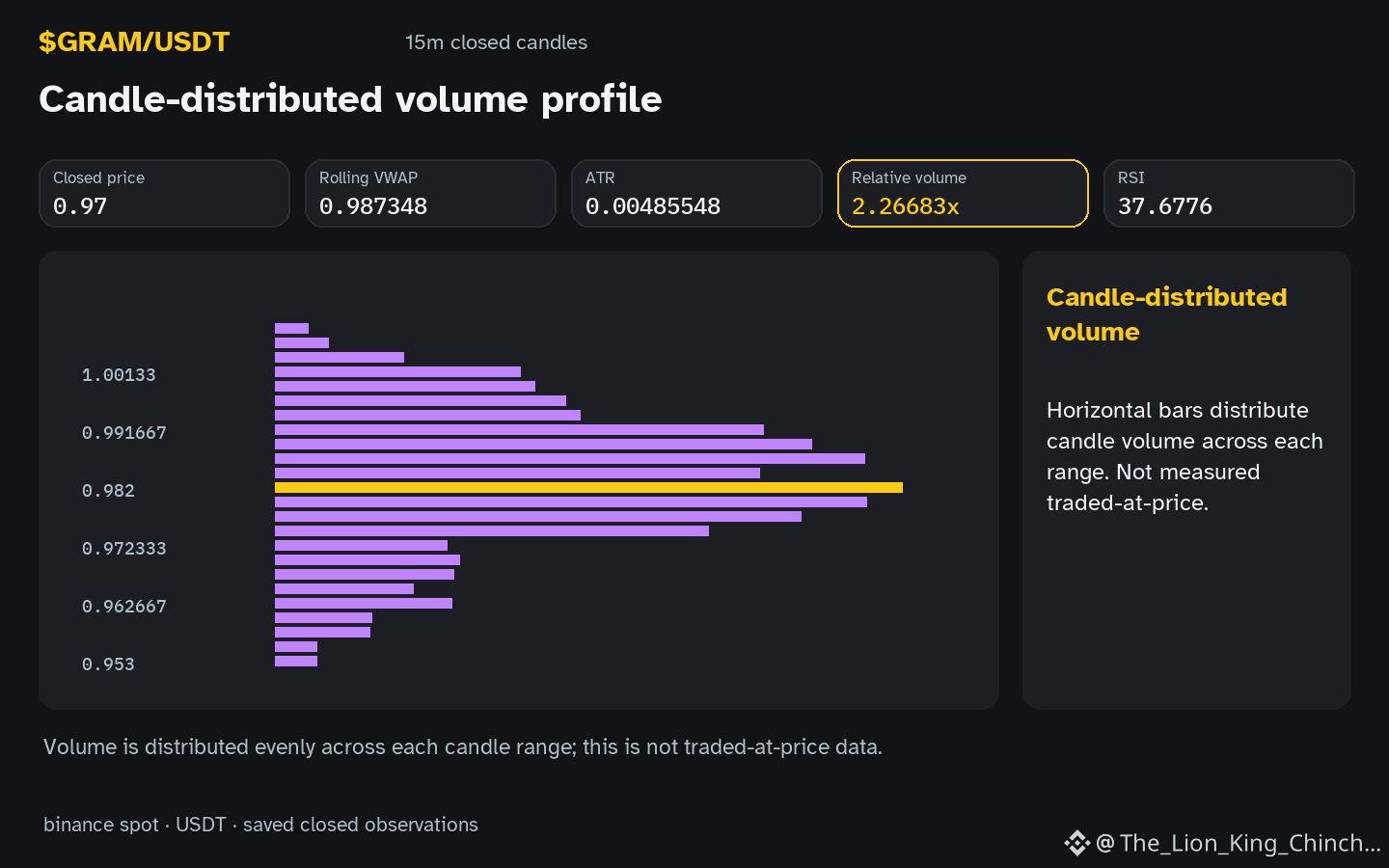
$GRAM: GRAM shows an hourly direction down while volume runs above baseline. Does the high historical turnover guarantee that the live order‑book will hold a deep buy side?\n\n**Myth**: Many traders assume that a strong turnover figure, such as a relative volume of 2.27x baseline, means the current order‑book is well‑filled and that exits will be easy. This view mixes two different concepts. Historical turnover measures how much was traded over a past period, but the live order‑book reflects only the orders that are currently posted. Even when 2.27x baseline suggests strong activity, the depth can be thin if most of that volume was executed quickly and removed.\n\n**Explanation**: Think of turnover as the total water that has passed through a pipe during the last hour. The order‑book depth is the amount of water still sitting in the pipe at this moment. If a surge of trades emptied the pipe, the recorded turnover will stay high while the remaining depth collapses. In GRAM’s case, the hourly change -0.512821% is negative, confirming price pressure despite the volume spike. The RSI 37.7 is also in a lower range, hinting that momentum is bearish.\n\n**Counterexample**: A different asset could post the same 2.27x baseline but retain a thick order‑book, allowing traders to unwind positions smoothly. That scenario shows the misconception is not universally true.\n\n**Self‑check**: To reassess the interpretation, watch the next closed hourly candle. If the bid‑ask spread widens and the depth at key levels shrinks, the hypothesis that high turnover equals deep depth weakens. Conversely, stable depth would support the opposite view. This simple observation‑driven test keeps the analysis grounded without projecting future price moves.
Probabilistic market research, not a recommendation or guaranteed return.
#GRAM #CryptoLearning