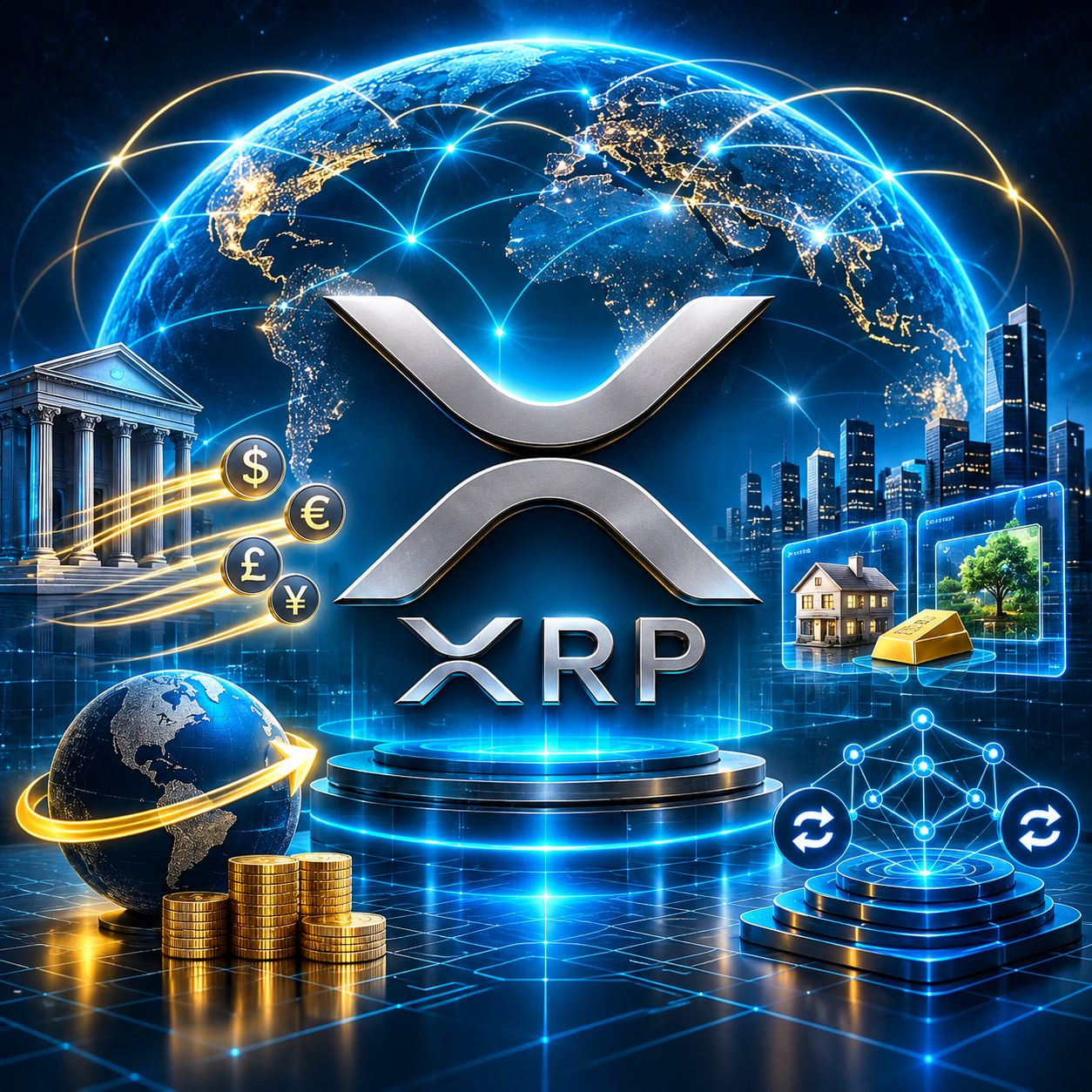

$XRP : Powering the Future of Global Payments and Digital Finance
Introduction
The cryptocurrency industry is evolving rapidly, and XRP remains one of the most recognized digital assets focused on transforming global payments. Built for speed, efficiency, and real-world financial applications, XRP aims to make transferring value across borders faster and more cost-effective.
XRP is the native digital asset of the XRP Ledger (XRPL), an open-source, decentralized blockchain launched in 2012. Its technology focuses on financial infrastructure, liquidity, and efficient value transfers.
1. Cross-Border Payments
One of XRP's most important use cases is international payments.
Traditional international transfers can involve multiple intermediaries, additional costs, and settlement delays. XRP can serve as a bridge asset between different currencies, helping facilitate faster transfers.
The XRP Ledger typically settles transactions in approximately 3–5 seconds.
2. Liquidity and Currency Exchange
XRP can provide liquidity when transferring value between different currencies.
For example, instead of maintaining separate liquidity pools for every currency pair, financial service providers may use XRP as an intermediate asset.
This can help improve capital efficiency and simplify international settlement processes.
3. Decentralized Finance (DeFi)
The XRP Ledger includes a native decentralized exchange (DEX), allowing users to trade supported digital assets directly on the network.
Its ecosystem also supports automated market makers (AMMs), which provide another way to facilitate trading and liquidity.
These features expand XRPL beyond simple payment transfers.
4. Real-World Asset Tokenization
Another important development is Real-World Asset (RWA) tokenization.
The XRP Ledger supports the creation and management of digital representations of assets such as:
- Government bonds
- Real estate-related assets
- Financial instruments
- Money market funds
- Other tokenized assets
Tokenization could make financial assets easier to transfer, manage, and trade through blockchain technology.
5. Low Transaction Costs and Fast Settlement
The XRP Ledger is designed to process transactions efficiently.
Its key characteristics include:
- Typical settlement time of 3–5 seconds.
- Very low transaction fees.
- No energy-intensive mining.
- A decentralized network of validators.
- An open-source development environment.
These characteristics make XRPL suitable for applications requiring frequent and efficient value transfers.
6. XRP's Role in the Ripple Ecosystem
An important distinction is that Ripple and XRP are not the same thing.
Ripple is a financial technology company, while XRP is an independent digital asset native to the XRP Ledger.
Ripple develops financial technology solutions and uses blockchain infrastructure in its business operations. XRP can serve as a bridge asset for liquidity and settlement.
7. Fundamental Strengths
From a fundamental perspective, XRP has several important areas worth monitoring:
- More financial applications built on XRPL.
- Growth in cross-border payment infrastructure.
- Expansion of tokenized financial assets.
- Development of decentralized trading and liquidity.
- Increasing developer and institutional participation.
However, adoption of the XRP Ledger does not automatically mean that every application will generate increased demand for XRP.
8. Risks and Challenges
Despite its technological advantages, XRP also faces important challenges.
These include regulatory uncertainty across different jurisdictions, competition from other blockchain networks, changing market conditions, and the possibility that institutional adoption may develop more slowly than expected.
Its market price can remain volatile regardless of technological progress.
Conclusion: Is XRP Building for the Long Term?
XRP represents an interesting combination of blockchain technology and real-world financial utility.
Its focus on cross-border payments, liquidity, decentralized trading, and tokenization gives the XRP Ledger several potential applications beyond cryptocurrency speculation.
The most important long-term factors to watch are actual network usage, meaningful XRP utility, developer growth, and sustainable adoption.
XRP's long-term story is not just about price movements. It is about whether blockchain technology can make global financial infrastructure more accessible, efficient, and connected.
Disclaimer: This article is for educational and informational purposes only. It is not financial advice or a recommendation to buy or sell XRP. #Xrp🔥🔥 #Write2Earn #BTC走势分析 $PORTAL