12.24% vs 4.16%: how to read a "high yield" claim
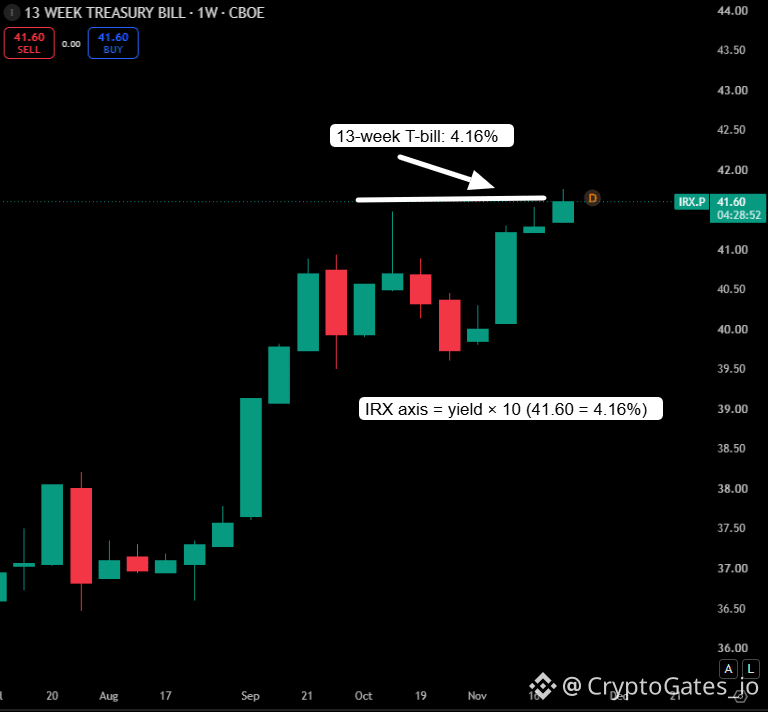
Saylor says STRC yields 12.24% while the 3-month T-bill sits at 4.16% (Nov 25 quotes). His goal is to make STRC the benchmark for "Digital Credit."
Here is how I'd read it:
Risk-free vs. risky. The T-bill is the baseline. Everything above it is a premium for risk.
The ~8pt spread is a risk premium. It reflects issuer risk plus Bitcoin's volatility, not a free bonus.
Ask what funds the payout. Yield that depends on continued capital raising and BTC price is only as stable as those conditions.
Know the source. The author issues the product. Treat it as a pitch and check the numbers yourself.
Stress test the downside. Ask what happens to the payout if BTC falls sharply.
The chart shows the T-bill at 4.16%, up from about 3.5% in December 2025. The risk-free benchmark is getting stronger, which raises the bar for any high-yield product.
Verify first. Risk later. Not financial advice.