$BTC
Opportunities, Risks, and the Futures Liquidation Trap
Bitcoin (BTC) and Binance Coin (BNB) are two of the most dominant forces in the cryptocurrency market. While both offer massive growth potential, their extreme daily volatility has turned the futures market into a high-stakes battlefield where countless traders face total liquidation.
The Good Side (Pros)
Bitcoin is widely recognized as digital gold. It holds the highest market capitalization, deep liquidity, and strong institutional adoption, making it the safest long-term store of value in the crypto space. BNB, the native token of the Binance ecosystem, provides immense utility. It powers the BNB Smart Chain, reduces tradingfees on the world’s largest exchange, and benefits from regular coin burns that decrease supply over time. For long-term spot investors, both assets have historically delivered remarkable returns.
The Bad Side (Cons) and Extreme Volatility
Despite their strengths, BTC and BNB suffer from severe price fluctuations. In a single day, prices can surge dramatically and crash just as fast due to macroeconomic news, regulatory crackdowns, or market manipulation by large holders known as whales. Unlike traditional stock markets, crypto operates 24/7 with no circuit breakers to stop sudden freefalls. Additionally, BNB faces centralization concerns because its value is heavily tied to Binance’s regulatory standing and corporate decisions.
The Futures Trading Liquidation Trap
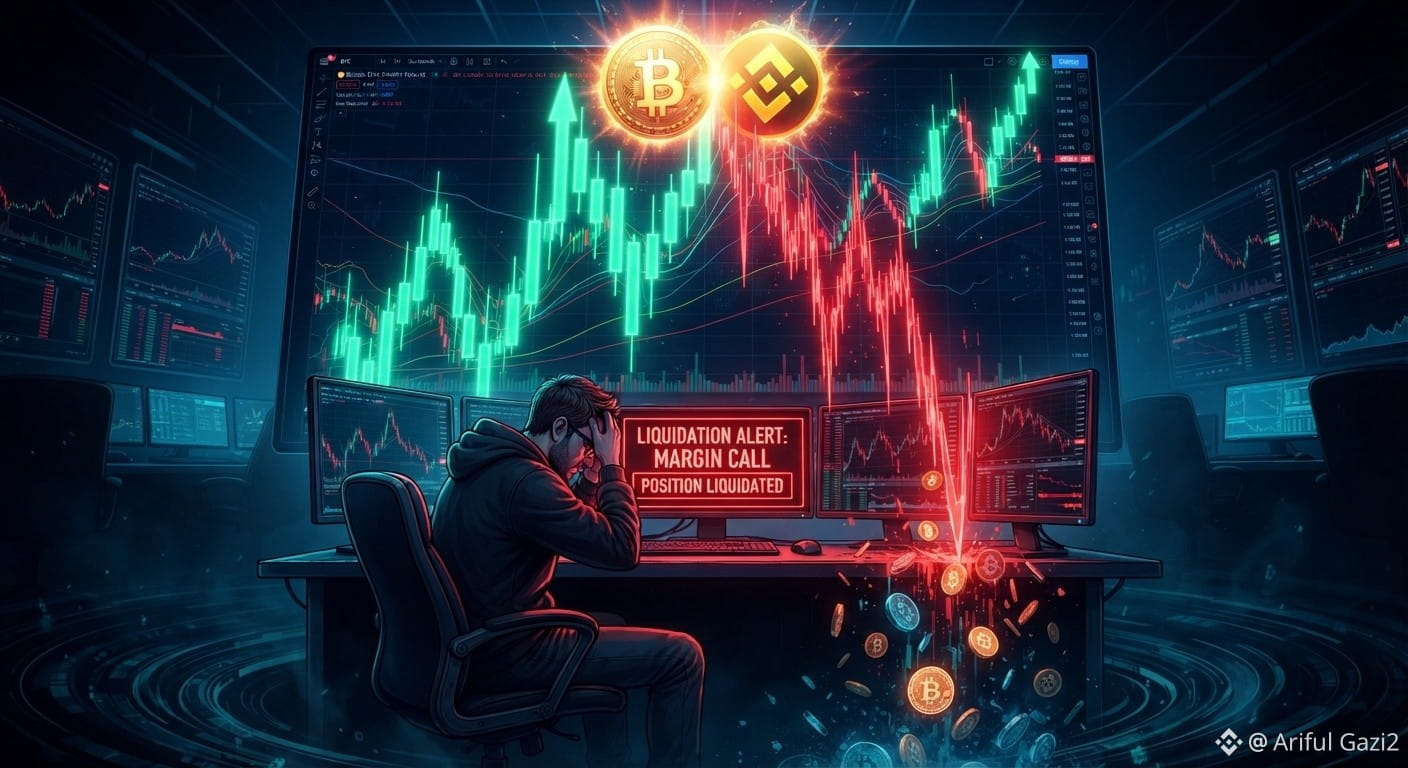
This constant up-and-down movement makes futures trading exceptionally dangerous. Many traders enter the market using high leverage—such as 20x, 50x, or even 100x—hoping to multiply small investments quickly. However, when BTC or BNB experiences a sudden 2% to 5% price swing in the opposite direction, leveraged positions are instantly wiped out.
This process, known as liquidation,happens daily on a massive scale. Sudden "wicks" on the price chart often trigger stop-losses and liquidate both long and short positions within minutes. Without strict risk management, proper position sizing, and low leverage, traders.