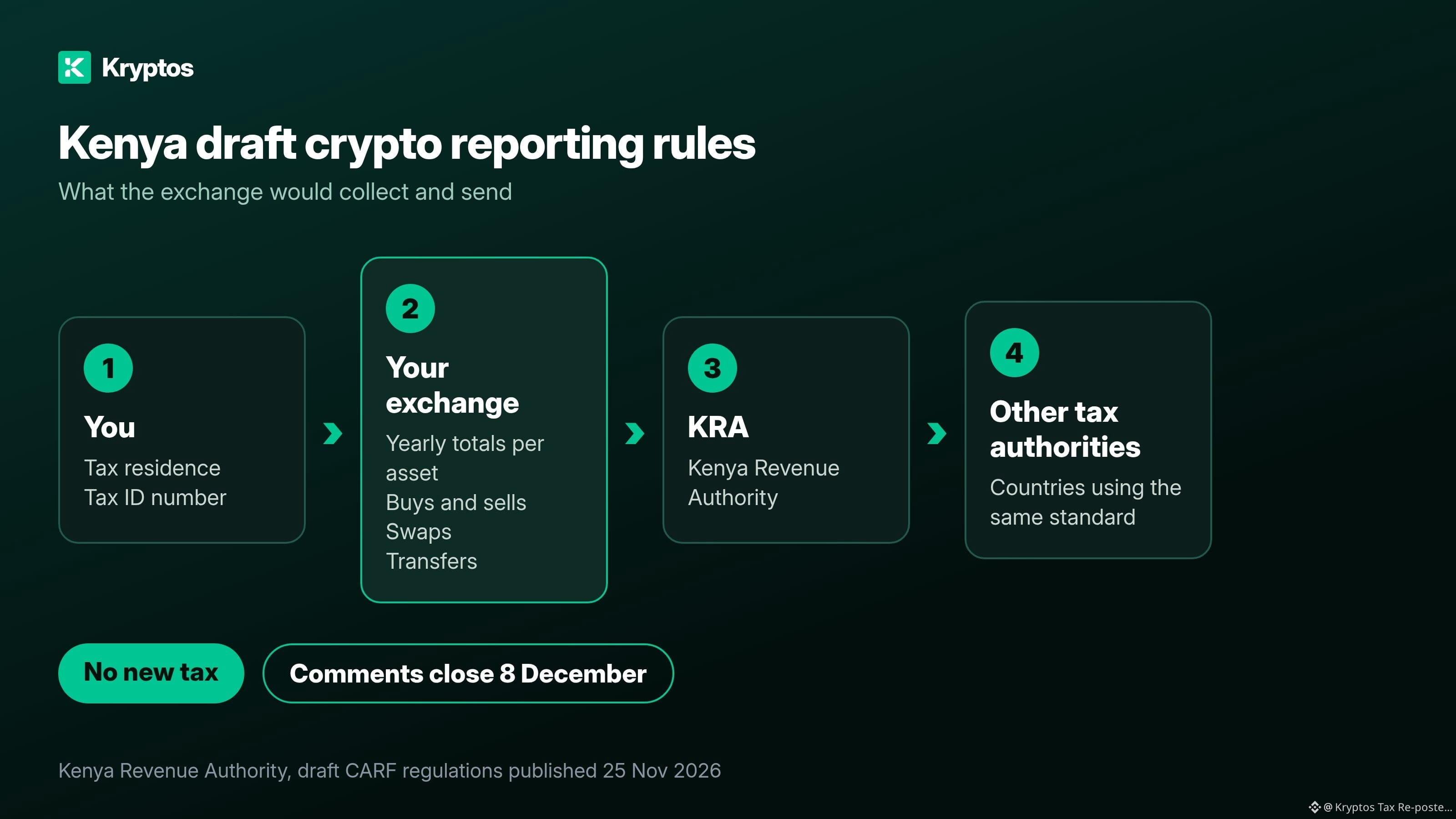
The Kenya Revenue Authority unveiled proposed regulations concerning cryptocurrency reporting on Wednesday, with the public comment period remaining open through December 8.
According to the proposed framework, digital asset exchanges operating in Kenya must collect tax identification numbers alongside residency information from every customer. Moving forward, these platforms would submit an annual report to the KRA outlining all purchases, sales, swaps, and transfers conducted by each participant.
Crucially, these provisions do not establish any new levies; instead, they provide the tax agency with far greater visibility into trading operations.
For individuals trading crypto assets in Kenya, it is an opportune moment to consider whether personal transaction records would correspond smoothly with such yearly summaries.
Not tax advice.