
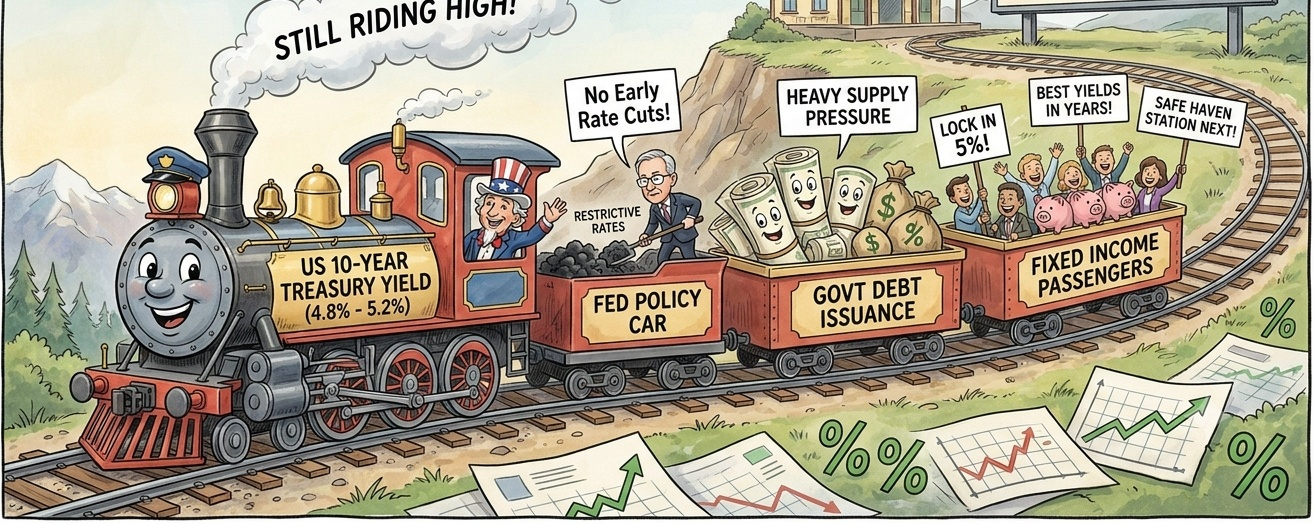

📉 BOND MARKET TWIST: RATE HIKE ODDS HIGH, YET TREASURIES SEE INFLOWS! 🏦⚡
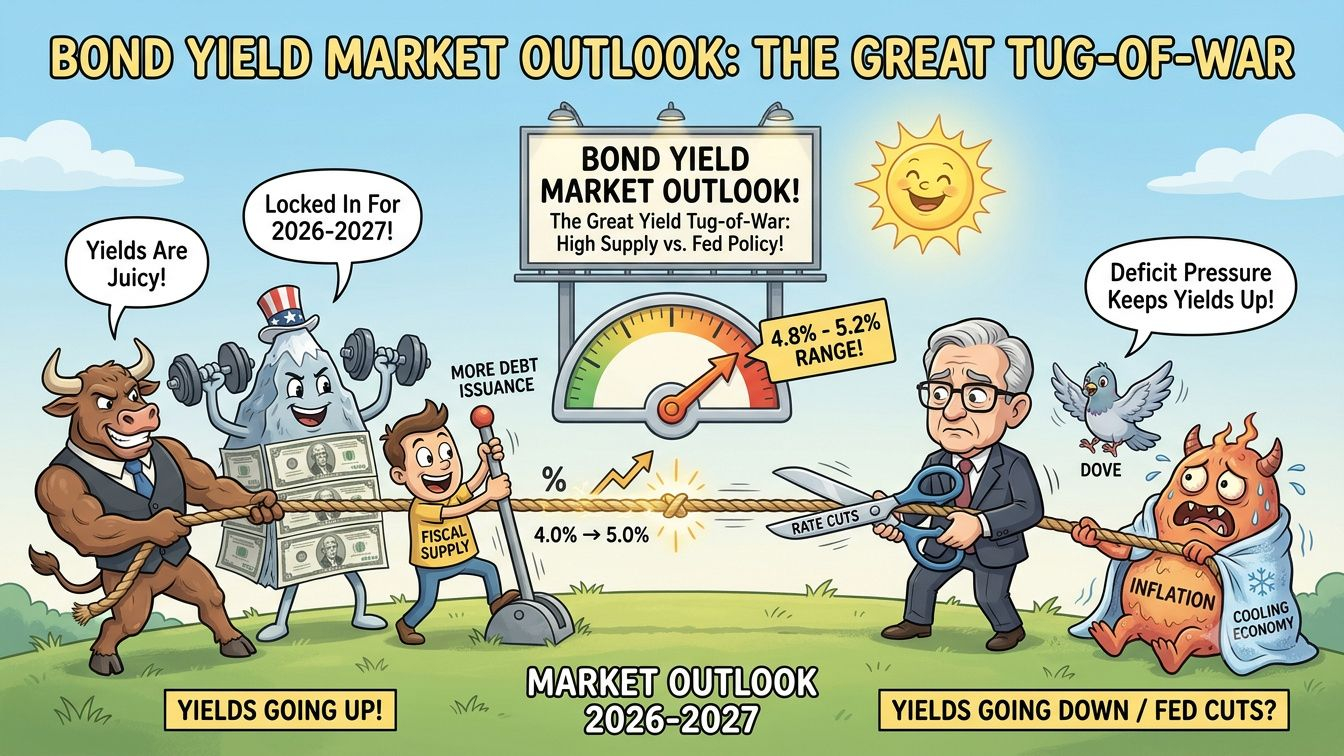
Textbook rules say that when inflation stays sticky and Fed rate-hike probabilities run high (with ~95%+ hike pricing heading into the December FOMC), bond yields should climb and bond prices should fall.🤔👇 Yet during the November 25, 2026 session—and ahead of the Thanksgiving holiday—the market moved in the opposite direction: US Treasury yields slipped (meaning bond prices saw buying and inflows), even as Core PCE inflation hovered sticky/slightly hot around ~3.3% YoY and rate-hike odds remained elevated.
This isn't a first in market history. Even inside a rate-hike regime, money can flow into bonds due to risk-off / safe-haven rotation or positioning unwinds.
🔍 1. What Actually Happened? (Ground Reality)
* Yields Dropped, Prices Rose: Bond prices and yields move inversely. Despite ~3.3% Core PCE inflation and sticky price pressures, pullbacks showed up across the 2-year (~4.58%), 10-year (~4.82%), and 30-year (~5.23%) Treasury yields.
* Rate-Hike Odds Stayed High: Markets didn't dismiss the likelihood of a December rate hike—hike expectations stayed elevated, while 5Y/10Y TIPS breakevens (~2.1% range) pointed to long-term inflation expectations remaining fairly anchored.
* Holiday & Liquidity Backdrop: Thin pre-Thanksgiving liquidity and position squaring amplified price/yield swings.
🧠 2. Why Did Money Flow Into Bonds Despite Hike Odds & Sticky Inflation?
* Flight to Safety (Risk-Off Rotation): When sharp volatility or pullback pressure hits equities—especially AI/tech and high-beta risk assets—institutions and trading desks park capital in US Treasuries to de-risk, even with a hawkish Fed.
* "Growth Scare" / Locking High Yields: If aggressive rate hikes and sticky inflation (~3.3%–3.5% zone) eventually cool economic growth or consumer demand, buyers look to lock in today's elevated yields (~4.8%–5.2% range) before a slower growth backdrop caps further upside in yields.
* Crowded Positioning & Short-Covering: When yields are already hovering near multi-year highs and hawkish bets are heavily crowded, even mild relief or position closing can spark a short-covering bounce—lifting bond prices and pulling yields lower.
* Attractive Nominal Yield Cushion: Nominal Treasury yields in the ~4.6%–5.2%+ zone provide built-in income and a cushion, drawing in conservative and defensive allocations.
⚡ 3. What Does This Mean for Your Macro & Crypto Tracker?
* Yields vs. Liquidity: When yields fall because equities are experiencing fear or risk-off stress, it isn't an immediate green light for risk-on—it first signals defensive rotation or stress.
* 2-Year Yield & Fed Path: Keep a close eye on the 2-year yield and December FOMC pricing—if yields rebound higher, pressure on liquidity and asset valuations can return quickly.
* Credit Spreads & Volatility: Don't read a Treasury bounce in isolation—check high-yield credit spreads and volatility to tell whether capital is entering as a panic hedge or structural relief.
⚠️ Educational market analysis only, not financial advice.
#BondMarkets #Treasuries #Fed #Macro #interestrates #CryptoMacro #MarketOutlook