
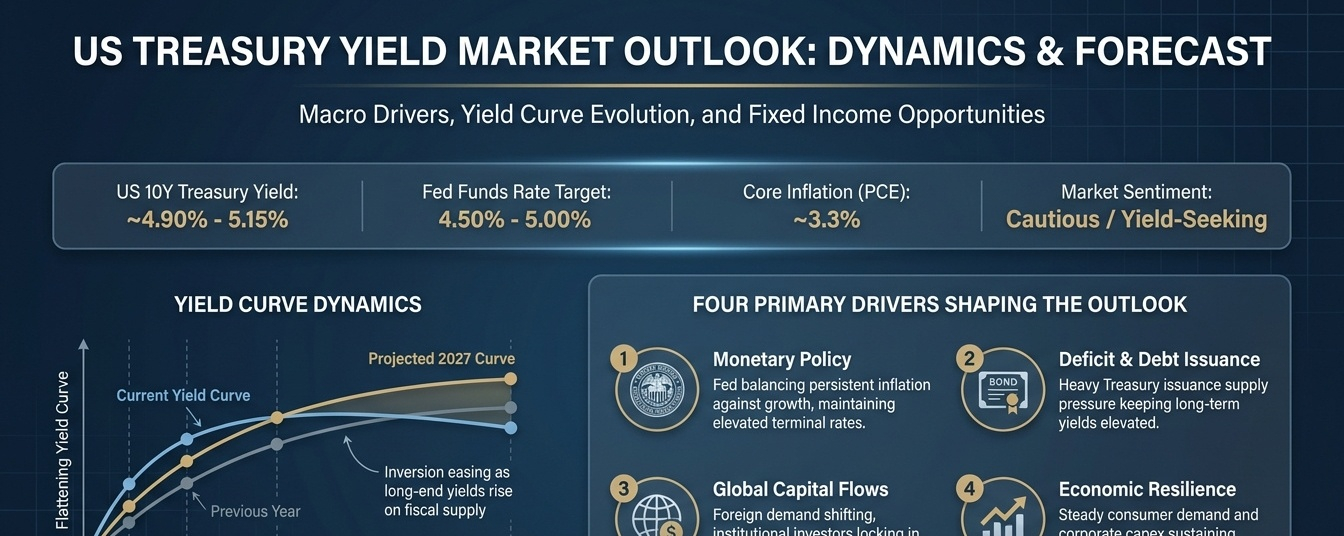

👇How the Fed Judges the "Neutral Rate" (r*) — And Why Nobody Knows the Exact Number
Every economy has an approximate neutral interest rate—a level that neither aggressively stimulates growth nor slams on the brakes. Economists commonly call it r-star (r^*).
When the economy operates near normal capacity and inflation sits near target, the neutral rate keeps demand balanced. The catch? Nobody knows the exact number in real time. Unlike a thermometer measuring temperature, the Federal Reserve cannot directly observe r^*. It estimates it using economic data and statistical models—and revises those estimates as conditions shift.
Here is what the Fed watches to judge where the neutral rate sits, how economists estimate it, and how you can spot whether policy is too tight, too loose, or roughly balanced.
1. What the Fed Watches to Judge Neutral
Policymakers never rely on a single metric. Instead, they triangulate across six core pillars:👇👇
* Inflation trends: The Fed looks for inflation stabilizing around its 2% target. Persistent above-target inflation suggests rates may sit below neutral or financial conditions are too easy. Cooling inflation without a sharp growth slump hints policy is near neutral, while falling inflation paired with weak demand points to restrictive rates. A single CPI or PCE print isn't enough—officials track broader trends, services inflation, wage pressure, and inflation expectations.
* The jobs market: Strong hiring, elevated job openings, and fast wage growth signal brisk demand. Rising unemployment, climbing layoffs, and sluggish hiring suggest policy may be holding growth back too hard.
* Growth and spending: Officials check whether households and businesses are moving at a normal clip across consumer spending, retail sales, GDP growth, business investment, housing activity, and manufacturing/services surveys. Outsized spending and housing momentum can push demand past supply capacity; broad slowdowns hint at rate pressure.
* Credit availability and loan costs: The policy rate is just the starting point. The Fed watches how much banks and markets pass that rate through to mortgage rates, auto loans, credit cards, corporate borrowing costs, small-business credit, lending standards, and delinquencies. If banks tighten lending standards sharply even while the Fed holds steady, the effective brake on the economy tightens.
* Financial conditions: Treasury yields, the US dollar, corporate bond spreads, stock valuations, risk appetite, and liquidity all shape real-world borrowing. A sharp jump in long-term yields or the dollar can make financing tighter even without a Fed move.
* Long-run structural drivers: Neutral rates evolve over time. Productivity growth, workforce and population trends, aging demographics, global savings patterns, government debt issuance, safe-asset demand, and capital investment opportunities all shape where long-run neutral settles. Stronger productivity generally supports a higher rate; weaker growth potential and heavy savings push it lower.
2. Nominal🤜 vs. 🤛Real Neutral Rate
When economists talk about r^*, they usually distinguish between nominal and real rates:
* Nominal rate: The headline interest rate (such as the policy rate).
* Real rate: The interest rate adjusted for inflation.
A helpful rule of thumb is:
Policymakers generally compare the estimated real policy rate against the estimated real neutral rate (r^*):
* Real rate > r^*: Policy may be restrictive (cooling demand).
* Real rate ≈ r^*: Policy is roughly neutral.
* Real rate < r^*: Policy may be accommodative / stimulative (boosting demand).
Illustrative example only: If the nominal policy rate is 5% and expected inflation is 2%, the estimated real rate is roughly 3%. If estimated real r^* is 1%, policy looks restrictive. In practice, both expected inflation and r^* are moving estimates—not fixed facts.
3. How Economists Estimate the Neutral Level
Because r^* isn't printed on a screen, the Fed and economists combine several approaches:
* Statistical models: Analyzing historical relationships among interest rates, inflation, unemployment, and output.
* Market signals: Reading clues from Treasury yields, inflation-linked bonds, and market-implied inflation expectations.
* Surveys: Polling households, businesses, and professional forecasters on expected inflation, growth, and future rates.
* Real-world transmission: Observing how demand, credit, hiring, and inflation actually respond after rates change.
* Fed projections: Policymakers publish long-run policy-rate projections. While not an official declaration of r^*, they offer a useful window into where officials think neutral sits over the long haul.
4. Signals That Rates Are Above, Below, or Near Neutral🧐🧐
| Stance | Typical Signals |
|---|---|
| Restrictive (Above Neutral) | Inflation gradually cools; loan demand and borrowing soften; housing and business capex slow; hiring and wage growth moderate; credit tightens; growth slips below potential. |
| Too Loose (Below Neutral) | Inflation trends above target; spending and credit expand rapidly; labor market runs unusually tight; wages and services prices heat up; asset valuations and borrowing look stretched. |
| Near Neutral (Balanced) | Inflation hovers near target; job market is neither overheated nor cracking; GDP grows at a sustainable pace; credit flows without excesses or major imbalances. |
5. The "Car Speed" Analogy🤔🤔
Think of the economy as a car:
* Neutral rate: The gas and brake are lightly balanced, holding a steady cruise.
* Below neutral: You're pressing the accelerator—spending, borrowing, and demand pick up speed, risking overheating and higher inflation.
* Above neutral: You're tapping the brake—demand slows and inflation cools.
* Too high for too long: You're slamming the brake—growth and jobs can start losing traction.
The Fed isn't just checking today's speed in the rearview mirror; it's watching road conditions, engine heat, and upcoming traffic. That is why neutral-rate estimates carry uncertainty—and why they shift as fresh data arrives.
For market education only; not investment advice.
Write down your comment in box and if like this then share it with others
Follow@CryptoWithGanesh
#CorePCEBeatLiftsFedHikeOdds #NeutralTrend #FOMOalert #FOMCForecast #EvolveAtBinanceBlockchainWeek
$BTC ,$TMF ,$TBT.ETF