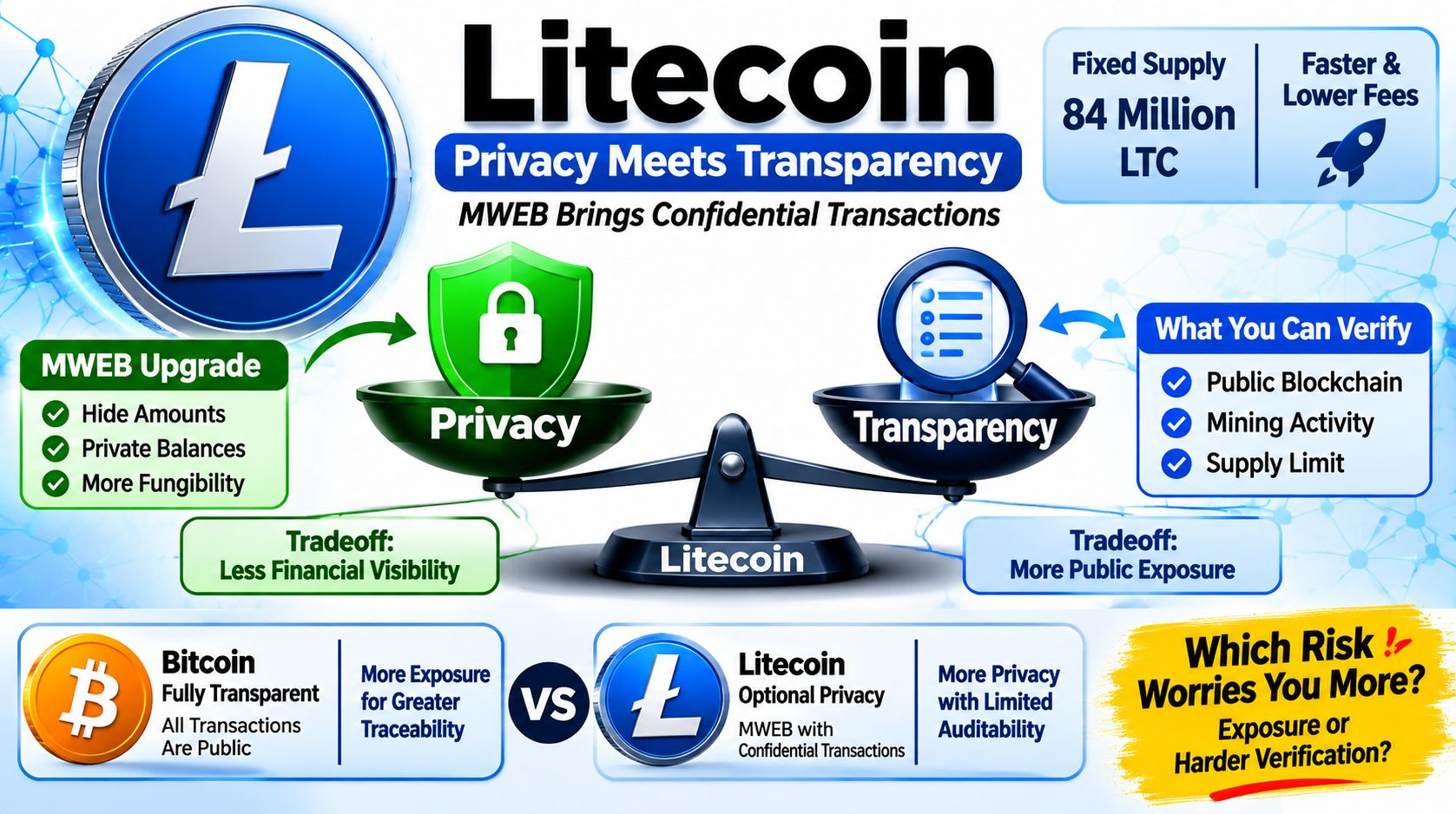

Litecoin has a fixed maximum supply of 84 million LTC, but its MWEB upgrade introduces something less visible: confidential transactions that hide transferred amounts and private balances. That's not an oversight. It's a stated choice. litecoin.com +1
The reason is financial privacy. MWEB allows users to move LTC away from the fully transparent main chain into an optional privacy layer. The tradeoff is that outsiders lose the ability to inspect individual transaction amounts and follow every movement of funds.
Holders can still verify Litecoin's transparent blockchain, mining activity, block rewards and protocol supply limit. MWEB uses confidential transactions to protect amounts and improve fungibility, meaning individual coins become harder to distinguish by transaction history. However, there is no monthly reserve attestation or named auditing firm because LTC is not backed by custodial reserves. Confidential balances also cannot be inspected like ordinary public transactions. litecoin.com +2
Bitcoin takes the opposite approach. Its confirmed transactions remain publicly visible, allowing anyone to examine the ledger. More exposure, in exchange for greater transaction-level transparency. Bitcoin
Neither approach removes counterparty risk. Litecoin's privacy model reduces financial visibility but limits public scrutiny. Bitcoin's transparent model improves traceability but exposes financial activity.
Litecoin chose optional privacy alongside public verification, relying on cryptography, mining consensus and network rules rather than reserve attestations.
Which risk worries you more — financial activity being exposed, or transaction details becoming harder for outsider
s to verify? #LTC #BTC $BTC $LTC