𝗦𝗨𝗡.𝗜𝗢: 𝗖𝗔𝗡 𝗔𝗡 𝗜𝗡𝗧𝗘𝗚𝗥𝗔𝗧𝗘𝗗 𝗗𝗘𝗙𝗜 𝗣𝗟𝗔𝗧𝗙𝗢𝗥𝗠 𝗜𝗠𝗣𝗥𝗢𝗩𝗘 𝗧𝗛𝗘 𝗘𝗖𝗢𝗡𝗢𝗠𝗜𝗖 𝗘𝗙𝗙𝗜𝗖𝗜𝗘𝗡𝗖𝗬 𝗢𝗙 𝗢𝗡-𝗖𝗛𝗔𝗜𝗡 𝗖𝗔𝗣𝗜𝗧𝗔𝗟?
Decentralized finance offers users greater control over their digital assets, but navigating fragmented liquidity pools, trading platforms and financial applications can introduce unnecessary complexity.
Every additional transaction, platform interaction and asset conversion can increase operational costs and expose users to additional risks.
SUN.io addresses this challenge by bringing multiple DeFi applications together within the TRON ecosystem.
Its strategic value extends beyond providing access to decentralized trading. An integrated financial environment could help users discover opportunities, compare execution costs and manage capital more efficiently.
The important question is whether this accessibility can translate into measurable improvements in financial outcomes.
𝗘𝗫𝗣𝗟𝗢𝗥𝗜𝗡𝗚 𝗧𝗛𝗘 𝗗𝗜𝗙𝗙𝗘𝗥𝗘𝗡𝗧 𝗟𝗔𝗬𝗘𝗥𝗦 𝗢𝗙 𝗦𝗨𝗡.𝗜𝗢
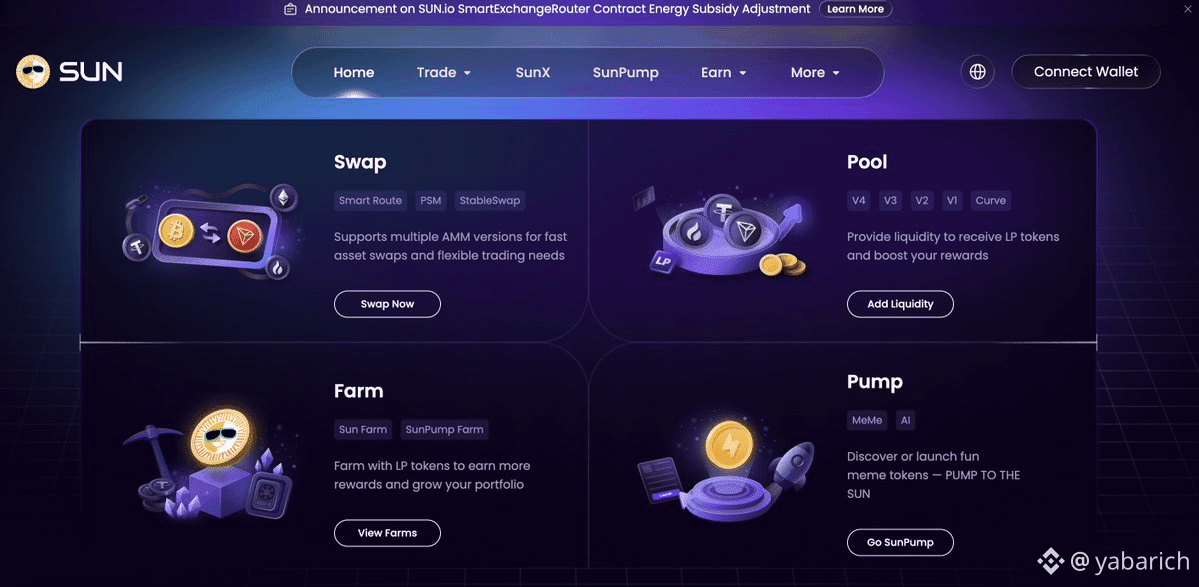
SUN.io brings together several complementary DeFi mechanisms:
• SunSwap — Decentralized token trading and liquidity provision through automated market makers.
• SunCurve — Stablecoin-focused liquidity pools designed to improve trading efficiency between similarly priced assets.
• PSM — A peg stability mechanism supporting conversions between eligible stablecoins, subject to available liquidity and protocol conditions.
• SUN governance — A framework through which eligible participants can contribute to protocol governance.
These applications address different financial requirements, from asset conversion and liquidity management to decentralized governance.
For users, the advantage of an integrated platform is the ability to explore multiple financial strategies without constantly navigating unrelated applications.
However, each mechanism has distinct risk characteristics. Stablecoin liquidity provision, volatile asset pools and governance participation should not be evaluated using identical risk assumptions.
The latest announcement emphasizes platform accessibility but does not disclose new TVL figures, trading volumes, liquidity incentives or product performance statistics.
Public research resources:
https://sun.io
https://tronscan.org
https://defillama.com/chain/Tron
𝗠𝗬 𝗣𝗘𝗥𝗦𝗢𝗡𝗔𝗟 𝗩𝗜𝗘𝗪: 𝗧𝗛𝗘 𝗛𝗜𝗗𝗗𝗘𝗡 𝗖𝗢𝗦𝗧 𝗢𝗙 𝗙𝗥𝗔𝗚𝗠𝗘𝗡𝗧𝗘𝗗 𝗗𝗘𝗙𝗜 𝗟𝗜𝗤𝗨𝗜𝗗𝗜𝗧𝗬
I believe one of the most underestimated challenges in decentralized finance is the cumulative cost of moving capital between financial opportunities.
Users often focus on advertised yields while overlooking trading fees, price impact, network resource costs and the expenses associated with repositioning their assets.
Consider a hypothetical DeFi participant managing $50,000 in stablecoin capital.
Scenario A — Higher-cost asset conversion:
• Monthly capital conversion volume: $50,000.
• Assumed combined execution cost: 0.30%.
• Monthly conversion expenditure: $150.
• Annual conversion expenditure: $1,800.
Scenario B — More efficient liquidity routing:
• Monthly capital conversion volume: $50,000.
• Assumed combined execution cost: 0.08%.
• Monthly conversion expenditure: $40.
• Annual conversion expenditure: $480.
Potential economic improvement:
• Monthly savings: $110.
• Annual savings: $1,320.
• Relative execution cost reduction: 73.33%.
• Annual savings relative to initial capital: 2.64%.
These figures are hypothetical assumptions, not actual SUN.io fees, verified execution benchmarks or guaranteed savings.
The example demonstrates why capital efficiency cannot be measured through advertised APY alone.
A user earning a higher nominal yield may ultimately achieve a lower net return if frequent asset conversions consume a significant portion of that income.
SUN.io's combination of trading and stablecoin liquidity mechanisms creates an opportunity to compare execution alternatives before committing capital.
Nevertheless, users should evaluate actual transaction quotes, pool balances, liquidity depth, smart contract exposure and applicable network costs.
Stablecoin-focused pools can reduce price impact under favorable conditions, but liquidity imbalances and depegging events can materially change execution outcomes.
𝗦𝗨𝗡.𝗜𝗢'𝗦 𝗟𝗢𝗡𝗚-𝗧𝗘𝗥𝗠 𝗢𝗣𝗣𝗢𝗥𝗧𝗨𝗡𝗜𝗧𝗬: 𝗕𝗘𝗖𝗢𝗠𝗜𝗡𝗚 𝗔 𝗖𝗢𝗥𝗘 𝗟𝗜𝗤𝗨𝗜𝗗𝗜𝗧𝗬 𝗟𝗔𝗬𝗘𝗥 𝗙𝗢𝗥 𝗧𝗥𝗢𝗡
As stablecoin payments and decentralized financial services continue to develop across TRON, efficient liquidity infrastructure will become increasingly important.
SUN.io could strengthen its strategic position by helping connect stablecoin circulation with decentralized trading, liquidity provision and broader capital allocation opportunities.
The most meaningful indicators I would monitor include:
• Daily and monthly decentralized trading volumes.
• Liquidity depth across major trading pairs.
• Stablecoin pool balances and price impact.
• Trading volume relative to available liquidity.
• Organic trading fees generated by liquidity pools.
• Liquidity provider returns excluding temporary incentives.
• Recurring user activity and retention.
• SUN governance participation.
• Smart contract security and operational resilience.
These metrics would help distinguish sustainable liquidity demand from activity driven primarily by short-term promotional rewards.
The relationship between platform growth and SUN token value should also be evaluated separately. Higher trading volumes do not automatically guarantee proportional token demand or price appreciation.
In my assessment, SUN.io's strongest long-term opportunity lies in making decentralized finance more economically efficient rather than simply offering more financial products.
A diversified DeFi platform creates opportunities for exploration.
Deep liquidity improves execution quality.
Transparent financial mechanisms support informed decisions.
Sustainable trading demand strengthens protocol economics.
Within the TRON ecosystem, SUN.io could serve as an important connection between stablecoin liquidity and practical decentralized financial activity.
The future of DeFi should not be defined by how many applications users can access, but by how effectively they can manage capital, understand risks and retain the economic value generated by their financial decisions.
Explore SUN.io:
https://sun.io