

Altcoin Season Explained: When It Starts, Why It Matters, and How Market Emotions Drive It
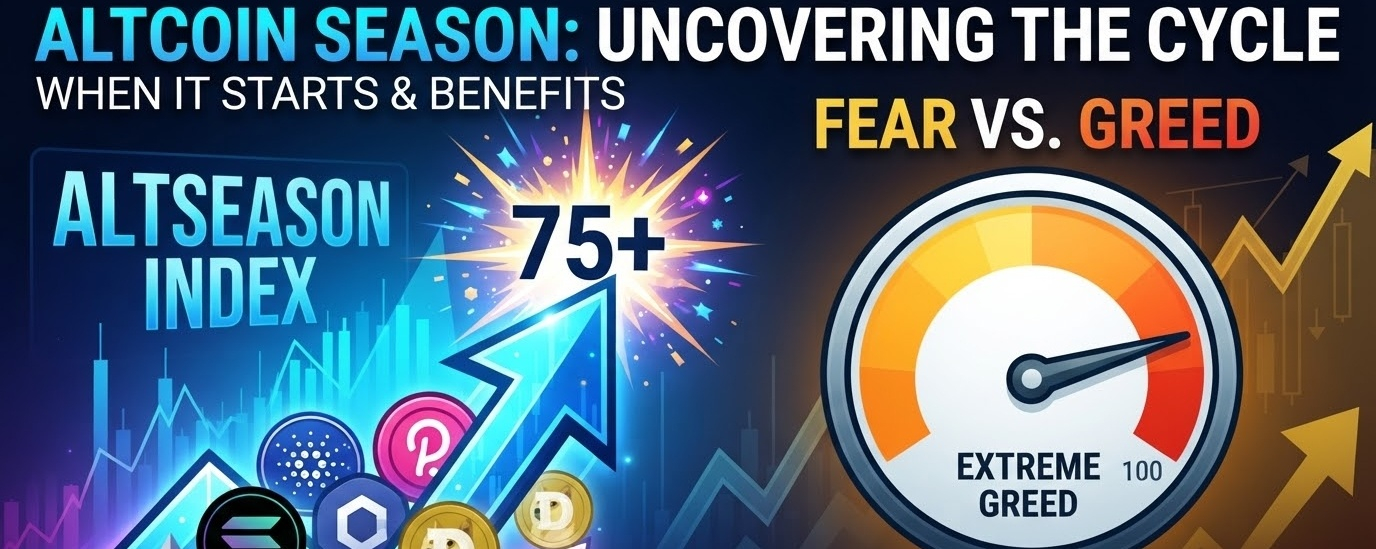
Altcoin season (or "altseason") is a period in the crypto market when alternative cryptocurrencies ("alts" like Ethereum, Solana, or sector tokens) outperform Bitcoin over a rolling window—commonly tracked over 90 days. Traders usually watch for an Altcoin Season Index score of 75 or higher (meaning 75% of top coins beat Bitcoin over the last 90 days) alongside a drop in Bitcoin's market share.
1. When Does Altcoin Season Start?
Altcoin season rarely starts out of nowhere. Capital usually moves in a wave: first into Bitcoin, then into large altcoins like Ethereum, and finally into smaller coins and trending sectors (such as AI, real-world assets, or gaming).
Watch for these three clear signals:
Bitcoin pauses or climbs gently: A sharp Bitcoin crash pulls money out of the whole market. Altseason tends to ignite when Bitcoin stabilizes or moves up steadily after a strong run.
Bitcoin $BTC dominance rolls over: When Bitcoin's share of total crypto market cap stops rising and starts sliding, traders are rotating profits into altcoins.
The Altcoin Season Index climbs toward 75+: Platforms like CoinMarketCap and BlockchainCenter track whether top coins are beating Bitcoin over 90 days. Readings near or above 75 signal broad altcoin strength.
2. What Are the Main Benefits of Altcoin Season?
Faster upside potential: Because many altcoins have smaller market caps than Bitcoin, strong waves of buying can push their prices up much faster over a few weeks.
Sector and narrative momentum: Money often flows into hot themes—like $DEFI DeFi, gaming, or infrastructure—creating active trends for traders and builders.
Higher trading activity and liquidity: Rising volume brings tighter spreads and more active markets across major exchanges.
The trade-off to keep in mind: Higher upside comes with sharper pullbacks. Altcoins can drop fast once hype cools or traders lock in gains.
3. How the Market Feels: Fear vs. Greed
Crypto prices move on human emotion as much as charts. The Crypto Fear and Greed Index scores market mood from 0 (Extreme Fear) to 100 (Extreme Greed) using factors like price volatility, trading volume, social media buzz, Bitcoin dominance, and search trends.
Simple Takeaways for Your Audience
Don't chase green candles blindly: Extreme greed often appears after big jumps, right before sharp pullbacks.
Have a profit and risk plan before hype peaks: Decide in advance when to take partial profits or cut losses so emotions do not steer your trades.
Use sentiment alongside price structure: Treat fear and greed readings as a mood check, not a standalone buy or sell button.
#BitcoinAndStocksSlipAgainAmidTrump’sTariffPlans #JensenHuangSaysNvidiaDoesn’tNeedASuccessionPlan #AnthropicBreaksBelowIPOPriceAmidAISlump