
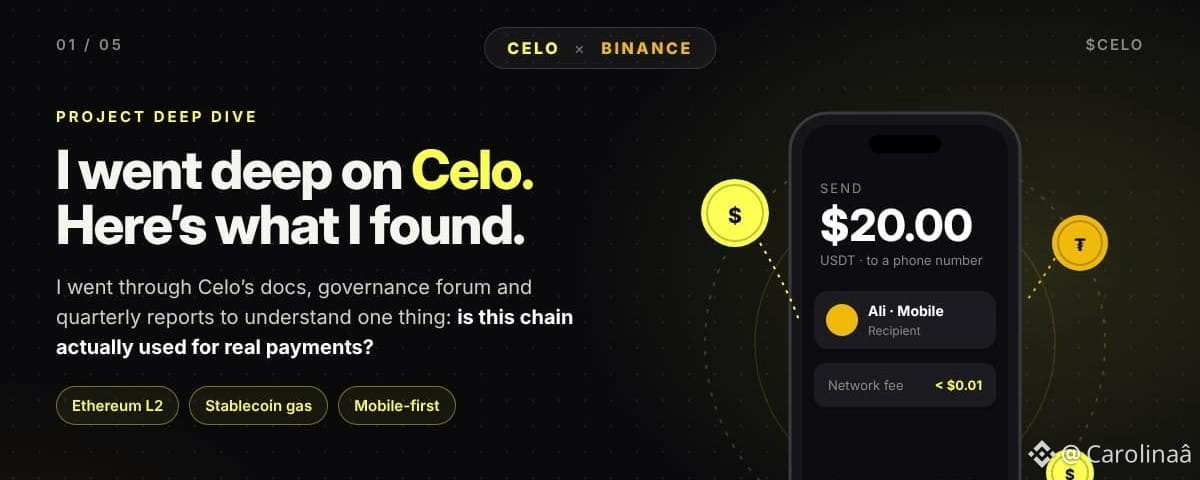


𝗜𝘁 𝗥𝗲𝗯𝘂𝗶𝗹𝘁 𝗜𝘁𝘀 𝗙𝗼𝘂𝗻𝗱𝗮𝘁𝗶𝗼𝗻
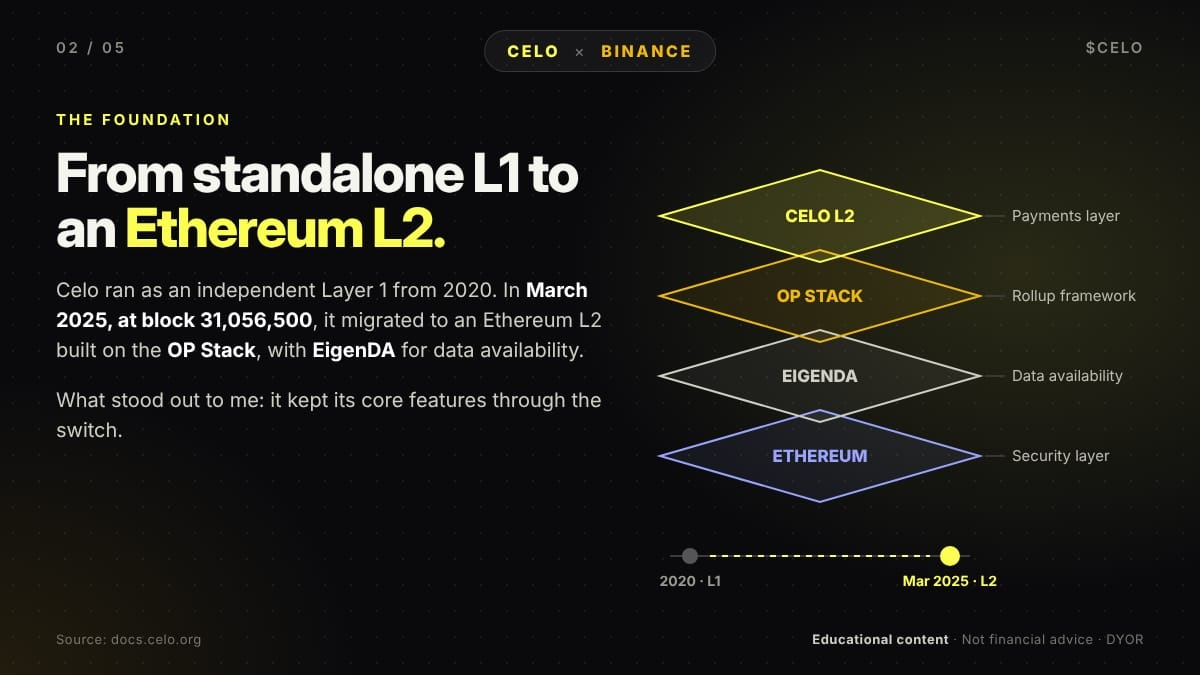
@celo ran as an independent Layer 1 from 2020.
In March 2025, at block 31,056,500, it became an Ethereum L2 on the OP Stack, with EigenDA for data availability.
What impressed me: it kept its core features through the switch.
𝗧𝗵𝗲 𝗙𝗲𝗮𝘁𝘂𝗿𝗲 𝗧𝗵𝗮𝘁 𝗦𝗼𝗹𝗱 𝗠𝗲
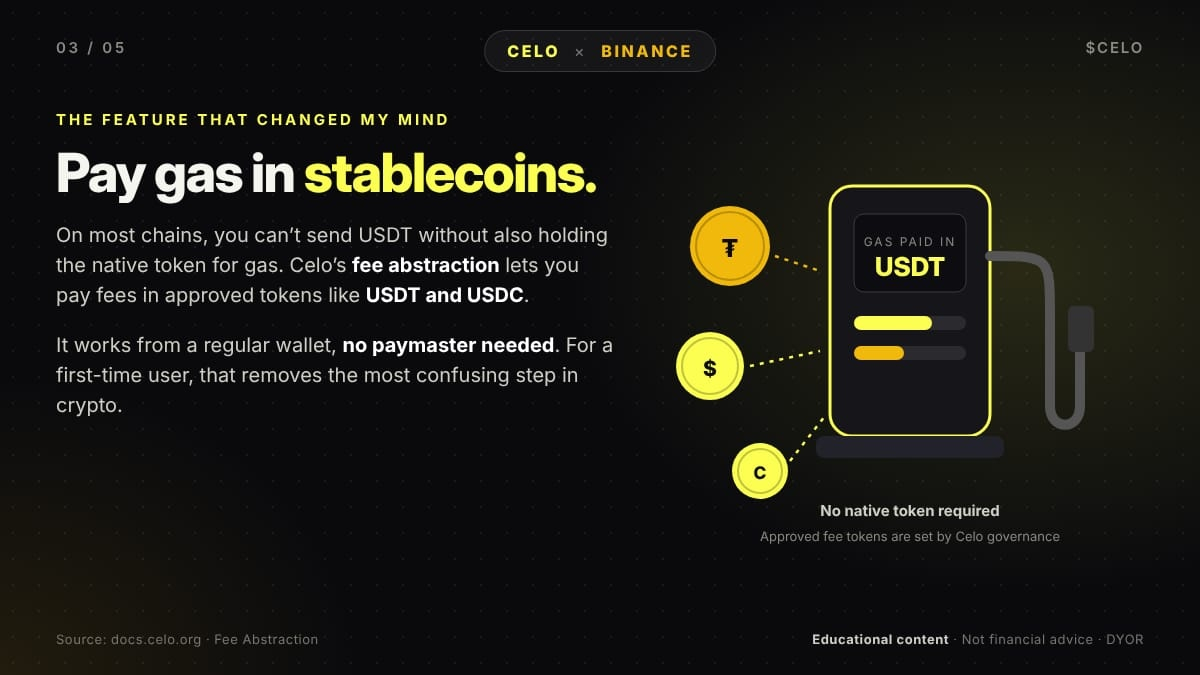
On most chains, you can't send USDT without also holding the native token for gas.
Celo's fee abstraction lets you pay gas in approved tokens like USDT and USDC. It works from a regular wallet, no paymaster needed.
𝗕𝘂𝗶𝗹𝘁 𝗳𝗼𝗿 𝗣𝗵𝗼𝗻𝗲𝘀, 𝗡𝗼𝘁 𝗧𝗿𝗮𝗱𝗶𝗻𝗴 𝗗𝗲𝘀𝗸𝘀
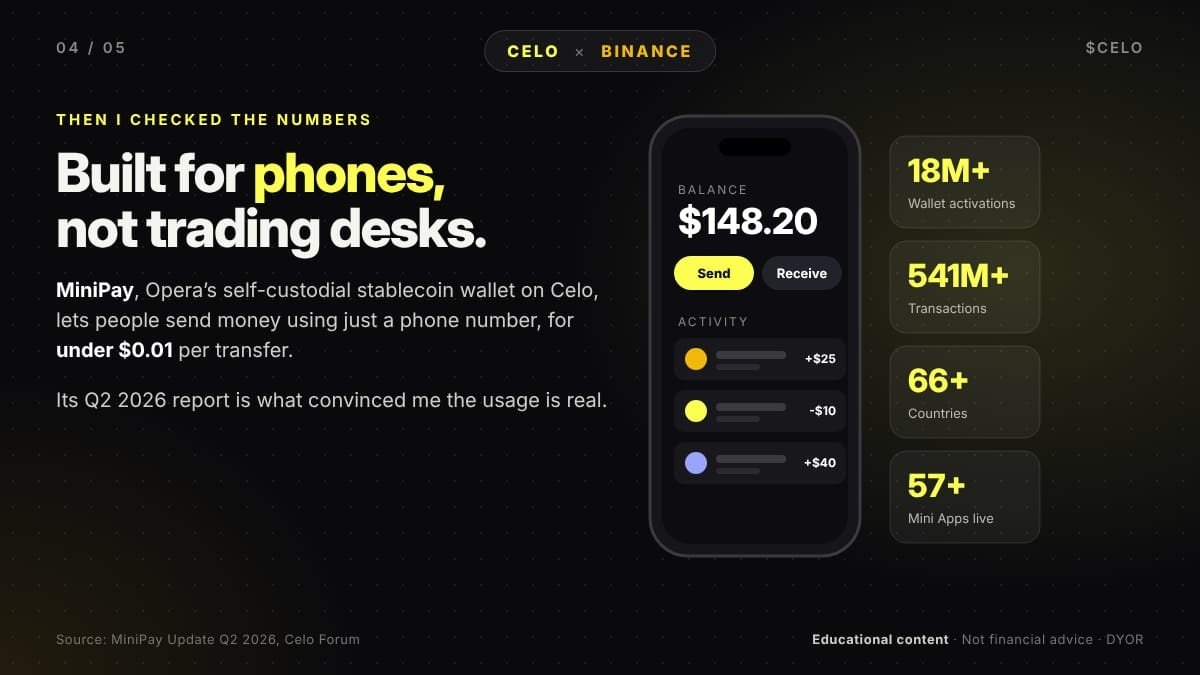
The clearest example is MiniPay, Opera's self-custodial stablecoin wallet on Celo.
Sending money feels like sending a text: just a phone number, and under $0.01 in fees.
𝗧𝗵𝗲𝗻 𝗜 𝗖𝗵𝗲𝗰𝗸𝗲𝗱 𝘁𝗵𝗲 𝗡𝘂𝗺𝗯𝗲𝗿𝘀
MiniPay's Q2 2026 update on the Celo forum:
• 18M+ wallet activations
• 541M+ transactions
• 66+ countries
• 57+ Mini Apps
This is what convinced me the usage is real, not just marketing.
𝗧𝗲𝘁𝗵𝗲𝗿 𝗜𝘀 𝗣𝗮𝘆𝗶𝗻𝗴 𝗔𝘁𝘁𝗲𝗻𝘁𝗶𝗼𝗻 𝗧𝗼𝗼
Per Tether's data, Celo was the fastest-growing native USDT network over the past year: ~825K to 5M users.
In March 2026, Tether also chose Celo as the first chain beyond Ethereum for its USAT stablecoin.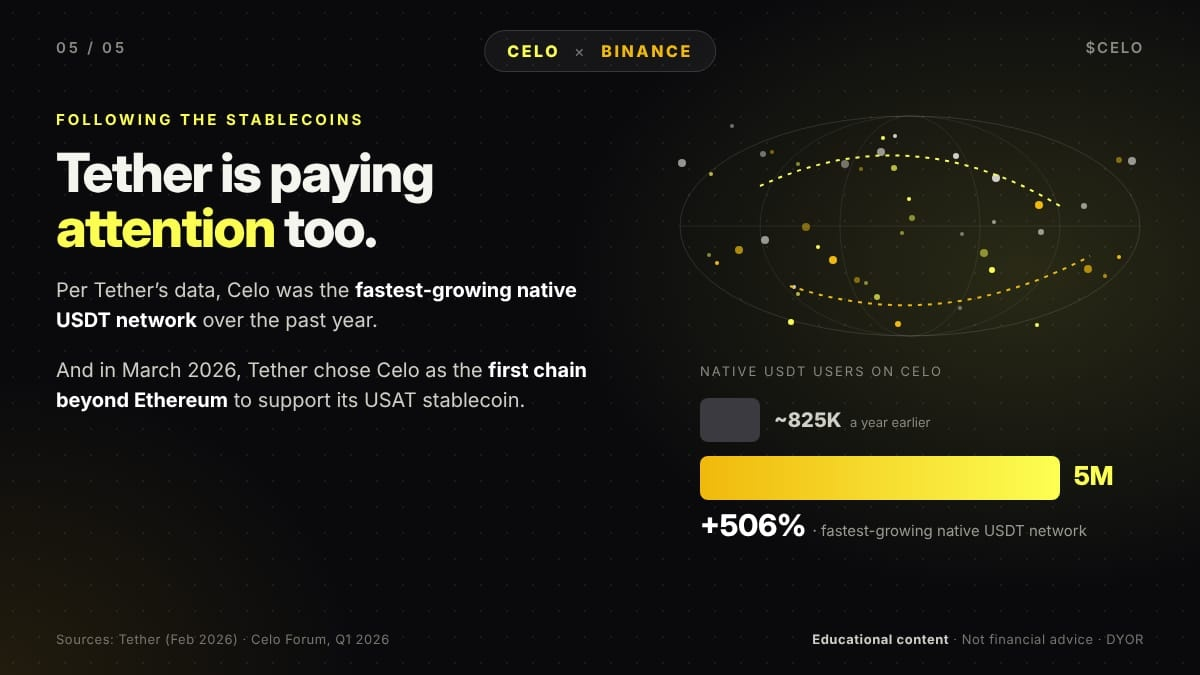
𝗪𝗵𝘆 𝗧𝗵𝗶𝘀 𝗠𝗮𝘁𝘁𝗲𝗿𝘀
In emerging markets like Pakistan, people need cheap, fast dollar transfers far more than another speculative token.
Phone-first design + stablecoin gas + sub-cent fees is a practical answer to that problem.
𝗠𝘆 𝗧𝗮𝗸𝗲𝗮𝘄𝗮𝘆
Celo isn't trying to be the loudest chain. It's trying to be the one people use without noticing.
To explore it, the CELO Trading Festival is live on @binance until Dec 20 (UTC). Check eligibility first.
Not financial advice
DYOR
