

I've noticed something while scrolling through crypto discussions lately. People seem less impressed by wallet launches than they used to be. A new project can announce millions of users, and the first question is increasingly simple: are people actually using it, or are they just opening an account and moving on?
That question came to mind when I looked through MiniPay's Q3 update on Celo.
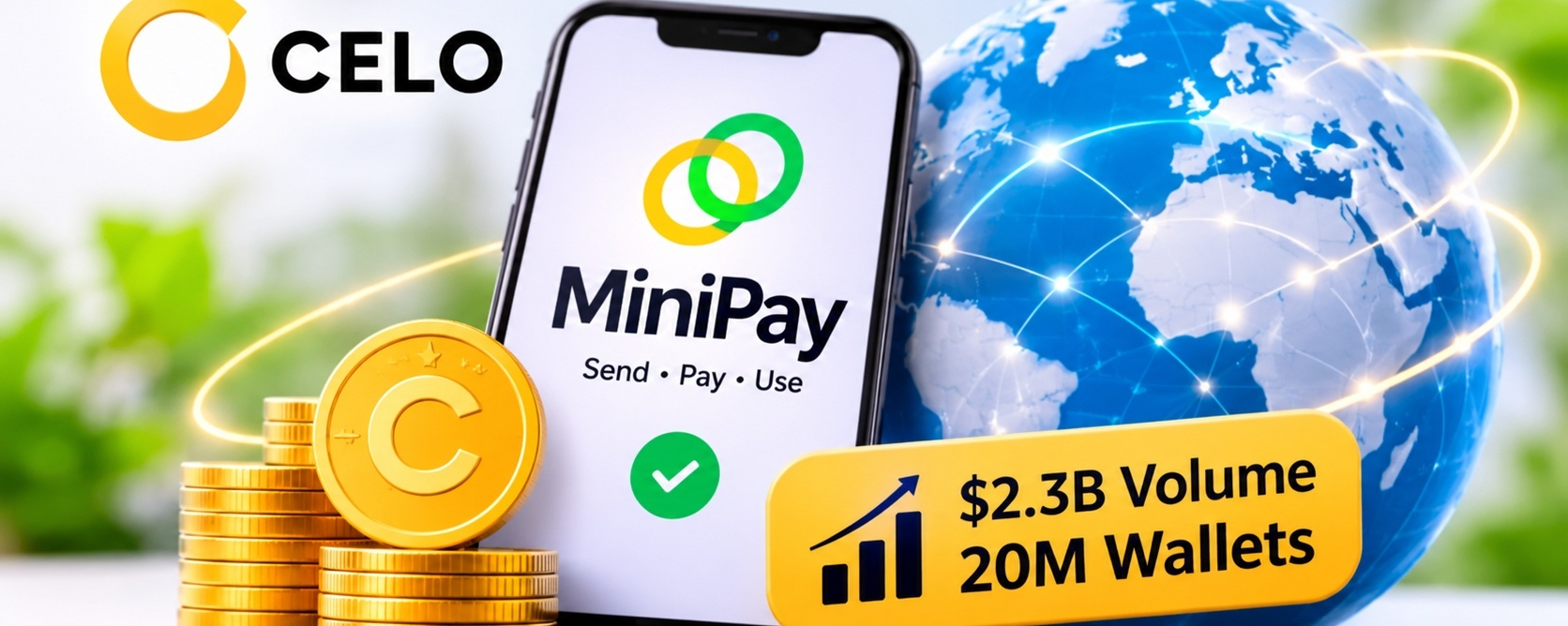
At first, the numbers look like another impressive adoption announcement. More than 20 million activated wallets, 600 million lifetime transactions, $2.3 billion in processed volume, availability across 70+ countries and 77 active Mini Apps. There is also 4.78 million CELO reported as staked. But I think the more interesting part is what sits behind those figures.
MiniPay is trying to make stablecoins useful without asking everyone to become a crypto enthusiast first. That difference matters. Someone receiving money from another country, paying a bill or sending dollars to a family member is not necessarily interested in blockchain technology. They simply want their money to arrive, remain accessible and cost less to move.
Celo's design helps address some of that friction. Its fee abstraction system allows supported stablecoins such as USDC and USDT to be used for transaction fees instead of forcing users to acquire CELO just to pay gas. It sounds like a small technical detail, but from a user's perspective, removing one extra token requirement can make the first transaction considerably easier.
The Mini App ecosystem is another interesting development. The Q3 report highlighted Sonny Pay, which allows users in countries including the Philippines, Vietnam, Brazil, Argentina and Peru to scan local QR codes and pay from a dollar stablecoin balance. The merchant receives local currency through an existing payment network. That is a more practical use case than simply transferring tokens between crypto wallets.
Still, I would be careful about interpreting every growth figure in the same way. The 127% increase in Buy CELO Mini App transactions happened during MiniPay's anniversary campaign, alongside a 41% increase in wallets purchasing through that app. It is a positive signal, but campaign-driven activity is not automatically the same as long-term organic demand. Likewise, 20 million wallet activations do not necessarily represent 20 million consistently active people.
There is another detail worth watching: incentives. Opera distributed approximately 386,000 CELO to users during Q3 through its rewards programme. Users could qualify through regular browser activity and keeping MiniPay enabled. This creates an interesting connection between everyday internet habits and blockchain participation. At the same time, I would want to see how much activity remains when rewards become less important.
Self-custody also deserves a closer look. Having control over your funds is important, but it does not eliminate every dependency. MiniPay relies on third-party providers for services such as exchanging stablecoins into local currencies, payment services and cash-in or cash-out options. Its Q3 introduction of reusable KYC through Sumsub is another attempt to reduce repeated verification. That improves convenience, although users still need clarity about how their identity information is shared with supported partners.
More recently, on November 19, MiniPay announced an upgrade to Privy, Stripe's wallet infrastructure. The planned experience includes email and passkey sign-in while allowing users to retain control of their funds and export their keys. I find this development particularly interesting because it addresses one of crypto's persistent problems: people want the control of self-custody without the daily complexity of managing seed phrases. The real test will be whether convenience improves without making users less aware of their recovery and security responsibilities.
For me, the important question around CELO is no longer simply how many wallets MiniPay can activate. It is whether those wallets become part of people's financial routines. The 77 Mini Apps, stablecoin-based transaction fees, local payment integrations and growing distribution network provide a foundation, but retention, reliable services and genuine repeat usage will tell a much deeper story.
I have learned not to confuse a large adoption number with a complete picture of adoption. What matters to everyday users is whether they understand what they are holding, how they can access it, what risks remain and whether the system works when they actually need it.
That is the part of MiniPay's progress I will keep watching. Not just how quickly the numbers grow, but whether using stablecoins gradually becomes ordinary enough that people no longer have to think about the crypto underneath.
