
TradFi Meets Blockchain: The Next Evolution of Global Finance
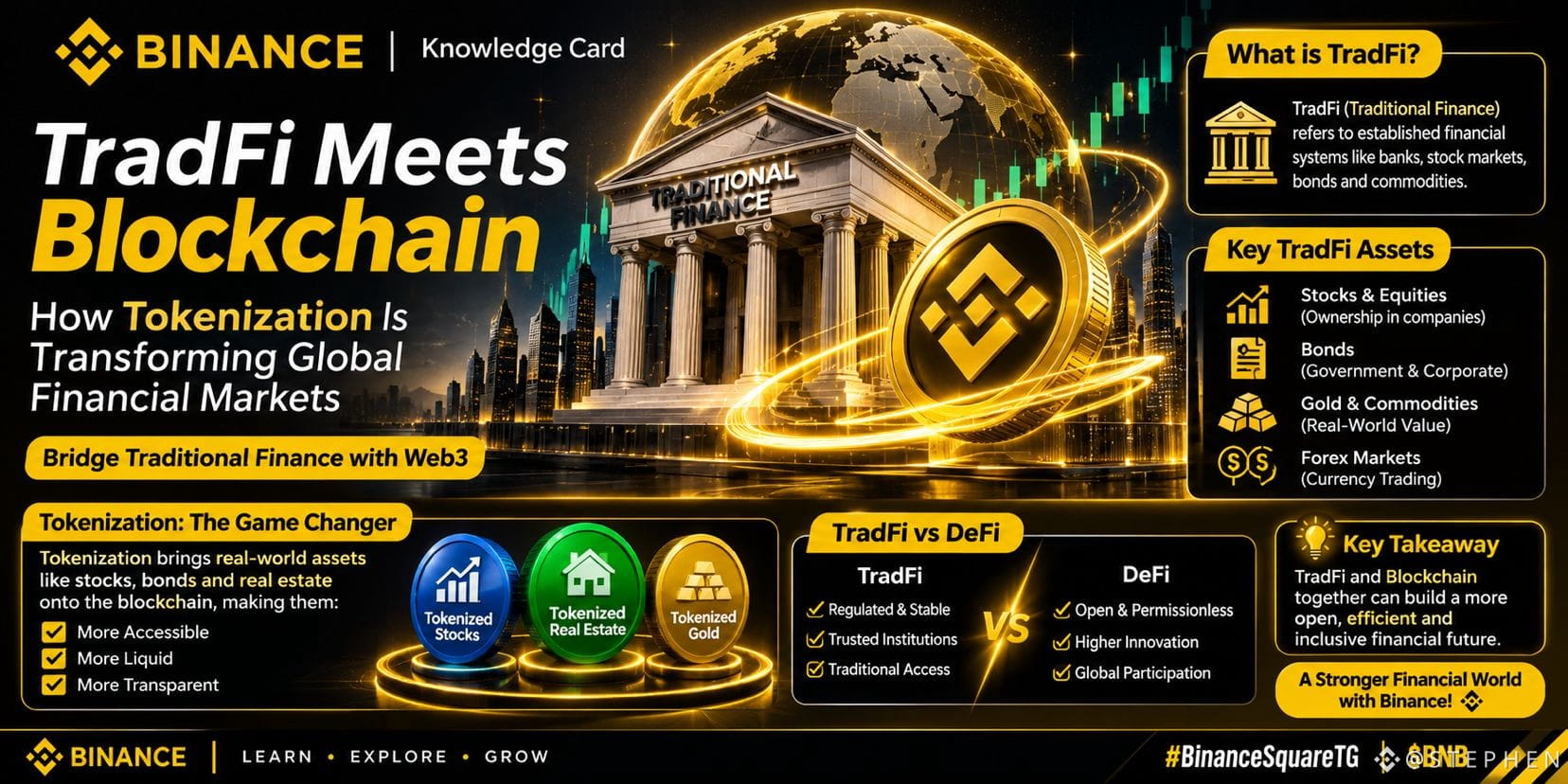
Traditional finance is entering a new phase, and blockchain technology could become one of its most important infrastructure layers.
For decades, financial markets have operated through banks, brokers, exchanges and centralized institutions. Stocks, government bonds, commodities and currencies have created the foundation of the global financial system. However, traditional markets still face challenges involving settlement delays, fragmented infrastructure, limited accessibility and operational costs.
This is where tokenization becomes interesting.
Tokenization transforms ownership rights or claims on real-world assets into blockchain-based digital tokens. This creates opportunities to represent assets such as equities, bonds, gold and real estate on blockchain networks.
But the real opportunity goes beyond simply putting assets on-chain.
Three developments deserve attention:
Market Accessibility: Digital infrastructure can help expand access to financial products, subject to regulations and eligibility requirements.
Settlement Efficiency: Blockchain-based settlement can reduce certain reconciliation processes and improve transaction transparency.
Financial Integration: Traditional institutions and decentralized infrastructure can potentially work together to create new financial products.
One important point: Tokenization does not automatically guarantee liquidity, legal ownership or investor protection. Regulation, custody and underlying asset rights remain essential.
The future may not be TradFi versus DeFi. It could be a financial ecosystem where both complement each other.
The bigger question: Will blockchain become the infrastructure powering tomorrow’s traditional financial markets?
💛 #BinanceSquareTG $BNB