
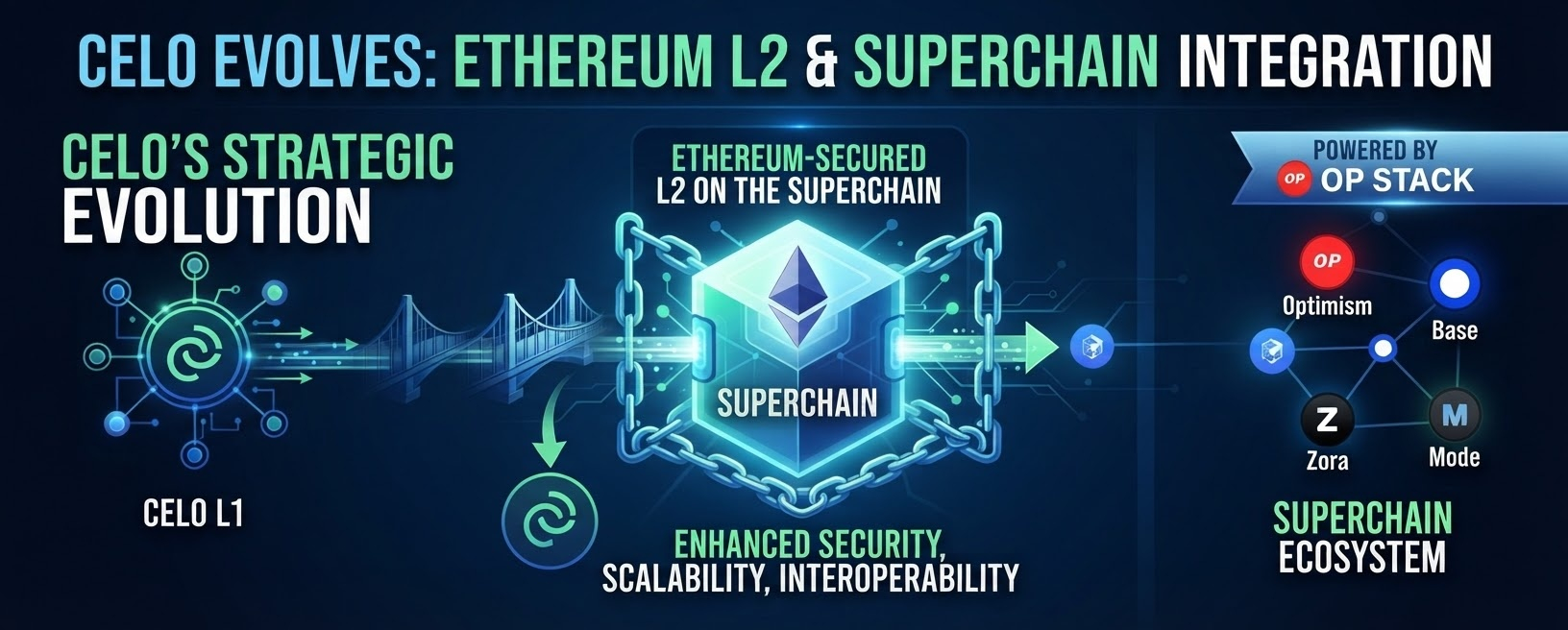


The transition of Celo from an independent Layer 1 blockchain to a Layer 2 scaling solution secured by Ethereum represents one of the most significant architectural pivots in the modern blockchain ecosystem. By migrating to a Layer 2 environment built on the Superchain, Celo has fundamentally restructured its underlying technology while preserving its core mission of fostering a mobile-first, accessible financial system for users globally. This strategic evolution was not a retreat from its original vision but rather a calculated move to leverage the unparalleled security, liquidity, and network effects of the Ethereum ecosystem. Operating as a Layer 2 allows Celo to inherit the robust consensus mechanism of Ethereum, ensuring that its network remains highly secure and decentralized without the need to maintain its own separate validator set for base-layer security.
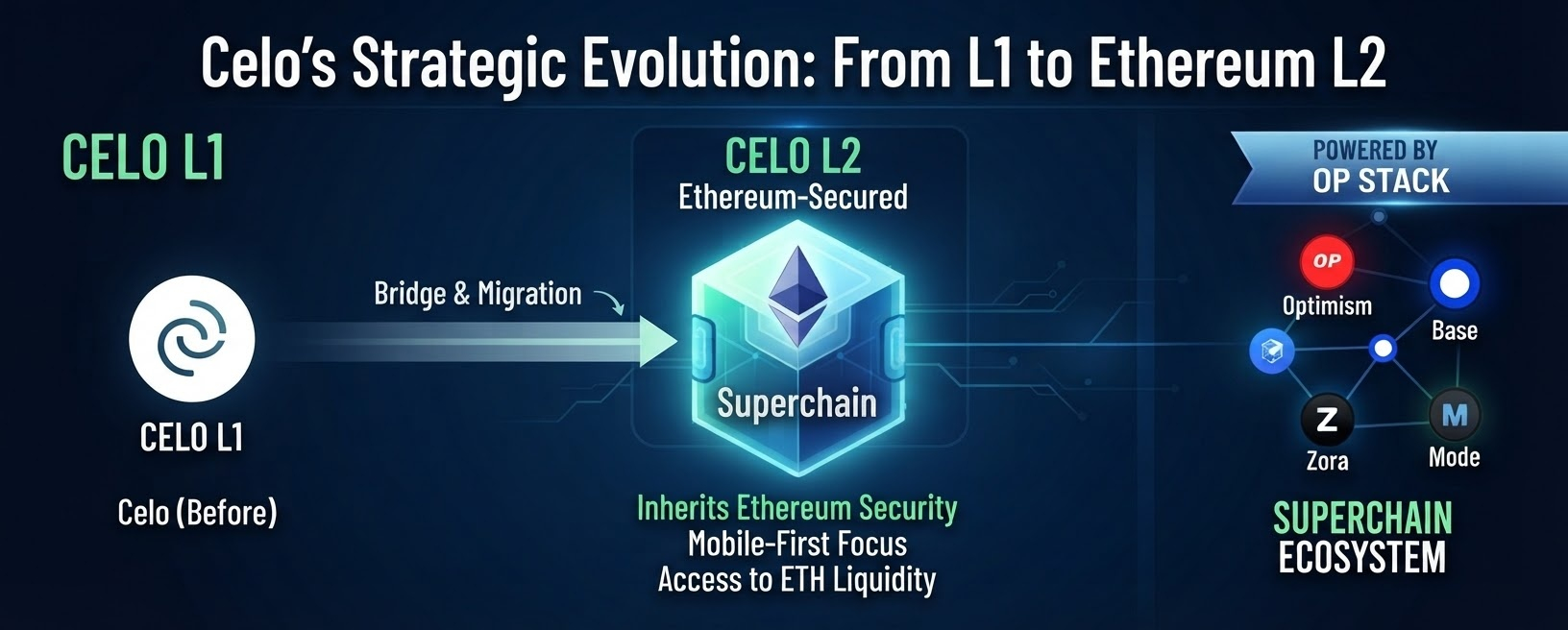
At the heart of this technological transformation is the utilization of the OP Stack, the open-source development framework created by Optimism. By building on the OP Stack, Celo has seamlessly integrated itself into the Superchain, a rapidly expanding network of interoperable Layer 2 chains that share a unified vision for scaling Ethereum. This architectural choice means that Celo is no longer an isolated chain but a vital node in a broader, interconnected web of blockchains. The Superchain framework allows for native interoperability, meaning assets and data can flow more freely between Celo and other OP Stack chains like Optimism Mainnet and Base. This interoperability is crucial for creating a cohesive user experience, as it eliminates the friction typically associated with moving assets across disparate blockchain networks.
The strategic rationale behind this migration is deeply rooted in the desire to optimize both developer experience and user economics. As a standalone Layer 1, Celo had to independently cultivate its own liquidity, security infrastructure, and developer tooling. By transitioning to an Ethereum Layer 2, Celo instantly taps into the massive liquidity pools and established developer ecosystem of Ethereum. Developers who are already building on Ethereum or other Layer 2s can deploy their applications on Celo with minimal friction, thanks to the shared EVM equivalence provided by the OP Stack. Furthermore, the Layer 2 architecture drastically reduces transaction fees and increases throughput, making micro-transactions and high-frequency applications economically viable. This is particularly important for the target demographic in emerging markets, where high gas fees on Layer 1 networks are a primary barrier to adoption.
The migration process itself was a monumental undertaking that required meticulous planning and execution by the Celo Foundation, core developers, and the broader community. The transition involved a comprehensive state migration, where the entire historical state of the Celo Layer 1 was carefully transferred to the new Layer 2 environment. To ensure a seamless experience for users and developers, the native CELO token was migrated on a one-to-one basis, preserving the exact holdings of every participant. The community governance played a pivotal role in this process, with multiple proposals and votes ensuring that the migration aligned with the collective will of the ecosystem. This decentralized approach to a major network upgrade reinforced the trust and transparency that are foundational to the community.
Despite these massive underlying changes, the network has fiercely protected the unique identity and user experience that originally set it apart. The ecosystem remains deeply committed to its mobile-first philosophy, continuing to pioneer innovations that make blockchain technology accessible to everyday smartphone users. Features such as the ability to pay gas fees in stablecoins or other widely used tokens, rather than being forced to use a native volatile asset, remain a cornerstone of the user experience. This flexibility is crucial for onboarding users who are unfamiliar with the complexities of cryptocurrency, allowing them to interact with decentralized applications using the digital dollars they already hold. Additionally, the focus on tokenizing real-world assets and building financial infrastructure for the unbanked remains unchanged, now supercharged by the efficiency of the Layer 2 environment.
Integration into the Superchain also opens up profound new possibilities for cross-chain applications and shared security. Through protocols like Superchain interop, Celo can communicate natively with other chains in the ecosystem, enabling complex decentralized finance strategies that span multiple networks without the need for risky third-party bridges. This native messaging capability allows developers to build applications that can seamlessly pull liquidity from Base, execute trades on Optimism, and settle on Celo, all within a single transaction flow. The shared security model of the Superchain means that as the entire network grows, the security of each individual chain is implicitly strengthened. This collective security posture is far more resilient than what any single Layer 1 could achieve in isolation.
Looking toward the future, this transition positions the network to capture a significant share of the next wave of blockchain adoption. By combining the mobile-centric, user-friendly innovations of the original protocol with the institutional-grade security and massive scale of Ethereum, the ecosystem is uniquely equipped to onboard the next billion users. The reduction in fees, the increase in transaction speed, and the deep integration with the broader Ethereum ecosystem create a fertile ground for new applications, particularly in the realms of decentralized payments, micro-lending, and real-world asset tokenization. Ultimately, the evolution into a Superchain Layer 2 is a testament to the pragmatic and collaborative nature of the blockchain industry, proving that adapting to the most efficient technological standards is the surest path to achieving global financial inclusion.
