

When I think about the future of blockchain, I don't just look at token prices or market trends. I look at projects that are trying to solve real problems and make technology useful in everyday life. Celo is one project that I find interesting because its main focus is making financial services more accessible, affordable, and easier to use.
Celo is an open-source blockchain ecosystem designed around real-world payments and financial applications. Its original vision was mobile-first, recognising that smartphones could become an important gateway to digital finance, especially for people who have limited access to traditional banking.
What makes Celo interesting is that it is not only trying to build blockchain infrastructure. It is also focusing on how ordinary people can actually benefit from it.
Key Features and Main Points of Celo
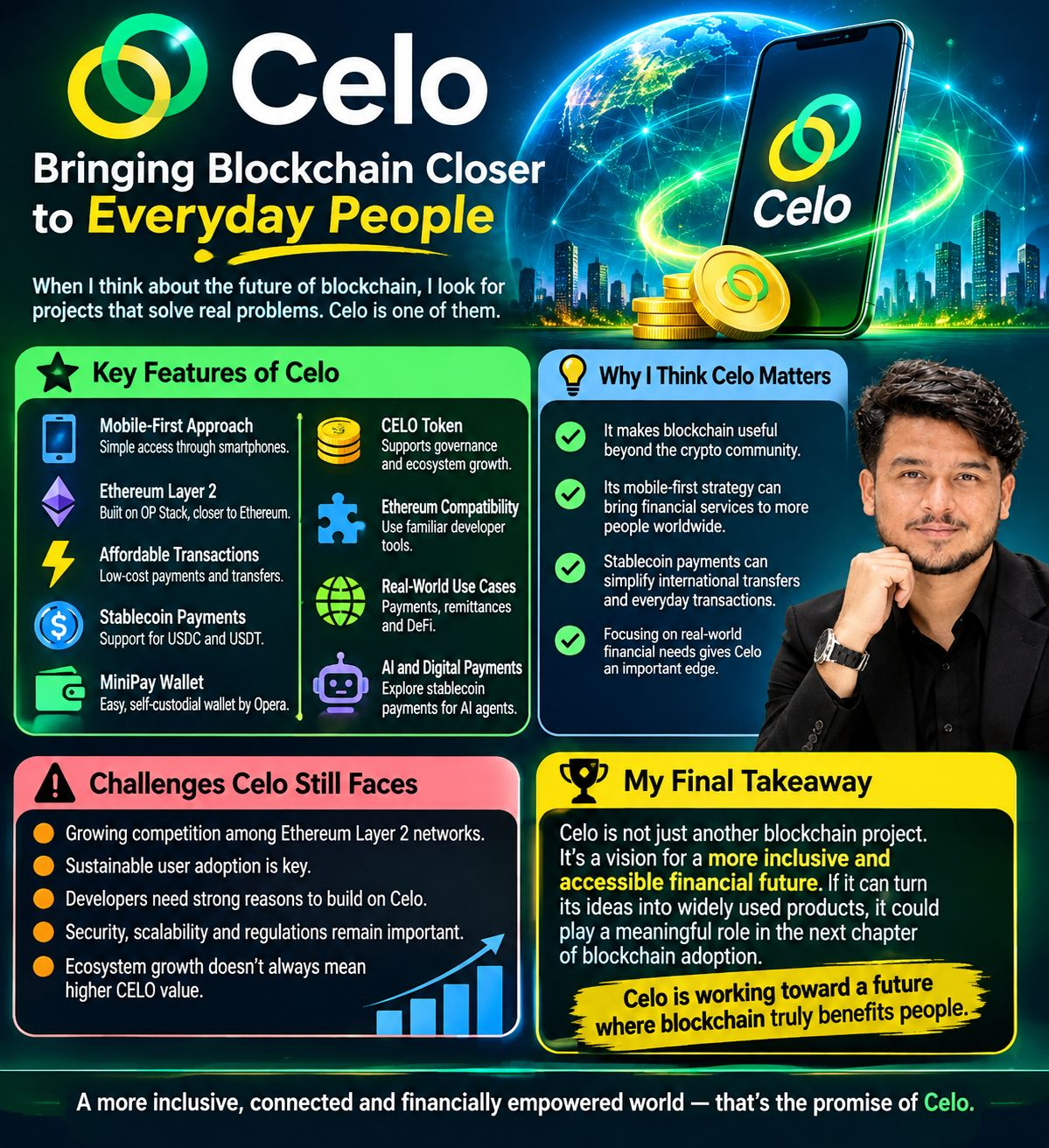
- Mobile-First Approach: Celo focuses on making blockchain applications accessible through smartphones. The goal is to create simple experiences instead of forcing users to understand complicated technical processes.
Ethereum Layer 2: In March 2025, Celo transitioned from an independent Layer 1 blockchain to an Ethereum Layer 2 using the OP Stack. This move strengthened its connection with the Ethereum ecosystem and created new opportunities for developers.
Affordable Transactions: Celo is designed to support low-cost transactions, making it suitable for everyday payments, transfers, and financial applications.
Stablecoin Payments: Stablecoins such as USDC and USDT are important parts of its ecosystem. They can support digital payments, international transfers, and access to dollar-denominated assets.
MiniPay Wallet: Developed by Opera, MiniPay is a self-custodial wallet designed to make stablecoin payments easier for mobile users. Its focus on simplicity is an important step toward bringing blockchain to a wider audience.
CELO Token: CELO plays a role in network governance and the ecosystem's economic structure. Understanding its token utility and supply dynamics is important when evaluating the project.
Ethereum Compatibility: The transition to Layer 2 infrastructure gives developers access to familiar Ethereum development tools and makes it easier to build applications within the ecosystem.
Real-World Use Cases: Celo is exploring practical applications involving payments, remittances, decentralized finance, and digital financial services.
AI and Digital Payments: Another interesting direction is the exploration of stablecoin-based payments for AI agents and automated digital services.
Why I Think Celo Deserves Attention
For me, the most interesting part of Celo is its focus on solving a problem that people actually experience.
Imagine someone who wants to send money internationally. Traditional payment services can involve multiple steps, fees, and delays. Blockchain-based stablecoin payments offer another possible way to move value more efficiently.
This is where Celo's vision becomes meaningful. It wants blockchain to become useful beyond the crypto community.
I also believe its mobile-first strategy is important. A technology becomes more powerful when people can use it without needing technical knowledge. Simple wallets, affordable transactions, and accessible applications can make a real difference.
Challenges Celo Still Needs to Overcome
Of course, every blockchain project has challenges, and Celo is no exception.
- Competition among Ethereum Layer 2 networks is increasing.
- Long-term user adoption needs to remain sustainable.
- Developers need strong reasons to continue building on the network.
- Security, scalability, and regulatory developments remain important.
- Ecosystem growth does not automatically translate into increased CELO token demand.
These are important factors to watch when evaluating its future.
My Final Thoughts
I don't see Celo as just another blockchain project trying to attract attention. Its focus on mobile accessibility, stablecoin payments, and real-world financial applications gives it an interesting direction.
However, the real test will be whether it can turn its vision into products that people consistently use.
For me, the future of blockchain is not about making technology more complicated. It is about making financial services simpler, more accessible, and more useful.
Celo is working toward that goal, and I believe its long-term progress will depend on one simple thing: delivering real value to real people.