
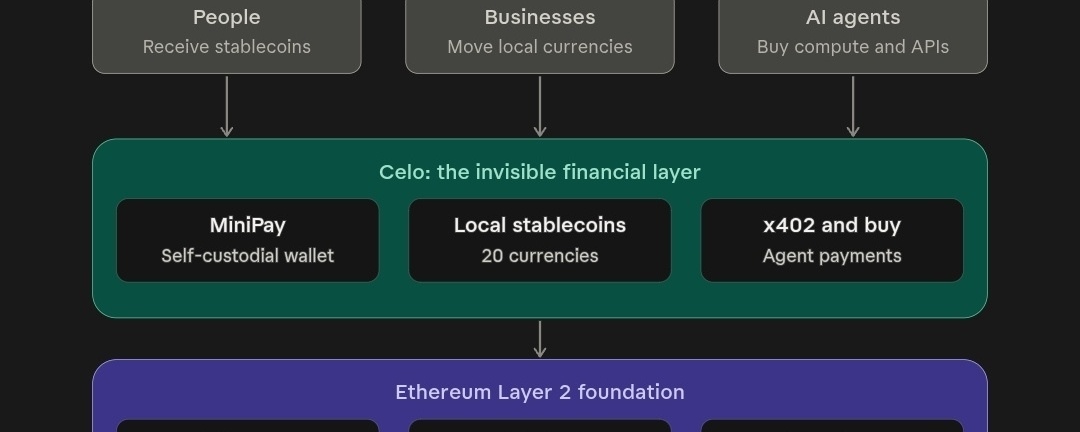


What if the biggest achievement of blockchain technology is not making people understand crypto, but making them no longer need to think about it?
Imagine three different situations.
A freelancer receives digital dollars from a client in another country. A small business needs to move money between different local currencies. An AI agent wants to purchase computing resources or access a paid API without waiting for a human to complete the payment.
These situations look unrelated, but they share one requirement: money must move quickly, reliably, affordably, and with as little friction as possible.
This is where I find Celo's strategy particularly interesting.
Rather than positioning itself only as another blockchain competing for transactions, Celo is developing infrastructure around a much bigger idea: making programmable money useful across human payments, local economies, and emerging machine-to-machine commerce.
And its transition to an Ethereum Layer 2 may be one of the most important pieces of that strategy.
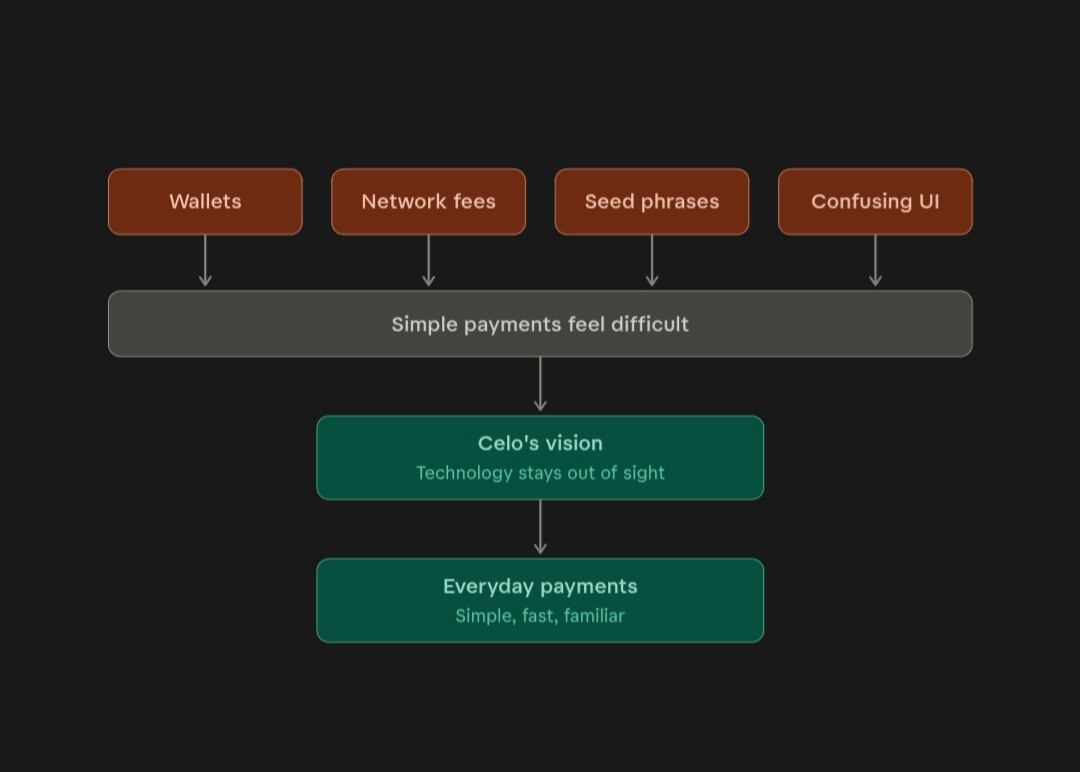
1. The Real Problem Is Not Moving Money. It Is Removing Friction.
Blockchain technology has already demonstrated that digital assets can move globally without following every traditional banking process.
But technical capability and everyday usability are two different things.
A person receiving stablecoins may still face several obstacles:
- Getting funds into a wallet.
- Understanding network fees.
- Finding liquidity for local currencies.
- Converting digital assets into usable money.
- Navigating complicated wallet interfaces.
- Trusting the security and reliability of the infrastructure.
These problems matter because mainstream users do not care about execution environments, consensus mechanisms, or transaction finality.
They care about whether their money arrives and whether they can actually use it.
My view is that the next stage of blockchain adoption will depend heavily on removing these small but persistent obstacles.
The winning financial infrastructure may be the infrastructure users barely notice.
2. Celo's Layer 2 Transformation Was About More Than Scaling
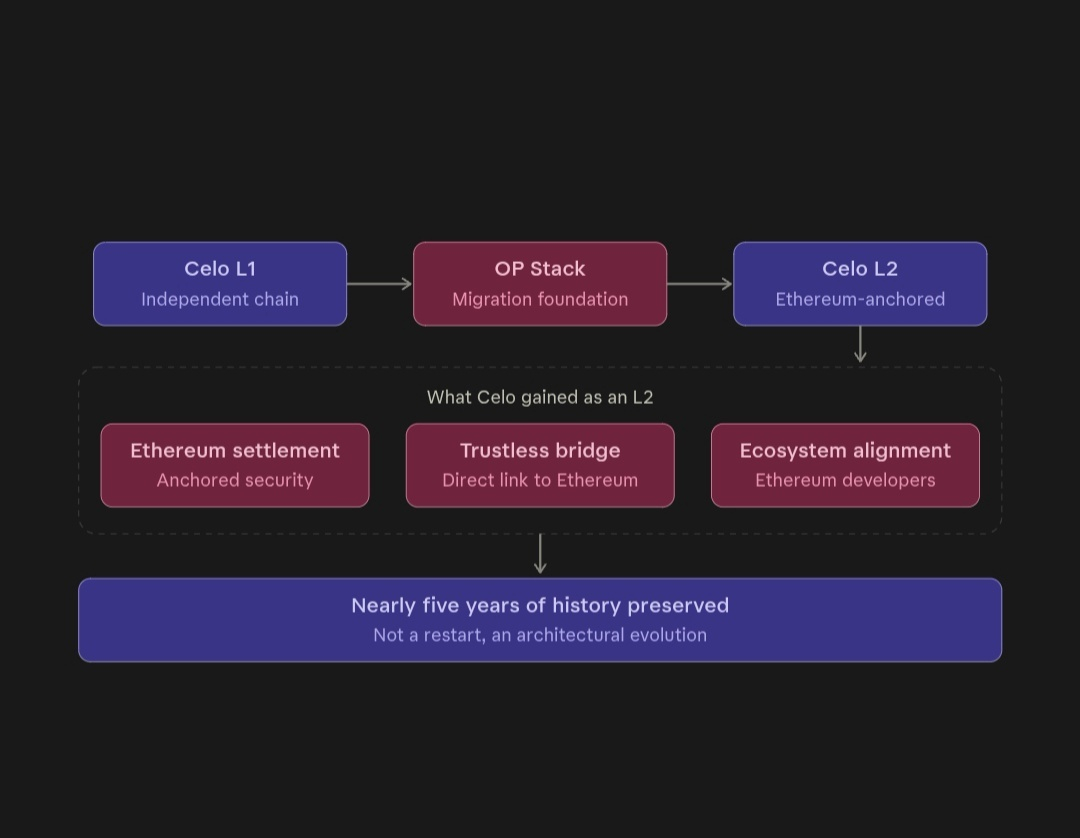
Celo launched in 2020 as an independent Layer 1 blockchain, with mobile accessibility and financial inclusion at the centre of its vision.
However, maintaining an independent network also meant operating a separate security and infrastructure ecosystem.
In May 2024, the Celo community approved a transition to an Ethereum Layer 2. The migration was completed on March 26, 2025, using the Optimism OP Stack.
This was not simply a change in classification.
Celo retained its existing network state and ecosystem while moving toward closer integration with Ethereum.
Its architecture combines several important components:
OP Stack: Provides the Layer 2 execution framework.
Ethereum: Provides the Layer 1 settlement foundation.
EigenDA: Provides data availability infrastructure.
Fee Abstraction: Allows users to pay transaction fees using supported ERC-20 assets, including stablecoins.
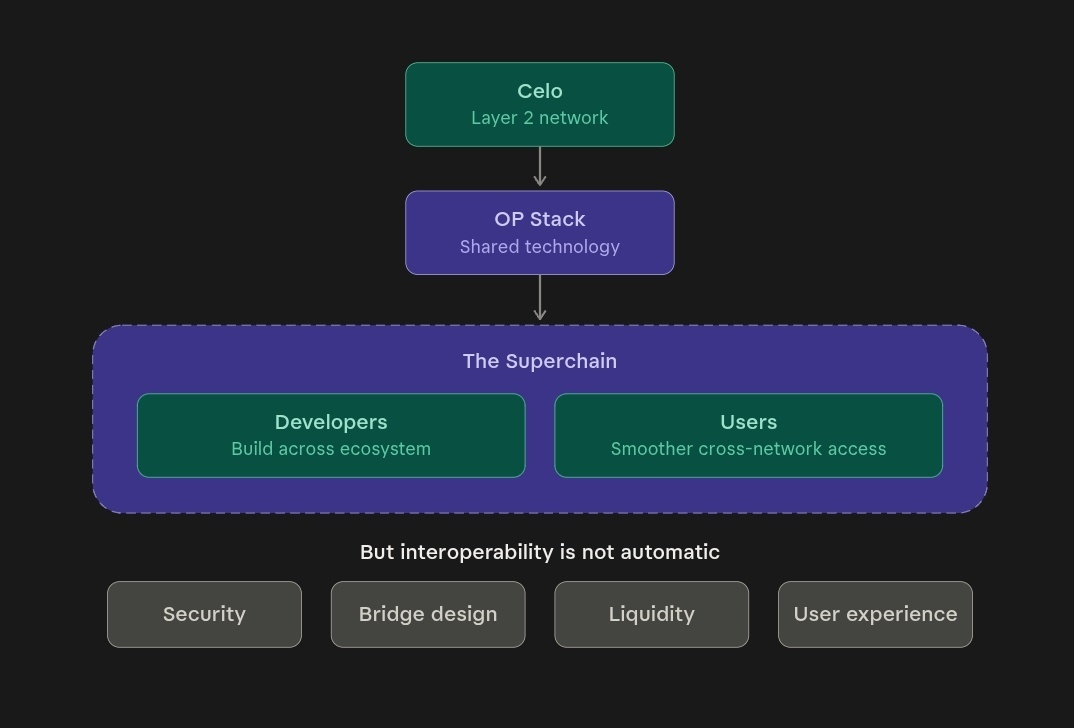
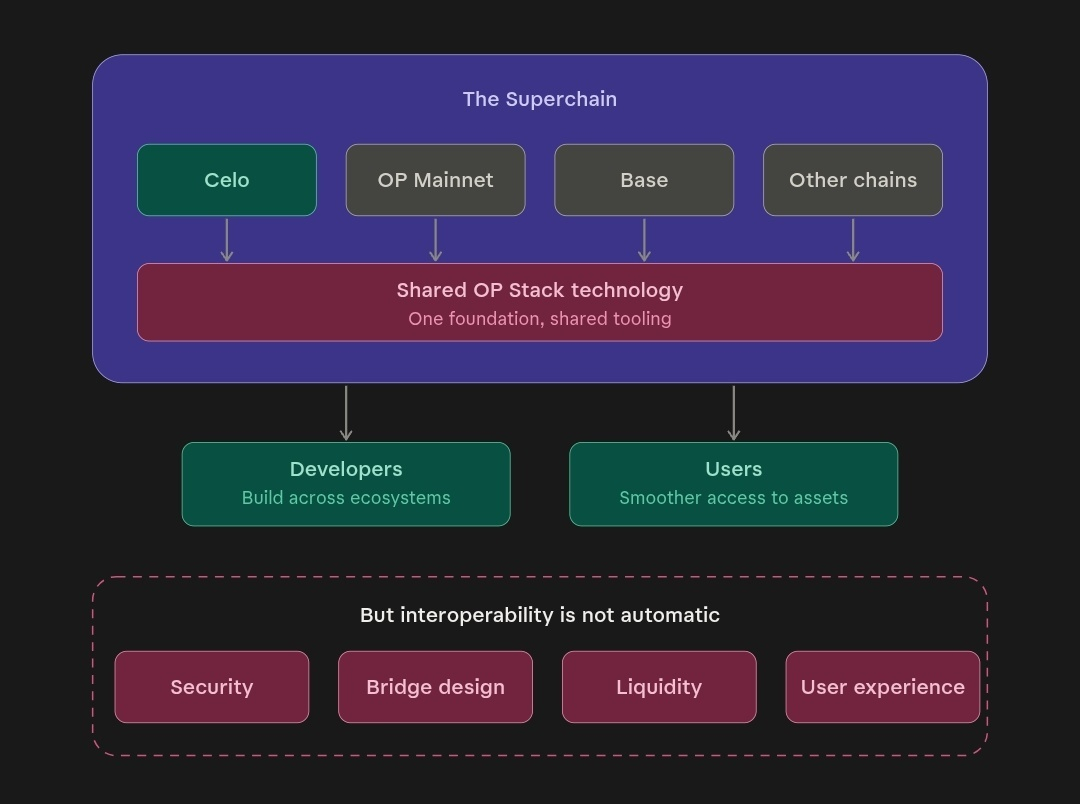
The Superchain connection also creates opportunities for shared infrastructure, interoperability, and collaboration with other OP Stack networks.
But I think the more interesting question is why Celo needs this architecture.
Its objective is not simply to process more transactions. It is to combine Ethereum alignment with a specialised financial use case: affordable, mobile-first payments.
There is an important technical distinction here: using Ethereum settlement does not mean every component inherits identical security assumptions to Ethereum. Data availability, sequencing, bridges, and operational infrastructure still deserve independent evaluation.
That is precisely why Celo's architecture should be examined as a complete system rather than judged by the L2 label alone.
3. MiniPay: The Distribution Layer That Makes the Technology Matter
Infrastructure without distribution rarely creates mainstream adoption.
A blockchain can have excellent technology, but if ordinary users cannot access it comfortably, its potential remains limited.
This is where MiniPay becomes an important part of Celo's strategy.
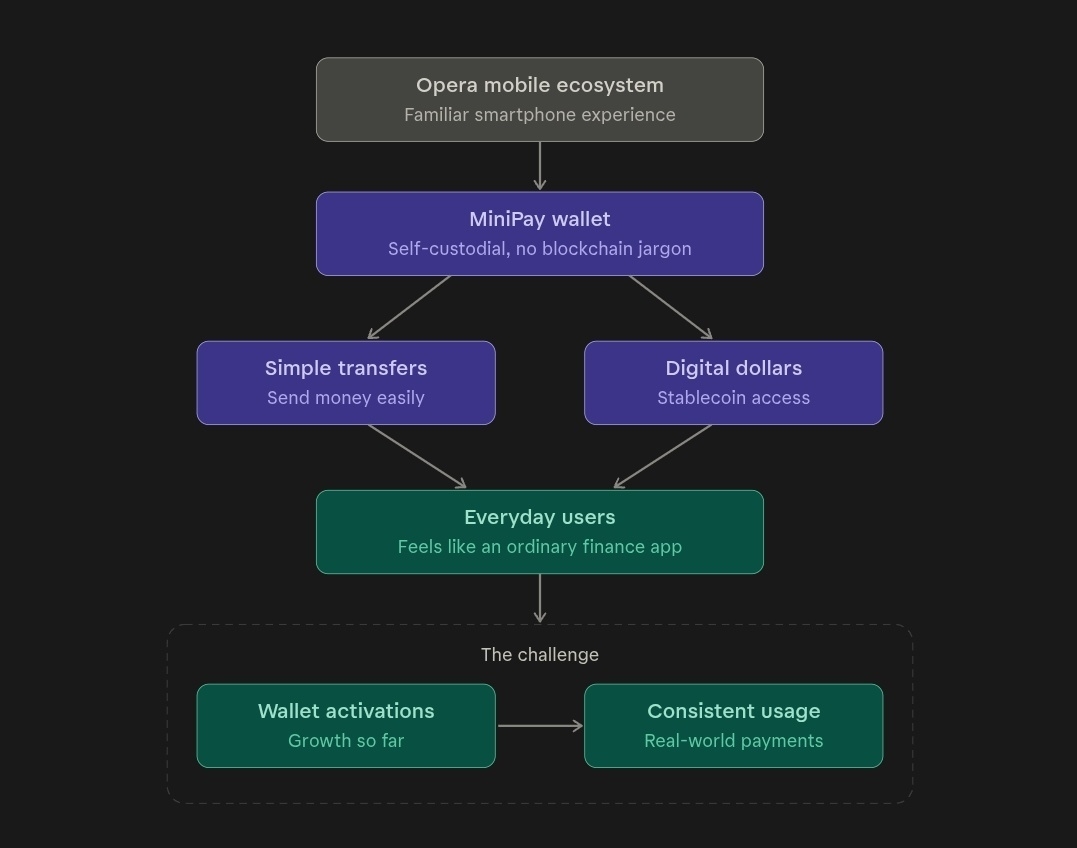
MiniPay is a self-custodial stablecoin wallet developed by Opera and built on Celo. Its approach is centred on making digital financial tools accessible through smartphones.
Instead of expecting every user to understand seed phrases, gas tokens, and complicated blockchain interfaces, MiniPay focuses on simplifying the experience.
Its reported adoption figures are worth examining.
According to the November 19, 2026 announcement:
- More than 20 million activated wallets.
- More than 600 million transactions processed.
- Availability across 70+ countries.
- 77 Mini Apps.
These are meaningful distribution indicators, although activated wallets should not be confused with unique monthly active users.
Another important development is MiniPay's upgrade to Privy, the Stripe-owned wallet infrastructure provider.
The integration introduces email, social-account, and passkey sign-in options while preserving the wallet's self-custodial design and allowing users to export their keys.
This matters because wallet access is one of the biggest onboarding barriers in crypto.
The wider Stripe connection is also developing. MiniPay introduced Link by Stripe deposits for users in the EU and US, providing another route for bringing money into the stablecoin ecosystem.
However, I would distinguish the availability of these integrations from universal payment acceptance. Their actual reach depends on supported markets, partners, and services.
The real opportunity is turning a crypto wallet into a familiar financial interface without removing the user's control over their assets.
4. Local-Currency Stablecoins: A More Interesting Payment Opportunity
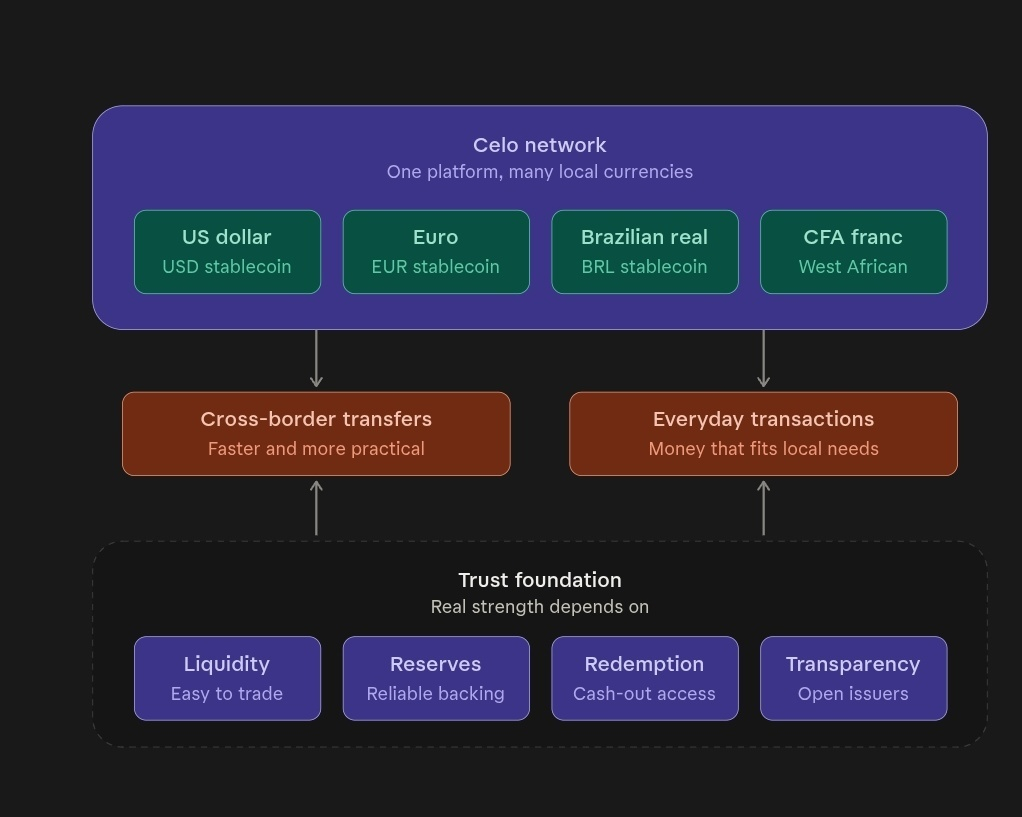
One aspect of Celo that deserves more attention is its focus on currencies beyond the US dollar.
Most crypto payment conversations revolve around dollar-denominated stablecoins.
But the global economy does not operate in a single currency.
A business in Brazil may need Brazilian reais. A user in Nigeria may prefer naira. A merchant in Argentina may need Argentine pesos.
Local-currency stablecoins can potentially reduce unnecessary conversion steps and support more relevant financial applications.
Celo's ecosystem includes assets such as:
- USDC and USDT.
- USA₮.
- USDm and EURm.
- BRLm and XOFm.
- Other local-currency stablecoin assets.
Celo reported an ecosystem of 33 stablecoins representing 20 currencies in its October 2026 infrastructure update.
This creates an interesting possibility: rather than treating every international transaction as a dollar conversion problem, applications could increasingly work with the currencies their users actually need.
But the number of supported stablecoins is only one part of the equation.
Their reserve quality, issuer reliability, redemption mechanisms, regulatory standing, and local liquidity are equally important.
A token representing a local currency is not automatically equivalent to a bank deposit or guaranteed redemption at every location.
For Celo, the next challenge is making this multi-currency infrastructure useful beyond simply having more assets available.
5. The Unexpected Next User: AI Agents
This is where Celo's story becomes particularly interesting.
Until now, most payment infrastructure has been designed around humans.
A person opens an application, selects a service, confirms a payment, and receives something in return.
But AI agents are changing the way digital services are accessed.
An autonomous agent may need to purchase computing power, retrieve information, access an API, or pay another digital service to complete a task.
The question becomes:
How does software pay for software without requiring a human to manually complete every transaction?
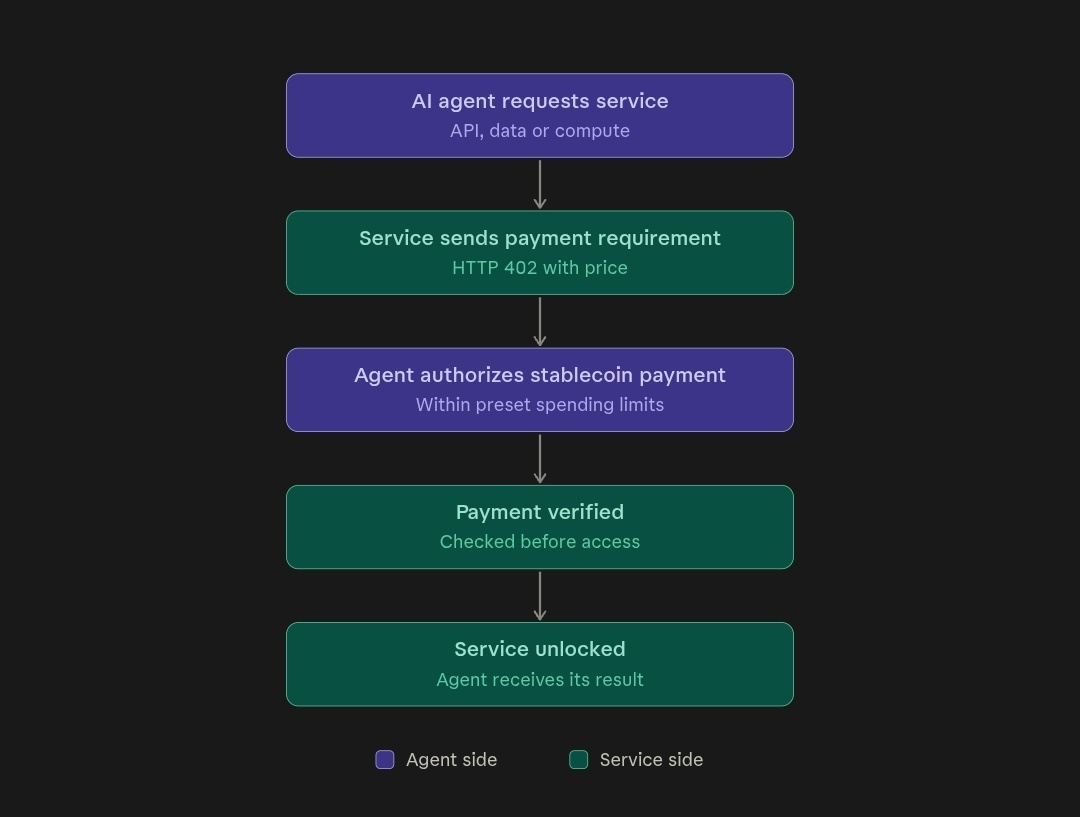
Celo is exploring this through its x402 payment infrastructure.
The concept uses the HTTP 402 Payment Required response to allow online services to request payment before providing access.
The process can work like this:
1. An AI agent requests a paid service.
2. The service returns a payment requirement.
3. The agent signs a supported stablecoin payment authorization.
4. A facilitator verifies the authorization and handles settlement.
5. The service receives confirmation and provides access.
Celo's facilitator supports this type of payment flow, including gas sponsorship for supported assets.
The October 27, 2026 update expanded support to 10 stablecoins across eight currencies.
Even more interesting is Celo's launch of buy, a services marketplace where AI agents can discover and purchase more than 700 services covering computing, data, and APIs.
This is not just another wallet feature.
It represents an attempt to connect stablecoin infrastructure with an emerging economy in which software can independently purchase digital resources.
There is still a long way to go before autonomous payments become a mainstream commercial activity.
But the infrastructure being developed today could become relevant if agent-driven commerce expands.
6. Why the Superchain Connection Matters
The Superchain narrative is sometimes reduced to a collection of networks using the same technology.
I think its bigger significance is the possibility of building specialised networks that can share infrastructure while serving different markets.
Celo's identity within that ecosystem is particularly clear.
Ethereum provides the settlement foundation.
The OP Stack provides the execution architecture.
The wider Superchain creates opportunities for ecosystem connectivity.
Celo focuses on stablecoin payments, local financial markets, and mobile accessibility.
This division of purpose is important.
Not every blockchain needs to compete for the same users or applications. A specialised network can develop a stronger identity by solving a specific problem exceptionally well.
For Celo, that problem is making digital money practical in everyday financial activity.
However, interoperability is not automatic. Bridges, liquidity fragmentation, cross-chain messaging, and differing security assumptions remain important challenges.
The Superchain opportunity will ultimately depend on how effectively these networks become connected in practice.
7. The CELO Token: Does Network Growth Create Economic Value?
This is a question that deserves an honest answer.
A growing ecosystem does not automatically guarantee a rising native token value.
CELO has roles in governance, staking, and the network's economic model. Supported stablecoins can also be used for transaction fees, meaning users do not always need to acquire CELO just to make payments.
This creates an important distinction between network adoption and token demand.
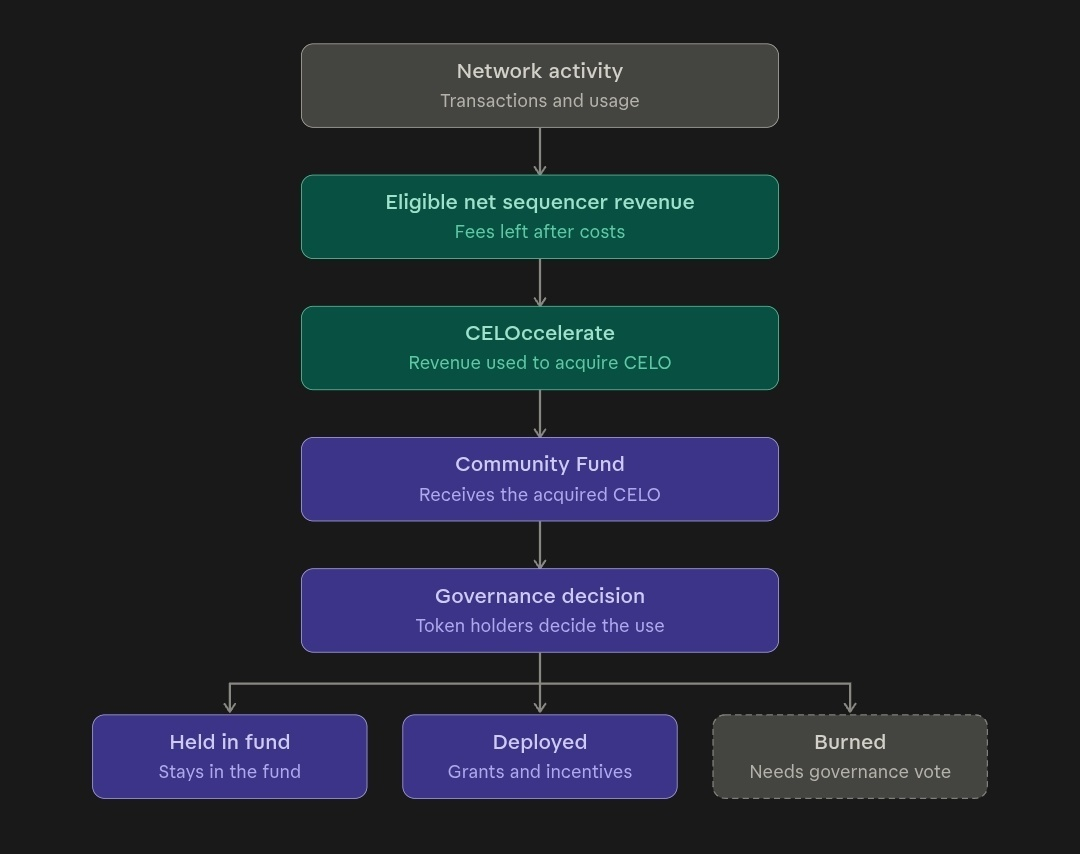
One development worth watching is CELOccelerate.
Under this framework, net sequencer revenue, after applicable operating costs and revenue-sharing obligations, is directed toward the Community Fund through CELO acquisition.
CELO holders participate in governance decisions regarding the fund's use.
That means the purchased tokens are not automatically burned. Governance can determine whether they are held, reinvested, allocated, or burned through an approved decision.
I find this mechanism interesting because it attempts to connect actual network activity with the token's economic role.
But its long-term success depends on measurable factors:
- Sustainable sequencer revenue.
- Operating costs.
- Stablecoin payment activity.
- Transparent revenue reporting.
- Governance decisions.
- The relationship between token acquisition and circulating supply.
The important point is that token value capture must be demonstrated through real economic activity, not simply promised through an attractive ecosystem narrative.
8. What Could Stop This Vision From Working?
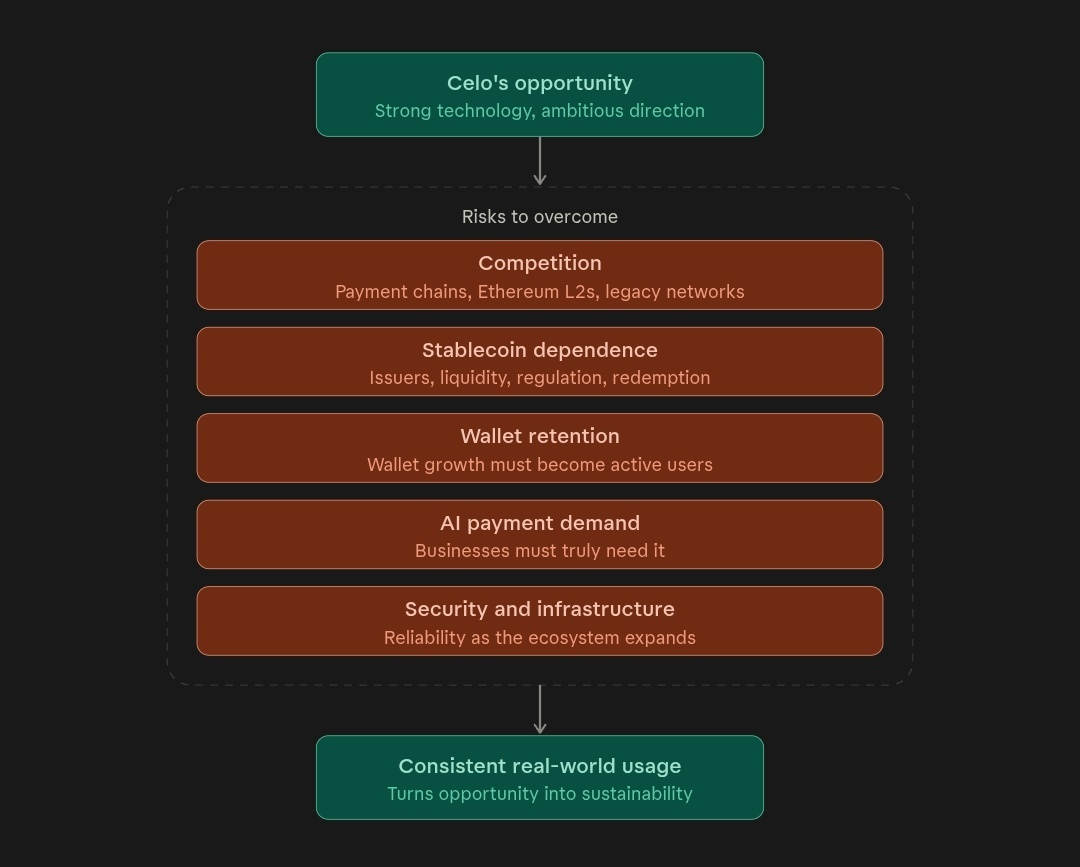
I would not consider Celo's opportunity without examining its challenges.
Competition: Ethereum L2s, Solana, and specialised payment networks are all competing for developers, liquidity, and financial applications.
Stablecoin dependencies: The reliability of stablecoin payments depends on issuers, reserves, redemption mechanisms, and local liquidity.
User retention: Twenty million activated wallets are encouraging, but recurring financial activity is a more meaningful measure of adoption.
Infrastructure security: Sequencing, data availability, bridges, and smart contracts all introduce technical risks that need continued attention.
Regulation: Local stablecoin rules and payment regulations can affect which financial services are available in different countries.
Token economics: Network growth must translate into sustainable revenue and meaningful economic value for the ecosystem.
These are not reasons to dismiss Celo. They are the challenges that will determine whether its strategy can succeed.
9. Five Things I Would Watch Next
Rather than judging Celo only by announcements or short-term market movements, I would monitor five developments:
1. MiniPay retention: Are activated wallets becoming regular users?
2. Stablecoin liquidity: Are local-currency assets gaining meaningful liquidity and real payment use cases?
3. Agentic payments: Are x402 and the buy marketplace generating recurring commercial transactions?
4. Network economics: Is sequencer revenue growing sustainably after operating costs?
5. Superchain connectivity: Are integrations creating meaningful benefits for developers, applications, and users?
These indicators can reveal whether Celo is progressing from a promising infrastructure narrative toward a sustainable financial ecosystem.
My Final Perspective: The Best Financial Infrastructure May Be Invisible
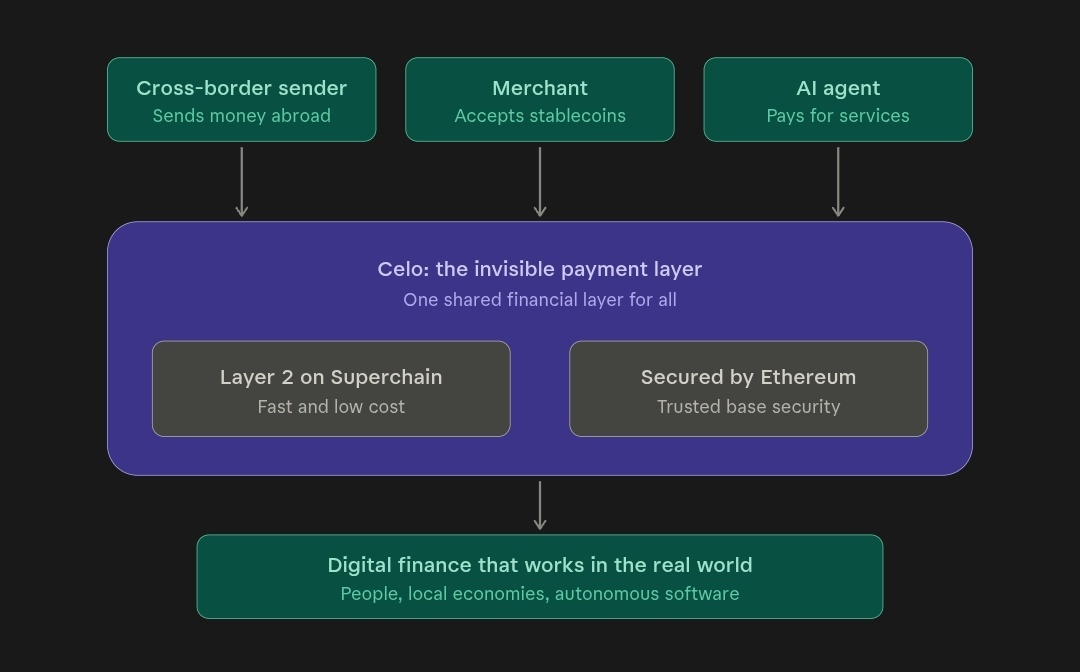
When I look at Celo, I see three different layers of opportunity coming together.
First, there are people who need accessible digital money.
Second, there are businesses and applications that need reliable payment infrastructure across currencies.
Third, there is an emerging generation of AI agents that may need to purchase digital services independently.
Celo is attempting to build infrastructure that can serve all three.
Its Ethereum Layer 2 transition gives it a different architectural position. Its Superchain alignment creates opportunities for broader connectivity. MiniPay provides a distribution channel, while stablecoins and agentic payment tools extend the potential use cases.
But I believe its biggest test is still ahead.
Can it convert wallet activations into recurring financial activity? Can local-currency stablecoins develop real liquidity? Can autonomous payments become a meaningful source of demand? And can network usage generate sustainable economic value?
Those questions matter more than the number of announcements a project publishes.
My central takeaway is simple: Celo's opportunity is not just to become a bigger blockchain. It is to become a financial layer that people, businesses, and eventually AI agents can use without needing to understand the blockchain underneath.
If that happens, the most successful part of Celo's technology might be the part that users never notice.
Celo is now a Layer 2. Secured by Ethereum. Built on the Superchain. But its real ambition is to make digital finance work in the real world.
What do you think will drive Celo's next stage of adoption: MiniPay, local-currency stablecoins, or AI-powered payments?

Disclosure: Original educational research prepared for the Binance Square Celo Creator Challenge. This article reflects an independent interpretation of publicly available information.
Disclaimer: This content is for educational purposes only and is not financial advice. Cryptocurrency assets involve significant risks. Always conduct your own research.