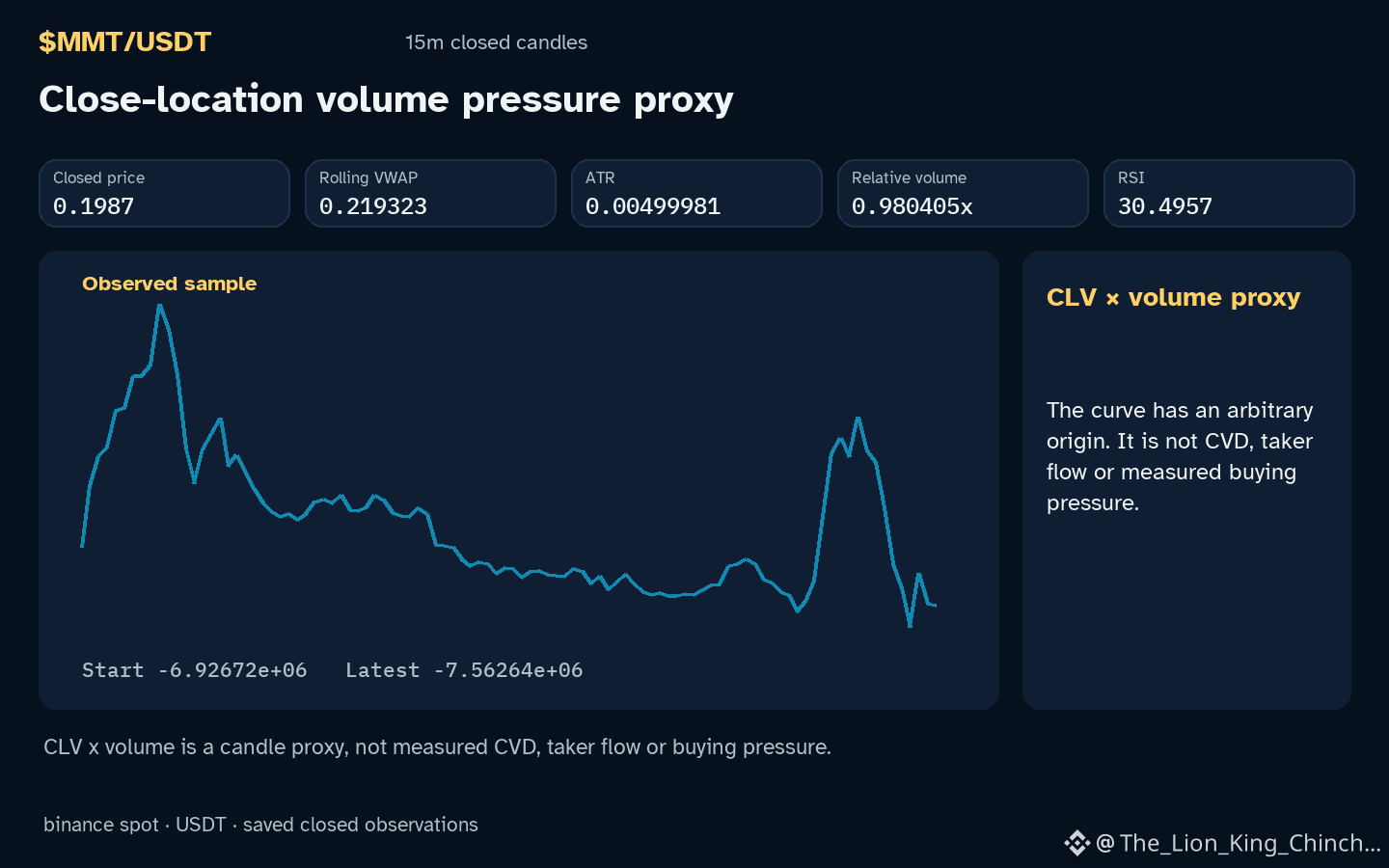
$MMT: Whipsaw Patience
Does $MMT frustration stem from outcome bias during false breaks? The asset trades below support against a down hourly direction. This setup invites a question about process versus result in volatile ranges.
Anchoring
Traders may fixate on a prior high or low as a reference point. When price briefly exits that level then reverses, the initial hope shifts to regret. This reaction is conditional, not certain. A trader might enter on the break, see the close revert, and judge the trade by the loss rather than the setup logic. The emotional cost can feel larger than the monetary risk.
Loss Aversion
Losing a position feels more painful than gaining an equal amount feels good. In a whipsaw, the quick loss triggers a stronger emotional response than a slow drift. This does not mean traders act irrationally. It simply means the perceived penalty feels severe. The self-check here is to ask if you are judging the entry rule or the final price.
Self-Check
Review your entry criteria. Did the setup meet your defined rules before the break? If yes, the process was sound even if the result was a loss. If no, the error lies in the rule, not the market. Use 30.5 as a context gauge, not a trigger. If RSI contradicts the break direction, pause. Do not chase the illusion of a confirmed trend.
Limits
This is a thought experiment, not an observation of actual traders. Candles do not reveal motives or order flow. The current data shows a range with volume not above baseline. Relative volume is 0.98x baseline. This context helps frame the volatility but does not predict the next move. The interpretation weakens if future closed candles show sustained movement beyond resistance without reversal. Until then, treat the break as uncertain. Focusing on the process rather than the outcome reduces emotional whiplash. The key is to let predefined rules guide decisions, not fear or greed.
Probabilistic market research, not a recommendation or guaranteed return.
#MMT #TradingPsychology #CryptoLearning