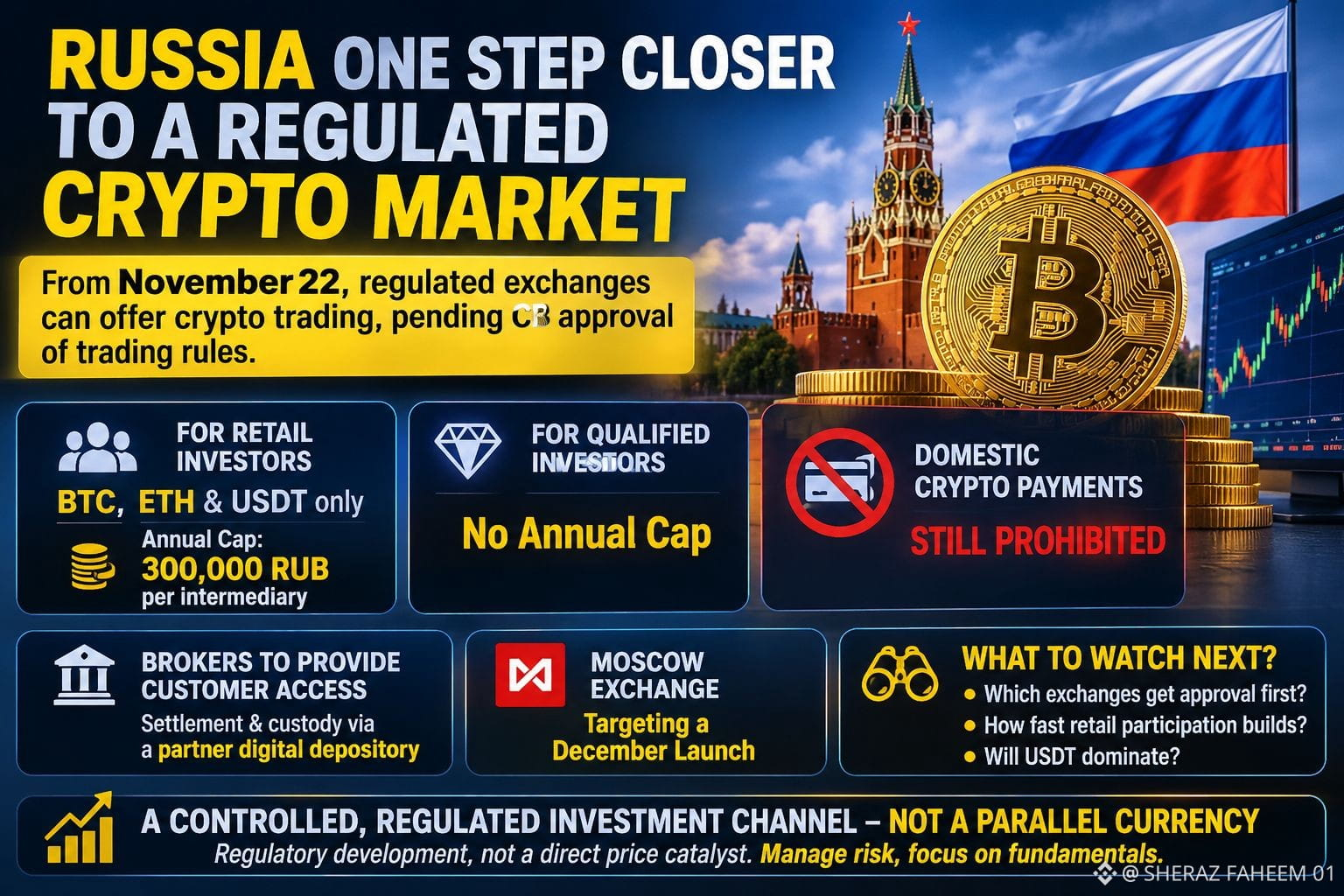
Russia moved one step closer to a live regulated crypto market this weekend. From November 22, regulated exchanges can offer crypto trading, provided their trading rules receive central bank approval. The permission is in place, but actual order books still depend on that sign-off.
The scope is narrow for now. Retail investors can access BTC, ETH and USDT, with purchases capped at 300,000 rubles per intermediary each year, while qualified investors face no annual cap. Domestic crypto payments remain prohibited, which suggests the goal is a controlled investment channel rather than a parallel currency.
For traders, the real signal is the structure. Brokers will provide customer access, and the exchange expects to work through a partner digital depository for settlement and custody. Moscow Exchange is targeting a December launch, so meaningful volume data is likely weeks away, not days.
What I am watching next is which exchanges get rule approval first, how quickly retail participation builds under the cap, and whether USDT becomes the dominant pair. A regulated ruble on-ramp could pull some flow away from OTC desks, but the size of that shift is still unknown.
This is a regulatory development, not a price catalyst on its own. Position sizing and risk management matter more than headlines.
Which part of this rollout matters most for liquidity?$PIEVERSE
$ACE
$IRYS